- 14
- Episodes
- 3
- Ratings
- 2024
- First episode
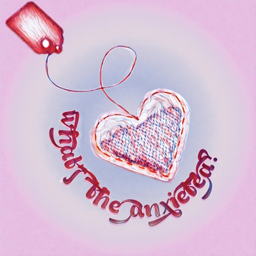
About what's the anxietea?
hi! we're afifa and megan, and we welcome you to what's the anxietea? a podcast that looks at the new age of mental health from the perspective of two gen-z graduate students studying clinical psychology. connect with us on instagram @whtstheanxietea! Hosted on Acast. See acast.com/privacy (https://acast.com/privacy) for more information.
- Publisher
- Afifa & Megan
- Category
- health & fitness · health & fitness · science
- Language
- en
- Explicit
- No
- First episode
- 4 Sept 2024
- Latest episode
- 9 Nov 2025
Latest episodes
14 episodes in the feed.
9 Nov 2025
how to be alone (and love it!)
In this episode, we’re talking about romanticizing solo time: turning being alone into something that feels soft, powerful, and totally yours. From solo coffee dates to taking yourself on little adventures, we’ll break down how to make “me time” feel like a vibe instead of a punishment. [Disclaimer]: We want to emphasize that this podcast is not meant to serve as or substitute professional mental health services or consultations. We are just doing this for fun and to start a more open dialogue about mental health. References: D. C. Greenwood, K. R. Muir, C. J. Packham, R. J. Madeley (1996). Coronary heart disease: a review of the role of psychosocial stress and social support. Journal of Public Health Medicine 18(2), 221–231. https://doi.org/10.1093/oxfordjournals.pubmed.a024483 Friedman, M., & Rosenman, R. H. (1959). Association of specific overt behavior pattern with blood and cardiovascular findings: Blood cholesterol level, blood clotting time, incidence of arcus senilis, and clinical coronary artery disease. JAMA, 169(12), 1286–1296. https://doi.org/10.1001/jama.1959.03000290012005 Matthews, K. A., & Haynes, S. G. (1986). Type A behavior pattern and coronary disease risk. Update and critical evaluation. American journal of epidemiology, 123(6), 923–960. https://doi.org/10.1093/oxfordjournals.aje.a114347 Shaw, W. S. & Dimsdale, J. E. (2010). Type A Personality, Type B Personality. In G. Fink (Ed.), Stress consequences: Mental, neuropsychological and socioeconomic (pp. 72-77). Academic Press. Hosted on Acast. See acast.com/privacy (https://acast.com/privacy) for more information.
21 Oct 2025
i scheduled this episode… because i’m type A
Are you Type A or just running on iced coffee and anxiety? In this episode, we unpack the whole “Type A vs Type B” personality thing: why some of us can’t stop planning, and others are just trying to vibe. We talk stress, success, burnout, and how to find your sweet spot between doing the most and doing nothing. Grab your planner… or don’t. Either way, you’ll feel seen. [Disclaimer]: We want to emphasize that this podcast is not meant to serve as or substitute professional mental health services or consultations. We are just doing this for fun and to start a more open dialogue about mental health. References: D. C. Greenwood, K. R. Muir, C. J. Packham, R. J. Madeley (1996). Coronary heart disease: a review of the role of psychosocial stress and social support. Journal of Public Health Medicine 18(2), 221–231. https://doi.org/10.1093/oxfordjournals.pubmed.a024483 Friedman, M., & Rosenman, R. H. (1959). Association of specific overt behavior pattern with blood and cardiovascular findings: Blood cholesterol level, blood clotting time, incidence of arcus senilis, and clinical coronary artery disease. JAMA, 169(12), 1286–1296. https://doi.org/10.1001/jama.1959.03000290012005 Matthews, K. A., & Haynes, S. G. (1986). Type A behavior pattern and coronary disease risk. Update and critical evaluation. American journal of epidemiology, 123(6), 923–960. https://doi.org/10.1093/oxfordjournals.aje.a114347 Shaw, W. S. & Dimsdale, J. E. (2010). Type A Personality, Type B Personality. In G. Fink (Ed.), Stress consequences: Mental, neuropsychological and socioeconomic (pp. 72-77). Academic Press. Hosted on Acast. See acast.com/privacy (https://acast.com/privacy) for more information.
1 Jun 2025
pick your potion: love languages
The hosts of "what's the anxietea?" explore the five love languages, detailing how they influence expressions of affection and impact interpersonal connections, ultimately enhancing understanding in relationships; this is an informational episode.
4 May 2025
order up! (birth order psychology)
Whether you were the trial run eldest, the peacekeeping middle, the attention-hogging youngest, or the wildcard only child, this show dives into the scientific and unscientific chaos of birth order. Join our hosts (two eldest children telling each other "exactlyyy") as they swap stories, roast stereotypes, and attempt to answer the age-old question: is it nature, nurture, or just parenting? [Disclaimer]: We want to emphasize that this podcast is not meant to serve as or substitute professional mental health services or consultations. We are just doing this for fun and to start a more open dialogue about mental health. References: Ansbacher, H.L., & Ansbacher, R. R. (Eds.). (1956). The individual psychology of Alfred Adler. New York: Basic Books. Barclay, K. J. (2015). Birth order and educational attainment: Evidence from fully adopted sibling groups. Intelligence, 48, 109–122. https://doi.org/10.1016/j.intell.2014.10.009 (https://doi.org/10.1016/j.intell.2014.10.009) Damian, R. I., & Roberts, B. W. (2015). Settling the debate on birth order and personality. Journal of Research in Personality, 58, 36–45. https://doi.org/10.1016/j.jrp.2015.05.005 (https://doi.org/10.1016/j.jrp.2015.05.005) Gregory Feist, Tomi-Ann Roberts, and Jess Feist. "Theories of Personality, 10th Edition" Faculty Research, Scholarly, and Creative Activity (2021). Lehmann, J. K., Nuevo-Chiquero, A. & Vidal-Fernandez, M. (2018). Journal of Human Resources, 53 (1) 123-156; DOI: https://doi.org/10.3368/jhr.53.1.0816-8177 (https://doi.org/10.3368/jhr.53.1.0816-8177) Sulloway, F. J. (1996). Born to rebel: Birth order, family dynamics, and creative lives. Pantheon Books. Wichman, A. L., Rodgers, J. L., & MacCallum, R. C. (2006). A multilevel approach to the relationship between birth order and intelligence. Personality and Social Psychology Bulletin, 32(1), 117–127. https://doi.org/10.1177/0146167205279581 Zajonc, R. B., & Sulloway, F. J. (2007). The confluence model: Birth order as a within-family or between-family dynamic? Personality and Social Psychology Bulletin, 33(9), 1187–1199. https://doi.org/10.1177/0146167207303017 (https://doi.org/10.1177/0146167207303017) Hosted on Acast. See acast.com/privacy (https://acast.com/privacy) for more information.
6 Apr 2025
doomscroll and chill
Tune in to us diving deep into the rabbit hole of endless news feeds, viral memes, and catastrophic headlines. This week, we’re unpacking the art of doomscrolling—We’ll explore why we can’t look away and offer some tips to break the cycle and stay "off the grid." [Disclaimer]: We want to emphasize that this podcast is not meant to serve as or substitute professional mental health services or consultations. We are just doing this for fun and to start a more open dialogue about mental health. References: https://www.merriam-webster.com/dictionary/doomscroll (https://www.merriam-webster.com/dictionary/doomscroll) https://www.cnn.com/2021/02/26/health/doomscrolling-prevention-tips-wellness/index.html (https://www.cnn.com/2021/02/26/health/doomscrolling-prevention-tips-wellness/index.html) https://news.virginia.edu/content/what-doomscrolling-why-do-we-do-it-and-how-can-we-stop (https://news.virginia.edu/content/what-doomscrolling-why-do-we-do-it-and-how-can-we-stop) "Digital News Report 2024" (PDF). Reuters Institute for the Study of Journalism. p. 27. https://reutersinstitute.politics.ox.ac.uk/sites/default/files/2024-06/RISJ_DNR_2024_Digital_v10%20lr.pdf (https://reutersinstitute.politics.ox.ac.uk/sites/default/files/2024-06/RISJ_DNR_2024_Digital_v10%20lr.pdf) George, S. A., Hovan George, A.S., Baskar, T., & Karthikeyan, M. M. (2024). Reclaiming our minds: Mitigating the negative impacts of excessive doomscrolling. Partners Universal Multidisciplinary Research Journal, 1(3), 17–39. https://doi.org/10.5281/zenodo.13737987 (https://doi.org/10.5281/zenodo.13737987) Modgil, S., Singh, R. K., Gupta, S., & Dennehy, D. (2021). A confirmation bias view on social media induced polarisation during Covid-19. Information systems frontiers: a journal of research and innovation, 1–25. Advance online publication. https://doi.org/10.1007/s10796-021-10222-9 (https://doi.org/10.1007/s10796-021-10222-9) Satici, S.A., Gocet Tekin, E., Deniz, M.E., & Satici, B. Doomscrolling scale: Its association with personality traits, psychological distress, social media use, and wellbeing. Applied Research Quality Life 18, 833–847 (2023). https://doi.org/10.1007/s11482-022-10110-7 (https://doi.org/10.1007/s11482-022-10110-7) Hosted on Acast. See acast.com/privacy (https://acast.com/privacy) for more information.
2 Mar 2025
truth be told: the lie detector
Lie detectors—science or just a really expensive way to make people sweat? In this episode, we dive into the world of polygraphs, debunk the myths, and find out if they actually work (or if they’re just drama machines for reality TV). We’ll explore the history, the science, and one of the wildest cases where the polygraph totally backfired. [Disclaimer]: We want to emphasize that this podcast is not meant to serve as or substitute professional mental health services or consultations. We are just doing this for fun and to start a more open dialogue about mental health. References: American Psychological Association. (2004, August 5). The Truth About Lie Detectors (aka Polygraph Tests). American Psychological Association. https://www.apa.org/topics/cognitive-neuroscience/polygraph (https://www.apa.org/topics/cognitive-neuroscience/polygraph) “Green River Killer” Gary Leon Ridgway’s Polygraph Charts. (2020, May 7). AntiPolygraph.org News. https://antipolygraph.org/blog/2020/05/07/green-river-killer-gary-leon-ridgways-polygraph-charts (https://antipolygraph.org/blog/2020/05/07/green-river-killer-gary-leon-ridgways-polygraph-charts/) Honts, C. R., & Thurber, S. (2019). Analyzing Iacono’s Thought Experiment about Polygraph Field Studies: Reason or Fantasy? Polygraph & Forensic Credibility Assessment. American Polygraph Association. Iacono, W. G., & Ben-Shakhar, G. (2019). Current status of forensic lie detection with the comparison question technique: An update of the 2003 National Academy of Sciences report on polygraph testing. Law and human behavior, 43(1), 86. National Research Council. 2003. The Polygraph and Lie Detection. Washington, DC: The National Academies Press. https://doi.org/10.17226/10420. The curious story of how the lie detector came to be. (2013, May 21). BBC News. https://www.bbc.com/news/magazine-22467640 (https://www.bbc.com/news/magazine-22467640) Vogel, J. & Baran, M. (2016, September 20). Inconclusive: The truth about lie detector tests. APM reports. https://www.apmreports.org/story/2016/09/20/inconclusive-lie-detector-tests#:~:text=Conversely%2C%20innocent%20people%20have%20failed,to%20 BTK%20 killer%20 Dennis%20Rader (https://www.apmreports.org/story/2016/09/20/inconclusive-lie-detector-tests#:~:text=Conversely%2C%20innocent%20people%20have%20failed,to%20BTK%20killer%20Dennis%20Rader). Hosted on Acast. See acast.com/privacy (https://acast.com/privacy) for more information.
16 Feb 2025
i'm late, for a very important date!
tune in to find out why megan and afifa are always running late! (and strategies to overcome it) [Disclaimer]: We want to emphasize that this podcast is not meant to serve as or substitute professional mental health services or consultations. We are just doing this for fun and to start a more open dialogue about mental health. References: Knouse, L. E., & Fleming, A. P. (2016). Applying cognitive-behavioral therapy for ADHD to emerging adults. Cognitive and Behavioral Practice, 23(3), 300–315. https://doi.org/10.1016/j.cbpra.2016.03.008 Sprich, S. E., Knouse, L. E., Cooper-Vince, C., Burbridge, J., & Safren, S. A. (2012). Description and Demonstration of CBT for ADHD in Adults. Cognitive and behavioral practice, 17(1), 10.1016/j.cbpra.2009.09.002. https://doi.org/10.1016/j.cbpra.2009.09.002 Hosted on Acast. See acast.com/privacy (https://acast.com/privacy) for more information.
2 Feb 2025
walking through wonder: the power of awe walks
tune into to find out how taking a walk cures everything! (maybe) [Disclaimer]: We want to emphasize that this podcast is not meant to serve as or substitute professional mental health services or consultations. We are just doing this for fun and to start a more open dialogue about mental health. References: Monroy, M., & Keltner, D. (2023). Awe as a pathway to mental and physical health. Perspectives on Psychological Science, 18(2), 309–320. https://doi.org/10.1177/17456916221094856 Sturm, V. E., Datta, S., Roy, A. R. K., Sible, I. J., Kosik, E. L., Veziris, C. R., Chow, T. E., Morris, N. A., Neuhaus, J., Kramer, J. H., Miller, B. L., Holley, S. R., & Keltner, D. (2020). Big smile, small self: Awe walks promote prosocial positive emotions in older adults. Emotion, 22(5), 1044–1058. https://doi.org/10.1037/emo0000876 Hosted on Acast. See acast.com/privacy (https://acast.com/privacy) for more information.
17 Nov 2024
attachment styles
tag yourself: attachment style edition! join megan and afifa in exploring the history of attachment theory! [Disclaimer]: We want to emphasize that this podcast is not meant to serve as or substitute professional mental health services or consultations. We are just doing this for fun and to start a more open dialogue about mental health. References: Abrams DB, Turner JR, Baumann LC, Karel A, Collins SE, Witkiewitz K, et al. (2013). "Attachment Theory". Encyclopedia of Behavioral Medicine. New York, NY: Springer New York. pp. 149–155. doi:10.1007/978-1-4419-1005-9_939. ISBN 978-1-4419-1004-2 Benware J. "Predictors of F ors of Father-Child and Mother-Child A Father-Child and Mother-Child Attachment in T Attachment in Two Parent Families". Utah State University. Bowlby J. (1969). Attachment and loss, Vol 1: Attachment. London: The Hogarth-Press and Institute of Psycho-Analysis. Bretherton I (1992). "The Origins of Attachment Theory: John Bowlby and Mary Ainsworth". Developmental Psychology. 28 (5): 759–775. doi:10.1037/0012-1649.28.5.759. Elliot AJ, Reis HT (August 2003). "Attachment and exploration in adulthood". Journal of Personality and Social Psychology. 85 (2): 317–31. doi:10.1037/0022-3514.85.2.317. PMID 12916573. Hazan C, Shaver P (March 1987). "Romantic love conceptualized as an attachment process". Journal of Personality and Social Psychology. 52 (3): 511–24. doi:10.1037/0022-3514.52.3.511. PMID 3572722. S2CID 2280613. van IJzendoorn, M. H., & Kroonenberg, P. M. (1988). Cross-Cultural Patterns of Attachment: A Meta-Analysis of the Strange Situation. Child Development, 59(1), 147–156. https://doi.org/10.2307/1130396 Keller H. (2018). Universality claim of attachment theory: Children's socioemotional development across cultures. Proceedings of the National Academy of Sciences of the United States of America, 115(45), 11414–11419. https://doi.org/10.1073/pnas.1720325115 McCarthy G, Taylor A (1999). "Avoidant/ambivalent attachment style as a mediator between abusive childhood experiences and adult relationship difficulties". Journal of Child Psychology and Psychiatry. Vol. 40, no. 3. pp. 465–477. doi:10.1111/1469-7610.00463. Simpson, J. A., & Rholes, W. S. (2017). Adult attachment, stress, and romantic relationships. Current Opinion in Psychology, 13, 19–24. https://doi.org/10.1016/j.copsyc.2016.04.006 Wylie MS (March 2011). "Do We Still Need Attachment Theory?". Psychotherapy Networker. Hosted on Acast. See acast.com/privacy (https://acast.com/privacy) for more information.
3 Nov 2024
what's your type? (looking at the MBTI)
afifa, megan, and (guest) erin share their MBTI types and talk about the test's origins! [disclaimer]: we want to emphasize that this podcast is not meant to serve as or substitute professional mental health services or consultations. we are just doing this for fun and to start a more open dialogue about mental health. references: Bess, Tammy L.; Harvey, Robert J. (2002-02-01). "Bimodal Score Distributions and the Myers-Briggs Type Indicator: Fact or Artifact?". Journal of Personality Assessment. 78 (1): 176–186. doi:10.1207/S15327752JPA7801_11 Coffield F, Moseley D, Hall E, Ecclestone K (2004). "Learning styles and pedagogy in post-16 learning: A systematic and critical review" Eysenck, H.J. Genius: The Natural History of Creativity (1995 ed.). p. 179. Furnham, A., Moutafi, J., & Crump, J. (2003). The relationship between the revised neo-personality inventory and the myers-briggs type indicator. Social Behavior and Personality: An International Journal, 31(6), 577–584. https://doi.org/10.2224/sbp.2003.31.6.577 Myers & Briggs Foundation. (2023, July 20). Myers-Briggs® overview. Myers Briggs Type Preferences Perception Judgment. https://www.myersbriggs.org/my-mbti-personality-type/myers-briggs-overview/ Nowack, K. (1996). "Is the Myers Briggs Type Indicator the Right Tool to Use?". Performance in Practice, American Society of Training and Development Pittenger, D. (2005). Cautionary comments regarding the Myers-Briggs Type Indicator. Consulting Psychology Journal Practice and Research, 57(3): 210-221. DOI: 10.1037/1065-9293.57.3.210 Randall, K., Isaacson, M., & Ciro, C. (2017). Validity and Reliability of the Myers-Briggs Personality Type Indicator: A Systematic Review and Meta-analysis. Journal of Best Practices in Health Professions Diversity, 10(1), 1–27. https://www.jstor.org/stable/26554264 Saggino, A., Cooper, C., & Kline, P. (2001). A confirmatory factor analysis of the Myers-Briggs Type Indicator. Personality and Individual Differences, 30, 3-9. doi: 10.1016/s0191-8869(00)00004-0 Schweiger, David M. (1985-08-01). "Measuring managerial cognitive styles: On the logical validity of the Myers-Briggs Type Indicator". Journal of Business Research. Sussex Publishers. (n.d.). In defense of the Myers-briggs. Psychology Today. https://www.psychologytoday.com/us/blog/my-brothers-keeper/202002/in-defense-the-myers-briggs Whitbourne, Susan Krauss (January 4, 2014). "What You Don't Know about This Personality Test Can Hurt You". Psychology Today. https://www.armyupress.army.mil/Portals/7/military-review/Archives/English/MilitaryReview_20160430_art012.pdf Hosted on Acast. See acast.com/privacy (https://acast.com/privacy) for more information.
20 Oct 2024
why am i scared of michael myers?
why are some people chill when watching horror movies while others get chills? is it worth it to get psyched out? are there too many puns in this description? find out in this week's episode! [disclaimer]: we want to emphasize that this podcast is not meant to serve as or substitute professional mental health services or consultations. we are just doing this for fun and to start a more open dialogue about mental health. references: Andersen, M. M., Schjoedt, U., Price, H., Rosas, F. E., Scrivner, C., & Clasen, M. (2020). Playing with fear: A field study in recreational horror. Psychological Science, 31(12), 1497-1510. https://doi.org/10.1177/0956797620972116 Bonanno, G. A. (2004). Loss, trauma, and human resilience: Have we underestimated the human capacity to thrive after extremely aversive events? American Psychologist, 59(1), 20–28. https://doi.org/10.1037/0003-066X.59.1.20 Dutton, D. G., & Aron, A. P. (1974). Some evidence for heightened sexual attraction under conditions of high anxiety. Journal of Personality and Social Psychology, 30(4), 510–517. https://doi.org/10.1037/h0037031 Eysenck, M. W. (2012). Fundamentals of cognition (2nd ed.). Psychology Press. Festinger, L. (1957). A theory of cognitive dissonance. Stanford University Press. Martin, G. N. (2019). (why) do you like scary movies? A review of the empirical research on psychological responses to Horror films. Frontiers in Psychology, 10. https://doi.org/10.3389/fpsyg.2019.02298 Pezzulo G. (2014). Why do you fear the bogeyman? An embodied predictive coding model of perceptual inference. Cognitive, affective & behavioral neuroscience, 14(3), 902–911. https://doi.org/10.3758/s13415-013-0227-x Tamborini, R., & Stiff, J. (1987). Effects of horror films on psychological responses." Communication Research. Zuckerman, M. (1994). Behavioral expressions and biosocial bases of sensation seeking. Cambridge University Press. Hosted on Acast. See acast.com/privacy (https://acast.com/privacy) for more information.
6 Oct 2024
revenge bedtime procrastination
megan and afifa confront their nightly procrastination habits and find out why they spend hours on their phones each night. [disclaimer]: we want to emphasize that this podcast is not meant to serve as or substitute professional mental health services or consultations. we are just doing this for fun and to start a more open dialogue about mental health. references: Giurge, L. M., Yemiscigil, A., Sherlock, J., & Whillans, A. V. (2020, September). Uncovering inequalities in time-use and well-being during COVID-19: A multi-country investigation. Harvard Business School Working Paper, No. 21-037. https://www.hbs.edu/faculty/Pages/item.aspx?num=58886 Godoy, M., & Nguyen, A. (2022, June 16). Stop Doomscrolling and get ready for bed. here’s how to reclaim a good night’s sleep. NPR. https://www.npr.org/2022/06/14/1105122521/stop-revenge-bedtime-procrastination-get-better-sleep Kamphorst, B. A., Nauts, S., De Ridder, D. T., & Anderson, J. H. (2018). Too depleted to turn in: The relevance of end-of-the-day resource depletion for reducing bedtime procrastination. Frontiers in Psychology, 9. https://doi.org/10.3389/fpsyg.2018.00252 Kühnel, J., Syrek, C. J., & Dreher, A. (2018). Why don’t you go to bed on time? A daily diary study on the relationships between chronotype, self-control resources and the phenomenon of bedtime procrastination. Frontiers in Psychology, 9. https://doi.org/10.3389/fpsyg.2018.00077 Liang, L.-H. (2022, February 25). The psychology behind “revenge bedtime procrastination.” BBC News. https://www.bbc.com/worklife/article/20201123-the-psychology-behind-revenge-bedtime-procrastination Serrano, J. F. (2024, March 18). How to stop procrastinating at bedtime and go to sleep. Time. https://time.com/6957353/bedtime-procrastination-how-to-go-to-sleep/ Suni, E. (2023, December 8). What is “Revenge bedtime procrastination”? Sleep Foundation. https://www.sleepfoundation.org/sleep-hygiene/revenge-bedtime-procrastination#:~:text=Revenge%20bedtime%20procrastination%20refers%20to,became%20popular%20on%20social%20media%20 Hosted on Acast. See acast.com/privacy (https://acast.com/privacy) for more information.
22 Sept 2024
the psychology of zodiacs
megan and afifa talk astrology, p.t barnum, and the accuracy of zodiacs! [disclaimer]: we want to emphasize that this podcast is not meant to serve as or substitute professional mental health services or consultations. we are just doing this for fun and to start a more open dialogue about mental health. references: Forer, B. R. (1949). The fallacy of personal validation: A classroom demonstration of gullibility. The Journal of Abnormal and Social Psychology, 44(1), 118–123. https://doi.org/10.1037/h0059240 Lopez, K. R. B., Gaticales, N. P., Provido, A. V. C., Santelices, S. M. B., & Arcinas, M. M. (2021). Social Contagion of Astrology in the Social Media amid COVID-19 Pandemic. International Journal of Multidisciplinary: Applied Business and Education Research, 2(4), 349-363. https://doi.org/10.11594/ijmaber.02.04.08 Vohs, K. D. (2024, March 15). Barnum Effect. Encyclopedia Britannica. https://www.britannica.com/science/Barnum-Effect Hosted on Acast. See acast.com/privacy (https://acast.com/privacy) for more information.
4 Sept 2024
princess treatment for your brain
megan and afifa start off by talking all things self-care; princess treatments, self-care planning, and the what the latest research recommends. [disclaimer]: we want to emphasize that this podcast is not meant to serve as or substitute professional mental health services or consultations. we are just doing this for fun and to start a more open dialogue about mental health references: Butler, L. D., Mercer, K. A., McClain-Meeder, K., Horne, D. M., & Dudley, M. (2019). Six domains of self-care: Attending to the whole person. Journal of Human Behavior in the Social Environment, 29(1), 107–124. https://doi.org/10.1080/10911359.2018.1482483 U.S. Department of Health and Human Services. (2024, February). NIMH website maintenance. National Institute of Mental Health. https://www.nimh.nih.gov/health/topics/caring-for-your-mental-health Hosted on Acast. See acast.com/privacy (https://acast.com/privacy) for more information.
Reach and audience
Public platform figures. Ratings count people who left a rating, not total listeners.
- Apple Podcasts (US)
- 5.0 / 5
- 3 ratings
Podcast Authority Score: 23 / 100
A composite of feed quality, social presence, YouTube performance and engagement. Read the methodology.
- Quality
- 34
- Social presence
- 0
- YouTube
- 0
- Engagement
- 32
Contact what's the anxietea?
- Guest appearances
- Books guests
Based on episode analysis; this does not confirm that the show is currently accepting guests.
Host of what's the anxietea??
Claim your podcast to manage its listing and keep your show details accurate.
Pod Engine is an independent podcast discovery and analytics service and is not affiliated with or endorsed by this podcast. Artwork and show content belong to their owners. Full legal notice.
Explore this show
Podcast research with Pod Engine