
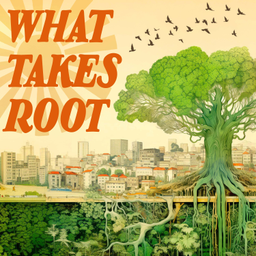
What Takes Root: Stories of Resistance and Reclamation
Claim This Podcastby Karen Given
Podcast Overview
<p><strong>What Takes Root: Stories of Resistance and Reclamation</strong> is a first-person podcast featuring changemakers from the Global South. From how Muslim girls learned to play soccer in India, to political music shaped by Kenya’s long history of resistance, to community radio reaching isolated Indigenous communities in Bolivia, these are intimate stories of people reclaiming power, voice, and possibility.</p><p>Longer series description </p><p>What happens when we stop talking — and start listening?</p><p><strong>What Takes Root: Stories of Resistance and Reclamation</strong> is a first-person storytelling series built around that question. Across nine episodes, changemakers from India, Africa and Latin America share stories of resistance, reclamation, and renewal – in their own words.</p><p>Social justice leader Sabah Kahn, a formerly “puny” kid who had no interest in sports, explains how she helped launch a soccer program for Muslim girls in India. </p><p>Musician and historian Mwongela Kamencu, a.k.a. Mongela, traces Kenya’s long tradition of resistance and reminds us that the people will always rise. </p><p>And Isapi Rua tells the story of how listening became an act of resistance, and how sound, memory, and movement came together in a traveling radio project for isolated Guarani communities in Bolivia. </p><p>These stories, and more, this season on What Takes Root.</p>
Language
🇺🇲
Publishing Since
2/9/2026
Reach the team behind What Takes Root: Stories of Resistance and Reclamation
Verified contact details for this show aren't on file yet — sign up to get notified when they land.
Recent Episodes
April 7, 2026
How a Colombian Biologist Reimagines Care and Resistance in the Forest
<p>Short description: In this episode of What Takes Root, Colombian biologist and community advocate María Clara Botero Zapata shares how growing up in a campesino family surrounded by mountains and forests shaped her understanding of life, care, and resistance.</p><p>She reflects on her family’s decision to create a natural reserve, restoring land that had already been deeply impacted by deforestation and environmental degradation, and how that process transformed not only the ecosystem, but their relationship with their community. Through her studies in biology, María Clara began to question traditional, often colonizing approaches to science, and instead turned toward a more relational and community centered way of knowing.</p><p>At the heart of her story is a deep recognition of care work, especially the invisible labor carried by women and girls who sustain life even in the face of environmental crisis. María Clara invites us to rethink what it means to protect nature, reminding us that we cannot protect what we do not know, and that sometimes, our greatest teachers are the trees, the soil, and the communities who live in close relationship with them.</p><p>For more information about ORA, visit<a target="_blank" rel="noopener noreferrer nofollow" href="https://orawards.org/">https://</a><a target="_blank" rel="noopener noreferrer nofollow" href="http://orawards.org/">orawards.org/</a></p>
April 7, 2026
Cómo una bióloga colombiana reimagina el cuidado y la resistencia desde el bosque
<p>En este episodio de Echando Raíces, la bióloga y gestora comunitaria colombiana María Clara Botero Zapata comparte cómo crecer en una familia campesina, rodeada de montañas y bosques, dio forma a su manera de entender la vida, el cuidado y la resistencia.</p><p>Reflexiona sobre la decisión de su familia de crear una reserva natural, restaurando un territorio que ya había sido profundamente afectado por la deforestación y la degradación ambiental, y cómo ese proceso transformó no solo el ecosistema, sino también su relación con la comunidad. A través de sus estudios en biología, María Clara comenzó a cuestionar los enfoques tradicionales, muchas veces colonizantes, de la ciencia, y a acercarse a formas de conocimiento más relacionales y centradas en la comunidad.</p><p>En el corazón de su historia está el reconocimiento del trabajo de cuidado, especialmente el trabajo invisible que sostienen las mujeres y las niñas incluso en medio de crisis ambientales. María Clara nos invita a repensar lo que significa proteger la naturaleza, recordándonos que no podemos proteger lo que no conocemos y que, a veces, nuestras mayores maestras son los árboles, la tierra y las comunidades que viven en relación cercana con ellos.</p><p>Para más información sobre ORA, visita<a target="_blank" rel="noopener noreferrer nofollow" href="https://orawards.org/">https://</a><a target="_blank" rel="noopener noreferrer nofollow" href="http://orawards.org/">orawards.org/</a></p>
March 31, 2026
She Ran Away to Learn—And Came Back to Change Everything
<p>Growing up in an Adivasi village in Jharkhand, Jacinta Kerketta never imagined she would become a voice for her people. In this episode of What Takes Root, Jacinta recalls how she fled violence in her home and journeyed to the unfamiliar and often hostile world of the city in search of an education. Moving between these two realities, she’s forced to confront caste, gender violence, and the erasure of her people’s stories.</p><p>Jacinta finds her purpose in writing, where she can challenge harmful narratives about Adivasi communities and carve out space for her own voice. But her work doesn’t stop there—what starts as one young woman’s determination to get an education grows into something much larger.</p><p>Returning to the villages that shaped her, Jacinta begins organizing with girls like her—creating spaces to write, speak, and imagine new futures.</p>
13 total episodes available
Deep-dive analytics for What Takes Root: Stories of Resistance and Reclamation
Frequently asked questions
Have a different question and can't find the answer you're looking for? Reach out to our support team by sending us an email and we'll get back to you as soon as we can.
- What is What Takes Root: Stories of Resistance and Reclamation?
<p><strong>What Takes Root: Stories of Resistance and Reclamation</strong> is a first-person podcast featuring changemakers from the Global South. From how Muslim girls learned to play soccer in India, to political music shaped by Kenya’s long history of resistance, to community radio reaching isolated Indigenous communities in Bolivia, these are intimate stories of people reclaiming power, voice, and possibility.</p><p>Longer series description </p><p>What happens when we stop talking — and start listening?</p><p><strong>What Takes Root: Stories of Resistance and Reclamation</strong> is a first-person storytelling series built around that question. Across nine episodes, changemakers from India, Africa and Latin America share stories of resistance, reclamation, and renewal – in their own words.</p><p>Social justice leader Sabah Kahn, a formerly “puny” kid who had no interest in sports, explains how she helped launch a soccer program for Muslim girls in India. </p><p>Musician and historian Mwongela Kamencu, a.k.a. Mongela, traces Kenya’s long tradition of resistance and reminds us that the people will always rise. </p><p>And Isapi Rua tells the story of how listening became an act of resistance, and how sound, memory, and movement came together in a traveling radio project for isolated Guarani communities in Bolivia. </p><p>These stories, and more, this season on What Takes Root.</p> - How often does this podcast release new episodes?
This podcast updates daily.
- Where can I listen to this podcast?
This podcast is available on 4 platforms including Apple Podcasts, Spotify, and more. You can also use the RSS feed directly.
- Does this podcast accept guests?
Yes, this podcast regularly features guests.
Legal Disclaimer
Pod Engine is not affiliated with, endorsed by, or officially connected with any of the podcasts displayed on this platform. We operate independently as a podcast discovery and analytics service.
All podcast artwork, thumbnails, and content displayed on this page are the property of their respective owners and are protected by applicable copyright laws. This includes, but is not limited to, podcast cover art, episode artwork, show descriptions, episode titles, transcripts, audio snippets, and any other content originating from the podcast creators or their licensors.
We display this content under fair use principles and/or implied license for the purpose of podcast discovery, information, and commentary. We make no claim of ownership over any podcast content, artwork, or related materials shown on this platform. All trademarks, service marks, and trade names are the property of their respective owners.
While we strive to ensure all content usage is properly authorized, if you are a rights holder and believe your content is being used inappropriately or without proper authorization, please contact us immediately at hey@podengine.ai for prompt review and appropriate action, which may include content removal or proper attribution.
By accessing and using this platform, you acknowledge and agree to respect all applicable copyright laws and intellectual property rights of content owners. Any unauthorized reproduction, distribution, or commercial use of the content displayed on this platform is strictly prohibited.