Continuance of the human future is in doubt. The unfortunate implications of past actions seem omnipresent, perhaps irreversible. Currently titled <i>climate change</i> it begins to appear as fatal as widespread radiation from weak leadership initiating a nuclear war in defending their masculinity. The nuclear option will not be discussed but the misguided thinking of the masculine aspect as seen in the shortcomings of the first three letters of management relative to misguided industrialization will be. Much technology that was to enhance life has been redirected to its destruction. What to do? Business as usual as seen in headquarters, labs stores and classrooms is now seen detrimental to life. In part this comes from ignoring the half-empty glass and seeing it as physically half-full and spiritually about to brim over. This is the religion known as negative entropy. It is used in management of industrial processes and products, as well as their marketing. Negentropy cannot exist in the universe, yet we mention its existence in raising funds for development and marketing of much. Humans ignore the necessary deterioration of energy, materials and lives during time. They prefer the idea of immortality and love its marketing. The immortal is often sold via the immoral. We are beginning to note that summers are becoming intolerably hotter each year. The remainder of the year offers devastating storms that injure the contexts life depends upon. Since 1975 David Hawk has equated the passion to have negative entropy to climate change and explains it as a Faustian Bargain. First depicted in 1550, the man Faust was talked into selling his long-term soul for the short-term having of knowledge and the holding of a beautiful woman. Hawk noted this as a young boy on an Iowa farm with nature seen as the enemy of industrial agriculture. Then, as a soldier in Vietnam, he experienced continuation of such in men seeking control over nature, and other men, via their destruction. Later, while working in several industries, he noted that the quest for inventing negative entropy destroyed the context essential to life.<br /><b></b><br /><b>David Hawk</b> earned an engineering degree at Iowa State University and was given the “scariest student” award at graduation. He went back to Germany to work on the 1972 Munich Olympic Competition Design with a man he greatly admired. Upon the team winning Hawk was offered a job in London to “redevelop” its historic Piccadilly Circus. He then opposed it upon discovering the work was to move humans underground, into dark walkways, so the cars could drive through the Circus more quickly in the bright sunlight. Hawk saw this as an ethical problem like Plato’s Allegory of the Cave and so he initiated a public exhibition for ordinary citizens. The project was killed, and Hawk was fired. He then completed master’s degrees in architecture and in city Planning at the University of Pennsylvania. Via his planning thesis he was invited into the first class of a new Systems Sciences Program at the Wharton School. His dissertation idea was rejected in the US thus he moved it to the Stockholm School of Economics. There he created a major study of how environmental deterioration results from business as usual. CEOs of 20 major international firms and leaders of 6 governments asked to join his project. It projected climate change consequences for continuance of business as usual. Many outside the study called climate change a hoax, including the then head of US EPA and the Dean of Wharton in 1979. In 2024 it is clearly not a hoax.<br /><br />Only on BBTV!
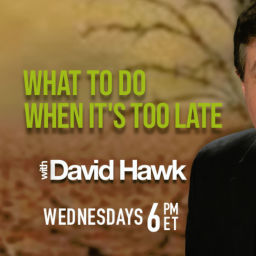
What To Do When It's Too Late
Claim This Podcastby Bold Brave TV
Podcast Authority
Beta
Podcast Overview
Continuance of the human future is in doubt. The unfortunate implications of past actions seem omnipresent, perhaps irreversible. Currently titled <i>climate change</i> it begins to appear as fatal as widespread radiation from weak leadership initiating a nuclear war in defending their masculinity. The nuclear option will not be discussed but the misguided thinking of the masculine aspect as seen in the shortcomings of the first three letters of management relative to misguided industrialization will be. Much technology that was to enhance life has been redirected to its destruction. What to do? Business as usual as seen in headquarters, labs stores and classrooms is now seen detrimental to life. In part this comes from ignoring the half-empty glass and seeing it as physically half-full and spiritually about to brim over. This is the religion known as negative entropy. It is used in management of industrial processes and products, as well as their marketing. Negentropy cannot exist in the universe, yet we mention its existence in raising funds for development and marketing of much. Humans ignore the necessary deterioration of energy, materials and lives during time. They prefer the idea of immortality and love its marketing. The immortal is often sold via the immoral. We are beginning to note that summers are becoming intolerably hotter each year. The remainder of the year offers devastating storms that injure the contexts life depends upon. Since 1975 David Hawk has equated the passion to have negative entropy to climate change and explains it as a Faustian Bargain. First depicted in 1550, the man Faust was talked into selling his long-term soul for the short-term having of knowledge and the holding of a beautiful woman. Hawk noted this as a young boy on an Iowa farm with nature seen as the enemy of industrial agriculture. Then, as a soldier in Vietnam, he experienced continuation of such in men seeking control over nature, and other men, via their destruction. Later, while working in several industries, he noted that the quest for inventing negative entropy destroyed the context essential to life.<br /><b></b><br /><b>David Hawk</b> earned an engineering degree at Iowa State University and was given the “scariest student” award at graduation. He went back to Germany to work on the 1972 Munich Olympic Competition Design with a man he greatly admired. Upon the team winning Hawk was offered a job in London to “redevelop” its historic Piccadilly Circus. He then opposed it upon discovering the work was to move humans underground, into dark walkways, so the cars could drive through the Circus more quickly in the bright sunlight. Hawk saw this as an ethical problem like Plato’s Allegory of the Cave and so he initiated a public exhibition for ordinary citizens. The project was killed, and Hawk was fired. He then completed master’s degrees in architecture and in city Planning at the University of Pennsylvania. Via his planning thesis he was invited into the first class of a new Systems Sciences Program at the Wharton School. His dissertation idea was rejected in the US thus he moved it to the Stockholm School of Economics. There he created a major study of how environmental deterioration results from business as usual. CEOs of 20 major international firms and leaders of 6 governments asked to join his project. It projected climate change consequences for continuance of business as usual. Many outside the study called climate change a hoax, including the then head of US EPA and the Dean of Wharton in 1979. In 2024 it is clearly not a hoax.<br /><br />Only on BBTV!
Language
🇺🇲
Publishing Since
1/17/2024
Unlock The Full Podcast Authority Score Report
See how your podcast performs across key metrics
Podcast Authority
BetaRecommendations available
Unlock the full report to see detailed tips
Recommendations available
Unlock the full report to see detailed tips
Unlock comprehensive insights including:
- • YouTube presence analysis
- • Social media reach metrics
- • RSS compliance scoring
- • Podcast 2.0 features
- • Technical standards
Detailed Analytics
- Complete breakdown of all 19 authority metrics
- Personalized recommendations for each metric
- Industry benchmarks and comparisons
- Technical RSS feed analysis and compliance scoring
Growth Strategies
- Step-by-step action plans for improvement
- Quick wins to boost your score immediately
- Pro tips from successful podcasters
See how your show performs across every key metric
High authority scores make your podcast more attractive to industry leaders and influencers who want to appear on credible shows.
Sponsors look for podcasts with proven authority and engagement. Your score demonstrates your podcast's value to potential partners.
Understanding your strengths and weaknesses helps you make data-driven decisions to expand your listener base effectively.
1 verified contact email on file for What To Do When It's Too Late
Pitch yourself as a guest, propose sponsorships, or reach out directly to the host.
Recent Episodes
May 7, 2025
What to do When It's Too Late - 05/07/2025
Only on BBTV!
April 30, 2025
What to do When It's too Late - 04/30/25
Only on BBTV!
April 23, 2025
What to do When It's too Late - 04/23/25
Only on BBTV!
58 total episodes available
Deep-dive analytics for What To Do When It's Too Late
Frequently asked questions
Have a different question and can't find the answer you're looking for? Reach out to our support team by sending us an email and we'll get back to you as soon as we can.
- What is What To Do When It's Too Late?
- How often does this podcast release new episodes?
This podcast updates daily.
- Where can I listen to this podcast?
This podcast is available on 8 platforms including Apple Podcasts, Spotify, and more. You can also use the RSS feed directly.
- Does this podcast accept guests?
Yes, this podcast regularly features guests.
Legal Disclaimer
Pod Engine is not affiliated with, endorsed by, or officially connected with any of the podcasts displayed on this platform. We operate independently as a podcast discovery and analytics service.
All podcast artwork, thumbnails, and content displayed on this page are the property of their respective owners and are protected by applicable copyright laws. This includes, but is not limited to, podcast cover art, episode artwork, show descriptions, episode titles, transcripts, audio snippets, and any other content originating from the podcast creators or their licensors.
We display this content under fair use principles and/or implied license for the purpose of podcast discovery, information, and commentary. We make no claim of ownership over any podcast content, artwork, or related materials shown on this platform. All trademarks, service marks, and trade names are the property of their respective owners.
While we strive to ensure all content usage is properly authorized, if you are a rights holder and believe your content is being used inappropriately or without proper authorization, please contact us immediately at hey@podengine.ai for prompt review and appropriate action, which may include content removal or proper attribution.
By accessing and using this platform, you acknowledge and agree to respect all applicable copyright laws and intellectual property rights of content owners. Any unauthorized reproduction, distribution, or commercial use of the content displayed on this platform is strictly prohibited.