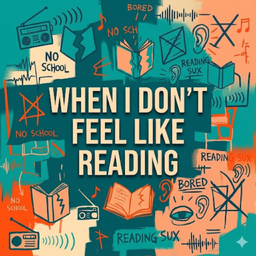
When I don’t feel like reading, but still want to understand a book.
This podcast is a place where talking through books in moments when reading feels difficult, tiring, or simply impossible.
Each episode is a short, focused walkthrough of one book — not a full reading, but a way to grasp the main ideas and thoughts using listening instead of pages.
If you don’t always have the time or energy to read, but don’t want to miss out on what books have to offer, this podcast is for you.
How to Have Impossible Conversations is a practical guide on communicating effectively with people who hold radically different beliefs in our polarized era. The authors treat conversation as a masterable skill, offering progressive techniques to navigate deep moral and political divides. Core strategies involve treating conversation partners as collaborators rather than adversaries, prioritizing active listening, and avoiding the urge to deliver facts or messages. Through advanced tools like introducing scales, seeking disconfirmation, and exploring moral epistemology, readers learn to gently intervene in others' cognitions, instill doubt, and foster genuine mutual understanding
12 Mar 2026
Supercommunicators
Charles Duhigg's Supercommunicators explores the science of human connection, revealing that successful communication hinges on identifying and aligning with others' mindsets. Duhigg argues that every discussion involves three distinct layers: the practical "What's This Really About?", the emotional "How Do We Feel?", and the identity-driven "Who Are We?". By applying the "matching principle"—recognizing which conversation is occurring and matching your partner's tone—communicators can achieve neural entrainment. Anyone can learn to become a supercommunicator by asking deep questions, reciprocating vulnerability, and proving they are listening, thereby bridging divides and building profound relationships.
20 Feb 2026
Outlive
Outlive advocates for "Medicine 3.0," a proactive approach shifting from treating advanced diseases to preventing the "Four Horsemen": heart disease, cancer, neurodegeneration, and metabolic dysfunction. It outlines actionable tactics across exercise, nutritional biochemistry, sleep, and emotional health to optimize both lifespan and healthspan.
20 Feb 2026
The E-Myth Revisited
Michael E. Gerber’s The E-Myth Revisited dispels the "Entrepreneurial Myth"—the false belief that understanding technical work qualifies someone to run a business. Gerber argues that every owner embodies three conflicting personalities: the visionary Entrepreneur, the organizing Manager, and the executing Technician. Many small businesses fail because the Technician takes over, turning the business into an exhausting job. To achieve true freedom, owners must work on their business, not just in it. By adopting a "Franchise Prototype" mindset and utilizing a systematic process of Innovation, Quantification, and Orchestration, entrepreneurs can build a predictable, systems-driven enterprise that thrives independently.
27 Jan 2026
Focus
Daniel Goleman reveals attention as the "hidden driver of excellence" necessary for a fulfilling life.
He outlines three critical modes of focus: Inner (self-awareness), Other (empathy), and Outer (systems awareness). While modern digital distractions deplete our concentration, Goleman argues that attention functions like a muscle that can be strengthened through smart practice.
High-performers and leaders must cultivate a balance of this "triple focus" to navigate complex environments and achieve long-term success.
20 Jan 2026
The Whole-Brain Child
The book looks at children’s behavior through the lens of brain development, asking why emotional outbursts and impulsive reactions are often not acts of defiance, but signs of a brain still learning how to work together.
Walking through a few ideas from the book that focus on emotion, integration, and what it means to support a developing mind rather than simply correct behavior.
It’s a reflective walkthrough of a book that invites adults to slow down, notice what’s happening beneath the surface, and respond with more understanding.
15 Jan 2026
Brain Rules for Baby
In this episode, we dive into the science-based insights of developmental molecular biologist John Medina and his bestselling book, Brain Rules for Baby: How to Raise a Smart and Happy Child from Zero to Five.
Rather than offering "Ivory Tower" theories, Medina addresses the six practical questions every parent asks about pregnancy, marriage, intelligence, happiness, morality, and sleep.
9 Jan 2026
Thinking, Fast and Slow
This episode is about Thinking, Fast and Slow by Daniel Kahneman.
I go through the book’s ideas on intuition and deliberation, and the two modes of thinking that quietly shape our judgments and decisions.
Rather than aiming for a full overview, this episode lingers on a few concepts that influence everyday choices — often without us realizing it.
6 Jan 2026
Antifragile: Things That Gain from Disorder
This episode is about Antifragile: Things That Gain from Disorder by Nassim Nicholas Taleb.
I walk through the book’s ideas on fragility, uncertainty, and why some systems don’t just survive chaos, but actually improve because of it.
Rather than trying to cover everything, this episode focuses on a few concepts that reshaped how I think about risk, control, and long-term resilience.
It’s a reflective walkthrough of a book about disorder — and what it reveals about how we build, decide, and adapt.
6 Jan 2026
Mistakes Were Made (But Not by Me)
This episode is about Mistakes Were Made (But Not by Me).
Talking through the book’s ideas around self-justification, blame, and why it’s so difficult for people to admit they’re wrong — even to themselves.
Rather than a full reading, this episode focuses on the parts that stood out to me and the questions they raised.
It’s a quiet walkthrough of a book about how we explain ourselves, and what that costs us.
Contact When I Don’t Feel Like Reading
Guest appearances
Does not typically book guests
Based on episode analysis; this does not confirm that the show is currently accepting guests.
Host of When I Don’t Feel Like Reading?
Claim your podcast to manage its listing and keep your show details accurate.
Pod Engine is an independent podcast discovery and analytics service and is not affiliated with or endorsed by this podcast. Artwork and show content belong to their owners. Full legal notice.
Explore this show Podcast research with Pod Engine