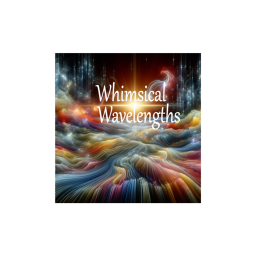
Whimsical Wavelengths
Claim This Podcastby Volcanologist & Geophysicist: Jeffrey Mark Zurek, PhD, PGeo | Science Communicator
Podcast Authority
Beta
Podcast Overview
<p><strong>Winner of the 2026 Science Podcast of the Year (American Writing Awards) and the 2026 PopCon Podcast Award for Science and Technology</strong>, Whimsical Wavelengths is a science podcast hosted by volcanologist Dr. Jeffrey Zurek dedicated to the "how" and "why" of discovery.</p><p>Eschewing the trend of bite-sized science, the show offers a deep, honest look at how science actually works, focusing on messy data, imperfect models, and the human personalities behind the research. From geophysics and planetary discovery to the history of scientific paradoxes, the focus is always on the process: how evidence is gathered, how ideas evolve over centuries, and why uncertainty is a fundamental feature of science rather than a flaw.</p><p></p><p>Because science is conducted by people, Whimsical Wavelengths does not ignore the human element. I weave together mathematical rigor and historical context with reflections on the realities of building a scientific career and what it truly means to belong in STEM. Whether it is a solo narrative exploration or a conversation with a working researcher, the goal is clarity without oversimplification.</p><p></p><p>The tone is thoughtful and curious, anchored by real-world field experience and the occasional groan-worthy dad joke, because while the science is serious, the pursuit of it is a human adventure. This is for listeners who want to understand the machinery of the natural world and the people who spend their lives trying to take it apart.</p><p></p><p>New episodes are released every two weeks.</p><p></p><p>Research the host and the show:</p><ul><li><p><a target="_blank" rel="noopener" class="ng-star-inserted" href="https://www.sfu.ca/volcanology/people/former_members/former_scholars/zurek.html"><strong>SFU Volcanology Lab</strong></a></p></li><li><p><a target="_blank" rel="noopener" class="ng-star-inserted" href="https://americanwritingawards.com/podcast-of-the-year"><strong>2026 Science Podcast of the Year</strong></a></p></li><li><p><a target="_blank" rel="noopener noreferrer nofollow" href="http://WhimsicalWavelengths.com"><strong>WhimsicalWavelengths.com</strong></a></p></li><li><p><strong>Linkedin; </strong><a target="_blank" rel="noopener noreferrer nofollow" href="https://www.linkedin.com/in/jeffrey-zurek/"><strong>Host Dr Jeffrey Zurek, </strong></a><a target="_blank" rel="noopener noreferrer nofollow" href="https://www.linkedin.com/company/whimsical-wavelengths"><strong>The Show Whimsical Wavelengths</strong></a></p></li></ul>
Language
🇺🇲
Publishing Since
9/16/2024
Unlock The Full Podcast Authority Score Report
See how your podcast performs across key metrics
Podcast Authority
BetaRecommendations available
Unlock the full report to see detailed tips
Recommendations available
Unlock the full report to see detailed tips
Unlock comprehensive insights including:
- • YouTube presence analysis
- • Social media reach metrics
- • RSS compliance scoring
- • Podcast 2.0 features
- • Technical standards
Detailed Analytics
- Complete breakdown of all 19 authority metrics
- Personalized recommendations for each metric
- Industry benchmarks and comparisons
- Technical RSS feed analysis and compliance scoring
Growth Strategies
- Step-by-step action plans for improvement
- Quick wins to boost your score immediately
- Pro tips from successful podcasters
See how your show performs across every key metric
High authority scores make your podcast more attractive to industry leaders and influencers who want to appear on credible shows.
Sponsors look for podcasts with proven authority and engagement. Your score demonstrates your podcast's value to potential partners.
Understanding your strengths and weaknesses helps you make data-driven decisions to expand your listener base effectively.
2 verified contact emails on file for Whimsical Wavelengths
Pitch yourself as a guest, propose sponsorships, or reach out directly to the host.
Recent Episodes
July 20, 2026
Under 0.45 Billion Tons: The Geochemical Truth About Volcanoes and Climate Change
<p>It is a flat-out scientific fact: humans emit way more carbon dioxide than volcanoes. It’s not even close. But in this season two solo finale, I don't want you to just take my word for it. Instead, I am taking you down the rabbit hole of how we actually know what we know. This isn't about magical guesses or black-box science; it’s a painstaking process of cross-referencing bubbles, isotopes, and trade data to prove a reality that completely dismantles one of the internet's most stubborn climate myths.</p><p>I discuss the volcanology and geochemistry that detail how we track magmatic gases using melt inclusions in primitive olivine crystals as microscopic time capsules. I walk through how we use Raman spectroscopy lasers to solve the "bubble problem" in melt inclusions, and how we use the geochemical buddy system, pairing volatile gases with non-volatile elements like niobium or barium, to calculate exact magmatic outputs before an eruption even starts. In this episode I lay out exactly how we capture nature's messy data.</p><p>Then, I flip the script to look at human emissions. We don't use scientific proxies or fuzzy estimates here; we use legally binding international trade data, customs ledgers, and national energy taxation registers. By comparing our maximum global volcanic calculations against the precise reporting of modern commerce and the chemistry of everyday cement production, the math reveals the bottom line. Volcanoes emit roughly 0.45 billion tons of CO2 per year, which accounts for just 1.2% of what human activity produces. Remember season three kicks off on September 14th.</p><p>Chapters</p><p>(00:00) Intro: Reflections on Season 2</p><p>(02:55) Debunking Myth: Volcanoes vs. Human Emissions</p><p>(03:45) Dr. Terry Gerlach and 2011 Baseline Paper</p><p>(04:20) The Big Three Magmatic Volatiles Explained</p><p>(05:55) Magma Chemistry Beyond the Tap Water Analogy</p><p>(07:15) Melt Inclusions & Volatile Resolution Barrier</p><p>(08:50) Sulfur Solubility vs. Deep Carbon Degassing</p><p>(10:45) The Melt Inclusion Vapor Bubble Problem</p><p>(12:40) The Geochemical Buddy System: Niobium Proxies</p><p>(14:35) Subduction Volatiles & Oxygen Fugacity</p><p>(17:15) Barium vs. Lanthanum Slab Meter Calibration</p><p>(19:15) Plume Traverses & Ultraviolet Spectrometer</p><p>(20:00) Giggenbach Bottles & Hydrothermal Systems</p><p>(24:40) Global Magma Budgets: From Ridges to Arcs</p><p>(31:40) Calculating the Total Volcanic CO2 Footprint</p><p>(35:00) Trade Ledgers, Customs Data, and IEA Register</p><p>(36:30) The 8% Problem: Calcining Limestone into Cement</p><p>(37:50) The Final Tally: Why Volcanoes Are Only 1.2%</p><p>(40:15) Conclusion: and Summer Encores </p><p><strong>Links:</strong></p><p><a target="_blank" rel="nofollow noopener" href="https://volcanoes.usgs.gov/vsc/file_mngr/file-154/Gerlach-2011-EOS_AGU.pdf"><strong>USGS Scientist Terry Gerlach's 2011 Paper</strong></a></p><p><strong>Web:</strong> <a target="_blank" rel="noopener noreferrer nofollow" href="http://WhimsicalWavelengths.com">WhimsicalWavelengths.com</a></p><p><strong>Support:</strong> <a target="_blank" rel="nofollow noopener" href="https://www.patreon.com/WhimsicalWavelengths">Pateron</a></p><p><strong>Socials:</strong> <a target="_blank" rel="nofollow noopener" href="https://bsky.app/profile/whimsicallambda.bsky.social">Bluesky </a>| <a target="_blank" rel="nofollow noopener" href="https://www.instagram.com/whimsical.wavelengths/">Instagram </a>| <a target="_blank" rel="nofollow noopener" href="https://www.facebook.com/WhimsicalWavelengths">Facebook</a></p><p><strong>Whimsical Wavelengths:</strong> Deep-dive conversations where a working scientist unpacks how we know what we know, one paper, one idea, or whimsical detour at a time. Hosted by <strong>Dr. Jeffrey Zurek (P.Geo)</strong>.</p>
July 6, 2026
Sequoias of the Deep: White Sturgeon, Polyploidy, and Dammed Rivers
<p>Time to turn our focus to the mighty river systems of the Pacific Northwest to examine a mysterious titan of the deep—the white sturgeon! <strong>BTW </strong>there is only one episode left before the summer break and encore presentations. </p><p>The guest for this episode is Dr. Stuart Willis, a fisheries geneticist with the <a target="_blank" rel="noopener noreferrer nofollow" href="https://critfc.org/fish-and-watersheds/fishery-science/hagerman-genetics-laboratory/">Hagerman Genetics Lab</a>. Together, we trace the evolutionary history of an apex scavenger, map how massive hydroelectric developments alter river ecology, and unpack the realities of polyploid genomics. From culturally vital First Nations fisheries to the modern engineering challenges of conservation aquaculture, we explore what it takes to protect a species that measures its life span in centuries.</p><p>Dr. Willis discusses the realities of mapping genomes, explaining how his past voyages into the Amazon prepared him for the ambiguous data limits of tracking prehistoric chromosomes. We confront the problems managing fragile river basins sectioned off by dams, and mapping hazards like river temperature spikes, sediment loss, and invasive species. The result is a look at how genetic tracking tools inform state policy decisions, highlighting the critical ecological reliance Sturgeon have on marine-derived nutrients brought by dwindling salmon runs.</p><p><strong>Topics Covered </strong></p><p><strong>The Hydroelectric Stroke</strong>: How run-of-river dams slow down river current</p><p><strong>Ploidy Paradoxes</strong>: Demystifying chromosomes from diploidy to octoploidy. Why female sturgeon dictate genetic sex markers</p><p><strong>Hopeful Monsters</strong>: How extreme environments exploit isolated niches. Nutrient Lifelines: Why freshwater health requires marine salmon runs</p><p><strong>Chapters </strong></p><p>(00:00) Mysterious Sturgeon of the Fraser</p><p>(04:00) STEM Career Paths and Amazon Field Work</p><p>(07:50) Two Mighty Rivers: Fraser vs. Columbia</p><p>(10:30) Run-of-River Dams and Ecological Strokes</p><p>(11:50) Anadromous Lifecycles vs. Catadromous Eels</p><p>(13:30) Prehistoric Features and Electroreception Tech</p><p>(16:00) Periodic Life History and Delayed Maturity</p><p>(20:45) Wrapping Your Head Around Cell Ploidy</p><p>(24:00) Autopolyploidization and Evolutionary Magic</p><p>(27:50) Rediploidization and Genomes Simplifying Over Time</p><p>(32:25) Hopeful Monsters in Isolated Island Niches</p><p>(38:15) Tortoiseshell Cats and ZW Sex Determination</p><p>(42:00) Hatchery Pentaploids and Spontaneous Mutants</p><p>(44:40) Null Alleles & Failed Diagnostic Assays</p><p>(47:50) Structural Variation and Conservation Tools</p><p>(52:20) Declining Salmon Runs and Marine Nutrients</p><p>(56:30) Call Outs, Sequoias of the Deep</p><p><strong>Links:</strong></p><p><a target="_blank" rel="noopener noreferrer nofollow" href="https://www.biorxiv.org/content/10.1101/2025.11.14.688503v1"><strong>Paper</strong></a></p><p><strong>Web:</strong> <a target="_blank" rel="noopener noreferrer nofollow" href="http://WhimsicalWavelengths.com">WhimsicalWavelengths.com</a></p><p><strong>Support:</strong> <a target="_blank" rel="nofollow noopener" href="https://www.patreon.com/WhimsicalWavelengths">Pateron</a></p><p><strong>Socials:</strong> <a target="_blank" rel="nofollow noopener" href="https://bsky.app/profile/whimsicallambda.bsky.social">Bluesky </a>| <a target="_blank" rel="nofollow noopener" href="https://www.instagram.com/whimsical.wavelengths/">Instagram </a>| <a target="_blank" rel="nofollow noopener" href="https://www.facebook.com/WhimsicalWavelengths">Facebook</a></p><p><strong>Whimsical Wavelengths:</strong> Deep-dive conversations where a working scientist unpacks how we know what we know, one paper, one idea, or whimsical detour at a time. Hosted by <strong>Dr. Jeffrey Zurek (P.Geo)</strong>.</p>
June 22, 2026
The Endless Frontier: How Politics and Policy Shape Modern Science
<p>The countdown to the end of season 2 continues. With only two new episodes left before our summer encore presentations, we are turning the lens back on ourselves to examine the modern scientific apparatus itself, the institutions, the funding models, and the historical policy shifts that built our world.</p><p>Joining the conversation are Dr. Ina Ganguli, Professor of Economics at the University of Massachusetts Amherst specializing in labor economics, and Dr. Chris Fisher, chemical biologist and founder of Multivalent Communications. Together, we map out how wartime mobilization birthed a golden age of foundational research, explore the delicate social contract between researchers and the state.</p><p>We get into the "Sausage-Making" of research, tracking the friction scientists face when transitioning from academia to industry. Dr. Ganguly shares field evidence from former Soviet republics, illustrating how quickly world-class scientific communities can be demolished by sudden geopolitical shocks. Ultimately, this episode serves as an evaluation of the systemic hazards facing institutional autonomy, historical talent immigration pipelines, and the socio-economic determinants that dictate who gets to participate in science.</p><p><strong>Topics Covered </strong></p><p>The Big Science Paradigm: How World War II shifted research from isolated inventors to state-funded national security</p><p>The Bush-Kilgore Debate: The post-war ideological battle between elite scientific autonomy and public geographic equity</p><p>The Commercialization Pivot: Assessing how the 1980 Bayh-Dole Act transformed foundational public goods into market drivers</p><p>The Talent Fragility Vector: Why progress remains heavily dependent on immigration pathways and reliable state fellowship pipelines</p><p><strong>Chapters </strong></p><p>(00:00) Science Policy and Labor Economics</p><p>(03:40) Academic Towers vs Industry Career Paths</p><p>(07:50) Soviet Science and Post-War History</p><p>(13:30) Pre-War History and Gentleman Scientists</p><p>(18:45) NSF Blueprint and Bush-Kilgore Debate</p><p>(23:50) Immigrant Talents and German Emigres</p><p>(29:10) Basic Science Economics and Public Goods</p><p>(34:30) National Science Foundation Foundations</p><p>(38:15) Public Trust and Federal Grant Returns</p><p>(44:00) Post-War Contracts & Institutional Trust</p><p>(51:00) 1980 Bayh-Dole Act and Corporate R&D</p><p>(55:20) High-Risk Basic Research Funding Decreases</p><p>(01:00:45) US Science Policy and Peer Review Freezes</p><p>(01:04:15) Government Scientist Career Paths</p><p>(01:07:15) Clean Air Regulation and Evidence Limits</p><p>(01:14:20) Science Humor and Franklin Pun Closures</p><p><strong>Links & Resources</strong></p><p><a target="_blank" rel="noopener noreferrer nofollow" href="https://nsf-gov-resources.nsf.gov/2023-04/EndlessFrontier75th_w.pdf">Book: The Endless Frontier</a></p><p><strong>Support:</strong> <a target="_blank" rel="noopener nofollow" class="ng-star-inserted" href="https://www.patreon.com/WhimsicalWavelengths">Pateron</a></p><p><strong>Socials:</strong> <a target="_blank" rel="noopener nofollow" class="ng-star-inserted" href="https://bsky.app/profile/whimsicallambda.bsky.social">Bluesky</a><a target="_blank" rel="noopener nofollow" href="https://bsky.app/profile/whimsicallambda.bsky.social"> </a>| <a target="_blank" rel="noopener nofollow" class="ng-star-inserted" href="https://www.instagram.com/whimsical.wavelengths/">Instagram</a><a target="_blank" rel="noopener nofollow" href="https://www.instagram.com/whimsical.wavelengths/"> </a>| <a target="_blank" rel="noopener nofollow" class="ng-star-inserted" href="https://www.facebook.com/WhimsicalWavelengths">Facebook</a></p><p><strong>Whimsical Wavelengths:</strong> Deep-dive conversations where a working scientist unpacks how we know what we know, one paper, one idea, or whimsical detour at a time. Hosted by <strong>Dr. Jeffrey Zurek (P.Geo)</strong></p>
49 total episodes available
Similar Podcasts
Discover related shows you might enjoy

Deep-dive analytics for Whimsical Wavelengths
Frequently asked questions
Have a different question and can't find the answer you're looking for? Reach out to our support team by sending us an email and we'll get back to you as soon as we can.
- What is Whimsical Wavelengths ?
<p><strong>Winner of the 2026 Science Podcast of the Year (American Writing Awards) and the 2026 PopCon Podcast Award for Science and Technology</strong>, Whimsical Wavelengths is a science podcast hosted by volcanologist Dr. Jeffrey Zurek dedicated to the "how" and "why" of discovery.</p><p>Eschewing the trend of bite-sized science, the show offers a deep, honest look at how science actually works, focusing on messy data, imperfect models, and the human personalities behind the research. From geophysics and planetary discovery to the history of scientific paradoxes, the focus is always on the process: how evidence is gathered, how ideas evolve over centuries, and why uncertainty is a fundamental feature of science rather than a flaw.</p><p></p><p>Because science is conducted by people, Whimsical Wavelengths does not ignore the human element. I weave together mathematical rigor and historical context with reflections on the realities of building a scientific career and what it truly means to belong in STEM. Whether it is a solo narrative exploration or a conversation with a working researcher, the goal is clarity without oversimplification.</p><p></p><p>The tone is thoughtful and curious, anchored by real-world field experience and the occasional groan-worthy dad joke, because while the science is serious, the pursuit of it is a human adventure. This is for listeners who want to understand the machinery of the natural world and the people who spend their lives trying to take it apart.</p><p></p><p>New episodes are released every two weeks.</p><p></p><p>Research the host and the show:</p><ul><li><p><a target="_blank" rel="noopener" class="ng-star-inserted" href="https://www.sfu.ca/volcanology/people/former_members/former_scholars/zurek.html"><strong>SFU Volcanology Lab</strong></a></p></li><li><p><a target="_blank" rel="noopener" class="ng-star-inserted" href="https://americanwritingawards.com/podcast-of-the-year"><strong>2026 Science Podcast of the Year</strong></a></p></li><li><p><a target="_blank" rel="noopener noreferrer nofollow" href="http://WhimsicalWavelengths.com"><strong>WhimsicalWavelengths.com</strong></a></p></li><li><p><strong>Linkedin; </strong><a target="_blank" rel="noopener noreferrer nofollow" href="https://www.linkedin.com/in/jeffrey-zurek/"><strong>Host Dr Jeffrey Zurek, </strong></a><a target="_blank" rel="noopener noreferrer nofollow" href="https://www.linkedin.com/company/whimsical-wavelengths"><strong>The Show Whimsical Wavelengths</strong></a></p></li></ul> - How often does this podcast release new episodes?
This podcast updates weekly.
- Where can I listen to this podcast?
This podcast is available on 6 platforms including Apple Podcasts, Spotify, and more. You can also use the RSS feed directly.
- Does this podcast accept guests?
No, this podcast does not typically feature guests.
Legal Disclaimer
Pod Engine is not affiliated with, endorsed by, or officially connected with any of the podcasts displayed on this platform. We operate independently as a podcast discovery and analytics service.
All podcast artwork, thumbnails, and content displayed on this page are the property of their respective owners and are protected by applicable copyright laws. This includes, but is not limited to, podcast cover art, episode artwork, show descriptions, episode titles, transcripts, audio snippets, and any other content originating from the podcast creators or their licensors.
We display this content under fair use principles and/or implied license for the purpose of podcast discovery, information, and commentary. We make no claim of ownership over any podcast content, artwork, or related materials shown on this platform. All trademarks, service marks, and trade names are the property of their respective owners.
While we strive to ensure all content usage is properly authorized, if you are a rights holder and believe your content is being used inappropriately or without proper authorization, please contact us immediately at hey@podengine.ai for prompt review and appropriate action, which may include content removal or proper attribution.
By accessing and using this platform, you acknowledge and agree to respect all applicable copyright laws and intellectual property rights of content owners. Any unauthorized reproduction, distribution, or commercial use of the content displayed on this platform is strictly prohibited.