
Why Meaning Matters is a weekly podcast series that explores how meaning shapes our experience and sets our expectations. When meanings shift, our economic, political and cultural landscape shifts along with it. <br />Cultural anthropologist, Ujwal Arkalgud and Motivbase President, Jason Partridge will tell you perception and meaning are the primary pressure points that shape and create the world we live in.
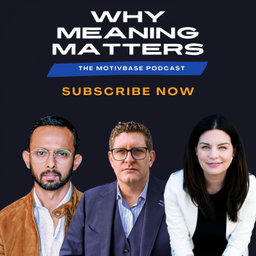
Why Meaning Matters
Claim This Podcastby Story Studio Network, Ujwal Arkalgud, Jason Partridge
25 episodes
Updated Daily
Accepts GuestsHas SponsorsLocation 🇺🇸
Podcast Overview
Why Meaning Matters is a weekly podcast series that explores how meaning shapes our experience and sets our expectations. When meanings shift, our economic, political and cultural landscape shifts along with it. <br />Cultural anthropologist, Ujwal Arkalgud and Motivbase President, Jason Partridge will tell you perception and meaning are the primary pressure points that shape and create the world we live in.
Language
🇺🇲
Publishing Since
9/6/2021
1 verified contact email on file for Why Meaning Matters
Pitch yourself as a guest, propose sponsorships, or reach out directly to the host.
Recent Episodes
April 1, 2022
The Future of Menstrual Health - The Meaning of Human Hygiene
We’re wrapping up season two with a conversation about the changing meaning of menstrual health and hygiene that demonstrates just how connected we all are. In today’s episode of Why Meaning Matters, Erin, Jason and Ujwal talk about what hair ‘down there’ and free bleeding mean to today’s consumers including toppling the patriarchy and environmental impact. Welcome to Why Meaning Matters. A Story Studio Network podcast hosted by Erin Trafford with MotivBase cultural anthropologist, Ujwal Arkalgud and MotivBase president, Jason Partridge. There's an aspect of menstrual health that is seeing a change right now and it's what women consider to be “basic hygiene”. That includes pubic hair and its associated notion to the lack of hygiene which bears no scientific reality. UJWAL [00:05:41] “It's a patriarchal expectation and it's certainly a problem in culture and it's being challenged.“ The media portrayal of being completely bare from 20 years ago is being challenged by women raising important questions and pointing out the purpose of pubic hair. JASON [00:07:34] “There is a purpose for why our bodies are a certain way. And when we mess with it, it messes us up. And that starts to basically be a pushback against the expectation. And that's where expectations start to change.“ Social media is playing a role in the discourse and facilitating circulation of the free-bleeding movement and greatly impacting the feminine hygiene space with new product lines. UJWAL [00:09:57] “They're amazing products now that are specifically built for, let's say, heavier flow days that are period underwear that are genuinely ten times more comfortable, and we can see consumers talking about this, but there's a symbolism around that, right. Which is that, the symbolism is, this thing isn't hiding the way it used to be and the other symbolism is that this is actually better for vaginal health. And so that makes a huge difference.” JASON [00:12:28] “And that in and of itself is basically creating different narratives and different tensions and challenges in what is the right thing to do.” Why Meaning Matters is a podcast produced by Story Studio Network and iContact Productions for MotivBase- Decoding implicit meaning behind what people talk about. If you want to contribute to the conversation, make sure you drop us an email at hello [at] storystudionetwork [dot] com. If you enjoyed this episode, be sure to SHARE it, RATE it, and SUBSCRIBE to the show!
March 24, 2022
The Future of Quality of Life - The Meaning of Cell Phones
Consumers are tethered to their smartphones everyday but what are the culture dynamics at play? In today’s episode of Why Meaning Matters, Erin, Jason and Ujwal put down their smartphones to talk about the myths and changing meaning of cell phones. Welcome to Why Meaning Matters. A Story Studio Network podcast hosted by Erin Trafford with MotivBase cultural anthropologist, Ujwal Arkalgud and MotivBase president, Jason Partridge. While MotivBase is studying the meanings around cell phones some would say, ‘What is there to analyze? It seems like everyone has one.’ UJWAL [00:02:13] “I think that's the whole point about studying meaning. The unsexy topics become sexy when you examine what they mean because there's always something that surprises us.” Health meanings with respect to cell phones is one of those surprises. Consumers have all the health apps on their smartphones but, in contrast, these phones have been cause for unhealthy behaviors as well. UJWAL [00:03:15] “There's been a lot of lobbying on this. But for the first time we're seeing consumers clearly make that distinction. And the distinction comes through two words, because meaning is all about words and language, and that language is Quality of Life.” Consumers, while addicted, have come to a level of acceptance that smartphones are a part of who they are. JASON [00:05:12] “Now I've become this person that has almost become somewhat of a creature that is partially the phone and the phone is part of me. And, that in and of itself is something that I readily accept because it allows me to thrive at so many things that I couldn't thrive at previously.” Additionally, there is social capital in the narrative around cell phone usage. That is, there is a distinction developing between appropriate and inappropriate usage; an emerging form of cell phone etiquette. UJWAL [00:07:47] “There's so many little moments now let's call them millions of little micro moments that are happening every day with our cell phones. The point is, do you use it to enhance your quality of life, to solve problems, to be present in the moment, to live a healthier life? Or, do you use it to, actually, to the detriment of your quality of life?” Equally mind blowing is the distinctions that consumers are making on the role of artificial intelligence (AI), their phones and the roles that the companies producing these devices are playing. UJWAL [00:11:30] “What's interesting to me again, is the consumer’s making a distinction. The consumer does not want to fake creativity. The consumer wants the technology to help them become more creative. Let me rephrase that. Help me learn to be more creative.” UJWAL [00:12:58] “And of course there's an entire industry of human centric design that is built around these design principles. How do you design to teach people things? And, so this has already been done in a zillion industries. I think it's just a renewed focus. It's a different way to approach the use of the technology itself.” In the next episode, our hosts wrap up season two with a conversation about menstrual health and hygiene. Stay tuned for episode twelve, season two finale of Why Meaning Matters. Why Meaning Matters is a podcast produced by Story Studio Network and iContact Productions for MotivBase- Decoding implicit meaning behind what people talk about. If you want to contribute to the conversation, make sure you drop us an email at hello [at] storystudionetwork [dot] com. If you enjoyed this episode, be sure to SHARE it, RATE it, and SUBSCRIBE to the show!
March 24, 2022
The Future of “Big Cannabis” - The Meaning of Cannabis Culture
In today’s episode of Why Meaning Matters, Erin, Jason and Ujwal continue the conversation on the myths and meaning of cannabis use in today’s Western culture including the newly prominent work from home lifestyle, perception and consumer buying power. Welcome to Why Meaning Matters. A Story Studio Network podcast hosted by Erin Trafford with MotivBase cultural anthropologist, Ujwal Arkalgud and MotivBase president, Jason Partridge. In season one, our hosts discussed how ideas start as myths in culture which eventually become truths when enough people agree or build consensus on that myth. Cannabis culture is no exception. UJWAL [00:03:06] “I think there's something very interesting there because the myths around it are especially exacerbated by the fact that now we are going into a culture where we're saying it's okay to work from home.” For cannabis companies, not only does this mean legitimizing and selling cannabis products, it also means tackling the threat of newly developing myths such as work-life balance and productivity when working from home. JASON [00:04:40] “You know, now it's this idea of killing productivity, which while at the same time is a little bit less dramatic potentially of some of the embellishments that happened in the past. But in some ways it's more dangerous because you know, what is really interesting is that the more a myth is easy to understand and the more a myth is easy to identify as something you can relate to, the more sticky it can be” How cannabis use continues to be represented and perceived in media and pop culture is that of unproductivity and a disconnect from science. UJWAL [00:07:55] “So if you're a cannabis company, you have gotta be freaking out right now, because on one hand, everybody started to throw money at cannabis and it's not yielding the way it was supposed to yield. And on the other hand, I have not seen a single example of a cannabis company, a cannabis brand that has found a way to build a proper legitimate brand out of this. It's a mess.” Comparing the subcultures built around the role of alcohol and smoking as facilitating productivity while cannabis continues to be linked to a notion of laziness. JASON [00:10:05] “Again, alcohol has the aperitif. It's sophisticated, right? Like what is cannabis’s aperitif?” There remains large groups of consumers who don’t believe in what “Big Cannabis” is doing and prefer to stick with underground sources where legitimacy has been built over time. JASON [00:11:27] “If cannabis wants to make inroads with those groups of consumers, they also have to figure out what authenticity means with those consumers. Otherwise, they're going to constantly be at odds with each other.” UJWAL [00:12:15] “The definition of authenticity is different in the context of cannabis for recreation and it's different in the context of cannabis for medical purposes, let's say for pain relief and all that sort of stuff.” Next week on Why Meaning Matters, the myths and meaning of cell phones in a world craving authenticity. Why Meaning Matters is a podcast produced by Story Studio Network and iContact Productions for MotivBase- Decoding implicit meaning behind what people talk about. If you want to contribute to the conversation, make sure you drop us an email at hello [at] storystudionetwork [dot] com. If you enjoyed this episode, be sure to SHARE it, RATE it, and SUBSCRIBE to the show!
25 total episodes available
Deep-dive analytics for Why Meaning Matters
Frequently asked questions
Have a different question and can't find the answer you're looking for? Reach out to our support team by sending us an email and we'll get back to you as soon as we can.
- What is Why Meaning Matters?
- How often does this podcast release new episodes?
This podcast updates daily.
- Where can I listen to this podcast?
This podcast is available on 4 platforms including Apple Podcasts, Spotify, and more. You can also use the RSS feed directly.
- Does this podcast accept guests?
No, this podcast does not typically feature guests.
Legal Disclaimer
Pod Engine is not affiliated with, endorsed by, or officially connected with any of the podcasts displayed on this platform. We operate independently as a podcast discovery and analytics service.
All podcast artwork, thumbnails, and content displayed on this page are the property of their respective owners and are protected by applicable copyright laws. This includes, but is not limited to, podcast cover art, episode artwork, show descriptions, episode titles, transcripts, audio snippets, and any other content originating from the podcast creators or their licensors.
We display this content under fair use principles and/or implied license for the purpose of podcast discovery, information, and commentary. We make no claim of ownership over any podcast content, artwork, or related materials shown on this platform. All trademarks, service marks, and trade names are the property of their respective owners.
While we strive to ensure all content usage is properly authorized, if you are a rights holder and believe your content is being used inappropriately or without proper authorization, please contact us immediately at hey@podengine.ai for prompt review and appropriate action, which may include content removal or proper attribution.
By accessing and using this platform, you acknowledge and agree to respect all applicable copyright laws and intellectual property rights of content owners. Any unauthorized reproduction, distribution, or commercial use of the content displayed on this platform is strictly prohibited.