
Wild Soul Grove is a mind, body and soul podcast hosted by coach and founder Joe Mugan. Through lived experience, authenticity and accountability, Joe shares honest conversations, practical tools and real stories about healing, growth and self leadership. For anyone ready to stop pretending they are fine and start building a life that actually fits.
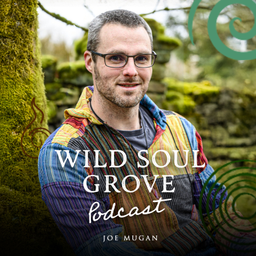
Wild Soul Grove
Claim This Podcastby Joe Mugan
8 episodes
Updated Daily
Accepts GuestsHas SponsorsLocation 🇬🇧
Podcast Overview
Wild Soul Grove is a mind, body and soul podcast hosted by coach and founder Joe Mugan. Through lived experience, authenticity and accountability, Joe shares honest conversations, practical tools and real stories about healing, growth and self leadership. For anyone ready to stop pretending they are fine and start building a life that actually fits.
Language
🇺🇲
Publishing Since
12/9/2025
Reach the team behind Wild Soul Grove
Verified contact details for this show aren't on file yet — sign up to get notified when they land.
Recent Episodes
April 8, 2026
Navigating Life's Challenges with Quiet Confidence
<p>Hello, Wild Soul. In this episode of the Wild Soul Grove Podcast, I explore something that changes everything: internal steadiness.</p><p>This is one of those qualities that rarely gets talked about, yet it is often the difference between people who stay stuck and people who actually transform. Not because they are louder, more confident, or more forceful, but because they have learned how to stay centred when life gets uncertain.</p><p>I share what I have seen over years of coaching people through big transitions: the ones who create meaningful change are not always the most motivated or confident. They are the ones who build a quiet inner calm, a steadiness that holds them when the external world feels messy, demanding, or unpredictable.</p><p>We explore how internal steadiness supports self-trust and boundaries, especially for capable people who carry a lot and often feel the pull of expectations. When you are not steady inside, boundaries can turn into over-explaining, over-justifying, or over-reacting. But when you cultivate steadiness, you begin to notice the space between stimulus and response, and in that space you find choice.</p><p>I talk about what starts to shift when you live from that steadier place: your mind gets quieter, you stop needing to prove yourself, you stop trying to manage everyone else’s reactions, and you begin to move with more clarity. Over time, that steadiness does not just change how you feel, it changes how others experience you. It reduces tension, creates respect, and brings a calmer energy into your relationships.</p><p>My intention is that you leave this episode understanding that steadiness is not a personality trait; it is a practice. A way of meeting life with more emotional clarity, less reactivity, and deeper self-mastery.</p><p><strong>Key takeaways</strong></p><ol><li data-list="bullet"><span class="ql-ui" contenteditable="false"></span>Internal steadiness is a vital, often overlooked part of personal development.</li><li data-list="bullet"><span class="ql-ui" contenteditable="false"></span>True change comes less from external confidence and more from a cultivated inner calm.</li><li data-list="bullet"><span class="ql-ui" contenteditable="false"></span>Practising steadiness in your interactions strengthens self-trust and supports healthier boundaries.</li><li data-list="bullet"><span class="ql-ui" contenteditable="false"></span>Emotional clarity grows when you learn to manage uncertainty without overreacting.</li><li data-list="bullet"><span class="ql-ui" contenteditable="false"></span>A powerful shift happens when you stop over-explaining yourself, and your mind becomes quieter.</li><li data-list="bullet"><span class="ql-ui" contenteditable="false"></span>Steadiness changes how others perceive and respond to you, often bringing more respect and less tension.</li></ol><br/>
March 25, 2026
Understanding Overthinking: A Barrier to Self-Trust
<p>Hello Wild Soul, in this episode of the Wild Soul Grove Podcast, I explore the link between overthinking and self-trust, especially for capable people who get stuck in mental loops that feel impossible to escape.</p><p>I talk about why overthinking is not a character flaw or a lack of intelligence. In many cases, it is intelligence weighed down by responsibility. When you care deeply, when you are used to thinking ahead, when you feel responsible for outcomes, your mind can become overtrained to anticipate consequences. What starts as being thoughtful can slowly turn into a pattern of second-guessing that drains your energy and leaves you feeling unsure of your own judgment.</p><p>We look at how over-analysis creates a kind of internal paralysis. The more you review, the more uncertain you feel, and the more you reach outside yourself for reassurance. I share why outsourcing certainty to others can feel collaborative at first, but can quietly turn into a need for external validation, which then erodes self-trust even further.</p><p>I also reflect on my own experiences of making choices that did not fit the conventional path, including stepping into a more nomadic lifestyle. I share what that taught me about alignment and why real clarity often comes after you move, not before.</p><p>Throughout the episode, I come back to a simple truth: confidence is built through action. I offer practical ways to start rebuilding self-trust by making small decisions without asking for permission, approval or guarantees. Each time you choose, follow through, and learn from the outcome, you strengthen your internal compass.</p><p>My intention is that you leave this episode feeling less trapped in your head, more connected to your inner signals, and more willing to take the next small step, even in the face of uncertainty.</p><p><strong>Key takeaways</strong></p><ol><li data-list="bullet"><span class="ql-ui" contenteditable="false"></span>Rebuilding self-trust means learning to live from a steadier internal place, rather than constantly seeking reassurance outside yourself.</li><li data-list="bullet"><span class="ql-ui" contenteditable="false"></span>Overthinking often affects capable people most, especially those who carry responsibility and tend to second-guess their choices.</li><li data-list="bullet"><span class="ql-ui" contenteditable="false"></span>Overthinking is a symptom of a capable mind that has been overtrained to anticipate consequences, and it can lead to mental exhaustion.</li><li data-list="bullet"><span class="ql-ui" contenteditable="false"></span>Action builds confidence, and clarity often arrives after a decision is made, not before it.</li></ol><br/>
March 11, 2026
Calm Boundaries: How to Say No Without Guilt
<p>Hello Wild Soul, in this episode of the Wild Soul Grove Podcast, I dive into what happens after you set a boundary, especially the guilt, the anxiety, and that familiar urge to people please, your way back into “safety”.</p><p>This conversation is for the capable ones, the reliable ones, the people who carry more than they should because it feels easier than letting someone else down. I explore why saying “no” can trigger such a strong internal reaction, even when your boundary is completely reasonable. For many of us, harmony has been linked to safety for a long time, so the moment we disrupt an old pattern, our nervous system can respond as if we have done something wrong.</p><p>I share how guilt often shows up, not because you are being unkind or selfish, but because you are stepping out of the role you have been conditioned to play. That emotional turbulence is not a sign that you have failed, it is a sign that you are changing the rules of the relationship, and your system is learning how to hold that.</p><p>We also explore over responsibility, the habit of feeling responsible for other people’s emotions, and how it quietly erodes self trust over time. I talk about the difference between healthy accountability and carrying emotional weight that was never yours in the first place.</p><p>Throughout the episode I offer practical ways to navigate the discomfort after setting a boundary, so you can stay steady and grounded rather than rushing to fix, explain, soften or take it back. The goal is not to become cold or confrontational, it is to develop the kind of inner stability that lets you honour yourself and still stay connected.</p><p>My intention is that you leave this episode feeling more compassionate towards your reactions, and more confident in your ability to hold the discomfort that comes with living in integrity.</p><p><strong>Key takeaways</strong></p><ol><li data-list="bullet"><span class="ql-ui" contenteditable="false"></span>Self-trust grows when you set boundaries and stay with what comes up afterwards.</li><li data-list="bullet"><span class="ql-ui" contenteditable="false"></span>Guilt often arises, not from wrongdoing, but from disrupting established patterns and roles.</li><li data-list="bullet"><span class="ql-ui" contenteditable="false"></span>Learning to tolerate discomfort after setting a boundary is part of nervous system growth and emotional maturity.</li><li data-list="bullet"><span class="ql-ui" contenteditable="false"></span>There is a difference between healthy responsibility and over-responsibility for other people’s emotions.</li></ol><br/>
8 total episodes available
Deep-dive analytics for Wild Soul Grove
Frequently asked questions
Have a different question and can't find the answer you're looking for? Reach out to our support team by sending us an email and we'll get back to you as soon as we can.
- What is Wild Soul Grove?
- How often does this podcast release new episodes?
This podcast updates daily.
- Where can I listen to this podcast?
This podcast is available on 4 platforms including Apple Podcasts, Spotify, and more. You can also use the RSS feed directly.
- Does this podcast accept guests?
No, this podcast does not typically feature guests.
Legal Disclaimer
Pod Engine is not affiliated with, endorsed by, or officially connected with any of the podcasts displayed on this platform. We operate independently as a podcast discovery and analytics service.
All podcast artwork, thumbnails, and content displayed on this page are the property of their respective owners and are protected by applicable copyright laws. This includes, but is not limited to, podcast cover art, episode artwork, show descriptions, episode titles, transcripts, audio snippets, and any other content originating from the podcast creators or their licensors.
We display this content under fair use principles and/or implied license for the purpose of podcast discovery, information, and commentary. We make no claim of ownership over any podcast content, artwork, or related materials shown on this platform. All trademarks, service marks, and trade names are the property of their respective owners.
While we strive to ensure all content usage is properly authorized, if you are a rights holder and believe your content is being used inappropriately or without proper authorization, please contact us immediately at hey@podengine.ai for prompt review and appropriate action, which may include content removal or proper attribution.
By accessing and using this platform, you acknowledge and agree to respect all applicable copyright laws and intellectual property rights of content owners. Any unauthorized reproduction, distribution, or commercial use of the content displayed on this platform is strictly prohibited.