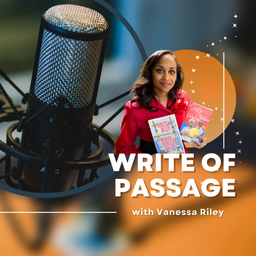
Write of Passage by Vanessa Riley
Hosted by Vanessa Riley · Vanessa Riley
5.0from 6 ratings
- 100
- Episodes
- 6
- Ratings
- Weekly
- Cadence
- 2024
- First episode
About Write of Passage by Vanessa Riley
Join bestselling author Vanessa Riley as she delves into untold histories, reflects on current events through a historical lens, shares behind-the-scenes writing insights, and offers exclusive updates on her groundbreaking novels. vanessariley.substack.com (https://vanessariley.substack.com?utm_medium=podcast)
- Publisher
- Vanessa Riley
- Category
- fiction · society & culture
- Language
- en
- Explicit
- No
- First episode
- 6 Dec 2024
- Latest episode
- 3 Nov 2026
Latest episodes
100 episodes in the feed.
3 Nov 2026
The Blood Behind Your Ballot
Blood. Bondage. And the ballot. People paid with their freedom—and their lives—for a right we sometimes talk ourselves out of using. Today, I want us to remember their names. The Blood Behind Your Ballot Nothing but the Blood and the Bondage Today, this podcast airs on Election Day. Every Tuesday that happens, I don’t take it for granted. Sometimes we get too comfortable in our ways. Sometimes we grow tired. And sometimes we begin to believe we are so small that our voices cannot possibly be heard. I know that feeling. It’s why some of us stop writing. And it’s definitely why some of us stop voting. I’m not going to tell you that life isn’t hard. It is. But before we decide that showing up won’t matter, I want us to remember what it cost the people who came before us to make showing up possible. Some bled. Some were beaten. Some were bound to a system determined to silence them. Some were imprisoned. Some died. All because they believed they had a right to be heard—and that we would have that right, too. Before we get to the ballot box, let’s remember what it took to get us there. * February 3, 1870 — The Fifteenth Amendment was ratified, prohibiting the denial or abridgment of citizens’ voting rights because of race, color, or previous enslavement. States returned to using poll taxes and other restrictions to circumvent these protections. * April 13, 1873 — In Colfax, Louisiana, following an election dispute, armed white men attacked and killed approximately 80 to 150 Black men defending the Grant Parish courthouse. * 1877 — Georgia made its poll tax cumulative. So prospective voters could be required to pay accumulated unpaid taxes for missing elections, creating more barriers to voting. For the next twenty years, poll taxes became a central means of Southern disenfranchisement. Payment requirements operated alongside literacy tests and intimidation. They targeted Black political participation but also excluded many poor white citizens. * November 10, 1898 — In Wilmington, North Carolina, white supremacists killed Black residents and forced out the city’s legally elected diverse government. The death toll recorded by the coroner was 14, but a commission in 2006 estimated as many as 60 murders. * March 3, 1913 — Women were assaulted as they walked in Washington, D.C.’s Woman Suffrage Procession. Approximately 100 marchers were taken to Emergency Hospital. * October 20, 1917 — In Washington, D.C., two women, Alice Paul and Rose Winslow, were imprisoned for picketing outside the White House to demand women’s voting rights. After being sentenced for obstructing traffic, they went on a hunger strike, were force-fed, and Paul ended up in the psychiatric ward. * November 14–15, 1917 — Arrested for picketing the White House while trying to get President Wilson to support a constitutional amendment securing women’s voting rights, Lucy Burns, Dora Lewis, Mary Nolan, and Alice Cosu were sent to Occoquan Workhouse in Lorton, Virginia, where they were brutalized by the guards in the “Night of Terror.” Dora Lewis was knocked unconscious. Mary Nolan was dragged despite her disabled foot. Alice Cosu suffered a heart attack. * August 26, 1920 — The Nineteenth Amendment was certified. It prohibited voting discrimination because of sex. Poll taxes were used to burden women, especially those whose husbands or fathers controlled the household money. * November 2, 1920 — In Ocoee, Florida, Moses “Mose” Norman was denied the right to vote on the grounds that he had not paid his poll tax. The dispute led to a white mob committing violence. Julius “July” Perry was lynched. Black homes were burned. In the Election Day massacre, the disputed death toll is as high as 60. * December 6, 1937 — In “Breedlove v. Suttles”, the Supreme Court upheld Georgia’s poll-tax requirement. * November 1942 — Southern senators filibustered anti-poll-tax legislation. The Senate’s historical account describes the taxes as a means of disenfranchising low-income voters, including many African Americans. * December 25, 1951 — The home of Harry T. and Harriette V. Moore, who led Black voter registration, was bombed on Christmas Day. Harry died December 25; Harriette died January 3. * May 7, 1955 — In Belzoni, Mississippi, Reverend George W. Lee, who was a voter-registration organizer, was shot and killed. * August 13, 1955 — In Brookhaven, Mississippi, Lamar Smith, a World War I veteran active in voter registration and local elections, was shot and killed outside the courthouse. * September 9, 1957 — The Civil Rights Act of 1957 was signed, creating the U.S. Commission on Civil Rights and strengthening federal authority to pursue voting-rights violations. * May 6, 1960 — The Civil Rights Act of 1960 was signed. This required the preservation of voting records and expanded federal remedies against discriminatory registration practices. * September 25, 1961 — In Liberty, Mississippi, Herbert Lee, a farmer who helped recruit people for voter-registration classes, was shot and killed by state representative Eugene Hurst. * June 9, 1963 — In Winona, Mississippi, Fannie Lou Hamer was arrested and brutally beaten in jail when she returned from a voter-education workshop. She survived. * June 12, 1963 — Jackson, Mississippi: Medgar Evers, the NAACP’s Mississippi field secretary, was shot and killed outside his home. * January 23, 1964 — The Twenty-fourth Amendment was ratified. It prohibited denying voting rights because of failure to pay a poll tax or other tax in federal elections. * June 21, 1964 — In Neshoba County, Mississippi, James Chaney, Andrew Goodman, and Michael Schwerner, civil rights workers working on Freedom Summer’s voter-registration campaign, were murdered in a conspiracy involving Klansmen and a deputy sheriff. * July 2, 1964 — The Civil Rights Act of 1964 was signed and addressed discrimination in voting, public accommodations, education, federally funded programs, and employment. * February 18, 1965 — In Marion, Alabama, Jimmie Lee Jackson was fatally shot by a state trooper. His death helped spur the Selma-to-Montgomery voting-rights march. * March 7, 1965 — In Selma, Alabama, state troopers and other officers attacked approximately 600 peaceful voting-rights marchers at the Edmund Pettus Bridge in what is called Bloody Sunday. Fifty-eight people were treated for injuries at the local hospital, including John Lewis, who suffered a fractured skull. * March 9, 1965 — In Selma, Alabama, after participating in a peaceful march, Reverend James Reeb and fellow ministers Orloff Miller and Clark Olsen were walking toward a movement meeting at Brown Chapel AME Church when white segregationists attacked them. Reverend Reeb was killed. * March 25, 1965 — On U.S. Highway 80 in Alabama, Klansmen shot Viola Liuzzo between Selma and Montgomery after she helped transport Black voting-rights marchers. Her passenger, Leroy Moton, survived. * April 27, 1965 — In “Harman v. Forssenius”, the Supreme Court rejected Virginia’s poll-tax workaround. * August 6, 1965 — The Voting Rights Act was signed, establishing powerful federal tools against racial discrimination in voting, including advance review of voting changes in covered jurisdictions. It also directed the attorney general to challenge remaining poll taxes in state and local elections. * January 10, 1966 — Near Hattiesburg, Mississippi, Klansmen killed Vernon Dahmer. They firebombed his home and store after a radio announcement publicized his help with Black voter registration and poll-tax payments. His wife and three children escaped, but his daughter, Bettie, suffered severe burns. * March 24, 1966 — In “Harper v. Virginia State Board of Elections”, the Supreme Court prohibited poll taxes in state elections. The Court held that making payment of a fee or a voter’s wealth an elec… This is a public episode. If you'd like to discuss this with other subscribers or get access to bonus episodes, visit vanessariley.substack.com/subscribe (https://vanessariley.substack.com/subscribe?utm_medium=podcast&utm_campaign=CTA_2)
27 Oct 2026
Right to Write
What do a ballot and a blank page have in common? Both require you to believe your voice matters. And both are absolutely useless if you never do anything with them. This is my writing quarter. Everything—and I mean everything—should be focused on writing. My job during this season is simple: to encourage you, motivate you, and get you into those chairs. Whether you’re transcribing, dictating, punching keys on a keyboard, or riding around with a notebook tucked into your bag, I want you writing. That’s my commitment to you. But as always, we live in a world. And this world has ups and downs. There are wars, political diatribes, disasters, and the everyday frustrations that make us want to scream into the void. And then there’s The Cheesecake Factory. Illustration by The Atlantic. Source: LPETTET / Getty (from the Atlantic asking to leave the Cheesecake Factory out of the fight) Yes, it still exists. It’s gaudy and gold and over the top, like former President Obama alluded to this past weekend in Cleveland. New York Times spent time on Cheesecake Factory! We go for the spectacle, the oversized plates and, the cheesecake. It’s still delicious. And yes, sometimes a slice of cheesecake seems like the only reasonable response to the madness happening around us. But since I would still like to fit into my wardrobe, I have to find another way to process my feelings. For me, that way is writing. And maybe it can be for you. Writing Through the Madness One of the reasons I talk to you every week is that I need a place to channel my emotions. Sometimes that emotion is joy. Sometimes it’s frustration. And sometimes, it’s rage—hot, burning lava. I need a place to spew about my perspective on the world. Not because my perspective is more important than anyone else’s, but because I’m a writer. And a writer has to write. The emotions I experience need somewhere to go. If I don’t process them, they’ll occupy every corner of my brain until I feel like my head might explode. So I write. I write about what troubles me. I write about what inspires me. I write about the things I cannot change and the things I desperately wish I could. Sometimes I pour those feelings onto the page. Other times, I consider pouring them into a cheesecake. But again, the wardrobe must work. So writing wins. Now, you might be wondering what any of this has to do with today’s lesson. That’s a fair question. I know it sounds as though I’m rambling, but I promise I have a point. You do not have to wait for the perfect moment to write. You do not have to wait for the perfect words, the perfect atmosphere, the perfect inspiration, or the perfect alignment of the planets. You simply need to write. Free Your Mind by Filling the Page I’m a tremendous proponent of journaling. Take a notebook, a notepad, or even an artist’s sketchbook and put your feelings on those pages. They don’t have to be beautiful. They don’t have to be organized. They don’t have to even make sense to anyone but you. The point is to release the thoughts that have taken up residence in your mind without paying rent. Think about how much mental energy we spend replaying conversations, worrying about current events, or imagining everything that might go wrong. Those thoughts take up space. Writing them down can help free that space. And once you’ve released some of that emotional clutter, you may discover that you have more room for the creative work you actually want to do. Your novel. Your short story. Your poem. Your next great idea. Sometimes, before you can create the world you imagine, you have to make peace with the world you’re living in. And that brings me to something else that’s been on my mind. Your Voice Matters Beyond the Page We’re in an election season. So I’m going to take this opportunity to say something important. Make a plan. Get informed. Go vote. Exercise your civic duty. People have fought, suffered, bled, and died for the right to enter a voting booth and make their voices heard. That is not an exaggeration. Think about the generations of people who were denied the ballot because of their race or sex. Think about the suffragists who marched, protested, and endured imprisonment. Think about the civil rights activists who faced violence while demanding equal access to the polls. Think about the people who marched across the Edmund Pettus Bridge in Selma in 1965 and were beaten for demanding voting rights. Think about Jimmie Lee Jackson, whose death helped inspire the Selma voting rights campaign. Think about Reverend James Reeb and Viola Liuzzo, who were killed during that struggle. These were real people who paid extraordinary prices for the freedoms we exercise today. And yet, I still hear people say, “My vote doesn’t matter.” Really? Look at your gas prices. Look at the cost of beef. Look at your grocery bills, your taxes, your schools, your roads, and the policies that shape your everyday life. No single elected official controls all those prices or circumstances, but public policy influences our economy, our opportunities, and the communities in which we live. Our choices have consequences. And so does our silence. Now, you might say, “Well, I have the right not to vote.” Of course you do. I also have the right to walk into the street blindfolded and hope a car doesn’t hit me. But I have more sense than that. And I hope you’ll recognize that having a voice means having an opportunity to use it. You may feel discouraged. You may feel overwhelmed. You may believe that one person cannot make a difference. But the answer to feeling powerless should not be to surrender. Sometimes the answer is action. And that brings us right back to writing. The Ballot and the Blank Page Voting and writing have something powerful in common. Both require you to believe that your voice matters. When you vote, you’re participating in a collective decision about the world you want to live in. When you write, you’re exercising your imagination to create a world that doesn’t yet exist. You’re declaring that your ideas deserve consideration. You’re deciding what matters, what should be questioned, and what possibilities deserve exploration. You’re giving shape to something that previously existed only in your mind. That is a remarkable kind of freedom. And I don’t want you taking it for granted. I don’t want you sitting on your laurels. I want you sitting in your chairs. Because butt-in-chair is still one of the best ways to get things done. If you’re discouraged by the direction of the country, get informed and vote. If you’re discouraged by your writing life, sit down and write. I know that sounds overly simplistic. But sometimes we spend so much time in our heads that we make things far more complicated than they need to be. We convince ourselves that we need another class, another notebook, another software program, or another three months of research. We decide that we cannot possibly begin until we know exactly how everything will end. And while we’re busy preparing to write, we aren’t actually writing. Let’s change that. Start Small. Write a Haiku. When I was in school, I loved writing haiku. Three little lines. * Five syllables in the first. * Seven in the second. * In Five in the third. Seventeen syllables to capture a thought, an observation, or a moment. There’s something wonderfully freeing about a small assignment with clear boundaries. You don’t have to write an entire novel today. You don’t even have to write a chapter. If you’re stuck, write a haiku. Give your mind freedom. Build a concept; let it grow. Challenge yourself now. See I’ve haiku’ed myself into expressing my idea within boundaries. That’s writing, taking a formless notion and giving it shape. We can turn an impulse into language. That’s freedom. And please know, not everything will be brilliant. Some of it will be junk. Most of it will be a mess. But there will be glimmers of beauty. So write anyway. Somewhere inside all the clutter will be ideas that become something extraordinary. Why I Love a Fast Draft I love dictating the first draft of a book. Why? Because it gets all the gobbledygook out of my head. By the time I’m ready to draft, I’ve usually done a tremendous amount of research. I’ve thought about my characters, their relationships, their histories, and the worlds they inhabit. There is a lot happening in the old noggin. A lot. And if I spend every moment worrying about perfect sentences, precise grammar and syntax, I’ll never get all those ideas onto the page. Dictation helps me move past that. Now, dictation isn’t perfect. Far from it. Sometimes I go back and read a sentence and wonder whether I was speaking English. But that’s okay. The first draft isn’t supposed to be perfect. It’s supposed to exist. At that stage, I’m not obsessing about flowery flowing words . I’m looking for narrative flow. I’m hunting for character arcs. I’m looking for story movement. I’m asking whether the characters are doing what I planned for them to do. Is this development better? What truth has the rambling unlocked. And because I’ve already done much of my character work, I know what I’m looking for. Know Your Characters, Then Let Them Move Before I begin drafting, I want to understand the people who will inhabit my story. I want to see purpose in action. What have I written that shows progress towards the goals, they are seeking. I want to understand their perspectives. What beliefs guide them? What convictions serve as their North Star? There should be some evidence of it on the page. If not, that will be fixed in editing and revision. I want to know their people, the relationships. Who matters to them? Who influences their decisions? Who challenges them, supports them, or stands in their way? And I want to understand what I call the pseudofact, the lie. What false belief has a character absorbed? What untruth has met them in childhood and refuses to let them go. The lie shapes how they interpret the world. Is it on the page? If not, I’ll revisit and fix during revisions. How I’ve learned to edit for this, that’s another lesson for another day. The point is that when I understand these elements, I have enough information to begin writing. That’s freedom first draft shows gaps and what I need to revisit, think about, or change. With words on the page, I have my beginning. I’m learning or relearning how each character speaks. I don’t need these scenes to be perfect. But I need to sit down and write them. You Cannot Edit a Blank Page Once that fast draft exists, I can go back and ask the important questions: Is this the world I want my characters to inhabit? Are their actions consistent with their beliefs and motivations? What is the narrative revealing about them that I didn’t recognize during the planning stage? Where is the tension? Where is the emotional truth? Where have I missed an opportunity? That’s when the real refining begins. Editing. I love editing because editing is where the magic happens. It’s where motivations strengthen, conflicts sharpen, emotional connections deepen, and rough ideas become compelling stories. American novelist, Frank Norris, author of The Octopus (1901) and The Pit (1903) progressive novels about Wheat and naturalism, said, “Don’t like to write, but like having written.” In Haiku form: I don’t like to write. Nonetheless having written, I do love that place. A quick first draft gets me to happy faster. It’s where I can recognize if a character arc needs work. I give myself grace knowing it will be several rounds of editing before these words, this story will sing. You cannot join me in Nirvana with blank pages. You don’t have a writing voice with blank pages. You cannot improve something that doesn’t exist. So stop demanding perfection from your first draft. Stop demanding instant change from one vote. Give yourself permission to write badly, and still hold yourself and politicians accountable. Give yourself permission to experiment or try something new. The first draft is not the final judgment on your talent. Neither is one election. It’s all raw material. And raw material is something you can work with. Your Assignment is to Take Action This week, I want you to do two things. First, think about the story you want to world. Then think about the world around you — is it currently a world that can hear your truth or does it feel like a fight? Now write about it. Take ten minutes with your journal. Write a page of observations. Create a haiku. Dictate a stream of consciousness into your phone. Get those stories or world thoughts onto the page. Find time today. Not tomorrow. Nothing has to be perfect. The House doesn’t even have to be quiet. You just need to dedicate a moment to put your ideas in print. Today. Because every time you choose to write, you’re choosing you, your power, your dreams. Don’t let fear, frustration, or perfectionism silence you. The Bottom Line We live in a complicated world. There will always be distractions, disappointments, arguments, crises, and circumstances beyond our control. There will always be reasons to postpone the things that matter. But we still have choices. We can choose to engage with our communities. We can choose to make our voices heard. We can choose to create something meaningful, even when the world feels chaotic. And as writers, we have an extraordinary tool at our disposal. The page. Don’t wait for the world to become perfect before you begin writing. Remember: You cannot change your world by remaining silent. You cannot hold elected leaders accountable if you never cast a ballot. So get informed. Make your plan. Vote. Then get back to your writing. Put your butt in the chair. Put your words on the page. And for if you need a slice of cheesecake or a piece of chocolate or gaudy gold, or fancy journal, or dictation mic get it. Don’t let anything become another excuse not to excercise your rights or your right to write. This week’s book list includes: The Pit (https://bookshop.org/a/12381/9780140187588): A Story of Chicago (1903) by Frank Norris - A gripping novel about speculation in Chicago’s wheat market and an examination of how ambition, greed, and the pursuit of wealth can destroy relationships. Story Genius (https://bookshop.org/a/12381/9781607748892) — Lisa Cron Shows how a character’s deeply held misconceptions and internal struggles shape decisions and conflicts. The Emotional Craft of Fiction (https://bookshop.org/a/12381/9781440348372) by Donald Maass Teaches novelists how to transform emotional experiences into compelling character journeys. This week’s indie bookstore spotlight is Reparations Club (https://rep.club/), a Black-owned, woman-owned bookstore and creative space in Los Angeles, California. Purchasing through this episode’s Bookshop.org links supports Reparations Club. If you’re ever in Los Angeles, stop by, browse the shelves, and give them some book love! In fact, check out my other partners in the fight, bookstores (https://vanessariley.com/fireswordandsea.htm) large and small, who are in the trenches fighting for literacy. Remember to check my Resources Center (https://vanessariley.com/blog/writing-resource-shop/) on my website for my writing downloads. Lots of free and low-cost tools that I’ve made available to help you on your writing journey. You can find my notes on Substack or on my website, VanessaRiley.com (https://www.vanessariley.com/), under the podcast link in the About tab. If this podcast sparked something in you, show me some love—hit like, share the episode, and subscribe to Write of Passage! Thank you for being here. I want you to come again. This is Vanessa Riley. This is a public episode. If you'd like to discuss this with other subscribers or get access to bonus episodes, visit vanessariley.substack.com/subscribe (https://vanessariley.substack.com/subscribe?utm_medium=podcast&utm_campaign=CTA_2)
20 Oct 2026
Your Lying Manuscript
Walter Mosley said it a month ago on a Zoom for The Center for Black Literature’s Summer Series. And in his MasterClass. I say it all the time. To get your novel finished, you need to have your butt in a chair and write every day. Whom are you going to believe—us or your lying unfinished manuscript? Putting Yourself and Your Words First When you’ve written a lot of books, people want to know how you do it. They ask about plotting techniques. Are you a pantser? A planster? Do you bounce between scenes or write straight through? What craft books do you recommend? Are you a morning writer or an evening writer? All valid questions. I enjoy talking about the work. But the advice I give that seems to generate the most consternation is this: write every day. “Now, Vanessa. When you say every day, do you mean every day? Don’t you take Sundays off? Don’t you go on vacation? What about Christmas? Surely you take off for Christmas.” Some of you are already looking at your work calendars, making me your HR rep trying to get me to approve your days off. Here’s what I mean by writing every day: take those words as literally as you need to take them to establish, in your own mind and spirit, that your writing matters. You need to believe that writing deserves a respected place in your routine. Your words don’t always have to wait until another month of research. Until you read another craft book. It doesn’t need to wait for a new, different notebook. You shouldn’t have to wait for a weekend when nobody needs anything from you. If you’ve allowed your writing life to build up excuses, forgive yourself. Begin anew. But let’s begin with vigor and consistency. But Write Every Day? Yes, there are days when—clutch the pearls—I don’t work on a manuscript. But I’ve written something, probably an essay for a podcast. Hint, hint. Or a little reflection for social media. Or something in my journal. Does that finish my novel? No. And I have to be honest with myself about that. A beautifully written caption will not resolve the emotional conflict or lack of tension I left my characters in three chapters ago. But every bit of writing keeps my writing muscles taut. Stringing coherent words together are like calisthenics. Arranging sentences are yogo. Any attempt at trying to get what’s in my head onto a page is a useful one. For me, daily writing makes returning to the manuscript easier. I’m telling you that writing is a muscle. And I want mine limber and strong, ready to work when I need it. Have you ever joined a gym or bought exercise equipment? In the beginning, there’s so much excitement. You have plans. You have goals. You have sneakers. Naturally, the sneakers need to be cute. Maybe you buy athletic wear. A matching set. Something that announces you are a person who intends to take this exercise business seriously. Then you do the workout. And the next morning, your legs have questions. Parts of your body angrily ask what are you doing. Eventually, the excitement of buying the equipment and icy heat lotion wear off, and you have to decide whether you’re going to keep at this. Writing asks that question, too. You bought the notebook. You downloaded the software. You found the perfect pen, the best journal. But, will you return to the work when the first burst of excitement wears off? How about when a scene is difficult? What about when you see words on a page and none of it comes out bearing any resemblance to the beautiful ones you imagined? That’s where I believe many stop, when they need their muscles to push through. This past week, I was at the Writing Sisters Summit, hosted by Nina Foxx, in Taos, New Mexico. The air was fresh. The mountains were magnificent. The dirt roads were scary. I want to be clear: I appreciated the scenery. I have lingering questions about the roads. But the sisterhood at the treat was amazing. Wanda Morris, Pamela Samuels Young, Sheila Williams, and I joined the faculty, bringing our experiences to a vibrant group of women writing across genres and at different stages of their careers. Some were working toward their first books. Others had been at this for years. We had time to talk about the writing and industry challenges. To ask questions and stay for the answers. To hear someone describe a struggle and recognize a little of our own. And yes, I got up early. I know. Another revelation. I walked the trails outside, feeling the crisp morning air on my cheeks. There was a slight breeze that smelled of sage. I took pictures, lots of pictures. I want to remember and treasure this experience. Then I switched from my camera to my Notes app and dictated thoughts about the project I’m working on. A phrase. A possibility. Something I was beginning to understand about the next new book. That counts, boys and girls. Was it the most productive writing session of my life? Word count-wise, no. But I was able to work out and articulate the premise of my next book. Something I’d been reaching for became clear. I captured it and brought it home. That is useful work. That’s words in a Note. My notes and journals are not a polished exhibit of perfect syntax and amazing grammar. There can be pages of disconnected phrases. Somethings will only make sense only to me. My daughter has license to destroy certain documents when I’m gone so your vision of me and being literate will be preserved. I’m being humorous, but I want you to understand that my daily writing isn’t perfect writing, sometimes it’s not good writing. A scene may begin as a few lines of dialogue. A character’s motivation may show up as something different than my outline. You may write a paragraph and realize the only sentence you need is the last one. It’s okay to write the paragraph to find it. That why editing and revision are powerful. But every word and thought dump in my daily writing moves me closer to a completed project. I think we struggle to write because we want prove that our writing is brilliant, and we’re setting up that moment to share with someone. That is too much pressure. And it’s unfair to you and your words. Daily writing for me, has taken away that pressure. I’m asking for words. Brilliance will come with editing and revision. And truthfully, the word the end needs to come before I start editing. Let me take a moment to say, sign up for word time. Find a writing retreat. If you can make it work, take the mini vacation. Plan the staycation. Find a local hotel with good room service—or reliable delivery—and give yourself some time with your words. It’s OK to go alone or together with other writers. You can start today pencilling in time on your calendar. The Writing Sisters Summit There was something deeply nourishing about being in Taos with women who had made room for their words. We stepped away from our usual responsibilities long enough to hear ourselves think. I came away feeling connected to the work and to the people doing it. I hope the women who joined us carried that feeling home, along with the things they learned and the pages they began. The retreat deepened my love for making room in my ordinary life for writing. I can’t wait for another mountain view or vineyard or rushing river or ocean. Today, I’m back in my office, answering emails, looking at my obligations. There definitely a stack of laundry to do. And there is the book, that I’m closer to finishing than I was yesterday, because my dedicated writing does this. For a very long time, my writing time was between 10 PM and 2 AM. I worked a full-time engineering job, and still am a full-time wife and mother. So every day doesn’t mean hours of writing necessarily. Every day doesn’t look the same. Some days I have the same hours. Some days I have small pockets of time. I use what I have. Journaling and essays keep me writing, but eventually I have to return to the people waiting inside a manuscript. So the other non-book writing can’t take over. But I’ll take words any way I can get them on to the page. Consider your writing life for a moment. Are you giving it regular attention? Are you allowing it to lie to you. Are your writing muscles feeble from lack of exercise? Are you asking them to perform whenever you have a little free time and coming up with blank pages? Maybe after this podcast spend a few minutes stringing together words or add a few thoughts about your latest idea to the page. If I write 50-150 words a day, consistently, I can have a novella or short novel done in a year. It’s doable. Take a moment and work through one exchange between two characters. Maybe you dictate the thought that came to you on a walk. Then during tomorrow’s writing time develop it. Then commit to coming back to the project the next day. Habits form by doing—not wishing and hoping. Doing needs to happen. Even when it’s awkward. Even when I’m tired. Even when there’s something on the TV… Even when there’s a food fight in Book Social Media In Walter Mosley’s MasterClass he say his Rule number one: Write every day. It’s nonnegotiable. I agree. Your unfinished manuscript agrees too. The chores and regular life say—“Naaaw. Writing can wait.” Who are you going to believe, your word count or procrastination? This week’s booklist includes: * Hanging and Burning (https://bookshop.org/a/12381/9780316573207) — Walter Mosley. A dying gangster hires investigator Joe King Oliver to find his missing granddaughter, drawing him into a family history of violence and buried secrets (Releases Oct. 20, 2026). * This Never Happens Here (https://bookshop.org/a/12381/9798217178056) — Wanda M. Morris. Two detectives investigate a disturbing pattern of murdered parents and missing children in Atlanta’s wealthy suburbs (Feb. 16, 2027). * Sounds Like Trouble (https://bookshop.org/a/12381/9781668024331) — Pamela Samuels Young and Dwayne Alexander Smith. Two private investigators juggle their simmering attraction and clashing personalities while tracking down a mysterious package for dangerous mobsters. * Daughters of the Wind (https://bookshop.org/a/12381/9780063307988) — Sheila Williams. A corporate executive who secretly commands the winds must gather powerful women across time to confront a looming climate catastrophe (Dec. 1, 2026). * Island Secrets: A Queens of Kiawah Story (https://bookshop.org/a/12381/9780578295008) — Nina Foxx. On South Carolina’s exclusive Kiawah Island, a cozy mystery blends murder, romance, and closely guarded secrets. * Murder in St. James’s Park (https://bookshop.org/a/12381/9781448317646) — Vanessa Riley. When Lady Worthing discovers her husband murdered, her search for his killer exposes secrets that challenge her judgment and shake her family. This week’s indie bookstore spotlight is Reparations Club (https://rep.club/), a Black-owned, woman-owned bookstore and creative space in Los Angeles, California. Purchasing through this episode’s Bookshop.org links supports Reparations Club. If you’re ever in Los Angeles, stop by, browse the shelves, and give them some book love! In fact, check out my other partners in the fight, bookstores (https://vanessariley.com/fireswordandsea.htm) large and small, who are in the trenches fighting for literacy. Remember to check my Resources Center (https://vanessariley.com/blog/writing-resource-shop/) on my website for my writing downloads. Lots of free and low-cost tools that I’ve made available to help you on your writing journey. If this podcast sparked something in you, show some love—hit like, share the episode, and subscribe to Write of Passage! You can find my notes on Substack or on my website, VanessaRiley.com (https://www.vanessariley.com/), under the podcast link in the About tab. If this sparked something in you, show some love—hit like, share the episode, and subscribe to Write of Passage! Thank you for being here. I want you to come again. This is Vanessa Riley. This is a public episode. If you'd like to discuss this with other subscribers or get access to bonus episodes, visit vanessariley.substack.com/subscribe (https://vanessariley.substack.com/subscribe?utm_medium=podcast&utm_campaign=CTA_2)
Reach and audience
Public platform figures. Ratings count people who left a rating, not total listeners.
- Apple Podcasts (US)
- 5.0 / 5
- 6 ratings
Podcast Authority Score: 29 / 100
A composite of feed quality, social presence, YouTube performance and engagement. Read the methodology.
- Quality
- 46
- Social presence
- 0
- YouTube
- 0
- Engagement
- 32
Contact Write of Passage by Vanessa Riley
- Guest appearances
- Books guests
Based on episode analysis; this does not confirm that the show is currently accepting guests.
Questions about Write of Passage by Vanessa Riley
Who hosts Write of Passage by Vanessa Riley?
Vanessa Riley host the show. Published by Vanessa Riley.
How often do new episodes come out?
The show publishes weekly, based on its RSS feed.
Does Write of Passage by Vanessa Riley take guests?
Yes. Guests have been identified in episode analyses.
Host of Write of Passage by Vanessa Riley?
Claim your podcast to manage its listing and keep your show details accurate.
Pod Engine is an independent podcast discovery and analytics service and is not affiliated with or endorsed by this podcast. Artwork and show content belong to their owners. Full legal notice.
Explore this show
Podcast research with Pod Engine