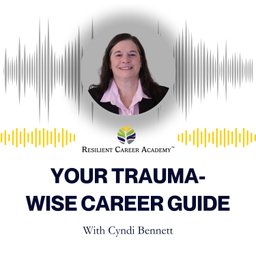
Your Trauma-Wise Career Guide
Hosted by Rebecca Wong and Your Trauma-Wise Career Guide · Cyndi Bennett | Career Coaching for Trauma Survivors
4.8from 8 ratings
- 81
- Episodes
- 8
- Ratings
- Weekly
- Cadence
- 2025
- First episode
About Your Trauma-Wise Career Guide
Traditional career development wasn't built for trauma survivors — and it shows. Your Trauma-Wise Career Guide, hosted by trauma survivor and career coach Cyndi Bennett, MBA, M.Ed., offers trauma-informed strategies for building a sustainable professional life alongside your healing. resilientcareers.substack.com (https://resilientcareers.substack.com?utm_medium=podcast)
- Publisher
- Cyndi Bennett | Career Coaching for Trauma Survivors
- Category
- business · education
- Language
- en
- Explicit
- No
- First episode
- 8 Apr 2025
- Latest episode
- 22 Oct 2026
Latest episodes
81 episodes in the feed.
22 Oct 2026
How Trauma Shows Up at Work When You’re a Nurse
Have you ever sat in your car after a grueling twelve-hour shift as an emergency room nurse and just couldn’t move? The fatigue hits hard once you leave those doors and finally sit down without someone needing you. The day was chaotic. Perhaps it was a full moon. Critical patients were everywhere. You barely had a chance to go to the bathroom. Lunch was a quick pass through the break room to inhale the food you brought. And a young child, the same age as your son, did not survive a car accident. You kept working afterward, carrying that heaviness through the rest of your shift. Now you’re looking at your phone. There’s a reminder for the in-service training you signed up to attend but never reached. You missed it again. You had wanted to be there. It was an opportunity to learn, build your skills, and take another step toward the career you wanted. But sitting in your car, you feel relieved that you don’t have to take on one more thing. Then comes the question: How are you supposed to grow in your nursing career when getting through a shift takes everything you have? When Getting Through the Shift Takes Everything You signed up for that training because you wanted to be there. Maybe it would help you earn a certification, prepare for another role, or explore a specialty that interests you. Now you have missed it again. Other people manage to do this. Why can’t I? You think about the colleague who stayed late for a class last week. You tell yourself you should have planned better, pushed through, found a way. During the shift, pushing through was what you did. When someone needed help, you stepped in, even though you were already behind. When you needed help yourself, you hesitated. Everyone’s busy. I should be able to handle this. You noticed the change in your supervisor’s tone and wondered whether you had done something wrong. You checked your patient notes again. You wanted to be certain there was nothing anyone could question. After the child died, someone asked if you were okay. “I’m fine.” There were patients waiting. And you weren’t sure what would happen if you let yourself stop. Perhaps some of this feels familiar beyond nursing: watching other people closely, trying to anticipate what they need, feeling uneasy about disappointing them. Being useful may have become a way to feel secure long before it became part of your job. Now those habits can be difficult to separate from being a good nurse. You may volunteer for another shift while postponing the course that matters to you. You may want a transfer but worry that your manager will think you cannot cope. You may hear about an opening and immediately think of every qualification you lack. * I need more experience first. * They probably have someone better in mind. * I can’t leave the team when we’re already short. Meanwhile, your own plans keep moving further down the list. The staffing shortages, missed breaks, and distressing events are real demands. When your response is to ask even more of yourself, it becomes harder to see what support is missing or what choices might be available. Career development begins to involve questions you may not have expected: What happens to my goals when I keep putting everyone else’s needs ahead of them? And what would help me give those goals some room? Before We Go Further, Let Me Introduce Myself I’m Cyndi Bennett, a trauma-informed career coach and Founder of the Resilient Career Academy. I help professionals who have experienced complex trauma and CPTSD understand how their experiences may be shaping their working lives and career decisions. For nurses, that can mean recognizing the pressure to keep pushing through, making room for their own professional goals, and exploring career options that fit their strengths, needs, and aspirations. Today, we’re exploring how childhood caretaking patterns can become part of your work identity, how the armor that helps you get through a shift can make your needs difficult to acknowledge, and what it might mean to include yourself in the care you give. When Caring for Others Became a Way to Be Safe Perhaps you were taking care of people long before you became a nurse. As a child, you may have learned to notice what someone needed before they asked. You watched expressions, listened for changes in tone, and tried to keep people comfortable. Being helpful might have brought approval, reduced conflict, or made the day feel more predictable. Your own needs could wait. Sometimes, expressing them made things harder. Over time, caring for others became something you did almost automatically. You simply knew how to be the responsible one, the helpful one, the person who could manage. Then you entered a profession where caring for others is central to the work. Your compassion, knowledge, and clinical skills matter. Alongside them, there may be an old expectation that you must keep giving, whatever it costs you. They need me. I can wait. You postpone the bathroom break. You offer to help before checking whether you have anything left to give. You feel uncomfortable resting while someone else is struggling. Sometimes there genuinely is no coverage or opportunity to step away. At other times, help may be available, yet accepting it still feels uncomfortable. Both deserve attention. If being needed once helped you feel safe, someone else’s unmet need may feel like something you must personally resolve. That can make it difficult to recognize where your responsibility ends, especially in a workplace where there is always more to do. When Being Capable Becomes Your Armor At work, you may be the nurse people turn to when things get difficult. You stay composed. You keep moving. You know how to put your feelings aside until later. Perhaps you have been doing that for years. The armor can be hard to recognize because it looks like competence. People see someone dependable. They may not see the effort involved, or how difficult it feels to say, “I need help.” You might hear yourself agreeing to another request before you have considered whether you can manage it. If I say no, will they think I don’t care? You might want to tell your manager that you are struggling, then decide against it. What if they stop trusting me? Being the person who handles things may have become so closely tied to your identity that having limits feels unsettling. If I’m not the person who always steps in, who am I? That question can follow you into professional growth. Learning something new involves asking questions, needing guidance, and allowing others to see what you do not yet know. Pursuing an opportunity may mean disappointing someone who wants you to stay exactly where you are. When being capable and available has helped you feel secure, those steps can carry more emotional weight than anyone else realizes. What You Carry Beyond the Shift You get home, but your thoughts are still at the hospital. You remember the child’s face. You think about your own son. Someone asks about your day, and you pause before answering. “Busy.” You may worry about upsetting the people you love, or simply feel too tired to find the words. Later, you open the information about that training. You read the same paragraph twice. I’ll look at it on my day off. But your day off already has a job: helping you recover enough to return. Repeated exposure to other people’s traumatic experiences can contribute to secondary traumatic stress. Recognizing that exposure is part of supporting professionals whose work brings them into contact with others’ trauma. National Child Traumatic Stress Network (https://www.nctsn.org/sites/default/files/resources/fact-sheet/secondary_traumatic_stress_child_serving_professionals.pdf) Alongside your own history, there may now be experiences from work that need attention too. Some may touch something familiar. Others may be painful because of what you witnessed that day. Yet the habit of putting others first can continue at home. My family needs me. They’ve had a long day too. You may care for everyone around you while struggling to find somewhere you can speak honestly about what you are carrying. Having that space could matter to your professional future as much as finding another training opportunity. It may help you understand what is exhausting you, what still matters to you, and what support you would like to explore. Making Room for Yourself in Your Career Recognizing these patterns can bring mixed feelings. You may value your generosity and dependability. You may also begin to notice how often your own development waits until everyone else has what they need. There is no requirement to change everything at once. If it feels helpful, you might notice one moment when you automatically put yourself last. Perhaps you dismiss a course you want to attend, agree to extra work, or decide against asking a question. What went through your mind just before that decision? Was there a practical barrier? Concern about how someone would respond? A familiar feeling that wanting something for yourself was asking too much? Your answer may offer a place to begin. The workplace matters here too. Staffing shortages, distressing events, compliance demands, and fear of being blamed or sued are pressures that deserve to be taken seriously. Understanding your own patterns does not make you responsible for resolving those conditions. It can, however, help you notice when you are carrying an additional expectation: that you must meet everyone’s needs without having any of your own. Your interests, learning, and hopes for the future belong in the conversation. If your needs had a place alongside everyone else’s, what might you want to explore in your nursing career? As you sit with that question, you may begin to notice how these patterns have shaped earlier career decisions too: an opportunity you passed over, support you hesitated to ask for, or a goal that kept coming last. If you’d like to explore those connections further, you’re welcome to read more at Resilient Career Academy (https://resilientcareers.substack.com/), where I write about how trauma patterns can influence the direction of your career and what it can mean to make room for your own needs and aspirations. Let’s Continue the Conversation This Sunday, I’ll be joining Patrick LaRose, host of The Second Shift (https://simplypaddy.substack.com/) podcast, for a live conversation about how trauma patterns can influence how you show up in the work environment. We’ll bring our perspectives to a conversation that makes room for the person behind the professional role. If these experiences feel familiar, or you’re curious about the patterns you notice in yourself at work, you’re welcome to join us. You can listen without needing to share your story. This is a public episode. If you'd like to discuss this with other subscribers or get access to bonus episodes, visit resilientcareers.substack.com/subscribe (https://resilientcareers.substack.com/subscribe?utm_medium=podcast&utm_campaign=CTA_2)
20 Oct 2026
Introduction to CPTSD in the Workplace
Imagine spending years building something you’re proud of. You’ve invested your time, developed your skills, earned the trust of others, and created a career that means something to you. Then, seemingly without warning, things that once felt manageable become overwhelming. A meeting you would have walked into confidently now fills you with dread. A conversation with your manager leaves you questioning your abilities. You sit down to complete work you’ve done hundreds of times before, but your mind won’t cooperate. You know how to do your job. You’ve proven that over and over again. So why does it suddenly feel so difficult? For those of us living with Complex Post-Traumatic Stress Disorder (CPTSD), the answer may have less to do with our professional capabilities and more to do with what is happening in our nervous systems. And sometimes, we don’t recognize that connection until our careers begin to feel like they’re slipping through our fingers. When Work Stopped Feeling Like My Safe Place I’m Cyndi Bennett, a trauma-informed career coach and Founder of the Resilient Career Academy. For most of my career, work was where I felt the most competent and confident. I knew what I was doing. I loved the work. I had built a successful career in a large financial corporation, and my professional identity was an important part of how I understood myself. Then, in 2019, everything changed. I began experiencing an overwhelming flood of previously inaccessible memories of childhood trauma. Although I knew I had experienced abuse, I hadn’t understood the extent of what I was carrying or how profoundly it could affect my everyday life. I knew very little about trauma or what was happening in my nervous system. Suddenly, the skills I had relied on throughout my career didn’t seem to be working anymore. I struggled to concentrate. I experienced emotional flashbacks and dissociation. Situations I had previously navigated with confidence began triggering intense fear and insecurity. I went from being someone who could manage enormous responsibilities to struggling with tasks that had once been routine. And I was terrified. Not only because of what I was experiencing internally, but because I was afraid of losing the career I had worked so hard to build. I couldn’t understand how I could still possess the same knowledge, skills, and experience yet feel so incapable of using them. What I didn’t know then was that my professional capabilities hadn’t disappeared. My ability to access them was being affected by a nervous system overwhelmed by trauma. That distinction would eventually change the way I understood my career, my healing, and the support I needed. What We’re Exploring Together In this article, I want to introduce the connection between CPTSD and our experiences at work, including why workplace situations can activate trauma responses, how those responses may affect our performance and relationships, and why understanding what is happening can help us begin developing more choices. I also want to share what my own experiences taught me about the importance of support and why trauma-informed career development became such an important part of my work. If you’re beginning to recognize these patterns in your own career, I invite you to subscribe for free to Resilient Career Academy (https://resilientcareers.substack.com/subscribe). We explore how CPTSD can affect our professional lives and the practical skills that can help us navigate work with greater awareness, confidence, and choice. How CPTSD Can Show Up at Work One of the things I’ve learned is that CPTSD doesn’t stay neatly contained outside our professional lives. We bring our nervous systems to work with us. And our nervous systems bring everything they’ve learned about relationships, authority, expectations, conflict, safety, and belonging. For someone who experienced childhood trauma, certain workplace situations may activate responses that developed much earlier in life. A manager’s disappointed expression might trigger an intense fear of having done something wrong. Constructive feedback might feel like rejection. A disagreement with a coworker might activate an urge to withdraw, defend ourselves, or do whatever is necessary to restore the relationship. Even positive opportunities, such as promotions, leadership responsibilities, or increased visibility, can sometimes activate fear. These responses aren’t necessarily conscious decisions. Our nervous systems may recognize similarities between a present situation and an earlier experience of danger, even when the circumstances are very different. When that happens, we may find ourselves responding automatically rather than choosing how we want to respond. At work, that can look like: * Overworking or perfectionism: Feeling compelled to prove our value or prevent criticism by doing more than is expected. * People-pleasing: Agreeing to responsibilities we don’t have the capacity for because saying no feels threatening. * Avoidance or shutdown: Struggling to initiate tasks, respond to messages, or participate in conversations when we’re overwhelmed. * Hypervigilance: Constantly monitoring our environment, our manager’s mood, or other people’s reactions for signs that something might be wrong. * Difficulty receiving feedback: Experiencing correction as a threat to our competence, belonging, or security. * Challenges with concentration and memory: Finding it difficult to think clearly or access information when our nervous systems are highly activated. Not everyone with CPTSD experiences these patterns, and these behaviors can have other explanations. But when trauma is part of our history, understanding that connection may give us a different place to begin. Instead of asking, “What’s wrong with me? Why can’t I handle this?” We can begin asking, “What’s happening in my nervous system, and what might I need to navigate this situation differently?” That shift matters. Because when we understand what’s happening beneath our responses, we have more information about what to do next. The Conversation That Changed Something for Me When I was struggling most intensely, I began withdrawing from the people around me, including the team I was leading. I had spent years learning how to protect myself by keeping people at a distance. I often describe that protection as titanium armor. The armor had served a purpose. It helped me maintain control and keep difficult experiences from reaching parts of me that felt vulnerable. But it also made receiving support incredibly difficult. Eventually, I realized I needed to talk with my manager. I remember walking into her office feeling physically sick with fear. I told her about what I was experiencing, how much I was struggling, and how concerned I was about my ability to continue performing my responsibilities. I even told her I would understand if she needed to find someone else to do the work. Her response surprised me. She told me she had hired the right person for the job. She still believed I was capable and qualified. And then she asked a question I’ll never forget. “How can I help?” Those four words meant more to me than I can adequately explain. At a time when I was questioning everything about myself, someone I respected still saw my capabilities. She didn’t need me to prove that I deserved support. She simply wanted to understand what would help. That conversation didn’t resolve everything I was experiencing. I still needed therapy, time, and opportunities to develop new skills. But it helped me begin to understand that receiving support didn’t have to mean surrendering my professional identity. I could be struggling and still be capable. I could need help and still have value. And perhaps most importantly, I didn’t have to navigate every difficult moment alone. I also recognize that not everyone has a manager who can respond this way. Disclosing a trauma history at work is a personal decision, and there may be very real reasons to protect that information. We can advocate for what we need without necessarily sharing the details of why we need it. Why Support Matters Beyond the Therapy Room As my healing continued, I learned something else. Having a trauma therapist was incredibly important, but I was still navigating situations at work that activated my nervous system between appointments. I needed to understand what to do when I was triggered during a meeting, overwhelmed by a conversation, or struggling to concentrate while responsibilities continued piling up. For a time, my manager provided an important source of support. When she left the company, I experienced just how much I had come to rely on that relationship. Her departure activated deep attachment wounds, and I withdrew again. My dissociation became severe, and it took the intervention of a trusted friend and coworker to help me recognize how much support I needed. I returned to therapy and eventually sought additional support from a trauma recovery coach. But that experience left me thinking about a much larger question. What happens to trauma survivors who are trying to maintain their careers while learning how to manage trauma responses, especially when they don’t have access to supportive managers, coaches, or other resources? What do we do when a trigger happens at 10:30 on a Tuesday morning, and we still have meetings to attend, decisions to make, and work to complete? That question became central to my work. Therapy and other healing supports can help us understand and process our experiences. But we may also need practical skills and appropriate support for navigating the professional situations we encounter every day. We may need to learn how to recognize when we’re becoming activated, identify what is happening in the present, regulate our responses, communicate our needs, establish boundaries, and make career decisions without automatically responding from fear. And we may need opportunities to practice those skills in manageable ways. Learning to Recognize the Difference Between Then and Now One of the most meaningful changes in my own journey has been learning to distinguish between what my nervous system learned in the past and what is happening in my present circumstances. When we experienced trauma during childhood, we may have had very limited choices. We couldn’t necessarily leave, challenge authority, establish boundaries, or seek help safely. Our nervous systems adapted to those circumstances. Those adaptations may have helped us survive. But years later, we may find ourselves responding to workplace situations as though we still have the same limited choices. A manager’s request can feel like a command we cannot question. A disagreement can feel like a threat to a relationship. A mistake can feel as though it puts our entire career at risk. Sometimes our current environments really are unsafe, and our concerns deserve to be taken seriously. Other times, our nervous systems may be responding to something familiar from the past, even when more options are available to us now. Learning to recognize the difference creates an opportunity to ask new questions. * What is happening right now? * What does my nervous system seem to be responding to? * What choices do I have in this situation? * What would help me feel safe enough to consider one of those choices? We don’t have to force ourselves into situations that feel overwhelming to make progress. Sometimes the next step is simply recognizing a pattern. Sometimes it’s practicing a small boundary, asking for clarification, or giving ourselves time to regulate before responding. The goal isn’t to never get triggered. The goal is to create more choice in what happens next. What Trauma-Informed Career Development Can Look Like Traditional career advice often focuses on the actions we need to take to succeed. * Speak up in meetings. * Advocate for yourself. * Build relationships. * Ask for feedback. * Pursue advancement. * Set boundaries. Those can be valuable strategies. But what happens when our nervous systems interpret those same actions as threatening? Knowing what we’re supposed to do doesn’t necessarily mean we can comfortably or consistently do it. That’s where trauma-informed career development offers a different approach. Instead of focusing only on the professional behavior we want to change, we also explore what may be happening beneath that behavior. We develop awareness of our patterns, consider how our earlier experiences may influence our responses, and build skills that support us in navigating present-day situations. That might mean learning how to recognize activation before a difficult conversation, developing ways to recover after receiving feedback, practicing boundaries in lower-stakes situations, or exploring why a desired career opportunity feels frightening. It’s not about lowering our professional aspirations. It’s about developing the capacity and support to pursue them in ways that account for our needs. Where We Go From Here When I first began writing about CPTSD in the workplace, I wanted to help other trauma survivors feel less isolated. I wanted to talk about the experiences that weren’t being addressed in traditional career development conversations. I still want that. But my understanding of what we need has evolved. I don’t want us to focus exclusively on how to survive another workday. I want us to explore what becomes possible when we understand our patterns, learn to work with our nervous systems, develop greater trust in ourselves, and begin making career decisions with more intention. Through Resilient Career Academy, we’ll explore workplace triggers and emotional regulation, relationships and boundaries, professional identity, career confidence, leadership, advancement, and the many ways trauma can influence our working lives. We’ll also explore what it means to build a career that supports our well-being rather than continually requiring us to sacrifice it. Some of that work begins with recognizing what we’re experiencing. Some of it involves learning new skills. And some of it requires examining the environments we’re working in and deciding whether they can support the lives and careers we want to build. There isn’t one path that works for everyone. But there are possibilities worth exploring. A Place to Begin If you’ve recognized yourself in parts of this article, you don’t have to figure everything out today. You might begin by paying attention to one situation at work that consistently brings up a strong emotional or physical response. What happened? What did you notice in your body? What did you feel compelled to do? You don’t need to judge the response or immediately change it. For now, awareness is a place to begin. If you’d like some structure for exploring those experiences, I invite you to download my free Workplace Trigger Tracker Toolkit (https://resilientcareeracademy.myflodesk.com/triggertoolkit). It’s designed to help you begin identifying workplace triggers, noticing patterns, and considering the support and coping strategies that may help you navigate difficult moments. And if you’re looking for ongoing opportunities to learn about the relationship between CPTSD and career development, you can subscribe for free to Resilient Career Academy (https://resilientcareers.substack.com/subscribe). I spent many years believing that my ability to perform at work was evidence of my competence and value. When trauma began affecting that performance, I struggled to separate what I was experiencing from who I believed myself to be. Today, I understand that distinction differently. Our trauma responses can affect how we experience work, but they do not define the full extent of our professional capabilities or what may become possible for us. And we deserve opportunities to discover what those possibilities might be. I’m glad we’re exploring them together. This is a public episode. If you'd like to discuss this with other subscribers or get access to bonus episodes, visit resilientcareers.substack.com/subscribe (https://resilientcareers.substack.com/subscribe?utm_medium=podcast&utm_campaign=CTA_2)
17 Oct 2026
Returning to Work After a Sabbatical: What Five Weeks Away Helped Me See | Newsletter #13
Have you ever stood over an open suitcase, trying to decide what absolutely needs to go because you are not paying for another piece of luggage? You run through the trip in your head. What’s the weather supposed to be? Will you need a jacket? How much walking will you be doing? Can one pair of shoes work for everything? You’ve figured out what you need for the daytime outings. But what about the evenings? What are you going to do when you get back to the hotel room at night? Well, there’s that article you could work on. A few emails you could catch up on. Maybe you could make some progress on that project once you’re settled in for the evening. And just like that, your computer starts looking like an essential item. That’s where I found myself before the first trip of my five-week sabbatical. But this time, with more fear and trepidation than leaving a laptop behind probably warrants, I decided it was staying home. I wanted to be present with my husband, even if part of my brain was convinced I would spend the rest of my sabbatical catching up. And as we traveled, something unexpected happened. Without work filling every available space, there was room to think about the future of my coaching business. What could it look like? What possibilities had I been too busy to consider? Making Room for What Could Be Maybe you recognize that busyness, too. Between getting through the workday, taking care of the people who depend on you, and keeping up with everything else, when is there room to think about what you want next? You can spend so much time managing the life you have that you rarely get to consider what you’d like your future to look like. You may know exactly what needs your attention today. But if someone asked what you want your work to make possible over the next few years, would you know where to begin? In What Do You Want From Your Career When Survival Is No Longer the Only Goal? (https://resilientcareers.substack.com/p/010resilientcareers), we explore that question without asking you to abandon the stability you’ve worked hard to build. The article offers a place to begin noticing what you want more room for. Paid members can go further with a worked example and The Beyond-Survival Career Reflection Guide, a companion worksheet for exploring possibilities and choosing one manageable next step. Help Choose the Podcast Art With all the traveling during my sabbatical, there was less time to work on The Resilient Career than I’d imagined. Since returning home, I’ve been working hard to get everything in place for the new podcast. The Resilient Career launches October 27! You’ll be able to watch on YouTube, listen here on Substack, or tune in wherever you get your podcasts. Before launch day, there’s one decision you can help with: the podcast art! Take a look at the two options below and cast your vote. Option 1: Green shirt, purple background Option 2: Blue shirt, navy background Thanks for helping bring this podcast to life. Your vote gives me a little more direction as launch day gets closer! And beyond the artwork, what would you like us to talk about on The Resilient Career? What questions about work or your career have been on your mind? Reply to this email or leave a comment. Your questions can help shape future episodes. Until next time, Take good care. This is a public episode. If you'd like to discuss this with other subscribers or get access to bonus episodes, visit resilientcareers.substack.com/subscribe (https://resilientcareers.substack.com/subscribe?utm_medium=podcast&utm_campaign=CTA_2)
Who has been a guest on Your Trauma-Wise Career Guide
Names identified in recent episode analyses. Showing up to five guests.
- Jade Miller
- Sarah Chen
- Cyndi Bennett
- Dr Emily Carter
Reach and audience
Public platform figures. Ratings count people who left a rating, not total listeners.
- Apple Podcasts (US)
- 4.8 / 5
- 6 ratings
- Spotify
- 5.0 / 5
- 2 ratings
Podcast Authority Score: 34 / 100
A composite of feed quality, social presence, YouTube performance and engagement. Read the methodology.
- Quality
- 55
- Social presence
- 0
- YouTube
- 0
- Engagement
- 32
Contact Your Trauma-Wise Career Guide
- Guest appearances
- Does not typically book guests
Based on episode analysis; this does not confirm that the show is currently accepting guests.
Questions about Your Trauma-Wise Career Guide
Who hosts Your Trauma-Wise Career Guide?
Rebecca Wong and Your Trauma-Wise Career Guide host the show. Published by Cyndi Bennett | Career Coaching for Trauma Survivors.
How often do new episodes come out?
The show publishes weekly, based on its RSS feed.
Does Your Trauma-Wise Career Guide take guests?
The show does not typically feature guests, based on episode analyses.
Host of Your Trauma-Wise Career Guide?
Claim your podcast to manage its listing and keep your show details accurate.
Pod Engine is an independent podcast discovery and analytics service and is not affiliated with or endorsed by this podcast. Artwork and show content belong to their owners. Full legal notice.
Explore this show
Podcast research with Pod Engine