
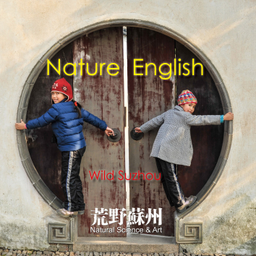
by 荒野苏州自然频道
Podcast Overview
<p style="font-size:17px;line-height:30px;margin:10px 0px;color:#333333;font-weight:900;" data-flag="subtitle"><img data-key="0" src="http://image.xmcdn.com/group39/M0A/5D/E1/wKgJn1plhrbgVbJUAALh8CyONP8189.jpg?op_type=4&device_type=ios&upload_type=attachment&name=mobile_large" alt="" data-origin="http://image.xmcdn.com/group39/M0A/5D/E1/wKgJn1plhrbgVbJUAALh8CyONP8189.jpg?op_type=0" data-large="http://image.xmcdn.com/group39/M0A/5D/E1/wKgJn1plhrbgVbJUAALh8CyONP8189.jpg?op_type=4&device_type=ios&upload_type=attachment&name=mobile_large" data-large-width="750" data-large-height="318" data-preview="http://image.xmcdn.com/group39/M0A/5D/E1/wKgJn1plhrbgVbJUAALh8CyONP8189.jpg?op_type=4&device_type=ios&upload_type=attachment&name=mobile_small" data-preview-width="140" data-preview-height="59" /><br /><span>主播:Ciana, Elysia, 飞鸟</span></p><p style="font-size:17px;line-height:30px;margin:10px 0px;color:#333333;font-weight:900;" data-flag="subtitle"><span>首播:每周五晚上18:00</span></p><p style="font-size:16px;line-height:30px;font-family:Helvetica, Arial, sans-serif;color:#333333;font-weight:normal;text-align:justify;" data-flag="subtitle"><span>这是一档由</span>喜欢大自然的三个观鸟爱好者一起合作、播出的自然类英文科普节目。</p><blockquote style="font-size:14px;margin:10px 0px;color:rgb(102, 102, 102);border-left:5px solid rgb(232, 232, 232);padding-left:15px;"><span data-flag="strong" style="color:#FC5832;word-break:break-all;font-family:Helvetica, Arial, sans-serif;"><span data-flag="bk-span" style="color:#666666;">如果你希望和我们一起,周末带孩子走进自然,</span></span><span data-flag="strong" style="color:#FC5832;word-break:break-all;font-family:Helvetica, Arial, sans-serif;"><span data-flag="bk-span" style="color:#666666;">请关注微信公号【<b>荒野苏州</b>】,<span></span></span></span><span data-flag="bk-span">申请成为“荒野俱乐部”会员。</span></blockquote><p style="color:#333333;font-weight:normal;font-size:16px;line-height:30px;font-family:Helvetica,Arial,sans-serif;hyphens:auto;text-align:justify;" data-flag="normal"><span>本专辑原创音频版权归“荒野苏州”所有,未经授权许可,严禁用于其他平台或商业用途!</span></p>
Language
🇨🇳
Publishing Since
1/21/2018
1 verified contact email on file for 自然英语
Pitch yourself as a guest, propose sponsorships, or reach out directly to the host.
Recent Episodes
January 11, 2025
New Species
<p style="color:#333333;font-weight:normal;font-size:16px;line-height:30px;font-family:Helvetica,Arial,sans-serif;hyphens:auto;text-align:justify;" data-flag="normal"><span>Hello, welcome to wild suzhou. Today I will be talking about the discovery of new species. </span></p><p style="color:#333333;font-weight:normal;font-size:16px;line-height:30px;font-family:Helvetica,Arial,sans-serif;hyphens:auto;text-align:justify;" data-flag="normal"><span>With there being over 2 million discovered and recorded species on earth, it may seem like scientists are getting close to documenting every single one, but this is far from the truth. It’s impossible to know exactly how many species there are and this number would be fluctuating constantly. Scientists are still discovering new species all the time. Scientists debate the estimate of how many total species there are on earth, guesses ranging from about 9 million to even tens of millions. A large part of this ambiguous number is because places like the deep ocean or the amazon rainforest are just so inaccessible and difficult to navigate. </span></p><p style="color:#333333;font-weight:normal;font-size:16px;line-height:30px;font-family:Helvetica,Arial,sans-serif;hyphens:auto;text-align:justify;" data-flag="normal"><span>Another question that might come up is how are researchers able to tell if a specimen they find is new, or already part of the immense amount of other species. The first thing they do after finding a species is by taking a detailed analysis of its biology and characteristics to see what it could be, and if they find it is unique enough, other scientists will weigh in and confirm or counter. A new technology is DNA sequencing, which is an even more accurate way to determine the makeup of an animal's genealogy. </span></p><p style="color:#333333;font-weight:normal;font-size:16px;line-height:30px;font-family:Helvetica,Arial,sans-serif;hyphens:auto;text-align:justify;" data-flag="normal"><span>Some of the most recently discovered animal species include the bright blue tarantula found in the mangroves of Thailand. The spider is not actually blue but it appears to be because of the way it’s hairs reflect light. Its venom is not enough to kill humans and since being discovered, people have started collecting them as pets. </span></p><p style="color:#333333;font-weight:normal;font-size:16px;line-height:30px;font-family:Helvetica,Arial,sans-serif;hyphens:auto;text-align:justify;" data-flag="normal"><span>Another is a collection of 6 slightly different species of pygmy chameleons, discovered in the mountains of Tanzania. The eastern Arc mountains are very biodiverse, and although the species were discovered in the same range, they are all slightly differently adapted to their unique biome. These chameleons can be as small as 1.5 centimeters. </span></p><p style="color:#333333;font-weight:normal;font-size:16px;line-height:30px;font-family:Helvetica,Arial,sans-serif;hyphens:auto;text-align:justify;" data-flag="normal"><span>Additionally, a new frog was discovered with a quality that scientists had never seen before, this being that the frog does not croak at all and is actually silent. It is called the Ukaguru spiny throated reed frog, and researchers have theorized that the spines on the throat serve as an identifier between them. </span></p><p style="color:#333333;font-weight:normal;font-size:16px;line-height:30px;font-family:Helvetica,Arial,sans-serif;hyphens:auto;text-align:justify;" data-flag="normal"><span>For wild suzhou I’m Elysia and thanks for listening. </span></p><span><br></span><br>
January 6, 2025
Animals that have repopulated
<p style="color:#333333;font-weight:normal;font-size:16px;line-height:30px;font-family:Helvetica,Arial,sans-serif;hyphens:auto;text-align:justify;" data-flag="normal"><span>In last week's episode I talked about the possibility of bringing back long lost animals from extinction, but this week I will talk about a more present issue that does not concern the prehistoric animals that have been lost to time. As the world’s climate changes, some animals are forced to adapt to their new habitat but for others, the decrease in their habitat is simply not sustainable and they are brought to the brink of extinction. However, due to conservation efforts there have been many species that almost vanished but have since repopulated. </span></p><p style="color:#333333;font-weight:normal;font-size:16px;line-height:30px;font-family:Helvetica,Arial,sans-serif;hyphens:auto;text-align:justify;" data-flag="normal"><span>Sea otters are an extremely important part of their marine environments that they exist in, especially because they are apex predators, eating sea urchins. If the sea otters were not there to keep the sea urchin population under control, this would be extremely detrimental to the kelp forests that they live in. The thing that first led to the decline of sea otter population was the demand for their extremely thick, soft fur due to the rise of the fur trade starting in the 1500s. However due to a lack of regulation, their population eventually dwindled to around a few thousand. However, in the last century, regulations on the fur trade and efforts to protect their environment has raised their population to more than 100,000. </span></p><p style="color:#333333;font-weight:normal;font-size:16px;line-height:30px;font-family:Helvetica,Arial,sans-serif;hyphens:auto;text-align:justify;" data-flag="normal"><span>An animal that faced a similar predicament was the blue whale, that also experienced a sharp decline in population due to hunting. Blue whales were once very common in all the oceans, but due to whaling their population jumped down to around 2000. They were sought after for their fat and oil when whaling peaked in the 1800s, which was a very useful substance at that time used in lamps, soaps, varnish and many more things. However, in the mid-1900s, regulations were placed and their population slowly started to recover. The practice of whaling was outlawed in 1971 in the US, but it is a hard animal to protect because its huge size means it cannot be bred and kept in captivity, and also since it migrates and not all countries have the same whaling regulations.</span></p><p style="color:#333333;font-weight:normal;font-size:16px;line-height:30px;font-family:Helvetica,Arial,sans-serif;hyphens:auto;text-align:justify;" data-flag="normal"><span>Other species that have just started their conservation efforts include Siberian tigers, giant pandas, and bison. </span></p><p style="color:#333333;font-weight:normal;font-size:16px;line-height:30px;font-family:Helvetica,Arial,sans-serif;hyphens:auto;text-align:justify;" data-flag="normal"><span>For wild Suzhou I’m Elysia and thank you for listening.</span></p>
December 20, 2024
Bringing back species from extinction
<p style="color:#333333;font-weight:normal;font-size:16px;line-height:30px;font-family:Helvetica,Arial,sans-serif;hyphens:auto;text-align:justify;" data-flag="normal"><span>Have you ever wondered what would happen if we recreated what happened in the movie Jurassic park? What if scientists actually did manage to bring back the dinosaurs through DNA cloning? Fortunately for humans, the chances of this are next to zero as the dinosaurs have been extinct for 66 million years. However, there is a chance that de-extinction -bringing back a species that has already been declared extinct-may be possible for some other long lost creatures. So what are some of the hypothetical ways that scientists have theorized about?</span></p><br><p style="color:#333333;font-weight:normal;font-size:16px;line-height:30px;font-family:Helvetica,Arial,sans-serif;hyphens:auto;text-align:justify;" data-flag="normal"><span>First of all, How scientists would hypothetically do this is through genome editing or cloning, in which they would take DNA samples from a similar living animal, compare it with the extinct species’, then essentially cut and paste parts of the living animals DNA and insert parts of the extinct species’ genetic code. After the genetic editing, they would transfer what’s called the new, hybrid nucleus into a donor egg of the living animal. If such a process ever happened, then the species created would not technically be exactly the same as the extinct species, but would share many genetic traits. </span></p><br><p style="color:#333333;font-weight:normal;font-size:16px;line-height:30px;font-family:Helvetica,Arial,sans-serif;hyphens:auto;text-align:justify;" data-flag="normal"><span> The reason it would not be possible to bring back dinosaurs is because the most essential part to bringing them back is having DNA that the scientists can use to create life. Since dinosaurs have not existed in many millions of years, all of the remnants of them have no DNA left in them, as their bones have no organic matter in them anymore and what remains is only minerals. Additionally, DNA breaks into smaller pieces over time due to exposure to the elements and it gets reclaimed by the earth. So for this reason, dinosaurs will not be coming back anytime soon, but what about other animals that went extinct more recently? </span></p><br><p style="color:#333333;font-weight:normal;font-size:16px;line-height:30px;font-family:Helvetica,Arial,sans-serif;hyphens:auto;text-align:justify;" data-flag="normal"><span>The Wooly Mammoth is one possible contender for de-extinction. Wooly mammoths lived in cold climates such as the arctic, which includes the northernmost parts of Eurasia and North America. Their habitat was the tundra which has a layer of permafrost, and this icy environment creates the perfect condition for preservation. Preserved mammoth DNA has been found through frozen carcasses so there are some teams of scientists that believe this return would be possible. </span></p><br><p style="color:#333333;font-weight:normal;font-size:16px;line-height:30px;font-family:Helvetica,Arial,sans-serif;hyphens:auto;text-align:justify;" data-flag="normal"><span>Although an interesting concept, the wooly mammoth, similar to the dinosaur, will probably remain a thing of the past as a big part of its extinction was due to the warming of the climate that came with the end of the ice age, so our current climate would not be very accommodating to them. But all of this goes to show the developments that scientists have made in regards to genetic editing that could have many applications in the natural world. </span></p><br><p style="color:#333333;font-weight:normal;font-size:16px;line-height:30px;font-family:Helvetica,Arial,sans-serif;hyphens:auto;text-align:justify;" data-flag="normal"><span>For Wild Suzhou, I’m Elysia and thank you for listening.</span></p>
286 total episodes available
Deep-dive analytics for 自然英语
Frequently asked questions
Have a different question and can't find the answer you're looking for? Reach out to our support team by sending us an email and we'll get back to you as soon as we can.
- What is 自然英语?
<p style="font-size:17px;line-height:30px;margin:10px 0px;color:#333333;font-weight:900;" data-flag="subtitle"><img data-key="0" src="http://image.xmcdn.com/group39/M0A/5D/E1/wKgJn1plhrbgVbJUAALh8CyONP8189.jpg?op_type=4&device_type=ios&upload_type=attachment&name=mobile_large" alt="" data-origin="http://image.xmcdn.com/group39/M0A/5D/E1/wKgJn1plhrbgVbJUAALh8CyONP8189.jpg?op_type=0" data-large="http://image.xmcdn.com/group39/M0A/5D/E1/wKgJn1plhrbgVbJUAALh8CyONP8189.jpg?op_type=4&device_type=ios&upload_type=attachment&name=mobile_large" data-large-width="750" data-large-height="318" data-preview="http://image.xmcdn.com/group39/M0A/5D/E1/wKgJn1plhrbgVbJUAALh8CyONP8189.jpg?op_type=4&device_type=ios&upload_type=attachment&name=mobile_small" data-preview-width="140" data-preview-height="59" /><br /><span>主播:Ciana, Elysia, 飞鸟</span></p><p style="font-size:17px;line-height:30px;margin:10px 0px;color:#333333;font-weight:900;" data-flag="subtitle"><span>首播:每周五晚上18:00</span></p><p style="font-size:16px;line-height:30px;font-family:Helvetica, Arial, sans-serif;color:#333333;font-weight:normal;text-align:justify;" data-flag="subtitle"><span>这是一档由</span>喜欢大自然的三个观鸟爱好者一起合作、播出的自然类英文科普节目。</p><blockquote style="font-size:14px;margin:10px 0px;color:rgb(102, 102, 102);border-left:5px solid rgb(232, 232, 232);padding-left:15px;"><span data-flag="strong" style="color:#FC5832;word-break:break-all;font-family:Helvetica, Arial, sans-serif;"><span data-flag="bk-span" style="color:#666666;">如果你希望和我们一起,周末带孩子走进自然,</span></span><span data-flag="strong" style="color:#FC5832;word-break:break-all;font-family:Helvetica, Arial, sans-serif;"><span data-flag="bk-span" style="color:#666666;">请关注微信公号【<b>荒野苏州</b>】,<span></span></span></span><span data-flag="bk-span">申请成为“荒野俱乐部”会员。</span></blockquote><p style="color:#333333;font-weight:normal;font-size:16px;line-height:30px;font-family:Helvetica,Arial,sans-serif;hyphens:auto;text-align:justify;" data-flag="normal"><span>本专辑原创音频版权归“荒野苏州”所有,未经授权许可,严禁用于其他平台或商业用途!</span></p> - How often does this podcast release new episodes?
This podcast updates daily.
- Where can I listen to this podcast?
This podcast is available on 4 platforms including Apple Podcasts, Spotify, and more. You can also use the RSS feed directly.
- Does this podcast accept guests?
No, this podcast does not typically feature guests.
Legal Disclaimer
Pod Engine is not affiliated with, endorsed by, or officially connected with any of the podcasts displayed on this platform. We operate independently as a podcast discovery and analytics service.
All podcast artwork, thumbnails, and content displayed on this page are the property of their respective owners and are protected by applicable copyright laws. This includes, but is not limited to, podcast cover art, episode artwork, show descriptions, episode titles, transcripts, audio snippets, and any other content originating from the podcast creators or their licensors.
We display this content under fair use principles and/or implied license for the purpose of podcast discovery, information, and commentary. We make no claim of ownership over any podcast content, artwork, or related materials shown on this platform. All trademarks, service marks, and trade names are the property of their respective owners.
While we strive to ensure all content usage is properly authorized, if you are a rights holder and believe your content is being used inappropriately or without proper authorization, please contact us immediately at hey@podengine.ai for prompt review and appropriate action, which may include content removal or proper attribution.
By accessing and using this platform, you acknowledge and agree to respect all applicable copyright laws and intellectual property rights of content owners. Any unauthorized reproduction, distribution, or commercial use of the content displayed on this platform is strictly prohibited.