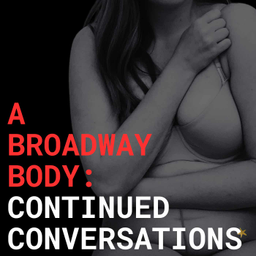
Podcast thumbnail for A Broadway Body: Continued Conversations

A Broadway Body: Continued Conversations

Claim This Podcast

by Megan Gill

37 episodes
Updated Daily
Accepts GuestsHas Sponsors
37

Podcast Authority

Beta
PoorBased on show quality, social media presence, reviews, charts, and more
Pod Engine
Quality75
Social0
YouTube0
Engagement0

Podcast Overview

I started A Broadway Body: Continued Conversations in January of 2025 in hopes of having intimate and transformative conversations about body image with performing artists. While my initial focus was to talk with artists because of the level at which our bodies are involved in our work onstage and onscreen, as the series evolved over this past year, I’ve come to understand that it’s vital to highlight an array of humanity through this project. Everyone has a body image story. Do you want to share yours? What started as a project to highlight performing artists’ body image stories has turned into a movement to showcase that every single person on this planet has a body image story - no matter who you are. My mission is to highlight these stories in hopes of: * Demystifying taboo around body image in our image-obsessed culture * Normalizing shared struggle within our physical beings * Helping people feel seen, validated, and therefore less alone in their own journey towards liberation in their body Subscribe over on Substack to get notified when I share a post, and please consider a paid plan to help support my work for either $10/month or $80/year. If you’d like to be a part of the series, send me a DM or email me at themegangill@gmail.com. I’m currently booking virtual conversations for 2026, and I’d love to talk with you. If you’d like to remain anonymous but still share your body image story - there’s a form to do so! Please reach out via email, and I’ll send it over to you ◡̈ I’m so looking forward to either chatting with you for a conversation or hearing from you via the form and highlighting your body image story! ---------- Disclaimer: While I’m not a licensed therapist, registered dietician, or medical health professional and cannot speak to body image topics from a clinical, trauma-informed place, I am an expert of lived experience. I’m an academic of my own body, and I’m passionate about facilitating conversations with other humans about their relationships with their bodies. I believe it’s important to continue conversations about healthy body image in creative spaces as a means to heal individuals as well as the collective whole. But just know the information presented in this medium is not professional mental health advice or medical advice, and any questions or concerns you have should always be directed to your health providers. <br/><br/><a href="https://www.continuedconvos.com?utm_medium=podcast">www.continuedconvos.com</a>

Language

🇺🇲

Publishing Since

1/7/2025

Unlock The Full Podcast Authority Score Report

See how your podcast performs across key metrics

37

Podcast Authority

Beta
PoorBased on show quality, social media presence, reviews, charts, and more
Pod Engine
Quality75
Social0
YouTube0
Engagement0
7
Excellent Areas
2
Good Performance
10
Growth Opportunities
excellent
Episode Length
43 minutes
Performing excellently!
good
Publishing Consistency
Every 14 days

Recommendations available

Unlock the full report to see detailed tips

poor
Episode Thumbnails

Recommendations available

Unlock the full report to see detailed tips

+16 More Metrics

Unlock comprehensive insights including:

  • • YouTube presence analysis
  • • Social media reach metrics
  • • RSS compliance scoring
  • • Podcast 2.0 features
  • • Technical standards
What's Included in Your Full Report

Detailed Analytics

  • Complete breakdown of all 19 authority metrics
  • Personalized recommendations for each metric
  • Industry benchmarks and comparisons
  • Technical RSS feed analysis and compliance scoring

Growth Strategies

  • Step-by-step action plans for improvement
  • Quick wins to boost your score immediately
  • Pro tips from successful podcasters
Get your free podcast insights report

See how your show performs across every key metric

Instant delivery
No spam
Attract Better Guests

High authority scores make your podcast more attractive to industry leaders and influencers who want to appear on credible shows.

Secure Sponsorships

Sponsors look for podcasts with proven authority and engagement. Your score demonstrates your podcast's value to potential partners.

Grow Your Audience

Understanding your strengths and weaknesses helps you make data-driven decisions to expand your listener base effectively.

1 verified contact email on file for A Broadway Body: Continued Conversations

Pitch yourself as a guest, propose sponsorships, or reach out directly to the host.

Recent Episodes

Episode thumbnail for Continued Conversations with Sara McKinley

June 23, 2026

Continued Conversations with Sara McKinley

<p><strong>Trigger Warning: In our conversation, we discuss diet culture, weight, and numbers pertaining to these topics. Please take care of yourselves as you listen and avoid if these topics might be triggering for you.</strong></p><p>Everyone please welcome Sara McKinley to Continued Conversations! Sara and I met through the acting world, and I’ve been wanting to chat with her for a while now, so I’m thrilled she joined me for a conversation about body image! Sara comes from the world of acting, and she also shares her lens on personal injury and navigating chronic pain.</p><p>In our conversation, we discuss…</p><p>* Navigating diet culture when represented by a parent</p><p>* Sara’s experience navigating a chronic illness</p><p>* How the medical system’s recommendation of “just lose some weight” isn’t always the answer</p><p>* Getting used to viewing yourself as an actor</p><p>* Being forced to sit face-to-face with yourself as a means to work through your personal self-image hurdles and biases</p><p>* How injury impacted Sara’s relationship with her body</p><p>* Advocating for yourself and deeply listening to what your body needs, especially living with a chronic illness</p><p>* We’re the ones who notice our bodies’ fluctuations the most</p><p>Along with diving deep into the throes of moving through a personal injury that impacted her life and career, as well as discussing how she’s affected by chronic pain on a daily basis, Sara so delicately opened up about the lessons she learned from her dad’s dieting, as well as sharing her own relationship with food. Healing from diet culture is not linear, and I’m grateful to Sara for talking about this subject, along with others, so compassionately. I truly, truly cannot wait for you to hear our conversation!</p><p><p><strong>“ I think the hardest part for me is when it's something you deal with every day or almost every day or so much in your life, at what point do you know when it's something you can push through and when it's something you have to listen to? I was at the gym the other day, and I was like, “I just don't have the energy to be here.” If I pushed through, would I have more energy at the end of it, or do I need to listen to my body and go home? It's really such a hard thing to kind of figure out for yourself, and you're kind of just like guessing, you know? At what point do I feel like I'm being lazy if I don't try, or am I listening to my body?”</strong></p><p><strong>- Sara McKinley</strong></p></p><p><strong>Below is a text insert of our conversation that stuck with me, starting at around the 11-minute and 24-second mark:</strong></p><p><strong>Megan Gill:</strong> I’m curious to know, as an actor, how has your relationship with your body and your self-image influenced how you show up in your work in that realm?</p><p><strong>Sara McKinley:</strong> Yeah, I feel not being stick thin and watching all of these people get cast that are, some things you – you can’t even change that about yourself. I’m never gonna be that skinny, even if I tried, which I shouldn’t. But there’s the body image that way.</p><p>And I think for me personally, my biggest insecurity is my double chin, and even just in self-tapes, having to position my camera in a certain way so that I don’t see myself having a double chin when I look back at it, you know? And some of that stuff nobody else even notices. It’s just you. Even me, I got my headshots last week, and looking at my headshot from my eyes, I’m like, “Well, that’s wrong, and that’s wrong, and I don’t like that, and I don’t like that.” And then having other people look at them and be like, “I don’t see any of that.” I think that’s the biggest thing is you have to get so used to seeing yourself and knowing that that’s not how other people are seeing you. It’s just how you, you, yourself, are seeing you, and you’re seeing all the parts that you don’t wanna see right away, that’s what stands out first.</p><p>So I think that’s the hardest thing is – sometimes I’m like, “Oh, well if I lost the extra 10, 20 pounds that I wanna lose, then maybe my double chin would go away.” But also, maybe it wouldn’t, you know?</p><p><strong>Megan Gill:</strong> Yeah.</p><p><strong>Sara McKinley:</strong> That doesn’t necessarily – that’s not necessarily something that’s gonna go away. That is just how we were built, you know?</p><p><strong>And another chunk of conversation jumping to around the 17-minute and 40-second mark:</strong></p><p><strong>Megan Gill:</strong> I know that you have dealt with, in recent times, a lot of injury. You had injured your back, which is a big deal. I mean, I’m curious to know how, having gone through that and working through that, has also affected your relationship to your body or how you modified or navigated those times. Because injury, and especially as an actor too, when your physical body is such a part of your work, it has a big impact on how we could view ourselves too. So I’m curious to hear about your journey with that.</p><p><strong>Sara McKinley:</strong> Yeah. Yeah, so I broke my back two years ago. I got a compression fracture in my T12s from falling off my horse. I was in a back brace for three months, which was hard because, one, I couldn’t really audition for three months because you can’t really book anything when you can’t bend or twist or lift. I talked to my agents, and I was like, “If it’s an audition for something far enough out, you can submit me to it. But generally –.” I think I did two auditions in my back brace. I was like, just throwing ‘em out there.</p><p>But yeah, it was hard because that year, so in January, I had hired a personal trainer, an online trainer, and I just started. I was gonna commit to figuring out my health issues, because I had chronic pain too, before that happened. And the funny thing is I actually made an appointment for physical therapy for my hips the day I broke my back, and I had to call them and be like, “Actually, I can’t go to physical therapy for my hips, because now I can’t do anything.”</p><p>And so, yeah, I was maybe two weeks into my workout program and tracking my food and everything, and I was like, well, now I’m in a back brace. Luckily, I worked it out with them that I could pause my program that I paid for and wait three months. But having that motivation and then being stuck with now you can’t move hardly at all for three months. And also wearing a back brace in public, it’s just not, it’s not attractive. So dealing with that too, it was hard.</p><p>I think the biggest thing is I’m really independent, so needing to ask for help and stuff was hard. Not being able to, I mean, just not being able to move very much. It was difficult, and honestly, it was really only for the first month that it was really that hard. I started to kind of phase out of the back brace in the last month and a half, but just even – I used to do background work, and I couldn’t even do background work because I was like, “They’re gonna make me sit in a hard chair for hours at a time where I’m gonna have to try to hide the back brace or all of this stuff.” And I was like, I just have to commit to not doing anything for several months. It was the beginning of the year, it was February, it was like, I know it’s pilot season, and I know there are auditions happening, and I’m not doing any of it. So that was frustrating. And then, yeah, just not being able to be active, and yeah. I could have eaten healthy while I was laying on a couch, but of course I didn’t, which surprisingly I wound up losing weight. But most of it was probably muscle because, you know, you wear a back brace for three months; you’re losing all of that core muscle that holds you up.</p><p>Yeah, I think the interesting thing is how motivated I was afterwards. I was back in the gym, I was back riding my horse right after three months.</p><p><strong>Megan Gill:</strong> Wow.</p><p><strong>Sara McKinley:</strong> I wound up being probably the fittest I’ve ever been that summer and fall, which helped a lot because I needed to build all that muscle back up. And then, of course, I wound up gaining 20 pounds back, but, you know, fluctuation, that’s how it goes.</p><p><strong>Megan Gill:</strong> Yeah, yeah, yeah. I know. I feel you.</p><p><strong>Sara McKinley:</strong> But yeah, I think the hardest thing was just having to take a pause and feeling you couldn’t really do anything and you were just waiting for it to be better. And also just the frustrating thing of like, I’m already chronically ill, and I already have chronic pain, and now I have such a big injury to deal with on top of it. Yeah, it was not a great time. But, you know, I luckily recovered pretty well from it. I didn’t need surgery, and I just…</p><p><strong>Megan Gill:</strong> Thank goodness.</p><p><strong>Sara McKinley:</strong> Yeah, yeah. Honestly, I never even got my hospital bill, which is, which is good because they were saying that my insurance wasn’t taken at that hospital, so I just don’t question it.</p><p><strong>Megan Gill:</strong> Yep. Nope. Perfect. Love that for you!</p><p><strong>Sara McKinley:</strong> Yeah. I feel the only way it really affected my acting was not being able to do auditions. And that’s the hardest thing as an actor is you spend so much time waiting around for anything to begin with, and to have – I mean, at that point I had been in LA for almost five years, so you’re trying at any point to build any kind of momentum, so to have to stop is hard, when it’s not your choice, especially.</p><p><strong>Megan Gill:</strong> Yeah. Yeah, I’m so sorry that happened, and I appreciate you for sharing about it. And also, I want to point out how, to go off of what you said about how you had so much motivation after the fact, how incredible that not only you healed so quickly, that your body was able to heal itself, and that you were able to just get back in it. Do you feel you had a different appreciation for the overall function of your body and what it can do for you after you had gone through that experience?</p><p><strong>Sara McKinley:</strong> I think it’s hard because I already have such a not-great relationship with my body just because of the lack of functionality to begin with, of just I can’t get it to operate a lot of days just on a normal basis, just because of how I exist. But I think if I think about it, I’m like, wow, it’s crazy how well I healed from an injury like that when I feel so terrible on most days, you know? And yeah, it could have been so much worse. And the way I fell, I could have also shattered my pelvis, or I could have broken a bunch of things. And the fact that only one single vertebra was compressed and nothing else is kind of crazy.</p><p>So yeah. And I’m like, maybe, in a way – my body’s really hypermobile, which is part of my issues, and I’m like, maybe in a way that saved me a little bit when I fell. I don’t know. I don’t know if that’s a real thing or not, but yeah, I think the motivation was just like I don’t like not feeling strong, so what I can do is try to get stronger. So the fact that I couldn’t do that for three months, I think coming out of that I was like, now I need to, because if I don’t build back the muscle in my core, then I’m gonna continue to be in pain. Because I think, you know, building the muscle back up is what made the pain less afterwards, you know?</p><p><strong>Megan Gill:</strong> Yeah. Yeah, yeah. Wow. What an interesting piece to hear you say that maybe your hypermobility, which is something that causes you a lot of pain on a daily basis, could have potentially been something that saved you from a deeper injury.</p><p><strong>Sara McKinley:</strong> Yeah.</p><p><strong>Megan Gill:</strong> Whether that’s true or not, it’s really lovely that you have that thought about it and that like – I am so sorry that you suffer from chronic pain on a daily basis. I do not know what that’s like, and I have a lot of sympathy for you, and I’m just feeling for you in terms of how that goes. But I just love that you shared that and that you’re able to look at it from that perspective.</p><p><p><strong>“ I think that’s kind of the biggest thing for me is just like gotten there and then losing it and then wanting to get back there and then, you know, that battle of honestly just 20 pounds is the whole difference. People looking at you, they can’t tell the difference. It’s just about you at that point. And sometimes it’s about, “Oh, I used to be able to plank for a minute. I felt so strong, and now I can’t even do 10 seconds, and now I feel so weak, and I don’t like feeling weak,” and, you know, all of that. I don’t think it probably affects my acting that much because it is such a small difference. Sometimes I’m like, “Oh, my acting profile says I’m this weight, and I gained 10 pounds. And what if they care?” And they never do because they don’t see your body, and they don’t know what that weight looks like on your body.“</strong></p><p><strong>- Sara McKinley</strong></p></p><p>Hi, I’m Sara McKinley! I’m an actress, published author, former dog trainer and long time equestrian, originally from Ann Arbor, Michigan. I got my BFA in Acting from Michigan State University and have been in LA for almost 7 years now. I love to read, travel, hang out with my animals and do anything creative. I’m a huge MCU and fantasy fan, and I hope one day I get to play a role in something similar! My dream is to ride horses for movie productions or work with dogs on set, while also acting as well!</p><p><a target="_blank" href="https://www.instagram.com/saramckinley/">Follow Sara on Instagram!</a></p><p><a target="_blank" href="https://www.imdb.com/name/nm11341419/">Sara’s IMDb</a></p><p><a target="_blank" href="https://www.amazon.com/dp/B09XZMPNT6?ref=cm_sw_r_ffobk_cp_ud_dp_D9SRCZVBRE32S4P1DXWF&#38;ref_=cm_sw_r_ffobk_cp_ud_dp_D9SRCZVBRE32S4P1DXWF&#38;social_share=cm_sw_r_ffobk_cp_ud_dp_D9SRCZVBRE32S4P1DXWF&#38;bestFormat=true">Buy Sara’s (beautiful) book!</a></p><p><a target="_blank" href="https://resumes.actorsaccess.com/saramckinley">Sara’s Actors Access</a></p><p><p><strong>Subscribe to the A Broadway Body: Continued Conversations newsletter + sign up for a paid plan to support me in creating more of this content for you ❤️‍🔥</strong></p></p><p><strong>If you want to be a part of the conversation… either reach out to me via email at themegangill@gmail.com to schedule a conversation or </strong><a target="_blank" href="https://airtable.com/appfBhngQH3gNY5LF/pagGShESknIOiuYjY/form"><strong>fill out this form</strong></a><strong> to share your body image story anonymously.</strong></p><p>A couple of notes to ensure this is a safe space for my guests to share their intimate and vulnerable body image stories in:</p><p>* These conversations are quite nuanced, complex, and oftentimes very vulnerable. Remember that everyone has their own body image story, and while someone else’s might look differently than yours, I encourage you to keep an open mind and stay empathetic.</p><p>* That being said, I welcome your support of my guests in the comments. Please be kind and considerate with your words.</p><p>* Thank you for being here. By sharing this type of content, my hope is to inspire collective reflection and cultural questioning. Thank you for supporting me in exploring the effects of our society’s beauty norms and body standards on human beings existing in today’s world.</p><p></p><p><strong>Do you have a friend, family member, or peer who might be interested in being a part of the conversation? I’d be honored if you could help me spread the word about Continued Conversations!</strong></p><p>While I’m not a licensed therapist, registered dietician, or medical health professional and cannot speak to body image topics from a clinical, trauma-informed place, I am an expert of lived experience. I’m an academic of my own body, and I’m passionate about facilitating conversations with other humans about their relationships with their bodies. I believe it’s important to continue conversations about healthy body image in creative spaces as a means to heal individuals as well as the collective whole. But just know the information presented in this medium is not professional mental health advice or medical advice, and any questions or concerns you have should always be directed to your health providers.</p> <br/><br/>Get full access to Continued Conversations with Megan Gill at <a href="https://www.continuedconvos.com/subscribe?utm_medium=podcast&#38;utm_campaign=CTA_4">www.continuedconvos.com/subscribe</a>

Episode thumbnail for Continued Conversations with Evan Neilson

June 9, 2026

Continued Conversations with Evan Neilson

<p><strong>Trigger Warning: in our conversation, we discuss weight, weight loss, diet culture, over-exercise, disordered eating habits, and more. Please take care of yourselves as you listen and avoid if these topics might be triggering for you.</strong></p><p>Everyone please welcome Evan Neilson to Continued Conversations! Evan is my very first male guest on this series!!! Evan and I were connected through his sister, Megan Neilson (who I’ve known for many years now), and I’m so grateful he was open to chatting body image in the arts with me! Evan comes from the high school and college theatre world, as do I, and he is now an educator with special ed students and still works within the arts and performs today. Our self-image stories of growing up as young kids and coming into adulthood were oddly aligned, so it was truly a joy to dive into this topic with Evan.</p><p>In our conversation, we discuss…</p><p>* Being the token “non-thin” (or, as we said in the nineties, “husky”) role both onstage and in real life in high school</p><p>* The intersection of thin bodies being cast in leading roles and Evan’s journey with that very experience both in his acting and in his real life - and flipping that on me, where I share my story with this exact experience as well</p><p>* The dieting industry and the explosion of social media impacting our self-image as young people</p><p>* The freshman 15, a negative/toxic “grindset” in college, and the competition amongst male friend groups when it comes to fitness</p><p>* The college environment driving Evan to adopt disordered eating habits</p><p>* The lack of education on how to best fuel our bodies: “All food is better than no food”</p><p>* Moving out of the all-or-nothing mindset when it comes to food and exercise</p><p>* Rewiring our brains to be kinder to ourselves and our bodies</p><p>* Leading from a place of grace and care and joy - and most importantly, by example of being true and genuine to yourself</p><p>* Supporting kids (and all people) operating at medium capacity instead of 100% evry single day</p><p>* The harmful impacts of “looksmaxxing” on men in our current society</p><p>Evan is a joy of a gentleman, and I have been thinking about this conversation ever since we recorded. There are so many important points we touched on here. We opened the book and talked through a lot of poignant themes within body image specifically when it comes to the male experience, and I cannot wait for you to hear our very important conversation!</p><p></p><p><p><strong>“ Like you mentioned, how guys talk about it or engage with it or not engage with it, it's just different, you know? Just kind of the one-off comments of, “Ah,” you know, “I'll get in shape one of these times.” That's kind of the vibe, and it becomes a competitive thing with the people within male friend groups. And going to a college gym, I mean, a frightening idea. There are so many things I would do before stepping into the lower level of the Arc [college gym] again, you know? Working out around people, it's just not for me.”</strong></p><p><strong>- Evan Neilson</strong></p></p><p><strong>Below is a text insert of our conversation that stuck with me, starting at around the 30-minute and 55-second mark:</strong></p><p><strong>Evan Neilson:</strong> I don’t know who said it or where I heard it from, but it’s been in my brain more recently is those moments where either you say something unkind to yourself, or you think, “Oh, maybe I don’t need this,” or, “Yeah, maybe I want this, but I’m not gonna get it.” Everyone in the arts community, especially, we all want to put good out there into the world and be good people to be around. You are also a person, you know? You are also a person to be nice to, and so, you being nice to yourself will have as much, if not more, of an impact compared to you being nice to another. And so, that goes beyond just body stuff, but just, you know, doing things that you like, doing stuff that brings yourself joy.</p><p>Going back to hustle culture, you know, I’m on spring break, and I’m like, I just feel so – what am I – what can I be doing right now? I’m wasting this time. And then it’s like, oh, there are actually many things I enjoy doing that are just as helpful for me in the long term and in the short term than me doing something that feels more productive or important, what have you. Yeah.</p><p><strong>Megan Gill:</strong> Yeah, it’s rewiring our brains.</p><p><strong>Evan Neilson: </strong>Kind of. Kind of, yeah. And it just takes time. It really does take a lot of time. And thinking back to – I’m not in therapy currently, but I did a little bit of therapy after getting outta school. Not to focus on the body stuff, because I had therapy for a couple of years during school. It was more focused on my anxiety. My anxiety got really bad right after finishing school. And I actually learned that’s kind of a common thing is right after you graduate college, your worries become less about your grades – your worries about your grades go away, and then it becomes, “I think I’m gonna get murdered,” you know? That’s what it turned into for me, for whatever reason.</p><p>And so, I was going and seeing a therapist for that, and once we kind of started to finish up, you know, for whatever reason, a few months in, he was like, “It’s interesting.” Even at that point, he was like, “You’ll say, ‘I struggle with my body,’ but that’s good. I’m done with that now.’” I still, at that point, was kind of pushing it away like, you know, a box that you don’t wanna unpack, you know, in the basement or whatever. I was still kind of treating it that way.</p><p>But now, with just some more distance and looking back on it, and then yeah, thinking about it in the sense of I treated myself that way, in the same way you think about if I treated another person that way. It’s like, have grace for yourself and patience, but also like, yeah, it’s fucked up I did that.</p><p>So I’m at that point now where more stuff is maybe – with some more distance, I can kind of process and intellectualize things a little bit more. Again, not always the best thing to do, to intellectualize your feelings and your body and stuff, but I feel like I’m at a point now where I think just the more and more experience I have in working with students that, you know, frankly, have way more difficult and complicated lives than I had as a child. Those things that you say to them or things that you want them to understand or process, they start to make their way back to you, eventually, as the teacher.</p><p>And so, yeah, now I think working in special ed where some students may have learning disabilities, some students come from an emotionally difficult home, so they struggle to regulate their emotions in the school environment and stuff. Again, going back to internalizing a bunch of stuff you saw as a kid, you know, I’m trying to put messages out there, and the other people I work with are trying to put messages out there to kids. And some of that stuff does start to, you know, work back to you.</p><p>Like, for example, I have a colleague who’s just awesome, an xperienced special ed teacher. She’s firm in expectations, but also is just the most gentle person. She started throwing out there at least medium effort as an expectation, where, yeah, we’ve been told that we need to do as much as we possibly can at every second, operate on 100%, you know, capacity. But it’s like, not every day is gonna be that. I feel like I’ve said that to – I’ve said, “Not every day is gonna be an 100% day,” to kids, a lot. But then when you start to take in what it means yourself, as a, you know – I mean, I’m almost 26, so again, I am an adult. I’m almost there. In a few years, I’ll be there. Yeah, if you’re operating at 50% capacity, that’s okay.</p><p><strong>Megan Gill:</strong> Yeah.</p><p><strong>Evan Neilson:</strong> Especially if you already worked the previous day or, you know, have other stuff going on. Not every day is gonna be your, your rockstar day, and that’s fine. Fill that space with, you know, the more joyful things you want to do and that kind of stuff.</p><p><strong>Megan Gill:</strong> Yeah, because joy is so important, for sure. And also, we have to give ourselves grace. We have to give our bodies grace. We have to give our minds grace. And I think that that’s so, so wonderful that you and your colleague are putting that information out there, especially planting it in young people’s minds. I’m curious to know if there’s anything else that – everything that you had gone through in terms of your upbringing and your relationship to your physical body, if there’s anything else like that that you are doing with your students or things that are a part of your story that you’re trying to almost give back to the young people you’re working with today, in a sense.</p><p><strong>Evan Neilson:</strong> Yeah, I mean, like anybody who became a teacher, you have the teachers you think back on. It’s like, okay, I really would like to emulate what those guys were doing for me and my peers. And going along with that, you have the bad ones. And it’s like, okay, I definitely do not want to emulate that person. So that’s a thing for me, for sure. I think for, I mean, now obviously all young people need a boost, need our help, need everything we can give them. But young men, you know, these guys aren’t gonna see as many male teachers coming up through high school and stuff, just given the political state of things and how easy all these guys can get ensnared into this stuff, you know, and just try to show – well, unfortunately, I’m not really allowed to make, you know, soapbox political stuff in the classroom, even though, you know, I may like to.</p><p>I’m trying to show a more realistic – I don’t know if realistic is the right word, but, you know, not traditionally masculine in the classic Hollywood sense. But, so just being someone who, you know, is willing to look silly. That’s a big part of being a teacher. You know, showing them that you can make a fool of yourself. I’m pretty open with the passions I’m into, so there is a student who is very much hyper-fixating on Hamilton right now. And so, for me, I’ve moved on, but at that time, for me, it was very intense. Ask anybody I know. The Hamilton era for me was extremely intense. So given that, you know, I’m like, oh yeah, I know everything you’re talking about, this girl who’s kind of just getting into it. Then yeah, trying to just keep a cool head in situations. You know, just these young men that just get so angry, that are angry at themselves, angry at, you know, authority figures in their lives, angry at politicians or whoever else, just trying to show them to accept things and, of course, be be kind and loving to the women in their lives as well.</p><p>I mean, going back to this line of gender, really just not how I’ll talk to a female student or a male student. I’m the same calm person, and for these kids of the school that I’m at, you know, these are kids that struggle to get to school, many of them. And so, I’m gonna do everything I can to get them to want to come back. So, you know, be someone who is – you know, I think back. I had a couple, like – yeah, sometimes elementary school teachers, they get weirdly comfortable, and they’ll make a weird comment about your belly or something. Like, those are things that stuck with me, you know?</p><p><strong>Megan Gill:</strong> Yeah.</p><p><strong>Evan Neilson:</strong> I was getting in a costume for, it was a musical or a school play or something. And my belly got poked, and she was like, “Just watch that, there.” There was a poke. I’m certain there was a poke. So I mean, yeah, no it’s crazy.</p><p><strong>Megan Gill:</strong> An educator.</p><p><strong>Evan Neilson:</strong> Yeah. It wasn’t my teacher, but it was someone who was helping with the school play, or something like that.</p><p><strong>Megan Gill:</strong> Still!</p><p><strong>Evan Neilson:</strong> They were like, “We want to make sure this costume stays on you, buddy.” You know, that kind of thing. And so, I’m probably overly cautious to a lot of these issues, but it’s better than the alternative, you know?</p><p><strong>Megan Gill:</strong> Absolutely. I think we need some more of that, you know?</p><p><strong>Evan Neilson:</strong> Mm-hmm. Yeah. Just drawing those clear boundaries, you know, and yeah, just showing kids what the right things are to say, and the right ways to respond in situations and what the clearly wrong ways are. And yeah, so just doing what I can to – you know, I mean, it’s tough for these young guys, you know, in this very – going back to, I mean, this is a whole can of worms, but right-wing politics and body standards, there’s some synergy there.</p><p><strong>Megan Gill:</strong> Yep. There sure is.</p><p><strong>Evan Neilson:</strong> So, trying to communicate all of that with my eyes and not being able to say it, you know, as much as possible.</p><p><strong>Megan Gill:</strong> You’re like, “I am transmuting messages to you right now, from my brain to your brain!”</p><p><strong>Evan Neilson:</strong> I really try to. I really try to.</p><p><strong>Megan Gill:</strong> Yeah. That’s gotta be tough, though, to not be able to maybe, as an educator, educate on things that are so important to us, you know? Because it’s not the place in a school. That’s tough. It’s gotta be tough.</p><p><strong>Evan Neilson:</strong> Yeah. Yeah. It’s a tough time right now for educators. Yeah, I mean, for me, you know, I think, yeah, you really can just try and embody your political views and how you see the world just by the way you act, right? So yeah, I don’t know. I’m in a school where we’re really just happy that they’re there, and we’re so thrilled and happy to get them to the finish line of graduation that I couldn’t see how anybody who, you know – I couldn’t see anybody who is okay with everything going on in this school environment that is all about, you know, picking these kids up that really need it, really need it, and don’t have the support at home. And somehow, SNAP benefits and free school lunch, that became a talking point within the last few months. And all these, all these kids get that. And just being sure to not make different obstacles that students go through, not trying to, you know, have those things be the kids’ defining features. And yeah, just being that kind, calm person every day. That’s always kind of the goal. And yeah, specifically thinking about body image and all that. At this point, I’m feeling very body neutral, body neutral-positive right now. So I’m just trying to communicate that with my eyes, as I said.</p><p><p><strong>“ I do love my brain. There's a lot of silly knowledge in there. I'm a trivia person, so I like to say there's some stuff I wish that I could clear out so there could be room for more useful stuff, but I do like that about my body a lot. But then on a more physical level, I love to run. I love to run on a primal level. I love to run for no reason. I love to run from my car to the doors of Jewel Osco for no reason. When I'm out walking the dog, and the dog starts to run, I'm going with. It's very primal.”</strong></p><p><strong>- Evan Neilson</strong></p></p><p>Evan is a special education teacher and lover of many things- movies, theatre, music, dogs, basketball, running, biking… OH, and ice cream! Outside of the classroom, one could often find him at the movie theater if he’s not busy coaching speech team or working on a stage production.</p><p>Evan doesn’t post much on socials but feel free to give him a follow on Twitter @hellomrevan (he will never call it X) or on Letterboxd @evan_neil.</p><p><p><strong>Subscribe to the A Broadway Body: Continued Conversations newsletter + sign up for a paid plan to support me in creating more of this content for you ❤️‍🔥</strong></p></p><p><strong>If you want to be a part of the conversation… either reach out to me via email at themegangill@gmail.com to schedule a conversation or </strong><a target="_blank" href="https://airtable.com/appfBhngQH3gNY5LF/pagGShESknIOiuYjY/form"><strong>fill out this form</strong></a><strong> to share your body image story anonymously.</strong></p><p>A couple of notes to ensure this is a safe space for my guests to share their intimate and vulnerable body image stories in:</p><p>* These conversations are quite nuanced, complex, and oftentimes very vulnerable. Remember that everyone has their own body image story, and while someone else’s might look differently than yours, I encourage you to keep an open mind and stay empathetic.</p><p>* That being said, I welcome your support of my guests in the comments. Please be kind and considerate with your words.</p><p>* Thank you for being here. By sharing this type of content, my hope is to inspire collective reflection and cultural questioning. Thank you for supporting me in exploring the effects of our society’s beauty norms and body standards on human beings existing in today’s world.</p><p></p><p><strong>Do you have a friend, family member, or peer who might be interested in being a part of the conversation? I’d be honored if you could help me spread the word about Continued Conversations!</strong></p><p>While I’m not a licensed therapist, registered dietician, or medical health professional and cannot speak to body image topics from a clinical, trauma-informed place, I am an expert of lived experience. I’m an academic of my own body, and I’m passionate about facilitating conversations with other humans about their relationships with their bodies. I believe it’s important to continue conversations about healthy body image in creative spaces as a means to heal individuals as well as the collective whole. But just know the information presented in this medium is not professional mental health advice or medical advice, and any questions or concerns you have should always be directed to your health providers.</p> <br/><br/>Get full access to Continued Conversations with Megan Gill at <a href="https://www.continuedconvos.com/subscribe?utm_medium=podcast&#38;utm_campaign=CTA_4">www.continuedconvos.com/subscribe</a>

Episode thumbnail for Continued Conversations with Mallory Gonyea

May 26, 2026

Continued Conversations with Mallory Gonyea

<p><strong>Trigger Warning: in our conversation, we discuss themes surrounding body image, the beauty industry, and diet culture. Please take care of yourselves as you listen and avoid if these topics might be triggering for you.</strong></p><p>Everyone please welcome Mallory Gonyea to Continued Conversations! Mallory and I met through The Spark Membership (shoutout Amy McNabb for bringing us together!), and I’m so grateful she was willing to sit down with me for a body image conversation.</p><p>In our conversation, we discuss…</p><p>* Existing at the intersection of being an artist and an athlete</p><p>* Rebuilding trust with your body after an injury</p><p>* How to manage when our work/sport is so closely tied to our identity, and the ability to execute our work/sport is stripped from us</p><p>* Mallory’s journey growing up a tomboy and connecting to her femininity and working to appreciate her body</p><p>* Because of today’s beauty standards (especially in Hollywood), Mallory grappling with the feeling like she has to choose between her career and a healthy body</p><p>* Working out and lifting weights for bodily longevity and strength as we age</p><p>* The implications of weight loss drugs on our whole system</p><p>* Representing your body type in this art form in hopes of showing a young person out there that their body, too, is good</p><p>* Mallory’s thoughts on how current female superhero roles are cast</p><p>* Taking up space as women, in our lives and in our art</p><p>* Helping other women see that strong is beautiful</p><p>Mallory is a Nashville-based actress who recently started her own production company. She also used to be a semi-pro soccer player, so her understanding of her body and self-image runs deep. Mallory dropped so many incredible tidbits in our chat - I was blown away by her knowledge of the body, and I cannot wait for you to hear our conversation!</p><p></p><p><p>“My grandmother, at the end of her life, she was bedridden because she did not take care of herself physically. She didn’t lift weights. She had had a stroke, and she didn’t do the rehab and the physical therapy that she needed. And I’ve seen that, and I can’t unsee that. And that’s what’s so concerning to me about this emphasis on becoming smaller as women, not just to take up less space, but it’s like we need muscle. When we’re in our thirties, we start losing muscle and collagen and all these other things that are so important, so quickly. And if we are not strength training, if we are not trying to be strong, we are gonna lose independence. I’ve seen it happen, and it takes off years of your life. And so, I’m always having to grapple with, do I have to choose between my career a healthy body. And it’s like I don’t want to do that, right? It’s like, how do we find space for both??”</p><p><strong>- Mallory Gonyea</strong></p></p><p><strong>Below is a text insert of our conversation that stuck with me, starting at around the 4-minute and 32-second mark:</strong></p><p><strong>Megan Gill: </strong>To call yourself an athlete, and then to have your body betray you in this way, and have something completely, like you said, out of your control happen to your body and then have to have to grapple with that is, I can only imagine….</p><p><strong>Mallory Gonyea:</strong> Like I said, it’s something that you build your identity on, right? And it’s like, I know this about myself. I know I am strong. So when you are no longer strong, when you’re stripped of that, you’re like, okay, this thing that I found value in the thing that I found my worth in is gone. You’re like, well, how do I – where’s my value? Where’s my worth, then?</p><p>I came out of the womb an athlete, very strong. If you look at my baby pictures, I had muscle definition, right? And being a woman, back when we were – I was born in ‘97, so grew up in the 2000s, right, where skinny was seen as beautiful. And it was the time where it was like, what do they call it, “heroin chic” was the in thing, right? And so, I was growing up where I’m just naturally strong, naturally a muscular woman. And I had to do a lot of learning on how to find that beautiful. And so, when that gets taken away, you’re like, well, what am I now, right?</p><p>So that’s kind of been just a whole journey for me, like my whole life growing up, of grappling with finding my identity and being strong, but also still not that being the accepted thing. And so, when that is taken from you, when that is your crutch of like, well, I’m gonna lean into being a strong woman, an athletic woman, and then that’s stripped away as well, it’s just huge mind – you know?</p><p><strong>Megan Gill:</strong> Oh my gosh, yes. It’s like not only have you – and I don’t mean to speak for you, but I’m curious about all of the work you did with yourself mentally to accept your physical body, your athletic body as an athlete, and then to have put in all of the work to get to a place with that. But to have done all of the mental gymnastics, to get to this place of like, ah, okay, this is my body, and I am an athlete and I can play this incredible sport with my body. And then to have it, like you said, stripped away and then to have to like do mental gymnastics times two. What was that journey like for you coming out of that?</p><p><strong>Mallory Gonyea:</strong> Well, yeah, to be completely vulnerable and honest with you, I was never like this girly girl, or this, you know, little princess, and I found my identity and my worth in what my body could do, not necessarily what it looked like. So I really leaned into the tomboy-ness of it and the, well, I don’t have to look pretty if I’m a strong athlete, right?</p><p>I don’t have to try to be feminine. I can just be me, and it can be focused on what I’m good at.</p><p>All my teammates growing up, they loved going shopping for makeup and they loved doing all these girly things, and I just never identified with that, or I don’t think I ever felt safe to. I didn’t feel comfortable in my femininity. And honestly, I’m still on this journey. I’m still learning how to love this body that I’m in. It’s been a whole journey of never quite feeling like I fit anywhere. But if I can be really good at something and if I have something to bring to the table, well, then that’s fine. It doesn’t matter how I look.</p><p>But then when you pivot into the acting industry, when you find out that that’s completely different, that the whole industry is based off of looks right, and you grow up and you see all these movies that are about athletes. Well, if you look at the ones that are about male athletes, they’re ripped. They’re very strong. They’re shredded. You look at these female athletes, they don’t match what I’m seeing in the real world, right? I always was between a size two and a six, and I still felt too big to play an athlete on screen. I didn’t see myself represented in the women who were playing athletes on screen. And I think we’ve gotten better, but we’re still a long ways away from that, right? It’s like, “Oh, well she shouldn’t be too muscular because we don’t want her to be too bulky.” Where it’s like you look at any of the women athletes in the world, they have muscle. They have to have muscle to be doing the things that they’re doing. And for some reason, Hollywood has equated thinness with being athletic, and that’s just not true.</p><p><strong>Megan Gill:</strong> Yeah.</p><p><strong>Mallory Gonyea:</strong> And so, I have found myself in a battle recently of like, okay, I’m no longer a competitive athlete, but I’m still an athlete, and I’m still constantly – even at my fittest, when I was a size two or four and really lean, I still felt like I needed to lose ten pounds. Like, “If I lose ten pounds, this will help me get cast,” or, you know, I see all these young, pretty, thin girls are the ones that are getting cast. And it’s like how am I super fit and super, you know, proud of my athleticness, but also wanting to not be that way.</p><p><strong>Megan Gill:</strong> Yeah.</p><p><strong>Mallory Gonyea:</strong> So it’s a constant battle of how do I stop myself from feeling like I need to be something other than myself.</p><p><strong>Megan Gill:</strong> Right. Gosh, because as actors, it’s so important, in my opinion, to bring ourselves to the work that we do obvi – whether you are producing, directing, acting (especially when you’re acting) because that character that’s being brought to life through you is only the way that they are because it’s you, because you are the one playing the role. And that’s the beauty of humanity. That’s the beauty of being able to act and why everybody brings something different to like the same role or the same character.</p><p><strong>Mallory Gonyea:</strong> Absolutely.</p><p><strong>Megan Gill:</strong> And if we are so disconnected from ourselves in that sense and just trying to fight who we naturally are, it’s so not beneficial.</p><p><strong>Mallory Gonyea:</strong> I would have to quite literally be malnourished to ever get to some of these sizes that we have glorified as a society, right? And I don’t want to do that. Me, personally, my grandmother, at the end of her life, she was bedridden because she did not take care of herself physically. She didn’t lift weights. She had had a stroke, and she didn’t do the rehab and the physical therapy that she needed. And I’ve seen that, and I can’t unsee that. And that’s what’s so concerning to me about this emphasis on becoming smaller as women, not just to take up less space, but it’s like we need muscle.</p><p>When we’re in our thirties, we start losing muscle and collagen and all these other things that are so important, so quickly. And if we are not strength training, if we are not trying to be strong, we are gonna lose independence. I’ve seen it happen, and it takes off years of your life. And so, I’m always having to grapple with, do I have to choose between my career a healthy body. And it’s like I don’t want to do that, right? It’s like how do we find space for both? And I do think that we are getting better. We’re starting to see more stories of women of all shapes and sizes, and we’re starting to see stories of actual athletic women, which is great, but it is concerning that we still always somehow circle back to thinness and smallness.</p><p><strong>Megan Gill:</strong> Yeah, I could not agree more with all of that. And, my god, just thank you for sharing that about your grandmother as well, because I know that that’s a really hard truth to reckon with, and to watch somebody that you love and you’re close to and is a part of your family, go through that and to have the rude awakening of like, I don’t want that for myself and the people that I love, and it starts now, it starts when we’re young – yeah, yeah. There’s a lot in that.</p><p>And I can also very much relate to that for myself. I move my body now because it feels good to do that. It helps me mentally. But also because I don’t want to be in my sixties and seventies and fall and hurt myself, you know?</p><p><strong>Mallory Gonyea:</strong> Right. Yeah, a lot of older people, they end up with broken hips because they don’t have that muscle, or they fall and they can’t get themselves up. A squat, right? That is that movement of sitting down and getting up, you know? Or, god forbid, having grandkids one day and not being able to pick them up. People don’t realize that is not just for aesthetics, right?</p><p><strong>Megan Gill:</strong> Right.</p><p><strong>Mallory Gonyea:</strong> It’s for being able to do the everyday things that you want to be able to do into, hopefully, your seventies and your eighties. I mean, I still want to be moving in my nineties, maybe resting a little bit more, but still wanting to be able to move, not needing to ask for help to go to the bathroom. It’s the simple things, right?</p><p><strong>Megan Gill:</strong> It’s so true. It’s like we are taught to work out to look smaller, to look thin, when in reality, we should be taught to work out for mobility purposes, for longevity, for our general health and wellness and strength. And I think that a lot of what I’ve been doing recently is literally rewiring my brain in terms of that because we were just so inundated and conditioned, especially in the heroin chic era. And I grew up in the nineties and two thousands as well, and just all of the messages we’ve received as small children, and just it takes so much to undo that.</p><p>And it is really sad to see, like what you were saying, how now Hollywood, as an industry, is very small, and a lot of the women are just shrinking before our eyes. I feel like this is just a known fact at this point, unfortunately, and it just hard to see because it’s like, god, we went through – okay, the millennials and gen Z people went through this. We went through the ringer. And I would hope that like the kids growing up today would have more of a different experience. And I do think in some ways, like you were saying, they’ll have a different experience than we did in some positive ways. But at the same time, it’s like, god, now they’re watching the Oscars and seeing all these teeny, tiny actresses. We are – we’re somehow all the way back at square one. And then I’m just like fearing for the people growing up now and fearing that they’re gonna be in their twenties and thirties having to decondition themselves of all of the shit that we have to decondition ourselves of too you know? And it’s just really hard to sit with that. It’s really heartbreaking.</p><p><strong>Mallory Gonyea:</strong> You’re like, “Oh, do I need to also opt into that in order to be cast? Is that now the new standard?” And I’m like, I don’t want any part of that. Because what they don’t tell you about the drugs that everybody are taking to get that thin is that it’s not stripping you of fat, it’s stripping you of – I mean, yes it is stripping you of fat, but it’s stripping you of muscle as well. And we need muscle to function and to live. And I do believe that there is a place for those medications in a medical setting because they were designed for that. But when they become commercial and public use to – what’s the word I’m looking for – to promote and advertise thinness, it’s scary and yeah. I’m like, okay, what are we doing here? You know, even sitting in that two-to-six range. And I go back to growing up, they told Kate Winslet – stunning, beautiful, never fat – that she was fat. And I’m like what are we doing here? It’s just – yeah, it’s very concerning.</p><p><p><strong>“ You grow up, and you see all these movies that are about athletes. Well, if you look at the ones that are about male athletes, they’re ripped, they’re very strong, they’re shredded. You look at these female athletes, and they don’t match what I’m seeing in the real world, right? I always was between a size two and a six. I still felt too big to play an athlete on screen. I didn’t see myself represented in the women who were playing athletes on screen. And I think we’ve gotten better, but we’re still a long ways away from that, right? It’s like, “Oh, well she shouldn’t be too muscular because we don’t want her to be too bulky.” It’s like you look at any of the women athletes in the world they have muscle, they have to have muscle to be doing the things that they’re doing. And for some reason, Hollywood has equated thinness with being athletic, and that’s just not.”</strong></p><p><strong>- Mallory Gonyea</strong></p></p><p>Mallory Gonyea is an award winning actress, writer, and producer based out of Nashville, Tennessee. As a former semi-pro athlete, she has built a career centered around strong, complex female characters, bringing a unique blend of physicality, emotional depth, and authenticity to her work. She is also the founder of Eden Pictures, and independent production company focused on creating bold, female centered stories. Outside of filmmaking, Mallory embraces loving her body by training in CrossFit and Boxing and is passionate about encouraging women to embrace strength, confidence, and overall wellness.</p><p><a target="_blank" href="https://www.instagram.com/mallorygonyea/">Follow Mallory on Instagram</a></p><p><a target="_blank" href="https://www.imdb.com/name/nm10574979/?utm_source=ig&#38;utm_medium=social&#38;utm_content=link_in_bio&#38;fbclid=PAZXh0bgNhZW0CMTEAc3J0YwZhcHBfaWQMMjU2MjgxMDQwNTU4AAGnKUGY-LV-tmuhxwgkpd1g49_mPbYha12E2VeJvsREPbjoBxuwA5sclkqrujM_aem_sonQ-jDg2TVHlY9-1OuCyQ">Check out Mallory’s IMDb</a></p><p><a target="_blank" href="https://boldjourney.com/meet-mallory-gonyea/?utm_source=ig&#38;utm_medium=social&#38;utm_content=link_in_bio&#38;fbclid=PAZXh0bgNhZW0CMTEAc3J0YwZhcHBfaWQMMjU2MjgxMDQwNTU4AAGnX0FKOQwps8m-WHgRkWLbjrFAUN1kqGfa54e3NztzlWubRHlPv5P1W9u9M4E_aem_sHa6NBRO6eMn5jsUvB2gGA">Read Mallory’s Bold Journey Article</a></p><p><p><strong>Subscribe to the A Broadway Body: Continued Conversations newsletter + sign up for a paid plan to support me in creating more of this content for you ❤️‍🔥</strong></p></p><p><strong>If you want to be a part of the conversation… either reach out to me via email at themegangill@gmail.com to schedule a conversation or </strong><a target="_blank" href="https://airtable.com/appfBhngQH3gNY5LF/pagGShESknIOiuYjY/form"><strong>fill out this form</strong></a><strong> to share your body image story anonymously.</strong></p><p>A couple of notes to ensure this is a safe space for my guests to share their intimate and vulnerable body image stories in:</p><p>* These conversations are quite nuanced, complex, and oftentimes very vulnerable. Remember that everyone has their own body image story, and while someone else’s might look differently than yours, I encourage you to keep an open mind and stay empathetic.</p><p>* That being said, I welcome your support of my guests in the comments. Please be kind and considerate with your words.</p><p>* Thank you for being here. By sharing this type of content, my hope is to inspire collective reflection and cultural questioning. Thank you for supporting me in exploring the effects of our society’s beauty norms and body standards on human beings existing in today’s world.</p><p></p><p><strong>Do you have a friend, family member, or peer who might be interested in being a part of the conversation? I’d be honored if you could help me spread the word about Continued Conversations!</strong></p><p>While I’m not a licensed therapist, registered dietician, or medical health professional and cannot speak to body image topics from a clinical, trauma-informed place, I am an expert of lived experience. I’m an academic of my own body, and I’m passionate about facilitating conversations with other humans about their relationships with their bodies. I believe it’s important to continue conversations about healthy body image in creative spaces as a means to heal individuals as well as the collective whole. But just know the information presented in this medium is not professional mental health advice or medical advice, and any questions or concerns you have should always be directed to your health providers.</p> <br/><br/>Get full access to Continued Conversations with Megan Gill at <a href="https://www.continuedconvos.com/subscribe?utm_medium=podcast&#38;utm_campaign=CTA_4">www.continuedconvos.com/subscribe</a>

37 total episodes available

Recent guests on A Broadway Body: Continued Conversations

Guests from recent episodes — sign up to see every guest that has ever appeared on this show.

Alia Parise

Guest

Marissa Procelli

Guest

Asher Phoenix

Guest

Ashley Justice

Guest

Katelyn Stoss

Guest

Deep-dive analytics for A Broadway Body: Continued Conversations

Frequently asked questions

Have a different question and can't find the answer you're looking for? Reach out to our support team by sending us an email and we'll get back to you as soon as we can.

What is A Broadway Body: Continued Conversations?

I started A Broadway Body: Continued Conversations in January of 2025 in hopes of having intimate and transformative conversations about body image with performing artists. While my initial focus was to talk with artists because of the level at which our bodies are involved in our work onstage and onscreen, as the series evolved over this past year, I’ve come to understand that it’s vital to highlight an array of humanity through this project. Everyone has a body image story. Do you want to share yours?

What started as a project to highlight performing artists’ body image stories has turned into a movement to showcase that every single person on this planet has a body image story - no matter who you are. My mission is to highlight these stories in hopes of:

  • Demystifying taboo around body image in our image-obsessed culture
  • Normalizing shared struggle within our physical beings
  • Helping people feel seen, validated, and therefore less alone in their own journey towards liberation in their body

Subscribe over on Substack to get notified when I share a post, and please consider a paid plan to help support my work for either $10/month or $80/year.

If you’d like to be a part of the series, send me a DM or email me at themegangill@gmail.com. I’m currently booking virtual conversations for 2026, and I’d love to talk with you. If you’d like to remain anonymous but still share your body image story - there’s a form to do so! Please reach out via email, and I’ll send it over to you ◡̈

I’m so looking forward to either chatting with you for a conversation or hearing from you via the form and highlighting your body image story!


Disclaimer: While I’m not a licensed therapist, registered dietician, or medical health professional and cannot speak to body image topics from a clinical, trauma-informed place, I am an expert of lived experience. I’m an academic of my own body, and I’m passionate about facilitating conversations with other humans about their relationships with their bodies. I believe it’s important to continue conversations about healthy body image in creative spaces as a means to heal individuals as well as the collective whole. But just know the information presented in this medium is not professional mental health advice or medical advice, and any questions or concerns you have should always be directed to your health providers. <br/><br/><a href="https://www.continuedconvos.com?utm_medium=podcast">www.continuedconvos.com</a>

How often does this podcast release new episodes?

This podcast updates daily.

Where can I listen to this podcast?

This podcast is available on 6 platforms including Apple Podcasts, Spotify, and more. You can also use the RSS feed directly.

Does this podcast accept guests?

Yes, this podcast regularly features guests.

Legal Disclaimer

Pod Engine is not affiliated with, endorsed by, or officially connected with any of the podcasts displayed on this platform. We operate independently as a podcast discovery and analytics service.

All podcast artwork, thumbnails, and content displayed on this page are the property of their respective owners and are protected by applicable copyright laws. This includes, but is not limited to, podcast cover art, episode artwork, show descriptions, episode titles, transcripts, audio snippets, and any other content originating from the podcast creators or their licensors.

We display this content under fair use principles and/or implied license for the purpose of podcast discovery, information, and commentary. We make no claim of ownership over any podcast content, artwork, or related materials shown on this platform. All trademarks, service marks, and trade names are the property of their respective owners.

While we strive to ensure all content usage is properly authorized, if you are a rights holder and believe your content is being used inappropriately or without proper authorization, please contact us immediately at hey@podengine.ai for prompt review and appropriate action, which may include content removal or proper attribution.

By accessing and using this platform, you acknowledge and agree to respect all applicable copyright laws and intellectual property rights of content owners. Any unauthorized reproduction, distribution, or commercial use of the content displayed on this platform is strictly prohibited.