
A podcast for Yom Hashoah, the International Holocaust Remembrance Day. Created by the students of Mercyhurst University' History & Memory of the Holocaust Class.
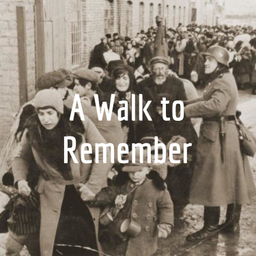
A Walk to Remember
Claim This Podcastby Averill Earls
8 episodes
Updated Daily
Accepts GuestsHas SponsorsLocation 🇺🇸
Podcast Overview
A podcast for Yom Hashoah, the International Holocaust Remembrance Day. Created by the students of Mercyhurst University' History & Memory of the Holocaust Class.
Language
🇺🇲
Publishing Since
4/5/2021
1 verified contact email on file for A Walk to Remember
Pitch yourself as a guest, propose sponsorships, or reach out directly to the host.
Recent Episodes
April 5, 2021
"Black American Media & the Holocaust" by Garrett Freas
<p><strong>The responses of Black Americans to the Holocaust, and their coverage of it, are important parts of African American and Holocaust scholarship. Nevertheless, most of the work on this topic either draws largely or solely from two Black newspapers, </strong><strong>The Chicago Defender</strong><strong> and </strong><strong>The Pittsburgh Courier</strong><strong>, and fails to examine any regional or sectional differences in coverage and interpretation in these or other Black newspapers found around the country. In doing so, these works fail to acknowledge the significance of regional differences as a contribution to a group’s memory and interpretation of the Holocaust and by extension other genocides. In examining the differences among various Black newspapers, one can attempt to show the ways in which regional differences among African Americans in the U.S. contributed to the Black American coverage and interpretation of the Holocaust. From my analysis, and from the work of previous scholars, it is clear that Black media outlets across the country often made comparisons between Nazi Germany and the United States, particularly regarding racial ideologies and discriminatory processes. Nevertheless, these comparisons were not the same across the board, with Black news outlets from different areas of the country comparatively highlighting different forms of American oppression, whether they be state operated or extra-judicial. These variations seem, to some degree, to reflect different experiences of racism in different corners of the United States.</strong></p>
April 5, 2021
"Women of Ravensbrück" by Sydney Hitchcock
<p><strong>Perhaps there is no better place to look at how women experienced concentration camp imprisonment than by looking at the lives of the prisoners of Ravensbrück. The Ravensbrück concentration camp was an all-female world of terror, located north of Berlin in a remote region of Germany known as the Mecklenburg lake district. Natural beauty surrounded the camp, which was the intent of its planner Heinrich Himmler who "believed that the cleansing of German blood should begin close to nature." The women imprisoned at Ravensbrück during World War II came from more than thirty different countries and were there for political, religious, and racial reasons. As Hitler implemented the Final Solution and the Third Reich spread its reign of terror across Europe, the women at Ravensbrück felt its grip tighten on their lives. Those who survived portray in their memoirs and letters the strong will and determination necessary to bear the horrors inflicted upon them. These women's stories enrich the Holocaust master narrative, which has been told mainly from a male perspective until recently. Women used their unique qualities as women to survive life at Ravensbrück; they relied on their social instincts, resourcefulness, and nurturing skills to protect their humanity which gave them the strength to persevere.</strong></p>
April 5, 2021
"Disability, Eugenics, and Euthanasia in the Holocaust" by Mary Claire Cousins
<p><strong>In a chapter titled “Eugenics in Hitler’s Germany,” Robert N. Proctor opens by writing, “we like to think that medicine is a force for healing in the world, but we should also not forget that, in the wrong political climate, medicine can join with evil to produce monstrosities. Such was the case in the Nazi era.” Proctor then goes on to list the sterilization of disabled people as one of the “most horrific crimes of the Nazis,” along with “cruel medical experiments, pernicious racial theories, and industrial-scale murder.” While Jews are the most notable victims of the Holocaust, there were many others viewed by the Nazis as undesirable, including homosexuals, the </strong><a href="https://www.jewishvirtuallibrary.org/the-nazi-euthanasia-t-4-program"><strong>physically and mentally disabled</strong></a><strong>, Roma, Poles and other Slavic people, </strong><a href="https://www.jewishvirtuallibrary.org/jehovah-s-witnesses-in-the-holocaust"><strong>Jehovah’s Witnesses</strong></a><strong>, and members of opposing political groups. The sterilization and/or killing of those with disabilities were “crimes committed in the guise of medicine.” However well-intentioned these practices may have started out, they clearly became tragic excuses to control the population and help promote the Aryan race.</strong></p>
8 total episodes available
Deep-dive analytics for A Walk to Remember
Frequently asked questions
Have a different question and can't find the answer you're looking for? Reach out to our support team by sending us an email and we'll get back to you as soon as we can.
- What is A Walk to Remember?
- How often does this podcast release new episodes?
This podcast updates daily.
- Where can I listen to this podcast?
This podcast is available on 4 platforms including Apple Podcasts, Spotify, and more. You can also use the RSS feed directly.
- Does this podcast accept guests?
No, this podcast does not typically feature guests.
Legal Disclaimer
Pod Engine is not affiliated with, endorsed by, or officially connected with any of the podcasts displayed on this platform. We operate independently as a podcast discovery and analytics service.
All podcast artwork, thumbnails, and content displayed on this page are the property of their respective owners and are protected by applicable copyright laws. This includes, but is not limited to, podcast cover art, episode artwork, show descriptions, episode titles, transcripts, audio snippets, and any other content originating from the podcast creators or their licensors.
We display this content under fair use principles and/or implied license for the purpose of podcast discovery, information, and commentary. We make no claim of ownership over any podcast content, artwork, or related materials shown on this platform. All trademarks, service marks, and trade names are the property of their respective owners.
While we strive to ensure all content usage is properly authorized, if you are a rights holder and believe your content is being used inappropriately or without proper authorization, please contact us immediately at hey@podengine.ai for prompt review and appropriate action, which may include content removal or proper attribution.
By accessing and using this platform, you acknowledge and agree to respect all applicable copyright laws and intellectual property rights of content owners. Any unauthorized reproduction, distribution, or commercial use of the content displayed on this platform is strictly prohibited.