- 17
- Episodes
- 2
- Ratings
- Bi-weekly
- Cadence
- 2025
- First episode
About AAC Access All Areas
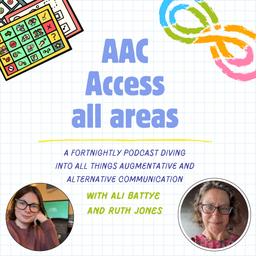
Hosted by Ali Battye and Ruth Jones, this podcast dives into everything neurodiversity‑affirming and AAC (Augmentative and Alternative Communication). Each episode explores real questions about what AAC is, how to get it, how to use it, and how to embed inclusive communication in everyday life. We share practical knowledge, lived experience, and professional insight to support AAC users, families, educators, therapists, and support teams across education, health, and social care. Expect clear explanations, honest conversations, and neurodivergent‑affirming perspectives that help you build confidence and competence with AAC. Whether you’re new to AAC or deeply experienced, this podcast opens the door to accessible, inclusive communication for everyone. Got a question? Send it in — we’ll dedicate an episode to answering it.
- Publisher
- Ali Battye and Ruth Jones
- Category
- education · kids & family
- Language
- en
- Explicit
- No
- First episode
- 20 Nov 2025
- Latest episode
- 18 Sept 2026
Latest episodes
17 episodes in the feed.
18 Sept 2026
What did we learn over the Summer?
The conversation covers a range of topics related to AAC, including personal reflections, writing projects, technical advancements, AI in AAC, representation in literature, and lived experiences of AAC users. The themes of neurodiversity, communication technology, and the impact of lived experiences are central to the discussion. The conversation delves into the challenges of AAC provision within EHCPs, the need for flexibility, and the importance of considering the dynamic nature of communication environments. It also emphasizes the value of open-mindedness and learning from a wide range of sources. Links: How to Help Non-Speaking Children in the Early Years : Supporting Communication through Joy and Connection: Bryony Rust: 9781032295190: (https://www.hive.co.uk/product/bryony-rust/how-to-help-non-speaking-children-in-the-early-years--supporting-communication-through-joy-and-connection/30369021)hive.co.uk (http://hive.co.uk) Howard Wicks (https://howardwicks.com/?utm_source=ig&utm_medium=social&utm_content=link_in_bio&fbclid=PAcGRvZgJleHRuA2FlbQIxMQBzcnRjBmFwcF9pZA85MzY2MTk3NDMzOTI0NTkAAae5SExQyzUXDkM0pEOeOf2phvisi2F0Y5cwJOiGAYtWePsLDA84jP9BNL6YiQ_aem_dMYERpkn_Shcw_fXvfWv1w) Ali on Instagram: https://www.instagram.com/ali_battye_speech (https://www.instagram.com/ali_battye_speech?utm_source=ig_web_button_share_sheet&stkn=ZDNlZDc0MzIxNw==) Ruth on Instagram: https://www.instagram.com/ruth_jones_slt (https://www.instagram.com/ali_battye_speech?utm_source=ig_web_button_share_sheet&stkn=ZDNlZDc0MzIxNw==)
21 Aug 2026
Is it ever too late for AAC?
Is it ever too late to introduce AAC? Ruth Jones and Ali Battye say the answer is no - and they back it up with the kind of real-world examples that can change how you think about communication forever. If you support an older child, teen, or adult who has never had robust AAC access, this conversation is a must-listen. Ruth and Ali unpack why the "too late" myth keeps showing up, especially for autistic people, people with learning disabilities, and young people whose AAC journey starts later because of access, cost, or outdated assumptions. They explore what actually changes as children grow, from regulation and attention to executive function, and why those changes can make AAC feel more possible, not less. You'll hear how language continues to grow across the lifespan, why neuroplasticity matters, and how older AAC users often take to text-to-speech or symbol-supported systems with incredible speed once the right tool is in front of them. Ali shares powerful examples from her practice, including teenagers who suddenly found the words to ask for home, express humour, comment, question, and even move from symbols to typing with ease. We break down the difference between simply requesting and truly communicating. Ruth and Ali show how AAC can become a way to build language, explore interests, deepen conversations, and support genuine self-advocacy - not just a way to ask for things. If you've ever wondered whether it's "too late" to start, this episode will leave you with a stronger belief in presuming potential, a broader view of communication, and a renewed sense of what's possible when AAC is introduced well. Essential listening for families, teachers, therapists, and anyone supporting older AAC users. Find us on Instagram: @ali_battye_speech @ruth_jones_slt or on TikTok @aac_access_all_areas
23 Jul 2026
How to manage AAC overwhelm?
In this episode, Ali and Ruth explore practical strategies for supporting adults involved in AAC communication, addressing feelings of overwhelm and emphasizing the importance of flexibility, connection, and personal pacing. Whether you're a parent, teacher, or therapist, discover how to create sustainable AAC practices that honour each individual's unique journey. The complex roles of family, educators, and therapists in AAC support Recognising and respecting individual differences in AAC familiarity and expectations Starting points for AAC implementation: focusing on interests and engagement The importance of "model without expectation" and mindfulness of building trust Acknowledging multimodal communication alongside AAC The significance of community networks and shared experiences Incorporating embodied caregiver experience into AAC discourse Embracing natural rhythms and respecting moments when AAC may not be welcomed Managing your own regulation and recognizing "affective resistance" as positive Practical tools: weekly mini-goals, tailored vocabularies, and environmental integration Find us on Instagram: @ruth_jones_slt @ali_battye_speech or on TikTok @AAC_access_all_areas Article: Affective Resistance in Augmentative and Alternative Communication, Gombar & Bach (2025) (https://www.tandfonline.com/doi/full/10.1080/20473869.2025.2605577)
2 Jul 2026
What if engagement isn't as we expect?
Summary In this episode, Ruth Jones and Ali Battye explore the complexities of AAC engagement, emphasizing patience, understanding fluctuating capacities, and honouring individual communication rhythms. They share practical insights and personal stories to support effective AAC use. Key Topics The importance of patience in AAC implementation Fluctuating capacities and sensory challenges for autistic AAC users The role of exploration and play in AAC learning Respecting individual communication rhythms Practical strategies for supporting AAC users "Follow the joy and connect through what lights them up." "AAC use can shift from exploration to meaningful communication." Find us on Instagram: @ali_battye_speech @ruth_jones_slt
18 Jun 2026
What does early AAC engagement look like?
Most children start exploring AAC systems in unexpected ways—and the early moments of engagement can be profoundly simple yet incredibly powerful. Discover how a child's spontaneous interaction with an iPad or communication book can reveal their natural inclination to communicate, even before they use words. If you’re supporting children with complex communication needs, you’ll want to hear what happens when the focus shifts from functional language to playful, joyful interaction—and how that sets the stage for meaningful communication down the line. In this episode, Ali & Ruth share real-life stories that showcase what early AAC engagement really looks like—and bust common misconceptions along the way. You’ll discover concrete strategies for fostering initial interest, like modeling subtly and avoiding pressure, so children feel ownership rather than obligation. We break down the subtle signs of early ownership—like batting away an AAC device or glancing over—instead of expecting instant speech.Key topics covered include: The dream scenario of instant curiosity sparked by a fun, interesting page How modelling “little and often” builds engagement without overwhelming Why exploring favourite characters like Peppa Pig can unlock broader language The importance of respecting individual differences and processing needs Practical tips for using communication books versus devices in early engagement You’ll learn why patience, attunement, and a playful approach create a foundation for both children and adults to build confidence. Avoid overwhelm and set realistic expectations, knowing that language development is a marathon—not a sprint. This episode is perfect for speech therapists, educators, parents, and anyone committed to unlocking every child's potential to connect. Whether you're troubleshooting early AAC success stories or looking for ways to make engagement irresistible, this conversation will renew your perspective on what’s possible—and remind you that the most meaningful moments often happen when we least expect them. Remember: early engagement isn’t just about immediate speech—it's about planting seeds of joy, ownership, and curiosity that will grow into lifelong communication skills. Get inspired to see the magic in those first tentative interactions—because sometimes, a simple glance or a giggle is the beginning of something extraordinary. Find us on Instagram @ali_battye_speech @ruth_jones_slt
14 May 2026
What are the reasons for communication?
This episode explores the diverse reasons for communication beyond requesting, emphasizing the importance of connection, joy, and meaningful interaction in AAC and speech therapy. Ruth and Ali discuss models, misconceptions, and real-life examples to deepen understanding and practice. The means, reasons and opportunities model of communication - Resource Library - Sheffield Children's NHS Foundation Trust (https://library.sheffieldchildrens.nhs.uk/the-means-reasons-and-opportunities-model-of-communication/) Find us on Instagram: @ali_battye_speech @ruth_jones_slt
23 Apr 2026
How do I set up AAC for a Gestalt Processor?
This episode explores Gestalt language processing in children, how it influences AAC setup, and practical strategies for supporting language development. Hosted by Ali Battye and Ruth Jones, it offers insights into tailoring AAC systems to meet the unique needs of Gestalt language processors. Find us on Instagram: Ali - @ali_battye_speech Ruth - @ruth_jones_slt
26 Mar 2026
What language should I add to an AAC tool?
This episode explores the essential aspects of AAC language, including robust vocabulary, core and fringe words, and effective communication strategies. Hosts Ruth and Ali discuss how to optimize AAC systems for speed, personalization, and meaningful interaction, emphasizing the importance of tuning into individual needs and preferences. Key topics: Robust vocabulary and its importance Core words and their universal role in AAC Fringe words and personalization Strategies for efficient AAC communication The role of phrase-based language and shortcuts Observing and tuning into individual communication needs Ruth's Instagram: https://www.instagram.com/ruth_jones_slt/ (https://www.instagram.com/ruth_jones_slt/) Ali's Instagram: https://www.instagram.com/ali_battye_speech/ (https://www.instagram.com/ali_battye_speech/)
12 Mar 2026
I've Got the Device and App - What Now?
Summary This episode explores the practical aspects of choosing, setting up, and personalizing AAC apps like Proloquo and TD Snap. Ruth and Ali discuss how to optimize vocabulary, app settings, and voice options to support meaningful communication for children with AAC needs. Key Topics Differences between Proloquo and Proloquo2Go Grid size and vocabulary customization Using crescendo to gradually increase complexity Symbol vs photograph for personalization Voice selection and customization in AAC apps Importance of respecting app design and structure Personalizing vocabulary based on child's interests Monitoring and adjusting app settings over time
26 Feb 2026
Where can I get an AAC device?
In this episode, Ruth and Ali discuss the various avenues for obtaining AAC devices, particularly for families who may not qualify for specialized services. They explore the importance of accessibility, the practical setup of AAC devices, and the role of communication in supporting AAC users. The conversation highlights the significance of protective measures for devices, funding options, and the supportive roles of educators and families in fostering effective communication for AAC users. Takeaways Many families struggle to access AAC services due to eligibility issues. Standard tablets can be used for AAC by those without complex needs. Purchasing devices and apps directly is a common route for families. iPads are often recommended due to their robust app ecosystem. Insurance and protective cases are essential for AAC devices. Refurbished devices can be a cost-effective option for families. Grants and charities can help fund AAC devices for those in need. Schools can play a crucial role in supporting AAC users. Communication needs should be honored and supported in educational settings. Building connections is key to effective communication for AAC users. Ruth's Instagram: ruth_jones_slt (https://www.instagram.com/ruth_jones_slt/) Ali's Instagram: ali_battye_speech (https://www.instagram.com/ali_battye_speech/)
12 Feb 2026
What AAC Apps are there?
The conversation covers the top AAC apps in England, including Proloquo2Go, Proloquo, and Grid for iPad. It also delves into the comparison of AAC apps, symbol sets, vocabulary personalization, robust vocabulary, language growth, considerations for choosing AAC apps, app pricing, free options, visual appearance, app functionality, editing and personalization of vocabulary, and professional reflection on AAC experience. Takeaways Top AAC apps in England Considerations for choosing AAC apps Get started with Grid for iPad - Smartbox AAC (https://thinksmartbox.com/news/get-started-with-grid-for-ipad-app/) Proloquo2Go - AAC app with symbols - AssistiveWare (https://www.assistiveware.com/products/proloquo2go) TD Snap Core First Page Set - Tobii Dynavox UK (https://uk.tobiidynavox.com/pages/td-snap-core-first) Ruth's Instagram: ruth_jones_slt (https://www.instagram.com/ruth_jones_slt/) Ali's Instagram: ali_battye_speech (https://www.instagram.com/ali_battye_speech/)
29 Jan 2026
Who is AAC for?
In this episode, Ruth and Ali explore the evolving landscape of Augmentative and Alternative Communication (AAC) and its significance for various users, particularly children with complex communication needs. They discuss the importance of presuming potential in AAC users, the role of AAC as a communication tool, and the challenges and misconceptions surrounding its use. The conversation emphasizes the need for universal design in communication environments and celebrates real-life success stories of AAC implementation, highlighting the transformative impact of AAC on users' communication abilities. Takeaways AAC has broadened to include a wider range of users. Presuming potential is essential for effective AAC use. AAC can serve as a dictionary or thesaurus for users. Children with complex needs can still have language in their heads. AAC should be integrated into everyday communication practices. The perception of AAC as a last resort is changing. Universal design in classrooms can enhance AAC accessibility. Children may need time to adapt to AAC tools. Success stories highlight the effectiveness of AAC in communication. AAC can support children with situational mutism and developmental language disorders. Ruth's Instagram: ruth_jones_slt (https://www.instagram.com/ruth_jones_slt/) Ali's Instagram: ali_battye_speech (https://www.instagram.com/ali_battye_speech/)
15 Jan 2026
AAC What Factors to Consider?
In this episode, Ruth Jones and Ali Battye discuss the critical considerations when choosing Augmentative and Alternative Communication (AAC) systems. They explore various factors such as feature matching, editability, and the importance of cultural representation in AAC symbols. The conversation also delves into the practical aspects of AAC technology, comparing iPads to dedicated devices, and emphasizes the need for support from app developers. The episode concludes with reflections on the evolving nature of AAC technology and the importance of ensuring that AAC systems are accessible and representative for all users. Takeaways Choosing AAC involves multiple stakeholders and considerations. Feature matching helps identify the best AAC solutions. Editability of vocabulary is crucial for effective communication. iPads can be a cost-effective alternative to dedicated AAC devices. Portability and durability are key factors in device selection. Cultural representation in AAC symbols enhances user experience. AAC technology is evolving, requiring ongoing adaptation. Support from app developers is essential for users. Vocabulary must grow and adapt as users age. Diversity in symbols is still an area needing improvement. Ruth's Instagram: ruth_jones_slt (https://www.instagram.com/ruth_jones_slt/) Ali's Instagram: ali_battye_speech (https://www.instagram.com/ali_battye_speech/)
25 Dec 2025
Who Decides on AAC?
In this episode, Ali Battye and Ruth Jones discuss the complexities surrounding who decides which Augmentative and Alternative Communication (AAC) tools to use. They explore the hub and spoke model of AAC assessment, the challenges faced by families in accessing AAC, and the role of speech and language therapists. The conversation also addresses common myths about AAC, the importance of parental involvement, and the need for effective communication partners in the AAC journey. Takeaways The hub and spoke model of AAC assessment was established around 2015. Access to high-tech AAC has historically been unequal. Paper-based AAC tools are easier to access but may lack quality. Speech and language therapists often feel unprepared to work with AAC. Parents should not feel they need permission to introduce AAC to their child. There are myths surrounding AAC that can hinder its use. The choice of AAC tool should be individualized based on the user's needs. Communication partners play a vital role in the success of AAC. Training and resources for AAC can vary significantly across regions. Parental involvement is crucial in the decision-making process for AAC. Ruth's Instagram: ruth_jones_slt (https://www.instagram.com/ruth_jones_slt/) Ali's Instagram: ali_battye_speech (https://www.instagram.com/ali_battye_speech/)
10 Dec 2025
Types of AAC
In this episode of AAC Access All Areas, Ruth and Ali discuss the various types of Augmentative and Alternative Communication (AAC) systems, their evolution in practice, and the importance of providing diverse language access for children with communication needs. They explore the shift from traditional paper-based systems to more modern, technology-driven solutions like iPads, emphasizing the need for individualized approaches based on each child's unique preferences and needs. The conversation highlights the significance of modeling language, the importance of patience in the AAC learning process, and the various tools available to support effective communication. Ruth's Instagram: ruth_jones_slt (https://www.instagram.com/ruth_jones_slt/) Ali's Instagram: ali_battye_speech (https://www.instagram.com/ali_battye_speech/)
26 Nov 2025
What is AAC?
Ali and Ruth discuss what augmentative and alternative communication is. Diving into what it stands for and what kinds of things we might think about when we hear the term AAC. We explore AAC and how it enriches the lives of those who communicate differently. 💡 Key Insight: Effective communication is about understanding and connecting with one another, no matter the method! Ali's AAC Book: Who's Afraid of AAC?: The UK Guide to Augmentative and Alternative Com (https://www.routledge.com/Whos-Afraid-of-AAC-The-UK-Guide-to-Augmentative-and-Alternative-Communication/Battye/p/book/9781911186175) Ruth's Instagram: ruth_jones_slt (https://www.instagram.com/ruth_jones_slt/) Ali's Instagram: ali_battye_speech (https://www.instagram.com/ali_battye_speech/)
20 Nov 2025
AAC Access All Areas Trailer
A brief introduction from Ali and Ruth on who they are and what the podcast hopes to deliver to listeners.
Reach and audience
Public platform figures. Ratings count people who left a rating, not total listeners.
- Apple Podcasts (US)
- 5.0 / 5
- 2 ratings
Contact AAC Access All Areas
- Guest appearances
- Does not typically book guests
Based on episode analysis; this does not confirm that the show is currently accepting guests.





Host of AAC Access All Areas?
Claim your podcast to manage its listing and keep your show details accurate.
Pod Engine is an independent podcast discovery and analytics service and is not affiliated with or endorsed by this podcast. Artwork and show content belong to their owners. Full legal notice.
Explore this show
Podcast research with Pod Engine