
The influence of regionalisation since the historic moment of the Good Friday Agreement and founding of parliaments in Scotland, Northern Ireland and Wales is discussed in this three part podcast hosted by the curator, art historian and Lecturer in Contemporary Art and Curation at University of Exeter, Marcus Jack. The podcast is a legacy project following on from the British Art Network’s annual conference 2023, British Art After Britain. <hr><p style='color:grey; font-size:0.75em;'> Hosted on Acast. See <a style='color:grey;' target='_blank' rel='noopener noreferrer' href='https://acast.com/privacy'>acast.com/privacy</a> for more information.</p>
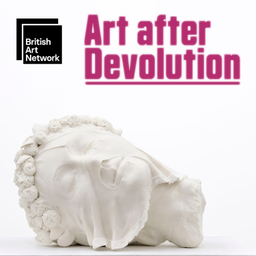
Art After Devolution
Claim This Podcastby British Art Network
4 episodes
Updated Weekly
Accepts GuestsHas SponsorsLocation 🇬🇧
Podcast Overview
The influence of regionalisation since the historic moment of the Good Friday Agreement and founding of parliaments in Scotland, Northern Ireland and Wales is discussed in this three part podcast hosted by the curator, art historian and Lecturer in Contemporary Art and Curation at University of Exeter, Marcus Jack. The podcast is a legacy project following on from the British Art Network’s annual conference 2023, British Art After Britain. <hr><p style='color:grey; font-size:0.75em;'> Hosted on Acast. See <a style='color:grey;' target='_blank' rel='noopener noreferrer' href='https://acast.com/privacy'>acast.com/privacy</a> for more information.</p>
Language
🇺🇲
Publishing Since
11/4/2024
1 verified contact email on file for Art After Devolution
Pitch yourself as a guest, propose sponsorships, or reach out directly to the host.
Recent Episodes
November 18, 2024
Organisational Inheritance
<p>Beth Bate (Dundee Contemporary Arts), Sepake Angiama (Iniva), and Nigel Prince (Artes Mundi) join Kirsteen MacDonald for a roundtable discussion sharing strategies for navigating the decentralisation project. </p><p> </p><p>These guests represent three UK arts organisations that were founded or re-developed around the new millennium with core missions to serve historically under-resourced and overlooked communities. Whilst the ideas, assets and personnel that comprise our public infrastructure are tested anew by austerity thinking, this discussion offers distinct and overlapping models for cultivating an outward-looking cultural infrastructure. </p><p> </p><p>Art after Devolution is hosted by Marcus Jack, a curator and writer based between Exeter and Glasgow. His research looks for counternarratives in visual culture through analyses of infrastructure, statehood and socio-economics, with particular emphasis on artists’ film. He lectures in Contemporary Art and Curation at the University of Exeter. Follow him on socials @marcusfjack or online at MarcusJack.com </p><p> </p><p>TIMESTAMPS </p><p>2:11 – Introductions </p><p>5:42 – Consideration of state funding across the UK </p><p>24:34 – Cultural value and the wider arts ecology </p><p> </p><p>Read the episode transcript here: https://britishartnetwork.org.uk/wp-content/uploads/2024/11/Transcript-Art-after-Devolution-Episode-Three.pdf</p><br><p>GUEST INFORMATION:</p><p>Sepake Angiama – @iniva_arts</p><p>Beth Bate – @dcadundee</p><p>Kirsteen Macdonald</p><p>Nigel Prince – @ArtesMundi</p><br><p>The image in our graphic is <em>Balaclava Bust </em>by Ursula Burke, used with her kind permission. </p><p>Music is <em>Too Many To Count</em> by Comfort from their 2023 album ‘What’s Bad Enough?’ Check them out wherever you listen to music. Thanks to Natalie McGhee for the permission to include it.</p><br><p>This podcast has been audio produced by Clare Lynch</p><br><p><em>Art after Devolution </em>is a British Art Network (BAN) podcast supported by the Paul Mellon Centre and Tate. Membership of the British Art Network is free and open to anyone with an active engagement in curating, researching and interpreting British art. To join, just visit britishartnetwork.org.uk </p><p>BAN is supported financially by the Paul Mellon Centre for Studies in British Art and Tate, with additional public funding provided by the National Lottery through Arts Council England. </p><br /><hr><p style='color:grey; font-size:0.75em;'> Hosted on Acast. See <a style='color:grey;' target='_blank' rel='noopener noreferrer' href='https://acast.com/privacy'>acast.com/privacy</a> for more information.</p>
November 11, 2024
Infrastructure Needs Data
<p>Abigail Gilmore traces the ways in which macro-level shifts in politics have altered the terrain for culture at a local level by tracing the arc of devolution since the late 1990s. </p><p> </p><p><em>Art after Devolution </em>is hosted by Marcus Jack, a curator and writer based between Exeter and Glasgow. His research looks for counternarratives in visual culture through analyses of infrastructure, statehood and socio-economics, with particular emphasis on artists’ film. He lectures in Contemporary Art and Curation at the University of Exeter. Follow him on socials @marcusfjack or online at MarcusJack.com </p><p> </p><p>TIMESTAMPS: </p><p>1:39 – Interview with Abigail Gilmore </p><p>4:48 – Current state of devolution and cultural governance </p><p>13:08 – Historical context of regionalisation </p><p>24:33 – Data collection and evidence in cultural policy </p><p>32:00 – Future directions </p><p> </p><p>Read the episode transcript here: https://britishartnetwork.org.uk/wp-content/uploads/2024/11/Transcript-Art-after-Devolution-Episode-Two.pdf </p><p> </p><p>GUEST INFORMATION: </p><p>Abigail Gilmore – @abi_gilmore</p><p> </p><p>The image in our graphic is <em>Balaclava Bust </em>by Ursula Burke, used with her kind permission. </p><p>Music is <em>Too Many To Count</em> by Comfort from their 2023 album ‘What’s Bad Enough?’ Check them out wherever you listen to music. Thanks to Natalie McGhee for the permission to include it. </p><p> </p><p>This podcast has been audio produced by Clare Lynch </p><p> </p><p><em>Art after Devolution </em>is a British Art Network (BAN) podcast supported by the Paul Mellon Centre and Tate. Membership of the British Art Network is free and open to anyone with an active engagement in curating, researching and interpreting British art. To join, just visit britishartnetwork.org.uk </p><p>BAN is supported financially by the Paul Mellon Centre for Studies in British Art and Tate, with additional public funding provided by the National Lottery through Arts Council England. </p><br /><hr><p style='color:grey; font-size:0.75em;'> Hosted on Acast. See <a style='color:grey;' target='_blank' rel='noopener noreferrer' href='https://acast.com/privacy'>acast.com/privacy</a> for more information.</p>
November 4, 2024
The Practice in the Politics
<p>Maria Fusco, Ursula Burke, and Michelle Hannah join Marcus Jack to explore how the complex and often violent societies produced by devolution have functioned as both a subject and working context for artists. </p><br><p><em>Art after Devolution </em>is hosted by Marcus Jack, a curator and writer based between Exeter and Glasgow. His research looks for counternarratives in visual culture through analyses of infrastructure, statehood and socio-economics, with particular emphasis on artists’ film. He lectures in Contemporary Art and Curation at the University of Exeter. Follow him on socials @marcusfjack or online at MarcusJack.com </p><br><p>TIMESTAMPS </p><p>2:42 – Maria Fusco, reading an extract from <em>Who Does Not Envy With Us Is Against Us</em> </p><p>6:59 – Interview with Ursula Burke </p><p>34:52 – Michelle Hannah, performance of <em>Burnout</em> </p><br><p>WORKS OF ART MENTIONED: </p><p>15:50 – Ursula Burke, <em>Balaclava Bust</em>, 2014 </p><p>18:18 – Ursula Burke, <em>Embroidery Frieze - The Politicians</em>, 2016 </p><p>18:46 – Jacques-Louis David, <em>Oath of the Horatii</em>, 1784 </p><p>19:08 – The Bayeux Tapestry, 11th century </p><p>19:14 – Parthenon Frieze, designed by Phidias, c.447-32 BC </p><p>30:50 – Ursula Burke,<strong><em> </em></strong><em>Truncheon</em>, 2019 </p><br><p>Read the episode transcript here: britishartnetwork.org.uk/wp-content/uploads/2024/11/Transcript-Art-After-Devolution-Episode-One.pdf</p><br><p>GUEST INFORMATION: </p><p>Maria Fusco – MariaFusco.net / @fuscowriting</p><p>Ursula Burke – UrsulaBurke.com / @burke.ursula </p><p>Michelle Hannah –<em> </em>MichelleHannah.net / @m_h_a_n_n_a_h </p><br><p>The image in our graphic is <em>Balaclava Bust </em>by Ursula Burke, used with her kind permission. </p><p>Music is <em>Too Many To Count</em> by Comfort from their 2023 album ‘What’s Bad Enough?’ You can hear more of their work wherever you listen to music. Thanks to Natalie McGhee for the permission to include it. </p><br><p>This podcast has been audio produced by Clare Lynch –<em> </em>linktr.ee/clarelynchred</p><br><p><em>Art after Devolution </em>is a British Art Network (BAN) podcast supported by the Paul Mellon Centre and Tate. Membership of the British Art Network is free and open to anyone with an active engagement in curating, researching and interpreting British art. To join, just visit britishartnetwork.org.uk </p><p>BAN is supported financially by the Paul Mellon Centre for Studies in British Art and Tate, with additional public funding provided by the National Lottery through Arts Council England. </p><br /><hr><p style='color:grey; font-size:0.75em;'> Hosted on Acast. See <a style='color:grey;' target='_blank' rel='noopener noreferrer' href='https://acast.com/privacy'>acast.com/privacy</a> for more information.</p>
4 total episodes available
Deep-dive analytics for Art After Devolution
Frequently asked questions
Have a different question and can't find the answer you're looking for? Reach out to our support team by sending us an email and we'll get back to you as soon as we can.
- What is Art After Devolution?
- How often does this podcast release new episodes?
This podcast updates weekly.
- Where can I listen to this podcast?
This podcast is available on 4 platforms including Apple Podcasts, Spotify, and more. You can also use the RSS feed directly.
- Does this podcast accept guests?
Yes, this podcast regularly features guests.
Legal Disclaimer
Pod Engine is not affiliated with, endorsed by, or officially connected with any of the podcasts displayed on this platform. We operate independently as a podcast discovery and analytics service.
All podcast artwork, thumbnails, and content displayed on this page are the property of their respective owners and are protected by applicable copyright laws. This includes, but is not limited to, podcast cover art, episode artwork, show descriptions, episode titles, transcripts, audio snippets, and any other content originating from the podcast creators or their licensors.
We display this content under fair use principles and/or implied license for the purpose of podcast discovery, information, and commentary. We make no claim of ownership over any podcast content, artwork, or related materials shown on this platform. All trademarks, service marks, and trade names are the property of their respective owners.
While we strive to ensure all content usage is properly authorized, if you are a rights holder and believe your content is being used inappropriately or without proper authorization, please contact us immediately at hey@podengine.ai for prompt review and appropriate action, which may include content removal or proper attribution.
By accessing and using this platform, you acknowledge and agree to respect all applicable copyright laws and intellectual property rights of content owners. Any unauthorized reproduction, distribution, or commercial use of the content displayed on this platform is strictly prohibited.