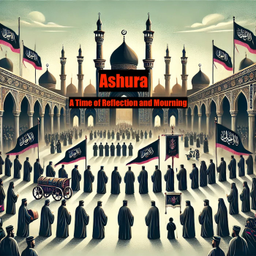
Podcast thumbnail for Ashura

by Inception Point AI

1 episodes
Updated Daily
Accepts GuestsHas Sponsors

Podcast Overview

Ashura: A Tale of Sacrifice and Remembrance In the scorching heat of the Karbala desert, the air was thick with tension and the scent of impending conflict. It was the 10th day of Muharram, in the year 61 AH (680 CE), and a small band of followers led by Imam Hussein, grandson of the Prophet Muhammad, stood defiantly against the massive army of Yazid I, the Umayyad caliph. Hussein, accompanied by his family and loyal companions, had refused to pledge allegiance to Yazid, viewing him as an unjust and illegitimate ruler. This refusal had led to a confrontation that would shape the course of Islamic history and give birth to one of the most significant observances in the Muslim world: Ashura. As the sun rose over the barren landscape, Hussein gathered his followers. Among them were his half-brother Abbas, his son Ali Akbar, and his infant son Ali Asghar. Women and children were also present, including Hussein's sister Zainab and his daughter Sakina. Despite being vastly outnumbered, their resolve remained unshaken. Hussein addressed his companions, his voice carrying across the desert air. "My friends, my family," he began, "today we stand not just for ourselves, but for justice, for truth, and for the very essence of our faith. Yazid's rule threatens to corrupt the message my grandfather brought to this world. We may be few, but our cause is mighty." On the opposing side, Umar ibn Sa'ad, the commander of Yazid's army, felt the weight of his duty pressing down upon him. He had been ordered to either secure Hussein's allegiance or bring about his demise. As he surveyed the small group facing his vast forces, a flicker of doubt crossed his mind. Was this really the path of righteousness? The battle began with a series of single combats, as was the custom of the time. Hussein's companions, one by one, rode out to face the enemy. Each fought valiantly, knowing they were sacrificing their lives for a greater cause. Ali Akbar, Hussein's eldest son, was among the first to fall, struck down in the prime of his youth. As the day wore on, the fighting intensified. The air was filled with the clash of swords, the cries of the wounded, and the anguished wails of those who had lost loved ones. Despite their bravery, Hussein's followers were gradually overwhelmed by the sheer numbers of the opposing force. Thirst began to take its toll on Hussein's camp. The Umayyad army had blocked access to the Euphrates River, denying water to Hussein and his followers. Children cried out in desperation, their lips cracked and dry. Hussein's half-brother Abbas made a valiant attempt to break through the blockade and bring water back to the camp, particularly for the suffering children. However, he was ambushed and killed, never reaching the river's edge. In a heart-wrenching moment, Hussein took his infant son Ali Asghar in his arms and approached the enemy lines. Holding the child up, he pleaded, "If you have any humanity left in you, at least allow water for this innocent ch This content was created in partnership and with the help of Artificial Intelligence AI.

Language

🇺🇲

Publishing Since

7/17/2024

2 verified contact emails on file for Ashura

Pitch yourself as a guest, propose sponsorships, or reach out directly to the host.

Recent Episodes

Episode thumbnail for Ashura- A Time of Reflection and Mourning

July 17, 2024

Ashura- A Time of Reflection and Mourning

<br />Ashura: A Tale of Sacrifice and Remembrance In the scorching heat of the Karbala desert, the air was thick with tension and the scent of impending conflict. It was the 10th day of Muharram, in the year 61 AH (680 CE), and a small band of followers led by Imam Hussein, grandson of the Prophet Muhammad, stood defiantly against the massive army of Yazid I, the Umayyad caliph. Hussein, accompanied by his family and loyal companions, had refused to pledge allegiance to Yazid, viewing him as an unjust and illegitimate ruler. This refusal had led to a confrontation that would shape the course of Islamic history and give birth to one of the most significant observances in the Muslim world: Ashura. As the sun rose over the barren landscape, Hussein gathered his followers. Among them were his half-brother Abbas, his son Ali Akbar, and his infant son Ali Asghar. Women and children were also present, including Hussein's sister Zainab and his daughter Sakina. Despite being vastly outnumbered, their resolve remained unshaken. Hussein addressed his companions, his voice carrying across the desert air. "My friends, my family," he began, "today we stand not just for ourselves, but for justice, for truth, and for the very essence of our faith. Yazid's rule threatens to corrupt the message my grandfather brought to this world. We may be few, but our cause is mighty." On the opposing side, Umar ibn Sa'ad, the commander of Yazid's army, felt the weight of his duty pressing down upon him. He had been ordered to either secure Hussein's allegiance or bring about his demise. As he surveyed the small group facing his vast forces, a flicker of doubt crossed his mind. Was this really the path of righteousness? The battle began with a series of single combats, as was the custom of the time. Hussein's companions, one by one, rode out to face the enemy. Each fought valiantly, knowing they were sacrificing their lives for a greater cause. Ali Akbar, Hussein's eldest son, was among the first to fall, struck down in the prime of his youth. As the day wore on, the fighting intensified. The air was filled with the clash of swords, the cries of the wounded, and the anguished wails of those who had lost loved ones. Despite their bravery, Hussein's followers were gradually overwhelmed by the sheer numbers of the opposing force. Thirst began to take its toll on Hussein's camp. The Umayyad army had blocked access to the Euphrates River, denying water to Hussein and his followers. Children cried out in desperation, their lips cracked and dry. Hussein's half-brother Abbas made a valiant attempt to break through the blockade and bring water back to the camp, particularly for the suffering children. However, he was ambushed and killed, never reaching the river's edge. In a heart-wrenching moment, Hussein took his infant son Ali Asghar in his arms and approached the enemy lines. Holding the child up, he pleaded, "If you have any humanity left in you, at least allow water for this innocent child." The response was an arrow that pierced the infant's neck, killing him instantly in his father's arms. Hussein, grief-stricken, returned to his camp, cradling his dead child. As the battle raged on, Hussein found himself increasingly isolated. His companions had fallen one by one, each death a blow to his heart but a testament to their unwavering faith and loyalty. Even in these dire circumstances, Hussein's commitment to his principles never wavered. He continued to fight, his sword flashing in the desert sun, each strike a defiance against tyranny and injustice. Finally, exhausted and wounded, Hussein stood alone on the battlefield. The enemy forces, despite their overwhelming numbers, hesitated to strike the final blow against the grandson of the Prophet. In this moment of respite, Hussein turned towards Mecca and fell into prayer, his forehead touching the scorching sand. It was then that Shimr, a soldier in Yazid's army, rushed forward and delivered the fatal...

1 total episodes available

Deep-dive analytics for Ashura

Frequently asked questions

Have a different question and can't find the answer you're looking for? Reach out to our support team by sending us an email and we'll get back to you as soon as we can.

What is Ashura?

Ashura: A Tale of Sacrifice and Remembrance In the scorching heat of the Karbala desert, the air was thick with tension and the scent of impending conflict. It was the 10th day of Muharram, in the year 61 AH (680 CE), and a small band of followers led by Imam Hussein, grandson of the Prophet Muhammad, stood defiantly against the massive army of Yazid I, the Umayyad caliph. Hussein, accompanied by his family and loyal companions, had refused to pledge allegiance to Yazid, viewing him as an unjust and illegitimate ruler. This refusal had led to a confrontation that would shape the course of Islamic history and give birth to one of the most significant observances in the Muslim world: Ashura. As the sun rose over the barren landscape, Hussein gathered his followers. Among them were his half-brother Abbas, his son Ali Akbar, and his infant son Ali Asghar. Women and children were also present, including Hussein's sister Zainab and his daughter Sakina. Despite being vastly outnumbered, their resolve remained unshaken. Hussein addressed his companions, his voice carrying across the desert air. "My friends, my family," he began, "today we stand not just for ourselves, but for justice, for truth, and for the very essence of our faith. Yazid's rule threatens to corrupt the message my grandfather brought to this world. We may be few, but our cause is mighty." On the opposing side, Umar ibn Sa'ad, the commander of Yazid's army, felt the weight of his duty pressing down upon him. He had been ordered to either secure Hussein's allegiance or bring about his demise. As he surveyed the small group facing his vast forces, a flicker of doubt crossed his mind. Was this really the path of righteousness? The battle began with a series of single combats, as was the custom of the time. Hussein's companions, one by one, rode out to face the enemy. Each fought valiantly, knowing they were sacrificing their lives for a greater cause. Ali Akbar, Hussein's eldest son, was among the first to fall, struck down in the prime of his youth. As the day wore on, the fighting intensified. The air was filled with the clash of swords, the cries of the wounded, and the anguished wails of those who had lost loved ones. Despite their bravery, Hussein's followers were gradually overwhelmed by the sheer numbers of the opposing force. Thirst began to take its toll on Hussein's camp. The Umayyad army had blocked access to the Euphrates River, denying water to Hussein and his followers. Children cried out in desperation, their lips cracked and dry. Hussein's half-brother Abbas made a valiant attempt to break through the blockade and bring water back to the camp, particularly for the suffering children. However, he was ambushed and killed, never reaching the river's edge. In a heart-wrenching moment, Hussein took his infant son Ali Asghar in his arms and approached the enemy lines. Holding the child up, he pleaded, "If you have any humanity left in you, at least allow water for this innocent ch

This content was created in partnership and with the help of Artificial Intelligence AI.

How often does this podcast release new episodes?

This podcast updates daily.

Where can I listen to this podcast?

This podcast is available on 4 platforms including Apple Podcasts, Spotify, and more. You can also use the RSS feed directly.

Does this podcast accept guests?

Information about guest appearances is not available.

Legal Disclaimer

Pod Engine is not affiliated with, endorsed by, or officially connected with any of the podcasts displayed on this platform. We operate independently as a podcast discovery and analytics service.

All podcast artwork, thumbnails, and content displayed on this page are the property of their respective owners and are protected by applicable copyright laws. This includes, but is not limited to, podcast cover art, episode artwork, show descriptions, episode titles, transcripts, audio snippets, and any other content originating from the podcast creators or their licensors.

We display this content under fair use principles and/or implied license for the purpose of podcast discovery, information, and commentary. We make no claim of ownership over any podcast content, artwork, or related materials shown on this platform. All trademarks, service marks, and trade names are the property of their respective owners.

While we strive to ensure all content usage is properly authorized, if you are a rights holder and believe your content is being used inappropriately or without proper authorization, please contact us immediately at hey@podengine.ai for prompt review and appropriate action, which may include content removal or proper attribution.

By accessing and using this platform, you acknowledge and agree to respect all applicable copyright laws and intellectual property rights of content owners. Any unauthorized reproduction, distribution, or commercial use of the content displayed on this platform is strictly prohibited.