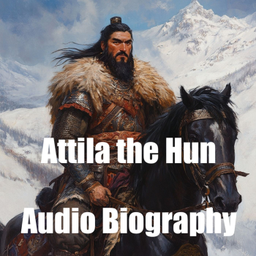
Podcast thumbnail for Attila the Hun - Audio Biography

Attila the Hun - Audio Biography

Claim This Podcast

by Inception Point AI

1 episodes
Updated Daily
Accepts GuestsHas Sponsors

Podcast Overview

Attila the Hun, often referred to as the "Scourge of God," was one of history's most feared and enigmatic conquerors. As the ruler of the Huns during the 5th century CE, Attila led a confederation of nomadic tribes that terrorized the Roman Empire, both East and West. His name became synonymous with ruthless ambition and unrelenting warfare, yet his life and reign were also marked by strategic brilliance, diplomatic cunning, and an ability to unite disparate peoples under his leadership. Attila’s legacy as both a destroyer and a unifier has echoed through history, shaping perceptions of barbarian leadership and the decline of the Roman world. Attila was born around 406 CE into the ruling family of the Huns, a nomadic people of Central Asian origin who had migrated westward into the steppes of Eastern Europe. The Huns were known for their horsemanship, archery, and ability to wage lightning-fast raids, which made them a formidable force in battle. Attila’s early life remains shrouded in mystery, as much of what is known about him comes from Roman sources, often written with a strong bias against the so-called “barbarians.” However, it is believed that Attila grew up in a world of constant tribal conflict and alliances, honing the skills of leadership, strategy, and negotiation that would later define his rule. Attila rose to power around 434 CE, initially sharing the leadership of the Huns with his elder brother, Bleda. Together, they inherited a vast confederation of tribes that had been solidifying under their uncle, King Rugila. Attila and Bleda expanded their domain through a combination of warfare and diplomacy, securing tribute agreements from the Eastern Roman Empire (Byzantium) and consolidating control over various Germanic and Scythian peoples. The Huns’ military strength was rooted in their mobility, discipline, and psychological warfare, which made them a constant threat to the Roman frontiers. In 445 CE, Attila became the sole ruler of the Huns after Bleda’s death, which some sources suggest was orchestrated by Attila himself. Now unopposed, he embarked on a series of campaigns that would cement his reputation as a fearsome conqueror. His first major move was to renew pressure on the Eastern Roman Empire, exploiting its internal divisions and relative military weakness. In 447 CE, Attila’s forces launched a devastating campaign into the Balkans, sacking cities and forcing Emperor Theodosius II to negotiate a humiliating peace treaty. The Treaty of Margus (434 CE), already in place, was revised to impose even heavier tributes on the Eastern Empire, demonstrating Attila’s dominance and his ability to use diplomacy to secure long-term gains. Attila’s ambitions, however, extended far beyond the Eastern Roman Empire. By the late 440s, he turned his attention to the Western Roman Empire, then under the rule of Emperor Valentinian III. At this time, the Western Empire was in decline, plagued by internal corruption, weak leadership, and exter This content was created in partnership and with the help of Artificial Intelligence AI.

Language

🇺🇲

Publishing Since

11/22/2024

2 verified contact emails on file for Attila the Hun - Audio Biography

Pitch yourself as a guest, propose sponsorships, or reach out directly to the host.

Recent Episodes

Episode thumbnail for Attila the Hun - Audio Biography

November 22, 2024

Attila the Hun - Audio Biography

Attila the Hun, often referred to as the "Scourge of God," was one of history's most feared and enigmatic conquerors. As the ruler of the Huns during the 5th century CE, Attila led a confederation of nomadic tribes that terrorized the Roman Empire, both East and West. His name became synonymous with ruthless ambition and unrelenting warfare, yet his life and reign were also marked by strategic brilliance, diplomatic cunning, and an ability to unite disparate peoples under his leadership. Attila’s legacy as both a destroyer and a unifier has echoed through history, shaping perceptions of barbarian leadership and the decline of the Roman world. Attila was born around 406 CE into the ruling family of the Huns, a nomadic people of Central Asian origin who had migrated westward into the steppes of Eastern Europe. The Huns were known for their horsemanship, archery, and ability to wage lightning-fast raids, which made them a formidable force in battle. Attila’s early life remains shrouded in mystery, as much of what is known about him comes from Roman sources, often written with a strong bias against the so-called “barbarians.” However, it is believed that Attila grew up in a world of constant tribal conflict and alliances, honing the skills of leadership, strategy, and negotiation that would later define his rule. Attila rose to power around 434 CE, initially sharing the leadership of the Huns with his elder brother, Bleda. Together, they inherited a vast confederation of tribes that had been solidifying under their uncle, King Rugila. Attila and Bleda expanded their domain through a combination of warfare and diplomacy, securing tribute agreements from the Eastern Roman Empire (Byzantium) and consolidating control over various Germanic and Scythian peoples. The Huns’ military strength was rooted in their mobility, discipline, and psychological warfare, which made them a constant threat to the Roman frontiers. In 445 CE, Attila became the sole ruler of the Huns after Bleda’s death, which some sources suggest was orchestrated by Attila himself. Now unopposed, he embarked on a series of campaigns that would cement his reputation as a fearsome conqueror. His first major move was to renew pressure on the Eastern Roman Empire, exploiting its internal divisions and relative military weakness. In 447 CE, Attila’s forces launched a devastating campaign into the Balkans, sacking cities and forcing Emperor Theodosius II to negotiate a humiliating peace treaty. The Treaty of Margus (434 CE), already in place, was revised to impose even heavier tributes on the Eastern Empire, demonstrating Attila’s dominance and his ability to use diplomacy to secure long-term gains. Attila’s ambitions, however, extended far beyond the Eastern Roman Empire. By the late 440s, he turned his attention to the Western Roman Empire, then under the rule of Emperor Valentinian III. At this time, the Western Empire was in decline, plagued by internal corruption, weak leadership, and external threats from other barbarian tribes such as the Vandals and Visigoths. Attila’s entry into Western Roman affairs was catalyzed by an unusual pretext: a letter from Honoria, the sister of Valentinian III. Honoria, reportedly unhappy with her political situation, sent a plea for help to Attila, offering him her hand in marriage. Attila interpreted this as an invitation to claim a share of the Western Roman Empire as her dowry, a claim Valentinian vehemently rejected. Using Honoria’s plea as a justification, Attila launched a massive invasion of Gaul (modern-day France) in 451 CE. This campaign culminated in the Battle of the Catalaunian Plains, also known as the Battle of Chalons, one of the most significant military engagements of the late Roman Empire. Attila’s forces clashed with a coalition of Roman troops led by the general Flavius Aetius and Visigothic warriors under King Theodoric I. The battle was brutal and indecisive, with both sides suffering heavy losses. Attila...

1 total episodes available

Deep-dive analytics for Attila the Hun - Audio Biography

Frequently asked questions

Have a different question and can't find the answer you're looking for? Reach out to our support team by sending us an email and we'll get back to you as soon as we can.

What is Attila the Hun - Audio Biography?

Attila the Hun, often referred to as the "Scourge of God," was one of history's most feared and enigmatic conquerors. As the ruler of the Huns during the 5th century CE, Attila led a confederation of nomadic tribes that terrorized the Roman Empire, both East and West. His name became synonymous with ruthless ambition and unrelenting warfare, yet his life and reign were also marked by strategic brilliance, diplomatic cunning, and an ability to unite disparate peoples under his leadership. Attila’s legacy as both a destroyer and a unifier has echoed through history, shaping perceptions of barbarian leadership and the decline of the Roman world. Attila was born around 406 CE into the ruling family of the Huns, a nomadic people of Central Asian origin who had migrated westward into the steppes of Eastern Europe. The Huns were known for their horsemanship, archery, and ability to wage lightning-fast raids, which made them a formidable force in battle. Attila’s early life remains shrouded in mystery, as much of what is known about him comes from Roman sources, often written with a strong bias against the so-called “barbarians.” However, it is believed that Attila grew up in a world of constant tribal conflict and alliances, honing the skills of leadership, strategy, and negotiation that would later define his rule. Attila rose to power around 434 CE, initially sharing the leadership of the Huns with his elder brother, Bleda. Together, they inherited a vast confederation of tribes that had been solidifying under their uncle, King Rugila. Attila and Bleda expanded their domain through a combination of warfare and diplomacy, securing tribute agreements from the Eastern Roman Empire (Byzantium) and consolidating control over various Germanic and Scythian peoples. The Huns’ military strength was rooted in their mobility, discipline, and psychological warfare, which made them a constant threat to the Roman frontiers. In 445 CE, Attila became the sole ruler of the Huns after Bleda’s death, which some sources suggest was orchestrated by Attila himself. Now unopposed, he embarked on a series of campaigns that would cement his reputation as a fearsome conqueror. His first major move was to renew pressure on the Eastern Roman Empire, exploiting its internal divisions and relative military weakness. In 447 CE, Attila’s forces launched a devastating campaign into the Balkans, sacking cities and forcing Emperor Theodosius II to negotiate a humiliating peace treaty. The Treaty of Margus (434 CE), already in place, was revised to impose even heavier tributes on the Eastern Empire, demonstrating Attila’s dominance and his ability to use diplomacy to secure long-term gains. Attila’s ambitions, however, extended far beyond the Eastern Roman Empire. By the late 440s, he turned his attention to the Western Roman Empire, then under the rule of Emperor Valentinian III. At this time, the Western Empire was in decline, plagued by internal corruption, weak leadership, and exter

This content was created in partnership and with the help of Artificial Intelligence AI.

How often does this podcast release new episodes?

This podcast updates daily.

Where can I listen to this podcast?

This podcast is available on 4 platforms including Apple Podcasts, Spotify, and more. You can also use the RSS feed directly.

Does this podcast accept guests?

Information about guest appearances is not available.

Legal Disclaimer

Pod Engine is not affiliated with, endorsed by, or officially connected with any of the podcasts displayed on this platform. We operate independently as a podcast discovery and analytics service.

All podcast artwork, thumbnails, and content displayed on this page are the property of their respective owners and are protected by applicable copyright laws. This includes, but is not limited to, podcast cover art, episode artwork, show descriptions, episode titles, transcripts, audio snippets, and any other content originating from the podcast creators or their licensors.

We display this content under fair use principles and/or implied license for the purpose of podcast discovery, information, and commentary. We make no claim of ownership over any podcast content, artwork, or related materials shown on this platform. All trademarks, service marks, and trade names are the property of their respective owners.

While we strive to ensure all content usage is properly authorized, if you are a rights holder and believe your content is being used inappropriately or without proper authorization, please contact us immediately at hey@podengine.ai for prompt review and appropriate action, which may include content removal or proper attribution.

By accessing and using this platform, you acknowledge and agree to respect all applicable copyright laws and intellectual property rights of content owners. Any unauthorized reproduction, distribution, or commercial use of the content displayed on this platform is strictly prohibited.