
Dissecting our emotional relationship with music. Come with us as we explore how music psychology can explain how our favourite pop songs just seem to get us right in the feels!
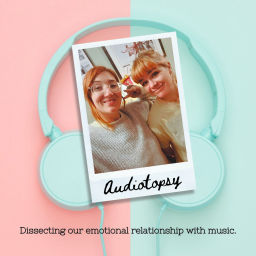
Audiotopsy
Claim This Podcastby Audiotopsy: Dissecting our Emotional Relationship with Music
5.0(11 reviews)
6 episodes
Updated Inactive
Accepts GuestsHas Sponsors
Podcast Overview
Dissecting our emotional relationship with music. Come with us as we explore how music psychology can explain how our favourite pop songs just seem to get us right in the feels!
Language
🇺🇲
Publishing Since
1/14/2024
1 verified contact email on file for Audiotopsy
Pitch yourself as a guest, propose sponsorships, or reach out directly to the host.
Recent Episodes
March 13, 2024
FIVE: The Drop
<p>In this episode, We explore the genre of Electronic Dance Music and discuss the psychology behind why we often have such strong emotional reactions to the breakdown, build up and drop sections of an EDM track. </p> <p>We explore the musical tools used by DJs and producers to make us feel all the things every time we listen and we're contextualising all of this in the wonderful work of one of our favourite music psychologists, David Huron. </p> <p><br></p> <p><strong>References</strong></p> <ul> <li>Fikentscher, K. (2000) “You better work!”: Underground dance music in new york city.<em> </em>Hanover, N.H.: University Press of New England. </li> <li>Huron, D. (2006) Sweet anticipation: Music and the psychology of expectation. The MIT Press. </li> <li>Solberg, R. & Dibben, N. (2019) Peak experiences with electronic dance music: Subjective experiences, physiological responses, and musical characteristics of the break routine. <em>Music Perception, 36 (</em>4). pp. 371-389. DOI: <a href="https://doi.org/10.1525/mp.2019.36.4.371">https://doi.org/10.1525/mp.2019.36.4.371</a></li> <li>Solberg, R. (2014) “Waiting for the bass to drop”: Correlations between intense emotional experiences and production techniques in build-up and drop sections of electronic dance music. <em>Dancecult 6</em>(1):61-82. DOI:<a href="http://dx.doi.org/10.12801/1947-5403.2014.06.01.04" target="_blank">10.12801/1947-5403.2014.06.01.04</a></li> <li>Turrel, A., Halpern, A., & Javadi, A. (2019) When tension is exciting: an EEG exploration of excitement in music. <em>bioRxiv</em> 637983. DOI: <a href="https://doi.org/10.1101/637983">https://doi.org/10.1101/637983</a></li> </ul> <p><br></p>
February 28, 2024
FOUR: The Chills
<p>Goosebumps, chills, frission - whatever you call it, its counted as one of the most intense emotional experiences we can have when listening to music. </p> <p>In this episode, we explore what it is about music and our own psychology that gives us that special tingly feeling when listening to certain songs. We'll explore the theory and contextualise it in a couple of songs that we find particularly spine tingling. </p> <p><strong>References</strong></p> <p>Bannister, S. (2020a). A survey into the experience of musically induced chills: Emotions, situations and music. Psychology of Music, 48(2), 297–314. https://doi.org/10.1177/0305735618798024</p> <p>Blood, A. J., & Zatorre, R. J. (2001). Intensely pleasurable responses to music correlate with activity in brain regions implicated in reward and emotion. Proceedings of the National Academy of Sciences of the United States of America, 98(20), 11818–11823. https://doi.org/10.1073/pnas.191355898</p> <p>de Fleurian, R., & Pearce, M. T. (2021). Chills in music: A systematic review. <em>Psychological Bulletin, 147</em>(9), 890–920. <a href="https://psycnet.apa.org/doi/10.1037/bul0000341" target="_blank">https://doi.org/10.1037/bul0000341</a></p> <p>Grewe, O., Nagel, F., Kopiez, R., & Altenmüller, E. (2007). Listening to music as a re-creative process: Physiological, psychological, and psychoacoustical correlates of chills and strong emotions. Music Perception, 24(3), 297–314. https://doi.org/10.1525/mp.2007.24.3.297</p> <p>Koelsch, S. (2010). Towards a neural basis of music-evoked emotions. Trends in Cognitive Sciences, 14(3), 131–137. https://doi.org/10.1016/j.tics.2010.01.002</p> <p>Panksepp, J. (1995). The emotional sources of "chills" induced by music. <em>Music Perception, 13</em>(2), 171–207. <a href="https://psycnet.apa.org/doi/10.2307/40285693" target="_blank">https://doi.org/10.2307/40285693</a></p> <p>Sachs, M. E., Ellis, R. J., Schlaug, G., & Loui, P. (2016). Brain connectivity reflects human aesthetic responses to music. Social Cognitive and Affective Neuroscience, 11(6), 884–891. https://doi.org/10.1093/scan/nsw009</p> <p>Sloboda, J. A. (1991). Music structure and emotional response: Some empirical findings. Psychology of Music, 19(2), 110–120. https://doi.org/10.1177/0305735691192002</p> <p><br></p>
February 14, 2024
THREE: Lauren's Songs
<p>Join us for episode 3 where we're dissecting 2 songs chosen by Lauren for their ability to make her feel all the things!</p> <p>We're going from one extreme to the other today as we analyse the songs and discuss the psychological theory that supports how in the world such contrasting songs can evoke such powerful emotions. </p> <p><br></p> <p><strong>Reference List</strong></p> <p>Bowling, D. (2013) A vocal basis for the affective character of musical mode in melody. <em>Frontiers in Psychology, 4. </em><a href="https://doi.org/10.3389/fpsyg.2013.00464"><em>https://doi.org/10.3389/fpsyg.2013.00464</em></a><em></em></p> <p>Cameron, D.J., Dotov, D., Flaten, E., Bosnyak, D., Hove, M. & Trainer, L. (2022) Undetectable very-low frequency sound increases dancing at a live concert. <em>Current Biology 32,</em> R1201–R1225, <a href="https://www.cell.com/action/showPdf?pii=S0960-9822%2822%2901535-4">https://www.cell.com/action/showPdf?pii=S0960-9822%2822%2901535-4</a></p> <p>Garrido, S., & Schubert, E. (2011). Individual differences in the enjoyment of negative emotion in music: a literature review and experiment. <em>Music Perception</em>, <em>28</em>(3), 279–296. <a href="https://doi.org/10.1525/mp.2011.28.3.279">https://doi.org/10.1525/mp.2011.28.3.279</a> </p> <p>Garrido, S., & Schubert, E. (2013). Adaptive and maladaptive attraction to negative emotions in music. <em>Musicae Scientiae</em>, <em>17</em>(2), 147–166. <a href="https://doi.org/10.1177/1029864913478305">https://doi.org/10.1177/1029864913478305</a> </p> <p>Matthews, T. E., Witek, M. A. G., Thibodeau, J. L. N., Vuust, P., Penhune, V. B. (2022) Perceived motor synchrony with the beat is more strongly related to groove than measured synchrony. <em>Music Perception</em> <em>29</em> (5): 423–442. <a href="https://doi.org/10.1525/mp.2022.39.5.423">https://doi.org/10.1525/mp.2022.39.5.423</a> </p> <p>Sachs, M., Damasio, A., & Habibi, A. (2021). Unique personality profiles predict when and why sad music is enjoyed. <em>Psychology of Music</em>, <em>49</em>(5), 1145–1164. <a href="https://doi.org/10.1177/0305735620932660">https://doi.org/10.1177/0305735620932660</a> </p> <p>Stupacher, J., Hove, M. J., Janata, P. (2016) Audio features underlying perceived groove and sensorimotor synchronisation in music. <em>Music Perception 33</em>(5):571-589, DOI:<a href="http://dx.doi.org/10.1525/mp.2016.33.5.571">10.1525/mp.2016.33.5.571</a></p> <p>Van der Zwag, M., Westerink, J., Van der Broek, E. L. (2011) Emotional and psychophysiological responses to tempo, mode, and percussiveness. <em>Musicae Scientiae 15(</em>2):250-269. DOI:<a href="http://dx.doi.org/10.1177/1029864911403364">10.1177/1029864911403364</a></p> <p>Zeloni, G., & Pavani, F. (2022).<em> </em>Minor second intervals: A shared signature for infant cries and sadness in music<em>. i-Perception, 13(2), 20416695221092471. </em><a href="https://doi.org/10.1177/20416695221092471"><em>https://doi.org/10.1177/20416695221092471</em></a></p>
6 total episodes available
Deep-dive analytics for Audiotopsy
Frequently asked questions
Have a different question and can't find the answer you're looking for? Reach out to our support team by sending us an email and we'll get back to you as soon as we can.
- What is Audiotopsy?
- How often does this podcast release new episodes?
This podcast updates inactive.
- Where can I listen to this podcast?
This podcast is available on 6 platforms including Apple Podcasts, Spotify, and more. You can also use the RSS feed directly.
- Does this podcast accept guests?
Yes, this podcast regularly features guests.
Legal Disclaimer
Pod Engine is not affiliated with, endorsed by, or officially connected with any of the podcasts displayed on this platform. We operate independently as a podcast discovery and analytics service.
All podcast artwork, thumbnails, and content displayed on this page are the property of their respective owners and are protected by applicable copyright laws. This includes, but is not limited to, podcast cover art, episode artwork, show descriptions, episode titles, transcripts, audio snippets, and any other content originating from the podcast creators or their licensors.
We display this content under fair use principles and/or implied license for the purpose of podcast discovery, information, and commentary. We make no claim of ownership over any podcast content, artwork, or related materials shown on this platform. All trademarks, service marks, and trade names are the property of their respective owners.
While we strive to ensure all content usage is properly authorized, if you are a rights holder and believe your content is being used inappropriately or without proper authorization, please contact us immediately at hey@podengine.ai for prompt review and appropriate action, which may include content removal or proper attribution.
By accessing and using this platform, you acknowledge and agree to respect all applicable copyright laws and intellectual property rights of content owners. Any unauthorized reproduction, distribution, or commercial use of the content displayed on this platform is strictly prohibited.