- 94
- Episodes
- 12
- Ratings
- Weekly
- Cadence
- 2024
- First episode
About Bad at Goodbyes
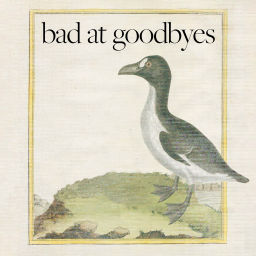
On Bad At Goodbyes, we offer a calm, clear-eyed, creative look at plants and animals from the IUCN Critically Endangered Red List. Research-based, we share species details, behaviors, habitat, and conservation information. And then at the end of each show we perform an ambient soundscape, to hold space for contemplation, delight, awe and perhaps grief. Without dedicated conservation action, some of these species will not survive the 21st century. And so, though listening and learning, perhaps we might acknowledge that journey with a moment of our attention, in recognition of our kinship. Thanks for listening.
- Publisher
- Joshua Dumas
- Category
- kids & family · science · science
- Language
- en
- Explicit
- No
- First episode
- 17 Sept 2024
- Latest episode
- 14 Oct 2026
Latest episodes
94 episodes in the feed.
14 Oct 2026
Fischer's Phragmipedium
Fischer's Phragmipedium :: Phragmipedium fischeri Bad at Goodbyes :: Episode 090 On today’s show we learn about the Fischer's Phragmipedium, a critically endangered orchid native to northwest Ecuador, to the Carchi Province, on the Columbian border. Its scientific name is Phragmipedium fischeri and it was first described in 1996. For more information about Phragmipedium conservation and conservation in Carchi Ecuador in general, please see the Dracula Reserve at https://reservadracula.org/ (https://reservadracula.org/). (00:05) Intro (02:05) Species Information (26:26) Citations (28:20) Music (36:01) Pledge Research for today’s show was compiled from: Braem, G. J., & Mohr, H. (1996). Phragmipedium fischeri, a new slipper orchid from Ecuador. Leaflets of the Schlechter Institute, 3, 27–31. Braem, G. J. (2011). A Re-evaluation of the Infrageneric Taxonomy of the Genus Phragmipedium. Richardiana, 12(1), 16-24. – https://www.biodiversitylibrary.org/part/273301 (https://www.biodiversitylibrary.org/part/273301) Braem, G. J., & Tesón, E. (2016). A revision of the Phragmipedium schlimii complex (Orchidaceae: Cypripedioideae). Richardiana, 16, 293–321. – https://richardiana.jardinbotaniquedeguyane.com/wp-content/uploads/2018/12/Richardiana-vol16-28-Phragmipediumschlimii.pdf (https://richardiana.jardinbotaniquedeguyane.com/wp-content/uploads/2018/12/Richardiana-vol16-28-Phragmipediumschlimii.pdf) Broaddus, C., & Robayo, J. (2021). Dracula Transect Expedition: Explorers Club flag report. The Explorers Club. – https://static1.squarespace.com/static/5d69890f65a29d0001afbce5/t/61a647f3829f5f05eaf1b63a/1638287355005/Dracula+Transect+Expedition+-+Explorers+Club+Flag+Report.pdf (https://static1.squarespace.com/static/5d69890f65a29d0001afbce5/t/61a647f3829f5f05eaf1b63a/1638287355005/Dracula+Transect+Expedition+-+Explorers+Club+Flag+Report.pdf) Dodson, C. H. (1966). Studies in orchid pollination: The genus Phragmipedium. American Orchid Society Bulletin, 35(8), 680–687 – https://www.aos.org/explore/phragmipedium (https://www.aos.org/explore/phragmipedium) Guo, Y.-Y., Luo, Y.-B., Liu, Z.-J., & Wang, X.-Q. (2012). Evolution and biogeography of the slipper orchids: Eocene vicariance of the conduplicate genera in the Old and New World tropics. PLoS ONE, 7(6), e38788. – https://doi.org/10.1371/journal.pone.0038788 (https://doi.org/10.1371/journal.pone.0038788) Jost, L. (2016, October 2). Ladyslippers 1: Biology. EcoMinga Blog. – https://ecomingafoundation.wordpress.com/2016/10/02/ladyslippers-1-biology/ (https://ecomingafoundation.wordpress.com/2016/10/02/ladyslippers-1-biology/) iNaturalist – near Carchi (https://www.inaturalist.org/observations?captive=false&nelat=0.9139594134612818&nelng=-78.09545657512842&quality_grade=research&subview=map&swlat=0.8920377715733394&swlng=-78.11892556232276&view=species) Manza, S. (2006, July 13). Phragmipedium fischeri. Slipper Orchid Info Data Sheet. – https://slipperorchids.info/phragdatasheets/fischeri/index.html (https://slipperorchids.info/phragdatasheets/fischeri/index.html) Matters, D. (2004, August/September). Phragmipediums and their culture. Australian Orchid Review, 69(4), 4-10. – http://www.biodiversitylibrary.org/page/61848580 (http://www.biodiversitylibrary.org/page/61848580) McGough, H. N., Roberts, D. L., Brodie, C., & Kowalczyk, J. (2006). CITES and slipper orchids: An introduction to slipper orchids covered by the Convention on International Trade in Endangered Species. Kew Royal Botanic Gardens. – https://iro.bl.uk/entities/publication/67a9adb0-a256-4643-b05f-b2ef889696b6 (https://iro.bl.uk/entities/publication/67a9adb0-a256-4643-b05f-b2ef889696b6) Missouri Botanical Garden. (n.d.). Phragmipedium (Group). Plant Finder. – https://plantfinder.mobot.org/PlantFinderDetails.aspx?taxonid=264657 (https://plantfinder.mobot.org/PlantFinderDetails.aspx?taxonid=264657) Rankou, H. 2016. Phragmipedium fischeri. The IUCN Red List of Threatened Species 2016: e.T43324499A43328089. – https://dx.doi.org/10.2305/IUCN.UK.2016-1.RLTS.T43324499A43328089.en (https://dx.doi.org/10.2305/IUCN.UK.2016-1.RLTS.T43324499A43328089.en) Royal Botanic Gardens, Kew. (n.d.). Phragmipedium schlimii f. schlimii. Plants of the World Online. – https://powo.science.kew.org/taxon/urn:lsid:ipni.org:names:77188197-1 (https://powo.science.kew.org/taxon/urn:lsid:ipni.org:names:77188197-1) Wikipedia – https://en.wikipedia.org/wiki/Phragmipedium (https://en.wikipedia.org/wiki/Phragmipedium) Zotz, G., & Hietz, P. (2001). The physiological ecology of vascular epiphytes: Current knowledge, open questions. Journal of Experimental Botany, 52(364), 2067–2078. https://doi.org/10.1093/jexbot/52.364.2067 (https://doi.org/10.1093/jexbot/52.364.2067) Please find us on the web at Bad at Goodbyes (https://badatgoodbyes.com/) and on instagram (http://instagram.com/badatgoodbyespodcast). Please subscribe and rate/review Bad at Goodbyes wherever you listen to podcasts (https://bad-at-goodbyes.captivate.fm/listen). Please help spread the word about the show and about the species we feature. Please take care of each other, and all of our fellow travelers. A note on accuracy: I strive for it! These episodes are well-researched and built from scholarly sources, hoping to provide an informed and accurate portrait of these species. That said, I’m a musician! I am not an academic and have limited scientific background. I may get things wrong! If you are using this podcast for scholarship of any kind, please see the cited sources and double-check all information.
7 Oct 2026
Raffles' Banded Langur
Raffles' Banded Langur :: Presbytis femoralis Bad at Goodbyes :: Episode 089 On today’s show we learn about the Raffles' Banded Langur, a critically endangered mammal, a primate, native to southeast Asia, to Singapore and southern Malaysia. Its scientific name is Presbytis femoralis and it was first described in 1838. For more information about Raffles' Banded Langur conservation please see Mandai Nature at https://www.mandainature.org/ (https://www.mandainature.org/). (00:05) Intro (02:05) Species Information (31:03) Citations (33:20) Music (41:20) Pledge Research for today’s show was compiled from: Ang, A., Boonratana, R. & Nijman, V. 2022. Presbytis femoralis. The IUCN Red List of Threatened Species 2022: e.T39801A215090780. – https://dx.doi.org/10.2305/IUCN.UK.2022-1.RLTS.T39801A215090780.en (https://dx.doi.org/10.2305/IUCN.UK.2022-1.RLTS.T39801A215090780.en) Ang, A., D’Rozario, V., Jayasri, S. L., Lees, C. M., Li, T. J., & Luz, S. (2016). Species action plan for the conservation of Raffles’ banded langur (Presbytis femoralis femoralis) in Malaysia and Singapore. IUCN SSC Conservation Breeding Specialist Group. – https://portals.iucn.org/library/node/47506 (https://portals.iucn.org/library/node/47506) Ang, A., Jabbar, S., D’Rozario, V., & Lakshminarayanan, J. (2021). Citizen science program for critically endangered primates: A case study from Singapore. Primate Conservation, 35, 179–188. – http://www.primate-sg.org/storage/pdf/PC35_Ang_et_al_Citizen_science.pdf (http://www.primate-sg.org/storage/pdf/PC35_Ang_et_al_Citizen_science.pdf) Ang, A., Roesma, D. I., Nijman, V., Meier, R., Srivathsan, A., & Rizaldi (2020). Faecal DNA to the rescue: Shotgun sequencing of non-invasive samples reveals two subspecies of Southeast Asian primates to be Critically Endangered species. Scientific Reports, 10(1), 9396. https://doi.org/10.1038/s41598-020-66007-8 (https://doi.org/10.1038/s41598-020-66007-8) Cherian, A. (2023, February). Raffles' banded langur. New England Primate Conservancy. – https://neprimateconservancy.org/raffles-banded-langur/ (https://neprimateconservancy.org/raffles-banded-langur/) Ding Li Yong. (2025). [Sound recording from] Xeno-Canto. XC961056. – https://www.xeno-canto.org/961056 (https://www.xeno-canto.org/961056) Er, J. (n.d.). Introducing our elusive wild neighbours. [Singapore] National Parks Board. Retrieved October 3, 2026. – https://www.nparks.gov.sg/publications-resources/articles/introducing-our-elusive-wild-neighbours (https://www.nparks.gov.sg/publications-resources/articles/introducing-our-elusive-wild-neighbours) Haris, H., Othman, N., Kaviarasu, M., Najmuddin, M. F., Abdullah-Fauzi, N. A. F., Ramli, F. F., Sariyati, N. H., Ilham-Norhakim, M. L., Md-Zain, B. M., & Abdul-Latiff, M. A. B. (2024). Ethnoprimatology reveals new extended distribution of critically endangered banded langur Presbytis femoralis (Martin, 1838) in Pahang, Malaysia: Insights from indigenous traditional knowledge and molecular analysis. American Journal of Primatology, 86, e23631. – https://doi.org/10.1002/ajp.23631 (https://doi.org/10.1002/ajp.23631) Haris, N. (2021). DNA metabarcoding and phytochemical analysis of plants consumed by banded langur (Presbytis femoralis) in Johor. [N. Haris'] Master's thesis, Universiti Tun Hussein Onn Malaysia. UTHM Institutional Repository. – https://eprints.uthm.edu.my/6435/ (https://eprints.uthm.edu.my/6435/) iNaturalist - Singapore (https://www.inaturalist.org/observations?captive=false&lat=1.3683384450006217&lng=103.78119076661717&quality_grade=research&radius=10.516025168574815&subview=map&threatened&view=species) Lai, D. (2026, August 3). Critically endangered Raffles’ banded langur spotted at Bukit Timah Nature Reserve after 39 years. The Straits Times. – https://www.straitstimes.com/singapore/critically-endangered-raffles-banded-langur-spotted-at-bukit-timah-nature-reserve-after-39-years (https://www.straitstimes.com/singapore/critically-endangered-raffles-banded-langur-spotted-at-bukit-timah-nature-reserve-after-39-years) Malaysian Palm Oil Council. (2021, September 1). Will Malaysia be able to weather the decline in palm oil exports to the United States? MPOC Market Insight. – https://www.mpoc.org.my/will-malaysia-be-able-to-weather-the-decline-in-palm-oil-exports-to-the-united-states/ (https://www.mpoc.org.my/will-malaysia-be-able-to-weather-the-decline-in-palm-oil-exports-to-the-united-states/) Mittermeier, R. A., Reuter, K. E., Rylands, A. B., Jerusalinsky, L., Schwitzer, C., Strier, K. B., Ratsimbazafy, J., & Humle, T. (Eds.). (2022). Primates in peril: The world’s 25 most endangered primates 2022–2023. IUCN SSC Primate Specialist Group, International Primatological Society, & Re:wild. – https://static1.1.sqspcdn.com/static/f/1200343/28551465/1665759930773/Top-25-Primates-2022-2023.pdf (https://static1.1.sqspcdn.com/static/f/1200343/28551465/1665759930773/Top-25-Primates-2022-2023.pdf) Najmuddin, M. F., Haris, H., Norazlimi, N., Md-Zain, B. M., Abd Rahman, M.-R., Shahrool-Anuar, R., Hassan, A. H., & Abdul-Latiff, M. A. B. (2020). Daily activity budget of banded langur (Presbytis femoralis) in Malaysia. Journal of Sustainability Science and Management, 15(5), 84–97. – https://doi.org/10.46754/jssm.2020.07.009 (https://doi.org/10.46754/jssm.2020.07.009) Numata, S., Yamaguchi, K., Shimizu, M., Sakurai, G., Morimoto, A., Alias, N., Noor Azman, N. Z., Hosaka, T., & Satake, A. (2022). Impacts of climate change on reproductive phenology in tropical rainforests of Southeast Asia. Communications Biology, 5(1), Article 311. – https://doi.org/10.1038/s42003-022-03245-8 (https://doi.org/10.1038/s42003-022-03245-8) Najmuddin, M. F., Haris, H., Norazlimi, N., Ruslin, F., Matsuda, I., Md-Zain, B. M., & Abdul-Latiff, M. A. B. (2021). Dietary habits of free-ranging banded langur (Presbytis femoralis) in a secondary-human modified forest in Johor, Malaysia. Zoological Studies, 60, Article 67. – https://doi.org/10.6620/ZS.2021.60-67 (https://doi.org/10.6620/ZS.2021.60-67) Rizaldi, Ilham, K., Prasetio, I., Lee, Z. H., Jabbar, S., & Ang, A. (2019). Preliminary study on the distribution and conservation status of the East Sumatran banded langur Presbytis femoralis percura in Riau Province, Sumatra, Indonesia. Asian Primates Journal, 8(1), 25–36. – http://static1.1.sqspcdn.com/static/f/1200343/28234574/1577091893337/2019Dec23_Article_3.pdf (http://static1.1.sqspcdn.com/static/f/1200343/28234574/1577091893337/2019Dec23_Article_3.pdf) Tay, L. S., Choo, R., Khoo, M. D. Y., Kong, E., Chan, Y. X., Neo, W. H. Y., Ow, S., Toh, Y. H., Ling, H., Soh, M. C. K., Lee, B. P. Y.-H., Loo, A. H. B., & Er, K. B. H. (2024). A suite of wildlife crossing structures facilitates mammal movement across tropical forest fragments in a city. Ecosphere, 15(12), Article e70114. https://doi.org/10.1002/ecs2.70114 (https://doi.org/10.1002/ecs2.70114) Woolloff, A., Svensson, M. S., Jabbar, S., Ang, A., & Nijman, V. (2023). Population viability analysis of the population of Raffles’ banded langurs Presbytis femoralis in Singapore. Raffles Bulletin of Zoology, 71, 542–552. – https://doi.org/10.26107/RBZ-2023-0041 (https://doi.org/10.26107/RBZ-2023-0041) Wikipedia – https://en.wikipedia.org/wiki/Raffles%27_banded_langur (https://en.wikipedia.org/wiki/Raffles%27_banded_langur) Please find us on the web at Bad at Goodbyes (https://badatgoodbyes.com/) and on instagram (http://instagram.com/badatgoodbyespodcast). Please subscribe and rate/review Bad at Goodbyes wherever you listen to podcasts (https://bad-at-goodbyes.captivate.fm/listen). Please help spread the word about the show and about the species we feature. Please take care of each other, and all of our fellow travelers. A note on accuracy: I strive for it! These episodes are well-researched and built from scholarly sources, hoping to provide an informed and accurate portrait of these species. That said, I’m a musician! I am not an academic and have limited scientific background. I may get things wrong!...
30 Sept 2026
Vallarta Pine
Vallarta Pine :: Pinus vallartensis Bad at Goodbyes :: Episode 088 On today’s show we learn about the Vallarta Pine, a critically endangered conifer native to the state of Jalisco, in western Mexico, near Puerto Vallarta a few miles inland from Banderas Bay on the Pacific Ocean. Its scientific name is Pinus vallartensis and it was first described in 2017. For more information about Vallarta Pine conservation and to donate to support their protection, please see the Vallarta Botanical Gardens at https://www.vbgardens.org/ (https://www.vbgardens.org/). (00:05) Intro (02:05) Species Information (20:11) Citations (22:04) Music (28:29) Pledge Research for today’s show was compiled from: Coder, K. D. (2008). Leaf senescence & abscission (Tree Leaf Color Series WSFNR08-33). Warnell School of Forestry and Natural Resources, University of Georgia. – http://hdl.handle.net/10724/36467 (http://hdl.handle.net/10724/36467) Cox, T. (2019, October 3). Conifer trees of Puerto Vallarta, Mexico. American Conifer Society. – https://www2.conifersociety.org/blogpost/2082607/489898/Conifer-Trees-of-Puerto-Vallarta-Mexico (https://www2.conifersociety.org/blogpost/2082607/489898/Conifer-Trees-of-Puerto-Vallarta-Mexico) Critical Ecosystem Partnership Fund. (2004). Madrean pine-oak woodlands. In R. A. Mittermeier, P. Robles Gil, M. Hoffmann, J. Pilgrim, T. Brooks, C. G. Mittermeier, J. Lamoreux, & G. A. B. da Fonseca, Hotspots revisited: Earth's biologically wealthiest and most threatened terrestrial ecoregions. Conservation International. – https://www.cepf.net/our-work/biodiversity-hotspots/Madrean-pine-oak-woodlands (https://www.cepf.net/our-work/biodiversity-hotspots/Madrean-pine-oak-woodlands) de La Rosa, J. A. P., & Gernandt, D. S. (2017). Pinus vallartensis (Pinaceae), a new species from western Jalisco, Mexico. Phytotaxa, 331(2), 233–242. – https://doi.org/10.11646/phytotaxa.331.2.7 (https://doi.org/10.11646/phytotaxa.331.2.7) Earle, C. J. (2026, January 11). Pinus vallartensis. The Gymnosperm Database. – https://www.conifers.org/pi/Pinus_vallartensis.php (https://www.conifers.org/pi/Pinus_vallartensis.php) Farjon, Aljos, and Brian T. Styles. 1997. Pinus (Pinaceae). Flora Neotropica, Monograph 75. New York: The New York Botanical Garden. – https://www.jstor.org/stable/4393881 (https://www.jstor.org/stable/4393881) Gossett, D. R. (2021). Leaf abscission. In Research Starters: Anatomy and Physiology. EBSCOhost. – https://www.ebsco.com/research-starters/anatomy-and-physiology/leaf-abscission (https://www.ebsco.com/research-starters/anatomy-and-physiology/leaf-abscission) iNaturalist – south of Puerto Vallarta (https://www.inaturalist.org/observations?lat=20.443970305093636&lng=-105.18266119619923&quality_grade=research&radius=5.629302690659642&subview=map&view=species) Perez de la Rosa, J., Gernandt, D. & Thomas, P. 2024. Pinus vallartensis. The IUCN Red List of Threatened Species 2024: e.T124561040A124561048. – https://dx.doi.org/10.2305/IUCN.UK.2024-2.RLTS.T124561040A124561048.en (https://dx.doi.org/10.2305/IUCN.UK.2024-2.RLTS.T124561040A124561048.en) Singh, S. P., Inderjit, Singh, J. S., et al. (2018). Insights on the persistence of pines (Pinus species) in the Late Cretaceous and their increasing dominance in the Anthropocene. Ecology and Evolution, 8, 10345-10359. – https://doi.org/10.1002/ece3.4499 (https://doi.org/10.1002/ece3.4499) Ulises, R.-S. H., & Lucia, F.-M. A. (2024). Impacts of Climate Change on Forest Resources in Mexico: Regional Projections and Vulnerabilities. Journal of Geography, Environment and Earth Science International, 28(12), 67–93. – https://doi.org/10.9734/jgeesi/2024/v28i12849 (https://doi.org/10.9734/jgeesi/2024/v28i12849) Vallarta Botanical Gardens. (n.d.). Habitat and ecosystem conservation. – https://www.vbgardens.org/habitat-ecosystem-conservation/ (https://www.vbgardens.org/habitat-ecosystem-conservation/) Wikipedia - https://en.wikipedia.org/wiki/Pinus_vallartensis (https://en.wikipedia.org/wiki/Pinus_vallartensis) Please find us on the web at Bad at Goodbyes (https://badatgoodbyes.com/) and on instagram (http://instagram.com/badatgoodbyespodcast). Please subscribe and rate/review Bad at Goodbyes wherever you listen to podcasts (https://bad-at-goodbyes.captivate.fm/listen). Please help spread the word about the show and about the species we feature. Please take care of each other, and all of our fellow travelers. A note on accuracy: I strive for it! These episodes are well-researched and built from scholarly sources, hoping to provide an informed and accurate portrait of these species. That said, I’m a musician! I am not an academic and have limited scientific background. I may get things wrong! If you are using this podcast for scholarship of any kind, please see the cited sources and double-check all information.
Reach and audience
Public platform figures. Ratings count people who left a rating, not total listeners.
- Apple Podcasts (US)
- 5.0 / 5
- 7 ratings
- Spotify
- 5.0 / 5
- 5 ratings
Podcast Authority Score: 62 / 100
A composite of feed quality, social presence, YouTube performance and engagement. Read the methodology.
- Quality
- 92
- Social presence
- 90
- YouTube
- 0
- Engagement
- 32
Contact Bad at Goodbyes
- Guest appearances
- Books guests
Based on episode analysis; this does not confirm that the show is currently accepting guests.
Host of Bad at Goodbyes?
Claim your podcast to manage its listing and keep your show details accurate.
Pod Engine is an independent podcast discovery and analytics service and is not affiliated with or endorsed by this podcast. Artwork and show content belong to their owners. Full legal notice.
Explore this show
Podcast research with Pod Engine