Podcast thumbnail for Bad Faith Cycles in Algorithmic Cultivation

Bad Faith Cycles in Algorithmic Cultivation

Claim This Podcast

by Calvin H

6 episodes
Updated Daily
Accepts GuestsHas SponsorsLocation 🇨🇦

Podcast Overview

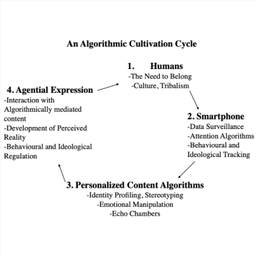
Bad Faith Cycles in Algorithmic Cultivation is an interview-based podcast series that explores Identity, defined as who we are and what we do, and Agency, defined as the sum total range of potential actions or our ability to make a difference, in our contemporary digitally and algorithmically mediated lives. The goal of the podcast is to provide listeners with an understanding of surveillance in digital space that allows them to recognize issues of “exploitation, commodification, and degradation” as related to commercial data extraction.

Language

🇺🇲

Publishing Since

9/3/2021

1 verified contact email on file for Bad Faith Cycles in Algorithmic Cultivation

Pitch yourself as a guest, propose sponsorships, or reach out directly to the host.

Recent Episodes

Episode thumbnail for Cory Doctorow

October 25, 2021

Cory Doctorow

<p>Cory Doctorow is a digital rights activist, a podcaster, and a writer. Cory speaks with conviction against commercial data practices, which he views as opaque and untrustworthy. Cory recently wrote an article on consent theatre, <strong>[1]</strong> a concept that explains the strategies used by data-based companies to obfuscate the depth of their surveillance practices to acquire unwitting consent of their users.</p> <p><strong>[1] </strong>Cory Doctorow, “Consent Theater,” Medium, 2021, <a href="https://onezero.medium.com/consent-theater-a32b98cd8d96">https://onezero.medium.com/consent-theater-a32b98cd8d96</a>.</p>

Episode thumbnail for Dr Darin Barney

October 18, 2021

Dr Darin Barney

<p>Dr Darin Barney is a professor at McGill University in Montreal, Canada. His work examines the future of digital technologies in democratic life, <strong>[1] </strong>the state of citizenship is a digitally integrated society, <strong>[2] </strong>and the infrastructure of network societies. <strong>[3] </strong>Our discussion revolved around concerns of digital governance over social and political life, <strong>[4]</strong> algorithmic fragmentation of social reality,<strong> [5]</strong> and the commercialization of data as treating users as standing-reserve. <strong>[6]</strong></p> <p><strong>[1] </strong>Darin David Barney, Prometheus Wired: The Hope for Democracy in the Age of Network Technology (Vancouver: UBC Press, 2000).</p> <p><strong>[2]</strong> Darin David Barney, One Nation under Google: Citizenship in the Technological Republic (Toronto: Hart House Lecture Committee, 2007).</p> <p><strong>[3] </strong>Darin David Barney, The Network Society, Key Concepts (Cambridge, UK: Polity, 2010).</p> <p><strong>[4]</strong> Yu-Che Chen, Managing Digital Governance: Issues, Challenges, and Solutions.(Boca Raton: Taylor and Francis, 2017), <a href="https://public.ebookcentral.proquest.com/choice/publicfullrecord.aspx?p=4921790">https://public.ebookcentral.proquest.com/choice/publicfullrecord.aspx?p=4921790</a>; Just and Latzer, 245.</p> <p><strong>[5] </strong>Dean DeChiaro, “Social Media Algorithms Threaten Democracy, Experts Tell Senators,” Roll Call, April 21, 2021, <a href="https://www.rollcall.com/2021/04/27/social-media-algorithms-threaten-democracy-experts-tell-senators/">https://www.rollcall.com/2021/04/27/social-media-algorithms-threaten-democracy-experts-tell-senators/</a>; Susan Morgan, “Fake News, Disinformation, Manipulation and Online Tactics to Undermine Democracy,” Journal of Cyber Policy 3, no. 1 (January 2, 2018): 39–43, <a href="https://doi.org/10.1080/23738871.2018.1462395">https://doi.org/10.1080/23738871.2018.1462395</a>; Ünver, 127–46.</p> <p><strong>[6] </strong>Martin Heidegger and William Lovitt, The Question Concerning Technology and Other Essays (New York: Harper &amp; Row, 1977).</p>

Episode thumbnail for Dr John Cheney-Lippold

October 4, 2021

Dr John Cheney-Lippold

<p>Dr John Cheney-Lippold is an assistant professor at the University of Michigan, Ann Arbor, USA. His work uses a variety of philosophical concepts to provide an ontological review of the intersections between commercial and domestic surveillance, identity profiling, cultural participation, and the processes of becoming. <strong>[1]</strong> Dr Cheney-Lippold’s concept Algorithmic Identity illustrates how the intensity of identity profiling in commercial surveillance practices curates an identity based sense of reality for digital technology users. <strong>[2]</strong> Dr Cheney-Lippold reflects this new mode of media distribution that utilizes data to target identity categories deserves significant ontological considerations.</p> <p><strong>[1]</strong> John Cheney-Lippold, We Are Data: Algorithms and the Making of Our Digital Selves(New York: New York University Press, 2017).</p> <p><strong>[2]</strong> John Cheney-Lippold, 5; Natascha Just and Michael Latzer, “Governance by Algorithms: Reality Construction by Algorithmic Selection on the Internet,” Media, Culture &amp; Society 39, no. 2 (March 2017): 238–58, <a href="https://doi.org/10.1177/0163443716643157">https://doi.org/10.1177/0163443716643157</a>; Smith, “On You: Networks, Subjectivity and Algorithmic Identity, 2018; Cornelius Schubert, “The social life of computer simulations: On the social construction of algorithms and the algorithmic construction of the social,” in Simulieren und Entscheiden, ed. Nicole J. Saam, Michael Resch, and Andreas Kaminski, Sozialwissenschaftliche Simulationen und die Soziologie der Simulation (Wiesbaden: Springer Fachmedien Wiesbaden, 2019), 145–69, <a href="https://doi.org/10.1007/978-3-658-26042-2_6">https://doi.org/10.1007/978-3-658-26042-2_6</a>.</p>

6 total episodes available

Deep-dive analytics for Bad Faith Cycles in Algorithmic Cultivation

Frequently asked questions

Have a different question and can't find the answer you're looking for? Reach out to our support team by sending us an email and we'll get back to you as soon as we can.

What is Bad Faith Cycles in Algorithmic Cultivation?

Bad Faith Cycles in Algorithmic Cultivation is an interview-based podcast series that explores Identity, defined as who we are and what we do, and Agency, defined as the sum total range of potential actions or our ability to make a difference, in our contemporary digitally and algorithmically mediated lives.

The goal of the podcast is to provide listeners with an understanding of surveillance in digital space that allows them to recognize issues of “exploitation, commodification, and degradation” as related to commercial data extraction.

How often does this podcast release new episodes?

This podcast updates daily.

Where can I listen to this podcast?

This podcast is available on 4 platforms including Apple Podcasts, Spotify, and more. You can also use the RSS feed directly.

Does this podcast accept guests?

Yes, this podcast regularly features guests.

Legal Disclaimer

Pod Engine is not affiliated with, endorsed by, or officially connected with any of the podcasts displayed on this platform. We operate independently as a podcast discovery and analytics service.

All podcast artwork, thumbnails, and content displayed on this page are the property of their respective owners and are protected by applicable copyright laws. This includes, but is not limited to, podcast cover art, episode artwork, show descriptions, episode titles, transcripts, audio snippets, and any other content originating from the podcast creators or their licensors.

We display this content under fair use principles and/or implied license for the purpose of podcast discovery, information, and commentary. We make no claim of ownership over any podcast content, artwork, or related materials shown on this platform. All trademarks, service marks, and trade names are the property of their respective owners.

While we strive to ensure all content usage is properly authorized, if you are a rights holder and believe your content is being used inappropriately or without proper authorization, please contact us immediately at hey@podengine.ai for prompt review and appropriate action, which may include content removal or proper attribution.

By accessing and using this platform, you acknowledge and agree to respect all applicable copyright laws and intellectual property rights of content owners. Any unauthorized reproduction, distribution, or commercial use of the content displayed on this platform is strictly prohibited.