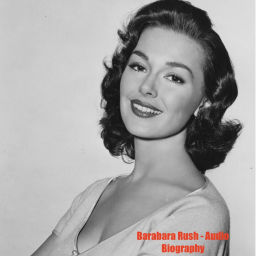
Podcast thumbnail for Barabara Rush - Audio Biography

Barabara Rush - Audio Biography

Claim This Podcast

by Inception Point AI

1 episodes
Updated Weekly
Accepts GuestsHas SponsorsLocation 🇺🇸

Podcast Overview

Barbara Rush: A Luminary of the Silver Screen Barbara Rush, an American actress whose career spanned over six decades, left an indelible mark on the world of entertainment. Born on January 4, 1927, in Denver, Colorado, Rush grew up in Santa Barbara, California, where her love for acting blossomed. Her journey from a young, aspiring actress to a Hollywood luminary is a tale of talent, dedication, and resilience. Early Life and Education Barbara Rush was born to Roy and Muriel Rush. Her father worked as a lawyer, while her mother was a homemaker. Growing up, Rush was drawn to the performing arts and actively participated in school plays. Her passion for acting led her to study at the University of California, Santa Barbara, where she majored in drama. During her college years, Rush honed her acting skills and caught the attention of talent scouts. Her striking beauty and undeniable talent opened doors for her in the entertainment industry. In 1948, she made her stage debut in the play "The Night of January 16th" at the Pasadena Playhouse, a renowned theater company known for launching the careers of many Hollywood stars. Rise to Stardom Rush's performance at the Pasadena Playhouse was a turning point in her career. She signed a contract with Paramount Pictures in 1950 and made her film debut in the western "The Goldbergs" (1950). Her breakthrough role came in 1951 when she starred opposite Paul Newman in the historical drama "The First Legion." Rush's portrayal of a young woman grappling with faith and love earned her critical acclaim and established her as a rising star. Throughout the 1950s, Rush appeared in numerous films, showcasing her versatility as an actress. She starred in the science fiction classic "When Worlds Collide" (1951), the film noir "Strangers on a Train" (1951), and the romantic comedy "The Magnificent Yankee" (1950). Her performances in these films demonstrated her ability to adapt to various genres and captivate audiences with her screen presence. One of Rush's most memorable roles was in the 1953 film "It Came from Outer Space," a groundbreaking science fiction movie directed by Jack Arnold. Rush played the lead role of Ellen Fields, a schoolteacher who encounters extraterrestrial life. The film was one of the first to feature aliens as sympathetic characters and showcased Rush's ability to convey a wide range of emotions, from fear to compassion. Television Success In addition to her film career, Rush made a significant impact on the television industry. She made her television debut in 1954 in an episode of the anthology series "The Ford Television Theatre." Throughout the 1950s and 1960s, she appeared in numerous television shows, including "The Twilight Zone," "Playhouse 90," and "The Outer Limits." Rush's most notable television role came in 1962 when she starred in the sitcom "Peyton Place." The show, based on the controversial novel by Grace Metalious, was groundbreaking for its time, addressing taboo subjects This content was created in partnership and with the help of Artificial Intelligence AI.

Language

🇺🇲

Publishing Since

4/2/2024

2 verified contact emails on file for Barabara Rush - Audio Biography

Pitch yourself as a guest, propose sponsorships, or reach out directly to the host.

Recent Episodes

Episode thumbnail for Barbara Rush - Audio Biography

April 2, 2024

Barbara Rush - Audio Biography

Barbara Rush: A Luminary of the Silver Screen <br />Barbara Rush, an American actress whose career spanned over six decades, left an indelible mark on the world of entertainment. Born on January 4, 1927, in Denver, Colorado, Rush grew up in Santa Barbara, California, where her love for acting blossomed. Her journey from a young, aspiring actress to a Hollywood luminary is a tale of talent, dedication, and resilience. <br />Early Life and Education Barbara Rush was born to Roy and Muriel Rush. Her father worked as a lawyer, while her mother was a homemaker. Growing up, Rush was drawn to the performing arts and actively participated in school plays. Her passion for acting led her to study at the University of California, Santa Barbara, where she majored in drama. <br />During her college years, Rush honed her acting skills and caught the attention of talent scouts. Her striking beauty and undeniable talent opened doors for her in the entertainment industry. In 1948, she made her stage debut in the play "The Night of January 16th" at the Pasadena Playhouse, a renowned theater company known for launching the careers of many Hollywood stars. <br />Rise to Stardom Rush's performance at the Pasadena Playhouse was a turning point in her career. She signed a contract with Paramount Pictures in 1950 and made her film debut in the western "The Goldbergs" (1950). Her breakthrough role came in 1951 when she starred opposite Paul Newman in the historical drama "The First Legion." Rush's portrayal of a young woman grappling with faith and love earned her critical acclaim and established her as a rising star. <br />Throughout the 1950s, Rush appeared in numerous films, showcasing her versatility as an actress. She starred in the science fiction classic "When Worlds Collide" (1951), the film noir "Strangers on a Train" (1951), and the romantic comedy "The Magnificent Yankee" (1950). Her performances in these films demonstrated her ability to adapt to various genres and captivate audiences with her screen presence. <br />One of Rush's most memorable roles was in the 1953 film "It Came from Outer Space," a groundbreaking science fiction movie directed by Jack Arnold. Rush played the lead role of Ellen Fields, a schoolteacher who encounters extraterrestrial life. The film was one of the first to feature aliens as sympathetic characters and showcased Rush's ability to convey a wide range of emotions, from fear to compassion. <br />Television Success In addition to her film career, Rush made a significant impact on the television industry. She made her television debut in 1954 in an episode of the anthology series "The Ford Television Theatre." Throughout the 1950s and 1960s, she appeared in numerous television shows, including "The Twilight Zone," "Playhouse 90," and "The Outer Limits." <br />Rush's most notable television role came in 1962 when she starred in the sitcom "Peyton Place." The show, based on the controversial novel by Grace Metalious, was groundbreaking for its time, addressing taboo subjects such as sexual promiscuity, incest, and abortion. Rush played the role of Grace Metalious, the author of the novel, and received critical acclaim for her performance. The show ran for five seasons and solidified Rush's status as a television icon. <br />Personal Life and Philanthropy Beyond her acting career, Barbara Rush was known for her personal life and philanthropic endeavors. She was married three times, first to actor Jeffrey Hunter from 1950 to 1955, then to publicist Warren Cowan from 1959 to 1969, and finally to sculptor Jim Gruzalski from 1970 to 1973. Rush had two children, Christopher Hunter and Claudia Cowan, both of whom followed in their mother's footsteps and pursued careers in the entertainment industry. <br />Rush was also deeply committed to various charitable causes. She was a strong advocate for animal rights and supported organizations such as the American Humane Association and the Society for the Prevention of Cruelty to Animals (SPCA). Additionally, she was involved with the United Nations Children's Fund (UNICEF) and worked to raise awareness about child welfare issues. <br />Later Career and Legacy As Rush's career progressed, she continued to take on challenging roles in both film and television. In the 1970s, she starred in the horror film "The Stunt Man" (1980) opposite Peter O'Toole, and appeared in the television miniseries "The Seekers" (1979) and "Scruples" (1980). Her later film credits include "Hocus Pocus" (1993) and "Strangers with Candy" (2005), demonstrating her ability to captivate audiences across generations. <br />Rush's contributions to the entertainment industry did not go unnoticed. She received a star on the Hollywood Walk of Fame in 1960, cementing her status as a true Hollywood icon. In 1954, she was nominated for a Golden Globe Award for her performance in the film "Magnificent Obsession," a testament to her acting prowess. <br />Beyond her accolades, Rush's legacy lies in her ability to inspire and pave the way for future generations of actresses. Her grace, talent, and dedication to her craft served as a model for aspiring performers. Rush's career demonstrated that with hard work and perseverance, one could achieve success in the competitive world of entertainment. <br />Conclusion Barbara Rush's life and career were a testament to the power of passion, talent, and resilience. From her early days at the Pasadena Playhouse to her iconic roles in film and television, Rush left an indelible mark on the entertainment industry. Her ability to captivate audiences across various genres and mediums showcased her versatility and skill as an actress. <br />Beyond her on-screen achievements, Rush's personal life and philanthropic endeavors revealed a woman committed to making a difference in the world. Her support for animal rights and child welfare issues demonstrated her compassion and desire to use her platform for good. <br />As we reflect on Barbara Rush's extraordinary life and career, we are reminded of the impact that one person can have on an industry and the world at large. Her legacy continues to inspire generations of actresses and fans alike, serving as a reminder of the enduring power of storytelling and the magic of the silver screen. <br />In a career spanning over six decades, Barbara Rush proved that with talent, dedication, and a passion for one's craft, anything is possible. Her contributions to film, television, and philanthropy will forever be remembered, and her legacy will continue to shine brightly in the annals of Hollywood history. Thanks for listening to Quiet Please. Remember to like and share wherever you get your podcasts.

1 total episodes available

Deep-dive analytics for Barabara Rush - Audio Biography

Frequently asked questions

Have a different question and can't find the answer you're looking for? Reach out to our support team by sending us an email and we'll get back to you as soon as we can.

What is Barabara Rush - Audio Biography?

Barbara Rush: A Luminary of the Silver Screen Barbara Rush, an American actress whose career spanned over six decades, left an indelible mark on the world of entertainment. Born on January 4, 1927, in Denver, Colorado, Rush grew up in Santa Barbara, California, where her love for acting blossomed. Her journey from a young, aspiring actress to a Hollywood luminary is a tale of talent, dedication, and resilience. Early Life and Education Barbara Rush was born to Roy and Muriel Rush. Her father worked as a lawyer, while her mother was a homemaker. Growing up, Rush was drawn to the performing arts and actively participated in school plays. Her passion for acting led her to study at the University of California, Santa Barbara, where she majored in drama. During her college years, Rush honed her acting skills and caught the attention of talent scouts. Her striking beauty and undeniable talent opened doors for her in the entertainment industry. In 1948, she made her stage debut in the play "The Night of January 16th" at the Pasadena Playhouse, a renowned theater company known for launching the careers of many Hollywood stars. Rise to Stardom Rush's performance at the Pasadena Playhouse was a turning point in her career. She signed a contract with Paramount Pictures in 1950 and made her film debut in the western "The Goldbergs" (1950). Her breakthrough role came in 1951 when she starred opposite Paul Newman in the historical drama "The First Legion." Rush's portrayal of a young woman grappling with faith and love earned her critical acclaim and established her as a rising star. Throughout the 1950s, Rush appeared in numerous films, showcasing her versatility as an actress. She starred in the science fiction classic "When Worlds Collide" (1951), the film noir "Strangers on a Train" (1951), and the romantic comedy "The Magnificent Yankee" (1950). Her performances in these films demonstrated her ability to adapt to various genres and captivate audiences with her screen presence. One of Rush's most memorable roles was in the 1953 film "It Came from Outer Space," a groundbreaking science fiction movie directed by Jack Arnold. Rush played the lead role of Ellen Fields, a schoolteacher who encounters extraterrestrial life. The film was one of the first to feature aliens as sympathetic characters and showcased Rush's ability to convey a wide range of emotions, from fear to compassion. Television Success In addition to her film career, Rush made a significant impact on the television industry. She made her television debut in 1954 in an episode of the anthology series "The Ford Television Theatre." Throughout the 1950s and 1960s, she appeared in numerous television shows, including "The Twilight Zone," "Playhouse 90," and "The Outer Limits." Rush's most notable television role came in 1962 when she starred in the sitcom "Peyton Place." The show, based on the controversial novel by Grace Metalious, was groundbreaking for its time, addressing taboo subjects

This content was created in partnership and with the help of Artificial Intelligence AI.

How often does this podcast release new episodes?

This podcast updates weekly.

Where can I listen to this podcast?

This podcast is available on 7 platforms including Apple Podcasts, Spotify, and more. You can also use the RSS feed directly.

Does this podcast accept guests?

Information about guest appearances is not available.

Legal Disclaimer

Pod Engine is not affiliated with, endorsed by, or officially connected with any of the podcasts displayed on this platform. We operate independently as a podcast discovery and analytics service.

All podcast artwork, thumbnails, and content displayed on this page are the property of their respective owners and are protected by applicable copyright laws. This includes, but is not limited to, podcast cover art, episode artwork, show descriptions, episode titles, transcripts, audio snippets, and any other content originating from the podcast creators or their licensors.

We display this content under fair use principles and/or implied license for the purpose of podcast discovery, information, and commentary. We make no claim of ownership over any podcast content, artwork, or related materials shown on this platform. All trademarks, service marks, and trade names are the property of their respective owners.

While we strive to ensure all content usage is properly authorized, if you are a rights holder and believe your content is being used inappropriately or without proper authorization, please contact us immediately at hey@podengine.ai for prompt review and appropriate action, which may include content removal or proper attribution.

By accessing and using this platform, you acknowledge and agree to respect all applicable copyright laws and intellectual property rights of content owners. Any unauthorized reproduction, distribution, or commercial use of the content displayed on this platform is strictly prohibited.