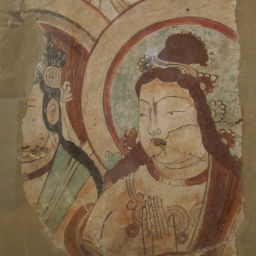
A semi-serious deep dive into Chinese history and culture broadcast from Beijing and hosted by Jeremiah Jenne and David Moser.

Barbarians at the Gate
Claim This Podcastby Barbarians at the Gate
Podcast Authority
Beta
Podcast Overview
A semi-serious deep dive into Chinese history and culture broadcast from Beijing and hosted by Jeremiah Jenne and David Moser.
Language
🇺🇲
Publishing Since
5/28/2016
Unlock The Full Podcast Authority Score Report
See how your podcast performs across key metrics
Podcast Authority
Beta
Recommendations available
Unlock the full report to see detailed tips
Recommendations available
Unlock the full report to see detailed tips
Unlock comprehensive insights including:
- • YouTube presence analysis
- • Social media reach metrics
- • RSS compliance scoring
- • Podcast 2.0 features
- • Technical standards
Detailed Analytics
- Complete breakdown of all 19 authority metrics
- Personalized recommendations for each metric
- Industry benchmarks and comparisons
- Technical RSS feed analysis and compliance scoring
Growth Strategies
- Step-by-step action plans for improvement
- Quick wins to boost your score immediately
- Pro tips from successful podcasters
See how your show performs across every key metric
High authority scores make your podcast more attractive to industry leaders and influencers who want to appear on credible shows.
Sponsors look for podcasts with proven authority and engagement. Your score demonstrates your podcast's value to potential partners.
Understanding your strengths and weaknesses helps you make data-driven decisions to expand your listener base effectively.
1 verified contact email on file for Barbarians at the Gate
Pitch yourself as a guest, propose sponsorships, or reach out directly to the host.
Recent Episodes

July 2, 2026
Neysun Mahboubi on the past, present, and future of US-China Academic Exchanges
<p>We are honored to have Professor Neysun Mahboubi, Director of the Penn Project on the Future of U.S.-China Relations, a program that provides a platform for talented U.S.-based China scholars to contribute academically informed analysis on the most important issues in U.S.-China relations. Neysun recounts his experiences as a legal scholar in China during the 1990s Reform and Opening Up period, focusing on his mentors and the legal scholars who were at the forefront of legal reform in the PRC. A passionate advocate for scholarly research on China, Neysun emphasizes the vital importance of bringing young China-focused researchers to the PRC to experience firsthand the trajectory of China in the 21st century and to interact directly with Chinese academics, bureaucrats, and business leaders.</p><p> </p><p>Neysun A. Mahboubi is Director of the <a href="https://global.upenn.edu/future-of-us-china-relations/">Penn Project on the Future of U.S.-China Relations</a> at the University of Pennsylvania, where he teaches courses on Chinese history, law, and policy and hosts the <a href="https://global.upenn.edu/future-of-us-china-relations/podcast/">China Studies podcast</a>. He is also a Non-Resident Senior Fellow with the Asia Program at the Foreign Policy Research Institute.</p><p> </p><p>Previously, he was a Research Scholar at Penn’s Center for the Study of Contemporary China, where he remains affiliated. </p>

June 18, 2026
AI Slop, AI Detectors, and Authentic Voice: A China-Tech Insider on Writing and Working With AI
Should we view today’s powerful AI language tools as intellectual crutches or as incredibly useful assets? Can they be safely integrated into our existing toolkit for business and academia, or should we approach them with justified caution? And why is the Western world terrified of AI, whereas China is already incorporating it into all sectors of society? Spoiler alert: The West views AI as a possible extinction risk, to be monitored and controlled, while China pragmatically views it as merely a tool to improve the lives of ordinary people. In this episode, we’re delighted to welcome back Zhang Yajun, founder of Zhang Global Advisory. Yajun shares her insights on the rapidly expanding role of Artificial Intelligence in global business communication and academic research. Yajun offers a more measured and practical take. From personal experience, she knows that non-native speakers can effectively use AI to produce writing that is clear, idiomatic, and faithful to their original ideas — while still preserving their authentic "human tone" and avoiding the sterile, formulaic output that AI often generates.

June 4, 2026
China Books Review x Barbarians at the Gate: The Private Life of Chairman Mao
The Politburo had given Mao Zedong’s personal physician Li Zhisui a direct order: prepare the Chairman’s body so that he can be on permanent display. Li was aghast. It was not what Mao had wanted, and besides, “How to pickle your country’s leader” wasn’t one of the courses he studied in medical school. But after the turbulence of the Cultural Revolution, Mao’s death meant a potential political showdown between the Gang of Four, including Mao’s wife, Jiang Qing, and Mao’s chosen successor, Hua Guofeng. Dr. Li did not want to be caught in the middle. So Li and his team did the best they could. Spoiler alert: it involved a massage that nobody would want to give. Li Zhisui’s controversial memoir, The Private Life of Chairman Mao, was published in 1994. Readers were titillated by Mao’s sex life, questionable hygiene regime, and gruesome medical maladies. Defenders of Mao labeled the book pure propaganda. Dr. Li was a disloyal liar, and his collaborators and publishers were pushing anti-Mao agendas. Jeremiah is joined by Alexander Boyd, Associate Editor of the China Books Review, to discuss Mao Zedong, Li Zhisui, and Jeremiah’s recent retrospective essay about The Private Life of Chairman Mao. Who was Dr. Li? What did it take to survive in the courtyards of power at the peak of Mao’s paranoia? And did Dr. Li really witness all of the major events he described in his book?
111 total episodes available
Recent guests on Barbarians at the Gate
Guests from recent episodes — sign up to see every guest that has ever appeared on this show.
David Chaffetz
Guest
David Moser
Guest
Zhang Yajun
Guest
Similar Podcasts
Discover related shows you might enjoy

Sinica Podcast
Kaiser Kuo

ChinaTalk
Jordan Schneider

Drum Tower
The Economist

The History of China
Chris Stewart

The China-Global South Podcast
The China-Global South Project

Glenn Diesen - Greater Eurasia Podcast
Glenn Diesen

Ones and Tooze
Foreign Policy

不明白播客
袁莉和她的朋友们

Economist Podcasts
The Economist

The Foreign Affairs Interview
Foreign Affairs Magazine

The Intelligence from The Economist
The Economist

The Ezra Klein Show
New York Times Opinion

The Long Game with Jake Sullivan and Jon Finer
Vox Media Podcast Network

Odd Lots
Bloomberg

Fresh Air
NPR
Deep-dive analytics for Barbarians at the Gate
Frequently asked questions
Have a different question and can't find the answer you're looking for? Reach out to our support team by sending us an email and we'll get back to you as soon as we can.
- What is Barbarians at the Gate?
- How often does this podcast release new episodes?
This podcast updates weekly.
- Where can I listen to this podcast?
This podcast is available on 8 platforms including Apple Podcasts, Spotify, and more. You can also use the RSS feed directly.
- Does this podcast accept guests?
Yes, this podcast regularly features guests.
Legal Disclaimer
Pod Engine is not affiliated with, endorsed by, or officially connected with any of the podcasts displayed on this platform. We operate independently as a podcast discovery and analytics service.
All podcast artwork, thumbnails, and content displayed on this page are the property of their respective owners and are protected by applicable copyright laws. This includes, but is not limited to, podcast cover art, episode artwork, show descriptions, episode titles, transcripts, audio snippets, and any other content originating from the podcast creators or their licensors.
We display this content under fair use principles and/or implied license for the purpose of podcast discovery, information, and commentary. We make no claim of ownership over any podcast content, artwork, or related materials shown on this platform. All trademarks, service marks, and trade names are the property of their respective owners.
While we strive to ensure all content usage is properly authorized, if you are a rights holder and believe your content is being used inappropriately or without proper authorization, please contact us immediately at hey@podengine.ai for prompt review and appropriate action, which may include content removal or proper attribution.
By accessing and using this platform, you acknowledge and agree to respect all applicable copyright laws and intellectual property rights of content owners. Any unauthorized reproduction, distribution, or commercial use of the content displayed on this platform is strictly prohibited.