- 17
- Episodes
- 4
- Ratings
- Monthly
- Cadence
- 2025
- First episode
About Calm With Me
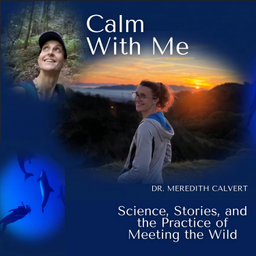
Calm With Me blends neuroscience, yoga, adventure, and storytelling to explore how we build calm in real life, not in perfect conditions. Hosted by neuroscientist and yoga teacher Dr. Meredith Calvert, the podcast weaves together science-backed insight, nervous system tools, and stories from the trail, the ocean, and everyday life to help listeners navigate stress, uncertainty, burnout, and change with more steadiness and ease. Part science podcast, part reflective companion, Calm With Me is for anyone craving a slower nervous system, a fuller life, and a little more wonder along the way.
- Publisher
- Dr. Meredith Calvert
- Category
- health & fitness
- Language
- en
- Explicit
- No
- First episode
- 13 Feb 2025
- Latest episode
- 26 Sept 2026
Latest episodes
17 episodes in the feed.
26 Sept 2026
Take It Outside: The Neuroscience Behind Meditating in Nature
Your meditation cushion works better on grass than carpet, and there's real science behind why. In this episode of Calm With Me, Dr. Meredith Calvert explores why taking mindfulness practice outside can transform it, drawing on her own journey from a stuffy MBSR classroom in graduate school to unexpected backyard encounters with a territorial squirrel, a curious hummingbird, and a remarkably calm coyote. She unpacks the neuroscience of attention restoration theory, explaining how nature's "soft fascination" lets our overworked directed attention finally rest, and shares research on Shinrin-yoku (forest bathing) showing that mindfulness paired with nature outperforms either alone, cutting cortisol, blood pressure, and rumination. A Swedish study gets special attention: outdoor and indoor mindfulness courses produced similar benefits, but outdoor participants had dramatically better follow-through, 90% completion versus 73%. Meredith argues this is really a story about adherence, not meditation. The episode closes with eight practical tips for starting an outdoor practice, no perfect conditions required. Plus: the 2027 WildCalm Retreats waitlist is now open!! Mentioned in this episode: The WildCalm retreats waitlist for 2027 is now open. All WildCalm retreats are small by design, and I expect them to fill quickly. If any of these is calling to you, joining now means you'll hear from me first.[Join the private waitlist] (https://form.jotform.com/262035743297057)No commitment or payment yet, just your place in line. Immersive experiences designed to help you slow down, breathe more deeply, and reconnect with yourself, through movement, breath, and nature. Find out more: (https://meriyoga.org/seacalm2026)WildCalm Retreats (https://wildcalmretreats.com/) Follow me on Instagram: @meriyogasf (https://www.instagram.com/meriyogasf) Time Stamps: 0:15 – Intro: who Meredith is, Wild Calm Retreats 1:15 – Mindfulness-based Stress Reduction (by Jon Kabat-Zinn) in Grad school 2:15 – Meditation during pregnancy/early motherhood 3:00 – The dishwasher rage moment 3:25 – Re-enrolling in MBSR with Wendy Beckerman 4:20 – A Zen proverb (sit for 20 min, or an hour if too busy) 4:50 – Thanksgiving trip sets up the breakthrough 5:20 – Going outside in the cold morning air 6:40 – The backyard squirrel 7:15 – The calm coyote 7:45 – "Here's where the neuroscientist in me shows up" 9:00 – Soft fascination vs. directed attention (the "40 tabs" analogy) 9:30 – Shinrin-yoku (forest bathing) study 10:05 – Swedish REST study 11:15 – Reframing this as a story about adherence 11:50 – Kids meditating outside 12:30 – Pulling it together: attention + restoration 12:50 – The neuroplasticity bonus 13:10 – Clearing out common excuses 15:35 – 8 Tips for starting an outside meditation practice 19:15 – Weekly assignment 20:25 – 2027 WildCalm Retreats waitlist + sign-off References: Basu, A., Duvall, J., & Kaplan, R. (2019). Attention Restoration Theory. *Environment and Behavior, 51(8). Olson, E. R. T., Hansen, M. M., & Vermeesch, A. (2020). Mindfulness and Shinrin-Yoku: Potential for Physiological and Psychological Interventions During Uncertain Times. International Journal of Environmental Research and Public Health*, 17(24) * Lymeus, F., Ahrling, M., Apelman, et al., (2020). Mindfulness-Based Restoration Skills Training (ReST) in a Natural Setting Compared to Conventional Mindfulness Training: Psychological Functioning After a Five-Week Course. Frontiers in Psychology, 11, 1560. * Barrable, A., Booth, D., Adams, D., & Beauchamp, G. (2021). Enhancing Nature Connection and Positive Affect in Children through Mindful Engagement with Natural Environments. International Journal of Environmental Research and Public Health, 18(9) * Argyriadis, A., Kopanakis, E., et al. (2024). The Impact of Outdoor in Nature Mindfulness on the Mental Well-being of Children and Adolescents. A Mental Health and Cross-cultural Approach. Mater Sociomed, 36(1), 73-76.
6 Aug 2026
Why We Go Outside to Find Ourselves
Adventure used to mean conquest. Not anymore. In this episode of Calm With Me, Dr. Meredith Calvert traces a shift happening across diving, surfing, and rock climbing: the fastest-growing group of participants isn't chasing adrenaline, but a quieter, deeper connection with themselves. Drawing on her forthcoming Scuba Diving Industry magazine article, Meredith explores the neuroscience behind why the wild calms us, including Blue Mind, soft fascination, and the default mode network, and how these effortless attention states let our overstimulated brains finally quiet down. Featuring insights from Bethany Hamilton, Kelly Slater, Lynn Hill, and dive shop owner Brent Webb, this episode asks what happens when fear becomes the doorway to growth rather than the obstacle to it. Meredith also unpacks a stubborn gap: participation among women is surging in these sports, yet leadership and instruction remain overwhelmingly male. Plus: the 2027 WildCalm Retreats waitlist is now open - sign up using the link below. Calm With Me is hosted by Dr. Meredith Calvert: neuroscientist, yogi, Master Scuba Diver, and devoted student of the wild mind. Mentioned in this episode: The WildCalm retreats waitlist for 2027 is now open. All WildCalm retreats are small by design, and I expect them to fill quickly. If any of these is calling to you, joining now means you'll hear from me first. [Join the private waitlist] (https://form.jotform.com/262035743297057) No commitment or payment yet, just your place in line. Immersive experiences designed to help you slow down, breathe more deeply, and reconnect with yourself, through movement, breath, and nature. Find out more: (https://meriyoga.org/seacalm2026)WildCalm Retreats (https://wildcalmretreats.com/) Follow me on Instagram: @meriyogasf (https://www.instagram.com/meriyogasf) Time Stamps: 01:10 - How self-development and wellness travel is changing dive tourism 01:50 - Soccer moms on scuba 02:50 - How adventure changes us 03:35 - E.E. Cummings and finding ourselves in the sea 03:50 - Blue Mind 04:15 - Soft fascination 04:50 - Evolution of sensory awareness 05:35 - Why being outside helps stop overthinking 05:50 - Scuba diving for personal growth 06:35 - Changes in the surfing industry 07:10 - Bethany Hamilton and passion bigger than fear 07:50 - Kelly Slater and surfing as religion 08:25 - Lynn Hill and climbing as moving meditation 08:50 - We don't come to conquer 09:15 - Changes in the climbing gym 09:30 - Yoga for rock climbing 10:10 - Female participation in rock climbing 10:30 - Women still missing in leadership roles - climbing 11:05 - Women still missing in leadership roles - diving 11:40 - What links climbing, surfing and diving? 12:10 - Adventure sports are good for our brains 13:05 - Philosophy of WildCalm retreats 13:50 - WildCalm retreats 2027 waitlist now open References: The Rise of the Wellness Diver: A Changing Audience. Scuba Diving Industry Magazine, July 2026. Calvert, M. (2026). Why Yoga Makes You a Better Scuba Diver. DiveNewsWire, May 2026. Nichols, W. J. (2014). Blue Mind: The Surprising Science That Shows How Being Near, In, On, or Under Water Can Make You Happier, Healthier, More Connected, and Better at What You Do. Murrin, E., Taylor, N., et al., (2023). Does physical activity mediate the associations between blue space and mental health? A cross-sectional study in Australia. BMC Public Health, 23. Basu, A., Duvall, J., & Kaplan, R. (2019). Attention Restoration Theory: Exploring the role of soft fascination and Mental Bandwidth. Environment and Behavior, 51(8), 956-981. McDonnell, A.S., Strayer, D.L., (2024). Immersion in nature enhances neural indices of executive attention. Sci Rep 14, 1845. Shifting Tides: Dive Industry Assessment & Strategies to Serve Today’s Scuba Divers. Business of Diving Institute. https://www.businessofdiving.com/scuba-analysis-strategy-planning (https://www.businessofdiving.com/scuba-analysis-strategy-planning) https://www.businessofdiving.com/scuba-diver-socio-demographic-profile (https://www.businessofdiving.com/scuba-diver-socio-demographic-profile)
27 Jun 2026
Your Wild Mind: From Fear to Flow in the Great Outdoors
You're mid-route. Your foot slips. Before your rational brain catches up, something ancient takes over and your heart is hammering, your breath has gone short and shallow and your hands are gripping harder than they should. Fear in the outdoors is fast, physical, and deeply intelligent. And if you know how to work with it, it's one of the most powerful entry points to presence you'll ever find. In this episode, neuroscientist, diver and yoga teacher Dr. Meredith Calvert breaks down the three F's of outdoor performance: fear, focus, and flow. She explains what's actually happening in your brain on a crux, why panicking makes you breathe in exactly the wrong way, and how natural environments both challenge us and restore the cognitive resources that modern life burns through. The science is real. The tools are portable. Calm With Me is hosted by Dr. Meredith Calvert — neuroscientist, yogi, Master Scuba Diver, and devoted student of the wild mind. Mentioned in this episode: Come with me to find your own Wild Mind? I built my WildCalm retreats around exactly this. Immersive experiences designed to help you slow down, breathe more deeply, and reconnect with yourself, through movement, breath, and nature. Next adventure? SeaCalm Yoga & Scuba Diving in Roatán, Honduras, this Labor Day (2026). No yoga or scuba experience needed. Just curiosity, and a willingness to let the ocean do what it does best. Find out more: https://meriyoga.org/seacalm2026 (https://meriyoga.org/seacalm2026) WildCalm Retreats (https://wildcalmretreats.com/) Follow me on Instagram: @meriyogasf (https://www.instagram.com/meriyogasf) Time Stamps: 01:20 - Calm is a super power 01:40 - Three brain structures involved with fear 01:50 - The amygdala- your alarm center 02:15 - The prefrontal cortex - your logic center 02:50 - The hippocampus - your memory vault 03:20 - Inhibitory learning 03:40 - Introduction to box breathing 04:00 - Practice: Box breathing 04:30 - Panic and your breath 04:55 - The Bohr effect 05:20 - The CO2 spike or hypercapnia 06:00 - Auto-occlusion 07:15 - Introduction to reflexive breathing 07:30 - Practice: Reflexive breathing 08:00 - Focus and attention restoration theory 08:30 - Directed attention 08:55 - Involuntary attention 09:30 - Soft fascination 10:25 - Finding flow 10:55 - Flow and the vagus nerve 11:30 - Heart rate variability 11:50 - Anchor practice for flow: 5, 4, 3, 2, 1 13:00 - Fear is not a design flaw Scientific references: • Kaplan, S. The restorative benefits of nature: Toward an integrative framework, J. Env. Psych. 1995. 15(3):169-182 • Pham TP & Sanocki T. Human Attention Restoration, Flow, and Creativity: A Conceptual Integration. J Imaging. 2024 Mar 29;10(4):83 • McDonnell, A.S., Strayer, D.L. Immersion in nature enhances neural indices of executive attention. Sci Rep 14, 1845 (2024) • Williams, KJH, Lee, KE, Hartig, T., et al. Conceptualising creativity benefits of nature experience: Attention restoration and mind wandering as complementary processes, J. Exp. Psych. 2018 (59), 36-45, • Colzato, LS., Szapora A, Hommel, B. Meditate to Create: The Impact of Focused-Attention and Open-Monitoring Training on Convergent and Divergent Thinking. Front. Psych. 2012, 3. • Lippelt DP, Hommel B, Colzato LS. Focused attention, open monitoring a n d loving kindness meditation: effects on attention, conflict monitoring, and creativity - A review. Front Psychol. 2014 S e p 23;5:1083.
30 May 2026
Beneath the Surface: Neuroscience, Breath & the Wild Within
Last episode, we explored Blue Mind — what water does to your brain from the outside. Today we go deeper. Literally. In this episode, Dr. Meredith Calvert unpacks the neuroscience of what happens when you actually go underwater: the ancient mammalian dive reflex that slows your heart without asking permission, the breath-buoyancy feedback loop that makes scuba diving one of the most intimate nervous system practices on the planet, and why the underwater environment produces a quality of presence that's hard to find anywhere else. We'll also do a short box breathing practice together — so you can feel the shift, not just understand it. If you've ever surfaced from a dive feeling clearer, calmer, and more yourself — this episode is the science behind that feeling. Mentioned in this episode: Want to experience Blue Mind for yourself? I built the SeaCalm retreat around exactly this. My yoga & scuba diving retreat in is an immersive week-long experience designed to help you slow down, breathe more deeply, and reconnect with yourself, through movement, breath, and the ocean. Not just a yoga retreat, not just a dive trip. It’s a restorative prescription for Blue Mind: a full week of soft fascination, feel-good neurotransmitters, and turquoise water as far as the eye can see. No yoga or scuba experience needed. Just curiosity, and a willingness to let the ocean do what it does best. Find out more: https://meriyoga.org/seacalm2026 (https://meriyoga.org/seacalm2026) Shrines of Science blog - Blue Mind: How the Ocean Heals (https://www.meriyoga.com/blog/blue-mind) WildCalm Retreats (https://wildcalmretreats.com/) Follow me on Instagram: @meriyogasf (https://www.instagram.com/meriyogasf) Time Stamps: 01:30 - Blue mind recap 01:55 - Mammalian dive reflex 02:45 - Meditation, yoga and the switch from sympathetic to parasympathic nervous system dominance 03:20 - Scuba diving is a breath practice 03:27 - Scuba diving rule number one 03:40 - Dirga pranayama - three-part breath 04:10 - Breath and positional feedback in diving 04:40 - Proprioreception 05:00 - Underwater presence 05:15 - Practice: Dirga Pranayama - three-part breath 06:15 - Meredith's first dive 06:40 - Eagle rays and the wild within us 07:10 - Diving and directed attention restoration 07:40 - Default mode network 08:20 - Introduction to SeaCalm Yoga & Scuba retreat 09:05 - Next episode: Awe and wonder as medicine
14 May 2026
Blue Mind: Your Brain on Water
Season two of Calm With Me begins at the water’s edge. In this episode, neuroscientist, yoga teacher, and scuba diver Dr. Meredith Calvert explores the science behind “Blue Mind,” the deeply restorative state our brains enter around water. From childhood memories of England’s rugged coastline to the neuroscience of soft fascination, dopamine, serotonin, and nervous system regulation, this episode dives into why the ocean has such a profound ability to quiet the mind and bring us back to ourselves. You’ll learn how blue spaces influence stress, attention, and emotional well-being, and why calm may be less about forcing relaxation and more about giving your nervous system the right environment to settle naturally. A grounding, science-informed invitation to slow down, breathe deeply, and practice meeting the wild. Mentioned in this episode: Want to experience Blue Mind for yourself? I built the SeaCalm retreat around exactly this. My yoga & scuba diving retreat in is an immersive week-long experience designed to help you slow down, breathe more deeply, and reconnect with yourself, through movement, breath, and the ocean. Not just a yoga retreat, not just a dive trip. It’s a restorative prescription for Blue Mind: a full week of soft fascination, feel-good neurotransmitters, and turquoise water as far as the eye can see. No yoga or scuba experience needed. Just curiosity, and a willingness to let the ocean do what it does best. Find out more: https://meriyoga.org/seacalm2026 (https://meriyoga.org/seacalm2026) Shrines of Science blog - Blue Mind: How the Ocean Heals (https://www.meriyoga.com/blog/blue-mind) WildCalm Retreats (https://wildcalmretreats.com/) Follow me on Instagram: @meriyogasf (https://www.instagram.com/meriyogasf) Time Stamps: 00:00 — The shift near the ocean 01:20 — A seaside childhood 01:50 — 'Just a little bit of fear' 02:15 — Wallace J. Nichols and Blue Mind 02:30 — The neurochemistry of Blue Mind 03:10 — Soft fascination 03:40 — The dose response of time spent near water 04:10 — Moving water 04:25 — Change your environment, change your nervous system 04:50 — 'Immerse yourself in soft fascination' Scientific references: Britton, E., Kindermann, et al., (2018). Blue care: a systematic review of blue space interventions for health and wellbeing. Health Promotion International, 35, 50 - 69. McDougall, C., Hanley, et al. (2021). Neighbourhood blue space and mental health: A nationwide ecological study of antidepressant medication prescribed to older adults. Landscape and Urban Planning, 214, 104132. McDougall, C., Hanley, N., et al. (2022). Blue space exposure, health and well-being: Does freshwater type matter? Landscape and Urban Planning, 224,104446. Murrin, E., Taylor, N., et al., (2023). Does physical activity mediate the associations between blue space and mental health? A cross-sectional study in Australia. BMC Public Health, 23. Pasanen, T., White, M., et al., (2019). Neighbourhood blue space, health and wellbeing: The mediating role of different types of physical activity.. Environment international, 131, 105016. Pearson, A., Shortridge, A., et al. (2019). Effects of freshwater blue spaces may be beneficial for mental health: A first, ecological study in the North American Great Lakes region. PLoS ONE, 14. Tang, H., Lee, A., & Hung, S., (2024). Does built environment and natural leisure settings with bodies of water improve human psychological and physiological health?. Landscape and Ecological Engineering, 20, 547 - 558. Wright, K., Eden, S., et al., (2024). A qualitative exploration of the contribution of blue space to well‐being in the lives of people with severe mental illness. People and Nature, 6 (2), 849-864. Yin, J., Ramanpong, J., et al. (2023). Effects of blue space exposure in urban and natural environments on psychological and physiological responses: A within-subject experiment. Urban Forestry & Urban Greening. 87, 128066.
12 Mar 2026
The Perimenopausal Brain: Part Two - Coming Up For Air
In this episode of Calm With Me, Meredith returns to the topic of the perimenopausal brain, exploring not just the physical symptoms but the deeper shift in identity that many women experience during this transition. Perimenopause often begins gradually, with mood changes, sleep disruption, anxiety, and physical symptoms appearing years before menstrual cycles noticeably change. Without clear information, these changes can slowly erode confidence and leave many women feeling like strangers in their own bodies. Neuroscience shows that these experiences are rooted in real biological changes as the brain adapts to declining estrogen, reorganizing systems involved in memory, emotion, and self-perception. Rather than viewing this as decline, Meredith introduces a more empowering perspective drawn from both neuroscience and traditional healing systems, which describe menopause as a “Second Spring,” a time of integration and wisdom. She offers a simple framework for navigating the transition using the acronym AIR: Acknowledge cultural narratives around aging, Integrate the qualities that define one’s true self, and Reframe the experience as a process of becoming rather than loss. Mentioned in this episode: Come with me on retreat: SeaCalm Yoga + Scuba Diving Retreat (Aug/Sep 2026): an immersive journey to reconnect with nature and slow time on the California coast https://meriyoga.org/seacalm2026 (https://meriyoga.org/sacredcalm_2026) WildCalm Retreats (https://wildcalmretreats.com/) Follow me on Instagram: @meriyogasf (https://www.instagram.com/meriyogasf) Time Stamps: 00:00 — A shifting sense of self 01:00 — Recasting perimenopause as a time of becoming 03:30 — A Zen story: The nun and the river 04:00 — Early symptoms of perimenopause 07:00 — Reorganization of the perimenopausal brain 08:40 — The Second Spring: An Eastern view of the menopausal transition 09:50 — The first step: Acknowledge 10:40 — Rejecting society's narrative for aging women 11:40 — The second step: Integrate 12:40 — Reclaiming a sense of adventure 13:15 — Yoga and scuba diving retreat 13:50 — Caring for others through volunteering 15:15 — The third step: Reframe 17:00 — Reframing insomnia 17:45 — Reframing anxiety 20:00 — The neuroscience behind reframing 20:30 — Bridge thoughts 22:00 — Positive social mirrors 22:55 — Reviewing the three steps Scientific references: Mosconi, L. et al. Menopause impacts human brain structure, connectivity, energy metabolism, and amyloid-beta deposition. Sci Rep 11, 10867 (2021). Coslov, N., Richardson, M. K. & Woods, N. F. “Not feeling like myself” in perimenopause: Observations from the Women Living Better survey. Menopause 31(5), 486–493 (2024). Woods, N. F., Coslov, N. & Mitchell, E. S. Effects of bothersome symptoms during the late reproductive stage and menopausal transition. Menopause 30(5), 559–567 (2023). Elavsky, S. & McAuley, E. Physical activity, symptoms, esteem, and life satisfaction during menopause. Maturitas 52(3–4), 374–385 (2005). Ceylan, B. & Özerdoğan, N. The relationship between menopausal symptoms, attitudes toward menopause and body image. Alexandria Journal of Medicine 53(4), 327–333 (2017). Sokołowska-Pawłowska, K. et al. Perceptions and attitudes toward menopause and perceived satisfaction with life. Menopause Review 23(1), 9–16 (2024).
30 Nov 2025
The Perimenopausal Brain: Part One - Neuroplasticity, Fog, Fire & Rebirth
In this episode, Meredith dives into the neuroscience of perimenopause, reframing this midlife shift not as decline but as a profound, fiery transformation. She explains how fluctuating estrogen reshapes neural circuits, why brain fog and mood swings appear, and how the brain ultimately recalibrates through neuroplasticity. Rather than fragile butterflies, Meredith invites listeners to embody the volcanic power of Pele—creative, potent, and unapologetically alive. She explores the science behind sleep disruption, from progesterone dips to circadian shifts, and shares practical tools such as breath counting, progressive relaxation, Raja yoga meditation, and yoga nidra, all shown to ease menopausal insomnia. Meredith also challenges the outdated cultural narrative that aging women become invisible, encouraging listeners to claim this stage as one of wisdom, spaciousness, and renewed purpose. She closes with an invitation to her upcoming workshop, a reminder of community, and an affirmation that the menopausal brain is not fading — it’s refocusing. Mentioned in this episode: Get more peace: Micromoments of Peace (free guide): 10 simple ways to create calm and presence in your day https://meriyoga.org/micromoments (https://meriyoga.org/micromoments) Free Yoga Nidra Audio Practice (https://drive.google.com/file/d/1ZGryVrB4rn7bcKny1z0gMfCsvb4qhDDN/view?usp=drive_link) Come with me on retreat: SacredCalm Yoga + Hiking Retreat (May 2026): an immersive journey to reconnect with nature and slow time on the California coast https://meriyoga.org/sacredcalm_2026 (https://meriyoga.org/sacredcalm_2026) WildCalm Retreats (https://wildcalmretreats.com/) Becoming Her Again Workshop (https://siscircle.com/event/navigating-perimenopause-menopause/) SIS Circle (https://siscircle.com/) (collaborative workshop partners) Follow me on Instagram: @meriyogasf (https://www.instagram.com/meriyogasf) Time Stamps: 00:00 — Why the menopausal brain is rewiring, not breaking 01:00 — Recasting perimenopause as a time of becoming 02:10 — The butterfly metaphor vs. the volcanic energy of Pele 04:00 — Brain fog, estrogen shifts, and neuroplastic adaptation 06:15 — Mindfulness as a buffer for attention, memory, and stress 08:10 — Sleep disruption: hormones, circadian rhythm, and anxiety loops 10:00 — Breath counting + progressive relaxation for returning to sleep 12:00 — Meditation research: Raja yoga and insomnia relief 13:30 — Yoga nidra as a nighttime reset 15:00 — Rewriting the cultural narrative of aging and claiming midlife power 17:00 — Invitation to the Becoming Her Again workshop & closing reflections Scientific references: Mosconi, L. et al. Menopause impacts human brain structure, connectivity, energy metabolism. Sci Rep 11, 10867 (2021). Epperson CN, et al., Menopause effects on verbal memory: findings from a longitudinal community cohort. J Clin Endocrinol Metab. 98(9):3829-38 (2013) . Streeter CC, et al., Effects of yoga on the autonomic nervous system, gamma-aminobutyric-acid, and allostasis in epilepsy, depression, and post-traumatic stress disorder. Med Hypotheses, 78(5):571-9 (2012) . Portella, C.S.,et al. Meditation as an approach to lessen menopausal symptoms and insomnia in working women undergoing the menopausal transition period: A randomized controlled trial. Advances in Integrative Medicine, 8 (4), 278-284 (2021) .
1 Nov 2025
Hungry Ghosts and the Neurobiology of Fear
In this special Halloween episode of Calm With Me, Dr. Meredith explores the metaphor of the “hungry ghost” — that restless inner part of us that’s always grasping for more… more achievement, more validation, more stuff. Blending neuroscience and yogic wisdom, she unpacks why the brain is wired to chase, how our nervous systems get caught in loops of craving, and what it takes to shift from perpetual hunger to genuine nourishment. Meredith guides you through simple practices to calm the craving brain, soften self-pressure, and reconnect with the quieter truth underneath all the wanting. The episode then takes a dive into the neurobiology of fear, both to understand how to tame fear and panic in the moment, but also the science behind why we sometimes find fear to be so fun (think Halloween, haunted houses and horror movies!). At the heart of all this — craving, not-enoughness, and even the strange thrill of fear — is a simple truth: our brains are built for survival, not serenity. Yoga, breathwork, and mindfulness help us to retrain the system, strengthening the pathways that regulate fear and easing the urgency to grasp for more. This episode offers a gentle, compassionate path through the fear and back to yourself — one breath at a time. Mentioned in this episode: Get more peace: Micromoments of Peace (free guide): 10 simple ways to create calm and presence in your day https://meriyoga.org/micromoments (https://meriyoga.org/micromoments) Come with me on retreat: SacredCalm Yoga + Hiking Retreat (May 2026): an immersive journey to reconnect with nature and slow time on the California coast https://meriyoga.org/sacredcalm_2026 (https://meriyoga.org/sacredcalm_2026) Follow me on Instagram: @meriyogasf (https://www.instagram.com/meriyogasf) Time stamps: 00:00 Intro 02:00 Halloween, Samhain and the thinning veil 03:10 Hungry Ghost Month 05:20 Craving and lack 06:30 The fifth Yama: Aparigraha 07:10 Dopamine hits and the neuroscience of craving 09:00 Your brain on gratitude 10:00 Gratitude practice 09:10 Analogy: Power vinyasa vs. restorative yoga 10:00 Pranayama- 5th limb of yoga 11:20 Breathwork or pranayama practice: One breath is enough 12:30 Introduction to fear 13:10 Your brain on fear 14:20 Why fear can be fun: Haunted houses and horror movies 17:30 How yoga, meditation and breathwork teach us to sit with fear and craving 20:05 Breathwork or pranayama practice: Settling breath 20:55 Wrap up and Micromoments of Peace freebie offer Scientific references: - Sutherland, M. (2023). Why fear feels good: The neuroscience of haunted houses and horror movies. Florida International University News. - Schultz, W. (2015). Neuronal reward and decision signals: from theories to data. Physiological Reviews, 95(3), 853–951. - Volkow, N. D., Wang, G. J., Fowler, J. S., & Tomasi, D. (2012). Addiction circuitry in the human brain. Annual Review of Pharmacology and Toxicology, 52, 321–336. - Campbell, J. I. D., et al. (2023). Eating ultraprocessed foods increases dopamine responses in the human brain. Nature Neuroscience, 26, 971–980. - Kini, P., Wong, J., McInnis, S., Gabana, N., & Brown, J. W. (2016). The effects of gratitude expression on neural activity. Frontiers in Psychology, 7, 1–14. - Fox, K. C. R., et al. (2016). Functional brain plasticity associated with meditation and mindfulness. Neuroscience & Biobehavioral Reviews, 65, 313–334. - LeDoux, J. E. (2000). Emotion circuits in the brain. Annual Review of Neuroscience, 23, 155–184. - Arnsten, A. F. T. (2009). Stress signalling pathways that impair prefrontal cortex structure and function. Nature Reviews Neuroscience, 10(6), 410–422. - Jerath, R., Edry, J. W., Barnes, V. A., & Jerath, V. (2006). Physiology of long pranayamic breathing... Medical Hypotheses, 67(3), 566–571. - Sutherland, M. R., et al. (2021). The thrill of fear: Individual differences in fear reactivity and enjoyment across contexts. Psychophysiology, 58(9). - Mobbs, D., et al. (2015). The ecology of human fear: survival optimization and the nervous system. Frontiers in Neuroscience, 9, 55.
23 Oct 2025
Soft Fascination: The Secret Bridge Between Wild Adventure and Inner Peace
When you step into the wild, whether its hiking a ridgeline, exploring coral reefs, or simply looking up at the sky, something profound happens inside your brain. Your focus softens, your nervous system steadies, and your awareness expands. Psychologists call this state soft fascination—a calm, alert attention that restores mental clarity and opens the doorway to awe. In this episode, Dr. Meredith Calvert explores the neuroscience of soft fascination, how it differs from mindfulness meditation, and why both are essential for a balanced, resilient mind. Drawing from yoga philosophy, Attention Restoration Theory, and her own experiences teaching underwater and on mountaintops, Meredith reveals how nature helps us rewire the brain for presence, creativity, and joy. You’ll also learn a simple breathwork practice to deepen your connection with the natural world—no matter where you are—and how to cultivate that same wild calm in daily life. If your brain runs faster than your breath, this one’s for you. Mentioned in this episode: Get more peace: Micromoments of Peace (free guide): 10 simple ways to create calm and presence in your day https://meriyoga.org/micromoments (https://meriyoga.org/micromoments) Come with me on retreat: SacredCalm Yoga + Hiking Retreat (May 2026): an immersive journey to reconnect with nature and slow time on the California coast https://meriyoga.org/sacredcalm_2026 (https://meriyoga.org/sacredcalm_2026) Follow me on Instagram: @meriyogasf (https://www.instagram.com/meriyogasf) Time stamps: 00:00 intro 02:10 Soft fascination 04:20 Dhyana- 7th limb of yoga 04:50 Default Mode Network (DMN) 05:10 Attention Restoration Theory 06:20 Mindfulness meditation 07:00 Dharana- 6th limb of yoga 08:10 Mindfulness-based stress reduction (MBSR) 09:10 Analogy: Power vinyasa vs. restorative yoga 10:00 Pranayama- 5th limb of yoga 10:30 Breathwork or pranayama practice: Ujjayi breathing or ocean breath 12:30 Neuroscience of breathwork and the parasympathetic nervous system activation 12:40 Respiratory vagal nerve stimulation and the vagus nerve 13:50 Stargazing 14:40 Summary 15:10 Wrap up and SacredCalm invitation Scientific references: • Pham TP & Sanocki T. Human Attention Restoration, Flow, a n d Creativity: A Conceptual Integration. J Imaging. 2024 Mar 29;10(4):83 • McDonnell, A.S., Strayer, D.L. Immersion in nature enhances neural indices of executive attention. Sci Rep 14, 1845 (2024) • Williams, KJH, Lee, KE, Hartig, T., et al. Conceptualising creativity benefits of nature experience: Attention restoration and mind wandering as complementary processes, J. Exp. Psych. 2018 (59), 36-45, • Garrison KA, Zeffiro TA, Scheinost D, et al., Meditation leads to reduced default mode network activity beyond an active task. Cogn Affect Behav Neurosci. 2015 Sep;15(3):712-20. • Niazi AK, Niazi SK. Mindfulness-based stress reduction: a non-pharmacological approach for chronic illnesses. N Am J Med Sci. 2011 Jan;3(1):20-3. • Gerritsen RJS, Band GPH. Breath of Life: The Respiratory Vagal Stimulation Model of Contemplative Activity. Front Hum Neurosci. 2018 Oct 9;12:397. • Colzato, LS., Szapora A, Hommel, B. Meditate to Create: The Impact of Focused-Attention and Open-Monitoring Training on Convergent and Divergent Thinking. Front. Psych. 2012, 3. • Lippelt DP, Hommel B, Colzato LS. Focused attention, open monitoring a n d loving kindness meditation: effects on attention, conflict monitoring, and creativity - A review. Front Psychol. 2014 S e p 23;5:1083.
9 Oct 2025
The Shape of Time and How to Make It Slow Down
Why does time seem to race by as we get older, yet stretch endlessly when we’re on vacation, in awe, or in love? In this episode of Calm With Me, Meredith explores the fascinating intersection of yogic philosophy and modern neuroscience to uncover how we can actually, intentionally, slow down our experience of time. From the ancient wisdom of Patanjali’s Yoga Sutras to Stanford neuroscientist David Eagleman’s research on perception, we’ll explore how novelty, nature, presence, and breath reshape our sense of time itself. You’ll learn: • How your brain’s chemistry warps time, and why new experiences feel longer • Why flow states and meditation expand your perception of the present moment • Four science-backed ways to stretch and savor time in daily life • A guided 4-7-8 breathwork practice to step outside time, right now Meredith also shares reflections from her recent travels and invites you to pause, breathe, and rediscover the beauty of now. Take a deep breath, press play, and remember—this moment is enough. Mentioned in this episode: Get more peace: Micromoments of Peace (free guide): 10 simple ways to create calm and presence in your day https://meriyoga.org/micromoments (https://meriyoga.org/micromoments) Come with me on retreat: SacredCalm Yoga + Hiking Retreat (May 2026): an immersive journey to reconnect with nature and slow time on the California coast https://meriyoga.org/sacredcalm_2026 (https://meriyoga.org/sacredcalm_2026) Follow me on Instagram: @meriyogasf (https://www.instagram.com/meriyogasf) Time stamps: 00:00 intro 02:50 Rome & why vacations go too fast 04:00 The shape of time 05:00 Yoga sutras on time & ksanas 06:10 Neuroscience & time perception 07:45 Meditation & time 09:20 How to slow down time 11:10 Micromoments of peace 12:00 Breathwork practice 4-7-8 13:10 Wrap up and SacredCalm invitation Scientific references: 1. Brain, Volume 135, Issue 3, March 2012, Pages 656–677, https://doi.org/10.1093/brain/awr210 (https://doi.org/10.1093/brain/awr210) 2. Anderson, L., and Shimamura, A. P. (2005). Influences of emotion on context memory while viewing film clips. Am. J. Psychol. 118, 323–337 3. Stetson C, Fiesta MP, Eagleman DM (2007) Does Time Really Slow Down during a Frightening Event? PLoS ONE 2(12): e1295. doi:10.1371/ journal.pone.0001295 4. Khan, Azizuddin & Dixit, Shikha. (2006). Effect of Cognitive Load and Paradigm on Time Perception. Journal of the Indian Academy of Applied Psychology. 32. 37–42 5. Mullen, G., & Davidenko, N. (2021). Time Compression in Virtual Reality, Timing & Time Perception, 9(4), 377–392. doi: https://doi.org/10.1163/22134468-bja10034 (https://doi.org/10.1163/22134468-bja10034) 6. Davydenko, M., & Peetz, J. (2017). Time grows on trees: The effect of nature settings on time perception. Journal of Environmental Psychology, 54, 20–26. doi:10.1016/j.jenvp.2017.09.003 7. Mitchell JM, Weinstein D, Vega T, Kayser AS. Dopamine, time perception, and future time perspective. Psychopharmacology (Berl). 2018;235(10):2783–2793. doi:10.1007/s00213–018–4971-z 8. Palmiter RD. Dopamine signaling in the dorsal striatum is essential for motivated behaviors: lessons from dopamine-deficient mice. Ann N Y Acad Sci. 2008;1129:35–46. doi:10.1196/annals.1417.003
4 Apr 2025
Your brain on kids: Strategies for navigating parenting stress and raising Resilient, Emotionally Intelligent Humans
In this seventh episode of Calm With Me, host Meredith Calvert how stress affects our ability to parent effectively, as well as the positive impacts of mindfulness practices on both kids and parents. She shares some specific practices, such as 'safe words' and belly breathing to help manage parental stress and build deeper connections with our kids. Listeners are guided through various breathing practices designed to reduce stress and promote relaxation. The episode emphasizes the importance of integrating these practices into daily life for improved mental health and resilience. Link to SacredCalm Yoga, Breathwork & Hiking Retreat: https://www.meriyoga.org/sacredcalmretreat **email meri@meriyoga.com and mention the 'Calm With Me' Podcast to receive $100 off this incredible retreat! References discussed in episode: Eric Barker books: Barking Up the Wrong Tree: The Surprising Science Behind Why Everything You Know About Success Is (Mostly) Wrong Plays Well with Others: The Surprising Science Behind Why Everything You Know About Relationships Is (Mostly) Wrong S.A. Denham. Family routines: A structural perspective for viewing family health. Advances in Nursing Science (2002) S. Dickstein. Family routines and rituals - The importance of family functioning: Comment on the special section. Journal of Family Psychology. (2002) B.H. Fiese et al.The dynamics of family chaos and its relation to children’s socioemotional well-being Xiaoqin , Diya & Thanos. Editorial: Parental influence on child social and emotional functioning. Frontiers in Psychology. Vol 5 (2024) https://doi.org/0.3389/fpsyg.2024.1392772 (https://doi.org/10.1007/s10826-023-02687-w) Hosokawa, R., Tomozawa, R. & Katsura, T. Associations between Family Routines, Family Relationships, and Children’s Behavior. J Child Fam Stud 32, 3988–3998 (2023). https://doi.org/10.1007/s10826-023-02687-w (https://doi.org/10.1007/s10826-023-02687-w) Kerr, Ratliff, et al. Parental influences on neural mechanisms underlying emotion regulation, Trends in Neuroscience and Education, Vol 16 (2019), https://doi.org/10.1016/j.tine.2019.100118 (https://epcaquebec.org/how-can-parents-support-their-childs-mental-health-through-emotional-learning/?utm_source=chatgpt.com ). Cindy Hovington references: https://epcaquebec.org/how-can-parents-support-their-childs-mental-health-through-emotional-learning/?utm_source=chatgpt.com (https://epcaquebec.org/how-can-parents-support-their-childs-mental-health-through-emotional-learning/?utm_source=chatgpt.com) https://americanspcc.org/5-ways-neuroscience-has-changed-how-i-parent/ (https://americanspcc.org/5-ways-neuroscience-has-changed-how-i-parent/)
20 Mar 2025
Diving Deep: The surprising connection between panic and your breath
In this episode of Calm With Me, host Dr. Meredith Calvert dives into the physiology and brain science behind panic attacks, exploring how the brains and breathing of those with panic disorder differ, and what we can learn from this about managing panic attacks and extreme anxiety. Meredith shares a few stories from her own life, including a magical dolphin encounter that turned deadly. She also summarizes a number of recent studies that shed light on the connection between panic and breath regulation and takes listeners through a simple breath practice that has been shown to be most effective for reducing anxiety. Link to SeaCalm Yoga, Breathwork & Scuba Diving Retreat: https://www.meriyoga.org/seacalm2025 **email meri@meriyoga.com and mention the 'Calm With Me' Podcast to receive $100 off this incredible retreat! Scientific references discussed in episode: Bentley TGK, D'Andrea-Penna G, Rakic M, Arce N, LaFaille M, Berman R, Cooley K, Sprimont P. Breathing Practices for Stress and Anxiety Reduction: Conceptual Framework of Implementation Guidelines Based on a Systematic Review of the Published Literature. Brain Sci. 2023 Nov 21;13(12):1612. doi: 10.3390/brainsci13121612 Jhang, J., Park, S., Liu, S. et al. A top-down slow breathing circuit that alleviates negative affect in mice. Nat Neurosci 27, 2455–2465 (2024). https://doi.org/10.1038/s41593-024-01799-w (https://doi.org/10.1038/s41593-024-01799-w) Balban MY, Neri E, Kogon MM, Weed L, Nouriani B, Jo B, Holl G, Zeitzer JM, Spiegel D, Huberman AD. Brief structured respiration practices enhance mood and reduce physiological arousal. Cell Rep Med. 2023 Jan 17;4(1):100895. doi: 10.1016/j.xcrm.2022.100895. Yamada T, Inoue A, Mafune K, Hiro H, Nagata S. Recovery of Percent Vital Capacity by Breathing Training in Patients With Panic Disorder and Impaired Diaphragmatic Breathing. Behav Modif. 2017 Sep;41(5):665-682. doi: 10.1177/0145445517711436. Epub 2017 Jul 1. PMID: 28670907. Yackle K, Schwarz LA, Kam K, Sorokin JM, Huguenard JR, Feldman JL, Luo L, Krasnow MA. Breathing control center neurons that promote arousal in mice. Science. 2017 Mar 31;355(6332):1411-1415. doi: 10.1126/science.aai7984. Nardi AE, Freire RC, Zin WA. Panic disorder and control of breathing. Respir Physiol Neurobiol. 2009 May 30;167(1):133-43. doi: 10.1016/j.resp.2008.07.011. Epub 2008 Jul 25. PMID: 18707030.
13 Mar 2025
Use Your Words! The Brain-Boosting Benefits of Speaking Up
In this episode of Calm With Me, host Dr. Meredith Calvert explores the neuroscience of being pleasantly surprised, discussing how and why the brain has evolved to react positively to the unexpected and why we remember the delights that sneak up on us, more than those we ancticipate. Beginning with a story of a surprise encounter during a family hike, she offers tools for finding more unexpected delight and shares a simple and effective practice to help prime the nervous system to be more open to joyful surprises. Link to SacredCalm Yoga, Breathwork & Hiking Retreat: https://www.meriyoga.org/sacredcalmretreat **email meri@meriyoga.com and mention the 'Calm With Me' Podcast to receive $100 off this incredible retreat! Scientific references discussed in episode: Pennebaker, J. W., & Chung, C. K. (2011). Expressive Writing: Connections to Physical and Mental Health. In H. S. Friedman (Ed.), The Oxford Handbook of Health Psychology. Oxford University Press. https://doi.org/10.1093/oxfordhb/9780195342819.013.0018 Klein-Koerkamp Y, Baciu M, Hot P. Preserved and impaired emotional memory in Alzheimer's disease. Front Psychol. (2012) Sep 14;3:331. doi: 10.3389/fpsyg.2012.00331. PMID: 23049516; PMCID: PMC3442282. Maya Al-Khouja, Netta Weinstein, William Ryan, Nicole Legate, Self-expression can be authentic or inauthentic, with differential outcomes for well-being: Development of the authentic and inauthentic expression scale (AIES), Journal of Research in Personality (2022) Volume 97 V.J. Cheng, Inauthentic: The anxiety over culture and identity. Rutgers University Press (2004) Macrae CN, Moran JM, Heatherton TF, Banfield JF, Kelley WM. Medial prefrontal activity predicts memory for self. Cereb Cortex (2004) Jun;14(6):647-54. doi: 10.1093/cercor/bhh025. PMID: 15084488 Farb NA, Segal ZV, Mayberg H, Bean J, McKeon D, Fatima Z, Anderson AK. Attending to the present: mindfulness meditation reveals distinct neural modes of self-reference. Soc Cogn Affect Neurosci. (2007) Dec;2(4):313-22. doi: 10.1093/scan/nsm030 Girija Kaimal, et al., Functional near-infrared spectroscopy assessment of reward perception based on visual self-expression: Coloring, doodling, and free drawing, The Arts in Psychotherapy, Volume 55, (2017) ISSN 0197-4556, https://doi.org/10.1016/j.aip.2017.05.004 Deci, E. L., & Ryan, R. M. (2014). The importance of universal psychological needs for understanding motivation in the workplace. In M. Gagné (Ed.), The Oxford handbook of work engagement, motivation, and self-determination theory (pp. 13–32). Oxford University Press.
6 Mar 2025
The Path of Delight
In this episode of Calm With Me, host Dr. Meredith Calvert explores the neuroscience of being pleasantly surprised, discussing how and why the brain has evolved to react positively to the unexpected and why we remember the delights that sneak up on us, more than those we ancticipate. Beginning with a story of a surprise encounter during a family hike, she offers tools for finding more unexpected delight and shares a simple and effective practice to help prime the nervous system to be more open to joyful surprises. Link to SacredCalm Yoga, Breathwork & Hiking Retreat: https://www.meriyoga.org/sacredcalmretreat **email meri@meriyoga.com and mention the 'Calm With Me' Podcast to receive $100 off this incredible retreat! Scientific references discussed in episode:
27 Feb 2025
Breathe to Thrive: The Science of Nervous System Regulation
In this episode of Calm With Me, host Meredith Calvert explores the neurobiology of stress and its impact on our lives. She discusses the global stress epidemic, the physiological responses to stress, and how breathwork and mindfulness can help manage and reverse these effects. Listeners are guided through various breathing practices designed to reduce stress and promote relaxation. The episode emphasizes the importance of integrating these practices into daily life for improved mental health and resilience. Link to SeaCalm Yoga & Scuba Diving Retreat:https://www.meriyoga.org/seacalm2025 (https://www.meriyoga.org/seacalm2025) Link to Micromoments freebie: https://meriyoga.org/micromoments (https://meriyoga.org/micromoments)
20 Feb 2025
Balance, Bikes and Brains
In this episode of Calm With Me, host Meredith Calvert explores the neuroscience of balance and burnout, discussing how chronic stress rewires the brain and offering practical tips for restoring balance through mindfulness and breathwork. Drawing parallels between motorcycle riding and life, she emphasizes the importance of maintaining focus and managing energy to avoid burnout and achieve a more peaceful existence. Link to SeaCalm Yoga & Scuba Diving Retreat:https://www.meriyoga.org/seacalm2025 Scientific references discussed in episode: Guendelman, S., Medeiros, S., & Rampes, H. (2017). Mindfulness and Emotion Regulation: Insights from Neurobiological, Psychological, and Clinical Studies.Frontiers in Psychology, 8, 220 Yang, CC., Barrós-Loscertales, A., Li, M. et al. Alterations in Brain Structure and Amplitude of Low-frequency after 8 weeks of Mindfulness Meditation Training in Meditation-Naïve Subjects. Sci Rep 9, 10977 (2019). https://doi.org/10.1038/s41598-019-47470-4
13 Feb 2025
Two Small Steps
In this inaugural episode of Calm With Me, Dr. Meredith Calvert introduces her journey from chaos to calm, sharing her background as a neuroscientist and yoga instructor. She emphasizes the importance of mindfulness and offers practical steps to tackle overwhelm and anxiety. The episode focuses on two simple yet effective steps: meeting oneself in the present moment and paying attention to breath, along with an optional movement exercise. Meredith invites listeners to join her on a journey toward a more peaceful life, highlighting the significance of self-acceptance and breath awareness.
Reach and audience
Public platform figures. Ratings count people who left a rating, not total listeners.
- Spotify
- 5.0 / 5
- 4 ratings
Contact Calm With Me
- Guest appearances
- Does not typically book guests
Based on episode analysis; this does not confirm that the show is currently accepting guests.
Host of Calm With Me?
Claim your podcast to manage its listing and keep your show details accurate.
Pod Engine is an independent podcast discovery and analytics service and is not affiliated with or endorsed by this podcast. Artwork and show content belong to their owners. Full legal notice.
Explore this show
Podcast research with Pod Engine