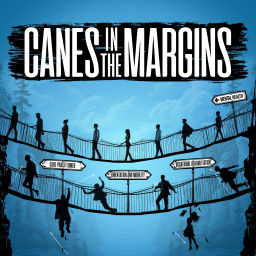
Canes in the Margins
Clairissa Richardson
5.0from 6 ratings
- 10
- Episodes
- 6
- Ratings
- 2023
- First episode
About Canes in the Margins
Canes in the Margins is a critical discourse podcast approach to reenergize the mental health needs of people with blindness or visual impairment (BVI). People with BVI experience a range of mental health issues lacking critical examination and are severely underrepresented as consumers within the mental health arena. The goal of this podcast is to educate service professionals, communicate experiences, and collaborate collectively to improve future mental health policy and practice for people with BVI.
- Publisher
- Clairissa Richardson
- Category
- health & fitness
- Language
- en
- Explicit
- Yes
- First episode
- 3 Sept 2023
- Latest episode
- 16 Mar 2025
Latest episodes
10 episodes in the feed.
16 Mar 2025
The Legitimization of Emotional Support Animals (ESA) as Service Animals: Comfort Displacing Safety
In this podcast session, we highlight the increasing rates ofmisrepresentation of emotional support animals (ESA) by the public and the relative mental health and safety consequences for people with BVI. Through a combination of empirical and anecdotal evidence, we highlight the effect of the loss of functionality, orientation, and independence for the person with BVI. In addition, we magnify the interconnected effects of loss of physical function (e.g., work/income, social, medical, psychological, etc.) in the lives of people with BVI. Join us as we unpack this topic! Guest Speakers: Tiffany Baylor-owner of "My Pink Cane," a non-profit organization that provides in-service disability training to businesses and agencies. Tiffany travels across the nation with the objective of increasing awareness, promoting equity, and building solutions to enhance the lives of people with blindness as well as other disabling conditions. Ashley Tavera-licensed clinical social worker (LCSW) with many years of experience working with clients living with substance use disorders, addictions, and trauma. Ashley is well-versed in mental health ethics and their association with people with disabilities, particularly within the blind community. References: ADA National Network. (2014). Service animals and emotional support animals: Where are they allowed and under what conditions? ADA National Network. Americans With Disabilities Act of 1990, 42 U.S.C. § 12101 et seq. (1990). https://www.ada.gov/pubs/adastatute08.htm (https://www.ada.gov/pubs/adastatute08.htm) Arkow, P. (2019). Of companion animals: Pets as a catalyst for social networks and support...And a barometer of community violence. In A. H. Fine (Ed.), Handbook on animal assisted therapy (5thed., pp. 43–51). Elsevier. Barba, B. E. (1995). A critical review of research on the human/companion animal relationship: 1988 to 1993. Anthrozoös, 8(1), 9–19. https://doi.org/10.2752/089279395787156509 (https://doi.org/10.2752/089279395787156509) Brooks, H. L., Rushton, K., Lovell, K., Bee, P., Walker, L., Grant, L., & Rogers, A. (2018). The power of support from companion animals for people living with mental health problems: A systematic review and narrative synthesis of the evidence. BMC Psychiatry,18(1), 1-12. https://doi.org/10.1186/s12888-018-1613-2 (https://doi.org/10.1186/s12888-018-1613-2) Brown, C. M., Hengy, S. M., & McConnell, A. R. (2016). Thinking about cats or dogs provides relief from social rejection. Anthrozoös, 29(1), 47–58. https://doi.org/10.1080/20414005.2015.1067958 (https://doi.org/10.1080/20414005.2015.1067958) Bueker, C. S. (2013). Leads to expanded social networks, increased civic engagement and divisions within a community: The role of dogs. Journal of Sociology and Social Welfare, 40(4), 211-236. https://scholarworks.wmich.edu/jssw/vol40/iss4/12 (https://scholarworks.wmich.edu/jssw/vol40/iss4/12) Craigon, P. J., Hobson-West, P., England, G. C. W., Whelan, C., Lethbridge, E., & Asher, L. (2017). "She's a dog at the end of the day": Guide dog owners' perspectives on the behavior of their guide dog. PLoS ONE, 12(4), 1-19. https://doi.org/10.1371/journal.pone.0176018 (https://doi.org/10.1371/journal.pone.0176018) Curl, A. L., Bibbo, J., & Johnson, R. A. (2017). Dog walking, the human–animal bond and older adults’ physical health. The Gerontologist,57(5), 930–939. https://doi.org/10.1093/geront/gnw051 (https://doi.org/10.1093/geront/gnw051) Fairman, S. K., & Huebner, R. A. (2001). Service dogs: A compensatory resource to improve function. Occupational therapy in health care, 13(2), 41–52. https://doi.org/10.1080/J003v13n02_03 (https://doi.org/10.1080/J003v13n02_03) Ferrell & Crowley (2023) Emotional support animal partnerships: Behavior, welfare, and clinical involvement, Anthrozoös, 36(3), 471-487. https://doi.org/10.1080/08927936.2023.2166711 (https://doi.org/10.1080/08927936.2023.2166711) Fine, A. H., & Beck, A. M. (2019). Understanding our kinship with animals: Input for health care professionals interested in the human–animal bond. In A. H. Fine (Ed.), Handbook on animal-assisted therapy (5th ed., pp. 3–12). Elsevier.
8 Apr 2024
Blind Joy: Exploring the Measures of Delight in the Naturality of Blindness
In this first-ever video episode, we welcome a wide variety of multidimensional guests who have agreed to aid in the meaningful formation of the concept of "blind joy" by sharing their experiences, beliefs, and knowledge as multidimensional people who also have blindness or visual impairment. Blind joy is a concept that postulates people with BVI are more than capable of identifying joy, including feelings of joy, uniqueness, and individuality, within the condition of blindness or visual impairment. The concept further argues that people with BVI are not constantly consumed by the physical limitations pertinent to blindness or visual impairment and highlights the reductionist narratives that are ascribed to people with BVI. Changing perceptions start with educating sighted people, offering differing perspectives, and reenergizing the condition of blindness or visual impairment as evergreen, diverse in both presentation and perception, and always at a crossroads with the social environment. Join us as we unpack this topic! Guest Biography: (1) Judy Matthews is a technology specialist for people with blindness or visual impairment, and vocational rehabilitation professional residing in Colorado. Judy is also Cuban, a music therapist, and emphasizes compassionate advocacy for Guide Dog users. If you would like to hear from Judy, feel free to connect with her via email at pawsitivej@outlook.com (2) Tina Reisner is a vocational rehabilitation professional, dual specialized in mobility and technology for people with blindness or visual impairment. Tina is a dedicated advocate for people with blindness or visual impairment, utilizing her personal experiences as a person with blindness to fuel social change. Tina is adopted and resides in Utah (3) Ashley Townsend is a licensed clinical social worker in private practice and business owner of Phoenix Therapy LLC. Ashley specializes in trauma-based and relational approaches that emphasize client multiplicity, internal healing, and recovery. If you would like to hear from Ashley, feel free to connect with her via email at ashleytownsend421@gmail.com (4) Tiffany Baylor is an academic professor, teacher of visual impairment (TVI), former United States Olympic athlete, and disability consultant. She also has experience as both a vocational rehabilitation (VR) counselor and consumer. Tiffany is the founder of My Pink Cane, a consulting company specializing in educating organizations on disability awareness and related policy and law. Tiffany is a lifelong Guide Dog user. If you would like to hear from Tiffany, feel free to connect with her via email at gtaw06e@gmail.com (5) Patrick Leahy is a U.S. election assistance commission specialist, working to ensure the equitable and accessible election processes. Patrick, and his Guide Dog Hogan, are quite a pair, evoking discourse in Washington DC involving the blind community, Guide Dog handling, and social challenges impacting the blind community. Patrick also enjoys comedy and performs stand-up comedy in his free time. If you would like to hear from Patrick, feel free to connect with him via email at pat.r.leahy@gmail.com (6) Michael Elliot is the business owner of Soar Technology and Consultants and served as bureau chief of the Florida Division of Blind Services. Michael is also a licensed mental health therapist residing in Florida. If you would like to hear from Michael, feel free to connect with him via email at michael@soarconsultants.com --- Send in a voice message: https://podcasters.spotify.com/pod/show/clairissa-richardson/message
21 Jan 2024
Adapt and Overcome: Finding Purpose in the Dark
In this episode, we dive into the world of software developer, Zach Tidwell, as he leads us into a renewed understanding of the technological paradigm that the sighted population rarely notice. Zach’s emphasis on digital literacy as a collective accountability measure re-energizes the concept of equity and inclusion within software design. Zach’s narrative of vision loss and adaptation is a story of willful determination and skillful championship, all within personal tragedy. Zach shares his approach to successful entrepreneurship within the software development industry from the lens of total blindness and invests time in exposing his positionality and related growth in a sight dominated world. Zach speaks passionately and with critical emphasis on the healing power of pushing through, trusting the process, and finding purpose. Join us as we unpack this topic! Trigger warning: This episode contains content that some listeners may find disturbing, or even traumatizing. Content involves themes of suicide and related graphic details. Please listen at your discretion. Guest Biography: Zach Tidwell is a software developer, business owner, and Marine Corps veteran specializing in computer programming. Zach is self-taught and practices the development and testing of his unique computer software to emphasize accessibility and other critical, user-friendly components. Zach is totally blind, with no light perception nor functionality; however, Zach sees more than you or I do when it comes to coding design. Zach’s most recent software, Zanagrams, is a puzzle-based gaming program that utilizes memory and context clues to enhance user experience. Zanagrams was named 2023 AppleVis Golden Apple Award winner, specifically for its accessibility design and related features. Zach’s goal is to change the “accessibility-based burden” ideology within computer software design, thereby emphasizing a collective equity within the industry that prioritizes accessibility, rather than incorporating accessibility post-design software. Scholarly References: Brennan, M., Horowitz, A., Reinhardt, J. P., Stuen, C., Rubio, R., & Oestreicher, N. (2011). The societal impact of age-related macular degeneration: Use of social support resources differs by the severity of the impairment. Journal of Visual Impairment and Blindness, 105(1), 5–19. https://doi.org/10.1177/0145482x1110500102 (https://doi.org/10.1177/0145482x1110500102) Dean, D., Pepper, J. V., Schmidt, R., & Stern, S. (2017). The effects of vocational rehabilitation services for people with mental illness. Journal of Human Resources, 52(3), 826–858. https://doi.org/10.3368/jhr.52.3.0114-6111r1 (https://doi.org/10.3368/jhr.52.3.0114-6111r1) Dweck, C. S. (2006). Mindset: the new psychology of success. Simmons University Library. Random House LLC Giesen, J. M., & Hierholzer, A. (2016). Vocational rehabilitation services and employment for social security disability income beneficiaries with visual impairments. Journal of Vocational Rehabilitation, 44(2), 175 189. https://doi.org/10.3233/jvr-150789 (https://doi.org/10.3233/jvr-150789) Guerette, A. R., & Smedema, S. M. (2011). The relationship of perceived social support with well-being in adults with visual impairments. Journal of Visual Impairment and Blindness, 105(7), 425–439. https://doi.org/10.1177/0145482x1110500705 (https://doi.org/10.1177/0145482x1110500705) McDonnall, M. C., Cmar, J. L., & McKnight, Z. (2021). What predicts job quality of vocational rehabilitation consumers who are blind or have low vision? Rehabilitation Counseling Bulletin, 66(2), 100–111. https://doi.org/10.1177/00343552211060012 (https://doi.org/10.1177/00343552211060012) McDonnall, M. & Lund, E. M. (2019). Employers’ intent to hire people who are blind or visually impaired: A test of the theory of planned behavior. Rehabilitation Counseling Bulletin, 63(4), 206–215. https://doi.org/10.1177/0034355219893061 (https://doi.org/10.1177/0034355219893061) McDonnall, Cmar, J. L., & McKnight, Z. S. (2022). Beyond Employment Rates: Self Employment and Other Categories of Work Among People with Visual Impairments. Journal of visual impairment & blindness, 116(5), 729 735. https://doi.org/10.1177/0145482x221128831 (https://doi.org/10.1177/0145482x221128831) --- Send in a voice message: https://podcasters.spotify.com/pod/show/clairissa-richardson/message
16 Jan 2024
Traumatic Loss and Triumphant Return: A Rehab Success Story
In this episode, we welcome Marcus Engel as he encourages us to shift our focus from observer to doer; follower to leader; leader to learner all within the context of compassion amidst human suffering. Marcus’ narrative of vision loss and success is not your typical rehabilitative story. Marcus speaks passionately and with critical emphasis on the healing power of meaningful relationships within the provider-patient paradigm, particularly as it relates to concepts of dependence and trauma. Marcus shares his educative approach to reconnecting with health professionals regarding such relationships and redefining vision loss as a non-linear, pervasive experience with other human beings. Join us as we unpack this topic! Trigger warning: This episode contains content that some listeners may find disturbing, or even traumatizing. Content involves themes of drunk-driving and related graphic details. Please listen at your discretion. Guest Biography: Marcus Engel is an author, adjunct professor, and renowned certified speaker professional specializing in the counseling, education, and training of healthcare professionals on compassionate, relational approaches to healthcare outcomes. Marcus has authored many literature that has been adapted to educate nurses and other allied healthcare professionals. If interested in learning more about Marcus Engel, please visit https://marcusengel.com/ Scholarly References: Avolio, B. J., & Gardner, W. L. (2005). Authentic leadership development: Getting to the root of positive forms of leadership. The Leadership Quarterly, 16(3), 315–338. https://psycnet.apa.org/doi/10.1016/j.leaqua.2005.03.001 (https://psycnet.apa.org/doi/10.1016/j.leaqua.2005.03.001) Brennan, M., Horowitz, A., Reinhardt, J. P., Stuen, C., Rubio, R., & Oestreicher, N. (2011). The societal impact of age-related macular degeneration: Use of social support resources differs by the severity of the impairment. Journal of Visual Impairment and Blindness, 105(1), 5–19. https://doi.org/10.1177/0145482x1110500102 (https://doi.org/10.1177/0145482x1110500102) Crudden, A., & Steverson, A. (2022). Job retention: Perspectives of individuals with blindness and low vision. Journal of Vocational Rehabilitation, 57(2), 127–140. https://doi.org/10.3233/jvr-221204 (https://doi.org/10.3233/jvr-221204) Demmin, D. L., & Silverstein, S. M. (2020). Visual impairment and mental health: Unmet needs and treatment options. Clinical Ophthalmology, Volume 14, 4229–4251. https://doi.org/10.2147/opth.s258783 (https://doi.org/10.2147/opth.s258783) Guerette, A. R., & Smedema, S. M. (2011). The relationship of perceived social support with well-being in adults with visual impairments. Journal of Visual Impairment and Blindness, 105(7), 425–439. https://doi.org/10.1177/0145482x1110500705 (https://doi.org/10.1177/0145482x1110500705) Khalili, H., Orchard, C., Laschinger, H. K., & Farah, R. (2013). An interprofessional socialization framework for developing an interprofessional identity among health professions students. Journal of Interprofessional Care, 27(6), 448–453. https://doi.org/10.3109/13561820.2013.804042 (https://doi.org/10.3109/13561820.2013.804042) Kuluski, K., Reid, R. J., & Baker, G. R. (2020). Applying the principles of adaptive leadership to person-centered care for people with complex care needs: Considerations for care providers, patients, caregivers and organizations. Health Expectations. https://doi.org/10.1111/hex.13174 (https://doi.org/10.1111/hex.13174) Rees, G., Tee, H. W., Marella, M., Fenwick, E., Dirani, M., & Lamoureux, E. L. (2010). Vision Specific distress and depressive symptoms in people with vision impairment. Investigative Ophthalmology and Visual Science, 51(6), 2891-2896. https://doi.org/10.1167/iovs.09-5080 (https://doi.org/10.1167/iovs.09-5080) Shamir, B., & Eilam, G. (2005). What’s your story? A life-stories approach to authentic leadership development. The Leadership Quarterly, 16(3), 395-417. https://doi.org/10.1016/j.leaqua.2005.03.005 (https://doi.org/10.1016/j.leaqua.2005.03.005) --- Send in a voice message: https://podcasters.spotify.com/pod/show/clairissa-richardson/message
27 Oct 2023
Self-Efficacy is Multidimensional, as are People With Blindness
In this episode, join host Clairissa Richardson as she critically examines the concept of self-efficacy as a psychological construct in the lives of people with blindness or visual impairment. Clairissa utilizes self-efficacy and choice theory as a lens by which the expectations of health rehabilitation are deconstructed as limiting perceptions of self-efficacy targets for people with BVI. Clairissa uses a combination of research, narrative storytelling, and audio oral history to re-energize the concept of self-efficacy for people with BVI as a powerful tool to disrupt control based deficits and redistribute power in clinical settings. The use of reality therapy as a treatment modality and self-developed non-empirical scale are also introduced in this episode. Scholarly References: Bandura, A. (1977). Self-efficacy: Toward a unifying theory of behavioral change. Psychological Review, 84(2), 191–215. https://doi.org/10.1037/0033-295X.84.2.191 (https://doi.org/10.1037/0033-295X.84.2.191) Bandura, A. (2006). Guide for constructing self-efficacy scales. In F. Pajares & T. Urdan (Eds.), Self-efficacy beliefs of adolescents (pp. 307–337). Information Age Publishing. Crudden, A., & Steverson, A. (2022). Job retention: Perspectives of individuals with blindness and low vision. Journal of Vocational Rehabilitation, 57(2), 127–140. https://doi.org/10.3233/jvr-221204 (https://doi.org/10.3233/jvr-221204) Demmin, D. L., & Silverstein, S. M. (2020). Visual impairment and mental health: Unmet needs and treatment options. Clinical Ophthalmology, Volume 14, 4229–4251. https://doi.org/10.2147/opth.s258783 (https://doi.org/10.2147/opth.s258783) Giesen, J. M., & Hierholzer, A. (2016). Vocational rehabilitation services and employment for social security disability income beneficiaries with visual impairments. Journal of Vocational Rehabilitation, 44(2), 175–189. https://doi.org/10.3233/jvr-150789 (https://doi.org/10.3233/jvr-150789) Kelley, S. D. M., & Moore, J. E. (2000). Abuse and violence in the lives of people with low vision: A national survey. Re:view, 31(4), 155-165. https://eric.ed.gov/?id=EJ603347 (https://eric.ed.gov/?id=EJ603347) Siegel, D. (2012). Pocket guide to interpersonal neurobiology. New York, NY: Norton. Sobsey, D., & Doe, T. (1991). Patterns of sexual abuse and assault. Sexuality & Disability, 9(3), 243-259. https://doi.org/10.1007/BF01102395 (https://doi.org/10.1007/BF01102395) Watson-Armstrong, L. A., O'Rourke, B., & Schatzlein, J. (1994). Sexual abuse and persons with disabilities: A call for awareness. Journal of Applied Rehabilitation Counseling, 25(1), 36-42. https://psycnet.apa.org/record/1994-41479-001 (https://psycnet.apa.org/record/1994-41479-001) Wubbolding R. (2017). Reality therapy and self-evaluation: The key to client change. American Counseling Association. Zapata, M. A. (2020a). An exploratory study of general self-efficacy and employment in adults with retinitis pigmentosa. Journal of Visual Impairment and Blindness, 114(1), 18–30. https://doi.org/10.1177/0145482x19900715 (https://doi.org/10.1177/0145482x19900715) Zapata, M. A. (2020b). Disability affirmation predicts employment among adults with visual impairment and blindness. Rehabilitation Counseling Bulletin, 65(2), 120–128. https://doi.org/10.1177/0034355220957107 (https://doi.org/10.1177/0034355220957107) Zapata, M. A. (2021). Mobility tool use relates to disability affirmation among adults with visual impairments. Journal of Visual Impairment and Blindness, 115(5), 382–392. https://doi.org/10.1177/0145482x211046684 (https://doi.org/10.1177/0145482x211046684) Zapata, M. A. (2022). Group identity in blindness groups predicts life satisfaction and lower anxiety and depression. Rehabilitation Psychology, 67(1), 42–52. https://doi.org/10.1037/rep0000432 (https://doi.org/10.1037/rep0000432) Zapata, M. A., & Pearlstein, J. G. (2022). Disability self‐worth relates to lower anxiety and depression in people with visual impairment. Journal of Clinical Psychology, 78(7), 1491–1499. https://doi.org/10.1002/jclp.23308 (https://doi.org/10.1002/jclp.23308) Blindness, Visual Impairment Self-Efficacy Scale: Non-empirical https://docs.google.com/document/d/17mKok7iUF8TPWhOqNDPMFPxur9HT-6gx/edit?usp=sharing&ouid=106882557158309973692&rtpof=true&sd=true (https://docs.google.com/document/d/17mKok7iUF8TPWhOqNDPMFPxur9HT-6gx/edit?usp=sharing&ouid=106882557158309973692&rtpof=true&sd=true) --- Send in a voice message: https://podcasters.spotify.com/pod/show/clairissa-richardson/message
20 Oct 2023
The Blindness Equation
In this episode, join host Clairissa Richardson as she critically examines the concept of identity for people with blindness or visual impairment (BVI) through the lens of liberation health and critical disability theory. Clairissa provides research-informed critical education for health rehabilitation professionals, introduces the "blindness equation," and provides practical, discipline-specific tools and approaches to enhance the scope and comprehension of mental health needs for people with BVI. Scholarly References: Belkin-Martinez,D. (2014). The liberation health model: Theory and practice. (Eds.), Social justice in clinical practice: A liberation health framework for social work (pp. 9–28). Routledge. Bourgois, P.,Holmes, S. M., Sue, K., & , J. (2017). Structural vulnerability: Operationalizing the concept to address health disparities in clinical care. Journal of the Association of American Medical Colleges, 92(3), 299–307. https://doi.org/10.1097/ACM.0000000000001294 (https://doi.org/10.1097/ACM.0000000000001294) Brennan, M., Horowitz, A., Reinhardt, J. P., Stuen, C., Rubio, R., & Oestreicher, N. (2011). The societal impact of age-related macular degeneration: Use of social support resources differs by the severity of the impairment. Journal of Visual Impairment and Blindness, 105(1), 5–19. https://doi.org/10.1177/0145482x1110500102 (https://doi.org/10.1177/0145482x1110500102) Clapp, C. M., Pepper, J. V., Schmidt, R., & Stern, S. (2020). Overview of vocational rehabilitation data about people with visual impairments: Demographics, services, and long-run labor market trends. Journal of Visual Impairment and Blindness, 114(1), 43–56. https://doi.org/10.1177/0145482x20901380 (https://doi.org/10.1177/0145482x20901380) Dean, D., Pepper, J. V., Schmidt, R., & Stern, S. (2017). The effects of vocational rehabilitation services for people with mental illness. Journal of Human Resources, 52(3), 826–858. https://doi.org/10.3368/jhr.52.3.0114-6111r1 (https://doi.org/10.3368/jhr.52.3.0114-6111r1) Demmin, D. L., & Silverstein, S. M. (2020). Visual impairment and mental health: Unmet needs and treatment options. Clinical Ophthalmology, Volume 14, 4229–4251. https://doi.org/10.2147/opth.s258783 (https://doi.org/10.2147/opth.s258783) Hiranandani, V. (2019). Towards a critical theory of disability in social work. Critical Social Work, 6(1). https://doi.org/10.22329/csw.v6i1.5712 (https://doi.org/10.22329/csw.v6i1.5712) Kant, J. D. (2014). Becoming a Liberation Health Social Worker. In D. B. Martinez (Ed.), Social Justice in clinical practice: A liberation health framework for social work (pp. 29–43). Routledge. Keay, L. J., Chang, K. J., Angell, B., Rogers, K., & Jan, S. (2022). Cost–benefit analysis of orientation and mobility programs for adults with vision disability: A contingent valuation study. Disability and Rehabilitation, 45(5), 857–865. https://doi.org/10.1080/09638288.2022.2044523 (https://doi.org/10.1080/09638288.2022.2044523) Lund, E. M.,& Cmar, J. L. (2019). Factors related to employment outcomes for vocational rehabilitation consumers with visual impairments: A systematic review. Journal of Visual Impairment and Blindness, 113(6), 518–537. https://doi.org/10.1177/0145482x19885277 (https://doi.org/10.1177/0145482x19885277) McDonnall, M. C., Cmar, J. L., & McKnight, Z. (2021). What predicts job quality of vocational rehabilitation consumers who are blind or have low vision? Rehabilitation Counseling Bulletin, 66(2), 100–111. https://doi.org/10.1177/00343552211060012 (https://doi.org/10.1177/00343552211060012) Moya, P. (2006). What’s identity got to do with it? Mobilizing identities in the multicultural classroom. In L. Alcoff, M. (Eds.), Identity politics reconsidered (pp. 96–117). Palgrave Oliver, M. (1990). The politics of disablement. Macmillan. Verschelden, C. (2017). Bandwidth recovery: Helping students reclaim cognitive resources lost to poverty, racism, and social marginalization. Stylus Publishing. Zapata, M. A. (2020a). An exploratory study of general self-efficacy and employment in adults with retinitis pigmentosa. Journal of Visual Impairment and Blindness, 114(1), 18–30. https://doi.org/10.1177/0145482x19900715 (https://doi.org/10.1177/0145482x19900715) Link to modified structural vulnerability assessment tool https://drive.google.com/file/d/1n42WWaKe1RrSiG-iDPZeJbaWnOrK3Av5/view?usp=share_link (https://drive.google.com/file/d/1n42WWaKe1RrSiG-iDPZeJbaWnOrK3Av5/view?usp=share_link) --- Send in a voice message: https://podcasters.spotify.com/pod/show/clairissa-richardson/message
1 Oct 2023
Waking up and Getting Real About Your Blindness: The Phoenix Method
In this episode, we are joined by Ashley Townsend as she takes us on a self-reflexive journey into her blindness as an identity. Ashley speaks candidly and with critical emphasis on the disability related socialization experiences that have orchestrated much of her beliefs about blindness. Ashley shares her liberatory approach to reconnecting and redefining blindness as an adult. Join us as we unpack this topic! Guest Biography Ashley Townsend is a licensed clinical social worker in private practice and business owner of Phoenix Therapy LLC. Ashley specializes in trauma-based and relational approaches that emphasize client multiplicity, internal healing, and recovery. Scholarly References Adams, M., Castañeda, C., Hackman, H., Peters, M., Zúñiga, X., & Blumenfeld, W. (2010). Readings for diversity and social justice. New York: Routledge. Belkin-Martinez, D. (2014). The liberation health model: Theory and practice. In D. Belkin Martinez & A. Fleck-Henderson (Eds.), Social justice in clinical practice: A liberation health framework for social work (pp. 9–28). Routledge. Beresford, P. (2011). Radical social work and service users: A crucial connection. In M. Lavalette (Ed.), Radical social work today: Social work at the Crossroads (pp. 95–114). Policy Press. Clapp, C. M., Pepper, J. V., Schmidt, R., & Stern, S. (2020). Overview of vocational rehabilitation data about people with visual impairments: Demographics, services, and long-run labor market trends. Journal of Visual Impairment and Blindness, 114(1), 43–56. https://doi.org/10.1177/0145482x20901380 (https://doi.org/10.1177/0145482x20901380) Dean, D., Pepper, J. V., Schmidt, R., & Stern, S. (2017). The effects of vocational rehabilitation services for people with mental illness. Journal of Human Resources, 52(3), 826–858. https://doi.org/10.3368/jhr.52.3.0114-6111r1 (https://doi.org/10.3368/jhr.52.3.0114-6111r1) Demmin, D. L., & Silverstein, S. M. (2020). Visual impairment and mental health: Unmet needs and treatment options. Clinical Ophthalmology, Volume 14, 4229–4251. https://doi.org/10.2147/opth.s258783 (https://doi.org/10.2147/opth.s258783) Freire, P. (1974). Education as the practice of freedom. In P. Freire (Ed.), Education for critical consciousness (pp. 1–78). Continuum. Harro, B. (2010). The cycle of socialization. In M. Adams, C. Castañeda, H. Hackman, M. Peters, X. Zuniga, & W. Blumenfeld (Eds.), Readings for diversity and social justice (pp. 45–51). essay, New York: Routledge. Keay, L. J., Chang, K. J., Angell, B., Rogers, K., & Jan, S. (2022). Cost–benefit analysis of orientation and mobility programs for adults with vision disability: A contingent valuation study. Disability and Rehabilitation, 45(5), 857–865. https://doi.org/10.1080/09638288.2022.2044523 (https://doi.org/10.1080/09638288.2022.2044523) National Federation of the Blind. (2023). Blindness Statistics. https://nfb.org/resources/blindness-statistics (https://nfb.org/resources/blindness-statistics) Oliver, M., & Barnes, C. (2012). The new politics of disablement. Workforce Innovation and Opportunity Act of 2014, 29 U.S.C. § 3101 et seq. (2014). Welch, J. (2017). All Too Human: Conflict and Common Ground in Interdisciplinary Research and Complex Problem Solving. Issues in Interdisciplinary Studies, 35, 88-112. https://files.eric.ed.gov/fulltext/EJ1193608.pdf (https://files.eric.ed.gov/fulltext/EJ1193608.pdf) Zapata, M. A. (2020a). An exploratory study of general self-efficacy and employment in adults with retinitis pigmentosa. Journal of Visual Impairment and Blindness, 114(1), 18–30. https://doi.org/10.1177/0145482x19900715 (https://doi.org/10.1177/0145482x19900715) Zapata, M. A. (2020b). Disability affirmation predicts employment among adults with visual impairment and blindness. Rehabilitation Counseling Bulletin, 65(2), 120–128. https://doi.org/10.1177/0034355220957107 (https://doi.org/10.1177/0034355220957107) Zapata, M. A. (2021). Mobility tool use relates to disability affirmation among adults with visual impairments. Journal of Visual Impairment and Blindness, 115(5), 382–392. https://doi.org/10.1177/0145482x211046684 (https://doi.org/10.1177/0145482x211046684) Zapata, M. A. (2022). Group identity in blindness groups predicts life satisfaction and lower anxiety and depression. Rehabilitation Psychology, 67(1), 42–52. https://doi.org/10.1037/rep0000432 (https://doi.org/10.1037/rep0000432) --- Send in a voice message: https://podcasters.spotify.com/pod/show/clairissa-richardson/message
29 Sept 2023
Sight is a Privilege, not an Ideal
In this episode, join host Clairissa Richardson as she deconstructs the mental health issues of people with blindness or visual impairment (BVI) from a critical systems perspective, incorporating health-rehabilitative affairs, disability as a social identity, and professional power dynamics to uncover the limitations and gaps that exist for people with BVI and the presence of mental health symptoms. Join us as we unpack this topic! Scholarly References Abrams, L. S., & Moio, J. A. (2009). Critical race theory and the cultural competence dilemma in social work education. Journal of Social Work Education, 45(2), 245–261. https://doi.org/10.5175/jswe.2009.200700109 (https://doi.org/10.5175/jswe.2009.200700109) Barnes, C. (2000). A working social model? Disability, work and disability politics in the 21st century. Critical Social Policy, 20(4), 441–457. https://doi.org/10.1177/026101830002000402 (https://doi.org/10.1177/026101830002000402) Brzuzy, S. (1997). Deconstructing disability. Journal of Poverty, 1(1), 81–91. https://doi.org/10.1300/j134v01n01_06 (https://doi.org/10.1300/j134v01n01_06) Choi, H. G., Lee, M. J., & Lee, S.-M. (2018). Visual impairment and risk of depression: A longitudinal follow-up study using a national sample cohort. Scientific Reports, 8(1). https://doi.org/10.1038/s41598-018-20374-5 (https://doi.org/10.1038/s41598-018-20374-5) Cosh, S., Carrière, I., Daien, V., Tzourio, C., Delcourt, C., & Helmer, C. (2019). Sensory loss and suicide ideation in older adults: Findings from the three-city cohort study. International psychogeriatrics, 31(1), 139–145. https://doi.org/10.1017/S104161021800056X (https://doi.org/10.1017/S104161021800056X) Demmin, D. L., & Silverstein, S. M. (2020). Visual impairment and mental health: Unmet needs and treatment options. Clinical Ophthalmology, Volume 14, 4229–4251. https://doi.org/10.2147/opth.s258783 (https://doi.org/10.2147/opth.s258783) Donoyama, N., & Takeda, F. (2007). Mental health and related factors among massage practitioners with visual impairment. Industrial health, 45(2), 191–198. https://doi.org/10.2486/indhealth.45.191 (https://doi.org/10.2486/indhealth.45.191) Campbell, F.K. (2001). Inciting Legal Fictions: 'Disability's' date with Ontology and the Ableist Body of Law. Griffith law review, 10, 42-62. https://www.griffith.edu.au/ Flaxman, A. D., Wittenborn, J. S., Robalik, T., Gulia, R., Gerzoff, R. B., Lundeen, E. A., Saaddine, J., Rein, D. B.(2021). Prevalence of visual acuity loss or blindness in the United States: A bayesian meta-analysis. JAMA ophthalmology, 139(7), 717–723. https://doi.org/10.1001/jamaophthalmol.2021.0527 (https://doi.org/10.1001/jamaophthalmol.2021.0527) Hiranandani, V. (2019). Towards a critical theory of disability in social work. Critical Social Work, 6(1). https://doi.org/10.22329/csw.v6i1.5712 (https://doi.org/10.22329/csw.v6i1.5712) Holloway, E. E., Sturrock, B. A., Lamoureux, E. L., Keeffe, J. E., & Rees, G. (2015). Depression screening among older adults attending low-vision rehabilitation and eye-care services: Characteristics of those who screen positive and client acceptability of screening. Australasian Journal on Ageing, 34(4), 229–234. https://doi.org/10.1111/ajag.12159 (https://doi.org/10.1111/ajag.12159) Kong, X., Yan, M., Sun, X., & Xiao, Z. (2015). Anxiety and depression are more prevalent in primary angle closure glaucoma than in primary open-angle glaucoma. Journal of glaucoma, 24(5), 57–63. https://doi.org/10.1097/IJG.0000000000000025 (https://doi.org/10.1097/IJG.0000000000000025) Lundeen, E. A., Saydah, S., Ehrlich, J. R., & Saaddine, J. (2021). Self-Reported vision impairment and psychological distress in U.S. adults. Ophthalmic Epidemiology, 29(2), 171–181. https://doi.org/10.1080/09286586.2021.1918177 (https://doi.org/10.1080/09286586.2021.1918177) Mayro, E. L., Murchison, A. P., Hark, L. A., Silverstein, M., Wang, O. Y., Gilligan, J. P., Leiby, B. E., Pizzi, L. T., Casten, R. J., Rovner, B. W., & Haller, J. A. (2020). Prevalence of depressive symptoms and associated factors in an urban, ophthalmic population. European Journal of Ophthalmology, 31(2), 740–747. https://doi.org/10.1177/1120672120901701 (https://doi.org/10.1177/1120672120901701) Nyman, S. R., Gosney, M. A., & Victor, C. R. (2010). Psychosocial impact of visual impairment in working-age adults. The British Journal of Ophthalmology, 94(11), 1427–1431. https://doi.org/10.1136/bjo.2009.164814 (https://doi.org/10.1136/bjo.2009.164814) --- Send in a voice message: https://podcasters.spotify.com/pod/show/clairissa-richardson/message
26 Sept 2023
The Power of Peer Support
In this episode, we are joined by Tiffany Baylor and Michael Elliot as they highlight the importance of peer networking and education in the lives of people with blindness or visual impairment. In a world that tends to predict the behaviors of people with BVI by way of subjective norms and attitudes, peer support is a critical factor in the presence of mental health issues. Join us as we unpack this topic! Guest Biography Tiffany Baylor is an academic professor, teacher of visual impairment (TVI), former United States Olympic athlete, and disability consultant. She also has experience as both a vocational rehabilitation (VR) counselor and consumer. Tiffany presents as blind and is looking forward to sharing more about how this identity corresponds to his experiences. Michael Elliot is the business owner of Soar Technology and Consultants and served as bureau chief of the Florida Division of Blind Services. Michael presents as blind, and is looking forward to sharing more about how this identity corresponds to his experiences. Scholarly References Bourgeois, P., Green, K., Hartley, M., White, M., & Clarke, B. (2021). Moral distress within rehabilitation counseling. Rehabilitation Research, Policy, and Education, 35(2), 117–128. https://doi.org/10.1891/re-20-08 (https://doi.org/10.1891/re-20-08) Crudden, A., & Steverson, A. (2022). Job retention: Perspectives of individuals with blindness and low vision. Journal of Vocational Rehabilitation, 57(2), 127–140. https://doi.org/10.3233/jvr-221204 (https://doi.org/10.3233/jvr-221204) Hahn, H. D., & Belt, T. L. (2004). Disability identity and attitudes toward cure in a sample of disabled activists. Journal of Health and Social Behavior, 45(4), 453–464. https://doi.org/10.1177/002214650404500407 (https://doi.org/10.1177/002214650404500407) Jameton, A. (1984). Nursing practice: The ethical issues. Prentice-Hall. McDonnall, M. C., & Lund, E. M. (2019). Employers’ intent to hire people who are blind or visually impaired: A test of the theory of planned behavior. Rehabilitation Counseling Bulletin, 63(4), 206–215. https://doi.org/10.1177/0034355219893061 (https://doi.org/10.1177/0034355219893061) McKnight, Z. S., Crudden, A., & McDonnall, M. C. (2021). Personal characteristics associated with working after disability onset for people with visual impairments. Journal of Visual Impairment & Blindness, 115(2), 95–105. https://doi.org/10.1177/0145482x211000960 (https://doi.org/10.1177/0145482x211000960) Oliver, M. (1990). The politics of disablement. Macmillan. Oliver, M., & Barnes, C. (2012). The new politics of disablement. Palgrave Macmillan. Zapata, M. A. (2020a). An exploratory study of general self-efficacy and employment in adults with retinitis pigmentosa. Journal of Visual Impairment and Blindness, 114(1), 18–30. https://doi.org/10.1177/0145482x19900715 (https://doi.org/10.1177/0145482x19900715) Zapata, M. A. (2020b). Disability affirmation predicts employment among adults with visual impairment and blindness. Rehabilitation Counseling Bulletin, 65(2), 120–128. https://doi.org/10.1177/0034355220957107 (https://doi.org/10.1177/0034355220957107) Zapata, M. A. (2021). Mobility tool use relates to disability affirmation among adults with visual impairments. Journal of Visual Impairment and Blindness, 115(5), 382–392. https://doi.org/10.1177/0145482x211046684 (https://doi.org/10.1177/0145482x211046684) Zapata, M. A. (2022). Group identity in blindness groups predicts life satisfaction and lower anxiety and depression. Rehabilitation Psychology, 67(1), 42–52. https://doi.org/10.1037/rep0000432 (https://doi.org/10.1037/rep0000432) --- Send in a voice message: https://podcasters.spotify.com/pod/show/clairissa-richardson/message
3 Sept 2023
Canes in the Margins Introduction
Be curious and encouraged to learn more about the purpose of Canes in the Margins! This trailer episode provides a brief glimpse into the critical examination of the underutilization of mental health in the lives of people with blindness or visual impairment. --- Send in a voice message: https://podcasters.spotify.com/pod/show/clairissa-richardson/message
Reach and audience
Public platform figures. Ratings count people who left a rating, not total listeners.
- Apple Podcasts (US)
- 5.0 / 5
- 1 ratings
- Spotify
- 5.0 / 5
- 5 ratings
Podcast Authority Score: 24 / 100
A composite of feed quality, social presence, YouTube performance and engagement. Read the methodology.
- Quality
- 35
- Social presence
- 0
- YouTube
- 0
- Engagement
- 32
Contact Canes in the Margins
- Guest appearances
- Books guests
Based on episode analysis; this does not confirm that the show is currently accepting guests.
Host of Canes in the Margins?
Claim your podcast to manage its listing and keep your show details accurate.
Pod Engine is an independent podcast discovery and analytics service and is not affiliated with or endorsed by this podcast. Artwork and show content belong to their owners. Full legal notice.
Explore this show
Podcast research with Pod Engine