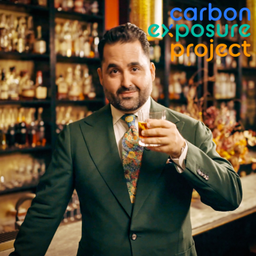
Podcast thumbnail for Carbon Exposure Project

Carbon Exposure Project

Claim This Podcast

by Carbon Exposure

5.0(16 reviews)
63 episodes
Updated Daily
Accepts GuestsHas SponsorsLocation 🇸🇬
47

Podcast Authority

Beta
FairBased on show quality, social media presence, reviews, charts, and more
Pod Engine
Quality26
Social90
YouTube76
Engagement51

Podcast Overview

Carbon Exposure is a carbon-native production studio specialising in carbon markets — and this podcast sits at the centre of what we do. Carbon markets are complex, technical, and often misunderstood. Much of the conversation is fragmented, buried in policy language, or disconnected from how the market actually operates. This podcast is designed to close that gap. Through conversations with the people shaping the market — policymakers, standard setters, developers, investors, and corporates — we unpack how things work in practice, across policy, project development, and finance. We cover the full spectrum of carbon markets, but always with the same objective: clarity. Carbon Exposure extends beyond the podcast into film, digital content, and strategic storytelling — helping organisations communicate more effectively and position themselves for market access. But it starts here. Because in carbon markets, understanding the landscape is the first step to participating in it.

Language

🇺🇲

Publishing Since

10/12/2023

Unlock The Full Podcast Authority Score Report

See how your podcast performs across key metrics

47

Podcast Authority

Beta
FairBased on show quality, social media presence, reviews, charts, and more
Pod Engine
Quality26
Social90
YouTube76
Engagement51
5
Excellent Areas
2
Good Performance
12
Growth Opportunities
excellent
Episode Length
29 minutes
Performing excellently!
good
Publishing Consistency
Every 11 days

Recommendations available

Unlock the full report to see detailed tips

needs improvement
Show Notes Quality
2.0/5

Recommendations available

Unlock the full report to see detailed tips

+16 More Metrics

Unlock comprehensive insights including:

  • • YouTube presence analysis
  • • Social media reach metrics
  • • RSS compliance scoring
  • • Podcast 2.0 features
  • • Technical standards
What's Included in Your Full Report

Detailed Analytics

  • Complete breakdown of all 19 authority metrics
  • Personalized recommendations for each metric
  • Industry benchmarks and comparisons
  • Technical RSS feed analysis and compliance scoring

Growth Strategies

  • Step-by-step action plans for improvement
  • Quick wins to boost your score immediately
  • Pro tips from successful podcasters
Get your free podcast insights report

See how your show performs across every key metric

Instant delivery
No spam
Attract Better Guests

High authority scores make your podcast more attractive to industry leaders and influencers who want to appear on credible shows.

Secure Sponsorships

Sponsors look for podcasts with proven authority and engagement. Your score demonstrates your podcast's value to potential partners.

Grow Your Audience

Understanding your strengths and weaknesses helps you make data-driven decisions to expand your listener base effectively.

1 verified contact email on file for Carbon Exposure Project

Pitch yourself as a guest, propose sponsorships, or reach out directly to the host.

Recent Episodes

Episode thumbnail for Inside a $1 Billion Nature Investment Strategy - Tripurari Prasad (Climate Asset Management)

July 1, 2026

Inside a $1 Billion Nature Investment Strategy - Tripurari Prasad (Climate Asset Management)

<p>In Episode 7 of Season 4 of the Carbon Exposure Podcast, we sit down with Tripurari Prasad, Deputy Head of Carbon, Investments at Climate Asset Management (CAM) — the joint venture between HSBC and Pollination that has committed over US$1 billion to nature as an institutional asset class.</p><p><br /></p><p>Tripurari's path to carbon is unusual: a decade in oil and gas, then South Pole (where he worked on one of the first Article 6.2 discussions, with Switzerland's KliK Foundation and the Thai government), then HSBC's carbon trading desk, and now leading capital deployment for CAM's emerging markets strategy.</p><p><br /></p><p>That seat — at the intersection of carbon, nature-based solutions, and institutional finance — gives him a perspective most carbon practitioners don't have. One that prompts this counter-intuitive line:</p><p><br /></p><p>"Carbon is not the core part of the story. It is always a side benefit."</p><p><br /></p><p>We explore what it actually takes to make nature an investable asset class, why most carbon projects fail on operations rather than methodology, how institutional capital is bifurcating between offtake-led and project-equity-led approaches, and where the next wave of demand is going to come from.</p><p><br /></p><p>In this episode, we cover:</p><p>- Tripurari's path from oil and gas, through South Pole and HSBC, to CAM</p><p>- How CAM is structured: natural capital strategy vs emerging markets carbon strategy</p><p>- Why 10,000 hectares is the institutional minimum for nature investments</p><p>- Why "carbon is the catalyst, not the destination" reframes the entire investment thesis</p><p>- How CAM stacks carbon with coffee, cacao, and bamboo supply chains</p><p>- Why 90% of project failures are operational, not methodological</p><p>- The split between offtake-led and project-equity-led financing</p><p>- Capital stacking, priority rights, and the maturing of carbon as infrastructure</p><p>- Why capital is not finite — and what's needed to unlock it (15–18% IRR expectations for emerging markets)</p><p>- Why Isometric freezing protocols is a model for the certainty institutional capital requires</p><p>- Whether 2030 net zero commitments are hard targets or soft targets</p><p>- The standardization gap and why the market needs an ISDA equivalent for carbon contracts</p><p>- The talent gap and cross-pollination from infrastructure and finance</p><p><br /></p><p>If you work in carbon markets, climate finance, nature-based solutions, project finance, or institutional investment in climate, this is a must-listen episode.</p><p><br /></p><p>Chapters</p><p>[00:00] Intro</p><p>[02:06] From Oil &amp; Gas to Carbon Markets</p><p>[07:33] South Pole and Article 6.2</p><p>[09:13] Inside Climate Asset Management (CAM)</p><p>[13:22] Why "10,000 Hectares" Is the Floor</p><p>[14:20] "Carbon Is Not the Core of the Story"</p><p>[16:02] Stacking Carbon With Coffee, Cacao &amp; Bamboo</p><p>[21:49] Why 90% of Projects Fail on Operations</p><p>[27:38] Offtake-Led vs Project-Equity Financing</p><p>[32:11] Capital Stacking &amp; Priority Rights</p><p>[34:37] Why Capital Is Not Finite</p><p>[44:18] The Case for Certainty in Carbon Markets</p><p>[46:16] Where the Demand Is Actually Coming From</p><p>[49:25] 2030: Hard Target or Soft Target?</p><p>[54:26] The Standardization Gap</p><p>[59:56] The Talent &amp; Cross-Pollination Problem</p><p><br /></p><p>#CarbonMarkets #ClimateFinance #NatureBasedSolutions #CarbonCredits #NBS #InstitutionalCapital #ProjectFinance #CarbonExposurePodcast</p>

Episode thumbnail for Surviving the Sustainability Winter - Fang Eu-Lin (Partner, PwC Singapore)

June 17, 2026

Surviving the Sustainability Winter - Fang Eu-Lin (Partner, PwC Singapore)

<p>In Episode 6 of Season 4 of the Carbon Exposure Podcast, we zoom out from carbon markets to the broader world of corporate sustainability and ESG reporting. Our guest is Fang Eu-Lin, Sustainability and Climate Change Practice Leader at PwC Singapore and one of Asia&#39;s leading voices on sustainability reporting, climate risk and corporate transition strategy.</p><p><br></p><p>Eu-Lin started her career as a chartered accountant and auditor, then pivoted into sustainability in 2016 when SGX rolled out reporting requirements for Singapore-listed companies. Ten years later, she sits at the intersection of climate science, financial reporting, and corporate strategy — exactly the seat that determines whether sustainability ambitions translate into measurable action.</p><p><br></p><p>This conversation moves through the evolution of climate and ESG reporting: the end of purism and the rise of pragmatism, how the ISSB, GHG Protocol, and SBTi are being revised, why CSOs and CFOs are increasingly co-authoring transition plans, and how Singapore&#39;s regulatory leadership offers a template for the rest of Asia.</p><p><br></p><p>She also shares her framing for the current moment — a &quot;sustainability winter&quot; — and three animal archetypes (snowy owl, squirrel, snow leopard) that professionals can channel to thrive through it.</p><p><br></p><p>In this episode, we cover:</p><p>- Eu-Lin&#39;s journey from chartered accountant to climate reporting leader</p><p>- Why sustainability requires systems thinking and deep technical grounding</p><p>- Whether climate is being deprioritized — or simply outranked by tariffs and AI</p><p>- The shift from sustainability purism to corporate pragmatism</p><p>- How the ISSB, GHG Protocol, and SBTi are being revised</p><p>- Why CFOs and CSOs need to co-author climate transition plans</p><p>- Singapore&#39;s carbon tax recycling and capacity-building model</p><p>- The reporting timeline pushback and the quality vs speed trade-off</p><p>- Climate scenario analysis and the limits of available research</p><p>- Physical risk vs transition risk for corporates</p><p>- The Scope 3 debate: spend-based vs activity-based measurement</p><p>- Why the Singapore Emission Factor Registry matters for accurate disclosure</p><p>- How to lead through the &quot;sustainability winter&quot;</p><p><br></p><p>If you work in sustainability reporting, climate finance, ESG, corporate strategy, or board governance, this is a must-listen episode.</p><p><br></p><p>Chapters</p><p>[00:00] Intro</p><p>[02:32] From Accounting to Sustainability</p><p>[05:17] Singapore&#39;s 2016 Reporting Pivot</p><p>[08:18] Syzygy: Aligning Skill, Passion &amp; Value</p><p>[13:34] Is Climate Falling Off the Agenda?</p><p>[15:12] The Shift From Purism to Pragmatism</p><p>[17:25] ISSB, GHG Protocol &amp; SBTi in Revision</p><p>[19:05] CFO + CSO Collaboration on Transition Plans</p><p>[23:33] Singapore&#39;s Carbon Tax Model</p><p>[27:20] Quality vs Speed in Climate Reporting</p><p>[29:12] Climate Scenario Analysis &amp; Risk</p><p>[33:09] Scope 3: Love It or Hate It?</p><p>[36:21] The Singapore Emission Factor Registry</p><p>[37:51] Outlook to 2030</p><p>[39:30] Snowy Owls &amp; The Sustainability Winter</p><p><br></p><p>#SustainabilityReporting #ESG #ClimateReporting #ClimateFinance #ISSB #ScopeThree #Singapore #CarbonExposurePodcast</p>

Episode thumbnail for Did the Media Break the Voluntary Carbon Market? - Patrick Greenfield (The Guardian)

June 3, 2026

Did the Media Break the Voluntary Carbon Market? - Patrick Greenfield (The Guardian)

<p>In Episode 5 of Season 4 of the Carbon Exposure Podcast, we sit back down with Patrick Greenfield, biodiversity reporter at The Guardian.</p><p><br /></p><p>Two years ago, Patrick's investigative reporting helped trigger the carbon market's integrity reckoning. Many in the market have quietly blamed him for the demand collapse that followed. This conversation gets into it.</p><p><br /></p><p>Late last year, Patrick travelled back to Kasigau Corridor in Kenya — the first ever REDD+ project registered on Verra — to see what had changed. What he found: communities promised long-term funding that simply isn't arriving anymore. Prices have collapsed. Methodologies have shifted from VM7 to VM48. The conservation work continues, but with far less capital behind it.</p><p><br /></p><p>He shares his view that the carbon market's "demand collapse" narrative may be a self-pitying story — that the misallocation of capital, not media criticism, was the real problem — and that the same "big beasts" who presided over the previous market still hold the mic on what comes next.</p><p><br /></p><p>This is not a comfortable conversation. It's a necessary one.</p><p><br /></p><p>In this episode, we cover:</p><p>•⁠ ⁠Why Patrick went back to Kasigau Corridor and what he found on the ground</p><p>•⁠ ⁠How the Trump administration's USAID, EPA, and aid cuts have reshaped global conservation funding</p><p>•⁠ ⁠Whether the voluntary carbon market can survive without policy tailwinds</p><p>•⁠ ⁠How the VM7 to VM48 methodology shift is reshaping project economics</p><p>•⁠ ⁠Why visual "boundary line" photos misrepresent how counterfactuals actually work</p><p>•⁠ ⁠Whether net zero commitments and the Paris Agreement still hold credibility</p><p>•⁠ ⁠The reporter accountability question: did journalism cause the demand collapse?</p><p>•⁠ ⁠Why Patrick calls the market's grievance "a slightly self-pitying story"</p><p>•⁠ ⁠The "big beasts" holding the mic and why new voices aren't being heard</p><p>•⁠ ⁠Why his reporting focus is shifting toward biodiversity loss</p><p><br /></p><p>If you work in carbon markets, climate finance, sustainability, policy, project development, or climate journalism, this is a must-listen episode.</p><p><br /></p><p>Chapters</p><p>[00:00] Intro &amp; Welcome Back</p><p>[02:00] Why He Went Back to Kasigau Corridor</p><p>[07:00] Trump, USAID &amp; the Climate Vacuum</p><p>[08:20] Is This the VCM's Moment of Truth?</p><p>[10:42] No More Chances for the VCM</p><p>[17:30] Counterfactuals &amp; The Boundary Line Trap</p><p>[23:30] Is the Paris Agreement Still Alive?</p><p>[26:00] The Role of Civil Society &amp; Media</p><p>[29:00] What He Found Back at Kasigau Corridor</p><p>[32:30] Methodology Shifts and the Haircut</p><p>[35:00] Did Journalism Cause the Demand Collapse?</p><p>[36:25] On the Side of the Angels</p><p>[41:30] The Big Beasts Holding the Mic</p><p>[45:00] Markets, Conservation &amp; The Profit of Deforestation</p><p>[51:30] The Self-Pitying Story</p><p>[53:00] Carbon Neutral Claims &amp; Consumer Deception</p><p>[01:01:20] Conspiracy Theories About Climate Reporting</p><p>[01:05:00] Biodiversity, Hope &amp; What Keeps Him Going</p><p><br /></p><p>#CarbonMarkets #ClimateFinance #CarbonCredits #VCM #REDDPlus #Biodiversity #ClimateJournalism #CarbonExposurePodcast</p>

63 total episodes available

Deep-dive analytics for Carbon Exposure Project

Frequently asked questions

Have a different question and can't find the answer you're looking for? Reach out to our support team by sending us an email and we'll get back to you as soon as we can.

What is Carbon Exposure Project?

Carbon Exposure is a carbon-native production studio specialising in carbon markets — and this podcast sits at the centre of what we do.

Carbon markets are complex, technical, and often misunderstood. Much of the conversation is fragmented, buried in policy language, or disconnected from how the market actually operates.

This podcast is designed to close that gap.

Through conversations with the people shaping the market — policymakers, standard setters, developers, investors, and corporates — we unpack how things work in practice, across policy, project development, and finance.

We cover the full spectrum of carbon markets, but always with the same objective: clarity.

Carbon Exposure extends beyond the podcast into film, digital content, and strategic storytelling — helping organisations communicate more effectively and position themselves for market access.

But it starts here.

Because in carbon markets, understanding the landscape is the first step to participating in it.

How often does this podcast release new episodes?

This podcast updates daily.

Where can I listen to this podcast?

This podcast is available on 4 platforms including Apple Podcasts, Spotify, and more. You can also use the RSS feed directly.

Does this podcast accept guests?

No, this podcast does not typically feature guests.

Legal Disclaimer

Pod Engine is not affiliated with, endorsed by, or officially connected with any of the podcasts displayed on this platform. We operate independently as a podcast discovery and analytics service.

All podcast artwork, thumbnails, and content displayed on this page are the property of their respective owners and are protected by applicable copyright laws. This includes, but is not limited to, podcast cover art, episode artwork, show descriptions, episode titles, transcripts, audio snippets, and any other content originating from the podcast creators or their licensors.

We display this content under fair use principles and/or implied license for the purpose of podcast discovery, information, and commentary. We make no claim of ownership over any podcast content, artwork, or related materials shown on this platform. All trademarks, service marks, and trade names are the property of their respective owners.

While we strive to ensure all content usage is properly authorized, if you are a rights holder and believe your content is being used inappropriately or without proper authorization, please contact us immediately at hey@podengine.ai for prompt review and appropriate action, which may include content removal or proper attribution.

By accessing and using this platform, you acknowledge and agree to respect all applicable copyright laws and intellectual property rights of content owners. Any unauthorized reproduction, distribution, or commercial use of the content displayed on this platform is strictly prohibited.