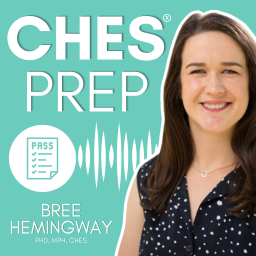
Podcast thumbnail for CHES® Prep Podcast

CHES® Prep Podcast

Claim This Podcast

by Bree Hemingway, PhD, MPH, CHES

4.8(18 reviews)
24 episodes
Updated Weekly
Accepts GuestsHas SponsorsLocation 🇺🇸

Podcast Overview

The CHES® Prep Podcast was created for people preparing for the Certified Health Education Specialist Exam AKA the CHES® exam and to grow your public health career with ease. We know that the CHES® exam is not the only thing going in your life so we get straight to the point with actionable steps and trusted resources. Host Bree Hemingway, PhD, MPH, CHES has been in the public health space for over a decade, taught public health courses at various universities and mentored many public health professionals. She brings her guidance and insights to you so you can prepare and pass the CHES® exam with confidence. Please share and enjoy!

Language

🇺🇲

Publishing Since

1/20/2023

2 verified contact emails on file for CHES® Prep Podcast

Pitch yourself as a guest, propose sponsorships, or reach out directly to the host.

Recent Episodes

Episode thumbnail for Comprehensive Public Health Program Planning: Expert Tips from Lawrence Green and Judith Ottoson

September 11, 2024

Comprehensive Public Health Program Planning: Expert Tips from Lawrence Green and Judith Ottoson

<p data-pm-slice="1 1 []">In this episode of the CHES Prep Podcast, host Bree Hemingway sits down with two luminaries in the field of public health: Dr. Lawrence Green and Dr. Judith Ottoson.</p> <p data-pm-slice="1 1 []">Together, they delve deep into the intricacies of the PRECEDE-PROCEED model for health program planning, implementation, and evaluation.</p> <p data-pm-slice="1 1 []">Their combined expertise spans decades of research, teaching, and practical application in the realm of public health, making this episode invaluable for anyone looking to ace the CHES exam and enhance their public health career.</p> <p><strong>Drs. Lawrence Green and Judith Ottoson: Navigating the PRECEDE-PROCEED Model</strong> In this episode, Bree, Lawrence, and Judith discuss the nuances of the PRECEDE-PROCEED model, its application in various cultural contexts, and the importance of participatory research planning.</p> <p>The latest edition of their book "Health Program Planning, Implementation, and Evaluation" serves as a focal point of the conversation, highlighting key updates and practical insights for future health education specialists.</p> <p><strong>Table of Contents</strong></p> <ul> <li> <p>Guest Introductions</p> </li> <li> <p>Overview of the Book "Health Program Planning, Implementation, and Evaluation"</p> </li> <li> <p>The PRECEDE-PROCEED Model Explained</p> </li> <li> <p>Lawrence Green’s Experience and Contributions</p> </li> <li> <p>Judith Ottoson’s Contributions and Emphasis on Quality of Life</p> </li> <li> <p>Implementation and Enabling Factors</p> </li> <li> <p>Role of Feedback and Evaluation</p> </li> <li> <p>CDC Evaluation Framework Connection</p> </li> <li> <p>Cultural Adaptability and Broader Model Focus</p> </li> <li> <p>Bree Hemingway’s CHES Preparation Tips</p> </li> </ul> <p><strong>Guest Introductions</strong> Dr. Lawrence Green and Dr. Judith Ottoson share their backgrounds and extensive careers in public health. Dr. Green’s roles have included serving at the CDC and multiple prestigious universities, while Dr. Ottoson’s experience covers a wide range of health promotion areas and academic positions. Both have significantly contributed to the evolution of health program planning and evaluation methodologies.</p> <p><strong>Overview of the Book "Health Program Planning, Implementation, and Evaluation"</strong> The episode dives into the new updates and changes in the 5th edition of their seminal book. Drs. Green and Ottoson discuss the importance of the book’s distinct chapters on planning, implementation, and evaluation, aiming to provide a comprehensive guide for health professionals.</p> <p><strong>The PRECEDE-PROCEED Model Explained</strong> A detailed explanation of the PRECEDE-PROCEED model, including its phases and new emphases in phase 4. This model begins with desired outcomes and involves community participation from the outset, making it crucial for effective program planning and evaluation.</p> <p><strong>Lawrence Green’s Experience and Contributions</strong> Dr. Green shares his journey, from working in Bangladesh on family planning to his academic pursuits and the creation of the PRECEDE-PROCEED model. Continuous feedback from global users and his dedication to refining the model are key highlights.</p> <p><strong>Judith Ottoson’s Contributions and Emphasis on Quality of Life</strong> Dr. Ottoson focuses on the model’s prioritization of quality of life and community involvement, illustrated by examples from the website lgreen.net, which showcases over 1600 applications of the PRECEDE-PROCEED model worldwide.</p> <p><strong>Implementation and Enabling Factors</strong> The discussion shifts to the significance of enabling factors in impoverished communities. Drs. Green and Ottoson stress the importance of starting with quality of life indicators to craft practical intervention strategies.</p> <p><strong>Role of Feedback and Evaluation</strong> Judith Ottoson elaborates on the importance of feedback and evaluation in health program planning. The latest edition of their book incorporates a detailed comparison of the CDC's Evaluation Framework with the PRECEDE-PROCEED model.</p> <p><strong>CDC Evaluation Framework Connection</strong> Chapter 9 of their book examines the alignment between the CDC's model and the PRECEDE-PROCEED model, suggesting integrated approaches for effective health program evaluation.</p> <p><strong>Cultural Adaptability and Broader Model Focus</strong> The adaptability of the PRECEDE-PROCEED model across various cultural contexts is assessed. The model’s focus on predisposing, enabling, and reinforcing factors for behavior change is highlighted.</p> <p><strong>Bree Hemingway’s CHES Preparation Tips</strong> Bree encourages listeners to view CHES exam preparation as a fun and rewarding experience. She provides insights from her own journey and offers a free CHES prep checklist to help guide listeners through the process.</p> <p><strong>Conclusion</strong> This episode underscores the vital role of the PRECEDE-PROCEED model in planning, implementing, and evaluating effective health programs. Drs. Green and Ottoson’s insights offer practical advice and underscore the importance of quality of life and community involvement in public health initiatives. Bree ends the episode by urging listeners to use the resources provided and share the podcast to help others on their CHES exam journey.</p> <p>Listeners are reminded to visit <a href= "https://chesprep.com/guide">chesprep.com/guide</a> for a free CHES prep checklist and encouraged to stay tuned for more insightful episodes designed to aid them in their public health careers.</p>

Episode thumbnail for Mastering CHES Exam: Dr. Cindy Delgado Discusses Assessment Models and Data Collection Strategies - Part 2

September 11, 2024

Mastering CHES Exam: Dr. Cindy Delgado Discusses Assessment Models and Data Collection Strategies - Part 2

<p data-pm-slice="1 1 []">Today, we’re sharing part 2 of our insightful discussion with Dr. Cindy Delgado, an experienced public health professional with an extensive background in health education.</p> <p data-pm-slice="1 1 []">In this continuation, we explore deep and practical advice on the assessment area of responsibility for the Certified Health Education Specialist (CHES) exam.</p> <p data-pm-slice="1 1 []">Dr. Delgado’s expertise and straightforward communication make this episode a must-listen for all CHES candidates looking to ace their exams and advance their public health careers.</p> <h2>Comprehensive Assessment Techniques for the CHES Exam</h2> <p>In this episode, we cover the various models and methods of assessments crucial for the CHES exam. Dr. Cindy Delgado breaks down different frameworks, data collection techniques, and analysis strategies, providing actionable insights and examples to help you grasp the practical application of these concepts.</p> <h3>Table of Contents</h3> <ol> <li> <p>Introduction to Assessment Models</p> </li> <li> <p>Primary and Secondary Data Collection</p> </li> <li> <p>Community and Individual Level Assessments</p> </li> <li> <p>Data Analysis and Interpretation</p> </li> <li> <p>Synthesis and Reporting Results</p> </li> <li> <p>Ethical Considerations in Data Use</p> </li> </ol> <h3>Introduction to Assessment Models</h3> <p><strong>Discussion on various models of assessment</strong>: Dr. Delgado describes several assessment models such as the epidemiological model, the public health model, and the asset model. She explains how choosing the correct model depends on the specific issue or problem being addressed. This section also covers frameworks like the PRECEDE-PROCEED model, intervention mapping, and sociological approaches.</p> <h3>Primary and Secondary Data Collection</h3> <p><strong>Understanding different types of data</strong>: Dr. Delgado contrasts primary and secondary data, including their uses and benefits within community assessments. She stresses the importance of knowing available databases and resources like PubMed and MedlinePlus, and discusses data collection methods like behavioral health surveys and GIS mapping.</p> <h3>Community and Individual Level Assessments</h3> <p><strong>Detailed look at assessment levels</strong>: This section outlines the assessment processes in various settings, including schools, healthcare, colleges, and business environments. Dr. Delgado emphasizes the importance of focus groups, community forums, interviews, and the Delphi technique in gathering reliable information.</p> <h3>Data Analysis and Interpretation</h3> <p><strong>Effective analysis planning</strong>: Dr. Delgado delves into how to develop a thorough analysis plan. She outlines the importance of identifying key needs, reducing biases, ensuring validity and reliability, and choosing appropriate statistical methods and software. This ensures that the findings of an assessment are accurate and actionable.</p> <h3>Synthesis and Reporting Results</h3> <p><strong>Integrating findings into actionable insights</strong>: Here, Dr. Delgado discusses how to synthesize data from multiple levels and check the validity of findings through rechecking and second opinions. She also covers prioritizing health education needs and determining the changeability and importance of health interventions.</p> <h3>Ethical Considerations in Data Use</h3> <p><strong>Importance of ethics and agreements</strong>: Dr. Delgado highlights the necessity of formal data-sharing agreements and ethical considerations, drawing on historical examples where breaches of trust occurred. She stresses the role of community and tribal IRBs in maintaining ethical standards in health assessments.</p> <h3>Conclusion</h3> <p>Dr. Delgado wraps up the discussion by emphasizing the critical steps to ensure your assessment data is accurate, unbiased, and ethically collected and utilized. Bree Hemingway offers a free CHES prep checklist to help listeners organize their study processes and prepare efficiently for the CHES exam.</p> <p>This episode provides a comprehensive guide to understanding and applying effective assessment techniques in health education, paving the way for your success in the CHES certification.</p> <p>Don’t forget to download our free checklist at <a href= "http://chesprep.com/guide" target="_blank" rel= "noopener noreferrer">chesprep.com/guide</a> to streamline your study process and ensure you’re ready for the CHES exam. Share this episode with anyone who might benefit from these insights, and stay tuned for more practical advice and strategies on the CHES Prep Podcast.</p>

Episode thumbnail for Understanding Community Assessments: Dr. Cindy Delgado's Expertise for CHES Exam Success - Part 1

September 11, 2024

Understanding Community Assessments: Dr. Cindy Delgado's Expertise for CHES Exam Success - Part 1

<p data-pm-slice="1 1 []">In this episode, Bree and Dr. Delgado explore the critical components of planning and assessment necessary for public health programming.</p> <p data-pm-slice="1 1 []">They review different phases of needs assessments and capacity building while emphasizing the importance of addressing social determinants of health.</p> <h4>Table of Contents</h4> <ol> <li> <p>Introduction to Planning and Assessment</p> </li> <li> <p>Forms of Data Collection</p> </li> <li> <p>Community Engagement</p> </li> <li> <p>Needs and Capacity Assessment</p> </li> </ol> <h3>Introduction to Planning and Assessment</h3> <p>Dr. Delgado explains the essential stages of planning and assessment in public health, detailing the importance of defining scope, purpose, and identifying priority populations. She emphasizes the need to establish clear goals and objectives before initiating any public health program, especially in resource-limited settings.</p> <h3>Forms of Data Collection</h3> <p>In this segment, Dr. Delgado reviews various forms of data collection, including primary and secondary data. She discusses the importance of establishing partnerships and agreements, identifying data gaps, and creating comprehensive analysis plans to support the assessment process.</p> <h3>Community Engagement</h3> <p>The discussion then moves to community engagement, where Dr. Delgado outlines strategies for including community members, leaders, and organizations in public health initiatives. She highlights the benefits of a community-centered approach, emphasizing equitable decision-making and the various roles partners and stakeholders can play.</p> <h3>Needs and Capacity Assessment</h3> <p>Dr. Delgado concludes the episode by covering needs and capacity assessments. She discusses the importance of identifying priorities, setting clear goals, and assessing available resources. She also touches on the significance of planning committees and coalitions in supporting these assessments.</p> <h3>Conclusion</h3> <p>Bree wraps up the episode by summarizing the key takeaways, reinforcing that preparing for the CHES exam can be engaging and fun. She encourages listeners to download the free CHES Prep checklist available at <a href= "https://chesprep.com/guide">chesprep.com/guide</a> for a comprehensive guide to exam success.</p> <hr /> <p>Make sure to tune in for Part 2 of Dr. Delgado’s insightful presentation and continue your journey towards becoming a Certified Health Education Specialist with confidence!</p>

24 total episodes available

Deep-dive analytics for CHES® Prep Podcast

Frequently asked questions

Have a different question and can't find the answer you're looking for? Reach out to our support team by sending us an email and we'll get back to you as soon as we can.

What is CHES® Prep Podcast?

The CHES® Prep Podcast was created for people preparing for the Certified Health Education Specialist Exam AKA the CHES® exam and to grow your public health career with ease.

We know that the CHES® exam is not the only thing going in your life so we get straight to the point with actionable steps and trusted resources.

Host Bree Hemingway, PhD, MPH, CHES has been in the public health space for over a decade, taught public health courses at various universities and mentored many public health professionals.

She brings her guidance and insights to you so you can prepare and pass the CHES® exam with confidence.

Please share and enjoy!

How often does this podcast release new episodes?

This podcast updates weekly.

Where can I listen to this podcast?

This podcast is available on 9 platforms including Apple Podcasts, Spotify, and more. You can also use the RSS feed directly.

Does this podcast accept guests?

Yes, this podcast regularly features guests.

Legal Disclaimer

Pod Engine is not affiliated with, endorsed by, or officially connected with any of the podcasts displayed on this platform. We operate independently as a podcast discovery and analytics service.

All podcast artwork, thumbnails, and content displayed on this page are the property of their respective owners and are protected by applicable copyright laws. This includes, but is not limited to, podcast cover art, episode artwork, show descriptions, episode titles, transcripts, audio snippets, and any other content originating from the podcast creators or their licensors.

We display this content under fair use principles and/or implied license for the purpose of podcast discovery, information, and commentary. We make no claim of ownership over any podcast content, artwork, or related materials shown on this platform. All trademarks, service marks, and trade names are the property of their respective owners.

While we strive to ensure all content usage is properly authorized, if you are a rights holder and believe your content is being used inappropriately or without proper authorization, please contact us immediately at hey@podengine.ai for prompt review and appropriate action, which may include content removal or proper attribution.

By accessing and using this platform, you acknowledge and agree to respect all applicable copyright laws and intellectual property rights of content owners. Any unauthorized reproduction, distribution, or commercial use of the content displayed on this platform is strictly prohibited.