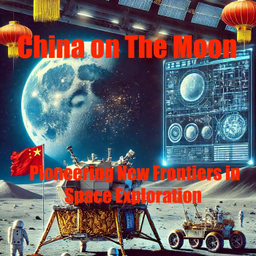
Podcast thumbnail for China on The Moon

China on The Moon

Claim This Podcast

by Inception Point AI

1 episodes
Updated Weekly
Accepts GuestsHas SponsorsLocation 🇨🇳

Podcast Overview

China on The Moon: Pioneering a New Era of Lunar Exploration In the grand tapestry of human exploration, the Moon has always held a special place. It has been a source of wonder, inspiration, and scientific curiosity for centuries. As we stand on the threshold of a new era in lunar exploration, one nation has emerged as a leading protagonist in this cosmic adventure: China. With its ambitious lunar exploration program, China is not only unraveling the secrets of our celestial neighbor but also pioneering a path for future generations to follow. The Chinese lunar exploration program is a testament to the indomitable human spirit, the thirst for knowledge, and the boundless possibilities that await us in the cosmos. It is a story of perseverance, innovation, and the relentless pursuit of scientific excellence. As we embark on this journey through China's lunar odyssey, we will witness the triumphs and challenges that have shaped this remarkable endeavor. To understand the significance of China's lunar exploration program, we must first delve into the annals of history. China's fascination with the Moon dates back centuries, interwoven with its rich cultural heritage and scientific traditions. From ancient myths and legends to the pioneering work of Chinese astronomers, the Moon has always held a special place in the Chinese consciousness. However, it was not until the latter half of the 20th century that China's space ambitions began to take shape. The establishment of the China National Space Administration (CNSA) in 1993 marked a turning point, signaling the nation's determination to become a major player in the global space arena. This was followed by the launch of the Chang'e program in the early 2000s, named after the Chinese moon goddess, which would become the cornerstone of China's lunar exploration efforts. The Chang'e 1 and 2 missions were the first steps in this grand voyage of discovery. Launched in 2007 and 2010 respectively, these orbiters were designed to map the lunar surface and gather crucial data on its composition. The success of these missions demonstrated China's growing capabilities in space technology and paved the way for even more ambitious endeavors. The Chang'e program has been a series of remarkable achievements, each building upon the success of its predecessor. The Chang'e 3 mission, launched in 2013, marked a historic milestone as it achieved the first soft landing on the Moon since the Soviet Luna 24 mission in 1976. The mission's Yutu rover, named after the mythical jade rabbit, became the first Chinese rover to explore the lunar surface. Equipped with an array of scientific instruments, Yutu provided unprecedented insights into the Moon's geology and composition, unraveling mysteries that had remained hidden for eons. But perhaps the most audacious and groundbreaking mission of the Chang'e program was Chang'e 4. Launched in December 2018, this mission accomplished a feat that had never been attempted before: a so This content was created in partnership and with the help of Artificial Intelligence AI.

Language

🇺🇲

Publishing Since

6/24/2024

2 verified contact emails on file for China on The Moon

Pitch yourself as a guest, propose sponsorships, or reach out directly to the host.

Recent Episodes

Episode thumbnail for China's Lunar Ambitions- Pioneering New Frontiers in Space Exploration

June 24, 2024

China's Lunar Ambitions- Pioneering New Frontiers in Space Exploration

China on The Moon: Pioneering a New Era of Lunar Exploration In the grand tapestry of human exploration, the Moon has always held a special place. It has been a source of wonder, inspiration, and scientific curiosity for centuries. As we stand on the threshold of a new era in lunar exploration, one nation has emerged as a leading protagonist in this cosmic adventure: China. With its ambitious lunar exploration program, China is not only unraveling the secrets of our celestial neighbor but also pioneering a path for future generations to follow. The Chinese lunar exploration program is a testament to the indomitable human spirit, the thirst for knowledge, and the boundless possibilities that await us in the cosmos. It is a story of perseverance, innovation, and the relentless pursuit of scientific excellence. As we embark on this journey through China's lunar odyssey, we will witness the triumphs and challenges that have shaped this remarkable endeavor. To understand the significance of China's lunar exploration program, we must first delve into the annals of history. China's fascination with the Moon dates back centuries, interwoven with its rich cultural heritage and scientific traditions. From ancient myths and legends to the pioneering work of Chinese astronomers, the Moon has always held a special place in the Chinese consciousness. However, it was not until the latter half of the 20th century that China's space ambitions began to take shape. The establishment of the China National Space Administration (CNSA) in 1993 marked a turning point, signaling the nation's determination to become a major player in the global space arena. This was followed by the launch of the Chang'e program in the early 2000s, named after the Chinese moon goddess, which would become the cornerstone of China's lunar exploration efforts. The Chang'e 1 and 2 missions were the first steps in this grand voyage of discovery. Launched in 2007 and 2010 respectively, these orbiters were designed to map the lunar surface and gather crucial data on its composition. The success of these missions demonstrated China's growing capabilities in space technology and paved the way for even more ambitious endeavors. The Chang'e program has been a series of remarkable achievements, each building upon the success of its predecessor. The Chang'e 3 mission, launched in 2013, marked a historic milestone as it achieved the first soft landing on the Moon since the Soviet Luna 24 mission in 1976. The mission's Yutu rover, named after the mythical jade rabbit, became the first Chinese rover to explore the lunar surface. Equipped with an array of scientific instruments, Yutu provided unprecedented insights into the Moon's geology and composition, unraveling mysteries that had remained hidden for eons. <br />But perhaps the most audacious and groundbreaking mission of the Chang'e program was Chang'e 4. Launched in December 2018, this mission accomplished a feat that had never been attempted before: a soft landing on the far side of the Moon. The far side, which always faces away from Earth, had long been a target of scientific curiosity due to its unique geological features and the challenges it posed for communication. The success of Chang'e 4 was a triumph of human ingenuity and technological prowess. The mission's Queqiao relay satellite, positioned at the Earth-Moon Lagrange point, served as a vital communication link between the lander and Earth, enabling the transmission of data and images from the previously unexplored lunar frontier. The mission's Yutu-2 rover has since been exploring the Von Kármán crater, providing unprecedented insights into the Moon's hidden face. The Chang'e 5 mission, launched in November 2020, marked another milestone in China's lunar exploration program. This complex mission was designed to collect and return lunar samples to Earth, a feat that had not been accomplished since the Soviet Luna 24 mission in 1976. The successful return of 1,731...

1 total episodes available

Deep-dive analytics for China on The Moon

Frequently asked questions

Have a different question and can't find the answer you're looking for? Reach out to our support team by sending us an email and we'll get back to you as soon as we can.

What is China on The Moon?

China on The Moon: Pioneering a New Era of Lunar Exploration In the grand tapestry of human exploration, the Moon has always held a special place. It has been a source of wonder, inspiration, and scientific curiosity for centuries. As we stand on the threshold of a new era in lunar exploration, one nation has emerged as a leading protagonist in this cosmic adventure: China. With its ambitious lunar exploration program, China is not only unraveling the secrets of our celestial neighbor but also pioneering a path for future generations to follow. The Chinese lunar exploration program is a testament to the indomitable human spirit, the thirst for knowledge, and the boundless possibilities that await us in the cosmos. It is a story of perseverance, innovation, and the relentless pursuit of scientific excellence. As we embark on this journey through China's lunar odyssey, we will witness the triumphs and challenges that have shaped this remarkable endeavor. To understand the significance of China's lunar exploration program, we must first delve into the annals of history. China's fascination with the Moon dates back centuries, interwoven with its rich cultural heritage and scientific traditions. From ancient myths and legends to the pioneering work of Chinese astronomers, the Moon has always held a special place in the Chinese consciousness. However, it was not until the latter half of the 20th century that China's space ambitions began to take shape. The establishment of the China National Space Administration (CNSA) in 1993 marked a turning point, signaling the nation's determination to become a major player in the global space arena. This was followed by the launch of the Chang'e program in the early 2000s, named after the Chinese moon goddess, which would become the cornerstone of China's lunar exploration efforts. The Chang'e 1 and 2 missions were the first steps in this grand voyage of discovery. Launched in 2007 and 2010 respectively, these orbiters were designed to map the lunar surface and gather crucial data on its composition. The success of these missions demonstrated China's growing capabilities in space technology and paved the way for even more ambitious endeavors. The Chang'e program has been a series of remarkable achievements, each building upon the success of its predecessor. The Chang'e 3 mission, launched in 2013, marked a historic milestone as it achieved the first soft landing on the Moon since the Soviet Luna 24 mission in 1976. The mission's Yutu rover, named after the mythical jade rabbit, became the first Chinese rover to explore the lunar surface. Equipped with an array of scientific instruments, Yutu provided unprecedented insights into the Moon's geology and composition, unraveling mysteries that had remained hidden for eons. But perhaps the most audacious and groundbreaking mission of the Chang'e program was Chang'e 4. Launched in December 2018, this mission accomplished a feat that had never been attempted before: a so

This content was created in partnership and with the help of Artificial Intelligence AI.

How often does this podcast release new episodes?

This podcast updates weekly.

Where can I listen to this podcast?

This podcast is available on 4 platforms including Apple Podcasts, Spotify, and more. You can also use the RSS feed directly.

Does this podcast accept guests?

Yes, this podcast regularly features guests.

Legal Disclaimer

Pod Engine is not affiliated with, endorsed by, or officially connected with any of the podcasts displayed on this platform. We operate independently as a podcast discovery and analytics service.

All podcast artwork, thumbnails, and content displayed on this page are the property of their respective owners and are protected by applicable copyright laws. This includes, but is not limited to, podcast cover art, episode artwork, show descriptions, episode titles, transcripts, audio snippets, and any other content originating from the podcast creators or their licensors.

We display this content under fair use principles and/or implied license for the purpose of podcast discovery, information, and commentary. We make no claim of ownership over any podcast content, artwork, or related materials shown on this platform. All trademarks, service marks, and trade names are the property of their respective owners.

While we strive to ensure all content usage is properly authorized, if you are a rights holder and believe your content is being used inappropriately or without proper authorization, please contact us immediately at hey@podengine.ai for prompt review and appropriate action, which may include content removal or proper attribution.

By accessing and using this platform, you acknowledge and agree to respect all applicable copyright laws and intellectual property rights of content owners. Any unauthorized reproduction, distribution, or commercial use of the content displayed on this platform is strictly prohibited.