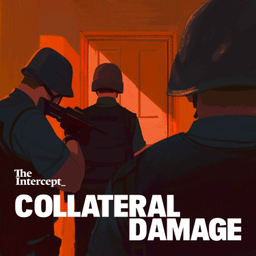
Collateral Damage is an investigative podcast series examining the half-century-long war on drugs, its enduring ripple effects, and the devastating consequences of building a massive war machine aimed at the public itself. Hosted by Radley Balko, an investigative journalist who has been covering the drug war and the criminal justice system for more than 20 years, each episode takes an in-depth look at someone who was unjustly killed in the drug war.
The so-called “war on drugs” began as a metaphor to demonstrate the country’s fervent commitment to defeat drug addiction, but the “war” part quickly became all too literal, complete with helicopters, tanks, and suspension of basic civil liberties protections.
All wars have collateral damage: the civilians, the noncombatants, the innocent people whose deaths are tragic but deemed necessary for the greater cause. Collectively, we’ve decided that the lives of these people were expendable — unfortunate but acceptable sacrifices for the impossible goal of a drug-free America. They are collateral damage, and these are their stories.
Hosted on Acast. See acast.com/privacy (https://acast.com/privacy) for more information.
Ep. 8 Legalized Takings: The Land Grab That Killed Donald Scott
In 1992, Donald Scott, the eccentric owner of a large Malibu estate, was killed in his home by an ad hoc team of raiding cops. The Los Angeles County Sheriff’s Department led the raid, but a panoply of state and federal police agencies participated too. Police claimed Scott was operating a large marijuana grow on the property. Scott, who always feared the government would take his land, actually repudiated the use of illegal drugs.
No marijuana or any illicit drugs were found on his property. A subsequent investigation by the local district attorney confirmed Scott wasn’t paranoid: The LA County Sheriff’s Department was motivated by a desire to take Scott’s property under civil asset forfeiture laws, auction it off, and keep the proceeds for the department. Bizarrely, Scott’s home wasn’t even in LA County. Despite recent reform efforts, the promise of forfeiture continues to be a major motivating force in drug policy across the country.
You can support our work at theintercept.com/join (https://join.theintercept.com/donate/Donate_Podcast?source=interceptedshoutout&recurring_period=one-time). Your donation, no matter the amount, makes a real difference.
Hosted on Acast. See acast.com/privacy (https://acast.com/privacy) for more information.
19 Nov 2025
Ep. 7 Dirty Information: The NYPD’s Shock Tactics and the death of Alberta Spruill
In 2004, New York narcotics officers raided Alberta Spruill’s home, shattering her door and detonating a flash grenade. Spruill, a 57-year-old city worker, went into cardiac arrest and died two hours later. The raid was based on faulty intel from a discredited informant, and the suspect they were searching for was already in custody. Spruill’s death came amid a surge in New York City Police Department raids, which had skyrocketed from 1,400 in the mid-’90s to over 5,000 by the time she was killed, nearly all no-knock.
Despite repeated warnings that these reckless raids would end in tragedy, few listened. This episode of Collateral Damage (https://theintercept.com/podcasts/collateral-damage/), hosted by Radley Balko (https://theintercept.com/staff/radley-balko/), explores how Spruill’s death catalyzed the political rise of Eric Adams, a young Black NYPD officer who would later become mayor. It also examines how promises of reform quickly faded, and the NYPD returned to business as usual.
You can support our work at theintercept.com/join (https://join.theintercept.com/donate/Donate_Podcast?source=interceptedshoutout&recurring_period=one-time). Your donation, no matter the amount, makes a real difference.
Hosted on Acast. See acast.com/privacy (https://acast.com/privacy) for more information.
12 Nov 2025
Ep 6: Airborne Imperialism: The Tragic Deaths of Veronica and Charity Bowers.
Veronica and Charity Bowers, a young Christian missionary and her daughter, are killed when the Peruvian Air Force shoots down a small passenger plane in 2001. The plane had been mistaken for a drug smuggling plane and was shot down as part of a joint anti-drug agreement between the CIA and the Colombian and Peruvian governments.
President Donald Trump has made the Bowers's deaths newly and urgently relevant since he began ordering the U.S. military to strike down alleged drug smuggling boats in the Caribbean and eastern Pacific Ocean in September 2025. By early November, the U.S. had launched a total of 17 strikes, killing at least 70 people, and those figures seem to grow (https://www.nytimes.com/interactive/2025/10/29/us/us-caribbean-pacific-boat-strikes.html) almost by the day (https://www.nytimes.com/interactive/2025/10/29/us/us-caribbean-pacific-boat-strikes.html). The attacks are illegal under both U.S. and international law. The administration also provided no documentation of the alleged drug trafficking (https://theintercept.com/2025/10/31/trump-venezuela-boat-strikes-unprivileged-belligerants/).
The attack on the Bowers family pierced the veil that obscures drug war foreign policy because of their nationality, skin color, and relatability. More than 20 years ago, House Oversight Committee hearing members Jan Schakowsky and Elijah Cummings demanded accountability after U.S. drug interdiction forces killed the Bowers. They demanded to know how such a mistake could happen, and how we could prevent the loss of innocent life going forward.
“The kind of action we saw in Peru … amounts to an extrajudicial killing,” said Schakowsky at the time. Cummings added, “The Peruvian shootdown policy would never be permitted as a domestic United States policy precisely because it goes against one of our most sacred, due process principles — namely, that all persons are presumed innocent until proven guilty.”
Now, a new administration openly celebrates summary execution of alleged drug smugglers without a hint of due process, and is now threatening to topple another government to prevent the U.S. from sating its appetite for illicit drugs.
The story of Veronica and Charity Bowers is a stark reminder of how aggressive drug policy is wasteful and futile, how we never seem to learn from past failures, and how the generations-long effort to stop people from getting high also — and necessarily — treats human lives as expendable.
You can support our work at theintercept.com/join (https://join.theintercept.com/donate/Donate_Podcast?source=interceptedshoutout&recurring_period=one-time). Your donation, no matter the amount, makes a real difference.
Hosted on Acast. See acast.com/privacy (https://acast.com/privacy) for more information.
5 Nov 2025
Ep. 5 What Fourth Amendment? How the Killing of Trevon Cole Almost Made Prime-Time TV
In June 2010, Las Vegas police conducted a no-knock raid on Trevon Cole’s apartment, where he lived with his nine-months-pregnant fiancée. Cole, who occasionally sold small amounts of marijuana, rushed to the bathroom to flush a bag down the toilet. An officer followed and shot him in the head, killing him. Cole was unarmed. The officer claimed Cole made a “furtive” movement, but others present, including Cole’s fiancée, never heard any warning.
Cole had no prior criminal record, but police secured the warrant by falsely linking him to a different Trevon Cole with a criminal history in Texas. Despite the clear misidentification and Cole’s lack of threat, a coroner’s inquest cleared the officer, who had previously shot two other men, killing one. This episode of Collateral Damage, hosted by Radley Balko, examines how the courts have failed to protect the Fourth Amendment in drug cases, featuring interviews with constitutional law scholars, Cole’s fiancée, and the daughter she was carrying during the raid, now a teenager.
You can support our work at theintercept.com/join (https://join.theintercept.com/donate/Donate_Podcast?source=interceptedshoutout&recurring_period=one-time). Your donation, no matter the amount, makes a real difference.
Hosted on Acast. See acast.com/privacy (https://acast.com/privacy) for more information.
29 Oct 2025
Ep. 4 Criminalizing Care: The Remarkable Life and Cruel Death of Peter McWilliams
Peter McWilliams was an optimist, activist, poet, and advocate for personal freedom. His book “Ain’t Nobody’s Business If You Do: The Absurdity of Consensual Crimes in Our Free Country” resonated across the political spectrum. After contracting AIDS and being diagnosed with AIDS-related non-Hodgkin lymphoma in 1996, McWilliams turned to medical marijuana to manage his nausea and keep down his medication. He became a vocal advocate for medical cannabis, but in 1997, he was arrested by federal authorities for running a grow operation, despite California creating some protections for medicinal use at the time.
As a condition of his bail, McWilliams was forced to stop using marijuana, even though it played a critical role in his treatment. He later died after choking on his own vomit, while awaiting sentencing by a federal judge. This episode of Collateral Damage (https://theintercept.com/podcasts/collateral-damage/) explores McWilliams’s life and legacy, and examines how the drug war has obstructed health care.
You can support our work at theintercept.com/join (https://join.theintercept.com/donate/Donate_Podcast?source=interceptedshoutout&recurring_period=one-time). Your donation, no matter the amount, makes a real difference.
Hosted on Acast. See acast.com/privacy (https://acast.com/privacy) for more information.
22 Oct 2025
Ep. 3 Blown Cover: The Preventable Murder of LeBron Gaither
When LeBron Gaither was 17, he got into an altercation with a staff member at his school that resulted in assault charges. As Gaither faced the possibility of a criminal record, a Kentucky State Police detective offered him a deal: Charges would go away if Gaither agreed to become a drug informant. At the time, such an agreement was illegal without consent from Gaither’s parents or guardian. But Gaither agreed. In 1996, Gaither’s body was found in the woods. Gaither had helped police build a case against a local drug dealer, and a grand jury member had tipped off the dealer that Gaither had testified against him. An autopsy revealed Gaither had been tortured before he was murdered. This episode revisits Gaither's case and others in which police were reckless and careless with the lives of those they pressured to become informants.
You can support our work at theintercept.com/join (https://join.theintercept.com/donate/Donate_Podcast?source=interceptedshoutout&recurring_period=one-time). Your donation, no matter the amount, makes a real difference.
Hosted on Acast. See acast.com/privacy (https://acast.com/privacy) for more information.
15 Oct 2025
Ep. 2 A Death in the Dark: The Story of Ryan Frederick and Detective Jarrod Shivers
In January 2008, Ryan Frederick, a 28-year-old who worked the night shift at a Coca-Cola plant in Chesapeake, Virginia, found himself at the center of a tragedy. Just days after his home had been burglarized, Frederick was jolted awake by the sound of his dogs barking and someone breaking through his front door. Grabbing his handgun, he cautiously approached the noise. A lower panel of the door had been shattered, and an arm was reaching through, fumbling for the handle. Frederick fired. The arm belonged to Detective Jarrod Shivers, who died from the gunshot wound. Frederick was arrested and initially charged with capital murder, with prosecutors even considering the death penalty. This episode revisits the night that changed Frederick’s life forever and ended Shivers’s. We hear from Frederick himself as well as veteran narcotics officer Neill Franklin.
You can support our work at theintercept.com/join (https://join.theintercept.com/donate/Donate_Podcast?source=interceptedshoutout&recurring_period=one-time). Your donation, no matter the amount, makes a real difference.
Hosted on Acast. See acast.com/privacy (https://acast.com/privacy) for more information.
8 Oct 2025
Ep. 1 Dirty Business: The Atlanta Narcotics Unit’s Deadly Raid on 92-Year-Old Kathryn Johnston
In 2006, a 92-year-old Atlanta woman was gunned down in her own home by police during a drug raid. The police initially claimed the woman was a marijuana dealer who fired a gun at them. The story might have ended there. But an informant bravely came forward to set the record straight. Subsequent investigations and reports revealed that the police had raided the wrong home, killed an innocent woman, then planted marijuana in her basement to cover up their mistake.
In the ensuing months, we’d learn that the Atlanta Police Department’s narcotics unit routinely conducted mistaken raids on terrified people. The problem was driven by perverse federal, state, and local financial incentives that pushed cops to take shortcuts in procuring warrants for drug raids in order to boost their arrest and seizure statistics. Most of those incentives are still in place today.
You can support our work at theintercept.com/join (https://join.theintercept.com/donate/Donate_Podcast?source=interceptedshoutout&recurring_period=one-time). Your donation, no matter the amount, makes a real difference.
Hosted on Acast. See acast.com/privacy (https://acast.com/privacy) for more information.
8 Oct 2025
Ep. 0 Trump’s War on Drugs
From Afghanistan to Iraq, the United States has long used drone strikes to take out people it alleges are terrorists or insurgents. It’s a legacy that started under President George W. Bush and greatly expanded under President Barack Obama (https://theintercept.com/drone-papers/). President Donald Trump has taken this tactic to new extremes, boasting about lethal strikes (https://theintercept.com/2025/09/10/trump-venezuela-boat-attack-drone/) against alleged drug boats in the Caribbean and declaring the U.S. is in a “non-international armed conflict (https://theintercept.com/2025/10/02/venezuela-boat-strike-justification/)” with narcotics traffickers.
Trump appears to be merging the war on terror with the war on drugs. This comes as he’s simultaneously ramping up the use of troops to police inside American cities. It's a chilling escalation. But it’s not the first time we’ve seen a president stoke public fear and deploy overwhelming force in the name of law and order.
In the modern war on drugs — which dates back more than 50 years to President Richard Nixon’s administration — the United States has produced laws and policies ensuring that collateral damage isn’t just tolerated, it’s inevitable.
This is the prelude.
You can support our work at theintercept.com/join (https://join.theintercept.com/donate/Donate_Podcast?source=interceptedshoutout&recurring_period=one-time). Your donation, no matter the amount, makes a real difference.
Hosted on Acast. See acast.com/privacy (https://acast.com/privacy) for more information.
1 Oct 2025
Introducing Collateral Damage
Collateral Damage is a new investigative podcast series examining the half-century-long war on drugs, its enduring ripple effects, and the devastating consequences of building a massive war machine aimed at the public itself. Hosted by Radley Balko (https://theintercept.com/staff/radley-balko/), an investigative journalist who has been covering the drug war and the criminal justice system for more than 20 years, each episode takes an in-depth look at someone who was unjustly killed in the drug war.
We as a society decided the lives of the people featured in the podcast were expendable — unfortunate but acceptable sacrifices for the unachievable goal of a drug-free America. They were collateral damage, and these are their stories.
Coming October 8, 2025. New episodes every Wednesday.
Subscribe wherever you listen to podcasts.
Hosted on Acast. See acast.com/privacy (https://acast.com/privacy) for more information.
Reach and audience
Public platform figures. Ratings count people who left a rating, not total listeners.
Apple Podcasts (US)
4.6 / 5
87 ratings
Contact Collateral Damage from The Intercept
Guest appearances
Books guests
Based on episode analysis; this does not confirm that the show is currently accepting guests.
Pod Engine is an independent podcast discovery and analytics service and is not affiliated with or endorsed by this podcast. Artwork and show content belong to their owners. Full legal notice.
Explore this show Podcast research with Pod Engine