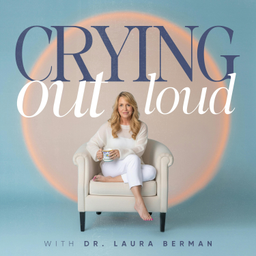
Crying Out Loud with Dr. Laura Berman
Dr. Laura Berman
5.0from 5 ratings
- 32
- Episodes
- 5
- Ratings
- Weekly
- Cadence
- 2026
- First episode
About Crying Out Loud with Dr. Laura Berman
Crying Out Loud is a grief companion for anyone carrying loss. Hosted by Dr. Laura Berman, bestselling author, therapist, and grieving mother, the show blends clinical guidance with spiritual insight to support healing on every level. Each week features conversations with experts, healers and mediums to help regulate your nervous system, honor your grief, and explore continued connection with loved ones on the other side. You were never meant to grieve alone. Let’s cry out loud together.
- Publisher
- Dr. Laura Berman
- Category
- health & fitness · society & culture
- Language
- en
- Explicit
- No
- First episode
- 3 Mar 2026
- Latest episode
- 5 Nov 2026
Latest episodes
32 episodes in the feed.
5 Nov 2026
The Tender Art of Grieving: How to Move Grief Through Your Body with Amar Atma
What if healing from grief isn't about thinking your way through the pain, but learning how to feel your way through it? Grief doesn't just affect our minds. It lives in our bodies, shapes our relationships, challenges our beliefs, and sometimes changes everything we thought we knew about love and life. In this episode of Crying Out Loud, I sit down with Amar Atma Singh Khalsa, grief specialist, educator, board-certified chaplain, and founder of the Institute for Compassionate Grieving. His new book, The Tender Art of Grieving: Embodied Practices for Letting Go and Finding Peace, brings together neuroscience, somatic practices, traditional Chinese medicine, Ayurveda, spirituality, and years of experience supporting people through profound loss. Amar's own relationship with grief began in childhood. Growing up in a South Asian Indian family where emotional struggles and conversations about death were often taboo, he spent years carrying unprocessed grief without having the language to understand it. The death of his grandfather, who had been his greatest source of safety and connection, brought those feelings to the surface. It would take him nearly 20 years to fully recognize what he had been carrying. His journey eventually led him through traditional Chinese medicine, acupuncture, spiritual studies, and nearly a decade of hospital chaplaincy, where he worked alongside families navigating trauma, critical illness, palliative care, and the end of life. In our conversation, we explore why grief is something we experience throughout the body, not simply an emotion we process in our minds. Amar explains how our physical sensations often recognize grief before we consciously understand what's happening, and why trying to suppress those feelings can make the experience even harder. We also get into the energetics of grief through traditional Chinese medicine, including how grief can affect the lungs, our breathing, and our sense of inspiration. Amar even guides us through a simple breathing and chest-massage exercise that can help create more space when grief feels overwhelming. One of the things I found especially fascinating was his distinction between different emotional experiences within grief. Anger, fear, anxiety, shame, and sadness aren't interchangeable. Each carries something different, and understanding those differences can help us respond to ourselves with greater compassion. We also explore the complicated relationship between grief and spirituality. How does profound loss challenge our faith? Can grief become a catalyst for spiritual awakening? And what happens when we begin to understand that our relationship with someone we love doesn't necessarily end when their physical life does? I share some of my own experiences after losing my son, Sammy, including the continuing bond I feel with him and the ways I've learned to remain connected. We talk about the mystery of consciousness, the possibility of an afterlife, and how grief can sometimes open doors to experiences and understandings we never expected. Another powerful part of our conversation is Amar's perspective on crying. He explains why tears can be a form of physiological release, what happens when we continually suppress them, and how breathing through an intense emotional experience can help us feel without becoming overwhelmed. And finally, we explore what Amar calls a personal apocalypse. Drawing from the original Greek meaning of the word, revelation, he shares what sitting beside people at the end of their lives has taught him about regret, love, and the things that truly matter. His biggest lesson? We spend so much time focusing on purpose that we sometimes forget the importance of presence. In this episode, we explore: Why grief can remain unrecognized for years, especially when our families or cultures don't give us permission to talk about loss How childhood experiences, cultural expectations, and intergenerational grief can shape the way we experience loss as adults Why we can't simply think our way through grief and why the body plays such an important role in emotional healing The connection between traditional Chinese medicine, the flow of qi, and the energetics of grief How grief can affect the lungs, breathing, and our ability to feel inspired and connected to life A simple breathing and chest-massage practice to help release tension and create space for difficult emotions Why anger, fear, anxiety, and sadness each have different expressions and deserve different kinds of attention How profound loss can challenge our relationship with faith, spirituality, and a higher power Why grief can become a catalyst for spiritual awakening and a deeper understanding of continuing bonds with loved ones The physiology of crying, why suppressing tears can affect our nervous system, and how to move through an overwhelming emotional experience What Amar means by a personal apocalypse and how facing death can reveal what truly matters in life The lessons people at the end of life have taught him about regret, loving more deeply, and living with intention Why love is about more than purpose and how presence and attention can become some of the greatest gifts we offer one another If you've ever felt disconnected from your body, your faith, or even yourself after losing someone you love, I think you'll find a lot to relate to in this conversation. Amar offers such a beautiful perspective on how we can move through grief, reconnect with ourselves, and find ways to keep loving and living while carrying the people we've lost with us. Don't forget to check out Amar's book, The Tender Art of Grieving: Embodied Practices for Letting Go and Finding Peace. You can also connect with him on social media at Amarma Coaching and learn more about his grief retreats, community conversations, and work with the Institute for Compassionate Grieving. And if you're looking for support, connection, or a place to feel less alone, my book, Crying Out Loud: A Path Through Grief Into a Life Reimagined, and The Grief Healing Collective are here for you. If something in this episode spoke to your heart, share your story or send your questions to cryingoutloudpod@gmail.com. None of us are meant to carry this alone. And if you want to explore more of how our brains, bodies, histories and emotional patterns shape the way we love and connect, come find me on my other podcast, The Language of Love. Every week, I talk with leading experts and share what I've learned in more than 30 years as a therapist about relationships, intimacy and healing. You can find The Language of Love wherever you're listening to Crying Out Loud.
29 Oct 2026
Crying Out Loud: What Losing My Son Taught Me About Grief, Healing, and Choosing Life
I've spent more than 30 years as a therapist helping people navigate grief, trauma, and some of the hardest experiences of their lives. But when my 16-year-old son Sammy died, I found myself in a place that all my professional training could never have prepared me for. Almost six years later, I've written the book I desperately needed back then, Crying Out Loud: A Path Through Grief Into a Life Reimagined. And in this special episode, I want to share some of what I've learned, both from my own grief and from the thousands of people I've had the privilege of working with. What does it actually mean to cry out loud? It means allowing ourselves to experience grief in all its messy, complicated, sometimes frightening forms. The anger, guilt, jealousy, despair, and even the moments of joy that can make us feel like we're betraying the person we've lost. I talk about why we can't simply think our way through grief, how our bodies hold what our minds can't process, and why learning to care for our nervous systems is so important. I share the practices that helped me when I could barely function, how my relationships changed, and how I've learned to keep my connection with Sammy alive in ways I never could have imagined. And I talk about something I believe deeply: grief changes us. I've said before that I didn't survive Sammy's death. The woman I was before he died is gone. I've had to discover who I am now, how to live with this enormous loss, and how to let joy back in without feeling guilty about it. I believe healing is possible, even when the loss itself can never be undone. And I believe we can build meaningful, even beautiful lives while still wishing with every fiber of our being that none of this had happened. In this episode, I explore: What it really means to cry out loud and why we need to stop apologizing for our grief How to work with anger, guilt, and the emotions we're often afraid to express Why grief lives in the body and the somatic practices that can help us move through it How grief changes friendships, relationships, and our sense of who we are Choosing life again, even when that choice starts with simply getting out of bed Letting joy return without feeling like we're leaving our loved ones behind Continuing bonds and the ways our relationships with those we've lost can evolve How grief can transform us and what it means to create a life reimagined My new book, Crying Out Loud, brings together what I've learned as a therapist, a grieving daughter, and a grieving mother, along with research, spiritual wisdom, and nearly 100 practical tools to help you find your own way through grief. I wrote it because I know how desperately we need something to reach for when our world falls apart. And because I want you to know that whatever you're feeling, wherever you are in your grief, there are ways to begin finding your footing again. Crying Out Loud: A Path Through Grief Into a Life Reimagined, is available now, wherever books are sold and The Grief Healing Collective is here for more live support. If something in this episode spoke to your heart, share your story or send your questions to cryingoutloudpod@gmail.com. None of us are meant to carry this alone. And if you want to explore more of how our brains, bodies, histories and emotional patterns shape the way we love and connect, come find me on my other podcast, The Language of Love. Every week, I talk with leading experts and share what I've learned in more than 30 years as a therapist about relationships, intimacy and healing. You can find The Language of Love wherever you're listening to Crying Out Loud.
22 Oct 2026
The Grieving Body with Dr. Mary-Frances O'Connor
Did you know that your risk of having a heart attack can be dramatically higher in the first 24 hours after someone you love dies? We know grief is emotionally devastating. But what we don't always understand is just how much it affects us physically. The exhaustion that sleep doesn't seem to fix. The brain fog. The headaches, digestive problems, tightness in your chest, and the feeling that your nervous system is constantly on high alert. Sometimes you barely recognize your own body. I experienced so much of this after my son died. And even with more than 30 years of experience as a therapist, I was surprised by how profoundly grief affected me physically. That's why I was so interested in having Dr. Mary-Frances O'Connor back to talk about her latest book, The Grieving Body. Mary-Frances is a neuroscientist and psychologist at the University of Arizona and the author of The Grieving Brain, which helped explain one of the strangest experiences of grief: how we can know intellectually that someone has died while our brains continue expecting them to come home. Her new book takes that science further, exploring what happens throughout our bodies when we lose someone we love, and what we can actually do to support our physical health while grieving. Mary-Frances also brings a deeply personal perspective to her research. She was just thirteen when her mother was diagnosed with cancer, and watching her mother face the possibility of dying shaped her understanding of loss long before she became a scientist. In this conversation, we get into some fascinating research, including why bereavement can increase our risk of serious health problems, what crying actually does for us, and how our attachment to someone becomes so deeply wired into our brains and bodies. We also explore why grief can hit us physically before we're even consciously aware of what's triggering it. Why do we sometimes start feeling anxious, exhausted, or unsettled as an anniversary approaches, only to realize later what our bodies seemed to know all along? I share some of my own experiences with the physical toll of grief, including how movement and somatic practices helped me when talking about my feelings simply wasn't enough. And we talk about something I think is especially important for grievers: the complicated relationship between taking care of ourselves and staying connected to the person we've lost. Sometimes, even feeling better can bring up guilt. But caring for your body, allowing yourself to rest, and finding moments of pleasure again don't diminish your love or your grief. In this episode, we explore: Why grief affects everything from your immune system and cardiovascular health to your sleep, digestion, and ability to think clearly The startling research on heart attack risk immediately following the death of a loved one Why our brains keep searching for someone even when we know they're gone, and the "gone but also everlasting" paradox The science of crying, why tears are connected to attachment, and what happens when we feel safe enough to let them come Why anniversaries, birthdays, and other significant dates can trigger physical grief responses before we consciously recognize what's happening Why two people grieving the same person can have completely different physical and emotional experiences How prolonged or particularly intense grief can affect our health What Mary-Frances means by the difference between time healing and action healing How movement, rest, and small acts of physical care can help support a grieving body A powerful story about a young widow that has stayed with Mary-Frances throughout her career One of the things I've learned, both professionally and through my own grief, is that we have to pay attention to what our bodies are telling us. We can't always think or talk our way through grief. Sometimes we need to move, cry, sleep, breathe, or simply give ourselves permission to stop pushing so hard. I hope this conversation helps you understand some of what may be happening in your own body and gives you a few practical ways to care for yourself through it. You can love and miss someone with every fiber of your being and still deserve to feel well in your own body. Don't forget to check out Mary-Frances's books, The Grieving Brain and The Grieving Body. You can learn more about her work on her website and follow her on Instagram. And if you're looking for support, connection, or a place to feel less alone, my book, Crying Out Loud: A Path Through Grief Into a Life Reimagined, and The Grief Healing Collective are here for you. If something in this episode spoke to your heart, share your story or send your questions to cryingoutloudpod@gmail.com. None of us are meant to carry this alone. And if you want to explore more of how our brains, bodies, histories, and emotional patterns shape the way we love and connect, come find me on my other podcast, The Language of Love. Every week, I talk with leading experts and share what I've learned in more than 30 years as a therapist about relationships, intimacy, and healing. You can find The Language of Love wherever you're listening to Crying Out Loud.
Reach and audience
Public platform figures. Ratings count people who left a rating, not total listeners.
- Apple Podcasts (US)
- 5.0 / 5
- 5 ratings
Contact Crying Out Loud with Dr. Laura Berman
- Guest appearances
- Books guests
Based on episode analysis; this does not confirm that the show is currently accepting guests.


Host of Crying Out Loud with Dr. Laura Berman?
Claim your podcast to manage its listing and keep your show details accurate.
Pod Engine is an independent podcast discovery and analytics service and is not affiliated with or endorsed by this podcast. Artwork and show content belong to their owners. Full legal notice.
Explore this show
Podcast research with Pod Engine