Curiosity ⇔ Entangled brings together two experts from different fields for unscripted conversations fueled by mutual curiosity. Each episode explores intersections of science, technology, philosophy, and humanity, diving into topics like the origins of life, artificial intelligence, ancient and modern history, and the mysteries of the cosmos. These unique dialogues create opportunities for the cross-pollination of ideas, sparking new insights and innovation. Join us to discover where curiosity can lead. Produced by Accelerator Media, a nonprofit organization www.acceleratormedia.org
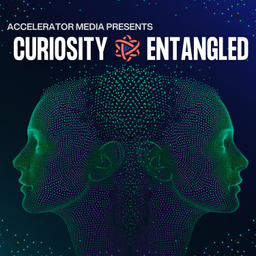
Curiosity ⇔ Entangled
Claim This Podcastby Accelerator Media
15 episodes
Updated Daily
Accepts GuestsHas SponsorsLocation 🇺🇸
14
Podcast Authority
BetaPoorBased on show quality, social media presence, reviews, charts, and more

Quality10
Social90
YouTube0
Engagement0
Podcast Overview
Curiosity ⇔ Entangled brings together two experts from different fields for unscripted conversations fueled by mutual curiosity. Each episode explores intersections of science, technology, philosophy, and humanity, diving into topics like the origins of life, artificial intelligence, ancient and modern history, and the mysteries of the cosmos. These unique dialogues create opportunities for the cross-pollination of ideas, sparking new insights and innovation. Join us to discover where curiosity can lead. Produced by Accelerator Media, a nonprofit organization www.acceleratormedia.org
Language
🇺🇲
Publishing Since
1/16/2025
Unlock The Full Podcast Authority Score Report
See how your podcast performs across key metrics
14
Podcast Authority
BetaPoorBased on show quality, social media presence, reviews, charts, and more
Quality10
Social90
YouTube0
Engagement0
5
Excellent Areas
0
Good Performance
14
Growth Opportunities
excellent
Episode Length
1h 16m
Performing excellently!
needs improvement
Publishing Consistency
Every 24 days
Recommendations available
Unlock the full report to see detailed tips
+16 More Metrics
Unlock comprehensive insights including:
- • YouTube presence analysis
- • Social media reach metrics
- • RSS compliance scoring
- • Podcast 2.0 features
- • Technical standards
What's Included in Your Full Report
Detailed Analytics
- Complete breakdown of all 19 authority metrics
- Personalized recommendations for each metric
- Industry benchmarks and comparisons
- Technical RSS feed analysis and compliance scoring
Growth Strategies
- Step-by-step action plans for improvement
- Quick wins to boost your score immediately
- Pro tips from successful podcasters
Get your free podcast insights report
See how your show performs across every key metric
Instant delivery
No spam
Attract Better Guests
High authority scores make your podcast more attractive to industry leaders and influencers who want to appear on credible shows.
Secure Sponsorships
Sponsors look for podcasts with proven authority and engagement. Your score demonstrates your podcast's value to potential partners.
Grow Your Audience
Understanding your strengths and weaknesses helps you make data-driven decisions to expand your listener base effectively.
2 verified contact emails on file for Curiosity ⇔ Entangled
Pitch yourself as a guest, propose sponsorships, or reach out directly to the host.
Recent Episodes
May 27, 2026
Where There Is Life, There Is Mind: Plant Intelligence & Consciousness with Paco Calvo and Mileece
<p>In this Curiosity Entangled conversation, sonic artist and immersive ecology designer Mileece and philosopher of plant intelligence Paco Calvo explore plant sentience, sound, consciousness, ecology, and the limits of human perception.</p><p><br></p><p>Mileece has spent decades using sound, technology, and immersive ecological design to help people experience their living relationship with plants and natural systems. Paco Calvo, professor of philosophy of science at the University of Murcia and author of Planta Sapiens, studies plant intelligence, behavior, and the assumptions that shape how science understands non-animal life.</p><p><br></p><p>Together, they discuss plant anesthesia, sonic art, scientific dogma, anthropocentrism, panpsychism, pollination, relational ecology, and what it means to think of life itself as minded.</p><p><br></p><p>TIMESTAMPS</p><p><br></p><p>00:00:07 – Mileece opens with microtubules, time crystals, and a playful path into big questions<br>00:00:27 – Paco Calvo asks how art, technology, and ecology connect in Mileece’s work<br>00:02:42 – Mileece on art as an entry point for questions science cannot yet formalize<br>00:04:10 – Paco on why art and science should move in both directions<br>00:06:03 – Mileece on the responsibility of artists in this moment on Earth<br>00:07:02 – Using technology to facilitate people’s innate relationship with nature<br>00:08:07 – Why art allowed Mileece to discuss plant consciousness before science was ready<br>00:10:08 – Paco on plant anesthesia and the power of outsider questions<br>00:13:00 – What does it mean for a plant to come out of anesthesia?<br>00:15:09 – Mileece on watching insects, bumblebees, and the limits of human dogma<br>00:16:31 – Externalities, economics, and the danger of ignoring contextual reality<br>00:19:39 – Robotic Buddhist monks, anthropomorphism, and the Dalai Lama’s view on plant sentience<br>00:24:48 – Paco on human bias beyond Western science<br>00:26:37 – Time scales, empathy, and learning to meet other beings on their own terms<br>00:29:01 – Mileece explains why she works with sound and plants<br>00:31:16 – Relational ecology and the false separation between humans and nature<br>00:32:31 – “Every inhalation we take is the exhalation of plants”<br>00:34:11 – Sound as a bridge to the hidden living relationships in ecology<br>00:36:29 – Paco on relational thinking, pollinators, flowers, and coevolution<br>00:39:08 – Why the whole plant can be understood as a sensory surface<br>00:40:04 – Why science loses the relationship when it freezes life into snapshots<br>00:43:08 – Sentience, decision-making, and unconscious processes inside living cells<br>00:44:02 – Paco’s view that where there is life, there is mind<br>00:45:06 – Neurocentrism, carbon-centrism, and the slippery slope toward panpsychism<br>00:47:35 – Mileece on emergence, coherence, and life as a relational state<br>00:51:02 – Mycorrhizal networks and the question of who gets to be the “main character”<br>00:55:39 – Communicating with radically different forms of life<br>00:57:14 – Mileece on wanting to communicate with plants and building sonification systems<br>01:00:54 – Mileece reflects on criticism, skepticism, and proving the legitimacy of the question</p><p><br></p><p>GUESTS</p><p><br></p><p>Mileece – Sonic Artist, Immersive Ecology Designer, and Biophilic Energy Ambassador<br>Paco Calvo – Professor of Philosophy of Science, University of Murcia; Author of Planta Sapiens</p><p><br></p><p>FOLLOW ACCELERATOR MEDIA<br>Twitter/X: https://x.com/xceleratormedia<br>Instagram: https://instagram.com/xcelerator.media<br>LinkedIn: https://linkedin.com/company/accelerator-media-org<br>Website: https://acceleratormedia.org</p><p><br></p><p>ABOUT CURIOSITY ENTANGLED<br>Curiosity Entangled pairs distinguished thinkers from different disciplines for unscripted conversations about science, technology, philosophy, and humanity’s long-term future. Produced by Accelerator Media, a 501(c)(3) nonprofit dedicated to thoughtful educational media and long-term thinking.</p><p><br></p><p>#PlantIntelligence #PlantSentience #Mileece #PacoCalvo #PlantaSapiens #SonicArt #Consciousness #Ecology #CuriosityEntangled</p>
May 2, 2026
Do Animals Sing? Animal Cognition, Communication, and Music | David Rothenberg & Justin Gregg
<p>What if animal sounds are not just signals, but music, performance, and meaning?In this wide-ranging conversation, philosopher and musician David Rothenberg and animal cognition researcher and writer Justin Gregg explore the strange borderlands between music, language, animal communication, play, science, and imagination. Moving from birdsong and whale music to dolphins, narwhals, emotional support alligators, escaped zoo animals, and improv comedy, they ask what happens when we stop treating animals as biological machines and start listening to them as expressive beings.David Rothenberg, professor of philosophy and music at the New Jersey Institute of Technology, has spent decades making music with birds, whales, insects, and other species while writing about the philosophical and scientific meaning of animal sound. Justin Gregg, author of If Nietzsche Were a Narwhal and Humanish, studies animal minds, dolphin cognition, and the ways humans project meaning onto other creatures. Together, they bring music, science, philosophy, humor, and curiosity into a lively conversation about what animals know, what humans imagine, and why the boundary between the two is never as clean as we think.They discuss why birds sing, whether animal sounds can be understood as music, how scientists study communication without reducing it to simple function, and why anthropomorphism is not always the mistake it is assumed to be. The conversation opens into stories of beluga whales, military dolphins, narwhals, prairie dogs, koalas, lyrebirds, emotional support alligators, animal escape stories, and the deep human need to find kinship with other beings.TIMESTAMPS00:00:57 – David Rothenberg on music, philosophy, and his unconventional academic path00:04:35 – Justin Gregg on sociolinguistics, dolphins, and entering animal cognition from the humanities00:05:20 – Scott McVay, John Lilly, Gregory Bateson, and the strange history of dolphin research00:07:45 – Teaching electronic music to engineering students and encouraging creative play00:12:21 – What makes sound music, and why streaming has changed how people listen00:20:04 – Organized sound, John Cage, silence, and listening differently00:24:08 – Why birds sing at dawn and why science still struggles to explain the dawn chorus00:26:34 – Birdsong, mating success, nightingales, and the limits of simple evolutionary explanations00:29:16 – Studying musicality in birds and why scientists resisted the question00:34:20 – Humpback whale song, beauty, and what science often leaves out00:39:15 – Koalas, lyrebirds, noise, distortion, and what humans recognize as song00:44:10 – Bee dances, prairie dogs, symbolic communication, and the importance of attention00:48:05 – Justin Gregg’s emotional support alligator story and animals as individuals00:53:55 – Narwhals, belugas, military dolphins, and Cold War animal research00:57:10 – Escaped animals, freedom stories, and why humans root for animals in captivityGUESTSJustin Gregg – Animal Cognition Researcher and WriterAuthor of If Nietzsche Were a Narwhal, Humanish, and Are Dolphins Really Smart? His work explores animal minds, dolphin cognition, human exceptionalism, and the stories people tell about intelligence, happiness, and meaning.David Rothenberg – Philosopher, Musician, and WriterProfessor of Philosophy and Music at the New Jersey Institute of Technology. Author of Why Birds Sing, Thousand Mile Song, Bug Music, and other works exploring music, nature, animal sound, and the deep connections between human creativity and the more-than-human world.FOLLOW ACCELERATOR MEDIATwitter/X: https://x.com/xceleratormediaInstagram: https://instagram.com/xcelerator.mediaLinkedIn: https://linkedin.com/company/accelerator-media-orgWebsite: https://acceleratormedia.org#AnimalCognition #Birdsong #WhaleMusic #JustinGregg #DavidRothenberg #AnimalCommunication #Dolphins #MusicPhilosophy #Anthropomorphism #Bioacoustics #CuriosityEntangled</p>
April 4, 2026
What Will 30 Trillion Tons of Waste Look Like in 100 Million Years?
<p>Waste is not just what societies discard. It is one of the clearest records of who we are, how we live, and what kind of planet we are leaving behind. In this wide-ranging conversation, anthropologist Joshua Reno and geologist Jan Zalasiewicz explore waste as both a human problem and a geological force, moving from landfills and urban rubble to deep time, the Anthropocene, and the far future of Earth itself.  Joshua Reno, professor of anthropology at Binghamton University, studies the hidden systems societies depend on but prefer not to think about, especially landfills, disposal, and the cultural meanings of waste. Jan Zalasiewicz, geologist and paleontologist, has spent decades mapping the physical traces humans leave behind, from landfill strata and made ground to the broader geological signatures of the Anthropocene. Together, they bring two very different disciplines into unusually close conversation. They discuss why waste is both necessary and disavowed, how landfills reveal uncomfortable truths about human behavior, and why the geological scale of human leftovers is far larger than most people realize. They explore how cities preserve layers of industrial history like buried archives, why “waste as resource” is both useful and misleading, and how the accelerating production of waste changes our sense of time. From there, the conversation opens outward into questions of continuity, extinction, future readers, nuclear warning systems, the Fermi paradox, deep-time oceans, and what it means to leave a material record in a universe that may not care whether anyone is left to interpret it.   This conversation bridges anthropology, geology, environmental thought, philosophy, and deep time, revealing waste not as a side effect of civilization, but as one of its defining signatures.⸻TIMESTAMPS00:00:27 – Joshua Reno on landfills, hidden systems, and the paradox of necessary waste00:06:27 – Why studying trash reveals more than self-reporting ever can00:10:06 – Why many geologists resist treating landfill and waste as geology00:13:22 – The shocking scale of the technosphere and humanity’s waste legacy00:19:03 – Why pollution narratives are powerful but incomplete00:20:55 – Fly ash, landfill mining, and the complicated idea of “good waste”00:25:43 – Cities as layered archives: London, war, rubble, and urban strata00:29:23 – What landfill work feels like from the inside: constant motion, danger, and routine00:35:34 – Sewer epidemiology and why institutions often resist what waste can reveal00:39:00 – Future readers, lost continuity, and who might one day interpret our remains00:49:08 – Nihilism, speculative philosophy, and the spread of “the world after us” thinking00:53:12 – The Fermi paradox and whether civilizations accelerate into self-destruction01:00:35 – Nuclear waste, deep burial, and the problem of warning distant futures    ⸻GUESTSJoshua Reno – Professor of Anthropology, Binghamton UniversityAuthor of Waste Away: Working and Living with a North American Landfill and Military Waste: The Unexpected Consequences of Permanent War Readiness. His work examines waste, disposal, landfills, and the hidden systems that shape social life.Jan Zalasiewicz – Geologist, Paleontologist, and StratigrapherEmeritus Professor of Palaeobiology, University of Leicester, Author of The Earth After Us and co-author of The Cosmic Oasis. His work spans geology, paleobiology, the Anthropocene, and the long-term material traces of human civilization.</p>
15 total episodes available
Similar Podcasts
Discover related shows you might enjoy
Chasing Consciousness
Freddy Drabble
Edge of Mind Podcast
Edge of Mind
Sean Carroll's Mindscape: Science, Society, Philosophy, Culture, Arts, and Ideas
Sean Carroll

Within Reason
Alex J O'Connor

On Being with Krista Tippett
On Being Studios

This American Life
This American Life

De Ongelooflijke Podcast
NPO Luister / EO

The Ezra Klein Show
New York Times Opinion
Deep-dive analytics for Curiosity ⇔ Entangled
Frequently asked questions
Have a different question and can't find the answer you're looking for? Reach out to our support team by sending us an email and we'll get back to you as soon as we can.
- What is Curiosity ⇔ Entangled?
- How often does this podcast release new episodes?
This podcast updates daily.
- Where can I listen to this podcast?
This podcast is available on 4 platforms including Apple Podcasts, Spotify, and more. You can also use the RSS feed directly.
- Does this podcast accept guests?
No, this podcast does not typically feature guests.
Legal Disclaimer
Pod Engine is not affiliated with, endorsed by, or officially connected with any of the podcasts displayed on this platform. We operate independently as a podcast discovery and analytics service.
All podcast artwork, thumbnails, and content displayed on this page are the property of their respective owners and are protected by applicable copyright laws. This includes, but is not limited to, podcast cover art, episode artwork, show descriptions, episode titles, transcripts, audio snippets, and any other content originating from the podcast creators or their licensors.
We display this content under fair use principles and/or implied license for the purpose of podcast discovery, information, and commentary. We make no claim of ownership over any podcast content, artwork, or related materials shown on this platform. All trademarks, service marks, and trade names are the property of their respective owners.
While we strive to ensure all content usage is properly authorized, if you are a rights holder and believe your content is being used inappropriately or without proper authorization, please contact us immediately at hey@podengine.ai for prompt review and appropriate action, which may include content removal or proper attribution.
By accessing and using this platform, you acknowledge and agree to respect all applicable copyright laws and intellectual property rights of content owners. Any unauthorized reproduction, distribution, or commercial use of the content displayed on this platform is strictly prohibited.