The topics discussed on this podcast are identified solely based on those about which I am currently learning and the audience for specific episodes may be different. Listen if interested. The podcast is created by very heavily leaning on artificial intelligence so please forgive any errors, hallucinations or misstatements. Before relying upon the accuracy of any statement, further research is recommended.
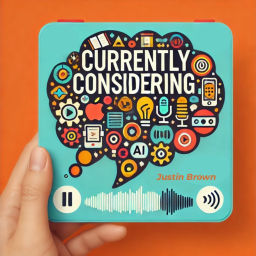
Currently Considering
Claim This Podcastby Justin Brown
5.0(1 reviews)
58 episodes
Updated Bi-weekly
Accepts GuestsHas SponsorsLocation 🇺🇸
45
Podcast Authority
BetaFairBased on show quality, social media presence, reviews, charts, and more

Quality89
Social0
YouTube0
Engagement0
Podcast Overview
The topics discussed on this podcast are identified solely based on those about which I am currently learning and the audience for specific episodes may be different. Listen if interested. The podcast is created by very heavily leaning on artificial intelligence so please forgive any errors, hallucinations or misstatements. Before relying upon the accuracy of any statement, further research is recommended.
Language
🇺🇲
Publishing Since
9/29/2024
Unlock The Full Podcast Authority Score Report
See how your podcast performs across key metrics
45
Podcast Authority
BetaFairBased on show quality, social media presence, reviews, charts, and more
Quality89
Social0
YouTube0
Engagement0
7
Excellent Areas
2
Good Performance
10
Growth Opportunities
excellent
Publishing Consistency
Every 6 days
Performing excellently!
good
Show Notes Quality
3.0/5
Recommendations available
Unlock the full report to see detailed tips
poor
Episode Thumbnails
Recommendations available
Unlock the full report to see detailed tips
+16 More Metrics
Unlock comprehensive insights including:
- • YouTube presence analysis
- • Social media reach metrics
- • RSS compliance scoring
- • Podcast 2.0 features
- • Technical standards
What's Included in Your Full Report
Detailed Analytics
- Complete breakdown of all 19 authority metrics
- Personalized recommendations for each metric
- Industry benchmarks and comparisons
- Technical RSS feed analysis and compliance scoring
Growth Strategies
- Step-by-step action plans for improvement
- Quick wins to boost your score immediately
- Pro tips from successful podcasters
Get your free podcast insights report
See how your show performs across every key metric
Instant delivery
No spam
Attract Better Guests
High authority scores make your podcast more attractive to industry leaders and influencers who want to appear on credible shows.
Secure Sponsorships
Sponsors look for podcasts with proven authority and engagement. Your score demonstrates your podcast's value to potential partners.
Grow Your Audience
Understanding your strengths and weaknesses helps you make data-driven decisions to expand your listener base effectively.
1 verified contact email on file for Currently Considering
Pitch yourself as a guest, propose sponsorships, or reach out directly to the host.
Recent Episodes
October 24, 2025
Harvard Summit Pre-Read Summary | Beyond GDP: Is the World Happiness Report Measuring the Wrong Thing?
<p>Podcast Description: The Happiest Country in the World Isn’t What You Think</p><p><strong>Episode Title:</strong> Beyond GDP: Is the World Happiness Report Measuring the Wrong Thing?</p><p><strong>Guest Experts:</strong> Byron Johnson, Ph.D., Tyler J. VanderWeele, Ph.D., and Brendan Case, Ph.D.</p><p><strong>Episode Length:</strong> (Based on the source's listening time) 6:49 minutes</p><p>The annual <strong>World Happiness Report</strong> routinely features wealthy Nordic nations like Finland, Denmark, Iceland, and Sweden at the top of its list. This trend reinforces a critical supposition of our globalized political and economic order: that wealth and material prosperity are essential preconditions for individual and societal flourishing. Political thinkers even encourage struggling nations to "get to Denmark".</p><p>But what if the rankings don't capture the fullness of well-being?</p><p>In this episode, social scientists Dr. Byron Johnson, Dr. Tyler J. VanderWeele, and Dr. Brendan Case challenge the conventional metrics of happiness, arguing that the World Happiness Report's primary metric—<strong>life evaluation</strong> (the 11-rung ladder question)—may prompt respondents to fixate too narrowly on wealth and status. True flourishing, they argue, is far broader, encompassing domains like health, sense of life’s purpose, prevailing emotions, and crucial social environments such as relationships with family, friends, and community.</p><p>The authors introduce findings from their five-year research project, the <strong>Global Flourishing Study (GFS)</strong>, which poses over 100 questions to more than 200,000 people across 22 countries. Using a comprehensive composite flourishing score, their findings present a drastically different picture of global well-being.</p><p><strong>The shocking results:</strong> While Sweden scored highly on life evaluation (second only to Israel), its composite flourishing score dropped dramatically to 13th, essentially tying with the United States. Meanwhile, countries often contrasted unfavorably in international development discussions—such as <strong>Indonesia, the Philippines, and Nigeria</strong>—ranked considerably higher in overall flourishing.</p><p>The GFS suggests that overall national composite flourishing actually <strong>decreased slightly as GDP per capita rose</strong> across the sample. Countries that scored high were rich not necessarily in economic terms, but in robust friendships, marriages, and community involvement—especially involvement in religious communities. For example, Indonesia (where 75% of participants attend religious services weekly) had the highest composite flourishing score, while Japan (with only 3% weekly attendance) had the lowest.</p><p>Dr. Johnson, Dr. VanderWeele, and Dr. Case explore whether the priority placed on economic growth has imposed hidden costs on developed nations, potentially eroding meaning, purpose, and strong relationships. They ask a profound question: Is it possible for countries like Sweden to <strong>"get to Indonesia"</strong> in terms of restoring a connection to community and meaning, without sacrificing their hard-won health, wealth, and stability?</p><p>This episode is based on the Guest Essay "The Happiest Country in the World Isn’t What You Think" by Byron Johnson, Tyler J. VanderWeele, and Brendan Case, published April 30, 2025.</p><p></p>
October 24, 2025
Harvard Summit Content Summary: Global Flourishing Study: What Contributes to a Life Well-Lived
<p><strong>The Global Flourishing Study: What Contributes to a Life Well-Lived?</strong></p><p><strong>A groundbreaking podcast diving deep into the science of human flourishing, featuring insights from the inaugural wave of the Global Flourishing Study (GFS).</strong></p><p>The question of "WHAT CONTRIBUTES TO A LIFE WELL-LIVED?" has long been central to philosophical traditions and religions. Now, social scientists, policymakers, and business leaders are grappling with this question using rigorous, large-scale research. This podcast explores the innovative GFS, a major collaboration between researchers at the Human Flourishing Program at Harvard, Baylor University’s Institute for Studies of Religion, and Gallup.</p><p><strong>What is Flourishing?</strong>We define flourishing as <strong>“the relative attainment of a state in which all aspects of a person’s life are good, including the contexts in which that person lives”</strong>, a definition cited in the report by T. J. VanderWeele (2017). A life well-lived is a holistic interplay of multiple dimensions, measured across six core domains: happiness and life satisfaction, mental and physical health, meaning and purpose, character and virtue, close social relationships, and financial and material stability.</p><p><strong>A Global, Longitudinal Look at Wellbeing</strong>The GFS is unique because it is longitudinal, surveying the same individuals over multiple years, moving beyond correlations to identify factors responsible for greater human flourishing. The inaugural wave includes <strong>over 207,000 participants</strong> from 22 countries and Hong Kong (S.A.R. of China), representing a wide range of cultural backgrounds and economic development levels.</p><p><strong>Key Discoveries and Insights (Based on Initial GFS Findings):</strong></p><ul><li><strong>The Age Effect:</strong> Is there a universal pattern to flourishing as we age? The GFS found that the relationship between age and flourishing varies significantly across the globe. While flourishing appears to increase with age in countries like the United States and Sweden, it tends to decline with age in places like India and Tanzania.</li><li><strong>The Mental Health Crisis:</strong> Mental health emerges as a key factor in flourishing. In many high-income countries, including the United States, mental health ratings are a flourishing deficit for younger respondents but boost scores among older adults, aligning with recent calls to action regarding youth mental health. For example, the average mental health score for U.S. adults aged 18 to 29 is 5.68, compared to 8.06 for those aged 60 to 69.</li><li><strong>The Power of Community:</strong> Regular <strong>participation in group activities</strong> (religious or civic) is generally associated with greater flourishing. The positive relationship between flourishing and religious service attendance is statistically significant in 21 out of 23 countries and territories. Furthermore, this connection is often stronger than civic participation, and specifically links religious attendance to a larger sense of meaning and purpose.</li><li><strong>The Role of Money:</strong> As anticipated, <strong>financial and material stability</strong> is a strong predictor of the composite flourishing score across all surveyed countries.</li></ul><p>Drawing on the work of contributors like Zacc Ritter, Andrew Dugan, Chris Felton, Byron R. Johnson, R. Noah Padgett, and Tyler J. VanderWeele, this podcast delivers evidence-based discoveries to inform policymakers, practitioners, and community leaders invested in creating environments where people can truly flourish.</p><p>The Global Flourishing Study is a proprietary research initiative of Gallup, Inc.. Findings cited are drawn from the inaugural wave of data collection.</p><p></p>
October 24, 2025
Harvard Content Review | The Retail Maverick: Ron Johnson's Transformative Vision and the J.C. Penney Debacle
<p>This podcast episode delves into the high-stakes career of acclaimed retailer Ron Johnson (HBS ’84), tracing his innovative journey from defining the mass-market chic image of Target to launching the iconic Apple retail stores, and finally examining his polarizing 18-month tenure as CEO of J.C. Penney.Johnson, who operates largely on intuition formed by nearly 30 years in the retail industry, achieved profound success early in his career:• <strong>Target's Transformation:</strong> At Target (1990–2000), Johnson played a significant role in establishing groundbreaking partnerships with top designers, such as Michael Graves, bringing "designer products to Target". His strategy was rooted in gaining "mindshare, not market share", successfully positioning Target as a high-quality merchandiser with low prices.• <strong>The Apple Revolution:</strong> Working directly with Steve Jobs, Johnson developed the Apple retail store prototype, focusing on exceptional customer service and the "customer ownership experience". He pioneered the successful "Genius Bar" for free, face-to-face support, comparing the specialists to friendly bartenders. By 2011, Apple stores led U.S. retail in annual sales per square foot.In 2011, Johnson was hired by a struggling J.C. Penney, which was seeking a "dramatic, creative transformation" to avoid brand obsolescence. Despite the company reporting a third-quarter loss of $143 million when he arrived, Johnson was optimistic, viewing J.C. Penney and Apple as "surprisingly similar". He declared on his first day, “I’m not here to improve, I’m here to transform”.Johnson swiftly implemented major, simultaneous changes with "little market testing". These included eliminating coupons and traditional sales in favor of the "Fair and Square" pricing model, and developing a new "store-within-a-store" concept designed to mimic an engaging town square. He also eliminated sales commissions to unify store employee missions.However, Johnson's rapid overhaul alienated the core J.C. Penney customer base—price-sensitive, middle-income suburban mothers. Many loyal shoppers were confused and felt the new model offered worse value after coupons were removed. Critics pointed out that Johnson "abandoned his core J.C. Penney shopping enthusiasts" . Over his final 12 months as CEO, J.C. Penney’s shares dropped more than 50%, leading board member Bill Ackman to comment that the turnaround plan was "very close to a disaster". Johnson was asked to step down in April 2013.Join us as we analyze Johnson’s retail approach, explore the critical questions guiding the Harvard Business School case study—What explains his success at Target and Apple, and what went wrong at J.C. Penney?--------------------------------------------------------------------------------<strong>Source Citation:</strong>This podcast episode is based on the Harvard Business School Case Study: Ron Johnson: Retail at Target, Apple, and J.C. Penney<strong>Authors:</strong> Professor Das Narayandas, Associate Director Kerry Herman, and Research Associate Lisa Mazzanti (with contributions from Research Support Associate Christine Snively).<br></p>
58 total episodes available
Deep-dive analytics for Currently Considering
Frequently asked questions
Have a different question and can't find the answer you're looking for? Reach out to our support team by sending us an email and we'll get back to you as soon as we can.
- What is Currently Considering?
- How often does this podcast release new episodes?
This podcast updates bi-weekly.
- Where can I listen to this podcast?
This podcast is available on 6 platforms including Apple Podcasts, Spotify, and more. You can also use the RSS feed directly.
- Does this podcast accept guests?
Yes, this podcast regularly features guests.
Legal Disclaimer
Pod Engine is not affiliated with, endorsed by, or officially connected with any of the podcasts displayed on this platform. We operate independently as a podcast discovery and analytics service.
All podcast artwork, thumbnails, and content displayed on this page are the property of their respective owners and are protected by applicable copyright laws. This includes, but is not limited to, podcast cover art, episode artwork, show descriptions, episode titles, transcripts, audio snippets, and any other content originating from the podcast creators or their licensors.
We display this content under fair use principles and/or implied license for the purpose of podcast discovery, information, and commentary. We make no claim of ownership over any podcast content, artwork, or related materials shown on this platform. All trademarks, service marks, and trade names are the property of their respective owners.
While we strive to ensure all content usage is properly authorized, if you are a rights holder and believe your content is being used inappropriately or without proper authorization, please contact us immediately at hey@podengine.ai for prompt review and appropriate action, which may include content removal or proper attribution.
By accessing and using this platform, you acknowledge and agree to respect all applicable copyright laws and intellectual property rights of content owners. Any unauthorized reproduction, distribution, or commercial use of the content displayed on this platform is strictly prohibited.