The podcast for those who don't understand anything about it. (Translated from the French prodcast "La cybersecuritée expliquée à ma grand-mère" using AI)
Hosted on Ausha. See ausha.co/privacy-policy for more information.

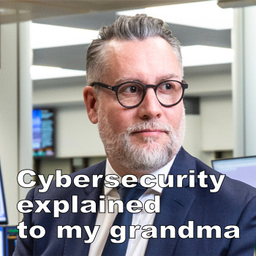
by Nicolas REMARCK
The podcast for those who don't understand anything about it. (Translated from the French prodcast "La cybersecuritée expliquée à ma grand-mère" using AI) Hosted on Ausha. See ausha.co/privacy-policy for more information.
Language
🇺🇲
Publishing Since
5/4/2025
See how your podcast performs across key metrics
Recommendations available
Unlock the full report to see detailed tips
Recommendations available
Unlock the full report to see detailed tips
Unlock comprehensive insights including:
See how your show performs across every key metric
High authority scores make your podcast more attractive to industry leaders and influencers who want to appear on credible shows.
Sponsors look for podcasts with proven authority and engagement. Your score demonstrates your podcast's value to potential partners.
Understanding your strengths and weaknesses helps you make data-driven decisions to expand your listener base effectively.
Pitch yourself as a guest, propose sponsorships, or reach out directly to the host.
June 2, 2025
This episode explores digital authentication methods, such as passwords and biometrics, revealing their vulnerabilities and emphasizing the need for layered security to protect digital identities.
May 19, 2025
<p>This episode will explain you the major topics about cryptography :</p><ul><li><p><b>Hiding ≠ Protecting</b></p><ul><li><p>Steganography conceals a message’s existence (wax tablets, watermarked films).</p></li><li><p>Coding just changes symbols (Morse, CD error-correction).</p></li><li><p>Cryptography actually locks the content.</p></li></ul></li><li><p><b>Early & Perfect Ciphers</b></p><ul><li><p>Caesar shift is weak; a <b>one-time pad</b> is unbreakable but impractical because the key must match the message length.</p></li></ul></li><li><p><b>Kerckhoffs’ rule:</b> everything about a system can be public—only the key must stay secret.</p></li><li><p><b>Enigma</b> showed strong design (159 quadrillion settings) yet fell to Turing owing to predictable message parts.</p></li><li><p><b>Modern crypto</b></p><ul><li><p><b>Symmetric keys</b> are fast but need a safe key swap.</p></li><li><p><b>RSA</b> (public/private keys) solves that, enabling HTTPS, digital signatures, and secure web traffic.</p></li><li><p><b>Hashes</b> act as digital fingerprints; signing = encrypting a hash with the private key.</p></li></ul></li><li><p><b>Future challenges</b></p><ul><li><p>2048-bit RSA is safe now, but quantum computers could break it.</p></li><li><p>Post-quantum and <b>homomorphic encryption</b> aim to keep data secure—even while processed in the cloud.</p></li></ul></li></ul><p><b>Bottom line:</b> robust math plus open scrutiny—not secrecy—keeps our digital world safe, but we must adapt as computing power grows.</p><br/><p>Hosted by Ausha. See <a href="https://ausha.co/privacy-policy">ausha.co/privacy-policy</a> for more information.</p>
May 5, 2025
<p>The history of hackers from the dawn of humanity to the present day.</p><ul><li><p><b>Hackers ≠ villains</b><br>“Hacker” simply means someone who pushes a system beyond its intended use; ethics split them into white hats(defenders) and black hats (attackers).</p></li><li><p><b>Flaws are human, not machine</b><br>Bugs stem from programming mistakes; early example: 1950s “bugs” were literal moths in tube computers. Hackers exploit such flaws just as lock-pickers exploit bad locks.</p></li><li><p><b>First big hack (1834)</b><br>The Blanc brothers bribed operators on France’s optical-telegraph network to slip stock tips through the error-correction mechanism, beating the market by days.</p></li><li><p><b>Phone-phreak era (1950s-1970s)</b><br>Captain Crunch’s 2600 Hz whistle fooled switches into granting free calls; Jobs & Wozniak sold “blue boxes” doing the same.</p></li><li><p><b>Internet dawn & celebrity hackers</b><br>Kevin Poulsen rerouted radio contests; Robert Morris’s worm crashed 10 % of the fledgling Internet; Kevin Mitnick mixed technical hacks with social engineering, landing on the FBI’s “Most Wanted.”</p></li><li><p><b>Hacker collectivism</b></p><ul><li><p><b>Cypherpunks (1992):</b> privacy, decentralization, crypto manifesto (free access, distrust authority).</p></li><li><p><b>Anonymous:</b> leaderless “digital flock” coordinating online protests.</p></li><li><p><b>Chaos Computer Club (Berlin):</b> white-hat research and public audits (e.g., Germany’s COVID app).</p></li></ul></li><li><p><b>Four modern tribes</b></p><ol><li><p><b>White hats / researchers</b> – find and disclose bugs, defend privacy.</p></li><li><p><b>Criminal crews</b> – profit-driven ransomware, card theft, etc.</p></li><li><p><b>Mercenaries</b> – vendors of spyware like Pegasus, sold to states.</p></li><li><p><b>Nation-states</b> – build cyber-armies; Stuxnet showed state-grade sabotage.</p></li></ol></li><li><p><b>Why the bad reputation?</b><br>Cyber-crime now out-earns all other transnational crime combined; 83 % of SMEs still lack basic defenses. As stakes rise—from personal data to national security—every hacker action feels existential.</p></li></ul><p><b>Bottom line:</b> Hackers can be guardians or predators; their tools are neutral, but in a hyper-connected world the consequences—and the fear—have never been bigger.</p><br/><p>Hosted by Ausha. See <a href="https://ausha.co/privacy-policy">ausha.co/privacy-policy</a> for more information.</p>
Have a different question and can't find the answer you're looking for? Reach out to our support team by sending us an email and we'll get back to you as soon as we can.
The podcast for those who don't understand anything about it. (Translated from the French prodcast "La cybersecuritée expliquée à ma grand-mère" using AI)
Hosted on Ausha. See ausha.co/privacy-policy for more information.
This podcast updates daily.
This podcast is available on 4 platforms including Apple Podcasts, Spotify, and more. You can also use the RSS feed directly.
No, this podcast does not typically feature guests.
Pod Engine is not affiliated with, endorsed by, or officially connected with any of the podcasts displayed on this platform. We operate independently as a podcast discovery and analytics service.
All podcast artwork, thumbnails, and content displayed on this page are the property of their respective owners and are protected by applicable copyright laws. This includes, but is not limited to, podcast cover art, episode artwork, show descriptions, episode titles, transcripts, audio snippets, and any other content originating from the podcast creators or their licensors.
We display this content under fair use principles and/or implied license for the purpose of podcast discovery, information, and commentary. We make no claim of ownership over any podcast content, artwork, or related materials shown on this platform. All trademarks, service marks, and trade names are the property of their respective owners.
While we strive to ensure all content usage is properly authorized, if you are a rights holder and believe your content is being used inappropriately or without proper authorization, please contact us immediately at hey@podengine.ai for prompt review and appropriate action, which may include content removal or proper attribution.
By accessing and using this platform, you acknowledge and agree to respect all applicable copyright laws and intellectual property rights of content owners. Any unauthorized reproduction, distribution, or commercial use of the content displayed on this platform is strictly prohibited.