- 18
- Episodes
- 12
- Ratings
- Monthly
- Cadence
- 2021
- First episode
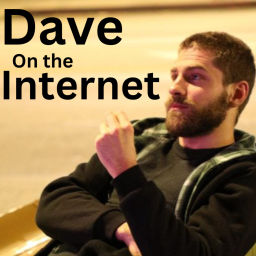
About Dave on the Internet
It's a time capsule. Recording what feels important right now. XO eggs Oh,
- Publisher
- David Garelik
- Category
- education
- Language
- en
- Explicit
- No
- First episode
- 14 Feb 2021
- Latest episode
- 9 Jul 2026
Latest episodes
18 episodes in the feed.
9 Jul 2026
Ep 15. Telling a complete story with a 1-line co-star audition
In this solo episode, I break down three television auditions... two one line co-stars and a larger guest star scene, and show you exactly how I approach them. Rather than focusing on line readings or emotional choices, I walk through how I try to tell a complete relationship-based story in every audition, even when the script gives you almost nothing to work with. We get into script analysis, identifying the event of the scene, creating visual storytelling, making bold behavioral choices, and finding ways to make an audition memorable without inventing anything that isn't already in the material. In the second half of the episode, I shift gears and talk about what happens after the audition. I share a few of the rituals and mindset shifts I use after callbacks or when I'm "in the mix" for a role practices that help me relieve pressure, let go of the outcome, and stay focused on the work instead of the booking. If you're auditioning for TV and film, recording self-tapes, or looking for a more story-driven approach to acting, I think you'll find a lot here. Topics covered: TV audition technique Self-tape auditions Co-star auditions Guest-star auditions Script analysis for actors Relationship-based storytelling Acting choices that stand out Visual storytelling Callback mindset Audition psychology Booking TV and film work
2 Jun 2026
Ep 14. Everything (I think) I know about auditioning
What actually makes a self-tape watchable? How do you make the viewer feel like they're watching an edited scene (where they. understand exactly what is going on) instead of a 3 minute uninterrupted close up? In this episode of Dave on the Internet, Matt and I go deep into a topic that has become the foundation of my audition class: why most audition tapes visually look like nothing is changing, and what we can do about it. We talk about the biggest shift in my own understanding of auditioning over the last few years—the realization that actors are often trying to communicate emotions when perhaps they should be focusing on trying to understand what is happening and how to tell that story with their body. In film and television, the edit helps tell the story. Every few seconds the camera cuts, reframes, pushes in, or reveals new information. In a self-tape, none of those tools exist. You're sending a 90-second close-up to a casting director who may watch dozens of auditions back-to-back. If the story isn't physically recognizable, it can become almost impossible for the viewer to track what is actually happening. We discuss: Why most actors focus on emotion instead of story How to identify the actual events of a scene The difference between demonstrating feelings and allowing feelings to emerge Why interruptions, discoveries, threats, confessions, and relationship shifts matter so much How behavior creates clearer storytelling than emotional indication What casting directors (maybe?) are actually watching for in self-tapes Why "off his look" doesn't require acting a look How to create the feeling of an edited scene when it's just you in a close up. The role of clarity, aliveness, and physical storytelling in great auditions Why some of the most compelling performances come from people who aren't trying to perform at all Throughout the conversation, we break down examples from audition classes, professional self-tapes, film scenes, and on-set experiences to explore a simple question: What if great acting isn't about showing us what you're feeling? What if it's about helping us understand what's happening? If you're an actor trying to book more work, tell clearer stories, and stop pushing so hard in auditions, this episode is for you. Keywords: acting audition tips, self tape audition technique, how to audition for film and television, acting class, audition coaching, on-camera acting, self tape acting, casting director advice, storytelling in auditions, acting craft, actor training, film acting, TV acting, audition preparation, acting career.
3 Mar 2026
Ep 13. Law of Attraction (Applied to Acting)
There was a period in my life where Law of Attraction ruled everything....specifically applied to acting. I was journaling daily. Reframing auditions. Repeating mantras in the mirror like a lunatic. Trying to bridge what I now call “the belief gap” between what I wanted and what I actually believed I could have. And during that stretch… things moved. In this episode of Dave on the Internet, we talk about: – The belief gap (and how it affects audition performance) – The specific journaling method I used – Celebrating small bookings to redefine identity. – The concept of “Excess Importance” and why squeezing something can push it away – Why most major career shifts happen sideways, not directly from the thing you’re chasing – Action vs obsession – Acting, identity, and psychological pressure This isn’t a “manifest your Ferrari” episode. It’s about performance psychology, responsibility, and how belief changes behavior in the room. If you’re an actor trying to book more consistently, or someone navigating ambition without losing your mind... this one might hit :)
23 Dec 2025
Ep 12 Peter Rinaldi (Back to One Podcast)- Lessons learned from interviewing 300+ actors
On his Podcast @backtoOne, Peter has interviewed many of the most talented actors working today. Paul Mescal, Diane Kruger, Tom Pelphrey, Vincent D’Onofrio, Michael Shannon, Daisy Ridley, Simon Rex, Julianne Nicholson, Jon Bernthal, Daisy Edgar-Jones, Carrie Coon, Christopher Abbott, Aubrey Plaza, Clive Owen, Zoë Deutch, Brit Marling, Jon Hamm, Vicky Krieps, Isabelle Huppert, Juliette Binoche and so many others. We got into what he’s learned from interviewing 300+ actors at completely different stages of their careers, and how those conversations slowly dismantled his belief that there’s a single “right way” to act. We talked about why he started the podcast in the first place: he was genuinely afraid of actors—afraid of over-directing, under-directing, saying the wrong thing, or not understanding the language of the work. We talked about the difference between younger / less experienced actors and more seasoned ones—especially how experienced actors tend to let go of tools they once clung to, not because the tools didn’t matter, but because they’re now embodied. Presence vs control. We spent time on the paradox of craft: you do need technique and preparation—but eventually the work deepens when you’re brave enough to release it and actually live in the moment. We talked about how directing finally kicked his ass in a real way when he had to work with trained actors, and how talking to actors is not the same thing as directing them. And lessons learned from directing his first play last summer. We talked about how Peter became such a fixture in the Brooklyn theater scene—after years of creative isolation—by finding communities of younger artists who actually take the work seriously, want to improve, and respect the craft rather than perform irony. We talked about industry contraction, AI, commercials, and the anxiety around what’s disappearing—and why the answer isn’t doom, but raising the level of the work so it’s harder to replace. And we ended on something that felt important: how actors grow not just by working, but by living—risking, failing, getting heartbroken, putting themselves out there. Acting, as Peter put it, is a great place to fail and come back stronger.
16 Dec 2025
Ep 11. Jordan Syatt - Getting an 'Out of your League Mentor', and letting yourself look dumb in the short term to get better faster
Jordan Syatt is my childhood best friend and probably my biggest mentor. We got voted attached at the hip in high school, and Jordan is also a pretty major reason why I have a vanguard account! I’ve had a front row seat watching Jordan become pretty much the most successful person I know over the past 15 years. There have been a handful of things that I’ve watched him accomplish that I previously thought were impossible. Fundamentally I think I’ve learned how to think better from him. This is gonna seem super trivial. I wonder if Jordan even remembers this. But one time we went to a BJJ class together when we were both white belts. In the class, I got paired with a blue belt… and he no joke submitted me 5 times in a minute with the same move. Afterwards, I’m discouraged, and kinda uninspired by the whole thing. It’s jarring how enormous and unsurmountable of a skill gap there was. Jordan looks over at me and goes “but isn’t it awesome that when you’re a blue belt your gonna be able to do that too” I remember also one time Jordan telling me that if he feels uncomfortable, or sad, for nervous or lonely or whatever negative emotion. He’s comforted because if he’s feeling it, that means that it’s something that everyone feels and he’s not alone. MY WHOLE LIFE I FELT THE EXACT OPPOSITE. We cover a lot in this episode. Enjoy. If you enjoy this episode please leave me one of those dang 5🌟 ratings. xo Love you
1 Dec 2025
Ep 10. Everything (I think) I know about acting in 90 mins.
In this episode of Dave on the Internet, we break down: 1) Specific skillsets that from my POV help you stand out as an actor 2) The skillsets that help you book work 3) Things to do in every single audition 4) Getting an agent, and broadly how to think about industry 5) + my own psychology behind all of that I hope you enjoy this episode and if you do, please leave a lil review on itunes or spotify. Also. Im teaching an on-camera audition intensive DEC 5-7. please reach out if you're interested. We're gonna be going into a lot of this in depth. xo
10 Jun 2025
Ep 9. Getting an agent with 0 IMDb credits
Leandro shares practical steps for securing an agent despite limited IMDb credits, focusing on skill development and outreach strategies in this interview episode.
15 Oct 2024
Ep 8. In Search of the Intersection Between Fighting and Acting w/ Roger Mamedov and JJ Perez
Roger Mamedov owns Williamsburg MMA. JJ is my friend, audition coach and a student of Roger's. I've wanted to record this for a long time. Roger is a very scary dude who also thinks about fighting in a very unique way. JJ's transformation with him has been pretty startling, and has been quite significant in how he's seen his art. To be blunt. I have not exactly had this experience. But I'm in search of it. I want to find the throughline through the things I care about, so it doesn't feel like one takes me away from the other. I want to train, I want to get better, but I also don't want to be too worn out to care about acting. And I dont exactly see practically how it helps. Or maybe I'm starting to. Okay bye.
14 Aug 2024
Ep 7. Couples Therapy & wtf does "integrating the shadow" actually mean
Couples Therapy is the best show on TV, largely because Orna Guralnik (the therapist) is the best communicator walking the face of the Earth. But does Orna herself get defensive? You tell me baby. I get into a few interesting moments Orna has in session and how she deals with them &&& Then... SHADOW WORK BABY. What is the shadow. How do we become aware of it, how do we integrate it. AND WHY. Hint. To actually have free will. This is maybe not the best description of an episode I've written in my life. But the episode itself I stand behind very fully. xo.
1 Aug 2024
Ep 6. Positive objectives in acting and in life with JJ Perez
My friend and teacher JJ Perez is back. This episode is wild. This got a lot deeper than I could have expected or hoped for. That's Gds plan baby. A lot of acting technique talk, the reality of playing objectives and character needs, fully ignoring given circumstances, tips for being seen as a series regular vs co star. And many spicy point of debate. Also life. Xo hope you enjoy.
17 Jul 2024
Ep 5. Conversation with Peter Rinaldi
Peter Rinaldi hosts my favorite podcast Back to One. He's mystical as hell. And has uniquely tremendous capacity to perceive deeply, and get into what’s important quickly. I think we made an unspoken pact to aim for this before this interview. There’s a lot of acting talk, interviewing talk…. but really its mostly human connection talk and how to live as open as possible. I can’t believe some of the shit we talked about in here. I’m very grateful this exists. Xo thank you for listening
9 Jul 2024
Ep 4. I got a flip phone!
I recorded this in my bed with the light off. It's about flip phones, playing scene objectives in life, and lessons learned from a girl on the subway. Solo pod Dave. It's only like 20 mins. xo.
24 Jun 2024
Ep 3. Conversation with my new roommate Hunter
I'm so glad/nervous this exists. Hunter messaaged me on IG 2 months ago and sent me his script. Now we're roommates. I got a lil wine drunk and we talked about the things that seemed to matter. Hunters expectations/goals from being in ny, acting, teaching, formative hs experiences, emotional shutdown/openness and its uses, and porn!!!! To anyone concerned, I offered Hunter wine too. He just didnt want any. love you, bye.
23 Jun 2024
Ep 2. The Skill Of Auditioning w/ JJ Perez. Part 2
I love this episode. We Go a bit deeper, the science that's been behind how JJ thinks about auditioning. Understanding how humans perceive story and putting it to use in auditions, and in acting. But it's an easy listen. I swear. But first... How JJ gets to know students to make the work more meaningful. Okay love u all tremendously.
31 May 2024
Ep 1. The skill of auditioning with JJ Perez
Talking to my friend/mentor/AUDITION COACH JJ Perez. This guy changed my life. Including monetarily. and taught me how to see auditions completely differently. We intend for this to continue lulz. We break auditioning down. Specifically. Hope you enjoy. Love you. I
10 Jan 2023
Ep 3 with Jerah Milligan
I tells a story about using spiritual jargon to impress a girl on a date and immediately uncovering myself as a fraud 😉 Then I get into how to talk about and be proud of your spiritual growth without developing a spiritual ego. What function does your personality serve, and who are you beneath it? Jerah and I talk about stand-up comedy and how to start. Then we fanboy over Andrew Shulz. We talk about Dating apps, and how to spit game on them. Wink Wink. Then we talk about a whole lot of other things pertaining to women, differences between NY and LA in terms of dating. Stalkers, romantic gestures, and goals for 2023. Enjoy.
24 Feb 2021
SFP #2 Presence is the Cheat Code
When I was 16 (13 years ago) I stumbled on a little book called Power of Now. I followed it to the best of my f*ckboi abilities for 6 months, and shit got weird. In this podcast we get into the effects of presence that most people are not talking about. We get in to Law of Attraction, my experience with it and why I believe it works for some people, not for others, and the mistake that I used to make when trying to Shmanifest. I give you a couple of my own own tricks to get present. We also discuss charisma, and my little theory on how it actually works ;) Books Mentioned in the podcast: The Power of Now by Eckhart Tolle The Law of Attraction by Esther Hicks and Jerry Hicks Connect with Me: https://www.instagram.com/davidgarelik https://www.tiktok.com/@daveydave33?
14 Feb 2021
Level up by doing what you're putting off, making fear your unconventional best friend, and what to do if you don't have real friends
We all know what we need to do. We just trick ourselves into putting it off indefinitely. Imagine what you'd allow yourself to go after if you weren't afraid of feeling negative emotions. What if you made friends with those emotions? I tell a couple of stories of things I knew I needed to do and put off because of fear, and the payoff once I committed to them. Allowing yourself to feel anything is your freedom. BONUS: I respond to a common question iv been getting on Tik Tok: what to do if you don't have any friends, and how to make real ones.
Reach and audience
Public platform figures. Ratings count people who left a rating, not total listeners.
- Apple Podcasts (US)
- 5.0 / 5
- 6 ratings
- Spotify
- 4.3 / 5
- 6 ratings
Podcast Authority Score: 12 / 100
A composite of feed quality, social presence, YouTube performance and engagement. Read the methodology.
- Quality
- 3
- Social presence
- 0
- YouTube
- 0
- Engagement
- 51
Host of Dave on the Internet?
Claim your podcast to manage its listing and keep your show details accurate.
Pod Engine is an independent podcast discovery and analytics service and is not affiliated with or endorsed by this podcast. Artwork and show content belong to their owners. Full legal notice.
Explore this show
Podcast research with Pod Engine