
Recent sermons from St. Nicholas Mission in Davenport, IA
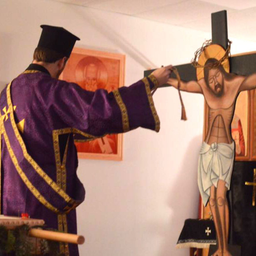
Deacon Jared
Claim This Podcastby Jared Johnson
5.0(1 reviews)
14 episodes
Updated Daily
Accepts GuestsHas SponsorsLocation 🇺🇸
Podcast Overview
Recent sermons from St. Nicholas Mission in Davenport, IA
Language
🇺🇲
Publishing Since
2/10/2019
1 verified contact email on file for Deacon Jared
Pitch yourself as a guest, propose sponsorships, or reach out directly to the host.
Recent Episodes
June 12, 2022
Freedom fries and liberty sandwiches
<figure class=" sqs-block-image-figure intrinsic " > <img data-stretch="false" data-image="https://images.squarespace-cdn.com/content/v1/553110ece4b0c8a1d44405ab/1655010267667-592UOV4RLSU5RDTV5WK7/burger_fries.jpg" data-image-dimensions="4855x2425" data-image-focal-point="0.5,0.5" alt="" data-load="false" elementtiming="system-image-block" src="https://images.squarespace-cdn.com/content/v1/553110ece4b0c8a1d44405ab/1655010267667-592UOV4RLSU5RDTV5WK7/burger_fries.jpg?format=1000w" width="4855" height="2425" sizes="(max-width: 640px) 100vw, (max-width: 767px) 100vw, 100vw" onload="this.classList.add("loaded")" srcset="https://images.squarespace-cdn.com/content/v1/553110ece4b0c8a1d44405ab/1655010267667-592UOV4RLSU5RDTV5WK7/burger_fries.jpg?format=100w 100w, https://images.squarespace-cdn.com/content/v1/553110ece4b0c8a1d44405ab/1655010267667-592UOV4RLSU5RDTV5WK7/burger_fries.jpg?format=300w 300w, https://images.squarespace-cdn.com/content/v1/553110ece4b0c8a1d44405ab/1655010267667-592UOV4RLSU5RDTV5WK7/burger_fries.jpg?format=500w 500w, https://images.squarespace-cdn.com/content/v1/553110ece4b0c8a1d44405ab/1655010267667-592UOV4RLSU5RDTV5WK7/burger_fries.jpg?format=750w 750w, https://images.squarespace-cdn.com/content/v1/553110ece4b0c8a1d44405ab/1655010267667-592UOV4RLSU5RDTV5WK7/burger_fries.jpg?format=1000w 1000w, https://images.squarespace-cdn.com/content/v1/553110ece4b0c8a1d44405ab/1655010267667-592UOV4RLSU5RDTV5WK7/burger_fries.jpg?format=1500w 1500w, https://images.squarespace-cdn.com/content/v1/553110ece4b0c8a1d44405ab/1655010267667-592UOV4RLSU5RDTV5WK7/burger_fries.jpg?format=2500w 2500w" loading="lazy" decoding="async" data-loader="sqs"> </figure> <p class=""><strong>ACTS OF THE APOSTLES 2:1-11</strong><br>WHEN THE DAY of Pentecost had come, they were all together in one place. And suddenly a sound came from heaven like the rush of a mighty wind, and it filled all the house where they were sitting. And there appeared to them tongues as of fire, distributed and resting on each one of them. And they were all filled with the Holy Spirit and began to speak in other tongues, as the Spirit gave them utterance. Now there were dwelling in Jerusalem Jews, devout men from every nation under heaven. And at this sound the multitude came together, and they were bewildered, because each one heard them speaking in his own language. And they were amazed and wondered, saying, "Are not all these who are speaking Galileans? And how is it that we hear, each of us in his own native language? Parthians and Medes and Elamites and residents of Mesopotamia, Judea and Cappadocia, Pontos and Asia, Phrygia and Pamphylia, Egypt and the parts of Libya belonging to Cyrene, and visitors from Rome, both Jews and proselytes, Cretans and Arabians, we hear them telling in our own tongues the mighty works of God."</p> <p class="">It feels like just a few years ago, but I think we’re heading on two decades. It just a couples years before Thomas came home. Beth and I spent a week touring Paris with Beth’s sister Becky. I have to say Paris was amazing and that I’d go back in a heartbeat, but one of the most interesting parts of our trip - something that was a bit unique - was the timing. You see, it was 2003 and we landed in Paris on the same day that President George W. Bush launched the US’s invasion of Iraq. It was the beginning of our nation’s military response to 9/11, which you could say finally ended just last year with our withdrawal from Afghanistan. The US launched that invasion with support from an international coalition that included the United Kingdom, Poland, and Australia, but we weren’t in England, Poland, or Australia. We were in France. And France had taken a stand against our invasion.</p><p class="">I remember seeing posters at bus stops with French headlines reading “Guerre Bush” or Bush’s War. I have photographs of the protestors outside the US Embassy and French police lining up in riot gear including bulletproof shields shields and batons, all standing at the ready, waiting to keep the peace by force if necessary. I don’t remember any personal trouble related to our presence as American tourists in Paris, but I do remember one time, as I was browsing a little gift shop, the owner of that shop had the radio playing. It was a talk show, and I couldn’t understand a thing, of course, because the announcer and his guest were speaking French, but then in the middle of his monologue, I heard two English words and I had to laugh because I knew exactly what they were talking about. Those words were: “Freedom Fries.”</p><p class="">You see, in reaction to the French pushback to our invasion, some Americans had decided to shun anything French. And that included the most popular fast food side dish in America, French Fries. And so a small number of restaurants and the Congressional Cafeteria renamed French Fries as Freedom Fries. Forget the fact that French Fries were invented in America, that “French” in the name is a reference to a style of cutting, not the country. But who ever really started saying “Freedom Fries.” It was 100% a stunt. And a laughable one, at that.</p><p class="">But 2003 was notthe first time Americans had decided to change the names of their foods to reflect their negative feelings about other ethnicities. Have you ever heard of “Liberty Cabbage” or “Liberty Sandwiches?” Well, in 1918, as America fought Germany in World War I, anti-German sentiment here at home led to the renaming of sauerkraut as “Liberty Cabbage” and hamburgers as “Liberty Sandwiches.” Those names didn’t stick, either. But unfortunately, this anti-German sentiment during World War I went even deeper than it’s 2003 equivalent, leading to the banning of German classes in schools and the speaking of German in public. It even led to prohibiting German preaching in German-speaking churches.</p><p class="">Right here in Iowa, our Governor at the time, passed the “Babel Proclamation,” an executive order forbidding the use of any language other than English in public. This executive order, a gross and obvious infringement of the first amendment, was enforced by local municipalities who would fine violators. Fines were often in the $25 range, which would be the equivalent of about $450 today. Right here in Scott County four women were fined $225 (or $2,250 of today’s dollars) by the County Defense Council when they were heard speaking German to one another over their a party line. And if you’re too young to know what a party line is, when telephones were first invented they were shared by communities, not just households, and you could listen in on your neighbor. These women were fined for simply speaking to their friends and family in their native tongue.</p><p class="">This proclamation was made, accepted, and enforced because people were afraid. In spite of the fact that these very same German immigrants had fled to America in an attempt to escape the oppression of the government that the US now fought, Americans feared what they could not understand. Iowa’s Governor Harding argued that his proclamation would "save the lives of American boys overseas by curbing sedition at home." His rhetoric was backed by none other than President Theodore Roosevelt who said in reference to the proclamation in Iowa: “America is a nation—not a polyglot boarding house ... There can be but one loyalty—to the Stars and Stripes; one nationality—the American—and therefore only one language—the English language.”</p><p class="">I have to say I love the irony of the name of the “Babel Proclamation,” a reference to the biblical story of the Tower of Babel. Doubtless Governor Harding or his advisors chose this name to give the proclamation an air of Christian authority. But did Governor Harding or his advisors know that they were naming their proclamation after the bad guys in that story? That evil king Nimrod was able to gather all the people together in one place and attempt to build his sacrilegious tower specifically because all the peoples of Earth spoke one language. And did he stop to think that it was God who sent the various languages to make sure that humanity huddle together in this way again, but rather fulfill his commandment to be “fruitful, multiply, and fill the earth.” By insisting that all Americans speak only one language, Governor Harding and Teddy Roosevelt were standing on the side of King Nimrod and the Tower of Babel. And they were standing against the will of God.</p><p class="">I thought talking about separation caused by languages, fear of what we don’t understand, and the Tower of Babel would be a good place to start this morning, because many of our hymns see what happened at Pentecost as an answer to what happened at the Tower of Babel. For example, today’s Kontakion reads, “When the High One descended, confusing tongues, He divided the nations. And when He distributed the fiery tongues He called all to one unity.” I think it is important to remember that this miracle didn’t sudden make everyone understand Aramaic. It didn’t make everyone suddenly start speaking a single language like Hebrew or Latin. The very first miracle performed upon the descent of the Holy Spirit was to see the Church preaching and teaching in a variety of tongues.</p><p class="">The passage read from Acts today begins with the disciples—the very same disciples who had fallen asleep in the garden of Gethsemane, who had fled in the face of persecution, who had hidden themselves behind locked doors when their Lord was hung on a cross—all gathered together and praying. Our icons always very stylistically show the twelve disciples or the twelve disciples and Mary, which is kind of how I always pictured it, but John Chrysostum makes the point and I think he is right that we are supposed to understand from the text that this was the entire 120 mentioned a few sentences earlier. So this group included not just the 12, but also Mary the mother of Jesus, Jesus’ brothers, and about 100 other disciples, men and women gathered together in prayer. And then suddenly a wind roars through the room, and tongues of fire come to rest upon each of these 120 individuals. As the Holy Spirit rests upon all these men and women in that upper room, we are witnessing the birth of the Church. Ezekiel had described the Glory of the Lord leaving the Temple in Jerusalem, and notice here that the Holy Spirit did not simply move into some central Christian Church. Instead, just as St. Paul would later describe, every person had become the Temple of the Lord. And just as Jesus had promised the woman at the well, the time had come for every person to worship in Spirit and in truth.</p><p class="">After the apostles and disciples are filled with the Holy Spirit, only then are they moved to leave their silent prayer and begin proclaiming the good news of Jesus Christ. We are told that in the streets of Jerusalem that day were many devout people who had journeyed to Jerusalem from all over the world to celebrate Pentecost, the major Judean festival. The author of Acts goes out of his way to describe the very diverse audience: “Parthians and Medes and Elamites, those dwelling in Mesopotamia, Judea and Cappadocia, Pontus and Asia, Phrygia and Pamphylia, Egypt and the parts of Libya adjoining Cyrene, visitors from Rome, both Judeans and proselytes, Cretans and Arabs.” Europe, Asia, and Africa are all represented in this list of visitors. This is a mix of Judean travelers; those who are not Judean, but simply interested in the Judean religion; and those with no Judean ties at all. </p><p class="">And in a crowd like that, it would be most likely that all of these visitors would be trying to speak Greek, the most common language in the Greco-Roman world. And it would have probably been acceptable for the Aramaic speaking disciples to attempt to reach out to this crowd and do their best in Greek. But this was not enough for the birthday of the Church. Instead of insisting on Aramaic or Greek or Latin, the disciples miraculously begin to speak to each of these people in this crowd in their own native languages.</p><p class="">The first thing the Holy Spirit does on Pentecost is demonstrate the path forward for this new Christian religion destined to reach the ends of the earth, and it is not to enforce some single language like reborn King Nimrod. Instead, the Holy Spirit caused the apostles to speak the various languages of these foreigh visitors. God spoke to these men and women in their own tongues. And yes, in this story, the language is learned with miraculous speed. But when a missionary dedicates his or her life to learning the language of a people they hope to serve, it is no less the miraculous just because it takes longer. It is every bit the work of the Holy Spirit that drives this action. When Sts. Cyril and Methodius worked with the Slavs, or when St. Nicolai Kasatin evangelized the Japanese, or St. Herman ministered to the Aleuts, or St. Patrick to the Irish, or St. Olaf the Norwegians, or St. Sava the Serbs, or St Nina to the Georgians, it was no less the Holy Spirit that led them to learn, work, and write in the language of the people. It was love, patience, kindness, and faithfulness that allowed them to do their work. In fact, it is always a loving act to take the time and effort to understand the many different peoples who live around us. It is fear causes us to mistrust what we can’t understand. And perfect love drives out fear.</p><p class="">And “different languages” doesn’t always have to mean literal linguistics. We all know different generations can have a hard time understanding one another. Or different occupations, whether you are a teacher or a manager or a grandmother or a meteorologist or a nurse or a technician, we each speak different languages in our daily lives. But each of you were called to carry the Spirit of Christ to all of those you work with every day. We come here, like the disciples gathered in the upper room, to pray, to purify our hearts, to be filled with the Holy Spirit, so that we can carry that Spirit out into the world. Each of you was chosen specifically and on purpose to be the hands and feet and mouth of Christ, spreading his love into places that only you can reach with words that only you know.</p><p class="">As St. Paul wrote to the Corinthians, “To the Judeans I became as a Judean, that I might win Judeans; to those who are under the law, as under the law, that I might win those who are under the law; to those who are without law, as without law, that I might win those who are without law; to the weak I became as weak, that I might win the weak. I have become all things to all people that I might by all means save some.” We must learn to speak the languages – both literal and figurative - of all those around us.</p><p class="">The story of Pentecost concludes with Peter, the same Peter who had sunk in the waves when he tried to walk on the water, who had fallen on his face in fear at the Transfiguration, who had denied Jesus three times on the night of His betrayal—preaching his first sermon, witnessing to Jesus Christ’s lordship without fear—in the streets of the very same city who had so recently – only 50 days earlier - crucified his Lord. Thousands are converted by his words and a community founded in love grows up in Jerusalem. Acts tells us that this community “continued steadfastly in the apostles’ doctrine and fellowship, in the breaking of bread, and in prayers. Then awe came upon every soul, and many wonders and signs were done through the apostles. Now all who believed were together, and had all things in common, and sold their possessions and goods, and divided them among all, as anyone had need. So continuing daily with one accord in the temple, and breaking bread from house to house, they ate their food with gladness and simplicity of heart, praising God and having favor with all the people. And the Lord added to the church daily those who were being saved.”</p><p class="">We often come to this passage to explore the beginnings of the Eucharist, the meal that we are here today to participate in today. Or we like to emphasize the notion communal living. It is easy to admire this lifestyle, this sharing of everything in common that still happens to this day in our monastic communities. But today, I’d really just like to emphasize the spirit of unity among these new Christians as they “continued daily with one accord” - with one accord. What a miraculous witness we would be to the world if we could do just this one simple thing. In an ever increasingly polarized society where so many are willing to post on Facebook about how others are “stupid” or “evil” and how “I know better than you,” what a glory it would be if there were just one community where love, patience, and humility were the rule. Where we listen to people who we disagree with. Where we show patience with people who make mistakes. And we are able to show humility, to demonstrate an understanding the limits of our own knowledge. Just like the apostles, I have little doubt that a place that that we would find “favor with all the people.”</p><p class="">Love is always the truest sign of the Church. This is why the Eucharist, a shared meal, lives at the heart of our faith. We prove, or at least try to prove, every week that we are one, that we are a family, that we are indeed the Church, by our willingness to come together to share a meal. To be the Church, we must do our best to remember that within the Church there is “neither Judean nor foreigner, slave nor free, male nor female.” Indeed, St. Maximus the Confessor takes this Pauline notion even further, saying: “Men, women, and children, profoundly divided as to race, nation, language, manner of life, work, knowledge, honor, fortune…the Church recreates all of them in the Spirit. To all equally she communicates a divine aspect. All receive from her a unique nature which cannot be broken asunder, a nature which no longer permits one henceforth to take into consideration the many and profound differences which are their lot. In that way all are raised up and united in a manner which is truly universal. In her none is in the least degree separated from the community, all are grounded, so to speak, in one another, by the simple and indivisible power of faith.” This is what the Church is. It is not a place to sing the prettiest songs or display the best icons - though those things certainly can happen here. It is where humanity is called together in order to practice and grow our love. Jesus taught this to his disciples as he washed their feet. He said: “By this all will know that you are My disciples, if you have love for one another.”</p><p class="">I hope this is why you are here today; to love and forgive one another; to live and pray in humility. If we had thousands here with us and we couldn’t love, we would be wasting our time. But I tell you that even when there are only a few of us are here, we have the potential to change the world. “Acquire the Spirit of Peace and a thousand souls around you will be saved,” St. Seraphim of Sarov famously taught. If you are able to find peace here and carry that peace out into the world, it will not go unnoticed. People are craving peace – especially right now - and they will seek you out and ask you where you found it. I promise you that.</p><p class="">May we be the kind of community where we love one another in spite of our differences, where we make sacrifices for one another in spite our own needs. May the fire of the Holy Spirit burn so brightly among us that it is unmistakable. May we be instantly recognizable to any who walk through our doors as the very icon of the Church founded over 2000 years ago when the Holy Spirit rested upon each of those one hundred and twenty disciples in that upper room.</p>
June 6, 2021
Truths, half-truths, and lies
<figure class=" sqs-block-image-figure intrinsic " > <img data-stretch="false" data-image="https://images.squarespace-cdn.com/content/v1/553110ece4b0c8a1d44405ab/1631294878399-ZC54R4A69RO15F4TJL06/media.jpg" data-image-dimensions="1165x582" data-image-focal-point="0.5,0.5" alt="" data-load="false" elementtiming="system-image-block" src="https://images.squarespace-cdn.com/content/v1/553110ece4b0c8a1d44405ab/1631294878399-ZC54R4A69RO15F4TJL06/media.jpg?format=1000w" width="1165" height="582" sizes="(max-width: 640px) 100vw, (max-width: 767px) 100vw, 100vw" onload="this.classList.add("loaded")" srcset="https://images.squarespace-cdn.com/content/v1/553110ece4b0c8a1d44405ab/1631294878399-ZC54R4A69RO15F4TJL06/media.jpg?format=100w 100w, https://images.squarespace-cdn.com/content/v1/553110ece4b0c8a1d44405ab/1631294878399-ZC54R4A69RO15F4TJL06/media.jpg?format=300w 300w, https://images.squarespace-cdn.com/content/v1/553110ece4b0c8a1d44405ab/1631294878399-ZC54R4A69RO15F4TJL06/media.jpg?format=500w 500w, https://images.squarespace-cdn.com/content/v1/553110ece4b0c8a1d44405ab/1631294878399-ZC54R4A69RO15F4TJL06/media.jpg?format=750w 750w, https://images.squarespace-cdn.com/content/v1/553110ece4b0c8a1d44405ab/1631294878399-ZC54R4A69RO15F4TJL06/media.jpg?format=1000w 1000w, https://images.squarespace-cdn.com/content/v1/553110ece4b0c8a1d44405ab/1631294878399-ZC54R4A69RO15F4TJL06/media.jpg?format=1500w 1500w, https://images.squarespace-cdn.com/content/v1/553110ece4b0c8a1d44405ab/1631294878399-ZC54R4A69RO15F4TJL06/media.jpg?format=2500w 2500w" loading="lazy" decoding="async" data-loader="sqs"> </figure> <p class=""><strong>ACTS OF THE APOSTLES 16:16-34</strong><br>IN THOSE DAYS, as we apostles were going to the place of prayer, we were met by a slave girl who had a spirit of divination and brought her owners much gain by soothsaying. She followed Paul and us, crying, "These men are servants of the Most High God, who proclaim to you the way of salvation." And this she did for many days. But Paul was annoyed, and turned and said to the spirit, "I charge you in the name of Jesus Christ to come out of her." And it came out that very hour. But when her owners saw that their hope of gain was gone, they seized Paul and Silas and dragged them into the market place before the rulers; and when they had brought them to the magistrates they said, "These men are Jews and they are disturbing our city. They advocate customs which it is not lawful for us Romans to accept or practice." The crowd joined in attacking them; and the magistrates tore the garments off them and gave orders to beat them with rods. And when they had inflicted many blows upon them, they threw them into prison, charging the jailer to keep them safely. Having received this charge, he put them into the inner prison and fastened their feet in the stocks. But about midnight Paul and Silas were praying and singing hymns to God, and the prisoners were listening to them, and suddenly there was a great earthquake, so that the foundations of the prison were shaken; and immediately all the doors were opened and every one's fetters were unfastened. When the jailer woke and saw that the prison doors were open, he drew his sword and was about to kill himself, supposing that the prisoners had escaped. But Paul cried with a loud voice, "Do not harm yourself, for we are all here." And he called for lights and rushed in, and trembling with fear he fell down before Paul and Silas, and brought them out and said, "Men, what must I do to be saved?" And they said, "Believe in the Lord Jesus, and you will be saved, you and your household." And they spoke the word of the Lord to him and to all that were in his house. And he took them the same hour of the night, and washed their wounds, and he was baptized at once, with all his family. Then he brought them up into his house, and set food before them; and he rejoiced with all his household that he had believed in God.</p><p class=""><strong>JOHN 9:1-38</strong><br>At that time, as Jesus passed by, he saw a man blind from his birth. And his disciples asked him, "Rabbi, who sinned, this man or his parents, that he was born blind?" Jesus answered, "It was not that this man sinned, or his parents, but that the works of God might be made manifest in him. We must work the works of him who sent me, while it is day; night comes, when no one can work. As long as I am in the world, I am the light of the world." As he said this, he spat on the ground and made clay of the spittle and anointed the man's eyes with the clay, saying to him, "Go, wash in the pool of Siloam" (which means Sent). So he went and washed and came back seeing. The neighbors and those who had seen him before as a beggar, said, "Is not this the man who used to sit and beg?" Some said, "It is he"; others said, "No, but he is like him." He said, "I am the man." They said to him, "Then how were your eyes opened?" He answered, "The man called Jesus made clay and anointed my eyes and said to me, 'Go to Siloam and wash'; so I went and washed and received my sight." They said to him, "Where is he?" He said, "I do not know. They brought to the Pharisees the man who had formerly been blind. Now it was a sabbath day when Jesus made the clay and opened his eyes. The Pharisees again asked him how he had received his sight. And he said to them, "He put clay on my eyes and I washed, and I see." Some of the Pharisees said, "This man is not from God, for he does not keep the sabbath." But others said, "How can a man who is a sinner do such signs?" There was a division among them. So they again said to the blind man, "What do you say about him, since he has opened your eyes?" He said, "He is a prophet. The Jews did not believe that he had been blind and had received his sight, until they called the parents of the man who had received his sight, and asked them, "Is this your son, who you say was born blind? How then does he now see?" His parents answered, "We know that this is our son, and that he was born blind; but how he now sees we do not know, nor do we know who opened his eyes. Ask him; he is of age, he will speak for himself." His parents said this because they feared the Jews, for the Jews had already agreed that if anyone should confess him to be Christ he was to be put out of the synagogue. Therefore his parents said, "He is of age, ask him. So for the second time they called the man who had been blind, and said to him, "Give God the praise; we know that this man is a sinner." He answered, "Whether he is a sinner, I do not know; one thing I know, that though I was blind, now I see." They said to him, "What did he do to you? How did he open your eyes?" He answered them, "I have told you already and you would not listen. Why do you want to hear it again? Do you too want to become his disciples?" And they reviled him, saying, "You are his disciple, but we are disciples of Moses. We know that God has spoken to Moses, but as for this man, we do not know where he comes from." The man answered, "Why, this is a marvel! You do not know where he comes from, and yet he opened my eyes. We know that God does not listen to sinners, but if anyone is a worshiper of God and does his will, God listens to him. Never since the world began has it been heard that anyone opened the eyes of a man born blind. If this man were not from God, he could do nothing." They answered him, "You were born in utter sin, and would you teach us?" And they cast him out. Jesus heard that they had cast him out, and having found him he said, "Do you believe in the Son of man?" He answered, "And who is he, sir, that I may believe in him?" Jesus said to him, "You have seen him, and it is he who speaks to you." He said, "Lord, I believe"; and he worshiped him.</p> <p class=""> Truths, half-truths, and lies. In this digital age, we have access to more information than the human race had ever dreamed possible, all of it lives right here in our pockets, and maybe half of it is true. Somehow we’re supposed to discern what the true from the false and make important decisions about how we live our lives base on what we learn. And while this may seem like an impossible task, it is not a new task. In fact, sorting truth from lies is something humanity has been struggling to do for ages. And today, on the sixth Sunday after Pascha, the Church offers us two stories that are themselves full up with these truths, half-truths, and lies. And in the life and actions of St. Paul and a blind beggar Jesus meets on the street, the Church will offer us two strong examples for how we might deal discern between them.</p><p class="">The first story we heard this morning was of St. Paul and St. Silas in Philippi. Paul and Silas are doing their work, sharing the Gospel, when they begin to be pestered by a slave girl possessed with a spirit of divination. We are told that this girl’s owners make quite some profit off her ability to prophesy. She follows Paul and Silas around for several days we are told. And did you catch what she said about them? "These men are servants of the Most High God, who proclaim to you the way of salvation." She, and the demon inside her, are proclaiming the truth.</p><p class="">And why? St. John Chrysostum suggests that this demon was making these true claims to legitimate himself. The idea is, of course, that Paul and Silas will accept this high praise, because why wouldn’t you, and by accepting her words as true, she could then pass other things off as true. But notice Paul and Silas don’t accept this praise. St. Paul sees right through this game. We are told he’s annoyed by the girl. And recognizing the abusive situation this girl is in, how she is being simultaneously possessed by this demon and exploited by her owners, he does the only compassionate thing there is to do, he saves this girl from her evil spirt. And, of course, this act of compassion causes all kinds of issues. Because St. Paul hit these slave owners where it hurt, in their pocket book.</p><p class="">In reaction, they grabbed Paul and Silas and dragged them before the town magistrates. And here we get a half-truth. These men couldn’t accuse Paul and Silas of healing their slave. That would give Paul and Silas credibility. So their accusation to the magistrates has absolutely nothing to do with the problem. They accuse Paul and Silas of being Judeans and causing the Romans to neglect their Roman duties. These are true facts, but they have nothing to do with the actual issue at hand. These particular facts were not chosen to get at the truth, but rather to stir up hate and anger. And they accomplished just that.</p><p class="">The magistrates rip their clothes at the horror of it all. And the mob in the marketplace begins to beat Paul and Silas. These magistrates, even though it is their job to judge in situations like this, show absolutely no discernment. They don’t even really try. They were just sitting there, waiting to get whipped up by xenophobic rhetoric of these slave owners and then watch the mob go crazy. After the mob beats Paul and Silas, they are thrown into a prison to be kept until morning. But God has something else in mind. He sends an earthquake in the middle of the night that miraculously frees all of the prisoners. When the jailer realizes that all the gates have fallen open, he presumes all the prisoners have escaped. And he is just about to kill himself when St. Paul calls out from inside his cell that they are all still there.</p><p class="">And this man, who moments before thought his life was over, does the most peculiar thing. He falls to the ground and asks Paul, “What must I do to be saved?” Now that’s a really odd question, if you think about it. “How can I be saved?” He had just been saved, from death, at his own hands. What kind of salvation is he asking St. Paul for? John Chrysostum writes: “Do you see how the wonder overpowered him? He wondered at Paul’s kindness; he was amazed by his boldness, in that he had not escaped when he had it in his power, and that he even hindered the jailer from killing himself.” Paul and Silas’ actions are so inexplicable, so miraculous, that the jailer recognizes something different within them.</p><p class="">These are not men concerned with their own power, with their own lives. Paul and Silas are not like the slave owners protecting their income, or the magistrates protecting their prestige and power. Paul and Silas are free. They saved the slave girl from her possession. And now they saved this jailer from death. And even now, when God has miraculously opened the gates and broken their shackles, Paul and Silas feel no need to try to escape and save their own necks. That is a higher level of freedom than this jailer had ever imagined possible.</p><p class="">Paul responds to the jailer’s inquiry with simply, “Believe in the Lord Jesus Christ and you shall be saved.” In other words, change your ruling authority. Don’t be driven by personal pride, don’t be ruled by your possessions, don’t be governed by the mood of the crowd. Do everything for Christ and you will be free. And from that very moment on, the jailer begins to do just this. We are told he takes in Paul and Silas, feeds and washes them, and even is baptized that very night.</p><p class="">In my memory that’s the end of the story, and that’s even where our liturgical reading cuts off today, but it’s not really the end of the story. There’s one last little detail that I love, now that it has been pointed out to me by St. John Chrysostum. To wrap up this story, St. Paul demonstrates a little civil disobedience. You see, there was one little detail that got left out of the slave owner’s accusations. It was true that Paul and Silas were foreigners and that their teachings went against Roman traditions. But they failed to mention, and maybe they didn’t even know, that Paul was a Roman citizen. And, while it was fine and dandy to beat up and imprison foreigners in a Roman colony, it is not how you were supposed to treat Roman citizens. Roman citizens held the right of appeal to a higher authority, even to the Emperor himself, so you always needed to be very cautious when prosecuting Roman citizens. And the magistrates knew they had not been cautious.</p><p class="">So Paul lets slip that he is a Roman citizen and this word gets to the magistrates. And early the next morning they send over the police to release the prisoners. But, just like the night before, St. Paul refuses to leave his cell. He says the magistrates beat me publicly and then threw me in here, and now they want to quietly let me go in the dark hours of the morning? No way. They can come let me out themselves. If they want to beat me publicly, they can come exonerate me publicly.</p><p class="">See how he leverages his Roman privilege? He doesn’t deny his privilege or abandon it, he uses it to help others. In his writings, St. John Chrysostum makes it clear that St. Paul does this for the sake of the jailer and of his fellow Christians in Philippi. By making the magistrates come apologize publicly, he is helping to ensure that a beating like his doesn’t happen to them. The magistrates ultimately come to let Paul and Silas out of prison and publicly apologize to him. And then, of course, they immediately beg them the troublemakers to leave town.</p><p class="">So that’s story number one. Story number two starts just with Jesus passing a man born blind on the side of the road. I think by “born blind” the text is telling us that his eyes were malformed or even unformed. This was not an old man that had developed cataracts or anything like that, where one might be more likely to expect healing. This is a man who for all intents and purposes didn’t have eyes.</p><p class="">And as they pass, the disciples ask a question: “Who sinned, this man or his parents, that he might be born blind.” And I want you to listen to Jesus’ answer. Jesus answered that neither of these was the cause, but rather he was made blind “so that the works of God might be made manifest in him.” That’s an odd phrase. What does it mean for the “works of God” to be “made manifest in him?” Let’s hear the rest of this story and try to answer that question.</p><p class="">Jesus takes dust from the ground and some of his own spittle and makes clay. I think we are here to see Jesus participating in the act of creation. Where God created humanity out of clay in the book of Genesis, here Jesus is using clay to complete His own work in creating eyes for this man. Is miracle, is this act of God, what Jesus was talking about? Are we supposed to thing that the Lord of creation made this man blind for his entire life, just so that He could heal him later to demonstrate his power? I don’t think that’s it. Or it’s at least, I don’t think that’s all of it.</p><p class="">Next Jesus tells the man to go wash in the pool of Siloam. John Chrysostum spends a lot of time pointing out how unnecessary all this is – Jesus could have just healed him on the spot – and concludes that all of this - the spittle, the mud, the washing - is all done to test the man’s faith. Unlike many of Jesus’ other healings, this man had not asked to be healed. He had not struggled to get to Jesus. He had in no way demonstrated his faith, and so Jesus offers him this test.</p><p class="">And he passes. Notice how the blind man doesn’t complain at all. How often are we prescribed some physical therapy, or a special diet in order to improve our health, and we complain about it the whole time. The doctor said I needed to eat less. The doctor said I needed to walk more. Not our blind man. Jesus spits in the mud and wipes it on his face, and then tells him to walk across town and wash it off, and he just does it. He shows a miraculous amount of faith in this man he doesn’t know. And I think it is this faith, this humility, this patience, more than the healing itself, that are “the works of God being made manifest” in this man. Those years of blindness have worked to prepare this man’s heart for this very moment in a way that little else could have. And as we’ll see, our blind man is one of the most clear sighted individuals in our story. That is not a coincidence.</p><p class="">When the blind man returns from the pool able to see, we have this great moment where we see the crowd react to what has happened. Human nature has not changed at all. First they’re like, “That’s impossible. How’d that happen?” And then when they get their explanation, they remain incredulous and conclude, “That’s not even really him, he just looks like him.” And then, perhaps the most ridiculous, they say, “Wait? Did you say Jesus did this to you on the Sabbath? That’s just wrong.” And they drag him to the Pharisees.</p><p class="">And then the Pharisees are divided among themselves over this question of working on the Sabbath and simply cannot figure out this puzzle – “This man is clearly sinful, because he works on the Sabbath. But how can a sinful man do such works?” They are completely stumped by this dilemma. They go back and forth with the man. They drag his parents out to vouch that this is actually him. I love it when his parents are like, “Yup, that’s our son, but he’s of age, so just talk to him. We don’t want to get involved.” Thanks, Mom. Thanks, Dad.</p><p class="">Only one man present in this whole crowd has the ability to see the obvious answer right in front of everyone. And that’s our blind man. All of this back and forth ends with this profound truth, which comes to us from the mouth of this blind man: “Why, this is an amazing thing, that you don’t know where he comes from, and he opened my eyes! We all agree that God doesn’t listen to sinners, and that he listens to those who do His will; and from the beginning of time we have never heard that anyone has ever opened the eyes of someone born blind; and you still can’t figure out where he comes from? If this man were not from God, he wouldn’t be able to do anything.”</p><p class="">This is a bolder and more public statement than any of Jesus’ disciples had ever made at this point. We won’t be seeing them vouching for Jesus in this way until after the crucifixion and resurrection and Pentecost. But this man, this blind beggar who literally doesn’t even know who Jesus is, was somehow able to discern the truth of the situation. And willing to proclaim it boldly, even at risk of his own wellbeing. How was he made ready for this?</p><p class="">Thankfully, Jesus tells us. Our reading today ended with an exchange between the blind man and Jesus where Jesus reveals to the blind man that he is indeed the promised messiah and Son of God and at this revelation, the blind man bows down before him. But our reading cuts off this ending, too, so let me read to you Jesus’ final words to the blind man: “For judgment I came into this world, that those who are blind might see, and those who see might become blind.” Think for a moment about that. We’re all good with the first half, Jesus opening our eyes, either physical or spiritual. That’s great. But what Jesus blinding people. What does that even mean? Thankfully, there are some Pharisees in proximity to this conversations and they ask this question for us: “Are you calling us blind?” Jesus answers them, “If you were blind, you would not be such sinners, but you say, ‘We see!’ and therefore your sin remains.” How about that? If you think you understand how the world works, that very thought can make you blind. Years of poverty and blindness had taught our beggar this truth. It had purified his mind so that he could see the truth when all the wise and educated Pharisees we completely unable to figure it out. Life’s hardships can be gifts. And what we like to call blessings, can often turn out to be curses.</p><p class="">So, those are our two stories. Both stories begin with healings that cause those involved to be dragged before those in power. And those in power refuse to even talk about the human beings and their miraculous healings. Instead of being grateful that these individual have been saved from their respective maladies, our power brokers in both situations worry about protecting cultural norms. The magistrates in Philippi worry that Paul and Silas are corrupting Roman society; and the Pharisees in Jerusalem are all worried that Jesus healed this man on the Sabbath. They are shown to be completely blind to the plight of the blind man and exploitation of the slave girl.</p><p class="">This is the blindness that God wants to heal us from, an inability to see those in need. And as physical blindness helped our beggar to see more clearly, it is often our own difficulties that help us to recognize the suffering found within others. After all, we must remember that God also used blindness to transform the Pharisee Saul into the Apostle Paul. So when difficulties arise in our lives, as they always will, it is left for us to accept these difficulties as tests, as opportunities to learn and to grow. It is for us to demonstrate our faith by saying, “Not my will but thine.” And in time, this patient, faithful endurance will help conform us ever more into the likeness of our Lord and God and Savior Jesus Christ, to whom be all glory and honor forever. Amen.</p><p class=""> </p>
March 28, 2021
What a show!
<figure class=" sqs-block-image-figure intrinsic " > <img data-stretch="false" data-image="https://images.squarespace-cdn.com/content/v1/553110ece4b0c8a1d44405ab/1628372990434-6FZ907DWTCXVGEIID6ZX/palamas.jpg" data-image-dimensions="2500x1249" data-image-focal-point="0.5,0.5" alt="" data-load="false" elementtiming="system-image-block" src="https://images.squarespace-cdn.com/content/v1/553110ece4b0c8a1d44405ab/1628372990434-6FZ907DWTCXVGEIID6ZX/palamas.jpg?format=1000w" width="2500" height="1249" sizes="(max-width: 640px) 100vw, (max-width: 767px) 100vw, 100vw" onload="this.classList.add("loaded")" srcset="https://images.squarespace-cdn.com/content/v1/553110ece4b0c8a1d44405ab/1628372990434-6FZ907DWTCXVGEIID6ZX/palamas.jpg?format=100w 100w, https://images.squarespace-cdn.com/content/v1/553110ece4b0c8a1d44405ab/1628372990434-6FZ907DWTCXVGEIID6ZX/palamas.jpg?format=300w 300w, https://images.squarespace-cdn.com/content/v1/553110ece4b0c8a1d44405ab/1628372990434-6FZ907DWTCXVGEIID6ZX/palamas.jpg?format=500w 500w, https://images.squarespace-cdn.com/content/v1/553110ece4b0c8a1d44405ab/1628372990434-6FZ907DWTCXVGEIID6ZX/palamas.jpg?format=750w 750w, https://images.squarespace-cdn.com/content/v1/553110ece4b0c8a1d44405ab/1628372990434-6FZ907DWTCXVGEIID6ZX/palamas.jpg?format=1000w 1000w, https://images.squarespace-cdn.com/content/v1/553110ece4b0c8a1d44405ab/1628372990434-6FZ907DWTCXVGEIID6ZX/palamas.jpg?format=1500w 1500w, https://images.squarespace-cdn.com/content/v1/553110ece4b0c8a1d44405ab/1628372990434-6FZ907DWTCXVGEIID6ZX/palamas.jpg?format=2500w 2500w" loading="lazy" decoding="async" data-loader="sqs"> </figure> <p class=""><strong>The Reading from the Holy Gospel according to St. Mark. (2:1-12)<br> </strong>At that time, when Jesus returned to Capernaum after some days, it was reported that He was at home. And many were gathered together, so that there was no longer room for them, not even about the door; and He was preaching the Word to them. And they came, bringing to Jesus a paralytic carried by four men. And when they could not get near Jesus because of the crowd, they removed the roof above Him; and when they had made an opening, they let down the pallet on which the paralytic lay. And when Jesus saw their faith, He said to the paralytic, “Son, your sins are forgiven.” Now, some of the scribes were sitting there, reasoning in their hearts, “Why does this man speak thus? It is blasphemy! Who can forgive sins but God alone?” And immediately Jesus, perceiving in His spirit that they thus reasoned within themselves, said to them, “Why do you reason thus in your hearts? Which is easier, to say to the paralytic, ‘Your sins are forgiven,’ or to say, ‘Rise, take up your pallet and walk’? But that you may know that the Son of Man has authority on earth to forgive sins” – He said to the paralytic – “I say to you, rise, take up your pallet and go home.” And he rose, and immediately took up the pallet and went out before them all. So that they were all amazed and glorified God, saying, “We never saw anything like this!”</p> <p class="">Today we read the story of the paralyzed man who was healed in Capernaum. It is also the day we remember St. Gregory Palamas, the 14th century priest and monk remembered for defending the Orthodox practice of hesychasm, or “stillness.” In preparing this for this short homily, I spent time reading St. Gregory’s homily on this same gospel passage, delivered just like this one, on the second Sunday of Lent. There was a moment as I was reading when St. Gregory talks about hearing two weeks ago about the Last Judgement, and then last week about Adam and Eve’s expulsion from paradise, and I realized that 700 years ago these same Sundays of the Triodion and of Great Lent were already in place. Little did he know that a couple centuries later he would be remembered specifically on this day. I am not going to tell his story today, but by way of honoring his memory, I will be leaning very heavily on the sermon he delivered on this day all those 700 years ago.</p><p class="">All three synoptic Gospels contain this story and place it near the beginning of Jesus’ ministry. Jesus has come to Capernaum, a major city near the sea of Galilee. Capernaum functioned in many ways as Jesus’ home base. Matthew goes so far, when he tells this story, as to call Capernaum Jesus’ “own city.” So when Jesus arrives he is a known entity. He has already taught and healed in the streets and synagogues of Capernaum and almost immediately a crowd begins to form around him. Why? Why did the crowd form around Jesus?</p><p class="">For exactly the same reason a crowd forms when a circus comes to town. For exactly the same reason there are lines around the block whenever the next Star Wars movie hits the theater. They want to see the show! For most of this crowd, Jesus is a performer. He tells stories, gives little lessons, and sometimes does magic tricks. Word of Jesus has begun to spread and the masses have gathered from far and wide to see the show.</p><p class="">But now, for the first time in the Gospel story, we begin see a second tier form within the crowd. Before this point in all the Gospels, Jesus has only ever spoken about the scribes and Pharisees. He is not yet leveling his harshest criticisms, but he is calling upon his listeners to “exceed” their righteousness.</p><p class="">And his growing audience also sees a difference between him and these prominent men. We are told they notice that Jesus speaks “as one with authority, not like the scribes and the Pharisees.” So, before this story, there has been talk of the scribes and the Pharisees, but this is the episode where they make their first appearance on stage.</p><p class="">And with this entrance I’d like to pause for a moment to help translate this story for our modern ears. Because the scribes and the Pharisees really get a bad rap and we need to be careful not to target the wrong people with this smear. It must be remembered that Christianity really grew out of the religion of the Pharisees. From their understanding of the Old Testament to their understanding of the end times, especially the idea of a bodily resurrection, Jesus and his disciples had more in common with the scribes and Pharisees than any other sect of their day. The synagogues that Jesus and St. Paul taught in were run by the Pharisees. Men like Nicodemus are shown as converting within the Gospels and Pharisees like Gamaliel are shown as sympathetic. So when Jesus blasts off in the Gospel of John with his famous, “Scribes, Pharisees, hypocrites!” you must understand that he is saving his harshest criticisms for his own people. The Pharisees are not hypocrites because they disagree with Jesus, but because they essentially believe the same thing, but they do not act on it.</p><p class="">And so, when Orthodox Christians read “scribes and Pharisees” in the Gospel, they should mentally translate it into something like “our Orthodox Priests and professors.” These were not the bad guys. These were not the occupying Romans or aristocratic Sadducees. To most in Jesus’ day, these were the good guys, the leaders, the people who should have known better. It would be as if I heard there was a new guy in town. He was Orthodox, he was one of us, but he didn’t even go to seminary, he just started talking as if he knew everything. And he was filling up the Tax Slayer Center. And then he started criticizing the Church and the Church leaders, he started criticizing me, calling on me and my colleagues to do more and to be more. Even if I agreed with him, I’d feel a little threatened. I’d want to go see what was going on. I’d be curious what this man had to say. I’d be curious what it was that the people loved so much. I’d be curious if he was the real deal, or if he was leading my people astray.</p><p class="">So this is the context for our story. A huge crowd has formed around Jesus. And the crowd is full of Jesus’ super fans, but it has also now begun to attract some that might be a little more critical. And the crowd is so thick that a paralyzed man, a man who needs and wants Jesus’ help, is stuck outside.</p><p class="">You get the irony, right? So many people just love to hear Jesus talk about loving God and neighbor that they can’t make room for this neighbor in need. How many of our Church’s are just like this, so wrapped up in our flowers and our festivals, our liturgies and our services, our fasts and our feasts, that the hungry and the poor can’t find a moment to get our attention. How many times do I have to hurry past the beggar on the street so I can make it to Church on time? And just as the Gospel’s critique of the Judean religious leaders needs to be read as a critique of our religious leaders, so to this critique of Jesus’ super-fans needs to be accepted as a critique of us. And we all need to hear these critiques, so we can learn from them.</p><p class="">So the paralyzed man is stuck outside, but luckily he has some fantastic friends who decide to help him out. These four faithful friends go to extraordinary lengths to help this paralyzed man make it to Jesus. They climb up on the roof of the house and make their way over the crowd. They have to create a hole in the roof to get inside and then lower the man on his pallet into the midst of the room.</p><p class="">And when this happens, I hope you can feel the anticipation and the excitement of this room. This is the moment the scribes and the Pharisees had been waiting for; the moment where Jesus will be shown to be the charlatan they already suspect he is. The crowd is excited. The faithful few are expectant.</p><p class="">And Jesus sets out to perform his greatest miracle to date. He has cured the sick, he’s healed lepers, he’s exorcized the demon possessed, but in this moment h edoes something bigger than any of that. With every eye in the place focused on him, he looks at the man and says: “Son, your sins are forgiven.”</p><p class="">Really? That’s it? Can you imagine what the people thought? Could there have been anything more disappointing to the crowds than that? Could there be anything more infuriating to the Pharisees? Reconciliation with God was their business! That is what the sacrifices and the temple were for. If this man can just come along out of nowhere and say, “Your sins are forgiven,” what does their role become? In a modern context, you need to hear them saying – “But he hasn’t been baptized!?! He hasn’t been chrismated!?! He hasn’t been to confession!?! Who are you to say that his sins have been forgiven? Who do you think you are? Do you think you’re God?!?”</p><p class="">When describing the reaction of the crowd, St. Gregory Palamas says, “It seemed to the scribes that the Lord was unable to heal the paralysed man, so He had resorted to something obscure, forgiving him his sins. Just to pronounce words of forgiveness, especially in such an authoritative and commanding way, was of course blasphemy; but it was also something anyone could do.”</p><p class="">And how about the paralyzed man and his friends. The Gospels don’t say, but I doubt he came out that day to have his sins forgiven. I think it’s pretty obvious they came that day in hope that he would be healed, that he would walk.</p><p class="">But I also don’t think in this moment that he was disappointed. I suspect he accepted this gift. St. Gregory makes a point of calling out the particularly endearing term, “Son,” that Jesus uses. “What a blessed way to be addressed!” he writes. “He hears himself called ‘son’ and is adopted as the child of the heavenly Father. He is joined to God who is without sin, having immediately become sinless himself through the forgiveness of his sins.” Jesus doesn’t just recognize him, he adopts him as his own. And I’m just guessing, that a paralyzed man in the first century often felt a little ostracized and outcast, and that to be embraced in this way in front of a huge crowd would have been unbelievably emotional. I imagine he felt healed, in many ways, in all the most important ways, long before anything else happened.</p><p class="">St. Gregory Palamas reminds us that each of us are paralytics in need of healing: “Anyone addicted to sensual pleasures is paralysed in their soul, and is lying sick on the bed of voluptuousness with its deceptive bodily ease. Once, however, they have been won over by the exhortations in the Gospel, they confess their sins and triumph over them and the paralysis they have brought upon their soul.” And we all know that when we realize our shortcomings, when we make our way to the Lord, and lay them bare in confession and the Lord offers us his forgiveness, we know the feeling of so many of those other pressures in our life melting away. In the end the heaviest burdens in our lives are often not our physical ailments, but the many burdens we bear within our minds and our hearts and the many obstacles that stand between ourselves and our brothers or sisters. And so, having felt that relief myself, I suspect that this man was happy with what he got. He was happy with the crumbs from the Lord’s table. Happy with his adoption by such a man as Jesus. It may not have been what he came for, but I believe he was satisfied nonetheless.</p><p class="">But regardless of his feelings, Jesus was not done. Jesus senses the tenseness in the crowd. The text says he perceived how they were reasoning within their hearts. And so, looking at the disappointed and critical crowd, he cut immediately to the heart of the matter: “Which is easier? For me to say, ‘Your sins are forgiven.’ Or for me to say, ‘Get up and walk?’” That’s it. That’s the whole Gospel story in one single question. Jesus came to reconcile humanity with God and with one another, he came to solve the single greatest problem that ails the entirety of creation, and when he does it, it’s not what the crowd wants. They don’t want it and the religious leaders won’t stand for it. And neither has the time of day for the God who stands in their midst, or for the neglected needy neighbor who had to climb over their heads to get someone to help him.</p><p class="">And so Jesus, in a move of great grace and condescension gives this man - and the crowd - what they came out for. He says to the man, “Rise, take up your pallet, and go home.” And the man does just that. In St. John Chrysostum’s commentary he says that the healing of this man’s soul was actually the greater miracle, but that Jesus, because the greater miracle is unseen, throws in “that which although an inferior thing, is yet more open to the sense; that the greater and also the unseen may receive its proof.” So Jesus gave this man a cure to the illness that had been plaguing all of humanity from the beginning of time and the crowd went “ho, hum.” But he gave him the ability to walk and we’re told “that they were all amazed and glorified God, saying, ‘We never saw anything like this!’”</p><p class="">I’d like to end by talking a little bit about the faith of our five men. We might get caught up in whether the healing occurred as a result of the faith of the paralyzed man or the faith of the friends, but the truth is the healing occurred so that the works of God might be revealed. St. Gregory points out that Jesus was not concerned with the faith of the servant of the Centurion, or the daughters of Jairus or the Canaanite woman. He was satisfied with the faith of those who pleaded on their behalf. But he also points out that the paralyzed man was present and there was no way the four men could have accomplished what they did without his cooperation. To St. Gregory it is clear that, “being racked with paralysis had not broken down this man’s reasoning, but instead it had broken down all the barriers and obstacles to his faith.” The paralyzed man’s trials, his illness, rather than breaking him down, had grown his faith.</p><p class="">St. Gregory Palamas explains that so many of us have been prevented from drawing near to the Lord, “by lands, by weddings, by worries about the affairs of this life, but the paralysed man’s physical weakness put an end to such things and removed them from his thoughts. There are times when illness is better for us than good health, because it helps us towards salvation and blunts our sinful impulses.”</p><p class="">St. Gregory ends by pointing out that the path taken by the paralyzed man and his friends, the path of faith, is always open to each of us. And that just as all those who witnessed the healing of the paralyzed man glorified God when they saw the miracle, so to the fruits of repentance can garner that same astonishment. “For they see that yesterday’s publican is today’s evangelist, the persecutor an apostle, the thief a theologian. Even the man who used to live among pigs, if you please, is now the son of the heavenly Father. Having decided in their hearts to ascend, they advanced from glory to glory, progressing from day to day towards excellence. The Lord says to his disciples, ‘Let your light so shine before men, that they may see your good works, and glorify your Father which is in heaven.’ He does not say this to urge them to show off, but to urge them to organize their lives as is pleasing to God. For just as light effortlessly attracts people’s gaze, so a way of life pleasing to God draws their minds along with their eyes. We do not praise the air which shares in the brilliance of the sunlight, but the sun which is the source of this brilliance and bestows it on us. And even if we do praise the air, we praise the sun so much more.”</p><p class="">Our faith attracts the attention of others, and ultimately it draws their gaze and reverence to its source, to Christ. It is not our invisible faith that draws this attention, not the faith that lives only in our hearts or in our minds, but rather faith made manifest by our hands and our feet, our words and our actions. Sharing your faith with your friends, with your family, your neighbors, your co-workers, your enemies, doesn’t mean you have to teach them something. It means you have to serve them, you have to love them, just like these four men loved and served their paralyzed friend.</p><p class="">As I pointed out at the beginning, St. Gregory Palamas gave his sermon on this same day during Lent 700 years ago. He gave this encouragement and I close by sharing it with you: “Solomon wrote, ‘To everything there is a season and a time to every purpose.’ If anyone is looking for the right season to practice virtue, it is now, in these forty days. Our whole life is intended as a suitable means of attaining salvation, but this season of fasting is more especially so. Christ the author and giver of our salvation began by fasting.” And so, this Lent, may we all strive to reflect ever more perfectly to all who enter our lives the love and glory of our Lord and God and Savior Jesus Christ, to whom be all glory, might, honor, and worship, together with his Father who is without beginning and the all-holy, good and life-giving Spirit, now and forever. Amen.</p>
14 total episodes available
Deep-dive analytics for Deacon Jared
Frequently asked questions
Have a different question and can't find the answer you're looking for? Reach out to our support team by sending us an email and we'll get back to you as soon as we can.
- What is Deacon Jared?
- How often does this podcast release new episodes?
This podcast updates daily.
- Where can I listen to this podcast?
This podcast is available on 4 platforms including Apple Podcasts, Spotify, and more. You can also use the RSS feed directly.
- Does this podcast accept guests?
Information about guest appearances is not available.
Legal Disclaimer
Pod Engine is not affiliated with, endorsed by, or officially connected with any of the podcasts displayed on this platform. We operate independently as a podcast discovery and analytics service.
All podcast artwork, thumbnails, and content displayed on this page are the property of their respective owners and are protected by applicable copyright laws. This includes, but is not limited to, podcast cover art, episode artwork, show descriptions, episode titles, transcripts, audio snippets, and any other content originating from the podcast creators or their licensors.
We display this content under fair use principles and/or implied license for the purpose of podcast discovery, information, and commentary. We make no claim of ownership over any podcast content, artwork, or related materials shown on this platform. All trademarks, service marks, and trade names are the property of their respective owners.
While we strive to ensure all content usage is properly authorized, if you are a rights holder and believe your content is being used inappropriately or without proper authorization, please contact us immediately at hey@podengine.ai for prompt review and appropriate action, which may include content removal or proper attribution.
By accessing and using this platform, you acknowledge and agree to respect all applicable copyright laws and intellectual property rights of content owners. Any unauthorized reproduction, distribution, or commercial use of the content displayed on this platform is strictly prohibited.