Mark Twain's "Death Disk" was inspired by the historical account of the execution of Colonel John Poyer of Pembroke, Wales on April 21, 1649. A small child was given the responsibility of selecting which of three rebel leaders of a civil uprising would receive a death penalty. The unfortunate fate was given to Poyer who was shot in front of a large crowd at Covent Garden. In 1883 Twain read about the child's role in the execution in a copy of Carlyle's Letters and Speeches of Oliver Cromwell, (Wiley & Putnam, 1845, pp. 344-345). In his personal notebook, Twain's imagination led him to remark, "By dramatic accident, it could have been his own child" (Notebook #22, reprinted in Mark Twain's Notebooks & Journals, Volume III, 1883-1891, p. 14). In December 1883, Twain wrote his friend William Dean Howells, "Now let's write a tragedy" (Mark Twain-Howells Letters, Volume II, p. 455). In his letter to Howells, he included the manuscript of the closing scene where a young girl unknowingly gives her own father a death sentence. Twain's original version ended in the father's execution.<br /><br />Twain's plan to complete the tragedy went nowhere for over a decade. In December 1899 he wrote from London to Katharine Harrison that he had recently completed "The Death Disk." Twain had revised the story and it now included a miraculous ending well-suited for the Christmas season. It was published in the 1901 Christmas issue of Harper's Magazine. On February 8, 1902, the story was staged as a one-act play at the Children's Theatre at Carnegie Hall. According to an announcement in The New York Times, February 7, 1902, child actress Beatrice Abbey (stage name of Mrs. Ethel Foster Hollearn) would star in the lead role in the play titled "Little Lady and Lord Cromwell."<br /><br />In Twain's autobiographical dictation on August 30, 1906, he recalled the struggles he had with the story. By that time he also recalled the title incorrectly:<br />"In the course of twelve years, I made six attempts to tell a simple little story which I knew would tell itself in four hours if I could ever find the right starting point. I scored six failures; then one day in London I offered the text of the story to Robert McClure and proposed that he publish that text in the magazine and offer a prize to the person who should tell it best. I became greatly interested and went on talking upon the text for half an hour; then he said, 'You have told the story yourself. You have nothing to do but put it on paper just as you have told it.' I recognized that this was true. At the end of four hours, it was finished, and quite to my satisfaction. So it took twelve years and four hours to produce that little bit of a story, which I have called 'The Death Wafer'" (Mark Twain in Eruption, pp. 199-200).<br /><br />In 1909, Biograph released "The Death Disk" as a silent film directed by D.W. Griffith.<br />(Summary by Barbara Schmidt, used by permission (http://www.twainquotes.com))
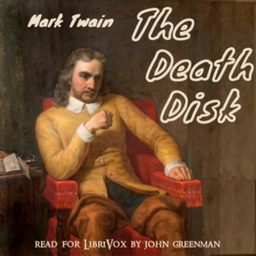
Death Disk, The by Mark Twain (1835 - 1910)
Claim This Podcastby ciesse
Podcast Authority
Beta
Podcast Overview
Mark Twain's "Death Disk" was inspired by the historical account of the execution of Colonel John Poyer of Pembroke, Wales on April 21, 1649. A small child was given the responsibility of selecting which of three rebel leaders of a civil uprising would receive a death penalty. The unfortunate fate was given to Poyer who was shot in front of a large crowd at Covent Garden. In 1883 Twain read about the child's role in the execution in a copy of Carlyle's Letters and Speeches of Oliver Cromwell, (Wiley & Putnam, 1845, pp. 344-345). In his personal notebook, Twain's imagination led him to remark, "By dramatic accident, it could have been his own child" (Notebook #22, reprinted in Mark Twain's Notebooks & Journals, Volume III, 1883-1891, p. 14). In December 1883, Twain wrote his friend William Dean Howells, "Now let's write a tragedy" (Mark Twain-Howells Letters, Volume II, p. 455). In his letter to Howells, he included the manuscript of the closing scene where a young girl unknowingly gives her own father a death sentence. Twain's original version ended in the father's execution.<br /><br />Twain's plan to complete the tragedy went nowhere for over a decade. In December 1899 he wrote from London to Katharine Harrison that he had recently completed "The Death Disk." Twain had revised the story and it now included a miraculous ending well-suited for the Christmas season. It was published in the 1901 Christmas issue of Harper's Magazine. On February 8, 1902, the story was staged as a one-act play at the Children's Theatre at Carnegie Hall. According to an announcement in The New York Times, February 7, 1902, child actress Beatrice Abbey (stage name of Mrs. Ethel Foster Hollearn) would star in the lead role in the play titled "Little Lady and Lord Cromwell."<br /><br />In Twain's autobiographical dictation on August 30, 1906, he recalled the struggles he had with the story. By that time he also recalled the title incorrectly:<br />"In the course of twelve years, I made six attempts to tell a simple little story which I knew would tell itself in four hours if I could ever find the right starting point. I scored six failures; then one day in London I offered the text of the story to Robert McClure and proposed that he publish that text in the magazine and offer a prize to the person who should tell it best. I became greatly interested and went on talking upon the text for half an hour; then he said, 'You have told the story yourself. You have nothing to do but put it on paper just as you have told it.' I recognized that this was true. At the end of four hours, it was finished, and quite to my satisfaction. So it took twelve years and four hours to produce that little bit of a story, which I have called 'The Death Wafer'" (Mark Twain in Eruption, pp. 199-200).<br /><br />In 1909, Biograph released "The Death Disk" as a silent film directed by D.W. Griffith.<br />(Summary by Barbara Schmidt, used by permission (http://www.twainquotes.com))
Language
🇺🇲
Publishing Since
1/18/2025
Unlock The Full Podcast Authority Score Report
See how your podcast performs across key metrics
Podcast Authority
BetaRecommendations available
Unlock the full report to see detailed tips
Recommendations available
Unlock the full report to see detailed tips
Unlock comprehensive insights including:
- • YouTube presence analysis
- • Social media reach metrics
- • RSS compliance scoring
- • Podcast 2.0 features
- • Technical standards
Detailed Analytics
- Complete breakdown of all 19 authority metrics
- Personalized recommendations for each metric
- Industry benchmarks and comparisons
- Technical RSS feed analysis and compliance scoring
Growth Strategies
- Step-by-step action plans for improvement
- Quick wins to boost your score immediately
- Pro tips from successful podcasters
See how your show performs across every key metric
High authority scores make your podcast more attractive to industry leaders and influencers who want to appear on credible shows.
Sponsors look for podcasts with proven authority and engagement. Your score demonstrates your podcast's value to potential partners.
Understanding your strengths and weaknesses helps you make data-driven decisions to expand your listener base effectively.
1 verified contact email on file for Death Disk, The by Mark Twain (1835 - 1910)
Pitch yourself as a guest, propose sponsorships, or reach out directly to the host.
Recent Episodes
January 18, 2025
Chapter II
January 18, 2025
Chapter I
2 total episodes available
Deep-dive analytics for Death Disk, The by Mark Twain (1835 - 1910)
Frequently asked questions
Have a different question and can't find the answer you're looking for? Reach out to our support team by sending us an email and we'll get back to you as soon as we can.
- What is Death Disk, The by Mark Twain (1835 - 1910)?
- How often does this podcast release new episodes?
This podcast updates daily.
- Where can I listen to this podcast?
This podcast is available on 4 platforms including Apple Podcasts, Spotify, and more. You can also use the RSS feed directly.
- Does this podcast accept guests?
No, this podcast does not typically feature guests.
Legal Disclaimer
Pod Engine is not affiliated with, endorsed by, or officially connected with any of the podcasts displayed on this platform. We operate independently as a podcast discovery and analytics service.
All podcast artwork, thumbnails, and content displayed on this page are the property of their respective owners and are protected by applicable copyright laws. This includes, but is not limited to, podcast cover art, episode artwork, show descriptions, episode titles, transcripts, audio snippets, and any other content originating from the podcast creators or their licensors.
We display this content under fair use principles and/or implied license for the purpose of podcast discovery, information, and commentary. We make no claim of ownership over any podcast content, artwork, or related materials shown on this platform. All trademarks, service marks, and trade names are the property of their respective owners.
While we strive to ensure all content usage is properly authorized, if you are a rights holder and believe your content is being used inappropriately or without proper authorization, please contact us immediately at hey@podengine.ai for prompt review and appropriate action, which may include content removal or proper attribution.
By accessing and using this platform, you acknowledge and agree to respect all applicable copyright laws and intellectual property rights of content owners. Any unauthorized reproduction, distribution, or commercial use of the content displayed on this platform is strictly prohibited.