- 33
- Episodes
- 3
- Ratings
- Daily
- Cadence
- 2026
- First episode
About Different Life
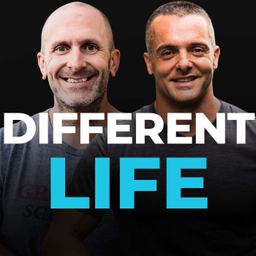
Most people don’t need more motivation. They need a different approach. Hosted by Gary Donia and Peter Brouillard, Different Life draws on years of experience helping people navigate pain, movement, recovery, and performance — but the conversation goes far beyond health alone. We talk about: • Strength training as a life skill • Back pain, mobility, and injury recovery • Pelvic floor health and durability • Sleep, stress, hormones, and energy • Performance and longevity over 40 • Discipline, habits, and identity shifts • Parenting and modeling health • Relationship-based healthcare We discuss these not as isolated topics, but as part of a bigger question: What does it look like to live differently, not just try to live better? If you feel stuck in patterns that no longer fit who you want to become, this show is for you. Because better often keeps you in the same cycles. Different changes your trajectory.
- Publisher
- Gary Donia & Peter Brouillard
- Category
- health & fitness · health & fitness
- Language
- en
- Explicit
- No
- First episode
- 17 Feb 2026
- Latest episode
- 12 Oct 2026
Latest episodes
33 episodes in the feed.
12 Oct 2026
032 | Are Protein Bars Healthy? How to Pick One (And Which Are Basically Candy)
Episode Summary Are protein bars actually healthy, or are a lot of them candy bars with better marketing? In this episode of Different Life, Gary and Peter break down how to tell a good protein bar from a bad one. It starts with the story of Peter catching Gary eating a Clif Bar as his "healthy" office snack and asking if he was planning to climb a mountain later. Peter explains the three types of bars (athlete fuel, protein, meal replacement), the simple label check he uses (calories first, then make sure protein is the biggest number), and the protein x 10 shortcut: 20 grams of protein should land around 200 calories. Then they put real bars to the test, including Barebells, David, Pure Protein, Clif and RXBAR, and even compare one to a Snickers. They also cover why whole food keeps you full far longer than a bar, whey vs plant protein, sugar alcohols, and how many bars a day is reasonable. Helping you build a healthier, capable, more meaningful life. Key Topics Discussed The 3 types of bars: athlete fuel, protein bars and meal replacements Why the front of the wrapper tells you nothing Peter's label check: 150 to 200 calories, protein the highest macro, 20g or more The protein x 10 shortcut for checking any bar in seconds How many protein bars a day is reasonable Why whole food keeps you fuller than a protein bar Whey vs plant protein Sugar alcohols and why they upset your stomach Barebells vs Snickers, side by side Why some "protein bars" are really candy bars Chapters with Timestamps 00:00 Cold Open: "Are You Climbing a Mountain Later?" 00:27 Peter, We Have Returned 01:38 Gary's Lunch: A Banana and a Protein Bar 02:13 Protein Bars Are Everywhere 03:10 The Clif Bar Story 05:48 The 3 Types of Bars 09:23 What to Look for on the Label 10:26 Peter's Rule: Calories First, Then Protein 12:21 The Protein x 10 Shortcut 13:38 How Many Bars a Day? 15:08 Why Whole Food Beats a Bar 18:13 Whey vs Plant Protein 19:10 Does Peter Eat Them? 20:08 Label Check: Barebells vs Snickers 22:28 David, Pure Protein and Sugar Alcohols 24:53 "You're Poisoning Your Employees" 27:33 Bars That Are Really Candy Bars 30:18 Gary's Secret Stash Notable Quotes “Protein equals healthy. Protein bar equals health.”, Peter “If protein's not the highest one, throw it, move on immediately.”, Peter “We're basically mimicking what GLP-1s do to people currently. We're trying to keep food in your stomach for longer.”, Peter Music: "Rock music intro for podcasts or shows" by Jibey, freesound.org/s/658310, licensed CC BY 4.0 Connect With Us Here: YouTube: https://www.youtube.com/watch?v=LhNzwFBTEHU Book a free discovery call: https://meetings.hubspot.com/peter-brouillard/discovery-call?utm_source=transistor&utm_medium=podcast&utm_campaign=dl032 Website: https://wholehealthsolutions.life/ Facebook: https://www.facebook.com/wholehealthsolutions.life Instagram: https://www.instagram.com/wholehealthsolutions.life LinkedIn: https://www.linkedin.com/company/whole-health-solutions-sports-performance
5 Oct 2026
031 | Why You Can’t Lose Weight: 11 Common Reasons Holding You Back
Episode Summary Why is losing weight so difficult? For many people, the answer seems obvious: there isn’t enough time, their metabolism is too slow, hormones are getting in the way, genetics dealt them a bad hand, or they simply don’t have enough willpower. In this episode of Different Life, Gary and Peter work through the common stories people tell themselves about why they can’t lose weight. Rather than treating them simply as “excuses,” they examine which concerns have some truth behind them, which ones are commonly misunderstood, and what someone can actually do about them. The conversation covers time and priorities, metabolism, calorie intake, healthy eating, exercise, hormones, genetics, stress, sleep, weekend eating, and willpower. Peter also explains how he approaches these barriers as a health coach: identify what is actually preventing progress, then build strategies that reduce the need to depend on motivation and discipline. At the heart of the episode is a simple framework: many weight-loss struggles ultimately involve some combination of overeating and under-moving. But simply telling someone to “eat less and move more” misses the important part—the behaviors, environment, habits, expectations, and life circumstances that determine whether someone can actually do it consistently. Helping you build a healthier, capable, more meaningful life. Key Topics Discussed Why “I don't have enough time” is one of the most common barriers to weight loss The difference between lacking time and not prioritizing your own health Why people often misunderstand what metabolism actually is How body size, muscle mass, and physical activity affect energy expenditure Why crash dieting can make sustainable weight management more difficult Why someone can feel like they “barely eat” while still consuming more calories than they realize How tracking food temporarily can reveal overlooked calories and eating patterns Why eating nutritious or “healthy” foods doesn't automatically create a calorie deficit The impact snacks can have even when meals are well planned Why exercising several days per week doesn't guarantee weight loss How exercise can influence hunger and food intake Hormones, thyroid function, testosterone, menopause, and weight loss Changes in fat distribution associated with menopause Why genetics can make weight management easier or harder without making change impossible How stress and poor sleep can become legitimate barriers to healthier behaviors Why weekends can undo a calorie deficit created Monday through Friday Alcohol, restaurant meals, sporting events, travel, and weekend eating Gary and Peter's debate over eating while watching sports or being entertained Why relying exclusively on willpower is rarely a sustainable strategy Identifying barriers and changing your environment instead of trying to “white-knuckle” healthier behaviors The idea of “overeating and under-moving” as a starting point for understanding weight-loss struggles Chapters with Timestamps 00:00 – Peter Is Late Again Gary and Peter open with Peter's ongoing struggle to remember the podcast schedule—and immediately stumble into a conversation about systems, reminders, and personal responsibility. 03:35 – Why Can’t I Lose Weight? Gary introduces the central question and a list of common reasons people believe they're unable to lose weight. 05:00 – The Top Weight Loss Barriers Peter identifies three barriers he frequently encounters in health coaching: lack of time, difficulty staying consistent, and not knowing what to do. 08:00 – “I Don’t Have Enough Time” Is lack of time really the problem, or is health simply too far down the priority list? 10:50 – “I Have a Slow Metabolism” Peter explains metabolism, energy expenditure, activity, body size, and muscle mass—and why metabolism isn't simply something you're genetically assigned. 14:10 – “But I Barely Eat” Why perceived food intake and actual calorie intake don't always match. 16:45 – “But I Eat Healthy” Healthy meals can coexist with enough snacks and additional calories to prevent weight loss. 18:00 – The Goldfish Problem A serious discussion about weight loss briefly becomes a not-so-serious discussion about how easy it is to eat an unreasonable number of Goldfish crackers. 19:45 – “But I Exercise All the Time” Why working out four or five days per week doesn't automatically produce weight loss. 21:40 – “It’s My Hormones” The conversation turns to testosterone, thyroid hormones, estrogen, menopause, body composition, and fat distribution. 24:35 – “It’s My Genetics” Peter explains why genetics genuinely can affect how easy or difficult it is for someone to maintain muscle and lower body fat—but doesn't necessarily make change impossible. 27:15 – Stress and Lack of Sleep How sleep, stress, food, exercise, and physical activity interact as part of overall health. 29:10 – “I’m Good All Week” Why being extremely disciplined Monday through Friday can still fail to produce results when weekends become a free-for-all. 31:20 – Alcohol, Sports & Weekend Eating Gary describes how Friday night pizza, football, travel, alcohol, and snacking can turn a weekend into a major calorie surplus. 33:15 – Peter Becomes the Fun Police Peter proposes a rule against boredom snacking and eating while being entertained. Gary strongly objects. 35:25 – “I Don’t Have Enough Willpower” Why Peter actually agrees that many people shouldn't expect themselves to succeed through willpower alone. 37:35 – The Real Reason You Can’t Lose Weight Peter boils the problem down to two concepts: overeating and under-moving—and explains why the real work is figuring out what's driving those behaviors. 38:40 – Peter Will Probably Be Late Again The episode ends where it began: with Peter's questionable time-management skills. Notable Quotes “It’s less trying to find time in their schedule, and it’s more reframing themselves as the priority.” — Peter“You’re unintentionally misleading yourself.” — Peter“The strategy is never rely on discipline and willpower. The strategy is, let’s figure out the barriers to the outcomes that you want, and then strategize on how to overcome those barriers.” — Peter“Because you’re overeating and under-moving.” — Peter“How can we re-engineer more movement and better eating into your life?” — Peter Connect With Us Here: YouTube: https://www.youtube.com/@WholeHealthSolutions Website: https://wholehealthsolutions.life/ Facebook: https://www.facebook.com/wholehealthsolutions.life Instagram: https://www.instagram.com/wholehealthsolutions.life LinkedIn: https://www.linkedin.com/company/whole-health-solutions-sports-performance
28 Sept 2026
030 | How to Use AI for Your Health Without Replacing Human Expertise
Episode Summary Artificial intelligence can now answer health questions, interpret complicated terminology, ask follow-up questions about symptoms, and turn an intimidating medical report into something an ordinary person can understand. So where does that leave doctors, physical therapists, health coaches, and other healthcare professionals? In this episode of Different Life, Gary and Peter explore where AI genuinely helps and where its limitations become much more obvious. They compare the old experience of searching symptoms through Google with conversational AI that can gather additional information and provide a more focused answer. They also discuss using tools like ChatGPT to understand imaging reports, lab results, back pain, exercise recommendations, and other health information before talking with a healthcare professional. The bigger question is whether information alone is enough. Peter compares AI-generated healthcare advice to asking AI how to repair a plumbing problem: getting instructions doesn't automatically give you the expertise, tools, judgment, or experience needed to execute them properly. Gary and Peter argue that this becomes even more important in healthcare, where professionals are interpreting not only data but a person's story, movement, reactions, goals, and behavior. The conversation eventually moves into robots, physical touch, AI implants, the danger of outsourcing too much thinking, and whether an increasingly automated world could actually make real human interaction more valuable. And because this is Different Life, they also somehow make time for table territorialism, scalding coffee, robot massages, and Peter's apparently unacceptable fingernails. Key Topics Discussed Why Gary gets irrationally irritated watching people aggressively claim tables in public spaces How assigning intentions to other people's behavior can change your emotional reaction The discussion around very hot beverages and esophageal cancer risk The difference between traditional Google searches and conversational AI How patients are already using ChatGPT and other AI tools for health questions Using AI to better understand symptoms before speaking with a healthcare professional Why receiving information is different from having the expertise to act on it How AI could help explain MRI reports, X-rays, radiology reports, and lab results The problem with arriving at a medical appointment convinced that AI has already diagnosed the problem Why healthcare professionals still provide context that an AI system may miss The importance of facial expressions, movement, body language, experience, and clinical judgment Physical touch and its role in creating connection between healthcare providers and patients Whether robots could eventually provide physical therapy or massage Why younger generations may be more resistant to AI than expected Using AI as a problem-solving tool without outsourcing your ability to think The possibility of future AI implants and brain-computer interfaces Why AI may be best used to help patients become more educated participants in their healthcare Human connection as something that may become even more valuable as technology grows Chapters with Timestamps 00:00 — Why Other People's Behavior Irritates Gary Gary opens with his frustration over people aggressively searching for and claiming the "perfect" table. 05:00 — Are We Inventing Other People's Intentions? Peter challenges Gary on how much of his irritation comes from assuming he knows what other people are thinking. 08:00 — Can Extremely Hot Drinks Increase Cancer Risk? A conversation about scalding food and drinks leads into cell turnover and esophageal cancer risk. 14:20 — AI in Healthcare The main conversation begins: how could artificial intelligence change physical therapy, personal training, health coaching, and medicine? 18:20 — AI vs. Google for Health Questions Gary and Peter compare traditional internet searches with AI tools that can interpret information and ask follow-up questions. 20:00 — Information Isn't the Same as Expertise Peter uses a plumbing analogy to explain why knowing what might be wrong doesn't necessarily mean you can solve the problem yourself. 21:40 — Can AI Replace Healthcare Professionals? They discuss experience, intuition, facial expressions, movement, and the contextual information a human clinician gathers. 23:20 — Could a Robot Replace Human Touch? Gary explains why physical contact and interpersonal connection can matter in healthcare. 26:00 — Why Younger People May Push Back Against AI They discuss their kids' attitudes toward AI and whether technology should replace collaborative problem-solving. 27:20 — AI as a Tool vs. AI as a Substitute for Thinking Gary argues for using the best available tool efficiently, while Peter warns against allowing AI to do all of the intellectual work. 29:00 — AI Implants and Brain-Computer Interfaces The conversation turns toward implanted technology, Stephen Hawking, and the possibility of interacting with computers through thought. 31:15 — How Patients Can Use AI Right Now They return to practical examples: describing symptoms, asking questions, and using AI as an informational starting point. 34:00 — The New Version of “Dr. Google” Gary describes patients arriving with predetermined diagnoses and treatment expectations—and why that can create problems. 36:10 — Becoming a Better-Informed Patient AI can help patients prepare better questions and understand their health without dictating treatment. 37:15 — Using AI to Understand Medical Reports One of the most practical applications: translating MRI, X-ray, radiology, and lab terminology into plain language. 38:25 — Why Feeling Heard Still Matters Gary and Peter argue that being listened to and understood remains a uniquely important part of healthcare. 39:00 — Robot Massage and Peter's Fingernails The episode ends on the inevitable conclusion: perhaps Peter really can be replaced by a robot. Notable Quotes “You can't do anything with information if you don't have the expertise.”“If you don't ask your mind to do the work…” — Peter, comparing mental effort with the need to physically exercise the body.“Part of problem-solving is picking the correct tool.”“I think AI is a wonderful tool for those things.” — Peter, discussing using AI to understand medical reports.“When you feel like you're heard… that goes a long way in feeling better.” Resources Mentioned ChatGPT https://chatgpt.com/ (https://chatgpt.com/) Google Gemini https://gemini.google.com/ (https://gemini.google.com/) Google News https://news.google.com/ (https://news.google.com/)
Reach and audience
Public platform figures. Ratings count people who left a rating, not total listeners.
- Apple Podcasts (US)
- 5.0 / 5
- 3 ratings
Contact Different Life
- Guest appearances
- Does not typically book guests
Based on episode analysis; this does not confirm that the show is currently accepting guests.
Shows with a similar audience


Host of Different Life?
Claim your podcast to manage its listing and keep your show details accurate.
Pod Engine is an independent podcast discovery and analytics service and is not affiliated with or endorsed by this podcast. Artwork and show content belong to their owners. Full legal notice.
Explore this show
Podcast research with Pod Engine