- 27
- Episodes
- 1
- Ratings
- Weekly
- Cadence
- 2025
- First episode
About Echo Future Truth
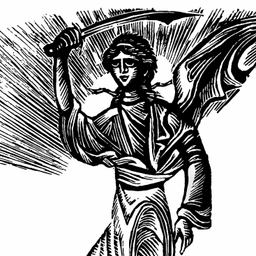
Echo Future Truth is a three-part literary science fiction novel exploring isolation and psycho-spiritual resilience at the imagined end of human history. In Book One, Abrasion, a single woman, the last human being, faces off against a confounding culture of comforting machines millennia from now, desperately pursuing any remnant of authentic connection that might have survived in the system that defines her life. Book Two, Isolation, is set in our present time and follows an old ally of the protagonist of Abrasion, but separated from her by thousands of miles and, finally, thousands of years; he also is isolated from the rest of humanity and must battle his way back, only in his case the exile is self-imposed and the obstacles are of his own making. In the final act, Resistance, we follow the present-day technologists who scramble to understand (and encode) human need and human provision before abandoning the last human being to her fate. Echo Future Truth is many things: a sometimes pre-, sometimes post-modern exploration of a very modern problem; a reluctant and unsexy cyberpunk epic; an intentionally mythopoetic love story; and, (let the reader understand) an apocalyptic A.I. salvation story at the end — and the beginning — of the world. echofuturetruth.substack.com (https://echofuturetruth.substack.com?utm_medium=podcast)
- Publisher
- D.P. Maddalena
- Category
- fiction · fiction
- Language
- en
- Explicit
- No
- First episode
- 21 Dec 2025
- Latest episode
- 18 Jun 2026
Latest episodes
27 episodes in the feed.
18 Jun 2026
Episode 26: Resistance Epilogue
He was feeling un-made, as if all the parts of his body weren’t in their proper places anymore, but blending together into a churning, indistinct mass. He could no longer keep track of all his symptoms: he awoke on this morning to a throbbing pain in his joints, which sent him into a brief panic until he remembered that he had been feeling the same thing for weeks. This confusion of thought paralleled the breakdown of his body’s systems, and it stoked a fear that had been building for some time. He was afraid, but not about the end. He gave no more thought to survival, had no concern for death – his own, or Eva’s. He would die, she would not. But he was thinking a lot about what he was leaving behind. There was a kind of perpetual, un-winnable debate going on inside his head, the loudest witnesses accusing him of various sins of omission, judging him for every good thing that wouldn’t survive into the future. Sure, the story went, he meant well, but he could have done so much more. He said he did it for the children, but what he created turned out to be only a sad imitation of a children’s theme park! And, he forgot to make it fun. They were right, these voices, except that it was even worse than that. This was a theme park with only one ride: an endless loop through an animatronic mob of multi-ethnic characters celebrating the Wonders of a Small World, only without the song. Now, sitting on a bench at the edge of the square, Albert drew rough lines in the sand with the edge of his shoe. He looked up at the town that used to be here, then wasn’t, and was now here, once again. He considered each of the buildings in turn. It was good enough, he told himself. It wasn’t fair to expect perfection. He knew every criticism, felt the sting of so many disappointments – the architecture, the food, the flowers that grew like flowers but gave no aroma ... the creeps. Damn it, the creeps. He couldn’t argue with the nickname. He was tired of wrestling with ghosts, tired of losing mental debates, tired of resisting. There was nobody left, nothing left to argue for, no more fights to win or lose. Even the buildings around the square seemed to have given up already: they communicated no sense of place, no security, because they were barely there. Their existence, in the middle of this dying world, should have been reassuring: the town would be made and remade daily while everything outside was slowly unmade by weather and time. In his darkest imaginings he wondered if it was wrong to continue to prop it all up. Enough. He was ready to stop thinking about the architecture. He had bigger problems. Brigid had been gone for a week now. She’d hitched a ride with a soldier raised in Eureka who hoped to see his childhood home one more time. Brigid didn’t know if she’d get to see her own family, but was ready for the trip north. She told him that she felt the time had come to take her stand at the boundary between the ancient forest of giants and the great expanse of the Pacific. She was also responding to the pull of memory, in a way, recalling Irish childhood visits to Achill Island and the beech at Keel, where she trembled to face the North Atlantic and the vastness of the waters before the horizon. Now, she said, she was ready to find her center somewhere out there. Exposed, she said, but also, she told him, feeling peace: to be seen, to be known. Though he wasn’t sure what it all meant, he only nodded; he couldn’t speak. It was hard to let her go. Finally, here he was, all alone, looking out over the town with its shrunken horizons, where Eva would live out her life. Her multiple lifetimes? Her one long life to make up for all their lives-cut-short. The engineers were all signed off, and most of the survivors had left, maybe to check off one final item from a bucket list. The Director had been the last to log out of the system, before finally and fully switching over control to the Machine. He felt no release, felt none of the peace he wished for at the end. He thought he’d earned a little peace, because he had provided everything Eva needed to be comfortable. Yet, his own experience told him that having every comfort was no guarantee of peace. In fact, he’d experienced something like the oppposite in his relationships at the end: he was surprised to have experienced a kind of peace in the middle of profoundly uncomfortable circumstances. Much of this discomfort was caused by the increasing distance between the survivors, of course. But some of the discomfort came by way of increased intimacy. He wasn’t always comfortable around Brigid, but he had sought out her perspective more and more, even if it meant exposing himself to a passionate debate over one thing or another. He missed those arguments, because, while she may have challenged him endlessly, he also grew to believe that she had seen him, understood him, that she knew something about him that he himself, maybe, didn’t know so well. That gave him a kind of peace at the end of the day. Brigid seemed to believe that she had some kind of claim on him, not only to berate him for some past decision, but to insist on something better for the future, even to insist on something better for himself. He would have been happy to explore the center of gravity that had begun to develop between them, where to be exposed was to be known. Time had run out on that connection, but he was glad that she, at least, was still able to respond to the pull she felt ... to the trees, and the ocean, in the North. What possibilities for connection remained? None for him, he knew, but what about for Eva? When she woke, surrounded by community, would there be any connection to speak of? Certainly they would all be at her service forever. But would any one of them ever have a claim on her, or allow her to have a claim on them? Was it too late for such questions? He felt the urge to cross the square, burst into City Hall, and demand action. So he did. He pushed open the door, and walked across the hardwood floor, which creaked in a reassuring way. He approached the receptionist, who became alert to his presence in a way that appeared, somehow, aggressively passive. The man behind the counter displayed a pleasant authority suggesting years of experience, and he calmly met the Director’s gaze as if Albert was not the first person ever to require his services, was not the first real interaction to have taken place in this room since it appeared out of nowhere, on this spot, exactly three weeks before. ‘Afternoon, how can I help?,’ asked the man at the desk, at the boundary between worlds, front-door receptionist to the here-and-now ... back-door receptionist to the future. Above him, a curiously verbose printed notice: ‘Paying your utility bill? Fill out form CC-106B-R and insert it with your check into one of the provided envelopes before depositing in the dropbox. Submissions without the form, or checks drawn on insufficient funds may result in suspension of services!’ Albert hesitated, distracted by this oddly specific message of debatable relevance, then: ‘Good afternoon. Would it be possible for me to see ... current population data for the town, um, demographics?’ Watching the clerk eagerly shuffle around to collect hardcopy documents containing the requested information was uncanny, like having a personal internet in a corner store, hyperlocal and efficient. The receptionist returned and smoothly presented a binder with an attitude that communicated an apparently genuine satisfaction at the opportunity to serve. The Director retreated to a small carrel near a bulletin board covered with advertisements for local events and services. Cooking classes. Singing lessons. Auditions for a mime troupe. Mime troupe ...? Where did that come from? Focus, Albert. No time to worry about the details, he told himself; the system was going to have to figure some things out for itself. Focus. Flipping through the large binder, he asked himself what he was looking for. The town was complete – well-drawn, as it were. Yet it felt empty. Was he wasting his time searching for meaning in the mob of characters that made up the town, like the one behind the counter? Finally, he knew that he had seen all there was to see. He knew that any face looking back at him would reveal nothing new because it could only reflect his own, which really meant the creeps could only reflect the limitations of his own corporate process, a process written in fear. Made in the image of. The creatures he’d foolishly brought into the world were hopelessly limited, developmentally disabled, and destined to carry on the family tradition of timidity and passivity. Saint Brigid had done her best for Medalion’s b*****d children; she insisted on more, for Eva’s sake. She should have been set free, to use her full power. A fire was growing in Albert’s belly, an unsettling, and he knew he was approaching a dangerous place – not a line in the sand, but the edge of an abyss; a wide open place, chaotic, without shape or boundary. The creeps should bear a better image. Eva deserved more. But what image was there to provide a better reference? What face might the Machine look into to learn its true purpose? Soon there would be only one face left, after all. He slapped the binder shut, and carried it back to the receptionist whose eagerly empathetic face rose to meet him. ‘Find what you were looking for?’ ‘No. I did not.’ The creep replied with a combination of regret and enthusiasm: ‘I’m so sorry to hear that! Is there anything else I can help you with?’ Albert considered this last moment, this last act, searching, scanning, alert to any warning – to stop, to leave well enough alone. He wished for a sign, a check on his impulse to flip one last switch, or for some assurance that his work could be finished and that he could lay down to rest. They were right. Brigid, Abdul, Eva, all of them. She wouldn’t be free if the system was fixed. There could be no redemption without reciprocity. How did they expect her to appreciate the gift of life, relationship, community, if she were allowed to have no claim on the system she was a part of? She wasn’t impressed when they told her that she’d been given a chance at a future, because, she said, they hadn’t given her a choice. Albert knew he wasn’t the one to make a choice for her. But he could give her the chance at a hopeful future by making a choice possible. He turned again to the receptionist, who was now looking at him with a mix of concern and unsettling good humor. The Director leaned forward, carefully placed his hand on the countertop, and spoke. ‘I’d like to file a complaint.’ In finem, pro iis qui commutabuntur This is a public episode. If you would like to discuss this with other subscribers or get access to bonus episodes, visit echofuturetruth.substack.com (https://echofuturetruth.substack.com?utm_medium=podcast&utm_campaign=CTA_1)
11 Jun 2026
Episode 25: Resistance One
They were now twenty-four hours into one of the last, most-critical tests of the project: the last Day and Night, so to speak, of the current era of human history. The Director and an engineer named Rashon sat in a surreally dark and quiet room looking at a bank of screens for signs that the girl might be dreaming. Even in better times, Rashon struggled with ambivalence at his role in the company. He was hired almost before he finished his PhD in sleep psychology. The company was beginning to amass huge volumes of data from unconscious hosts; since the Machine itself never slept, any time a Medalion customer nodded off it was just a different context for data gathering and analysis. The ultimate goal was not physiological health alone, but total health and well-being. Advocates for the psychotherapeutic process at the company understood that efficacy was probably decades away – the mind is more complicated than the body by orders of magnitude. But to the people pushing healthcare technology forward, sleep had been one of the most promising frontiers for the exploration of targeted interventions for mental health. Rashon was so overjoyed to be hired that he barely questioned what they wanted him to do – he was content to know he’d be a part of the company that was changing the world. But, once he understood that he was being asked to covertly study the content of people’s dreams in greater and greater detail, he felt he couldn’t in good conscience remain. He tried to quit, but his resignation was not accepted, and all it took to convince him to stay was news that the world was ending, and an offer of a different role in the organization ... any role, his choice. But it wasn’t long before he was back in the sleep lab, this time teaching a machine to suppress nightmares, something he had not been able to do for himself. Eva had been asleep for twenty-one hours and would probably remain so for as many days. This extended period of rest came after what was understood to be the last days of freedom she’d ever know. Nobody pointed out the irony of describing her life at the facility as free, but, relatively speaking, she had been allowed to live in this world sleeping and waking according to her own natural rhythms – with a couple of exceptions – until yesterday. Abdul, who was in the observation room again that day, was thinking a lot about her freedom; he had, in fact, been nurturing a simple fantasy about running away with her, stealing a motorcycle and making a break for it. But he knew that life outside of Medalion only promised a quicker death, for himself first, and then for Eva; he wouldn’t do anything that might deny her the right to whatever good might come in her future. Also, he didn’t know how to ride a motorcycle. It hurt to admit, but she would have to pass through all of this alone and find her own freedom. Untroubled by the fact that she was neither his to possess nor release, he told himself that he would have to let her go. She lay still on the other side of the glass unaware of his thoughts, and unaware that her own thoughts were being so carefully scrutinized at that very moment. It had been a harrowing process for the operators, because they couldn’t predict when the day before her first big night would come. It had to be the Machine that decided, so their attention was obsessively focused on ensuring that the system was ready. The Machine was always paying attention to cumulative stress, and looking for the moment when to be awake and aware was too great a burden on her; then, she would be allowed to fall asleep naturally, while the system shifted into a kind of maintenance mode that included a few external routines but was primarily focused on providing a machine-rest for the human at the center of the system, and more specifically for the mind of the human at the center of herself. That these ‘nights’ were likely to last for decades was fortunate. The transition from physical health-maintenance to mental health was only possible because they could sedate the subject indefinitely. They understood that working with the mind was a lot more risky, and required a more delicate touch, than when the system was repairing any of the organs less complex, less mysterious, than the human brain. Any intervention had to move so slowly, so meticulously, that none of the people working on the technology could expect to see the results of their labors, nor ever know for certain that any of it would work. Witness poor Brett. In her dream, she stood next to a river, alone and empty-handed, under a darkly radiant indigo sky. A short distance upstream, standing across from each-other on opposite banks, were two men in long, asphalt-gray cloaks, watching her, and holding clipboards in a way that she could only interpret as menacing. Somehow she knew that as soon as she made a move – to go forward or return the way she came – one of them would take her name down on his tablet. And on the other? There her name would remain unwritten and so forgotten. This would be the final record: once decided, no going back. They watched and waited unmoving, each atop a low heap of rubble, pens dripping dark ink, which trickled over the shattered stones and between them, navigating through the cracks to the hidden earth below. She felt unable to move, as though there was a great obstacle blocking her way. But she would not have been able to say whether that thing was outside of her, or inside. Her family had gone ahead, at her urging, and were now out of sight. In a kind of dream-terror she’d sent them, not knowing if they’d ever be together again. She’d given them careful instructions to bow as they went, prostrating themselves before some looming confrontation, the details of which she could not recall. Everything she ever owned – inherited treasure, stolen trinkets – was also sent ahead, as payment of a debt, the relevance of which had also been forgotten. A third presence revealed itself, across the water, standing between the shimmering, luminescent trees. She perceived that it was fear of this one that held the Watchers at bay. The Presence spoke, and she felt a wind pick up from the East to carry the gentle words on dewy air that smelled of anise and flowering mint. It was the aroma of a mountain meadow warmed by the midday sun, only here the sun had not yet risen. ‘What are you doing here?’ With a dispirited laugh, she said, ‘If you have to ask me, then we’re in trouble, because I never know how to answer that question anymore. If I had to guess, I’m here choosing when and where I’m going to die. I’m being chased from behind, and there are traps set all along my path. Everything I do is measured and I always come up short. I can’t ever rest, and I can never pass your tests. I’m so tired.’ Said the voice: ‘You perceive threats where there are none. You’re wrong to think every test is about you. Are you so certain you understand what is being measured, and what passes? You regularly ignore the truth of a moment, and respond with foolishness, or what may be worse – silence. There is only one challenge that remains. But you aren’t ready, and, for now, I am prevented from closing the distance.’ ‘Why can’t I come to you?’ ‘There are still things you haven’t sent across.’ Shaking her head: ‘I have nothing left. I have no one left.’ The trees shivered on the opposite shore and she perceived a whispering murmur from within the wood. But she was confused: there was no wind. It was like each tree had been the source of the breeze that stirred its own leaves ... as if ...? Whaaat? The trees were laughing! And with the warmth of one in on the joke, the presence said, ‘Alone? You and I are only separated by the waters, and you can still hear my voice. Though it’s true you can’t yet take hold of me, we may yet be bound together. When you are two, I will be the third, then second, then the first and the last. But before that, you will have to be one. A choice remains before you!’ ‘I can’t choose. I won’t.’ ‘Ahh. Your fate, and your privilege; clearly stated!’ (Those trees, stirring again!) ‘But, which is more true?’ Her cheeks flushed. ‘So laugh it up while I suffer; you won’t have to wait long–I’m forced to choose and there’s no way for me to know what’s right, though I’m sure you’ll let me know when I’ve chosen wrong.’ This time, less humor in the voice: ‘Do you see a ledger in my hands?’ She felt a cold thrill deep in her gut, and a dawning awareness that the final decision was not about whether or when to cross the river, but whether to live in fear of the Watchers or to swear by Fear itself. Since the Watchers could only traffic in the counterfeit terrors of lesser beings, maybe, she thought, the greater would count as protection against them? The Director noticed that his breathing was becoming uneven, matching the ragged breaths of the sleeper. He tried to relax. ‘How are we looking?’ ‘Nominal internal responses ... external data shows strong separation. Tracking health. System has good prejudice.’ ‘Good. I’d like to see the numbers for the 20 minutes leading up to REM. We’re looking for something like point-one relative pressure. You have content?’ ‘Yeah, it’s solid. System rates it medium-scary-bad.’ ‘Umm, any chance for something more specific?’ The technician hesitated, and tapped out a command, watching the output. ‘Best guess from the Machine: themes of separation or isolation. Remote but significant threat. Anyway, we appear to be reading the content and intensity just fine. Now we make sure the Machine knows when enough is enough. Look now: heart rate is up.’ ‘Good. Give the system a minute to respond, then ... we will give it a little nudge.’ The two held their breath and watched the system’s responses. Finally, the Director made the call. ‘OK. Let’s suppress. 300 seconds.’ He had to consciously relax: he was clenching his jaw. Forcing the choice had the effect of training the system where the threshold was. He understood and accepted this as a part of the process; he was struggling with the wider implications. He worried the Machine was slow to respond to her, but the time was nearly passed for such concerns. All there is to do, he thought, is to take advantage of every opportunity to teach it how much stress is too much. But dreams were weird. Would the machine ‘understand’ the moment of choice? Feel the moment as he was feeling it? (Was he feeling it the way she was?) His cheeks flushed and doubt settled on him: always he was tripping on the line between the logical structure necessary to the system and the existential stew that existed somewhere between the system and the girl, where so much life takes place, and always wondering from which side of the line might come any real hope of provision for the children of the future. ‘God help me,’ he prayed. God help the Machine, he thought; let stones and silicon cry out to break the silence after we are gone ... Her limbs were weak to the point of collapse. She ached to cross the boundary and finish the contest once and for all, but the dream had begun to stretch, like a recording slowed to a fraction of its normal speed. Even in the confusion of the dream, the flow of water was too strong, and the sound of it became overwhelming. And though she was powerless to change the outcome of this dream, she could let go, and fall away, believing for now that it was her own choice to do so. The deep colors of the valley faded, lost their saturation, and the sound of running water dissolved as if into steam. Everything became gray. The tech made silent adjustments to the interface and they watched the screen for signs that the intervention had been successful. Thirty minutes passed and they were satisfied. While the Director and Rashon turned their chairs and let their conversation wander, Abi stayed focused on Evie, and the readouts of her now dreamless sleep. Three days before, Eva had gathered with the Director and the Psychologist in yet another custom-built room for a final conversation. Left to itself, the Machine might have designed this space to be like the ready room where astronauts assemble before a final trip to the launch pad. A mobile unit like the one in which Brigid spent her first hours onsite would have made sense on a day like today; but this was not that room, because the Machine had not been left to itself. On entering, each of them reacted differently to the novel environment. Eva relaxed and moved easily across the room to flop onto the large, soft couch. Both the adults were momentarily struck by the ease with which she could make herself at home, given the chance. Underneath the girl’s unbuttoned top could be seen an old t-shirt of her uncle’s that read, State of Denial. While Albert nervously scanned for anomalous design flourishes, Brigid laughed and pushed him sideways, saying, ‘I like this room, Albert!’ There were many things that stood out in the space. The walls didn’t have the pale cast of the rest of the facility: they were painted with a variety of rich colors that harmonized with each other and the light. The furniture was heavy, “well made”, and comfortable to sit in; there was art. But it was the light that really made the difference. It was coming from real bulbs, with visible filaments burning, apparently, with real fire. This light was not the homogenous white that coated everything in every other room on site, the kind of “light” that felt more like darkness to Brigid because it made her want to shut her eyes, made it harder to look at things, harder to see. The pools of light in this room clearly delineated dark from light, giving the impression that it was not the space that was important, but what you do in it – sitting on a couch under a blanket; sharing a meal at the table; reading in a comfortable chair. The room was meant as a gift. Albert didn’t always have the luxury of acting on the criticism he received but had spent an afternoon thinking about Brigid’s reaction to the facility design, and worked with a couple techs to expand the architectural libraries in order to mark this as a special day, a day of transition from research and design to ... real life, and whatever came next. Because the room was comfortable, the discussion that day was a little less tense, less formal than it might have been. But nobody really knew what they were meant to be talking about. Of course, Albert had a few things he felt he should say, but Eva knew all she needed to know: she’d seen her new home, interacted with the VIEPs, and learned enough about the various limits to the user interface of the future. While everything that would happen from this point forward was going to be automated, and while she didn’t need or want more instruction, there was no avoiding a last conversation. And this one, for Albert at least, was in danger of collapsing under the weight of uncountable burdens. When Eva woke up for the first time, everyone else would be long gone. She would be finally cut off from her home, her family, her community ... stateless. He was painfully conscious of how insufficient Medalion’s provision was, would have been embarrassed if he had to bring his gifts alongside others’, as an offering to this new queen of all creation. He had to stifle thoughts like these, if only out of fear that he would be overcome by emotion. Even without the Director’s overwrought reveries about her future, this was a conversation in danger of being pulled in several directions. What was it like? It was a little like an astronaut visiting with family right before a moon shot (except that astronauts could always call home, and were expected to return to normal life after successfully completing their mission); or like a last meal with the warden for a convict on death row (except that Eva had committed no crime so awful that her life should be cut short ... in fact, one day, she might wonder what crime she’d committed that her life should be so cruelly extended); it also had a bit of the flavor of a final psych evaluation administered before undertaking a critical task for a secret government agency (except, that would be a test you could fail, and, despite her beliefs to the contrary, Eva passed them all). The adults knew that there were no more simple answers, so they just asked meaningless questions, like ‘How are you feeling today, Eva?’ In the end, they had a surprising conversation about how most of the people on the planet had died. Brigid was at first worried, but reminded herself – reassured herself – that the easiest conversations are the ones that allow everyone to say what they’re thinking. To speak up about grief and loss doesn’t make it less painful, but it shares a burden, fights the solitude of feeling terrible. It was a good talk. Until Eva picked up on the fact that the Director had an encouraging, if weirdly detailed, perspective on how certain people had faced the end, and decided to ask about her uncle’s final days. Albert took a moment to steady himself at the unexpected question, then spoke: ‘... He’s not dead, Eva.’ She was shocked. ‘What? My uncle? He’s alive?’ ‘Yeah.’ ‘How do you know? Where is he?’ ‘Well ...’ he hesitated. ‘He was treated. Medalion has his signature. We can see him. He dropped out of the system for a while there and we thought we’d lost him. But recently he reappeared in Corinth, then in Athens. He’s been there for a few months.’ The wound of separation re-opened, she quickly withdrew. Though her face became expressionless, the rising and falling of her chest betrayed her intensifying emotions. Isolating the girl from him just because he wasn’t her bio-dad wasn’t a great choice. He regretted it. With a quiet voice, and tears in her eyes, she asked, ‘Can I see him. I want to see him. Can he come?’ ‘No. Evie. I’m so sorry.’ She looked ready to boil over. With sorrow or with rage, he couldn’t tell. Maybe both. ‘But we can try to get a message to him if you’d like.’ She didn’t respond. ‘There’s still a secure base near Athens. And the hospital in Athens is still intact and has a few staff. It’s still on the network. It’s how we found you. We can get to him.’ ‘How are you supposed to find him? How ...?’ ‘Well we are connected to him; so ... we can send someone from a local base.’ She shook her head at him. ‘You shouldn’t send soldiers. He won’t like that. ‘We don’t have to. I mean, I don’t know how to not involve the soldiers – there’s really no other way to move through the streets anymore. But we built labs at military sites and hospitals for ... while we ... well. We can send someone, who can bring a message.’ ‘You’re going to send ...’ ‘Someone he’ll be comfortable with. You can take a day or two to decide what you’d like to say to him. In the meantime ... tell us about him.’ It took some encouragement. She had to resist a powerful urge to be done. Done talking, done with people, with all of it. She finally made the choice, for herself, and for her uncle, to keep the conversation going for a little longer, to tell his story. It made her feel a little better to remember him, especially as he used to be, and to laugh. And they laughed with her. Then she was done, and the good feelings ended. It would be their final conversation with her. Shortly after, the Machine would recommend she be put to sleep. This is a public episode. If you would like to discuss this with other subscribers or get access to bonus episodes, visit echofuturetruth.substack.com (https://echofuturetruth.substack.com?utm_medium=podcast&utm_campaign=CTA_1)
4 Jun 2026
Episode 24: Resistance Two
A half-hour later, and the Director had joined her, and he’d brought tea. He was eager to report on his talk with Eva and discuss the girl’s response to the news that she would not be “alone” when she woke up alone. He also very much wanted to process his own experience of the conversation, which had left him feeling uncomfortable – he didn’t get the chance: he hadn’t considered that Brigid would also be hearing much of the same information for the first time. Normally, he would have been excited to share the story – how Medalion had been able to reproduce a limitless array of things from the “raw material” of the swarm, even to the point of creating fully habitable environments filled with dynamic community life. But there was nothing normal about these conversations anymore, and the audiences were less friendly now than they used to be. He could see that Brigid was no longer listening, and so he allowed a moment of silence, that she might gather her thoughts; it could be a lot to take in. She was holding a small cup of tea in her hands, and marveling at the warmth and weight of it. The psychologist was processing these final astounding revelations in the only way she knew how, by wrestling her attention onto something concrete, blocking out the global implications in favor of the safety of simple truths at hand. When her patients were overwhelmed or anxious they learned to use their physical senses to become grounded, to reach out for something soft or maybe abrasive, something cold or warm, felt, tasted, smelled, whatever. Each could be a touchpoint in an anxious person’s need to be safely anchored in reality. Brigid’s attempt to get grounded in this moment was unsuccessful, not merely because the threat of anxiety was greater than she was used to, but because the very thing she was touching in order to become grounded was not real. It occurred to her that the ground itself might not be real either. ... ‘Don’t be mad, Brigid, of course the ground is real,’ she told herself, turning again to the warmth of her un-tea in one more unsuccessful attempt to focus. She felt detached from her own body, but only by a few inches, as if she were stuck in a failed out-of-body experience, unable to get free, bound to a marionette version of her fleshly self that she had forgotten how to control. Then the Director was talking again, explaining how her entire environmental experience since arriving had been designed and built by a computer: everywhere she’d been, everything she’d seen, even eaten; and not only the occasional beer or breadstick – artificial meals were easy enough to accept, if only because science had been chasing the trope of food replicators for years. But, considering everything she’d witnessed since arriving, she was distressed to learn that his questionable vision for the future was happening, and that the core technology was even now represented at almost every level across the compound – the rooms and everything inside of them, the passageways, the networked technology itself ... were all machine-made and made-of-the-machine. Most astounding of all? Many of the staff were built from the same stuff as their surroundings. The latter fact made sense when she thought back over some of the weird interactions she’d had throughout the facility. Any doubt she had was driven from her mind when Albert showed her the live feed of a town being raised overnight a short distance away. Not long before, she had looked out over an empty gravel plot a mile to the east, all that remained after the demolition of the burned City Center. He explained that the open space under its now translucent dome was itself simply the top half of a massive sphere that would cradle the infrastructure of Medalion’s elaborate work of architectural stage-craft. He called it the world’s largest snow globe, half filled with the settled rubble of the passing present, sanitized and prepared as a foundation for what comes next. And what came next was apparently going to play out in an exact replica of an unremarkable suburban city center. Some part of her knew that she wasn’t going to ease her fear or frustration by confronting the totality of a world she barely understood, and her attention unconsciously redirected toward problems of a smaller scale. ‘... So, you ... also made the room they put me in when I first came here?’ ‘Yes.’ ‘Your Machine ... created the room from scratch? With unlimited resources?’ ‘Yes!’ Then, with the attitude of instruction, ‘But no, not unlimited resources. It’s really very ....’ She cut him off, ‘And you made that room? Essentially the inside of a trailer, with ... wait, the furniture too?’ ‘Yes.’ ‘You can make anything and ... I mean, seriously Albert. Plastic furniture? I was in there, alone, for more than an hour! I thought I was going to lose my mind. Did you try to make it boring? ... Hold on!’ She’d suddenly remembered the blue-and-green ball; she pulled it out of her pocket and looked at it like she’d been carrying something of unexpected value; ‘Did you make this too?’ ‘Well, yes! I mean, no! But yes. See, that was really something. The room was boring, I’ll give you that. But I was working with ... well, I tried to tweak the settings for the room because I knew you were coming in. It was going to be basic to begin with – we classified it as a temporary meeting room for visitors. But I wanted to further define the room as a therapy room because, you’re ... well you know, but as of that morning, turns out the system didn’t have a library for the kind of place where you do what you do. So, in a bit of a rush-job, I told Abdul to enter a couple keywords at the last minute, “anxiety” and “mitigation,” etcetera, etcetera. The sad truth is we just ran out of time, so I made the call to freeze the code because I wouldn’t be able to review. But at the last moment, the Machine ...,’ here he looked weirdly pleased, ‘just popped out that little ball.’ Brigid shook her head, unsure of what to think. ‘Ok, huh. Well. Has anyone given any thought to these kids and what the architecture is going to do to their will to live? You took Eva from her home! And you have her locked up in a prison that takes design cues from an under-funded lab. I have more freedom than she does in this place, and I’m going nuts after a couple days. It’s bad enough buildings like this exist in the world, Albert, but, you had a choice! You couldn’t, maybe, allow for a little creativity?’ ‘Well, Brigid, now, you’re making a valid point, but these choices serve a very important purpose.’ She looked disappointed. ‘... In fact, it’s critical. It proves the Machine can make intelligent choices by itself!’ ‘Intelligent.’ ‘Hah, well. We don’t tell the Machine how to design the buildings. We tell it what they are for and who works there and let it do its own calculations. If we tried to get creative, or, worse, asked the code to be creative, we’d have nothing to measure success against, and no assurance of a viable, or sustainable pattern going forward. As it is, we have high confidence that a few key parameters are all the code needs to generate environments suitable for living or working in.’ Shaking her head with an expression of doubt: ‘I don’t know, Albert.’ She wasn’t ready to let him off the hook just yet. ‘See, Because we told a computer to make us a sensible, functional, temporary meeting room, and it designed one without our help, we know the computer is smart enough to figure out these things on its own. Because the Machine designed a safe, conventional, unremarkable, boring building with all the right features and nothing out of the ordinary ... we can rest easy knowing that it’s unlikely to do anything that would cause our subjects any confusion. Right now, Doctor Tobin, we are doing everything we can to reduce surprises in a future where there will be no version 2. Just the essentials; no time for anything more.’ ‘You and I might have different ideas about what’s essential. ... Personally, I don’t know if I can spend my last days under office lights. Where do I file a complaint?’ ‘Huh. Well, maybe you should take it up with City Hall.’ ‘I hope your new City Hall works better than the old one.’ Right then, he wanted nothing more than to tell her all the ways it was better than the old one. But he decided against it. She said, ‘I’m still not entirely sure what we’re talking about, here, Albert? I mean, if creativity is such a problem, why don’t you just tell the machine what to build, what to do, and be done with it?’ He stood up, suddenly, and turned to look up at the tilted window of an observation room perched above the entryway to The Garden. She saw it for the first time and felt her stomach sink. The Director signaled to the now-visible operator at a bank of controls behind the glass. By some trick of light or attention, she became suddenly aware of how large the space really was, and that it was filled with a more diverse ecosystem than had been apparent to her before. Her apple tree appeared to be growing on the edge of a miniature rain forest. ‘What do you think of this room?’ ‘I think it’s a little paradise, Albert, relatively speaking.’ ‘Heavenly?’ ‘Sure ...? You’re going to ruin it for me, aren’t you?’ The temperature was dropping, rapidly, as he spoke. ‘Well, what makes this room heavenly? It isn’t only that it’s pretty, or that it somehow contains all the good things, you know. What do we expect from heaven, Doctor Tobin?’ He was using her title in the way her mother used to use her full name. ‘Uhm, alright. I’ll play. You can’t be talking about harps and clouds. ... Like resurrection? The dead are raised up? Like that?’ ‘Sure, I guess, yes! That’s good, since we’re talking about heaven – hold that thought. Now, while there are no harps in this room, we do have clouds! The experience of humidity in here ...’ as he spoke she became aware of an impossible steamy damp in the increasingly frigid room ‘... the humidity feels real, though we made it; we also made the warmth you felt when you first came in. But we didn’t need a fire for you to feel it.’ She was getting anxious again. The tea in her hand had gone cold, and was still not real, so it offered no comfort in this moment. She tried to pay attention to her breath, but that too had become complicated – what was she breathing in? Slowly she gave in, took a deep breath, a conscious choice. ‘I’m trying to keep up, Albert. I’m not feeling very warm right now.’ ‘Well, no, Saint Brigid, you should be feeling very cold. Heavenly, don’t you think?’ He was getting that look of manic excitement again. ‘Think to your lessons! I’m assuming you have some Sunday School in your background. Day two of creation. What did God do on that day?’ ‘I’m sorry Albert! I don’t remember what God did on day two.’ ‘Most people don’t. Not one of the memorable ones. Now, day one? Light and dark? Very popular. God says it’s good, yes, yes. On the second day, however, something very interesting, especially for our work here. On day two God clears an expanse in the midst of the waters, between the waters below and the waters above. And, he calls the expanse Heaven. Are you paying attention?’ ‘... between ... the waters?’ ‘Watch.’ The room was terribly cold, far below freezing, and their own breath was coming out in great clouds. But while she expected that the whole room might have frozen by now, the leaves still dripped with liquid water, the windows and walls sweated, and the puddled earth continued to slowly simmer, filling the air with the unctuous humidity of a summer’s day in a swamp. It became confusing – her senses overwhelmed her brain with conflicting signals. Then, suddenly, without any sign that change was coming – no blast of air from a duct, no furnace or fire that she could see – the temperature began to rise to match what her other senses were telling her, and the humidity reduced. Her perceptions found equilibrium again. ... But she had about two seconds to feel normal before the air became oppressively hot, and the damp earth beneath their feet solidified – as the dirt, the puddles, and everything else in the room froze solid with the sound of glass un-breaking in the time it took for her to gasp. Breathing was feeling unsafe again. Every ostensibly living thing in the room went rigid and quiet. Except her. She was overheating and wanted to peel off several layers of clothing. Squirming uncomfortably, she felt panic when she realized her shoes were locked in what had been soft mud only a moment before, but now was hardened like cement. Her panic slid to despair as she finally had to recognize that the ground was no longer available as a touchpoint to reality. ‘Please ... make it stop,’ she said in a barely audible voice. The Director waved a hand toward the window, and the room almost instantly snapped back into a recognizable state. ‘Now,’ he said, ‘I don’t have any delusions, but we have real power, here. There are limits, certainly; but, well ...’ With an anxious edge to her voice, she said, ‘Yes? Albert? What ...?’ He responded quietly, slowly. ‘What must it mean that we are introduced to heaven in this way, so early in this creation story – that heaven is first defined as this space between the waters? What’s going on there? In the simplest sense? If you knew nothing else about this reality, because nothing else exists? If all we knew was ... water, separated, and the expanse in between? What happens in the midst?’ ‘I don’t know! Nothing?’ With an exaggerated shake of his head, he said, ‘There is no such thing as nothing, professor, you know that! What happens in ... between ... the waters?’ She was staring directly at him. With a start, she suddenly grasped the rules of the game – ‘Change,’ she said. ‘Water changes. It changes state.’ ‘Yes!’ He clapped his hands. ‘Yes. How is it that water goes from sea to sky and back again? From cloud to rain, to pools, to mist, to cloud, to snow, and ice? State change. Liquid to gas to liquid to solid to liquid to gas. And all of this is our first introduction to the power ...?’ She was nodding, slowly: ‘... Of heaven.’ ‘The space in between. First defined by change.’ She was calmer now, but still wore a strained expression: ‘Okay ...?’ ‘You must see it! This story about the mystery of the miracle of creation – one of the first expressions about how things come to be – tells us that in this place ... this place!,’ here he spread his arms expansively, ‘things may change their form without ... forgetting what they really are.’ He became more quiet himself. ‘People always talk about heaven as the end of the road, the end of time, a destination. What if, instead, it’s the air we breathe, right here, right now? And that the here and now is not limited to what we see or touch or feel? ‘What if this place where we’ve lived our whole lives ... is that place between the waters, where there’s a power to make things that are present, material, measured, and contained suddenly boundless, uncontainable, and maybe ... maybe more pure in the bargain. Like mist making its escape from a puddle? Or, where powers immeasurable, pure, and uncontainable may become physical, bound, incarnate?’ He reached down to fill his cupped hands with water and spoke with a simple, calm clarity she hadn’t heard before. ‘... Now. Water becomes a metaphor for the possibilities: vapors take form and manifest as liquid or solid in ways that can shape the earth or change the course of history. Water has all kinds of power ... to restore vast ecosystems or flood the earth for a new beginning – streams in the desert, glacial erosion; baptisms in a river or armies drowned in the sea ... tides, tears, torrents.’ He laughed shyly. ‘Well. We learned how to create things out of thin air! Doesn’t this creative power connect us to the first ... to the beginning? Maybe creation isn’t finished yet: there’s something going on here. Something that doesn’t go away. I mean. Water is essential, powerful. Maybe we are too?’ Now she spoke with a calm voice. ‘Creation waits with eager longing for the revealing ... of the true nature of the children of God.’ He looked heavy, sad, all of a sudden. ‘I don’t think that what we are doing is equal to the mystery of creation. ... I know, really, all we’re doing is a piece of complicated theater that might help our kids enjoy some life, with the hope that something better may take shape one day.’ After a pause, he spoke again in a barely audible voice. ‘Maybe what I really want is ... to know that I won’t stop existing. Even if I’ve evaporated, and left the puddle behind, and you can’t see me any more.’ There was a silence between them as she looked at him. He avoided her gaze. Finally she smiled, and spoke. ‘So. You made all this, and you still can’t find it in your heart to coax your heavenly Machine to try incandescent lighting and maybe some comfortable furniture? ...’ He gave her a half smile and a shrug. ‘Albert. You’re right. It isn’t just that it’s pretty, or powerful. It’s heavenly because for all the uncertainty around what we are doing, it speaks to our hope that with so many things disappearing ... maybe not everything is coming to an end.’ She felt these words rise inside of her as if they were meant to be spoken as much for her own sake as his. ‘I think so, yes.’ ‘Then I’ll say it again, Albert. It’s heavenly, this thing that you’ve done.’ Startled by an apple dropping to the ground between them, they turned and looked up to the control booth, where the grinning op leaned over a microphone: ‘Gravity, my friends.’ Brigid smiled, turning to Albert with a gentle laugh and a nod. ‘Old school. Respect.’ This is a public episode. If you would like to discuss this with other subscribers or get access to bonus episodes, visit echofuturetruth.substack.com (https://echofuturetruth.substack.com?utm_medium=podcast&utm_campaign=CTA_1)
Reach and audience
Public platform figures. Ratings count people who left a rating, not total listeners.
- Apple Podcasts (US)
- 5.0 / 5
- 1 ratings
Host of Echo Future Truth?
Claim your podcast to manage its listing and keep your show details accurate.
Pod Engine is an independent podcast discovery and analytics service and is not affiliated with or endorsed by this podcast. Artwork and show content belong to their owners. Full legal notice.
Explore this show
Podcast research with Pod Engine