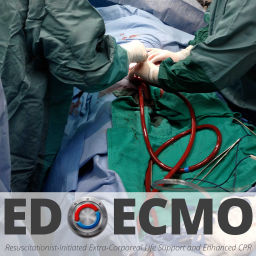
The ED ECMO Project is the work of Zack Shinar and Jon Marinaro to bring extracorporeal life support to EDs and ICUs around the world. This site aims to be the ultimate resource for the background, logistics, and evidence for resuscitative ECMO.

EDECMO Podcast
Claim This Podcastby Zack Shinar, MD
Podcast Authority
Beta
Podcast Overview
The ED ECMO Project is the work of Zack Shinar and Jon Marinaro to bring extracorporeal life support to EDs and ICUs around the world. This site aims to be the ultimate resource for the background, logistics, and evidence for resuscitative ECMO.
Language
🇺🇲
Publishing Since
1/31/2014
Unlock The Full Podcast Authority Score Report
See how your podcast performs across key metrics
Podcast Authority
Beta
Recommendations available
Unlock the full report to see detailed tips
Recommendations available
Unlock the full report to see detailed tips
Unlock comprehensive insights including:
- • YouTube presence analysis
- • Social media reach metrics
- • RSS compliance scoring
- • Podcast 2.0 features
- • Technical standards
Detailed Analytics
- Complete breakdown of all 19 authority metrics
- Personalized recommendations for each metric
- Industry benchmarks and comparisons
- Technical RSS feed analysis and compliance scoring
Growth Strategies
- Step-by-step action plans for improvement
- Quick wins to boost your score immediately
- Pro tips from successful podcasters
See how your show performs across every key metric
High authority scores make your podcast more attractive to industry leaders and influencers who want to appear on credible shows.
Sponsors look for podcasts with proven authority and engagement. Your score demonstrates your podcast's value to potential partners.
Understanding your strengths and weaknesses helps you make data-driven decisions to expand your listener base effectively.
2 verified contact emails on file for EDECMO Podcast
Pitch yourself as a guest, propose sponsorships, or reach out directly to the host.
Recent Episodes

May 24, 2026
EDECMO 104: ECMO and the Cancer Patient
Host Jon Marinaro interviews medical oncologist Dr. Eric Nadler and Dr. Gary Schwartz about ECMO's role in carefully selected cancer patients, highlighting the need for collaboration and education.

March 18, 2026
EDECMO 103: HIV and ECMO
<h1 data-section-id="hvwwxc" data-start="195" data-end="234"><strong>Critical Care ECMO with Dr. Jon Marinaro, Dr. Gary Schwartz and Dr. Cedrick Spak – Episode 103</strong></h1> <p data-section-id="hvwwxc" data-start="195" data-end="234"><strong>Key Points: ECMO in HIV/AIDS Patients</strong></p> <p data-section-id="aickhj" data-start="236" data-end="292">1. HIV Is No Longer a Strong Contraindication to ECMO</p> <ul data-start="293" data-end="716"> <li data-section-id="8dbqi7" data-start="293" data-end="398"> <p data-start="295" data-end="398">Historically, <strong data-start="309" data-end="388">HIV and severe immunosuppression were considered relative contraindications</strong> for ECMO.</p> </li> <li data-section-id="18lwwfy" data-start="399" data-end="483"> <p data-start="401" data-end="483">With modern <strong data-start="413" data-end="445">antiretroviral therapy (ART)</strong>, outcomes have dramatically improved.</p> </li> <li data-section-id="1aje5bp" data-start="484" data-end="602"> <p data-start="486" data-end="602">Patients with HIV who receive effective ART can recover immune function and achieve <strong data-start="570" data-end="601">near-normal life expectancy</strong>.</p> </li> <li data-section-id="wc87an" data-start="603" data-end="716"> <p data-start="605" data-end="716">Therefore, <strong data-start="616" data-end="677">HIV alone should not exclude patients from ECMO candidacy</strong>.</p> </li> </ul> <hr data-start="718" data-end="721" /> <p data-section-id="kiqw2s" data-start="723" data-end="773">2. Immune Reconstitution Makes Recovery Possible</p> <ul data-start="774" data-end="1128"> <li data-section-id="10etdrr" data-start="774" data-end="840"> <p data-start="776" data-end="840">ART can rapidly suppress viral load and restore immune function.</p> </li> <li data-section-id="1rjwhim" data-start="841" data-end="942"> <p data-start="843" data-end="942">Patients with very low CD4 counts (even <10) can recover to <strong data-start="903" data-end="931">normal CD4 counts (>800)</strong> over time.</p> </li> <li data-section-id="64zthq" data-start="943" data-end="1039"> <p data-start="945" data-end="1039">This means even <strong data-start="961" data-end="1038">severely immunocompromised patients may recover if given time and support</strong>.</p> </li> <li data-section-id="1iwz5qe" data-start="1040" data-end="1128"> <p data-start="1042" data-end="1128">ECMO can act as a <strong data-start="1060" data-end="1089">bridge to immune recovery</strong>.</p> </li> </ul> <hr data-start="1130" data-end="1133" /> <p data-section-id="6dl7zs" data-start="1135" data-end="1174">3. ECMO Functions as a “Pause Button”</p> <ul data-start="1175" data-end="1367"> <li data-section-id="jdml4w" data-start="1175" data-end="1301"> <p data-start="1177" data-end="1241">ECMO stabilizes respiratory or cardiac failure while clinicians:</p> <ul data-start="1244" data-end="1301"> <li data-section-id="hn1uja" data-start="1244" data-end="1262"> <p data-start="1246" data-end="1262">Treat infections</p> </li> <li data-section-id="vtkocv" data-start="1265" data-end="1276"> <p data-start="1267" data-end="1276">Start ART</p> </li> <li data-section-id="189y5u8" data-start="1279" data-end="1301"> <p data-start="1281" data-end="1301">Manage complications</p> </li> </ul> </li> <li data-section-id="16xujlw" data-start="1302" data-end="1367"> <p data-start="1304" data-end="1367">This buys time for <strong data-start="1323" data-end="1366">reversible disease processes to recover</strong>.</p> </li> </ul> <hr data-start="1369" data-end="1372" /> <p data-section-id="1nd4l62" data-start="1374" data-end="1437">4. Major Cause of Respiratory Failure: Pneumocystis Pneumonia</p> <p data-start="1438" data-end="1485">Common features in HIV patients requiring ECMO:</p> <ul data-start="1487" data-end="1642"> <li data-section-id="17zlucs" data-start="1487" data-end="1527"> <p data-start="1489" data-end="1527">Pneumocystis jirovecii pneumonia (PJP)</p> </li> <li data-section-id="5bxeec" data-start="1528" data-end="1556"> <p data-start="1530" data-end="1556">Severe respiratory failure</p> </li> <li data-section-id="fuq6a9" data-start="1557" data-end="1586"> <p data-start="1559" data-end="1586"><strong data-start="1559" data-end="1586">Cystic lung destruction</strong></p> </li> <li data-section-id="13dpda0" data-start="1587" data-end="1642"> <p data-start="1589" data-end="1642">Frequent <strong data-start="1598" data-end="1642">bronchopleural fistulas and pneumothorax</strong></p> </li> </ul> <p data-start="1644" data-end="1684">Ventilation can worsen these conditions.</p> <p data-start="1686" data-end="1707">Thus ECMO is used to:</p> <ul data-start="1708" data-end="1830"> <li data-section-id="hjuog9" data-start="1708" data-end="1740"> <p data-start="1710" data-end="1740"><strong data-start="1710" data-end="1740">Reduce ventilator pressure</strong></p> </li> <li data-section-id="cz9ttj" data-start="1741" data-end="1770"> <p data-start="1743" data-end="1770">Prevent further lung damage</p> </li> <li data-section-id="1njpouq" data-start="1771" data-end="1830"> <p data-start="1773" data-end="1830">Allow lung healing.</p> </li> </ul> <hr data-start="1832" data-end="1835" /> <p data-section-id="xv5le6" data-start="1837" data-end="1889">5. Ventilator Strategy: Minimize Positive Pressure</p> <p data-start="1890" data-end="1907">Typical strategy:</p> <ul data-start="1909" data-end="2059"> <li data-section-id="1uvtdhf" data-start="1909" data-end="1966"> <p data-start="1911" data-end="1966">Rapid ECMO initiation if ventilation causes lung injury</p> </li> <li data-section-id="1dhfu2t" data-start="1967" data-end="1997"> <p data-start="1969" data-end="1997">Attempt <strong data-start="1977" data-end="1997">early extubation</strong></p> </li> <li data-section-id="7dnjke" data-start="1998" data-end="2059"> <p data-start="2000" data-end="2010">If needed:</p> <ul data-start="2013" data-end="2059"> <li data-section-id="14y313m" data-start="2013" data-end="2027"> <p data-start="2015" data-end="2027">tracheostomy</p> </li> <li data-section-id="ss8jsa" data-start="2030" data-end="2059"> <p data-start="2032" data-end="2059">minimal ventilator settings</p> </li> </ul> </li> </ul> <p data-start="2061" data-end="2095">Example “rest settings” described:</p> <ul data-start="2096" data-end="2168"> <li data-section-id="hkmgjx" data-start="2096" data-end="2119"> <p data-start="2098" data-end="2119">Driving pressure ≈ 10</p> </li> <li data-section-id="1l0627s" data-start="2120" data-end="2155"> <p data-start="2122" data-end="2155">PEEP ≈ 10 (often reduced further)</p> </li> <li data-section-id="1rwgayq" data-start="2156" data-end="2168"> <p data-start="2158" data-end="2168">FiO₂ ≈ 50%</p> </li> </ul> <p data-start="2170" data-end="2244">Goal: <strong data-start="2176" data-end="2205">avoid further lung trauma</strong>.</p> <hr data-start="2246" data-end="2249" /> <p data-section-id="11jg26n" data-start="2251" data-end="2280">6. ECMO Candidate Selection</p> <p data-start="2281" data-end="2298">Primary question:</p> <p data-start="2300" data-end="2330"><strong data-start="2300" data-end="2330">Is the disease reversible?</strong></p> <p data-start="2332" data-end="2367">If yes → ECMO should be considered.</p> <p data-start="2369" data-end="2393">Factors supporting ECMO:</p> <ul data-start="2394" data-end="2459"> <li data-section-id="1vz42vl" data-start="2394" data-end="2409"> <p data-start="2396" data-end="2409">Young patient</p> </li> <li data-section-id="1gc0ewf" data-start="2410" data-end="2431"> <p data-start="2412" data-end="2431">Treatable infection</p> </li> <li data-section-id="t2ej4c" data-start="2432" data-end="2459"> <p data-start="2434" data-end="2459">Potential immune recovery</p> </li> </ul> <p data-start="2461" data-end="2497">Possible relative contraindications:</p> <ul data-start="2498" data-end="2663"> <li data-section-id="ax5fna" data-start="2498" data-end="2523"> <p data-start="2500" data-end="2523">Severe fungal infection</p> </li> <li data-section-id="9dktbs" data-start="2524" data-end="2572"> <p data-start="2526" data-end="2572">Multiple uncontrolled opportunistic infections</p> </li> <li data-section-id="wc4kxm" data-start="2573" data-end="2663"> <p data-start="2575" data-end="2663">Extreme cachexia or severe systemic deterioration.</p> </li> </ul> <hr data-start="2665" data-end="2668" /> <p data-section-id="13gef10" data-start="2670" data-end="2702">7. Early ART Should Be Started</p> <p data-start="2703" data-end="2719">Modern approach:</p> <ul data-start="2721" data-end="2817"> <li data-section-id="1e7utc0" data-start="2721" data-end="2776"> <p data-start="2723" data-end="2776"><strong data-start="2723" data-end="2776">Start antiretroviral therapy during acute illness</strong></p> </li> <li data-section-id="76n9yu" data-start="2777" data-end="2817"> <p data-start="2779" data-end="2817">Do not delay until after ICU discharge</p> </li> </ul> <p data-start="2819" data-end="2828">Benefits:</p> <ul data-start="2829" data-end="2879"> <li data-section-id="1xnrry7" data-start="2829" data-end="2854"> <p data-start="2831" data-end="2854">Rapid viral suppression</p> </li> <li data-section-id="nvq6x7" data-start="2855" data-end="2879"> <p data-start="2857" data-end="2879">Faster immune recovery</p> </li> </ul> <p data-start="2881" data-end="2886">Risk:</p> <ul data-start="2887" data-end="3043"> <li data-section-id="2hxp43" data-start="2887" data-end="3043"> <p data-start="2889" data-end="2945"><strong data-start="2889" data-end="2943">Immune Reconstitution Inflammatory Syndrome (IRIS)</strong></p> <ul data-start="2948" data-end="3043"> <li data-section-id="1obhc9p" data-start="2948" data-end="3043"> <p data-start="2950" data-end="3043">Temporary worsening of infection due to immune rebound.</p> </li> </ul> </li> </ul> <hr data-start="3045" data-end="3048" /> <p data-section-id="5ht4ru" data-start="3050" data-end="3090">8. Circuit and Infection Complications</p> <p data-start="3091" data-end="3137">Important ECMO considerations in HIV patients:</p> <ul data-start="3139" data-end="3279"> <li data-section-id="uwq2mx" data-start="3139" data-end="3181"> <p data-start="3141" data-end="3181">Increased risk of <strong data-start="3159" data-end="3181">circuit thrombosis</strong></p> </li> <li data-section-id="1y3uxjj" data-start="3182" data-end="3205"> <p data-start="3184" data-end="3205">Possible <strong data-start="3193" data-end="3205">fungemia</strong></p> </li> <li data-section-id="1m0l5lc" data-start="3206" data-end="3279"> <p data-start="3208" data-end="3227">If fungemia occurs:</p> <ul data-start="3230" data-end="3279"> <li data-section-id="yffa11" data-start="3230" data-end="3251"> <p data-start="3232" data-end="3251">circuit replacement</p> </li> <li data-section-id="1oluih5" data-start="3254" data-end="3279"> <p data-start="3256" data-end="3279">possible re-cannulation</p> </li> </ul> </li> </ul> <p data-start="3281" data-end="3328">These complications require careful monitoring.</p> <hr data-start="3330" data-end="3333" /> <p data-section-id="1c4d58s" data-start="3335" data-end="3360">9. Cannulation Strategy</p> <p data-start="3361" data-end="3397">Example high-volume center approach:</p> <ul data-start="3399" data-end="3508"> <li data-section-id="r22r4m" data-start="3399" data-end="3508"> <p data-start="3401" data-end="3442"><strong data-start="3401" data-end="3442">Bilateral femoral VV ECMO cannulation</strong></p> <ul data-start="3445" data-end="3508"> <li data-section-id="1j456aw" data-start="3445" data-end="3451"> <p data-start="3447" data-end="3451">Fast</p> </li> <li data-section-id="18sdioy" data-start="3454" data-end="3469"> <p data-start="3456" data-end="3469">Reliable flow</p> </li> <li data-section-id="13gcka7" data-start="3472" data-end="3508"> <p data-start="3474" data-end="3508">Allows later neck access if needed</p> </li> </ul> </li> </ul> <p data-start="3510" data-end="3567">Used especially during high-volume periods (e.g., COVID).</p> <hr data-start="3569" data-end="3572" /> <p data-section-id="m0i23a" data-start="3574" data-end="3613">10. Outcomes and Indication Expansion</p> <p data-start="3614" data-end="3644">ECMO indications are evolving:</p> <ul data-start="3646" data-end="3712"> <li data-section-id="1ol8w57" data-start="3646" data-end="3657"> <p data-start="3648" data-end="3657">Older age</p> </li> <li data-section-id="1hf8nbr" data-start="3658" data-end="3683"> <p data-start="3660" data-end="3683">Longer ventilator times</p> </li> <li data-section-id="48ciy7" data-start="3684" data-end="3694"> <p data-start="3686" data-end="3694">HIV/AIDS</p> </li> <li data-section-id="5h4yz4" data-start="3695" data-end="3712"> <p data-start="3697" data-end="3712">Cancer patients</p> </li> </ul> <p data-start="3714" data-end="3777">All are examples of <strong data-start="3734" data-end="3756">“indication creep”</strong> as experience grows.</p> <p data-start="3779" data-end="3805">The key principle remains:</p> <p data-start="3809" data-end="3872">ECMO should be used if there is a realistic chance of recovery.</p> <hr data-start="3874" data-end="3877" /> <p data-section-id="14aez08" data-start="3879" data-end="3920">11. Resource and Program Considerations</p> <p data-start="3921" data-end="3951">Decision-making must consider:</p> <ul data-start="3953" data-end="4028"> <li data-section-id="v3uxf" data-start="3953" data-end="3976"> <p data-start="3955" data-end="3976">Resource availability</p> </li> <li data-section-id="sdm202" data-start="3977" data-end="3997"> <p data-start="3979" data-end="3997">Program experience</p> </li> <li data-section-id="ufv6qj" data-start="3998" data-end="4028"> <p data-start="4000" data-end="4028">Institutional risk tolerance</p> </li> </ul> <p data-start="4030" data-end="4097">High-volume ECMO centers can often accept <strong data-start="4072" data-end="4096">higher-risk patients</strong>.</p> <hr data-start="4099" data-end="4102" /> <p data-section-id="kgl7ce" data-start="4104" data-end="4124">12. Broader Lesson</p> <p data-start="4125" data-end="4198">Medical contraindications often change with new technology and therapies.</p> <p data-start="4200" data-end="4214">Example given:</p> <ul data-start="4215" data-end="4327"> <li data-section-id="zvgr8i" data-start="4215" data-end="4279"> <p data-start="4217" data-end="4279">HIV was once a contraindication for <strong data-start="4253" data-end="4279">kidney transplantation</strong></p> </li> <li data-section-id="1cm6mcj" data-start="4280" data-end="4327"> <p data-start="4282" data-end="4327">Now it is accepted due to improved treatment.</p> </li> </ul> <p data-start="4329" data-end="4391">The same evolution may be happening with <strong data-start="4370" data-end="4390">ECMO indications</strong>.</p>

February 9, 2026
EDECMO 102: ECPR Patient’s Brains are DIFFERENT!
<p>We need a major change in the way we think about the brains of ECPR patients. We have been duped into thinking that they are the same as regular resuscitation patients, and the answer is that they are not. On EDECMO 102, we learn about this idea from two wonderful people: Ingrid Magnet and Michael Poppe. In addition to the inspirational ECPR program they have created in Vienna, they have published a paper showing just how different these two groups of patients are. They show that ECPR patients improve their neurologic function tremendously over the six months following their event. This really changes the way we need to think about these patients and how we discuss options with their families in the hospital.</p> <p><img fetchpriority="high" decoding="async" class="alignnone size-medium wp-image-7790" src="https://edecmo.org/wp-content/uploads/2026/02/2025-10-10-22.04.18-450x600.jpg" alt="" width="450" height="600" srcset="https://edecmo.org/wp-content/uploads/2026/02/2025-10-10-22.04.18-450x600.jpg 450w, https://edecmo.org/wp-content/uploads/2026/02/2025-10-10-22.04.18-768x1024.jpg 768w, https://edecmo.org/wp-content/uploads/2026/02/2025-10-10-22.04.18-1152x1536.jpg 1152w, https://edecmo.org/wp-content/uploads/2026/02/2025-10-10-22.04.18-1024x1365.jpg 1024w, https://edecmo.org/wp-content/uploads/2026/02/2025-10-10-22.04.18.jpg 1536w" sizes="(max-width: 450px) 100vw, 450px" /></p>
121 total episodes available with 1 transcripts
Recent guests on EDECMO Podcast
Guests from recent episodes — sign up to see every guest that has ever appeared on this show.
Eric Nadler
Guest
Gary Schwartz
Guest
Joe Bellezzo
Guest
Similar Podcasts
Discover related shows you might enjoy

EMCrit FOAM Feed
Scott D. Weingart, MD FCCM

Critical Care Scenarios
Brandon Oto, PA-C, FCCM and Bryan Boling, DNP, ACNP, FCCM

Critical Care Time
Critical Care Time Podcast

Cardionerds: A Cardiology Podcast
CardioNerds

Core EM - Emergency Medicine Podcast
Core EM

The Resus Room
Simon Laing, Rob Fenwick & James Yates

Emergency Medical Minute

Core IM | Internal Medicine Podcast
Core IM Team

Anesthesia and Critical Care Reviews and Commentary (ACCRAC) Podcast
Jed Wolpaw

JAMA Clinical Reviews
JAMA Network

The Curious Clinicians

The World’s Okayest Medic Podcast
Mike Carunchio

This Week in Cardiology
Medscape

Behind The Knife: The Surgery Podcast

NEJM This Week
NEJM Group
Deep-dive analytics for EDECMO Podcast
Frequently asked questions
Have a different question and can't find the answer you're looking for? Reach out to our support team by sending us an email and we'll get back to you as soon as we can.
- What is EDECMO Podcast?
- How often does this podcast release new episodes?
This podcast updates bi-weekly.
- Where can I listen to this podcast?
This podcast is available on 8 platforms including Apple Podcasts, Spotify, and more. You can also use the RSS feed directly.
- Does this podcast accept guests?
Information about guest appearances is not available.
Legal Disclaimer
Pod Engine is not affiliated with, endorsed by, or officially connected with any of the podcasts displayed on this platform. We operate independently as a podcast discovery and analytics service.
All podcast artwork, thumbnails, and content displayed on this page are the property of their respective owners and are protected by applicable copyright laws. This includes, but is not limited to, podcast cover art, episode artwork, show descriptions, episode titles, transcripts, audio snippets, and any other content originating from the podcast creators or their licensors.
We display this content under fair use principles and/or implied license for the purpose of podcast discovery, information, and commentary. We make no claim of ownership over any podcast content, artwork, or related materials shown on this platform. All trademarks, service marks, and trade names are the property of their respective owners.
While we strive to ensure all content usage is properly authorized, if you are a rights holder and believe your content is being used inappropriately or without proper authorization, please contact us immediately at hey@podengine.ai for prompt review and appropriate action, which may include content removal or proper attribution.
By accessing and using this platform, you acknowledge and agree to respect all applicable copyright laws and intellectual property rights of content owners. Any unauthorized reproduction, distribution, or commercial use of the content displayed on this platform is strictly prohibited.