
Invitation to a Loving, Living & Life-Giving Walk with Christ! <br/><br/><a href="https://bishopjos.substack.com?utm_medium=podcast">bishopjos.substack.com</a>
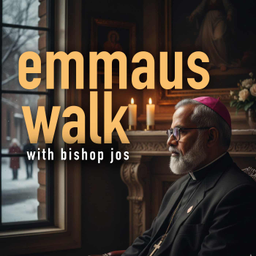
Emmaus Walk with Bishop Jos!
Claim This Podcastby Jos Tharakan
33 episodes
Updated Daily
Accepts GuestsHas Sponsors
Podcast Overview
Invitation to a Loving, Living & Life-Giving Walk with Christ! <br/><br/><a href="https://bishopjos.substack.com?utm_medium=podcast">bishopjos.substack.com</a>
Language
🇺🇲
Publishing Since
12/22/2025
1 verified contact email on file for Emmaus Walk with Bishop Jos!
Pitch yourself as a guest, propose sponsorships, or reach out directly to the host.
Recent Episodes
July 21, 2026
Making Space - Lesson 2
<p>I say this often, and I believe it deeply. Knowing that we are held by the Divine is a great comfort, but it does not magically erase the anxiety of meeting life every day. We still face the crushing weight of financial struggles, the fracture of relationship issues, the shadow of political repression, and the fear of crimes committed against us. In the middle of these storms, it can be hard to feel “safe” in those hands.</p><p>This is why I return again and again to the ancient invitation of Jesus: “Fast and pray” (Matthew 17:21).</p><p>For a long time, I looked at fasting as a form of punishment or a test of willpower. But I have come to see it differently. Fasting is a spiritual exercise in recognizing the boundaries of our own bodies. When we feel hunger, when we intentionally limit what we consume, we become acutely aware of our physical edges. We learn where we end and where the rest of the world begins.</p><p>This recognition is vital. If we do not understand the boundaries of our own bodies, we will never understand the boundaries of others. We will find ourselves constantly exerting our ideologies, our needs, and our space into the lives of those around us. Fasting teaches us the discipline of “not consuming” everything in sight—whether that is food, attention, or power. It creates a holy space for others to exist.</p><p>As Swami Vivekananda, the great Indian sage, once observed:</p><p>“The more we come out and do good to others, the more our hearts will be purified, and God will be in them. But this requires the discipline of the senses, for a mind that is always seeking outward cannot find the stillness within.”</p><p>Fasting is that discipline. It is the practice of quieting the outer body so that we can finally hear the song of the inner body. While it reaps physical benefits and mental clarity, its greatest gift is a heightened social awareness. It removes the “thick skin” of our ego and makes us sensitive to the hunger of our neighbor.</p><p>Jesus reminded us that “the body is more than clothing” and that we are to treat our existence as a sacred temple. When we discipline the outer body, we are not rejecting it; we are celebrating it as a vessel for the powerful presence of God. This inner body—the spirit that walks in the breath God gave us—needs to be embraced and enjoyed. It is the part of us that is boundless.</p><p>Prayer is the recognition of those boundaries so that we can be boundless in love and compassion. If I know my own limits, I am less likely to violate yours. If I am at peace with my own physical hunger, I am more equipped to feed your spiritual hunger.</p><p>Sometime back, someone told me that our soul needs room to breathe. Fasting clears the clutter from the inner room, the sacred space of God. It helps us move from a life of fear—where we are constantly grabbing for more—to a life of joyful living, where we know that what we have is enough because God is enough.</p><p>Knowing who we are is the best pathway to knowing who others are. When I sit in the silence of my fast, I realize that I do not need to dominate the world to be safe in it. I am safe because I have stopped fighting the boundaries and started enjoying the Boundless One who lives within them.</p><p><p>Thanks for reading Emmaus Walk with Bishop Jos!! Subscribe for free to receive new posts and support my work.</p></p> <br/><br/>This is a public episode. If you would like to discuss this with other subscribers or get access to bonus episodes, visit <a href="https://bishopjos.substack.com?utm_medium=podcast&utm_campaign=CTA_1">bishopjos.substack.com</a>
July 19, 2026
An Art of Making Space
<p>I have come to believe that making room is the truest way we show we care. It doesn’t matter what we are making room for — a person, an idea, a grief, or God — the principle holds. Where there is no inner space, there is no place for anything sacred to enter. Without room, there is no place for a person to be truly welcomed. Without room, there is no place for God to dwell. And without room, there is no place for the quiet, difficult work of transformation to happen either.</p><p>So much of what we long for — healing, understanding, acceptance, kindness, compassion, love, forgiveness — these are not things we manufacture through effort alone. They are things we make room for. And making room is itself a kind of labor: sorting through what we’ve accumulated, releasing what no longer serves us, clearing the clutter that has quietly taken up residence in us. It ends, if we let it, in an attitude of welcome.</p><p>Scripture has always understood this. When Joseph and Mary arrived in Bethlehem, Luke tells us simply that there was no room for them in the inn (Luke 2:7). It’s easy to read past that line, but it carries a warning worth sitting with: the world was busy, full, occupied — and so it had nothing left to offer the very thing it most needed. I wonder how often my own life looks like that inn. Full of good things, worthy things even, but so full that there’s no room left for the one guest who matters most.</p><p>There’s a small gesture from Japanese tradition that has stayed with me: the Maneki-neko, the beckoning cat you’ll see in shop windows and by doorways, one paw raised. It’s often mistaken for a simple good-luck charm, but its meaning runs deeper than that. The raised paw isn’t grasping — it’s inviting. A left paw lifted welcomes people, conversation, connection, the opening of a door. A right paw raised beckons prosperity, sustenance, the blessing of a home. Tradition cautions that raising both at once can tip into something closer to grasping — a reminder that what we’re after isn’t seized, but received. The cat doesn’t chase what it wants. It simply makes itself open to it, and waits.</p><p>That’s not so different from what contemporary voices mean when they speak of “manifesting,” however overused the word has become. Strip away the marketing, and the instinct underneath it is an old one: what you want room for, you must first make room for. Maya Angelou wrote often about our shared hunger for home — for the safe place where we can go as we are and not be questioned. That home is not only a place we search for. It is also a place we build inside ourselves, by clearing enough space that something, or someone, can finally rest there.</p><p>Because here is the truth I keep returning to: two things cannot occupy the same space at the same time. If I want grievance, I cannot also hold peace there. If I want distraction, I cannot also hold God there. Making room always means letting something go.</p><p>So this week, I’m trying something simple. Left hand open, to welcome. Right hand open, to receive. Not grasping. Just open — the way that small cat has been teaching patient doorways for centuries. Make space. We already know how.</p><p></p> <br/><br/>This is a public episode. If you would like to discuss this with other subscribers or get access to bonus episodes, visit <a href="https://bishopjos.substack.com?utm_medium=podcast&utm_campaign=CTA_1">bishopjos.substack.com</a>
April 19, 2026
Be the Reminder!
<p>My father suffered from dementia toward the end of his life. I watched it happen — slowly, tenderly, and painfully. He would forget what happened yesterday, but could tell you, in vivid detail, a story from forty years ago. Short-term memory goes first. The present slips away. And I remember sitting beside him, thinking: this is one of the most heartbreaking things I have ever witnessed.</p><p>I tell you that story today because I want to talk about forgetting. And not just the kind that comes with age or illness — but the kind that seems to be a fundamental condition of the human soul.</p><p>When we hear the story of two disciples walking the road to Emmaus, I need you to notice something remarkable: these are not strangers to Jesus. These are followers. And yet they walk away from Jerusalem in grief and confusion, unable to recognize the Risen Lord walking right beside them. Why? Because they forgot.</p><p>Earlier in Luke chapter 24, the women at the tomb — Mary Magdalene, Joanna, Mary the mother of James — had to be reminded by two blazing angels: “Remember how he told you, while he was still in Galilee, that the Son of Man must be delivered into the hands of sinful men and be crucified and on the third day rise.”</p><p>Remember.</p><p>It keeps coming up. And Jesus, walking to Emmaus, says it with a kind of holy exasperation: “O foolish ones, and slow of heart to believe all that the prophets have spoken!”</p><p>He is not being cruel.</p><p>He is being pastoral.</p><p>He is doing what he always does: walking with the forgetful, the confused, the brokenhearted and helping them remember.</p><p>But I want to suggest to you that we are not just dealing with two forgetful disciples in this story on a dusty road. We are dealing with a collective dementia, a cultural, civilizational forgetting of who we are and what we are called to become.</p><p>Rumi, a great mystic poet, wrote of this ache with devastating beauty. He described the human soul as a reed cut from its reed bed, crying out for what it has lost, not because it is broken, but because it remembers, somewhere deep, where it came from.</p><p>He wrote of love’s longing as a fire that burns away everything that is not essential, until what remains is the truth of who you are.</p><p>“Out beyond ideas of wrongdoing and rightdoing,</p><p>there is a field. I’ll meet you there.</p><p>When the soul lies down in that grass,</p><p>the world is too full to talk about.”</p><p>— Rumi</p><p>That field Rumi speaks of — that is where we began. Children of one God, brothers and sisters under one sky. And we have forgotten it. We have forgotten the Holocaust. We have forgotten the millions who died because we forgot the commandment to love our neighbor. We have forgotten what is written on the very doorstep of this nation: “Give me your tired, your poor, your huddled masses yearning to breathe free.” Emma Lazarus, a jewish woman, wrote those words as an echo of Matthew 25 — “when I was thirsty, when I was hungry, when I was a stranger.” If we claim to be a Christian nation and behave as we do now, we are not just forgetting a poem. We are forgetting the Lord himself. We are forgetting our identity.</p><p>Saint Thomas Aquinas taught that every human being carries within them a natural orientation toward the good, toward truth, toward God — what he called the natural law written on the heart. Aquinas believed that we do not reason our way into knowing that we should love our neighbor. We remember it. Yes, We remember it!</p><p>It is already there, inscribed in the very nature of what it means to be human. Sin, for Aquinas, is not so much rebellion as it is a kind of forgetting. Sin is a turning away from what we already, at the deepest level, know.</p><p>Father Richard Rohr puts it this way: that the spiritual life is not about climbing to some new height, but about returning to the ground of who we already are: “We do not think ourselves into new ways of living, we live ourselves into new ways of thinking.”</p><p>That is what Jesus does on the road to Emmaus. He does not hand those two disciples a theological argument. He walks with them. He listens. He breaks bread. He lets the truth catch up with them from the inside, not the outside. And their hearts burn within them not because they learned something new, but because they finally remembered what they already knew.</p><p>So what does this mean for us? It means we are called to two things simultaneously, and both matter.</p><p>First, we are called to speak. When leaders or anyone deliberately deny the truth — when the poem on the Statue of Liberty is treated as an inconvenience rather than a calling — we must name it. We must call out the intentional forgetting with the same clarity that Jesus called his disciples foolish. Not from anger. From love. From the grief of someone who remembers what was forgotten.</p><p>But second — and this is the harder thing — we are called to walk with. Because there are many people, like my father, who genuinely do not remember. Who have been so formed by fear, by noise, by the relentless pace of the world, that they have lost the thread back to their own humanity. These people do not need our condemnation. They need someone to walk beside them, to break bread with them, to stay patient and present until something in them begins to stir.</p><p>That is ministry. That is what the angels did at the tomb. That is what Jesus did on the road. That is what the angels did again at the Ascension, when they looked at the disciples staring into the clouds and essentially said: “Stop gazing upward. Get on with your lives. Walk with each other.”</p><p>Be the Reminder</p><p>The world around us is suffering from a kind of spiritual amnesia. It has forgotten that we are all children of one God, made for love, made for each other. Our calling is not to have all the answers. Our calling is to be the reminder.</p><p>When you sit with someone in grief, you are reminding them they are not alone. When you welcome the stranger, you are reminding the world of what it forgot. When you break bread with someone whose politics infuriate you and find the image of God still there — you are doing exactly what Jesus did on that dusty road to Emmaus.</p><p>You are not just helping them remember. You are helping yourself remember too.</p><p>“Were not our hearts burning within us</p><p>while he talked with us on the road,</p><p>while he opened the Scriptures to us?” Luke 24:32.</p><p>May your heart burn again this week.</p><p><p>Thanks for reading Emmaus Walk with Bishop Jos!! This post is public, so feel free to share it.</p></p><p></p> <br/><br/>This is a public episode. If you would like to discuss this with other subscribers or get access to bonus episodes, visit <a href="https://bishopjos.substack.com?utm_medium=podcast&utm_campaign=CTA_1">bishopjos.substack.com</a>
33 total episodes available
Deep-dive analytics for Emmaus Walk with Bishop Jos!
Frequently asked questions
Have a different question and can't find the answer you're looking for? Reach out to our support team by sending us an email and we'll get back to you as soon as we can.
- What is Emmaus Walk with Bishop Jos!?
- How often does this podcast release new episodes?
This podcast updates daily.
- Where can I listen to this podcast?
This podcast is available on 4 platforms including Apple Podcasts, Spotify, and more. You can also use the RSS feed directly.
- Does this podcast accept guests?
Information about guest appearances is not available.
Legal Disclaimer
Pod Engine is not affiliated with, endorsed by, or officially connected with any of the podcasts displayed on this platform. We operate independently as a podcast discovery and analytics service.
All podcast artwork, thumbnails, and content displayed on this page are the property of their respective owners and are protected by applicable copyright laws. This includes, but is not limited to, podcast cover art, episode artwork, show descriptions, episode titles, transcripts, audio snippets, and any other content originating from the podcast creators or their licensors.
We display this content under fair use principles and/or implied license for the purpose of podcast discovery, information, and commentary. We make no claim of ownership over any podcast content, artwork, or related materials shown on this platform. All trademarks, service marks, and trade names are the property of their respective owners.
While we strive to ensure all content usage is properly authorized, if you are a rights holder and believe your content is being used inappropriately or without proper authorization, please contact us immediately at hey@podengine.ai for prompt review and appropriate action, which may include content removal or proper attribution.
By accessing and using this platform, you acknowledge and agree to respect all applicable copyright laws and intellectual property rights of content owners. Any unauthorized reproduction, distribution, or commercial use of the content displayed on this platform is strictly prohibited.