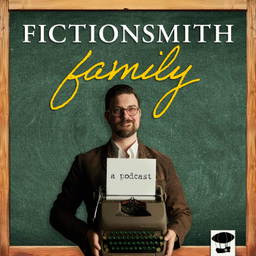
Fictionsmith Family
Hosted by Fictionsmith Family and The Fictionsmith Family · Ryan Dunlap
5.0from 4 ratings
- 25
- Episodes
- 4
- Ratings
- 2025
- First episode
About Fictionsmith Family
Connecting families through storytelling. Invite your child into a meaningful story and reignite your own imagination as we walk you through the cooperative writing process with lessons and activities that helped my children and I publish our own books (and more importantly, spend time together). fictionsmith.substack.com (https://fictionsmith.substack.com?utm_medium=podcast)
- Publisher
- Ryan Dunlap
- Category
- education · kids & family
- Language
- en
- Explicit
- No
- First episode
- 17 May 2025
- Latest episode
- 16 Aug 2025
Latest episodes
25 episodes in the feed.
16 Aug 2025
Summer Writing Project - Act Two Writing: Oh The Places You'll Go
One of the reasons stories are as interesting as they are is because it opens a window to us to places we've never been before. Having new places described to you allows you to be teleported into the shoes of the character, and it lets your imagination soar. I know everyone is different, but I have to ask myself how often I actually go new places. Sure, there's the occasional family vacation, and even sometimes those are to the same places we've been to before. Honestly, it's pretty rare. We might try a new restaurant from time to time, but with the way we pack our lives, we're all about getting from point A to point B as fast as we can, and we get in our routines to make sure we are as efficient with our time as we can be. But we crave new experiences. We read stories, or watch movies, or unfortunately, scroll endlessly on a screen looking for something fresh and entertaining... and I have many thoughts on phones and their roles in our lives... but those are filtered experiences. We're experiencing something new through someone else, and if we're drawing on that for our own storytelling, it will be a weaker (and eventually cliched) version of what you can do if you learn to describe something from your environment and your set of experiences. Activity: Not All Who Wander Are Lost What I encourage you to do is to find some time to go somewhere safe that you've never been before. Maybe it's a walking trail you've always wanted to see. Maybe it's a different part of your town that you have never visited before. It's summer, I get it, so maybe even riding in the car somewhere to go down some streets you've never been before. No GPS, no mapping system, just go somewhere you haven't been before and take in the sights of somewhere new. And then, if you have the time and budget, find a restaurant you've never been to before and visit it. Check out the menu and maybe try something that isn't your usual go-to meal. Spend time together soaking in all of the new experiences and talk about what you notice. And when your food arrives, talk about what you taste. In Act 2 of stories, often our characters will find themselves in new places and experiencing new tastes and smells and sights. When you what you're experiencing first hand isn't what you're used to, your mind will be paying more active attention to it all and these can be great details to add into your book because you'll be more like your character who is taking it all in. If a restaurant trip is outside the budget, then maybe visit a grocery store you haven't been to and pick up ingredients for a dish you've never made before. Basically, I want you to jump out of the rut of your day to day and see if it doesn't jog your creativity in how you are writing your story and how you describe things. As an aside, I've found some of my more creative times have been during road trips to places I've never been to before. I was wondering why all of these ideas were coming to me and I believe it is because my mind was making new connections and firing on different cylinders than it usually was. Getting better at communicating what you are experiencing that is new to you will serve the story, and your reader. Plus I think it's an important life skill to pick up in general. Putting words to new ideas and concepts will serve you in so many areas of life. One more thing. What a character notices can actually tell you a lot about them. * Do they pay attention to the animals they see? * Are they always looking for where the exit is as soon as they enter a room? * Are they more likely to notice the style of clothes the other person is wearing more than what the other person is saying? Little details like that don't necessarily need to be pounded in, but they are little clues that we can give a reader about a character…and maybe can offer you some insight into yourself as well. Ask yourself when you experience someplace new, what are you paying attention to? Maybe that's something your main character can share. I hope your writing journey is going well. My apologies that these episodes are coming out a little less frequently. When I originally planned out the Summer Writing Project, I had it scheduled to run alongside Camp NaNoWriMo (National Novel Writing Month), but in the last year that program has gone away, so I figured I'd give myself a little more grace in releasing these as this month has been more about offering some writing advice and last month was more about how to understand story structure and using that to build out your story. Thanks for being a part of this! Get full access to Fictionsmith Family at fictionsmith.substack.com/subscribe (https://fictionsmith.substack.com/subscribe?utm_medium=podcast&utm_campaign=CTA_4)
25 Jul 2025
Summer Writing Project - Act Two Writing: Fighting Lulls with Conflict
As you write your story, you may eventually hit points where things feel like they've stopped being interesting. You may have the major events figured out by using your outline so you know how to get from Point A to B to Z, but sometimes when you are at those points, your characters may kind of run out of things to talk about or do. How do we fix this? Conflict. What is conflict? Things going wrong. Or are about to go wrong… Remember when we talked about characters being proactive, or taking initiative so that the events of the story are interesting because we get to see what they do when there are troubles? The things they're reacting to are usually trying an effort to fix a problem (or avoiding something that could become a problem). There may be a great big problem that they need to solve that is looming over the story, but it's going to take babysteps to get there…and those babysteps are going to be driven forward by handling problems that keep coming up. If there is tension, then there is something to talk about or do, and it will be hard to hit the dreaded standstill where there's nothing going on. What kind of problems can we introduce? And can we take a moment to feel a little sympathy for the characters out there who are constantly facing a tough time because of our imaginations? There are several types of conflict we can have in a story. 1. The Big Problem Usually our big problem is at least hinted at during the inciting incident and blooms into something bigger as the opening act develops. It's a driving force that causes our character to make steps and hopefully find a solution by the end of it. But because the hero won't be in a place where they can find that solution until they reach the end of the story, it means sometimes they can stall out and not know what else to do. So what else can we do to get them to the next part of the story? 2. Internal Conflict When we start a story, our characters have flaws (or at least they should have some sort of problem that makes them interesting). It could be insecurity, or a character flaw like jealousy, or ego, or irrational fear. And because of those issues, we can poke that button from time to time and prod them along by having them react to the thing that they struggle with. Getting our characters into trouble because of those flaws is a way to have events that will keep things interesting, at least in the short run. We need to make sure that those problems aren't the major driving force, but instead are little interludes that remind us that the character still has to grow as a person too (besides solving the big problem of the story). Very frequently, the things that they have to overcome within themselves being resolved are the thing that both mirrors the big bad problem, and either the hero needs to figure out the solution in order to figure out the big bad problem, OR solving the big bad problem unlocks the personal problem and sets them free. 3. The Ticking Clock If we have something looming on the horizon the character knows is coming, but it's not coming immediately, it can be a big enough of a problem that it isn't the main problem...but it's something to focus on in the meanwhile. We could have a test that is coming up that the character is worried about. Or a hurricane can be slowly approaching and they have to evacuate and make it to safety. Or the character needs to buy something and don't have the money yet so they need to do something to earn it and save up. Deadlines that are approaching before the end of the story can be great for this and give you something to work toward. 4. Wants (and Hobbies) A writing trick to make a character interesting and not having to always have everything be full of conflict is by having some low level or low stress stakes of giving a character a hobby they are trying to pursue. Maybe they like stamp collecting and just really want to try and find a special stamp. Maybe they love to draw and need to find some art supplies or want to win an art competition or make a special gift for someone they love. Not all conflict has to be a threat to their lives or some crazy big problem. Not all stories are like that, and there are some lower stakes problems that can be solved too, especially if you story is a calmer, more personal story. The point is that we just need to make sure that something is happening that is motivating the characters to take action. That keeps us from kind of just floating around with the story meandering and us getting bored as writers (or readers). One small warning, don't just throw something random at the characters for them to react to. If you're introducing new conflict into the story, just make sure it ties into something one of the characters want (or don't want), and it gives them a clear direction on what they should do next that will ultimately move them closer to the end of the story. Activity: Wants and Problems Make a list of all of the things your main character wants. Then come up with 3 reasons for each thing as to what is stopping them from getting those things. One of those wants met with one of the problems can help jumpstart you back on track for what can happen next if you're feeling stuck. Until next time! Get full access to Fictionsmith Family at fictionsmith.substack.com/subscribe (https://fictionsmith.substack.com/subscribe?utm_medium=podcast&utm_campaign=CTA_4)
19 Jul 2025
Summer Writing Project - Act One Writing: Prioritizing Your Time
When I set out to create the Summer Writing Project, I wanted to create something that parents and kids could join together and tell a story. I had no clue how many people would actively keep up with these episodes and how many projects would be written in real time as I send out these lessons. As of early July 2025, we crossed over 1,000 podcast downloads (mostly on Apple Podcasts (https://podcasts.apple.com/us/podcast/fictionsmith-family/id1815401662), but it is available on Spotify (https://open.spotify.com/show/3MVNJQTdW9W0ZrQsGKJVjC) and directly through Substack as well), and I'm encouraged that people are listening to and reading these lessons and hopefully participating in the activities. If you're joining me in real time, I'm immensely grateful and I'm trying to knock out 2-3 lessons per week and staying on top of this. But you might have noticed we only had one lesson last week, and this past weekend's lesson came out on a Monday. For that, I am sorry, but I also have an explanation. A missed opportunity. I had made an agreement with myself that Fictionsmith Family wouldn't keep happening if I wound up letting it take up the time that I usually spend with my family. That would kind of make me a hypocrite, telling people how to creatively connect with their children while I ignored my own kids. Early on, during the Prologue, I lapsed on that once. I had fallen behind on recording an episode I had written, and my wife took the kids to the pool and asked if I was coming along. I took it as an opportunity to have a quiet house so I could record without interruption, and then as I hit publish, I thought about my family making memories at the pool without me and the strain I was adding to my wife with managing the kids in a fairly chaotic environment so I could talk about spending time with your kids. It felt gross. I don't plan to let it happen again, and so far it hasn't. Summers can be busy All that to say, summer can be a pretty hectic time in general when you have kids. Summer camps, birthday parties, sports, family vacations... the idea of sticking to somewhere around 50 lessons here and adhering to them in real time felt like it probably won't be the case for the majority of people who follow along. Also, for those of you who live in a place where the idea of taking a noticing walk means squinting through sweat and wondering why someone would subject you to the heat... I'm sorry. There are definitely alternatives to these exercises, and with this being my first time sharing these ideas with the public, there are going to be some growing pains and revisions going forward. Finding time to write together Staying consistent is important to any writing project. Or at least making sure that you aren't letting long gaps creep in to the point that when you pick the story back up you're struggling to remember the names of minor characters or forgetting important details. But if there are busy periods and you have to take a break, give yourself grace. Goodness knows on the third book of the Invisible House series called The Lost Saint, it took such a long gap that we had to re-read the first two books in the series before returning to the last half of the manuscript. I find what helps me is putting something down on my calendar daily as a reminder, and often I still have to initiate the time to work on the story together. Car trips are also helpful when it's just me and the kiddo I'm writing the book with because I can ask questions about what they think should happen next, or ask what they're going through in real life and then follow up by asking how they think the character we are writing would handle that situation. Overall, this is a time we get to spend together talking about life and story together. And because story is one of the ways we make sense out of life, conversations inevitably veer over in that direction until we're talking about what is on their mind, and ultimately the story we write is the secondary byproduct. This episode I know feels a little bit like it's taking a rabbit trail regarding writing a book, but if you've gotten this far and you have an outline of a story, my encouragement is to not give up and to understand that sometimes life gets busy and it's okay to take a pause if you need to. I'll do my best to stay consistent, and the beautiful thing about having this all in Substack and Podcast format is that through the magic of time travel, you can read or listen to this any time you want as long as it is available. One more thing about figuring out when to make the most of your time... ask yourself and your co-writer when you feel the most productive and creative. Some people like to be fresh in the morning, while others might like to wind their day down and then sit with a night light and put their story into words. How to team up It may also be a situation where the two of you prefer to divide and conquer, or you have a creative meeting, then one of you goes off and drafts and you come back together to give feedback and talk about where the story is going next. Once you figure out when it makes the most sense to write together, put it in your calendar, or write it on a sticky note so neither of you forget. It can be easy to let time slip away, but if you're intentional enough to be following along with this process, then I think you can make it work. One last thing I understand this is a lot longer of a process than most kids would undertake, and interest in this may ebb and flow. We've had more than one writing project in our family kind of fade away, and I've always given my kids an opportunity to be honest with me if they decide they are done. I really don't want them to look back on the time we spend together and feel like it's only because I forced them into participating. I hope this is helpful, and thank you to everyone who has reached out so far and commented, emailed, and texted me about being a part of this process. Until next time! Get full access to Fictionsmith Family at fictionsmith.substack.com/subscribe (https://fictionsmith.substack.com/subscribe?utm_medium=podcast&utm_campaign=CTA_4)
Reach and audience
Public platform figures. Ratings count people who left a rating, not total listeners.
- Apple Podcasts (US)
- 5.0 / 5
- 4 ratings
Podcast Authority Score: 23 / 100
A composite of feed quality, social presence, YouTube performance and engagement. Read the methodology.
- Quality
- 33
- Social presence
- 0
- YouTube
- 0
- Engagement
- 32
Host of Fictionsmith Family?
Claim your podcast to manage its listing and keep your show details accurate.
Pod Engine is an independent podcast discovery and analytics service and is not affiliated with or endorsed by this podcast. Artwork and show content belong to their owners. Full legal notice.
Explore this show
Podcast research with Pod Engine