



Furniture Industry Lessons is a long-form podcast documenting the people, companies, and moments that shaped the furniture industry. Each episode explores the true stories behind iconic brands, influential founders, and pivotal decisions that built today’s furniture business. From family-owned retailers to global manufacturers, from early risk-taking entrepreneurs to modern industry leaders, these are the stories rarely told—but often referenced—inside the furniture world. Designed for furniture professionals, executives, retailers, vendors, and anyone curious about how this industry was built, Furniture Industry Lessons goes beyond headlines to preserve the history, lessons, and personalities behind the business of furniture.
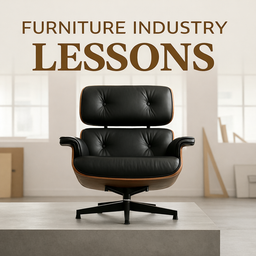
Furniture Industry Lessons
Claim This Podcastby Furniture Stories
5 episodes
Updated Daily
Accepts GuestsHas SponsorsLocation 🇺🇸
Podcast Overview
Furniture Industry Lessons is a long-form podcast documenting the people, companies, and moments that shaped the furniture industry. Each episode explores the true stories behind iconic brands, influential founders, and pivotal decisions that built today’s furniture business. From family-owned retailers to global manufacturers, from early risk-taking entrepreneurs to modern industry leaders, these are the stories rarely told—but often referenced—inside the furniture world. Designed for furniture professionals, executives, retailers, vendors, and anyone curious about how this industry was built, Furniture Industry Lessons goes beyond headlines to preserve the history, lessons, and personalities behind the business of furniture.
Language
🇺🇲
Publishing Since
1/3/2026
Reach the team behind Furniture Industry Lessons
Verified contact details for this show aren't on file yet — sign up to get notified when they land.
Recent Episodes
May 18, 2026
Lessons From Bob's Discount Furniture
<p>The central theme of this podcast episode revolves around the remarkable journey of Bob Kaufman, the founder of Bob's Discount Furniture, whose entrepreneurial path was profoundly influenced by personal adversity and market dynamics. We explore how a life-altering motorcycle accident catalyzed Kaufman's transformation from a motorcycle enthusiast to a prominent figure in American furniture retail, ultimately leading to the establishment of a discount furniture empire. The narrative delves into Kaufman's innovative approach to business, especially during the waterbed craze of the late 20th century, illustrating how he capitalized on fleeting consumer trends while learning crucial lessons about operational resilience. Additionally, we examine the pivotal role of strategic decisions in shaping the company’s identity, including its unique no-sale pricing philosophy and aggressive expansion plans. Through this exploration, we gain insights into the intricate interplay of psychological resilience, market adaptability, and the foundational principles that continue to drive Bob's Discount Furniture's success in a competitive landscape. Bob Kaufman's journey into the realm of furniture retail is profoundly illustrative of the indomitable spirit of entrepreneurship. The narrative begins with his formative experiences as a motorcycle enthusiast, which took an unexpected turn following a life-altering accident that curtailed his mobility. This incident, rather than serving as an impediment, catalyzed a profound psychological transformation, compelling Kaufman to reassess his life's trajectory and pursue a path in the furniture industry. Emerging from a period of introspection, Kaufman seized upon the burgeoning trend of waterbeds, which epitomized the countercultural ethos of comfort and innovation in the late 20th century. The rapid rise of this market segment provided a lucrative opportunity for Kaufman, who adeptly aligned his business strategy with the zeitgeist of the era. However, the subsequent collapse of the waterbed craze served as a pivotal lesson in the volatility of consumer trends and the necessity for operational adaptability. This tumultuous period laid the groundwork for the establishment of Bob's Discount Furniture, a venture characterized by an unwavering commitment to delivering value and accessibility, which has since become a cornerstone of the company's ethos.</p><p>Takeaways:</p><ul><li>The genesis of Bob's Discount Furniture is deeply rooted in Bob Kaufman's journey through personal adversity and resilience, which shaped the company's ethos of value and accessibility.</li><li>Kaufman's foray into the waterbed market exemplified his entrepreneurial spirit, yet also served as a cautionary tale about the volatility of consumer trends and the need for operational adaptability.</li><li>The innovative real estate strategies employed by Kaufman, such as negotiating advantageous lease agreements, laid the groundwork for Bob's Discount Furniture's early success and competitive pricing model.</li><li>The company's steadfast commitment to a no-sale pricing philosophy, which eschews traditional discounting practices, has proven to be a strategic advantage in maintaining brand integrity and customer trust.</li></ul><br/>
March 23, 2026
Lessons From Art Van Furniture
<p>The salient point of our discussion today revolves around the two distinct categories of mistakes prevalent within the furniture industry, as exemplified by the trajectory of Art Van Furniture. We shall dissect the nuances of both types of errors: those that impart lessons yet are survivable, and those that culminate in irrevocable harm, erasing decades of brand equity and leaving thousands without livelihoods. Our examination of Art Van Furniture serves not merely as a retrospective tribute but as a strategic case study, illuminating critical decisions, identifiable patterns, and forewarning signs that executives must heed to avert similar fates within their organizations. We delve into the rise of Art Van, a paragon of operational excellence and community engagement, and juxtapose it with the detrimental consequences that ensued following its acquisition by a private equity firm, thereby elucidating the imperative lessons for current and future industry leaders. Ultimately, we aim to equip our listeners with the insights necessary to recognize early warning signs and to foster sustainable practices that prioritize both community and operational integrity. The narrative surrounding Art Van Furniture encapsulates the dualities that pervade the furniture industry, wherein mistakes can either be pedagogical or catastrophic. Through a meticulous analysis of the company's trajectory, one discerns two distinct categories of errors: those that offer valuable lessons yet remain surmountable, and those that precipitate irrevocable demise. Art Van, once a paragon of operational excellence under the stewardship of its founder Archie Van Elslander, exemplified the former for decades. His acute understanding of consumer behavior and regional culture fostered an enterprise that thrived for over half a century. However, the subsequent acquisition by a private equity firm marked a pivotal juncture, as the original ethos eroded under a regime focused primarily on financial engineering. This summary elucidates the essential takeaways for contemporary executives, emphasizing the critical need for vigilance against the early warning signals of decline, which, if overlooked, can transform into existential threats for any enterprise.</p><p>Takeaways:</p><ol><li data-list="bullet"><span class="ql-ui" contenteditable="false"></span>In the furniture industry, mistakes can either be survivable or catastrophic, with significant impacts on employees and equity.</li><li data-list="bullet"><span class="ql-ui" contenteditable="false"></span>Understanding the patterns and early warning signs of decline is crucial for furniture executives to avoid catastrophic failures.</li><li data-list="bullet"><span class="ql-ui" contenteditable="false"></span>The loss of community connection and employee trust can lead to a brand's downfall, as seen in the Art Van Furniture case.</li><li data-list="bullet"><span class="ql-ui" contenteditable="false"></span>A company's culture and operational philosophy are foundational; neglecting them can result in a rapid decline in customer loyalty and sales.</li></ol><br/>
March 5, 2026
Rooms To Go: A Case Study in Simplicity and Scale
<p>The furniture industry is fraught with two distinct categories of errors: those that impart silent lessons and those that threaten to obliterate one's business. In this podcast, we meticulously examine the trials faced by Rooms To Go, a prominent player within this sector, as they encountered both types of mistakes. By dissecting the strategic decisions, grave miscalculations, crises, and transformative breakthroughs that characterized their journey, we aim to extract invaluable insights for leaders and decision-makers navigating similar turbulent waters. Our objective is to illuminate the patterns and warning signs that can safeguard against perilous pitfalls, enhancing foresight and strategic acumen in an increasingly complex marketplace. Through this exploration, we emphasize the imperative of understanding operational realities and the significance of resilience in the face of adversity. The podcast episode meticulously dissects the tumultuous journey of Rooms To Go, a renowned entity within the furniture industry, tracing its origins back to the demise of Siemens Furniture. The narrative embarks with a critical analysis of the leveraged buyout executed by Kohlberg Kravis Roberts (KKR) in 1987, which transformed Siemens from a thriving public company into a beleaguered entity shackled by insurmountable debt. The episode elucidates the catastrophic consequences of this financial maneuver, illustrating how the operational dynamics of the company were irrevocably altered, leading to its eventual bankruptcy in 1992. It further explores the lessons that can be gleaned from this cautionary tale, emphasizing the paramount importance of understanding the structural implications of debt and the necessity for robust governance frameworks that can question the viability of high-stakes financial decisions. Transitioning from Siemens' collapse, the podcast astutely chronicles the innovative resurgence of Rooms To Go, spearheaded by Geoffrey and Morton Seaman. This segment highlights the revolutionary concept of room packages, which redefined the furniture shopping experience, making it simpler and more customer-centric. The episode illustrates how the Seaman duo leveraged their prior experiences to create a retail model that emphasized ease and transparency, in stark contrast to the convoluted traditional furniture sales methods. The discussion culminates in a robust examination of the logistical underpinnings that support this business model, underscoring the critical role of supply chain management in maintaining competitive advantage. Moreover, the episode delves into the inherent challenges faced by Rooms To Go as it scaled its operations, particularly the delicate balance between rapid growth and operational integrity. It addresses the paradox of their success, which, while financially impressive, has been marred by systemic issues related to customer satisfaction and employee welfare. The podcast posits that a culture prioritizing sales above all else can lead to detrimental outcomes, ultimately eroding brand trust. This multifaceted exploration not only provides a vivid account of Rooms To Go's historical context but also imparts invaluable insights for current and future leaders in the furniture industry, advocating for a holistic approach that marries financial prudence with customer-centric operational practices.</p><p>Takeaways:</p><ol><li data-list="bullet"><span class="ql-ui" contenteditable="false"></span>In the furniture industry, two types of mistakes exist: those that teach quietly and those that are catastrophic.</li><li data-list="bullet"><span class="ql-ui" contenteditable="false"></span>The history of Siemens Furniture serves as a cautionary tale regarding leveraged buyouts and operational fragility.</li><li data-list="bullet"><span class="ql-ui" contenteditable="false"></span>The inception of Rooms To Go arose from a profound understanding of customer frustration and a desire to simplify the purchasing process.</li><li data-list="bullet"><span class="ql-ui" contenteditable="false"></span>A resilient supply chain, characterized by strategic inventory management, is crucial for thriving amidst market volatility and unexpected disruptions.</li><li data-list="bullet"><span class="ql-ui" contenteditable="false"></span>Revenue derived from deceptive practices can foster a toxic corporate culture, ultimately jeopardizing long-term trust and brand reputation.</li><li data-list="bullet"><span class="ql-ui" contenteditable="false"></span>The importance of aligning sales compensation with customer satisfaction cannot be overstated, as it ensures a focus on genuine value delivery.</li></ol><br/>
5 total episodes available
Similar Podcasts
Discover related shows you might enjoy
Deep-dive analytics for Furniture Industry Lessons
Frequently asked questions
Have a different question and can't find the answer you're looking for? Reach out to our support team by sending us an email and we'll get back to you as soon as we can.
- What is Furniture Industry Lessons?
- How often does this podcast release new episodes?
This podcast updates daily.
- Where can I listen to this podcast?
This podcast is available on 4 platforms including Apple Podcasts, Spotify, and more. You can also use the RSS feed directly.
- Does this podcast accept guests?
No, this podcast does not typically feature guests.
Legal Disclaimer
Pod Engine is not affiliated with, endorsed by, or officially connected with any of the podcasts displayed on this platform. We operate independently as a podcast discovery and analytics service.
All podcast artwork, thumbnails, and content displayed on this page are the property of their respective owners and are protected by applicable copyright laws. This includes, but is not limited to, podcast cover art, episode artwork, show descriptions, episode titles, transcripts, audio snippets, and any other content originating from the podcast creators or their licensors.
We display this content under fair use principles and/or implied license for the purpose of podcast discovery, information, and commentary. We make no claim of ownership over any podcast content, artwork, or related materials shown on this platform. All trademarks, service marks, and trade names are the property of their respective owners.
While we strive to ensure all content usage is properly authorized, if you are a rights holder and believe your content is being used inappropriately or without proper authorization, please contact us immediately at hey@podengine.ai for prompt review and appropriate action, which may include content removal or proper attribution.
By accessing and using this platform, you acknowledge and agree to respect all applicable copyright laws and intellectual property rights of content owners. Any unauthorized reproduction, distribution, or commercial use of the content displayed on this platform is strictly prohibited.