- 21
- Episodes
- 6
- Ratings
- 2024
- First episode
About Future of Therapy Podcast
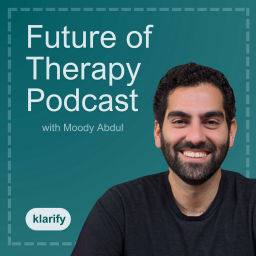
Future of Therapy Podcast
- Publisher
- Klarify
- Category
- health & fitness · health & fitness
- Language
- en
- Explicit
- No
- First episode
- 7 May 2024
- Latest episode
- 8 May 2026
Latest episodes
21 episodes in the feed.
8 May 2026
Why Motivation Is the Worst Foundation for Lasting Change
Brought to you by Klarify: Klarify is an AI assistant that automates your notes, codes your sessions, submits the claims, and appeals the denials. Over 415,000 notes generated for 5,200+ therapists. HIPAA, PHIPA, & PIPEDA compliant. In this episode, I spoke with Tammer Malaty, a licensed therapist and founder of Malaty Therapy in Houston, who has spent nearly 15 years helping clients build sustainable change. Drawing on his decade running groups in a recovery high school and his own personal recovery journey, Tammer explains why most therapy plans fail the moment a client walks out of the office. We dig into the mistake almost everyone makes about motivation, why he insists on teaching clients how to think rather than what to think, and the moment a stranger tapped him on the shoulder at a movie theater that changed how he understands the work entirely. Tammer breaks down why coping skills must be practiced when the stakes are low, not in the middle of a crisis, using a sports analogy that every clinician will recognize. We talk about the famous rat study that overturned everything we thought we knew about addiction, and why community matters more than willpower in long-term recovery. Tammer also shares his observations on the rise of loneliness and economic hopelessness among young men, how COVID rewired adolescent mental health, and the patterns he sees in the 18 to 24 year-olds walking into his office. We close on AI: how Tammer is using it to brainstorm through tough cases, surface his blind spots, and become a sharper clinician without ever replacing the human work at the core of therapy. Chapters: (00:00:00) - The Movie Theater Moment That Changed Everything (00:01:24) - Inside Malaty Therapy: A 12-Therapist Group Practice in Houston (00:02:37) - What Makes a Therapist Actually Good (00:04:29) - How COVID Reshaped Adolescent Mental Health (00:08:06) - From Personal Recovery to Treating Teens in Recovery (00:11:22) - Why Therapy Is About Planting Seeds You May Never See Bloom (00:12:29) - Motivation Is Just a Feeling: Why Coping Skills Need Real Practice (00:15:26) - The Rat Study and Why Community Beats Willpower (00:16:56) - Young Men, Loneliness, and Economic Hopelessness (00:21:46) - How AI Helps Therapists Spot Their Own Blind Spots About the Host: Moody Abdul is the co-founder of Klarify and host of the Future of Therapy podcast. After experiencing the powerful combination of therapy and AI tools during a personal breakthrough, he became passionate about helping therapists leverage technology to enhance their practice. Through Klarify, he's working to automate time-consuming tasks like case notes, documentation, and dealing with insurance companies, allowing therapists to focus more on client care. The Future of Therapy podcast reaches over 83,000 therapists across North America. Website: https://www.klarify.ca/ (https://www.klarify.ca/) LinkedIn: https://ca.linkedin.com/in/moodyabdul (https://ca.linkedin.com/in/moodyabdul) About Tammer Malaty: Tammer Malaty is a licensed therapist and the founder of Malaty Therapy. He earned his Master's degree in Counseling from the University of Houston and has been practicing for nearly 15 years. He works with teens, adults, professionals, and families, helping clients navigate behavioral challenges, relationship dynamics, and life stressors with a practical, results-oriented approach. Tammer integrates evidence-based methods such as cognitive behavioral therapy (CBT) with a focus on habit formation, communication, and real-world application. His work emphasizes creating structure, accountability, and sustainable change, particularly for individuals and families seeking to improve behavior patterns, emotional regulation, and interpersonal relationships. He collaborates closely with clients to develop clear, actionable strategies that translate directly into everyday life. Website: https://malatytherapy.com/therapists/tammer-malaty/ (https://malatytherapy.com/therapists/tammer-malaty/)
22 Nov 2025
Why Disability-Informed Care Should Be Standard, Not Specialized
This episode is brought to you by Klarify: Turn therapy sessions into case notes instantly, on any platform. Over 150,000 notes generated for 3400+ therapists. HIPAA, PHIPA, & PIPEDA compliant. In this episode, I'm joined by Ryan Yellowlees, a registered clinical counselor who was rejected by 48 out of 50 therapists. Their reason? "Uncomfortable" treating someone with chronic illness. Ryan's experience reveals a disturbing gap: a mental health field that trains therapists to be inclusive while systematically excluding 27% of the population. Ryan brings four years of clinical experience specializing in chronic illness, physical disabilities, and caregiver support. Born and raised in Victoria, BC, they were told at age 8 by a pediatric neurologist that they wouldn't amount to anything. Instead of accepting that narrative, Ryan became the therapist they needed as a child and a disability justice activist fighting oppression in healthcare. We explore Ryan's journey through a system that didn't want them. From being rejected by nearly every therapist they contacted to facing discrimination during their master's program, where practicum directors refused them clients because they needed to work remotely. We discuss diagnostic overshadowing and how medical professionals make dangerous assumptions about cognitive abilities based on physical disabilities. Ryan explains why discrimination and poor treatment, not the disability itself, cause mental health struggles. The conversation challenges fundamental assumptions about therapy and who gets to practice it, revealing how ableism is embedded in everything from training programs to emergency care. Chapters: (00:00:00) - When 48 Therapists Say No (00:03:13) - Discrimination During Training: "You Can't Do In-Person" (00:04:29) - Diagnostic Overshadowing and Medical Malpractice (00:09:00) - Why Therapists Aren't Trained in Disability (00:14:00) - The COVID Empathy Collapse (00:20:00) - What Is Disability-Informed Counseling? (00:27:00) - Medical Model vs. Social Model of Disability (00:30:00) - Eugenics, Ableism, and What Society Needs to Learn (00:32:00) - Disability as Part of Being Human About the Host: Moody Abdul is the co-founder of Klarify and host of the Future of Therapy podcast. After experiencing how therapy and AI tools combined during a personal breakthrough, he became passionate about helping therapists leverage technology. Through Klarify, he's working to automate time-consuming tasks like case notes, allowing therapists to focus more on client care. The Future of Therapy podcast reaches over 65,000 therapists across North America. Website: https://www.klarify.ca/ (https://www.klarify.ca/) LinkedIn: https://ca.linkedin.com/in/moodyabdul (https://ca.linkedin.com/in/moodyabdul) About Ryan Yellowlees: Ryan Yellowlees, MC, RCC, is a Registered Clinical Counsellor, disability activist, and board member of Every Canadian Counts, a disability advocacy organization, who lives in Victoria, British Columbia. They live with a progressive chronic illness called Duchenne muscular dystrophy and run a private virtual counselling practice called Life Empowered Counselling. They specialize in disability discrimination, ableism, chronic illness, physical disability, and caregiver support counselling. Their counselling approach draws from personal experience living with chronic illness and Disability Justice, narrative, person-centred, and strength-based perspectives. Life Empowered Counselling: https://www.lifeempoweredcounselling.ca (https://www.lifeempoweredcounselling.ca) Recommended Resources: Untold Stories: A Canadian Disability History Reader Unravelling MAiD in Canada: Euthanasia and Assisted Suicide as Medical Care The Rejected Body: Feminist Philosophical Reflections on Disability
17 Jul 2025
I cried talking to ChatGPT (and what that taught me about therapy)
This episode is brought to you by Klarify: Turn therapy sessions into case notes instantly, on any platform. Over 45,000 notes generated for 1800+ therapists. HIPAA, PHIPA, & PIPEDA compliant. In this episode, I share a deeply personal experience that changed my perspective on AI and therapy forever: the moment I cried while reading a ChatGPT response that understood me better than my closest friends. I'm joined by Dr. Ingrid Söchting, Director of the UBC Psychology Clinic and clinical professor at UBC's Department of Psychiatry, to unpack what this reveals about the future of mental health care. Dr. Söchting brings three decades of experience training therapists and treating patients with mood disorders, anxiety, OCD, and trauma. As someone who teaches professional ethics and supervises both psychology and psychiatry residents, she offers unique insights into the promises and perils of AI in therapy. We explore how AI provided validation and insights that felt more profound than human conversations, yet enhanced rather than replaced my relationships with my therapist and friends. Dr. Söchting explains why this shouldn't threaten therapists but could revolutionize access to mental health care. We dive into the ethics of AI confidentiality, why human therapists have limitations too, and how technology might help us customize therapy approaches, from CBT to psychodynamic therapy, based on individual needs. The conversation reveals how AI could help demystify therapy and make mental health support as normalized as visiting a dentist, while preserving the irreplaceable human elements of therapeutic relationships. Chapters: (00:00:00) - The ChatGPT Experience That Changed Everything (00:03:30) - Teaching Ethics in the Age of AI (00:08:00) - Can AI Enhance Human-Delivered Therapy? (00:12:00) - Why I Felt More Seen by AI Than Friends (00:18:00) - The Limitations of Human Therapists (00:21:00) - Therapy as Facilitating Epiphanies (00:23:00) - Vision for 2030: Demystifying Mental Health About the Host: Moody Abdul is the co-founder of Klarify and host of the Future of Therapy podcast. After experiencing the powerful combination of therapy and AI tools during a personal breakthrough, he became passionate about helping therapists leverage technology to enhance their practice. Through Klarify, he's working to automate time-consuming tasks like case notes, allowing therapists to focus more on client care. The Future of Therapy podcast reaches over 58,000 therapists across North America. Website: https://www.klarify.ca/ (https://www.klarify.ca/) LinkedIn: https://ca.linkedin.com/in/moodyabdul (https://ca.linkedin.com/in/moodyabdul) About Dr. Ingrid Söchting: Ingrid Söchting, Ph.D., is a registered psychologist in British Columbia and the Director of the UBC Psychology Clinic and a clinical professor in the Department of Psychiatry at UBC. She is the coordinator of the UBC Psychiatry Residency CBT Training. Over the past 30 years, she has specialized in individual and group treatment for mood and anxiety disorders as well as OCD and trauma. Prior to leading the clinic at UBC, she was chief psychologist in an outpatient mental health clinic in Vancouver Coastal Health. She teaches Master’s level course in the clinical psychology program at UBC and supervises psychology and psychiatry residents in CBT and Interpersonal Psychotherapy (IPT). Her book Cognitive Behavioral Group Therapy: Challenges and Opportunities. WileyBlackwell (2014) is a complete guide to group therapy across mental health problems. UBC Psychology Clinic Profile: https://psych.ubc.ca/profile/ingrid-sochting/ (https://clinic.psych.ubc.ca/) LinkedIn: https://www.linkedin.com/in/ingrid-sochting-273097136/ (https://www.linkedin.com/in/ingrid-sochting/)
Reach and audience
Public platform figures. Ratings count people who left a rating, not total listeners.
- Apple Podcasts (US)
- 5.0 / 5
- 1 ratings
- Spotify
- 5.0 / 5
- 5 ratings
Podcast Authority Score: 47 / 100
A composite of feed quality, social presence, YouTube performance and engagement. Read the methodology.
- Quality
- 81
- Social presence
- 0
- YouTube
- 0
- Engagement
- 32
Contact Future of Therapy Podcast
- Guest appearances
- Books guests
Based on episode analysis; this does not confirm that the show is currently accepting guests.
Host of Future of Therapy Podcast?
Claim your podcast to manage its listing and keep your show details accurate.
Pod Engine is an independent podcast discovery and analytics service and is not affiliated with or endorsed by this podcast. Artwork and show content belong to their owners. Full legal notice.
Explore this show
Podcast research with Pod Engine