May 10, 2024
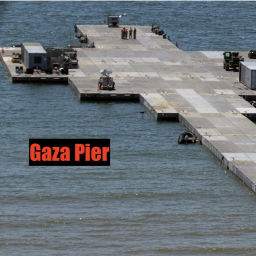
Gaza Pier
U.S. Completes Construction of Gaza Aid Pier, But Weather Prevents Installation <br />Introduction The U.S. military has successfully completed the construction of a new Gaza aid pier aimed at boosting deliveries of urgently needed humanitarian assistance to the region. However, unfavorable weather conditions have temporarily delayed the installation of the two-part structure, the Pentagon announced on Tuesday. <br />The pier, which will cost at least $320 million, was built in response to the humanitarian crisis following the outbreak of war between Israel and Hamas, triggered by the terrorist group’s October 7 attack. The project reflects a concerted effort by the U.S. and international partners to ensure the effective delivery of aid to Gaza amid devastating destruction and widespread shortages. <br />Overview of the Aid Pier Construction Deputy Pentagon Press Secretary Sabrina Singh provided further details in a press briefing on Tuesday, explaining the progress and current status of the pier. “As of today, the construction of the two portions of the JLOTS — the floating pier and the Trident pier — are complete and awaiting final movement offshore,” Singh said, using the acronym for Joint Logistics Over-the-Shore, the official name for the pier's capability. <br />However, Singh noted that current weather conditions have made it unsafe to move the components of the pier into place. “Today, there are still forecasted high winds and high sea swells, which are causing unsafe conditions for the JLOTS components to be moved. So, the pier sections and military vessels involved in its construction are still positioned at the port of Ashdod,” she added. <br />The adverse weather conditions led to a temporary relocation of the vessels and the under-construction pier to Ashdod, where they will remain until it is safe to proceed with the final movement offshore. Once the weather clears, U.S. Central Command, in collaboration with the Israel Defense Forces (IDF), will move the pier into its final position off the Gaza shore. <br />Operational Readiness and Installation Plans Despite the delays, U.S. Central Command remains on standby to move the pier to its final position near the Gaza coast. Singh emphasized that the pier sections will be anchored to the Gaza shore by Israeli soldiers to ensure no American boots are on the ground. This careful arrangement aims to address security concerns while facilitating aid delivery in a region fraught with tension. <br />Once in place, aid will be transported via commercial vessels to a floating platform offshore, where it will be transferred to smaller vessels and brought to the pier anchored to the shore. Trucks will then transport the aid inland for distribution, allowing for a steady flow of much-needed supplies. <br />The pier's design includes two main components: 1. Floating Pier: Allows for seamless transfer of aid from larger commercial vessels to smaller boats. 2. Trident Pier: Anchored to the shore to facilitate aid transportation by trucks to distribution centers. <br />The aid pier is expected to accommodate around 100 trucks per day, significantly enhancing aid deliveries to Gaza. <br />Background and Strategic Importance Plans for the pier were first announced by U.S. President Joe Biden in early March, as he pressed Israel to ramp up the amount of aid entering Gaza. The installation of the pier is intended to facilitate humanitarian assistance and support reconstruction efforts in the conflict-stricken region. <br />Amid international pressure to increase the flow of aid, Israel recently reopened the Erez Crossing, which had been largely destroyed during the October 7 attack. The Kerem Shalom crossing, a critical aid entry point, was temporarily closed after Hamas fired rockets at it, resulting in the deaths of four Israeli soldiers. The U.S. government has assured that Israel will reopen the Kerem Shalom crossing. <br />In addition to the crossings, the Gaza aid pier represents a crucial alternative for the delivery of humanitarian assistance. It aims to circumvent challenges posed by the ongoing conflict and provide a secure, efficient pathway for aid to reach the most vulnerable communities. <br />Strategic Position of Rafah and Other Crossings The White House described the closure of Rafah and Kerem Shalom as “unacceptable” and emphasized the importance of reversing the decision. On Tuesday morning, the IDF took control of the Palestinian side of the Rafah border crossing with Egypt as part of a “pinpoint operation” aimed at preventing Hamas from using the crossing for terrorist purposes. <br />The U.S. government stressed that the opening of the Gaza aid pier does not replace the need for crossings like Kerem Shalom and Rafah to remain operational. U.S. State Department spokesperson Matthew Miller reiterated that “no one should think that the completion of this pier and the opening of that route is in any way a replacement for Kerem Shalom and Rafah being open.” <br />“Getting that pier finished is not a sufficient means to close other gates. It’s not a sufficient reason to operate in the south and disrupt the delivery of humanitarian systems because even when that pier is open, the amount of aid it can deliver a day — somewhere around 100 trucks — in no way can replace what needs to come into Gaza through these other gates,” Miller added. <br />Logistics and Humanitarian Impact of the Pier The Gaza aid pier’s construction and subsequent installation aim to address the immense humanitarian crisis in Gaza, where nearly 2 million residents face severe shortages of food, water, medicine, and electricity. The pier will provide a dedicated route for essential supplies, with an estimated capacity of 100 trucks per day. <br />Humanitarian Logistics Chain <br />1. Arrival of Commercial Vessels: Commercial vessels carrying aid will arrive at the floating platform offshore. 2. Transfer to Smaller Vessels: Aid will be transferred to smaller vessels suitable for shallow coastal waters. 3. Movement to the Trident Pier: The smaller vessels will bring aid to the Trident Pier anchored to the Gaza shore. 4. Distribution by Truck: Trucks will transport the aid inland to distribution centers for efficient allocation. <br />Coordination and Security <br />The pier’s operations require close coordination between U.S. Central Command, the IDF, and international humanitarian organizations to ensure a seamless flow of aid. Security measures include the IDF's anchoring of the pier and monitoring of the aid distribution process to prevent misappropriation. <br />Expected Benefits <br />- Increased Aid Flow: The pier will allow for a substantial increase in aid deliveries, addressing urgent needs in Gaza. - Improved Logistics Efficiency: Streamlined logistics will minimize delays and reduce bottlenecks in aid distribution. - Alternative to Land Crossings: Provides a viable alternative amid challenges at Rafah and Kerem Shalom crossings. <br />Political and Diplomatic Repercussions The construction of the Gaza aid pier comes amid rising international criticism of the blockade and its impact on Gaza’s civilian population. The pier’s completion and the U.S. government's role in its development have significant political and diplomatic implications. <br />International Pressure <br />Global organizations, including the United Nations and the European Union, have called for immediate and unhindered access to humanitarian assistance for Gaza. The completion of the pier underscores the U.S. commitment to easing the humanitarian crisis, despite political and logistical challenges. <br />Regional Tensions <br />The project has also sparked tensions with Hamas, which views increased Israeli control over aid distribution as a potential threat. Hamas spokespersons have criticized the IDF's involvement in securing the pier, arguing that it could lead to further surveillance and control over aid flows. <br />U.S.-Israel Relations <br />The pier represents a collaborative effort between the U.S. and Israel to address the crisis while maintaining security in the region. However, the White House has made it clear that the pier is not a substitute for reopening critical land crossings. <br />Conclusion The completion of the Gaza aid pier marks a significant milestone in efforts to deliver much-needed humanitarian assistance to Gaza amid ongoing conflict and devastation. Although weather conditions have temporarily delayed its installation, the U.S. and Israel remain committed to swiftly positioning the pier and ensuring a steady flow of aid to those in need. <br />Despite the strategic importance of the new aid pier, the international community continues to emphasize the importance of keeping critical border crossings like Rafah and Kerem Shalom open to maximize the delivery of humanitarian aid and support the broader reconstruction efforts in Gaza. Thanks for listening- Remember to like and share