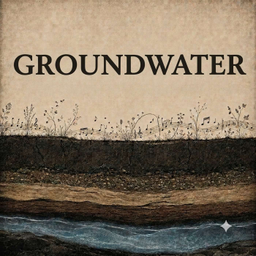
Groundwater: The Blues Beneath American Music
Thomas Stubbs
5.0from 17 ratings
- 13
- Episodes
- 17
- Ratings
- Bi-weekly
- Cadence
- 2026
- First episode
About Groundwater: The Blues Beneath American Music
In 1927, the record industry split American music in two and sold it to separate audiences. We've believed the split ever since. Groundwater is a music history podcast that follows the current underneath — the blues, running from Congo Square to the South Bronx, from Robert Johnson to Aretha Franklin to hip-hop. Each episode traces a moment the industry tried to keep apart: the soul sessions at Stax and Muscle Shoals that crossed every line; Louis Armstrong working race and commerce from New Orleans to Chicago; the Great Migration carrying Muddy Waters and the Delta sound up the Illinois Central to Memphis, Chicago, and Detroit; and the state's long campaign against the singers who got political, from Billie Holiday to the Dixie Chicks. If you want to understand why American music sounds the way it does, start here and follow the water.
- Publisher
- Thomas Stubbs
- Category
- history · music
- Language
- en
- Explicit
- No
- First episode
- 7 May 2026
- Latest episode
- 22 Sept 2026
Latest episodes
13 episodes in the feed.
22 Sept 2026
The Rooms Where the Walls Came Down, Part 2: Stax, Muscle Shoals, and Minton's Playhouse
Muscle Shoals, Alabama, January 1967. Jerry Wexler brings Aretha Franklin, the daughter of the most famous Black preacher in America, to FAME Studios to record with four white session men she has never met, in a region where the Klan is a functioning organization. She walks in skeptical. The Swampers start playing. The skepticism ends before the first take is finished, and "I Never Loved a Man (The Way I Love You)" makes her the Queen of Soul. This is the second of two episodes about the rooms where the recording industry's segregated shelf system stopped working, and it ends with a room where the walls went up on purpose. Room three: 926 East McLemore Avenue, Memphis. Jim Stewart, a white country fiddle player, and his sister Estelle Axton, who mortgaged her house twice, rent an abandoned movie theater in a Black neighborhood and let the sloping floor do what it wants to the drums. Booker T. Jones, Steve Cropper, Duck Dunn, and Al Jackson Jr. as an integrated house band in a city where they could not legally eat together. "Green Onions" cut during a break in someone else's session. The neighborhood standing guard over the building during the riots after Dr. King's assassination. The Stax Museum, and the grade that is still wrong. Room four: 3614 Jackson Highway, Sheffield, Alabama. A coffin showroom with burlap on the walls, bought by the Swampers when they walked out of FAME. WLAC and WDIA after dark. Spooner Oldham's electric piano. The Rolling Stones arriving to cut "Brown Sugar" and "Wild Horses" thinking they were at FAME. Paul Simon calling Stax for the Black Jamaican musicians on "I'll Take You There" and getting four white Alabamans instead. Room five: Minton's Playhouse, 210 West 118th Street, Harlem. Fletcher Henderson's charts and Benny Goodman's crown. Charlie Parker, Dizzy Gillespie, Thelonious Monk, and Kenny Clarke building music that could not be danced to, could not be booked into a ballroom, and could not be stolen. "Ko-Ko" as the fence. The toll the builders paid. And why America preserves the rooms where the walls came down and let the room where the wall went up change shape until it was gone. Music in this episode "Guitar Rag" — Sylvester Weaver (OKeh, 1923). Public domain. Series theme. "Green Onions" — Booker T. & the M.G.'s (Stax, 1962) "I Never Loved a Man (The Way I Love You)" — Aretha Franklin (Atlantic, 1967) "Ko-Ko" — Charlie Parker (Savoy, 1945) All excerpts are used as direct commentary on the specific recordings discussed. Episode artwork Marion Post Wolcott, Entrance to a movie house, Beale Street, Memphis, Tennessee, October 1939. Farm Security Administration/Office of War Information Collection, Library of Congress. No known restrictions on publication. Groundwater draws from Race Records: The Lie That Split American Music — and the Blues That Ran Underneath by Thomas Stubbs. Next episode: the river goes underground. A man in a rhinestone suit who refused to believe American music had walls, buried at the headwaters. A father and a son who never knew each other, with one song between them. And a current that kept running even when nobody could see it. The Underground River. (00:00) - Cold open: Jim Stewart (01:10) - Intro (01:55) - Stax: 926 East McLemore (06:48) - Muscle Shoals: 3614 Jackson Highway (13:11) - Minton's: the fence (16:53) - Two facts (18:33) - Congo Square (19:15) - Outro
8 Sept 2026
Rooms Where the Walls Came Down Part 1: Sun Studio and Chess Records
Summary July 5, 1954. A storefront studio on Union Avenue in Memphis, a nineteen-year-old truck driver failing for hours — until he started fooling with a blues during a break and the man behind the glass stuck his head out. This episode is about that room, and the one on the South Side of Chicago where two brothers from a junk shop put the Delta through an amplifier. Description Memphis, July 5, 1954. At Sun Studio, 706 Union Avenue, a nineteen-year-old truck driver named Elvis Presley has spent hours failing to cut anything usable. During a break he starts singing Arthur Crudup's "That's All Right" — a Black man's blues — loose and fast and happy, and Sam Phillips sticks his head out of the control room. The flip side of the single would be Bill Monroe's "Blue Moon of Kentucky." Race record on one side, hillbilly on the other, the same music on both. This is the first of two episodes about the rooms where the recording industry's segregated shelf system stopped working — not metaphorical places, physical ones, with addresses and electrical bills and mice in the walls. Room one: 706 Union. Sam Phillips, a cotton farmer's son from Florence, Alabama, recording B.B. King and Howlin' Wolf in a one-room storefront; Ike Turner's band, a torn speaker cone stuffed with newspaper, and "Rocket 88"; Dewey Phillips on WHBQ asking the kid where he went to high school so the listeners would know he was white; Johnny Cash, Carl Perkins, Jerry Lee Lewis, Roy Orbison walking through the same door; the Million Dollar Quartet. Room two: 2120 South Michigan Avenue. Leonard and Phil Chess, two Polish Jewish kids from a junk shop on South State Street, a nightclub called the Macomba, and McKinley Morganfield coming up from Clarksdale on the Illinois Central to plug in as Muddy Waters. Willie Dixon as the label's secret engine. Chuck Berry walking in from St. Louis with "Ida Red." The Rolling Stones on pilgrimage in June 1964. The economics of who got rich and who sued. And the building today, with Willie Dixon's name on the door. Music in this episode "Guitar Rag" — Sylvester Weaver (OKeh, 1923). Public domain. Series theme. "That's All Right" — Elvis Presley (Sun, 1954) "Rocket 88" — Jackie Brenston and His Delta Cats (Chess, 1951) "Rollin' Stone" — Muddy Waters (Chess, 1950) All excerpts are used as direct commentary on the specific recordings discussed. Episode artwork: Russell Lee, "Entertainers at Negro tavern. Chicago, Illinois," April 1941. Farm Security Administration/Office of War Information Collection, Library of Congress. No known restrictions on publication. Groundwater draws from Race Records: The Lie That Split American Music — and the Blues That Ran Underneath by Thomas Stubbs. Next episode: two more rooms, and then a fifth. A converted movie theater in South Memphis with a floor that still slopes toward where the screen used to be. A cinder-block building in Alabama that used to sell caskets, where four white men played behind Aretha Franklin. And a room in Harlem where the walls went up on purpose. The Rooms Where the Walls Came Down, Part 2: Stax, Muscle Shoals, and Minton's Playhouse. (00:00) - Cold Open: July 5, 1954 (02:32) - Episode Intro (03:27) - The Partitions (05:32) - 706 Union Avenue (11:27) - 2120 South Michigan Avenue (17:59) - Outro and Next Episode
13 Aug 2026
The Moondog: Alan Freed, the Payola Scandal, and the First Rock and Roll Riot
On a Friday night in Cleveland in March 1952, a crowd twice the size of the building broke down the doors of the Cleveland Arena to hear Black rhythm-and-blues bands play. The Moondog Coronation Ball — often called the first rock and roll concert — was ended by the fire department before a single act finished a set. The disc jockey behind it was Alan Freed, who spent the next decade playing race records for white teenagers on a fifty-thousand-watt signal, named the music rock and roll, and routed around the segregated shelf system the recording industry had built in the 1920s. Then came the payola hearings. Everybody took the money. Only one man was destroyed for it. This episode is about Alan Freed, Dick Clark, the Frankie Lymon broadcast that killed a network television show, and the three-name writer credit on Chuck Berry's "Maybellene" — Berry, Fratto, Freed — that kept earning for three decades after Freed was gone, until Berry went to court to take his song back. Music in this episode "Guitar Rag" — Sylvester Weaver (OKeh, 1923). Public domain. Series theme. "The Hucklebuck" — Paul Williams and His Hucklebuckers (Savoy, 1949) "Sincerely" — The Moonglows (Chess, 1954) "Why Do Fools Fall in Love" — Frankie Lymon and the Teenagers (Gee, 1956) "Maybellene" — Chuck Berry (Chess, 1955) All excerpts are used as direct commentary on the specific recordings discussed. Groundwater draws from Race Records: The Lie That Split American Music — and the Blues That Ran Underneath by Thomas Stubbs. Next episode: the shelves come down for real — not on the radio, but in the rooms. Four recording studios. A storefront on Union Avenue in Memphis where a truck driver walked in to make a record for his mother. An address on South Michigan Avenue in Chicago where the Rolling Stones went on pilgrimage. A converted movie theater with a sloping floor. And a cinder-block building in Alabama where Aretha Franklin found out who the tightest rhythm section in the South actually was. The Rooms Where the Walls Came Down. (00:00) - Episode 7: The Moondog: Alan Freed, the Payola Scandal, and the First Rock and Roll Riot (03:26) - Act One: One Audience (05:02) - Act Two: The Record Rendezvous (06:24) - Act Three: 50,000 Watts (08:42) - Act Four: The Warning Shot (10:13) - Act Five: The Affidavit (14:11) - Act Six: The Credit Line
31 Jul 2026
The Same Music: The Bristol Sessions, Hank Williams, and the Lie That Split Blues from Country
In the summer of 1927, a talent scout named Ralph Peer set up a temporary recording studio on the third floor of a hat company in Bristol, Tennessee, and built the two shelves — race records and hillbilly — that still separate blues from country a century later. The split had nothing to do with the music. It had everything to do with the market. This episode takes the wall down. The Carter Family's uncredited Black song collector, Lesley Riddle, who taught Maybelle her famous guitar style. Jimmie Rodgers, the Father of Country Music, audibly singing a twelve-bar blues — and inspiring Howlin' Wolf, who couldn't yodel so he howled instead. DeFord Bailey, the Grand Ole Opry's first star, making a locomotive out of a harmonica. Robert Johnson compressing every tradition in the South into twenty-nine songs and a dead man at twenty-seven. Duane Allman tracing the shared root of blues and mountain music on a single slide. Hank Williams, whose primary musical education came from a Black street musician named Rufus "Tee-Tot" Payne. Bill Monroe, who learned his sound from a Black fiddler named Arnold Schultz. And a recording made in a room in Hollywood in July 1930: Jimmie Rodgers singing with Louis Armstrong on trumpet and Lil Hardin Armstrong on piano. It was filed under hillbilly. Armstrong's name did not appear on the label. The shelves come down when you listen. Music in this episode "Guitar Rag" — Sylvester Weaver (OKeh, 1923). Public domain. Series theme. "Crazy Blues" — Mamie Smith and Her Jazz Hounds (OKeh, 1920). Public domain. "The Little Old Log Cabin in the Lane" — Fiddlin' John Carson (OKeh, 1923). Public domain. "Single Girl, Married Girl" — The Carter Family (Victor, recorded at Bristol, August 1927) "Blue Yodel (T for Texas)" — Jimmie Rodgers (Victor, 1927) "Pan American Blues" — DeFord Bailey (Brunswick 146, recorded April 18, 1927) "Come On In My Kitchen" — Robert Johnson (Vocalion, recorded November 23, 1936) "Come On In My Kitchen" — The Allman Brothers Band, from Shades of Two Worlds (Epic, ℗ 1991) "I'm So Lonesome I Could Cry" — Hank Williams (MGM, 1949) "Blue Yodel No. 9 (Standin' on the Corner)" — Jimmie Rodgers with Louis Armstrong and Lil Hardin Armstrong (Victor, recorded Hollywood, July 1930) All excerpts are used as direct commentary on the specific recordings discussed. Episode artwork Ben Shahn, "Fiddlin' Bill Hensley, mountain fiddler, Asheville, North Carolina," 1937. Farm Security Administration / Office of War Information Collection, Library of Congress. Digital ID fsa.8a17160. The print that circulated was cropped to show only the fiddler. The Library's own catalogue note records it: "File print cropped and shows only Fiddlin' Bill." The uncropped negative shows a second musician beside him, playing guitar. Groundwater draws from Race Records: The Lie That Split American Music — and the Blues That Ran Underneath by Thomas Stubbs. Next episode: a Friday night in Cleveland, 1952. A hockey arena built for ten thousand and a crowd of twenty thousand banging on the doors. The Moondog. (00:00) - Cold Open: Two Discoveries, Three Years Apart (02:16) - Introduction (02:42) - Act One: The Hat Company (08:30) - Act Two: The Same Five Notes (12:35) - Act Three: The Man at the Crossroads (15:55) - Act Four: The Cover That Showed Its Work (18:36) - Act Five: The Hank Williams Problem (22:30) - Act Six: The Shelves Come Down (26:22) - Outro
16 Jul 2026
We Both Speak African: Dizzy Gillespie, Miles Davis, and How Jazz Crossed the Atlantic
Dizzy Gillespie meets Chano Pozo, Django Reinhardt hears Louis Armstrong, and Miles Davis records Sketches of Spain. How jazz crossed the Atlantic and came back changed. When Jelly Roll Morton talked about the "Spanish tinge" in jazz, he wasn't talking about Spain. He was talking about Cuba, and the West African rhythmic tradition that survived the Middle Passage in Havana the same way it survived in New Orleans. This episode traces four lines running outward from the same source: the Afro-Cuban reunion that debuted at Carnegie Hall in 1947 and produced "Manteca"; Django Reinhardt fusing Armstrong's records with Romani tradition in occupied Paris; the bossa nova collision between Rio de Janeiro and New York that gave the world an accidental voice; and Miles Davis hearing all of it in a Spanish guitar concerto and recognizing something he already knew from the blues coming up the river in East St. Louis. The drain runs in every direction. The river doesn't know what it's carrying. Groundwater draws from the book Race Records: The Lie That Split American Music — and the Blues That Ran Underneath by Thomas Stubbs. Music in this episode: "Guitar Rag," Sylvester Weaver (OKeh, 1923) — show theme, public domain "Cuba: Lucumi Drums," from African and Afro-American Drums (Smithsonian Folkways FE 4502) "Manteca," Dizzy Gillespie and His Orchestra featuring Chano Pozo (Victor, 1947) "Minor Swing," Quintette du Hot Club de France (Swing, 1937) "The Girl from Ipanema" (single version), Stan Getz and João Gilberto featuring Astrud Gilberto (Verve, 1964) "Concierto de Aranjuez (Adagio)," Miles Davis, arranged by Gil Evans, from Sketches of Spain (Columbia, 1960) All clips excerpted for commentary and criticism.
2 Jul 2026
The Country's Memory: Jimi Hendrix, Strange Fruit, and American Music at 250
Jimi Hendrix played "The Star-Spangled Banner" at Woodstock in 1969 and let the war in around the melody. This year the United States turns 250. This Groundwater special steps back from the map to ask what twentieth-century American music has been for: the country's memory, the part of the record that didn't get edited. At its center is Billie Holiday's "Strange Fruit" — the song that held a mirror up to lynching, and the song the state went after its singer over. Around it: the Fisk Jubilee Singers and the spirituals; Woody Guthrie's "This Land Is Your Land" and the verses America stopped teaching; Sam Cooke's "A Change Is Gonna Come"; Nina Simone's "Mississippi Goddam"; and Louis Armstrong refusing to carry the flag abroad after Little Rock. The dark and the joy are the same record. Music and sound, in order of appearance: - "Guitar Rag" — Sylvester Weaver — OKeh, 1923 (theme; public domain) - "The Star-Spangled Banner" — Jimi Hendrix — Woodstock, 1969 - "Swing Low, Sweet Chariot" — Fisk University Jubilee Quartet — Victor, 1909 (public domain) - "This Land Is Your Land" — Woody Guthrie — Asch, 1944 - "Strange Fruit" — Billie Holiday — Commodore, 1939 - "A Change Is Gonna Come" — Sam Cooke — RCA Victor, 1964 - "Mississippi Goddam" — Nina Simone — Philips, 1964 Excerpts used briefly for criticism and commentary.
25 Jun 2026
The Blues Professor, Part 2: Muddy Waters, the Mardi Gras Indians, and Where to Start with the Blues
Muddy Waters, the Mardi Gras Indians, Blind Willie McTell, and the one record to start with: the second half of Thomas Stubbs's conversation with Rich Pettit, the man Atlanta knows as the Blues Professor. In Part 1 we traced the blues out of West Africa and up the East Coast. This half starts back home in New Orleans — where Rich grew up — and the city's living traditions: the second line, the jazz funeral that walks to the cemetery on a dirge and home on a parade, and the Mardi Gras Indians, with Big Chief Jolly of the Wild Tchoupitoulas and the Neville Brothers and the Meters threaded through it. Then the heart of it: Blind Willie McTell's "Dying Crapshooter's Blues" — a song a dying gambler dictated to a blind street singer, who carried it back to Atlanta and made it last. Rich calls it one of the cleverest pieces of writing in the blues, and it's hard to argue. And at the end, the question you put to anyone who really knows: if you're starting from nothing, where do you go first? Rich's answer is Muddy Waters — which takes us to The Last Waltz, one camera on Muddy alone, doing "Mannish Boy," killing it. Groundwater is the companion podcast to Thomas Stubbs's book Race Records: The Lie That Split American Music — and the Blues That Ran Underneath. More at groundwater.fm. Music Theme — "Guitar Rag," Sylvester Weaver (OKeh, 1923). Public domain. "N.O. Bounce," Big Freedia. Excerpted as commentary under fair use. "Dying Crapshooter's Blues," Blind Willie McTell — Library of Congress field recording, Atlanta, 1940 (John A. Lomax, Archive of American Folk Song). Excerpted as commentary under fair use. "Mannish Boy," Muddy Waters with The Band, from The Last Waltz (Warner Bros., 1978). Excerpted as commentary under fair use.
23 Jun 2026
The Blues Professor, Part 1: Piedmont Blues, the Allman Brothers, and Atlanta's Living Scene
Piedmont blues, the Allman Brothers, Lonnie Holley, and the long road the blues took out of West Africa: Thomas Stubbs sits down with Rich Pettit, the man Atlanta knows as the Blues Professor — part one of two. For forty years, Rich has hosted Good Morning Blues on WRFG 89.3, Atlanta's community radio station. He grew up in New Orleans and came to the blues backwards — through classic rock — until he started noticing how many of those songs were covers. Part one is about where the blues comes from and where it went: West Africa and Congo Square, the banjo nobody remembers is African, Atlanta's living blues scene, and the Piedmont players who taught each other on back porches outside Covington — Savannah Weaver, Curly Weaver, Blind Willie McTell, Bar-B-Q Bob, Buddy Moss — before the music climbed the East Coast and rode the rail north. Along the way: Lonnie Holley improvising the blues on a high wire, the night the Dirty Dozen Brass Band rolled in late and blew Michelle Shocked's horn section off the stage, and the $30 loophole that keeps a Grant Park living room packed. Part two, we head to Chicago. Groundwater is the companion podcast to Thomas Stubbs's book Race Records: The Lie That Split American Music — and the Blues That Ran Underneath. More at groundwater.fm. Music Theme — "Guitar Rag," Sylvester Weaver (OKeh, 1923). Public domain. "Crazy Blues," Mamie Smith (OKeh, 1920). Public domain. "Come On In My Kitchen," The Allman Brothers Band, from Shades of Two Worlds (Epic Records, ℗ 1991). Excerpted as commentary under fair use.
13 Jun 2026
Groundwater Trailer: Why American Music's Genre Labels Are a Lie - A Music History Podcast
A two-minute introduction to Groundwater — what the show is, why American music's genre labels are a lie, and where we're going. Start here, then follow the water.
9 Jun 2026
Twelfth Street Station: The Great Migration and How New Orleans Music Reached Chicago
The music didn’t ride north on riverboats. It rode the Illinois Central Railroad — out of New Orleans, up through Memphis and the Mississippi Delta into Chicago — in the luggage cars and Jim Crow coaches of the Great Migration. Episode 4 of Groundwater traces what the music became when it left the South: Louis Armstrong stepping off the train at Twelfth Street Station in 1922 with a cornet and a fish sandwich; King Oliver’s Creole Jazz Band and Armstrong’s first recorded solo; the Hot Five’s “West End Blues” and the thirteen-second cadenza that changed what a trumpet could do; Muddy Waters electrifying his Delta guitar on the South Side for Chess Records; Count Basie’s Kansas City swing; and Charlie Parker and Dizzy Gillespie inventing bebop as an act of self-defense. The pipeline begins at Congo Square. The northern terminus is Chess Records. Music and sound, in order of appearance: • “Guitar Rag” — Sylvester Weaver — OKeh, 1923 (theme; public domain) • “2-8-2 No. 1534, Illinois Central” — Vinton Wight, Sounds of Steam Locomotives No. 1 — Folkways FX 6152, 1956 • “Chimes Blues” — King Oliver’s Creole Jazz Band — Gennett, 1923 • “West End Blues” — Louis Armstrong and His Hot Five — OKeh, 1928 • “Hoochie Coochie Man” — Muddy Waters — Chess, 1954 (written by Willie Dixon) • “One O’Clock Jump” — Count Basie and His Orchestra — Decca, 1937 • “Ko-Ko” — Charlie Parker and Dizzy Gillespie — Savoy, 1945 Excerpts used briefly for criticism and commentary; pre-1928 recordings are public domain.
26 May 2026
The Drain: New Orleans Music From Professor Longhair to Katrina
Professor Longhair kicked the bass of his piano to keep time. The Meters stripped the second line down to funk. Then the levees broke. New Orleans music from Longhair to Katrina Armstrong left. Bechet left. Oliver left. Morton left. For thirty years, the romantic version of the story held that New Orleans jazz had migrated north and the city was living on memory. It was wrong. The city never stopped cooking. This episode traces the music that stayed: Professor Longhair’s rumba-boogie on a piano with several keys missing; Fats Domino selling sixty-five million records without leaving the Ninth Ward; the Meters inventing funk on Valence Street; the second-line beat and the jazz funeral as direct descendants of Congo Square; bounce as the rhythmic line running from a Magnolia housing project in 1991 back to an enslaved man on a drum in 1819. On August 29, 2005, the levees broke, and the people displaced were precisely the people who carried the tradition. Some came back. Many came back. The second lines resumed. The episode closes on Keith Richards on his knees at Chess Records — the drain running in reverse. Adapted from *Race Records: The Lie That Split American Music — and the Blues That Ran Underneath* (forthcoming). ----- **Music featured in this episode:** “Go to the Mardi Gras” — Professor Longhair (Ron Records, 1959) “Tipitina” — Professor Longhair (Atlantic, 1953) “Blueberry Hill” — Fats Domino (Imperial, 1956) “Cissy Strut” — The Meters (Josie Records, 1969) “Brass Band Beat No. 1,” from *New Orleans Brass Band Beats: Second Line Season, Vol. 1* “Just a Closer Walk With Thee” and “New Second Line” — Olympia Brass Band, from *New Orleans Funeral and Parade* (Folkways Records, 1962) “Brother John” — The Wild Tchoupitoulas (Island/Antilles, 1976) “Get It Ready Ready” — DJ Jubilee (Take Fo’ Records, 1993) “Let Me Get That Outcha” — Big Freedia “Walter’s Blues” (live) — Little Walter, with Hound Dog Taylor (guitar), Dillard Crume (bass), and Odie Payne (drums) “I Can’t Be Satisfied” — Muddy Waters (Aristocrat, 1948) Theme music: “Guitar Rag” — Sylvester Weaver (OKeh, 1923; public domain). All excerpts used under fair-use claim for purposes of criticism and commentary.
7 May 2026
Little Louis: Louis Armstrong and the Birth of Jazz
The first jazz musician is a ghost — no recording of Buddy Bolden survives. This is the story of the music from Bolden through Storyville to the kid who became Louis Armstrong. What we know about him comes from the testimony of people who heard him play, filtered through decades of memory and myth. This episode traces the music from Bolden through the legalized vice district of Storyville to a kid from the Battlefield neighborhood who walked into a pawn shop with two dollars from a Lithuanian Jewish junk dealer and walked out with a five-dollar cornet. His name was Louis Armstrong. He would change what music was. Groundwater is a music history podcast about American popular music — the blues, country, jazz, rock, hip-hop, and the artificial boundaries the recording industry built between them in 1927. The show argues three things. First, that the blues-country split we inherited was manufactured by record labels at the Bristol Sessions — Ralph Peer building two shelves out of the same music. Second, that the blues is not a genre at all but the groundwater beneath all of American popular music, surfacing in country, rock, jazz, and hip-hop. Third, that when the music got political, the state did not ban the songs. It went after the singers — through drug charges, tax investigations, and loyalty tests, from Billie Holiday through the Dixie Chicks. The show is hosted by Thomas Stubbs and adapted from his forthcoming book Race Records: The Lie That Split American Music — and the Blues That Ran Underneath. The first three episodes work through Chapter 1, The Mouth of the River, tracing the music from Congo Square through Storyville and Louis Armstrong to the second-line beat that runs through New Orleans today. If you've read Robert Palmer's Deep Blues, Greil Marcus's Mystery Train, or Jeff Chang's Can't Stop Won't Stop — or if you'd like a podcast that takes pop music as seriously as those books did — this show is for you. New episodes posted regularly. Listen anywhere you get podcasts.
7 May 2026
Below Sea Level: How New Orleans Built American Music
New Orleans should not exist — a city in a swamp, below sea level, at the mouth of a continent. It became the place that built American music: jazz, blues, R&B, funk, rock and roll. New Orleans was founded in 1718 in a swamp, below sea level, by people who needed someone standing at the mouth of the continent. Within a year, the first ship carrying enslaved people arrived. A century later, a French slave code with a Sunday loophole would create the only space in slave-holding North America where West African drumming survived openly. This episode traces how geography, French colonial law, the Haitian Revolution, and an accident of empire produced the foundation of every musical tradition the United States would invent — jazz, blues, country, rock and roll, R&B, funk, hip-hop. The city is still sinking. The music is still rising. Groundwater is a music history podcast about American popular music — the blues, country, jazz, rock, hip-hop, and the artificial boundaries the recording industry built between them in 1927. The show argues three things. First, that the blues-country split we inherited was manufactured by record labels at the Bristol Sessions — Ralph Peer building two shelves out of the same music. Second, that the blues is not a genre at all but the groundwater beneath all of American popular music, surfacing in country, rock, jazz, and hip-hop. Third, that when the music got political, the state did not ban the songs. It went after the singers — through drug charges, tax investigations, and loyalty tests, from Billie Holiday through the Dixie Chicks. The show is hosted by Thomas Stubbs and adapted from his forthcoming book Race Records: The Lie That Split American Music — and the Blues That Ran Underneath. The first three episodes work through Chapter 1, The Mouth of the River, tracing the music from Congo Square through Storyville and Louis Armstrong to the second-line beat that runs through New Orleans today. If you've read Robert Palmer's Deep Blues, Greil Marcus's Mystery Train, or Jeff Chang's Can't Stop Won't Stop — or if you'd like a podcast that takes pop music as seriously as those books did — this show is for you. New episodes posted regularly. Listen anywhere you get podcasts.
Reach and audience
Public platform figures. Ratings count people who left a rating, not total listeners.
- Apple Podcasts (US)
- 5.0 / 5
- 8 ratings
- Spotify
- 5.0 / 5
- 9 ratings
Contact Groundwater: The Blues Beneath American Music
- Guest appearances
- Books guests
Based on episode analysis; this does not confirm that the show is currently accepting guests.
Host of Groundwater: The Blues Beneath American Music?
Claim your podcast to manage its listing and keep your show details accurate.
Pod Engine is an independent podcast discovery and analytics service and is not affiliated with or endorsed by this podcast. Artwork and show content belong to their owners. Full legal notice.
Explore this show
Podcast research with Pod Engine