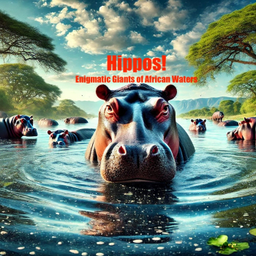
Podcast thumbnail for Hippos!

by Inception Point AI

1 episodes
Updated Weekly
Accepts GuestsHas SponsorsLocation 🇿🇦

Podcast Overview

Imagine the serene and sprawling rivers and lakes of Africa, shimmering under the sun and teeming with life. Here, in these watery realms, roams one of the most enigmatic and formidable creatures of the continent: the hippopotamus (Hippopotamus amphibius). To witness a hippopotamus in its natural habitat is to step into a world of ancient and primal wonder, a world that has remained relatively unchanged for millennia. These colossal mammals, often seen lounging in the water or grazing by the riverbanks, embody the beauty and brutality of Africa's wilderness. The Immensity of Hippopotamuses Hippopotamuses are among the largest land mammals, rivaled only by elephants and certain species of rhinoceroses. An adult hippopotamus can weigh between 2,500 to 4,000 kilograms (5,500 to 8,800 pounds) and measure up to 4.5 meters (15 feet) in length. Despite their stocky build and seemingly cumbersome appearance, hippos are remarkably agile and possess surprising speed, both on land and in water. The physical characteristics of hippopotamuses are well-suited to their semi-aquatic lifestyle. Their barrel-shaped bodies, short legs, and webbed feet make them adept swimmers, capable of moving effortlessly through the water. Their eyes, ears, and nostrils are positioned on the top of their heads, allowing them to see, hear, and breathe while mostly submerged. This adaptation is crucial for their survival, enabling them to remain hidden and vigilant against potential threats. Feeding Habits and Diet Hippopotamuses are primarily herbivorous, feeding on a variety of grasses and vegetation. They are known to consume up to 40 kilograms (88 pounds) of grass each night, which they graze during their nocturnal foraging excursions. Despite their seemingly peaceful diet, hippos are equipped with formidable tusks and teeth, which they use for defense and territorial disputes. The digestive system of a hippopotamus is adapted to process large quantities of tough plant material. Their multi-chambered stomachs and specialized gut flora enable them to efficiently break down cellulose and extract nutrients from their fibrous diet. However, hippos do not ruminate like cattle; instead, they rely on microbial fermentation to aid in digestion. While hippos spend much of their time in the water, they venture onto land to feed. Their nocturnal foraging behavior helps them avoid the heat of the day and reduces the risk of dehydration. During these nightly excursions, hippos can travel several kilometers from their water source, following well-worn paths to their favorite grazing areas. Territoriality and Social Structure Hippopotamuses are highly territorial animals, particularly in the water. Male hippos, known as bulls, establish and defend territories along the riverbanks or lake shores. These territories are critical for access to mating opportunities and prime grazing areas. A dominant bull's territory may encompass a stretch of river or a section of a lake, which he will vigorousl This content was created in partnership and with the help of Artificial Intelligence AI.

Language

🇺🇲

Publishing Since

7/7/2024

2 verified contact emails on file for Hippos!

Pitch yourself as a guest, propose sponsorships, or reach out directly to the host.

Recent Episodes

Episode thumbnail for Hippos! Enigmatic Giants of African Rivers

July 7, 2024

Hippos! Enigmatic Giants of African Rivers

Imagine the serene and sprawling rivers and lakes of Africa, shimmering under the sun and teeming with life. Here, in these watery realms, roams one of the most enigmatic and formidable creatures of the continent: the hippopotamus (Hippopotamus amphibius). To witness a hippopotamus in its natural habitat is to step into a world of ancient and primal wonder, a world that has remained relatively unchanged for millennia. These colossal mammals, often seen lounging in the water or grazing by the riverbanks, embody the beauty and brutality of Africa's wilderness. The Immensity of Hippopotamuses Hippopotamuses are among the largest land mammals, rivaled only by elephants and certain species of rhinoceroses. An adult hippopotamus can weigh between 2,500 to 4,000 kilograms (5,500 to 8,800 pounds) and measure up to 4.5 meters (15 feet) in length. Despite their stocky build and seemingly cumbersome appearance, hippos are remarkably agile and possess surprising speed, both on land and in water. The physical characteristics of hippopotamuses are well-suited to their semi-aquatic lifestyle. Their barrel-shaped bodies, short legs, and webbed feet make them adept swimmers, capable of moving effortlessly through the water. Their eyes, ears, and nostrils are positioned on the top of their heads, allowing them to see, hear, and breathe while mostly submerged. This adaptation is crucial for their survival, enabling them to remain hidden and vigilant against potential threats. Feeding Habits and Diet Hippopotamuses are primarily herbivorous, feeding on a variety of grasses and vegetation. They are known to consume up to 40 kilograms (88 pounds) of grass each night, which they graze during their nocturnal foraging excursions. Despite their seemingly peaceful diet, hippos are equipped with formidable tusks and teeth, which they use for defense and territorial disputes. The digestive system of a hippopotamus is adapted to process large quantities of tough plant material. Their multi-chambered stomachs and specialized gut flora enable them to efficiently break down cellulose and extract nutrients from their fibrous diet. However, hippos do not ruminate like cattle; instead, they rely on microbial fermentation to aid in digestion. While hippos spend much of their time in the water, they venture onto land to feed. Their nocturnal foraging behavior helps them avoid the heat of the day and reduces the risk of dehydration. During these nightly excursions, hippos can travel several kilometers from their water source, following well-worn paths to their favorite grazing areas. Territoriality and Social Structure Hippopotamuses are highly territorial animals, particularly in the water. Male hippos, known as bulls, establish and defend territories along the riverbanks or lake shores. These territories are critical for access to mating opportunities and prime grazing areas. A dominant bull's territory may encompass a stretch of river or a section of a lake, which he will vigorously defend against rival males. Territorial disputes among male hippos can be intense and violent, involving displays of aggression, vocalizations, and physical combat. Bulls use their massive tusks and powerful jaws to assert dominance, often resulting in serious injuries or even death. Despite their aggressive nature, these confrontations serve to maintain social order and establish a clear hierarchy within the hippo population. Female hippos, known as cows, and their offspring form social groups called pods. These pods are typically led by a dominant cow and consist of related females and their young. The social structure within a pod is relatively stable, with strong bonds formed between mothers and their calves. Calves are particularly vulnerable during their first few years of life, relying on their mothers for protection and guidance. Reproduction and Maternal Care The reproductive cycle of hippopotamuses is closely tied to their aquatic environment. Mating and birthing...

1 total episodes available

Deep-dive analytics for Hippos!

Frequently asked questions

Have a different question and can't find the answer you're looking for? Reach out to our support team by sending us an email and we'll get back to you as soon as we can.

What is Hippos!?

Imagine the serene and sprawling rivers and lakes of Africa, shimmering under the sun and teeming with life. Here, in these watery realms, roams one of the most enigmatic and formidable creatures of the continent: the hippopotamus (Hippopotamus amphibius). To witness a hippopotamus in its natural habitat is to step into a world of ancient and primal wonder, a world that has remained relatively unchanged for millennia. These colossal mammals, often seen lounging in the water or grazing by the riverbanks, embody the beauty and brutality of Africa's wilderness. The Immensity of Hippopotamuses Hippopotamuses are among the largest land mammals, rivaled only by elephants and certain species of rhinoceroses. An adult hippopotamus can weigh between 2,500 to 4,000 kilograms (5,500 to 8,800 pounds) and measure up to 4.5 meters (15 feet) in length. Despite their stocky build and seemingly cumbersome appearance, hippos are remarkably agile and possess surprising speed, both on land and in water. The physical characteristics of hippopotamuses are well-suited to their semi-aquatic lifestyle. Their barrel-shaped bodies, short legs, and webbed feet make them adept swimmers, capable of moving effortlessly through the water. Their eyes, ears, and nostrils are positioned on the top of their heads, allowing them to see, hear, and breathe while mostly submerged. This adaptation is crucial for their survival, enabling them to remain hidden and vigilant against potential threats. Feeding Habits and Diet Hippopotamuses are primarily herbivorous, feeding on a variety of grasses and vegetation. They are known to consume up to 40 kilograms (88 pounds) of grass each night, which they graze during their nocturnal foraging excursions. Despite their seemingly peaceful diet, hippos are equipped with formidable tusks and teeth, which they use for defense and territorial disputes. The digestive system of a hippopotamus is adapted to process large quantities of tough plant material. Their multi-chambered stomachs and specialized gut flora enable them to efficiently break down cellulose and extract nutrients from their fibrous diet. However, hippos do not ruminate like cattle; instead, they rely on microbial fermentation to aid in digestion. While hippos spend much of their time in the water, they venture onto land to feed. Their nocturnal foraging behavior helps them avoid the heat of the day and reduces the risk of dehydration. During these nightly excursions, hippos can travel several kilometers from their water source, following well-worn paths to their favorite grazing areas. Territoriality and Social Structure Hippopotamuses are highly territorial animals, particularly in the water. Male hippos, known as bulls, establish and defend territories along the riverbanks or lake shores. These territories are critical for access to mating opportunities and prime grazing areas. A dominant bull's territory may encompass a stretch of river or a section of a lake, which he will vigorousl

This content was created in partnership and with the help of Artificial Intelligence AI.

How often does this podcast release new episodes?

This podcast updates weekly.

Where can I listen to this podcast?

This podcast is available on 4 platforms including Apple Podcasts, Spotify, and more. You can also use the RSS feed directly.

Does this podcast accept guests?

Information about guest appearances is not available.

Legal Disclaimer

Pod Engine is not affiliated with, endorsed by, or officially connected with any of the podcasts displayed on this platform. We operate independently as a podcast discovery and analytics service.

All podcast artwork, thumbnails, and content displayed on this page are the property of their respective owners and are protected by applicable copyright laws. This includes, but is not limited to, podcast cover art, episode artwork, show descriptions, episode titles, transcripts, audio snippets, and any other content originating from the podcast creators or their licensors.

We display this content under fair use principles and/or implied license for the purpose of podcast discovery, information, and commentary. We make no claim of ownership over any podcast content, artwork, or related materials shown on this platform. All trademarks, service marks, and trade names are the property of their respective owners.

While we strive to ensure all content usage is properly authorized, if you are a rights holder and believe your content is being used inappropriately or without proper authorization, please contact us immediately at hey@podengine.ai for prompt review and appropriate action, which may include content removal or proper attribution.

By accessing and using this platform, you acknowledge and agree to respect all applicable copyright laws and intellectual property rights of content owners. Any unauthorized reproduction, distribution, or commercial use of the content displayed on this platform is strictly prohibited.