- 16
- Episodes
- 4
- Ratings
- 2022
- First episode
About Hormone Zone
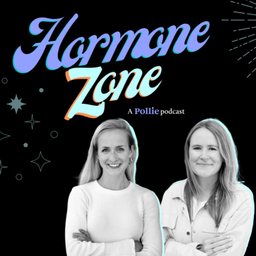
Hormone Zone is a podcast for menstruating people who want to learn more about their bodies. Hosts Jane Sagui and Sabrina Mason are here to talk about the TMI topics that people want to learn more about. Friends for a decade and now the co-founders of female health startup Pollie, no topic is off limits for Jane, Sabrina, and their periodic guests. From poop to periods to f*cked up stuff in healthcare, we’re here for it. Learn more about Pollie on our website (www.pollie.co) or Instagram (@pollie.co).
- Publisher
- Jane Sagui and Sabrina Mason
- Category
- health & fitness
- Language
- en
- Explicit
- Yes
- First episode
- 9 May 2022
- Latest episode
- 21 Mar 2023
Latest episodes
16 episodes in the feed.
21 Mar 2023
How naturopathic medicine and acupuncture can help our hormones feat. Dr. Lana Butner (@drlanawellness)
In today's episode, Jane sits down with naturopathic doctor and licensed acupuncturist Dr. Lana Butner to learn about naturopathic medicine, acupuncture, and our hormones. Dr. Lana owns her own practice and helps people with chronic conditions and unexplained symptoms identify the root cause of their health issue. She helps her patients with gut health, hormone and fertility issues like PCOS, and more. If you have been struggling with a health issue and are curious about exploring how naturopathic medicine or acupuncture could help you, this episode is for you. Tune in to learn: What is naturopathic medicine? What is the credentialing process like for providers? How does naturopathic medicine differ from functional medicine? What does the process of working with a naturopathic doctor typically look like? How can acupuncture help our fertility? Are food sensitivity tests worth the hype? Full-fat dairy for menstruating people: yay or nay? Why are thyroid imbalances oftentimes misdiagnosed as PCOS? What are tips for knowing if a specific acupuncturist will be good for fertility issues? What are tips for PCOS nutrition for someone who was just diagnosed? --- If you would like to learn more about Dr. Lana or work with her, check out her website (https://www.drlanawellness.com/) (https://www.drlanawellness.com/). You can find her on Instagram (https://www.instagram.com/drlanawellness/) and Tiktok (https://www.tiktok.com/@drlanawellness) at @drlanawellness. Use the code POLLIE15 for 15% off Dr. Lana's new PCOS Recipe Booklet (https://www.drlanawellness.com/packages-inventory/8dihy3ccc85cm1uf63ozzq7jjagvc7) and DRLANA2WEEKS for 2 weeks free of Pollie's PCOS Program (just search "Pollie" and apply the code at checkout in the App Store or Google Play Store). Labs to ask for if you are concerned about your thyroid health (hint: TSH is oftentimes not enough!) TSH Free T3 and T4 Reverse T3 and T4 Thyroid antibodies Looking for an acupuncturist to work with? Look for the following NCCAOM-accredited (National Certification Commission for Acupuncture and Oriental Medicine) A Diplomate of Acupuncture is an acupuncturist who is certified by the NCCAOM. It is a considerable professional achievement to earn the designation Diplomate of Acupuncture (NCCAOM). Look for certifications in specialty areas related to fertility and / or female health Check out referrals from reproductive endocrinologists (REIs), fertility clinics, and/or OBGYNs in your area Be aware of dry needling, this is not acupuncture! It can be helpful for physical therapy-related purposes but there is little regulation / credentialing for this type of work. --- Learn more about Pollie on our website (www.pollie.co (//www.pollie.co)) or Instagram and Tiktok (@pollie.co).
14 Feb 2023
The dark side of wellness feat. Clara Nosek, RD (@yourdietitianbff)
In today's episode, Jane sits down with Clara Nosek, RD (@yourdietitianbff) to talk about the downsides of the wellness and nutrition industries. Clara is a registered dietitian who moonlights as an educator and content creator in the anti-diet and wellness accountability space. Her content goes much deeper than her hilarious wellness and diet culture memes, though. She provides digestible and science-backed education to help people better understand the ways that wellness culture can oftentimes reflect and perpetuate discriminatory systems in our society, and she uses research and history to explain the problematic parts of this industry. If you've been thinking about whether wellness or diet culture has gone too far and may be negatively impact your life, this episode is a good jumping point to start more deeply reflecting on how external influences and massive systems have played a role. It's also a great listen for those who work in the wellness or nutrition space and want to make sure they are staying accountable, acknowledging their specific privileges and biases, and practicing with their clients (or educating their platforms) in a way that is inclusive, aware, and not unintentionally harmful to certain communities. Tune in to learn: What is wellness culture, and how and why can it be so toxic? How have capitalism, white supremacy, ableism, and other societal systems impacted the way wellness culture has developed? If you feel like wellness culture is impacting you in a negative way, what are tangible steps you can take to start re-assessing your relationship and consumption of its content, products, and services? What are ways you can still participate in parts of wellness culture that bring you joy and make your mind and body feel good without enabling a system that you want to change? Is that even possible? What are helpful resources for examining how wellness culture has impacted you and your own wellbeing, as well as others in your community? You can find Clara @yourdietitianbff on Instagram (https://www.instagram.com/yourdietitianbff/?hl=en) and Tiktok (https://www.tiktok.com/@yourdietitianbff?lang=en) as well as her website (https://www.claranosek.com/ (https://www.claranosek.com/)). SHOW NOTES Clara's recommended resources (in this order!) include: The Gospel of Wellness (Rina Raphael) McMindfulness (https://www.amazon.com/McMindfulness-Ronald-E-Purser-audiobook/dp/B07WX8C3H3/ref=sr_1_1?crid=2JZZWBWP0H40K&keywords=mcmindfulness&qid=1676312629&s=books&sprefix=mindfulnes%2Cstripbooks%2C137&sr=1-1) (Ronald E. Purser) Cult-ish (https://www.amazon.com/Cultish-Language-Fanaticism-Amanda-Montell-ebook/dp/B08HZ4YYGG/ref=sr_1_1?crid=I5QRNJXGV87I&keywords=cult-ish&qid=1676312655&s=audible&sprefix=cult-ish%2Caudible%2C116&sr=1-1-catcorr&asin=B08HZ4YYGG&revisionId=8425211f&format=1&depth=1) (Amanda Montell) The Sum of Us (https://www.amazon.com/Sum-Us-Everyone-Prosper-Together/dp/B087CBHQQK/ref=sr_1_1?crid=RY7ORLKAGRQG&keywords=the+sum+of+us&qid=1676312711&s=audible&sprefix=the+sum+of+us%2Caudible%2C125&sr=1-1) (Heather McGhee) Hood Feminism (https://www.amazon.com/Hood-Feminism-Notes-Movement-Forgot/dp/B083KNS373/ref=sr_1_1?keywords=hood+feminism&qid=1676312760&s=audible&sprefix=hood+f%2Caudible%2C118&sr=1-1) (Mikki Kendall) The two anti-diet dietitians / creators Jane calls out are: Lisa Hayim (@lisahayim on Instagram) Robyn Nohling (@thereallife_rd on Instagram) Learn more about Pollie on our website (www.pollie.co) or Instagram and Tiktok (@pollie.co).
30 Jan 2023
Why do people mix up PCOS and endometriosis?
PCOS and endometriosis both impact at least 10% of women and people that menstruate, and are largely known as being fertility-related conditions. But despite being quite different disorders, they are sometimes confused with one another. Why is that? In today’s episode, Jane and Sabrina dive into what PCOS and endometriosis both are, how they are diagnosed, and what makes them similar vs. different. Perhaps the most commonly-shared symptom of PCOS and endometriosis is infertility and irregular menstrual cycles. However, PCOS tends to be “irregular” in that people get fewer cycles per year than average, whereas endometriosis tends to be “irregular” in that it can make people’s periods incredibly heavy and painful (although, heavy and painful periods are also a symptom for many people with PCOS!). PCOS and endometriosis are complex conditions and sit at the intersection of several bodily systems. PCOS, for example, is a hormone imbalance at its core but is also a metabolic and / or inflammatory condition for some people. Endometriosis is generally characterized as an inflammation condition but can be worsened by hormone imbalances. Both have been linked to genetic factors as well. Whether you have PCOS or endometriosis, are trying to support someone in your life who does, or just want to expand your knowledge about women’s health, this episode is a quick deep dive into why it is important to distinguish the two conditions. — SHOW NOTES Study that suggests PCOS may increase endometriosis by 9x: https://academic.oup.com/jcem/article/100/3/911/2839432 (https://academic.oup.com/jcem/article/100/3/911/2839432) Other studies (e.g., https://journals.sagepub.com/doi/abs/10.5301/je.5000181?journalCode=peva& (https://journals.sagepub.com/doi/abs/10.5301/je.5000181?journalCode=peva&)) show there is a likely link between the two conditions — Learn more about Pollie on our website (www.pollie.co (http://www.pollie.co/)) or Instagram and Tiktok (@pollie.co).
16 Jan 2023
Can I get pregnant if I have PCOS?
PCOS is known as being the leading cause of infertility, and it does have a reproductive health impact for a majority of people who have it. One of the diagnostic criteria for PCOS is having irregular or absent ovulation, after all, and if you are not ovulating (or are not ovulating consistently) getting pregnant will indeed be more difficult. That said, a PCOS diagnosis is not an infertility sentence. While you will not be able to get pregnant in any given month that you don’t ovulate, spontaneous ovulation is possible even in unmanaged PCOS. And the good news is that managing your PCOS with lifestyle and medication can make ovulation even more likely. In fact, over 60% of people with PCOS can achieve ovulation with lifestyle changes alone. And adding in fertility treatments like clomid, IUIs, and IVF is also a helpful tool if that is desired and financially feasible. Whether you were diagnosed with PCOS yesterday or a decade ago, if you are looking for a crash course on what this means for your family formation journey, this episode is for you. ------------ Study referenced about how lifestyle changes can encourage ovulation for 60% of people with PCOS: https://pubmed.ncbi.nlm.nih.gov/26401593/ (https://pubmed.ncbi.nlm.nih.gov/26401593/) This deserves its own episode, but if fertility treatment is not covered by your employer or health insurance it can be a steep out of pocket expense. We are fans of Future Family as a financing option: https://www.futurefamily.com/ivf (https://www.futurefamily.com/ivf) ------------ Learn more about Pollie on our website (www.pollie.co (http://www.pollie.co/)) or Instagram and Tiktok (@pollie.co).
2 Jan 2023
Are ovarian cysts and PCOS the same thing?
Hormone Zone is back after our break! We’ll be starting a new bite-sized format mixed with specialist interviews. Today’s discussion gets into a question we hear a lot: are ovarian cysts the same thing as polycystic ovaries or PCOS? While the two certainly sound similar, they are actually quite different. Ovarian cysts are fluid-filled sacs in or surrounding the ovary. They affect 8-18% of pre and postmenopausal women. While they oftentimes cause no discomfort or symptoms, they can sometimes become twisted or burst open which can be painful and dangerous. There are different types of cysts such as follicular cysts, corpus luteum cysts. Polycystic ovaries, on the other hand, refer to a state of your ovaries having an abnormally-high number of follicles surrounding them. They do not cause any harm or pain and are not dangerous. And as one final clarification point: having polycystic ovaries does not automatically mean that you have PCOS! They are commonly seen with PCOS, but can also be due to another hormone imbalance or just be a “normal” variant of your own body. They must be accompanied by high androgen levels (detected through lab work) and / or irregular or absent ovulation (detected through irregular menstrual cycles) to be diagnosed as PCOS. If you have any questions or have a topic you would like us to discuss in a future episode. — SHOW NOTES Pollie’s advisor Dr. Pooja Mahtani has a great blog article covering this topic: https://poojamahtaniwellness.com/polycystic-ovaries-vs-pcos-whats-the-difference/ (https://poojamahtaniwellness.com/polycystic-ovaries-vs-pcos-whats-the-difference/) https://www.clevelandclinicmeded.com/medicalpubs/diseasemanagement/womens-health/ovarian-cysts/ (https://www.clevelandclinicmeded.com/medicalpubs/diseasemanagement/womens-health/ovarian-cysts/) — Learn more about Pollie on our website (www.pollie.co (http://www.pollie.co/)) or Instagram and Tiktok (@pollie.co).
13 Sept 2022
Ending the PCOS stigma
Since September is PCOS Awareness Month, Jane and Sabrina are tackling one of their favorite topics: stigma and PCOS. PCOS (polycystic ovarian syndrome) impacts at least 10% of menstruating people. Common symptoms like irregular periods and subsequent infertility, weight gain, acne, female-pattern hair loss, hirsutism, and mental health conditions are all very stigmatized in today’s culture. For that reason, many people with PCOS may struggle with internal, external, or anticipated stigma. In today’s episode, Sabrina and Jane start off with Jane’s own experience with PCOS before getting into the research behind stigma and chronic conditions. Tune in to hear more about: How and why Jane internalized feelings of being “defective” because of her PCOS diagnosis (note: PCOS does not make you defective; but society tells us it does!) How Jane’s feelings about PCOS have shifted throughout the years and what has helped her confront the shame and embarrassment she felt about symptoms How internalized stigma still shows up with health-related issues in Jane’s life Internalized vs. experienced stigma vs. anticipated stigma: What they are, how they contribute to lower quality of life and worse health outcomes, and how various forms of privilege play a role The importance of re-framing your condition, sharing your story, educating yourself, holding healthcare providers accountable, and other tips when it comes to confronting, reducing, and even eliminating feelings of shame and embarrassment from PCOS and other chronic health issues STUDIES The Impact of Stigma in Healthcare on People Living with Chronic Illnesses (https://www.ncbi.nlm.nih.gov/pmc/articles/PMC8919040/) Barriers to routine gynecological cancer screening for White and African-American obese women (https://pubmed.ncbi.nlm.nih.gov/16231037/): Study findings demonstrate that people with stigmatized conditions (e.g., higher BMI) tend to delay care. This study found that a higher BMI resulted in significantly lower rates of female preventative care like pap tests, pelvic examinations, and mammograms. 90% of the women in the study had health insurance (and these conditions are covered by insurance) suggesting that the main causes of delaying or not receiving preventative care was related to disrespectful treatment and negative attitudes of providers (experienced stigma) and internalized stigma (embarrassment about weight). OTHER EPISODES General PCOS podcast Hormone Zone episode (https://open.spotify.com/episode/3AengzKd6XYqYkR7GiBF2r?si=5b81604e95824d57) --- Learn more about Pollie on our website (www.pollie.co (http://www.pollie.co/)) or Instagram (@pollie.co).
31 Aug 2022
Are plant-based diets good for our hormones? Feat. Dr. Dylan Cutler
In today’s episode, Sabrina and Jane are joined by Pollie advisor, OBGYN PhD, and health educator Dr. Dylan Cutler to talk all about plant-based (and vegan) diets and PCOS. While plant-based eating is often brushed aside in the world of hormonal health due to a focus on low glycemic or even borderline keto diets, there are many benefits to adding more vegetables, fruits, grains, and legumes to your diet - even if you decide to not commit 100% to being vegan or vegetarian. In fact, if we focus on whole foods, plant-based eating is a pretty stellar way to make sure we are getting plenty of fiber, vitamins, and antioxidants throughout the course of the day, all of which are known to support balanced hormones. Tune in to this episode to hear: What does “plant-based” even mean? How does it compare to being vegan? How does plant-based eating compare to other ways of eating that are often recommended for female hormones and PCOS? What benefits does research show over other lifestyles such as keto and Mediterranean diets? What does research say about how eating plant-based impacts our hormones? Is there any research behind plant-based / vegan diets and PCOS? What are tips for anyone who is considering adopting a vegan or more plant-based lifestyle? Are there any signs to watch out for in terms of nutrient deficiencies? What are signs that something may be a food intolerance or food allergy vs. just getting used to eating more plant-based (Read: Adjusting to higher levels of fiber)? FOOD SENSITIVITY TESTS At-home food sensitivity and allergy tests are popular, but their efficacy can be a controversial topic. Sensitivity testing, for example, can often come up as “sensitive” to foods that you eat frequently but do not actually have an adverse reaction to. Be sure to speak with your physician if you are concerned about a serious food allergy or if you are considering making any lifestyle changes (e.g., eliminating certain foods / food groups) based on results from one of these tests. Everlywell (https://www.everlywell.com/products/food-sensitivity/) and myLAB Box (https://www.mylabbox.com/product/food-sensitivity-test/) are two examples of at-home food sensitivity testing. Labcorp (https://www.ondemand.labcorp.com/lab-tests/food-allergy-test) and Quest (https://questdirect.questdiagnostics.com/products/food-allergy-test-panel) have food allergy panels, and now Everlywell (https://www.everlywell.com/products/food-allergy-test/) has an at-home food allergy test option. Follow Dr. Cutler at @dr.dylancutler (https://www.instagram.com/dr.dylancutler/?hl=en) on Instagram! Learn more about Pollie on our website (www.pollie.co (http://www.pollie.co/)) or Instagram (@pollie.co).
16 Aug 2022
Who’s better, Dr. Reddit or Dr. Google?
In today’s episode Jane and Sabrina talk about online health communities, with most of the conversation centered on Reddit. With 1 in 10 people (and growing) going to social media for health information and over 1 billion health questions searched on Google every day, this topic is an important one, especially when it comes to parsing out misinformation. They discuss whether content on social media platforms like Facebook, Instagram, and Tiktok is ever legit (hint: it depends), how to tell if specific community platforms for chronic conditions, and Jane’s obsession with Reddit UTI groups. The conversation concludes with weighing the benefits of health-related subreddits as well as their limitations, as well as what Jane and Sabrina think community platforms should have to monitor any misinformation (and we need a better tool than Facebook automatically censoring any mention of the word “vagina,” sigh) while also fostering organic engagement. Learn more about Pollie on our website (www.pollie.co (http://www.pollie.co/)) or Instagram (@pollie.co).
1 Aug 2022
Is the fertility awareness method an effective form of birth control?
Fertility awareness methods (FAMs) have gained popularity in recent years both for being effective support tools for those trying to conceive and even for people who are hoping to avoid pregnancy. In today’s episode, Jane and Sabrina discuss FAM as a birth control method as well as the risks (and benefits) associated with this approach. They discuss the different types of FAM (i.e., Standard Days, Cervical Mucous, Basal body temperature (BBT), Symptothermal), how people can use these methods for both birth control and family planning, how FAM stacks up to other birth control methods with typical vs. perfect use, and more. While there are many benefits of fertility awareness methods there can be risks if this is being used for contraceptive purposes. Jane and Sabrina take a look at these risks and shed some light on their thoughts about how FAM can be portrayed on social media. If you are curious to learn more about what the fertility awareness method even is, how basal body temperature tracking and cervical mucous can provide a clue into our fertile window, FAM-related devices and apps, this episode is for you! Note: The day after this episode was posted, Natural Cycles announced a partnership with Oura Ring (https://www.ouraring.com). This is exciting because Oura Ring automatically takes your BBT while you sleep. However, it is priced at $300, which we recognize is not accessible for everyone. ***Disclaimer: While these methods are great additions to the routine of someone who is trying to conceive, being informed about how they work and how to maximize efficacy is especially important if you are using FAM for birth control. Be sure to talk with your doctor before starting BBT tracking, cervical mucous tracking, or any other FAM method as a form of birth control. While research shows “perfect” FAM use can prevent pregnancy in over 90% of cases, even the most diligent efforts can be hindered by a hormone imbalance like polycystic ovary syndrome (PCOS) or monthly hormonal fluctuations caused by stress or other medication. FAM-RELATED APPS & DEVICES Tempdrop* (device for monitoring BBT): https://www.tempdrop.com/ (https://www.tempdrop.com/) Ava* (fertility tracking device for monitoring BBT): https://www.avawomen.com/ (https://www.avawomen.com/) kegg* (device for monitoring cervical mucous): https://kegg.tech/ (https://kegg.tech/) Natural Cycles** (birth control and family planning app using BBT tracking): https://www.naturalcycles.com/ (https://www.naturalcycles.com/) *Not FDA approved for birth control and lacking studies for pregnancy prevention; if your goal is to avoid pregnancy, be sure to use this in combination with other FAM methods and barrier protection. **FDA-cleared and CE-marked, but make sure to still talk with your doctor before using this as birth control and do your research about what constitutes perfect vs. typical use. OTHER LINKS https://www.acog.org/womens-health/faqs/fertility-awareness-based-methods-of-family-planning (https://www.acog.org/womens-health/faqs/fertility-awareness-based-methods-of-family-planning) https://www.plannedparenthood.org/learn/birth-control/fertility-awareness (https://www.plannedparenthood.org/learn/birth-control/fertility-awareness) https://www.healthline.com/health/healthy-sex/how-effective-is-birth-control (https://www.healthline.com/health/healthy-sex/how-effective-is-birth-control) Hormone Zone episode on birth control with Dr. Mare Mbaye: https://open.spotify.com/episode/0aG9u5CUsDAqTPa9NMG6mJ?si=07a2f4a2bcd64ebc (https://open.spotify.com/episode/0aG9u5CUsDAqTPa9NMG6mJ?si=07a2f4a2bcd64ebc) Learn more about Pollie on our website (www.pollie.co (http://www.pollie.co/)) or Instagram (@pollie.co).
19 Jul 2022
WTF is PCOS and what do I do about it?
Polycystic ovary syndrome (PCOS) is an incredibly common hormone imbalance that impacts 10% of menstruating people. While it is the leading cause of infertility and is oftentimes framed as a reproductive issue as a result of this, there is much more to PCOS beyond this: it is a risk factor infertility, diabetes, heart disease, mental health issues, and more. Not to mention frustrating day-to-day symptoms such as irregular or absent ovulation, wonky periods, trouble losing weight, acne, hair loss, hirsutism (male-pattern hair growth), mood-related symptoms, sleep issues, and more. Given all this, being diagnosed with PCOS can be pretty scary. That’s why Jane and Sabrina started Pollie (www.pollie.co (http://www.pollie.co/)) to help people find personalized symptom management support. In today’s episode Jane and Sabrina go through a crash course on PCOS and discuss everything from systemic issues that make this condition difficult to find support for to their top tips for having PCOS. Tune in to hear: What even is PCOS? Is it a hormone imbalance, a metabolic condition, or both? How is PCOS diagnosed? What is the Rotterdam criteria, and is it still current? What are other conditions that should be ruled out before a PCOS diagnosis is made? How common is PCOS? What is the typical patient experience like? What are different treatment options for managing PCOS? Is the pharmaceutical route (e..g, hormonal birth control, metformin, ******spironolactone) any better or worse than making lifestyle modifications (e.g., nutrition, exercise, stress management, sleep, supplements)? What are tips for managing PCOS in a sustainable way? At the end of the day, it is important to remember that PCOS is a complex condition and no two cases are the same. For this reason, figuring out what works for you in terms of symptom management may just take a bit of experimentation. If you have any questions about Pollie’s PCOS Program, feel free to reach out to their team at hello@pollie.co (mailto:hello@pollie.co) ----------------------- Helpful labs to ask your doctor to check for PCOS include: Androgen panel (e.g., Free and total testosterone, SHBG, DHEA-S) Metabolic panel (e.g., Fasting glucose, Fasting insulin, HbA1c) Lipids (e.g., HDL, LDL, Total cholesterol, Triglycerides) Other sex hormones (e.g., Estradiol, Progesterone, FSH, LH, AMH) Inflammatory markers (e..g, C-reactive protein (CRP)) Other key health biomarkers (e.g., Vitamin D3, Vitamin B12, Ferritin) PCOS is a diagnosis for exclusion! For that reason, make sure you work with your physician to rule out other conditions such as (includes sample labs): Thyroid issues (e.g., TSH, T4) Primary ovarian failure (e.g., high FSH) FHA / hypothalamic problems (e.g., low FSH) Congenital adrenal hyperplasia (e.g., 17 hydroxy progesterone) Adrenal gland tumor (e.g., significantly high DHEA-S) Pituitary tumor (e.g., high prolactin) Ulta Lab (https://www.ultalabtests.com/ (https://www.ultalabtests.com/)) is a helpful platform for ordering labs yourself if you are having trouble getting comprehensive bloodwork done through insurance. ***Note that you should still work with your physician to determine which labs you should be checking to monitor your overall health in addition to your PCOS and what to do if you receive low or abnormal results.
5 Jul 2022
Why birth control is not a one-size-fits-all feat. OBGYN Dr. Mare Mbaye
Birth control is a hot topic in today’s wellness world to say the least. Chances are you have seen conflicting information about hormonal birth control in terms of how it can impact our hormones and overall health. In this episode, we bring on Dr. Marieme Mbaye to teach us more about how hormonal contraceptives even work, how the different types function (e.g., Combination pills vs. progestin-only, Oral contraceptives vs. IUDs vs. the ring vs. the rod), the typical impact they have on our body’s hormones, and signs that a birth control method may not be working with your body’s chemistry. After covering the basics, we get into an exciting discussion around the personalization of birth control. Just like there is no single fix when it comes to the types of foods or exercise that work for all of our bodies, there is also no one-size-fits-all approach when it comes to hormonal contraceptives. Tune in to learn: What are the different types of birth control? How does each type work to prevent pregnancy? What are the short and long-term benefits of hormonal contraceptives? What are examples of negative side effects birth control may cause? How much time is recommended before deciding whether a birth control method is (or isn’t) working for you? Are there any tests (e.g. biomarkers, genetic testing) that can be run to pinpoint which birth control method(s) may work best for your body? What is the future of birth control? — Check out Adyn (https://adyn.com/ (https://adyn.com/)) for a test that assesses several biomarkers and genes that can help determine which birth control method(s) will work best with your body. NOTE: Jane, Sabrina, and Pollie are very passionate about advocating that people chose what is best for them when it comes to both contraception and their hormone health management. While getting lost in a social media rabbithole about the pros and cons of hormonal contraceptives can be scary, it is important to remember that birth control’s #1 goal is to prevent pregnancy, and it has fundamentally shifted the way that women have been able to lead their lives as a result. Moreover, for every story one shares about a negative experience on birth control, there is a story about how it improved someone’s quality of life in a multitude of ways. At the end of the day, it’s a personal choice between a patient and their provider. Learn more about Pollie on our website (www.pollie.co (http://www.pollie.co/)) or Instagram (@pollie.co).
21 Jun 2022
Functional medicine needs a rebrand
In this week’s episode of Hormone Zone, Jane and Sabrina have a bone to pick with functional medicine. And that’s not with anything about this care model’s actual approach - they’re both fans - but rather why they think it needs a rebrand. The two start with discussing the different types of healthcare models that exist today including conventional medicine vs. integrative care, alternative medicine vs. functional medicine, and how “holistic” care fits into it all. They then get into misconceptions about functional medicine, why it is often branded as an elitist concept that only wealthy folks can afford, and what systemic changes are needed to allow for that rebrand (hello, insurance coverage and physician referrals). If you are looking to learn more about different healthcare models or curious as to why functional practitioners are so d*mn expensive, you’ll want to tune in to this episode. — During Jane and Sabrina’s discussion about reiki and acupuncture, they touched on how to look look into the research behind different treatment modalities. If there’s something you’d like to learn more about, searching for peer-reviewed studies is a good starting point for seeing what credible, research-backed findings exist. Since not all of us have access to libraries or databases with these journal articles, you can just Google “Pubmed + [key phrase]” to see what’s out there for yourself. Learn more about Pollie on our website (www.pollie.co (http://www.pollie.co/)) or Instagram (@pollie.co).
7 Jun 2022
Are period poops real? Feat. Dr. Saru Bala, ND
Gut health is a popular buzzword these days, but why is it important for our hormones and reproductive health? Lucky for you, Jane and Sabrina enjoy talking about poop more than any two coworkers should, and this episode explores all-things relating to gut health and our hormones. In Hormone Zone’s first interview, Jane and Sabrina have a chat about the gut-hormone connection with naturopathic doctor, Pollie advisor, and female hormone specialist Dr. Saru Bala. Dr. Bala unpacks what “gut health” actually is, why it is such a vital part of our overall health, and signs that something may be off with your gut that is influencing your hormones. Tune in to hear: What even is gut health? What encourages good gut health? What is the gut-brain access? How does gut health impact our hormones? What the heck is the estrobolome? What are tests that can help determine that something may be off with your gut health? What are signs of a healthy vs. unhealthy poop? Are “period poops” really a thing? Are probiotics worth the investment? What foods and habits have been shown to disrupt the gut? How do you go about eliminating potential disruptors, and when can you tell when it is time to reintroduce them back in? Learn more about Pollie on our website (www.pollie.co (http://www.pollie.co/)) or Instagram (@pollie.co). About Dr. Bala Dr. Saru Bala is a licensed naturopathic doctor based in Phoenix, Arizona. She owns her own practice that specializes in women’s hormonal health. You can find her at @drsarubala on Instagram and Tiktok or visit her website at https://www.drsarubala.com/ (https://www.drsarubala.com/).
24 May 2022
Was I a better roommate or co-founder?
Today’s episode dives in to Jane and Sabrina’s unique relationship. The two met nearly a decade ago while on a study abroad trip and started their company, Pollie, in the early days of the pandemic. They discuss who they are outside of work, their compatible sun signs, how their friendship has evolved over the years, and why they started to take the plunge and start Pollie in 2020. They also answer questions that they commonly hear from Pollie’s community as well as their own friends and family. If you’ve ever wondered what it would be like to start a company with a friend (like, a really close friend), this episode is for you. PS - The jury is still out on whether the two were better roommates or co-founders, LOL! Learn more about Pollie on our website (www.pollie.co (http://www.pollie.co/)) or Instagram (@pollie.co).
10 May 2022
If one more doctor tells me to pee after sex I will explode
Welcome to Hormone Zone! In our first episode, Jane and Sabrina discuss one of their favorite topics: how to advocate for yourself at the doctor. Jane shares her recent struggles with recurrent urinary tract infections (UTIs), how difficult it has been for her to understand why these monthly infections keep happening, and frustrations with being dismissed by providers about this new issue. The most wild part, though? Advocating for herself has not become any easier since the last time Jane went through a frustrating health issue. And that was a decade ago! Tune in to hear more about Jane’s newfound obsession with bladder health, Sabrina’s favorite Pollie survey stats, and their discussion on systemic issues that make it difficult to speak up at the doctor. And, of course, they also discuss specific ways to advocate for yourself at the doctor. — Curious to learn more about the at-home vaginal and urinary tract tests mentioned in the episode? Check out Evvy’s vaginal microbiome test (https://evvy.com/ (https://evvy.com/)) and MicroGenDX’s urinary and vaginal tests (https://microgendx.com/ (https://microgendx.com/)) for two options that helped Jane. Learn more about Pollie on our website (www.pollie.co (http://www.pollie.co/)) or Instagram (@pollie.co).
9 May 2022
Introducing Hormone Zone
Introducing Hormone Zone: a new podcast for menstruating people who want to learn more about their bodies, from the founders of Pollie. Coming soon to Spotify and Apple Podcasts! Learn more about Pollie on our website (www.pollie.co) or Instagram (@pollie.co).
Reach and audience
Public platform figures. Ratings count people who left a rating, not total listeners.
- Apple Podcasts (US)
- 5.0 / 5
- 4 ratings
Contact Hormone Zone
- Guest appearances
- Books guests
Based on episode analysis; this does not confirm that the show is currently accepting guests.
Host of Hormone Zone?
Claim your podcast to manage its listing and keep your show details accurate.
Pod Engine is an independent podcast discovery and analytics service and is not affiliated with or endorsed by this podcast. Artwork and show content belong to their owners. Full legal notice.
Explore this show
Podcast research with Pod Engine