
This podcast is primarily focused on discussing a few common arguments that were used to justify enslavement in the United States, focusing on the Enlightenment and Post Enlightenment period (1715-1815)
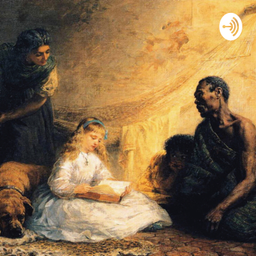
How Enslavement was Justified in America During 1715-1815
Claim This Podcastby Taylor Fritz
5 episodes
Updated Daily
Accepts GuestsHas SponsorsLocation 🇺🇸
Podcast Overview
This podcast is primarily focused on discussing a few common arguments that were used to justify enslavement in the United States, focusing on the Enlightenment and Post Enlightenment period (1715-1815)
Language
🇺🇲
Publishing Since
10/9/2020
1 verified contact email on file for How Enslavement was Justified in America During 1715-1815
Pitch yourself as a guest, propose sponsorships, or reach out directly to the host.
Recent Episodes
October 10, 2020
Conclusion: How justifications for enslavement can be paralleled to those of today’s injustices
Thank you for listening to my podcast! Here is my bibliography: Bly, Nellie. Ten Days in a Mad-House. CreateSpace Independent Publishing Platform, 2018. Doll, E. A. “Idiot, Imbecile, and Moron.” Journal of Applied Psychology 20, no. 4 (August 1936): 427–437. National Institute of Mental Health (U.S.). Patients in Mental Institutions. U. S. Govt. Print. Off., 1950. http://hdl.handle.net/2027/mdp.39015068580169. Rosvold, H. E. and Mortimer Mishkin. 1950. "Evaluation of the Effects of Prefrontal Lobotomy on Intelligence." Canadian Journal of Psychology/Revue Canadienne De Psychologie 4 (3) (09): 122-126. doi:http://proxy.geneseo.edu:2108/10.1037/h0083524. https://proxy.geneseo.edu/login?url=https://proxy.geneseo.edu:5742/docview/614253445?accountid=11072.
October 10, 2020
“Slavery would be too difficult to abolish due to its necessity to the country and its economy
Thank you for listening to my podcast! Here is my bibliography: Jefferson, Thomas. Autobiography of Thomas Jefferson. New York and London: The Knickerbocker Press, 1914. https://hdl.handle.net/2027/loc.ark:/13960/t84j0wc2d. Jefferson, Thomas. “The Complete Memoirs, Correspondence, And Miscellanies, From The Papers of Thomas Jefferson.” Edited by David Widger. The Project Gutenberg, May 17, 2009. http://www.gutenberg.org/files/28860/28860-h/28860-h.htm To Jefferson, it was anti-democratic and contrary to the principles of the American Revolution for the federal government to enact abolition or for only a few planters to free their slaves. Locke, John. “Second Treatise of Government by John Locke.” The Project Gutenberg eBook of Second Treatise Of Government By John Locke. Accessed March 3, 2020. https://www.gutenberg.org/files/7370/7370-h/7370-h.htm. Locke, John. “Two Treatises of Government by John Locke.” The Project Gutenberg eBook of Two Treatises Of Government By John Locke. Accessed March 3, 2020. https://www.gutenberg.org/files/7370/old/trgov10h.htm
October 9, 2020
“Enslavement is ‘natural’”
Thank you for listening to this episode of my podcast! Here is the bibliography: Aristotle. Aristotle: Politics. Translated by CDC Reeve. Hackett Publishing Company, 1998. Huber, Pierre. The Natural History of Ants. Translated by James Rawlins Johnson. Google Books. London: Longman, Hurst, Rees, Orme, and Brown, 1820. https://books.google.com/books?id=AJM-AAAAcAAJ&source=gbs_navlinks_s. Minella, Timothy K. 2019. “The Enslaved Ants and the Peculiar Institution: Argument by Analogy in the Slavery Question.” Early American Studies, An Interdisciplinary Journal 17 (2): 256–80. http://search.ebscohost.com.proxy.geneseo.edu:2048/login.aspx?direct=true&db=hus&AN=135603201&site=ehost-live&scope=site. Richard Kraut. “Are There Natural Rights in Aristotle?” The Review of metaphysics 49, no. 4 (June 1, 1996): 755–774.
5 total episodes available
Deep-dive analytics for How Enslavement was Justified in America During 1715-1815
Frequently asked questions
Have a different question and can't find the answer you're looking for? Reach out to our support team by sending us an email and we'll get back to you as soon as we can.
- What is How Enslavement was Justified in America During 1715-1815?
- How often does this podcast release new episodes?
This podcast updates daily.
- Where can I listen to this podcast?
This podcast is available on 4 platforms including Apple Podcasts, Spotify, and more. You can also use the RSS feed directly.
- Does this podcast accept guests?
No, this podcast does not typically feature guests.
Legal Disclaimer
Pod Engine is not affiliated with, endorsed by, or officially connected with any of the podcasts displayed on this platform. We operate independently as a podcast discovery and analytics service.
All podcast artwork, thumbnails, and content displayed on this page are the property of their respective owners and are protected by applicable copyright laws. This includes, but is not limited to, podcast cover art, episode artwork, show descriptions, episode titles, transcripts, audio snippets, and any other content originating from the podcast creators or their licensors.
We display this content under fair use principles and/or implied license for the purpose of podcast discovery, information, and commentary. We make no claim of ownership over any podcast content, artwork, or related materials shown on this platform. All trademarks, service marks, and trade names are the property of their respective owners.
While we strive to ensure all content usage is properly authorized, if you are a rights holder and believe your content is being used inappropriately or without proper authorization, please contact us immediately at hey@podengine.ai for prompt review and appropriate action, which may include content removal or proper attribution.
By accessing and using this platform, you acknowledge and agree to respect all applicable copyright laws and intellectual property rights of content owners. Any unauthorized reproduction, distribution, or commercial use of the content displayed on this platform is strictly prohibited.