- 47
- Episodes
- 2021
- First episode
About How I Got Here with Dreena Whitfield
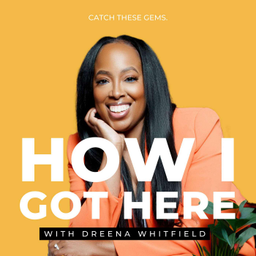
How I Got Here with Dreena Whitfield goes beyond the highlight reel with Black women founders, executives, and leaders. Real conversations about the pivots, the setbacks, and the purpose behind the work. From bootstrapping a beauty brand with $500 to leading a professional sports franchise, each episode explores the moments that shaped who they became and the cost of building something meaningful. For women navigating leadership, business ownership, career reinvention, and the cost of ambition. New episodes biweekly on Wednesdays. Host: Dreena Whitfield Executive Producer, Writer & Creative Director: Keena Williams / Struxa howigotherewdreenaw.substack.com
- Publisher
- Dreena Whitfield
- Category
- business · society & culture
- Language
- en
- Explicit
- No
- First episode
- 13 Jan 2021
- Latest episode
- 18 Mar 2026
Latest episodes
47 episodes in the feed.
18 Mar 2026
Dr. T.M. Robinson-Mosley on Sports Psychology, Building The Playbook, and Why Ready Is Not a Feeling | How I Got Here
Description Counseling psychologist Dr. T.M. Robinson-Mosley shares how she went from growing up in a home where psychology and sports were inseparable to founding The Playbook, an award-winning mental health performance platform trusted by the NBA, NCAA, NWSL, and the U.S. Air Force. Dr. Mosley talks about her mother and twin aunt being among the only Black psychologists in Alabama, her uncle catching the last out of the 1969 World Series, boxing and rugby as an athlete, building a consulting practice she never planned, and scaling 36 providers across pro sports during COVID. This episode covers the mental health crisis in elite sports, quantifying wellness the way a Fitbit tracks physical health, building winning team cultures, and why ready is not a feeling but a decision. Key Takeaways Ready is not a feeling, it is a decision. Waiting to feel ready may mean never starting. More than 50% of elite athletes report depression and anxiety severe enough to affect their ability to function. The crisis is now. You cannot fight tall. Lean into your actual strengths, even the ones that feel like weaknesses. Building a winning team culture is everybody's everyday work. Seeing people who looked like her doing the work gave Dr. Mosley the belief that nothing was unattainable. Who Should Listen Women building at the intersection of multiple industries. Founders moving from consulting to scalable tech. Sports professionals and clinicians exploring athlete mental health. Anyone who has waited to feel ready before making a move. Learn more about Dr. Mosley and The Playbook at playbookperformance.co (https://playbookperformance.co/) Host: Dreena Whitfield, WhitPR (https://www.whitpr.com/) Executive Producer, Writer, and Creative Director: Keena, Struxa (https://struxa.ai/) Music: Kinita G, "How I Got Here (Official Podcast Theme)" Subscribe for more conversations on purpose, leadership, and reinvention. (00:00) - Meet Dr. T.M. Robinson-Mosley: From Boxing Rings to the NBA and Building The Playbook (01:26) - What was it like growing up in a home where psychology and sports lived in the same space? (03:48) - What parts of that early world make the most sense in who Dr. Mosley became? (04:57) - What did years of rugby, boxing, and competing show Dr. Mosley about strength and pressure? (07:27) - How did Dr. Mosley build a consulting practice with a private practice inside it? (08:43) - What happens when you become an entrepreneur you never planned to be? (09:42) - How did watching her mother earn a PhD at age six shape Dr. Mosley's entire career? (11:09) - Why does Dr. Mosley say ready is not a feeling but a decision? (11:22) - What is The Playbook and how does it track athlete mental health like a wearable device? (12:20) - Why are more than 50% of elite athletes battling depression and anxiety? (14:10) - How did a mentor at the NCAA give Dr. Mosley her first break in professional sports? (15:53) - How did The Playbook scale to 36 providers across the NBA, NFL, and MLB during COVID? (16:17) - Why is building a winning team culture everybody's everyday work? (17:19) - What does Dr. Mosley want people to say about her legacy? (17:58) - Quick-fire questions
4 Mar 2026
Amber Guyton on Soulful Maximalism, Pricing Your Worth, and Why Only 2% of Interior Designers Are Black | How I Got Here
Amber Guyton left corporate financial services, built Blessed Little Bungalow into a full-service design brand, and learned that pricing your worth and protecting your peace are the real work. Today she's one of only 2% of interior designers who are Black, with licensing partnerships at Home Goods, TJ Maxx, and Mitchell Black, celebrity clients, and a design philosophy rooted in soulful maximalism. Key Takeaways: You do not have to scale to be successful; a boutique business built on alignment, creative freedom, and strong values is a powerful model. Only 2% of the interior design industry is Black, and showing up authentically in that space is both representation and strategy. Pricing your worth starts with tracking your time; undercharging does not just hurt you, it affects the entire industry. An ADHD diagnosis, anxiety, and depression do not disqualify you from building something meaningful; they just mean some days the building looks different. In this conversation with Dreena Whitfield, Amber opens up about the leap from corporate to creative entrepreneurship, the imposter syndrome that comes without formal design training, and how soulful maximalism became her signature. She talks about what happened when a hobby started feeling like work, why she chose a boutique model over empire-building, and the invisible battles of entrepreneurship, including a recent ADHD diagnosis. This episode covers: decorating her first home in a single week, growing from $250 e-design mood boards to thousands, how licensing partnerships found her before she went looking, navigating an industry where representation barely exists, the heartbreak of a client relationship gone wrong, choosing creative freedom over brand scripts, designing spaces for first-generation wealth builders, and the legacy she hopes to leave behind. If you're a woman navigating the leap from corporate to creative entrepreneurship, a designer wrestling with imposter syndrome or pricing, an entrepreneur building while managing mental health, or a first-generation wealth builder who wants spaces that reflect your identity, this episode is for you. About Amber Guyton: Designer, creative director, and founder of Blessed Little Bungalow (https://www.blessedlittlebungalow.com/). University of Georgia MBA. Former corporate marketing executive. Her work has been featured in Architectural Digest, HGTV Magazine, and Forbes. Licensing partnerships with Home Goods, TJ Maxx, and Mitchell Black, with a bedding line on the way. Speaker at High Point Market. Follow Amber Guyton at @blessedlittlebungalow (https://www.instagram.com/blessedlittlebungalow/) Watch the full video episode on Substack: howigotherewdreenaw.substack.com (https://howigotherewdreenaw.substack.com/) Subscribe on YouTube: youtube.com/@howigotherewdreenaw (https://youtube.com/@howigotherewithdreenawhitfield?si=YCD0sbd3lx1Mvaeb) Subscribe to How I Got Here with Dreena Whitfield for more conversations on purpose, leadership, and reinvention. (00:00) - Meet Amber Guyton: The Interior Designer Building Blessed Little Bungalow With Soul (01:36) - How did Amber Guyton know it was time to leave corporate and pursue interior design full-time? (04:14) - How did the pandemic push Amber Guyton from side hustle to full-time design business? (05:47) - Why did Amber Guyton choose a boutique design business over scaling? (07:43) - What happens when a creative side hustle becomes a full-time business and stops feeling fun? (09:52) - How did Blessed Little Bungalow start from decorating one house in a week? (12:34) - What is it like being a Black interior designer in an industry that is only 2% Black? (14:37) - How did Amber Guyton build a design career without formal interior design training? (15:42) - What is soulful maximalism and how does it center Black art and identity in interior design? (18:25) - How does designing for first-generation wealth builders differ from traditional interior design? (20:32) - How should interior designers price their work when there is no industry blueprint? (26:24) - How did Amber Guyton land licensing deals with Home Goods, TJ Maxx, and Mitchell Black? (29:44) - What is the long-term vision for Blessed Little Bungalow beyond interior design? (34:23) - How do interior designers manage ADHD, anxiety, and depression while running a business? (39:07) - How do you protect creative standards when clients cut budgets or projects fall apart? (41:26) - What does Amber Guyton want her legacy in interior design to be? (43:40) - Quick-fire questions and closing
19 Feb 2026
From Organizing at 12 to Leading a National Movement | Mary Pat Hector | How I Got Here
Mary Pat Hector started organizing at 12, advised President Obama at 18, and ran for office at 19 — losing by just 22 votes. That loss reshaped her entire path. Today she's CEO of Rise, a national organization fighting for free college and student basic needs across 10+ states, and the founder of Equity for All, a platform helping young people of color in the South gain political power. Key Takeaways: She advised President Obama on criminal justice reform at 18 and has since helped mobilize over 4 million voters through Rise. When a Black woman takes over from a white male founder, the funding dynamics shift overnight. The most impactful skill a young leader can learn is fundraising — without it, you'll always work for someone else. Progressive organizations are facing a post-2024 crisis as foundations pull back out of fear of political retaliation. In this conversation with Dreena Whitfield, Mary Pat opens up about the real cost of being the youngest, the first, and the only in the room. She shares what happened when she stepped into the CEO role after a white male founder — and how fundraising, dynamics, and expectations shifted overnight. She talks about building sisterhood as a leadership survival tool, balancing being a new mom and CEO, and what she's hearing from young people who are losing faith in democracy. This episode covers: growing up in a service-driven household in Atlanta, what it was like in the Oval Office at 18, the emotional toll of running for office as a teenager, founding Equity for All after her election loss, leading a hunger strike at Spelman, her path to leading Rise, navigating progressive fundraising after 2024, the personal sacrifices young leaders make, and the legacy she hopes to leave behind. If you're a young person figuring out how to lead, an organizer navigating burnout, or someone who wants to understand what it actually takes to build civic power — this episode is for you. About Mary Pat Hector: CEO of Rise (https://risefree.org/), Founder of Equity for All (https://www.equityforallinc.com/). Spelman College (https://www.spelman.edu) and Georgia State University (https://www.gsu.edu/) graduate. Rise has mobilized over 4 million voters nationwide. She helped register over 500,000 Georgia voters through Black Youth Vote. Led hunger strikes that gained 75,000+ meals for HBCU students. Youngest board member of Headcount.org. Featured on MSNBC, CNN, NYT, Hulu's 1619 Project, Forbes, and more. Subscribe to How I Got Here for more conversations on purpose, leadership, and reinvention. Host: Dreena Whitfield / WhitPR (https://whitpr.com/) Executive Producer, Writer & Creative Director: Keena Williams / Struxa (https://www.struxa.ai/) (00:00) - Meet Mary Pat Hector: The Activist Who Started Organizing at 12 Years (01:22) - How does growing up in a service-driven household shape your leadership? (02:36) - What makes Atlanta a unique city for Black leaders and organizers? (05:06) - What is it like advising the President of the United States at 18 years old? (08:09) - What happens when you run for office at 19 and lose by 22 votes? (13:10) - How losing an election inspired the founding of Equity for All (16:08) - What does Rise do and how did Mary Pat Hector become CEO? (19:28) - What really happens when a Black woman takes over from a male founder? (21:40) - How does a young CEO fundraise with no prior experience? (24:31) - How are progressive organizations adapting after the 2024 election? (26:59) - Why are young people disillusioned with democracy and what can be done about it? (29:01) - What does it cost to be the youngest, the first, and the only in the room? (32:13) - What do young civic leaders sacrifice in their twenties for the work? (34:23) - How do you balance being a CEO, a new mom, and a wife at the same time? (37:09) - How do you separate your identity from your work when service is all you know? (40:29) - What legacy does Mary Pat Hector want to leave for the next generation of leaders? (44:03) - How did Mary Pat Hector's mother shape her into the leader she is today? (45:27) - Rapid Fire: Organizing playlists, dream career paths, and the quotes that keep her going (48:30) - Why it matters to platform the work of Black women in leadership
Contact How I Got Here with Dreena Whitfield
- Guest appearances
- Books guests
Based on episode analysis; this does not confirm that the show is currently accepting guests.
Host of How I Got Here with Dreena Whitfield?
Claim your podcast to manage its listing and keep your show details accurate.
Pod Engine is an independent podcast discovery and analytics service and is not affiliated with or endorsed by this podcast. Artwork and show content belong to their owners. Full legal notice.
Explore this show
Podcast research with Pod Engine