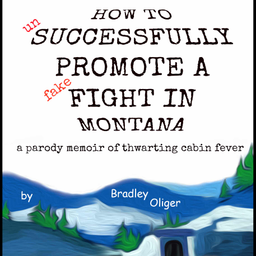
Podcast thumbnail for How to Unsuccessfully Promote a Fake Fight in Montana

How to Unsuccessfully Promote a Fake Fight in Montana

Claim This Podcast

by A Parody Memoir of Thwarting Cabin Fever by Bradley Oliger

6 episodes
Updated Daily
Accepts GuestsHas SponsorsLocation 🇺🇸

Podcast Overview

The entire book by chapter. Montanamemoirs.com Narrated by Matthew S. Newbold https://www.audible.com/pd/How-to-Unsuccessfully-Promote-a-Fake-Fight-in-Montana-Audiobook/B097YZKNBC <br/><br/><a href="https://montanamemoirs.substack.com?utm_medium=podcast">montanamemoirs.substack.com</a>

Language

🇺🇲

Publishing Since

5/8/2022

1 verified contact email on file for How to Unsuccessfully Promote a Fake Fight in Montana

Pitch yourself as a guest, propose sponsorships, or reach out directly to the host.

Recent Episodes

Episode thumbnail for Chapter 4. Enough Talk

May 9, 2022

Chapter 4. Enough Talk

<p><a target="_blank" href="https://www.audible.com/pd/How-to-Unsuccessfully-Promote-a-Fake-Fight-in-Montana-Audiobook/B097YZKNBC">CUTTING THE RIBBON ON ADVENTURE</a></p><p>With all the duties like wood collection or winter prep on deck, those first few days were about savoring the moment. The incubating idea that we had been talking about for months and that I had been envisioning for years was biting through the shell and hatching. All those “responsible” tasks were going to get back in line and take a number. This was a grand opening ceremony to celebrate and get to know the surroundings of an area we would be a denizen of indefinitely.</p><p>With the cabin stocked of many needs to include fishing supplies, our celebration would kick off with fishing at the lake we had passed about a mile back. Murray Lake. A decent-sized body of water in the mold of an upside-down foam “number 1” hand that is a popular sell at sporting events. The marshy finger pointed towards Kalispell. The access road traveled alongside the eastern portion with some great casting locations on the east, north, and northwest shores. An aesthetic rock formation highlighted the northern tip. A southern section was appealing for fishing also but requested an off-trail trek around the finger of marshland. Behind was a stiff hill that came to be known as “Forgotten Pole’s Ridge” and housed as quality a view available for that wooded section of state forest land. A tranquil place to forget whatever I engaged in previously.</p><p>As purebred City Slickers, we thought little about the situation we were putting ourselves through. We strolled to the lake with our poles and nothing else. No container to put the fish. No protection. We were in bear country. Daylight would guide us walking towards the lake, so the idea seemed brilliant. Once seated lakeside in wait of aquatic creatures biting the line, thinking a little, and watching the sun set, we realized how poorly planned our outing had become. We had much to learn about this new way of life that we “smokejumped” into. What if we actually caught a fish? Where would we put it? We would have to carry it by hand a mile back to the cabin.</p><p>The darkness arrived before we could be ready. We did not catch fish, but we smelled like bait. At dark. In bear country. The course home seemed like an eternity. I have known females named “Eternity” and always wondered if that would be an association one would want. We tend to reference “eternity” to something long and awful. The bear was mauling me; seemed like an eternity. It took an eternity for the medevac to arrive. It must have seemed like an eternity for my parents waiting for the doctor to come out and let them know if I’d ever have use of my sexy abs again from the ferocious bear-attack. I’d thereafter need an eternity of medical procedures. The writer had an eternity of overused and abused references to “eternity.”</p><p></p><p>After the eternity, we found safe passage at the cabin which by definition isn’t possible. We made it out to Montana and proved that eternity could be a finite noun. We were alive, and the sky looked peculiar. Very distinct from Toledo or Nashville. There was an eternity of stars in the sky. A positive use of eternity. We had proved that eternity was both finite and positive. What an amazing start to the journey! We started a fire and sat on top of “The Aloha” just overwhelmed by what was up above. I had been out in deserts and countrysides that were comparatively remote with little light pollution. Many of those moments stick out, but this occasion was a cut above the rest. This was home.</p><p>We roved around the property those first few days to get a feel for the area. We ascended Kim’s Peak to survey the land and inspected the skeet shooting site with its stash of clay pigeons and the metallic launcher. We found where the family was building a small cabin. An occasional train sound passed in the distance. And then there was the discovery and acquaintance to the stockpile of unprocessed firewood.</p><p><a target="_blank" href="http://montanamemoirs.com">GETTING THE HEAT</a></p><p>The ideal location to gather wood was near the skeet shooting site. A short downhill hike off the two-track was a patch of twenty or more dead trees. They had been felled a few years before with just enough time to season to proper firewood conditions. We sawed them into five- or six-foot lengths and hauled them up the hill to the back of my truck. The favored method for hauling was by using a rope tied on one end with a smooth drag up the hill. Other times, with less grace and common sense, we “shotputted” the logs at six feet a thrust up to the finish line. The involuntary and emasculated grunt that accompanied each toss worked seamlessly in keeping away bears and single women.</p><p>Nearly a whole cord of wood fit in the back of the vehicle at a time, but typically we kept the stack to a more manageable weight of half that capacity. From there, we would take them to the yard and process them into eighteen-inch portions. Select logs were thus split into quarters or smaller for fire starting.</p><p></p><p>The process was tiresome, yet gratifying knowing the heat we needed was coming from our own sweat, blood, and emasculated grunts. A man who cuts his own wood heats himself twice and gets many splinters (or however that saying goes by whoever said it). Almost every day comprised focus time for wood processing. We knew the days were limited before the snow would continually fall. The home for all this lumber was underneath the porch and before too long, that whole porch underside would be full. Tarps covered the inventory to protect from moisture because the porch had some gaps in the flooring.</p><p><strong>It was eerie out there today. The trees were slowly swaying as the wind whistled through them. It really sounded like somebody whistling in the distance. While I was cutting, I was startled to see Brad collecting logs I had cut. We didn’t acknowledge each other and when I had finished cutting, he was gone. I did the usual log toss relay to get the rest of the logs to the truck that was nearly 100 yards away. When I got there, I was glad to see that Brad had loaded the logs he had gathered. Back at the cabin, he had the fire going in the pit to aid his bread creation. I thanked him for coming out and helping. He looked at me as if he had no idea what I was talking about. I had the chilling realization that maybe I was just seeing things when I saw him in the creepy woods. If so, then who or what loaded those logs? (Calmes, 10/7/99)</strong></p><p>Those initial nights were cool, but not cold. The estimation of how much wood we would use with the wood-burning stove on a nightly basis proved adequate. Sitting around the wood-burning stove as though it were a television set became a familiar routine. Especially on the nights with no bonfire outside. Something about a warm, glowing source that puts a busy mind to rest.</p><p><strong>When we got back, we cut wood until the chainsaw nearly burned out. I hope we have the proper gas in it. We’ll probably need a lot more wood than we think. I don’t want to underestimate that. We run out of wood during the winter, we freeze. (Calmes, 9/29/99)</strong></p><p>The fire outside did not happen as often as it should. A glaring reason was for wood supply concerns as each bonfire prescribed a minimum of six logs. The early, few months before winter hit were very conservative. As part of making the area more like home, we had built up a rock wall on one side to catch the heat and reflect it back towards us. With little luck proving the efficacy of the structure, it remained a tribute to the many survivalists that swear by it.</p><p><strong>Ultimate wood day! Holy crap! Two overfilled truckloads! Under the deck is basically filled. I don’t need to say how exhausting today was, but I did. I am not in the least bit cold tonight. The wood burner can really kick out heat! I just burned a hole in the back of my right hand by accidentally touching it to the door of the stove. I planned on working on my drawing today, but the wood adventure took all day. Brad did most of the sawing while I did most of the tossing. It feels great having all of this wood, but it is all just going to end up burned up someday. Brad pointed out that it is kind of like money. You get it just to lose it. I ate a million s’mores around the fire this evening after stacking the last of the wood in the dark. I’ve been thinking, and I hope Brad doesn’t read this, but I’m becoming a little attracted to him. No, I’ve been thinking that I’m probably going to want to leave in January when my aunt and uncle leave. They are coming here for a week after Christmas. It just doesn’t feel right living so easily. We are using Uncle Hal’s cabin. though we did stain it... and using his wood… though we did cut it… but that doesn’t make it ours. I think Uncle Hal would like it if we leave when he does so he can do all the things that need to be done... like turning off the water and power and whatever. I hope Brad is okay with that. Maybe we can come back out here next summer for a few weeks. I’ll definitely be ready to leave in January. So far this has been the most enjoyable experience of my life, but I don’t want to overdo it. (Calmes, 10/20/99)</strong></p><p>EARNING OUR KEEP WITH SEPTEMBER STAIN</p><p>A unique focus was also front and center. There was a shoddy feeling from settling in someone else’s amazing cabin with no real contributions; rent payments, electric bills, maintenance cost performed against the wood-burning stove. Such a selfless act to allow us to stay there with no expectation of reimbursement. To soften the burden of our mere existence, we came up with hopeful ways to leave the cabin better than how we found it. Not enough to cover the price of admission, but anything was better than nothing.</p><p>Job “numero uno” was staining the cabin. The biggest need of the property by far as Andy’s relatives were fully intending to have their cabin stained either by professionals or by themselves. The cabin was made of wood and wood decays without the proper treatment. Our arrival at the beginning of September meant fall was formally on the doorstep. The sunny days would become the minority, bringing in much rain and possibly snow. We had to take advantage of every nice day there was, almost immediately. The challenge was that neither of us had stained a cabin before. Previous shop classes allowed for small wooden projects, but nothing commensurate to a nearly two-story cabin. I had also painted interiors, but even that action was limited. With apprenticeship-level experience painting houses combined with Andy’s skill and peaceful patience in artistic paintings, the task at hand was going to be a piece of cake.</p><p><strong>We began the process of staining the cabin today. Today also marks the one-week anniversary of our arrival here. Staining will be a little more work than anticipated. We only finished one side of the cabin. When we were through, we were covered in stain... well at least I was. Brad was more careful. I had to shower twice today to get the stain out of my hair. I got a very small sense of accomplishment from our work today. I can’t wait to finish… then I will feel pretty good… if I haven’t drowned in wood stain that is. (Calmes 9/15/99</strong><strong>)</strong></p><p>The project hastily turned out to be no trivial task. Staining was long, finicky, and made a gigantic mess. The mess was unavoidable without the proper outfit; a hazmat suit. We learned that stain was far more invasive than paint, and paint was deeply invasive.</p><p><strong>The back of the cabin was much harder to stain than the side. The peak goes up so high we had to extend the brush by taping a stick to it. I got impatient and started spraying like mad, and it all began to drip on my head before I could smooth it out. Some got in my hair... some in my mouth... That sucked. I finally decided to take a lunch break when Brad called me to the back of the cabin. When I got there, I noticed the difference in consistency between what I had done and what he was currently spraying. He was using stuff from the bottom of the can and guess what… we forgot to stir the stain and the stuff on the bottom was all thick and syrupy. We opened the second can and stirred it, only to find that it was much darker than all of the unstirred stain we have been using. Two days’ work down the drain. We decided to take a couple days off because we pretty much have to start over. Not very encouraging. (Calmes, 9/16/99)</strong></p><p>The planning required a reasonable understanding of future weather, and a weather forecast for that area was a broad statement. Being near mountains causes localized weather events. The reason that weather was so important was that once stained, the drying process requires enough time to settle or risk becoming susceptible to warping and run-off. Our estimation was one entire day of clear weather following the work to absorb properly and become impervious.</p><p><strong>Two weeks since leaving Toledo. Probably the longest two weeks of my life… a good kind of long. Woke up ready to stain and stain we did. We finished the side facing the road, and it looks great! It is not too much different than the back, but we still have to do the far side over. We may need to buy more stain. We listened to some tapes that were in my Uncle’s Jeep... Allman Brothers, Elton John, The Beatles. Staining takes a loooong time. We should finish by Wednesday. Fingers crossed. They don’t call this stuff stain for no reason. No matter how hard I scrub, it will not leave my skin, or my clothing! I look at it as battle scars. (Calmes, 9/19/99)</strong></p><p><strong>The ultimate battle with the stain took place this afternoon. I took it upon myself to stain above the deck. Two rolls of masking tape were vanquished while taping the windows so I won’t get stain on the edges. Well, that was successful. I didn’t get stain on the edges of the windows. I got stain everywhere else on them, however. The tin roof I was standing on became soaked with stain and impossible to walk on. After many tears from fumes and looking directly into the blinding sun, I regained my eyesight and saw that I had won. The top is finished! Meanwhile, Brad did the bottom of the front. We aren’t going to redo the first side we did. It doesn’t look too light compared to the front. The back is just going to have to be darker than the rest of the sides. (Calmes 9/20/99)</strong></p><p>The task consumed every level of our consciousness. An inescapable clock winded down; the window closing. With so many diversions at our disposal, nothing else would receive the full enjoyment deserved with the thought of finishing the stain and getting those oppressive chains unlocked. A full day, utterly mesmerized by the beauty of northwest Montana, could be deflated by walking back to an unfinished stain job that growled like a rabid dog. The photo alone tells the story well about how badly we wanted the project done.</p><p></p><p><strong>What happened to Tuesday? That’s right! We finished staining the cabin!!! It took all day, but we actually did it. We finished the deck, only leaving a few footprint spaces empty and just enough stain to fill them. We gathered everything we need to camp out, and I filled in the footprints. Oh, what a feeling! Next step: cleaning. (Calmes, 9/29/99)</strong></p><p>The work was finally done. In looking back, there was some unnecessary “perfectionism” that prevented an earlier finale. Sure, there was a shade difference and if there was a wand to be waived that could merge the differences, we would have opted for the “wand wave.” We had finished the unfinishable and felt marginally better about living inside its walls, though not enough to feel fully like we had earned our right to be there. We cut that invisible line that was pulling at us to finish, leaving the fun and adventure to become unleashed.</p><p><a target="_blank" href="http://MONTANAMEMOIRS.COM">FREE TO ROAM AT LAST</a></p><p>I had already scouted out favorite spots, giving names to some. Boyle Lake was just north of our invisible boundaries. Relatively small in both size and depth, what drew my attraction to it was the openness that it allowed with the tracks near its southern tip. The open feel invited sunlight to the area as downed trees all around gave way to bursts of wind from the loose, muddy soil. On the northeast corner, a small hill rose beyond the marshland that provided an unobstructed vantage point of the lake and trees to block the wind, rain, and sunlight exposure overhead.</p><p><strong>I tried to clean the sprayer this morning, but it is too drenched in stain to ever work again. Then I got my camera and headed out with Brad to destination unknown. After we passed my easel and went over the mountain, we were basically lost the rest of the day. We eventually stumbled upon Boyle Lake, so Brad knew the way from there. When we were on the train tracks, we heard some voices in the distance that sounded like girls, so we journeyed down the steep rock hill to investigate. We realized we were on private property when we came across a lady walking her dog. She was nice but seemed annoyed that we were on her property. The sun was setting, so we headed in. Good workout! (Calmes, 10/10/99)</strong></p><p>Woods Lake was directly east of the property beyond Kim’s Peak. Another shallow lake, but with its own personality that seduced me by its high volume of cattails and virtually no bare shoreline as its name would suggest. Nearly the entire surface area was of that popular aquatic plant. Thornburg Lake lay a half-mile northeast from there, with much of the same sense on a slighter scale. Almost to the point where the lake itself was easy to miss altogether.</p><p><strong>Brad had the idea to hike to Woods Lake today. We took the backwoods hoping to find an animal trail that I know of, but I calculated wrong and we ended up a little south of it. Beautiful hike! So many different views. We found the lake easily, then headed north through a marsh area. We began to walk through the cattails until Brad sunk to his knee in the mud. We quickly exited the marsh and headed for Thornburg Lake, but walked a half-hour in the wrong direction. When we finally made it there, we found a half-built, run-down cabin. It was really old lookin’. Then we set our sights on Whitefish Lake. When we reached the train tracks, we knew we had made it. The sun was getting ready to set, and we were nearly two hours from the cabin, so we headed in. All of this without seeing any wild animals besides birds and squirrels. There was a cool hawk at Thornburg Lake. It flew along the mountain on the opposite side of the lake, casting its shadow on the trees. Just when I was sure we weren’t going to see anything else, Brad noticed deer down the tracks. I quickly took a photo just in time to watch their white tails leap off into the woods. Brad was sure there would be deer, maybe Elk in a field that we were soon to be at. He was right… about the deer. Three more white tails running off into the woods. The sunset was brilliant! Too bad we couldn’t see it because we were deep in the thick woods. I could see just enough color through the trees to tell that it looked awesome. While I was paying attention to the sky, we unknowingly walked by two deer that were only ten yards away from us... or less. After we passed, they jumped up and we watched their white tails. I missed what could’ve been a very close-up shot of two deer looking at the camera! Oh well, they’re just deer. I’d be pissed if I missed a shot of a bear like that… actually, I’d probably be dead. We got back to the cabin just as darkness had completely settled. (Calmes, 10/16/99)</strong></p><p></p> <br/><br/>This is a public episode. If you would like to discuss this with other subscribers or get access to bonus episodes, visit <a href="https://montanamemoirs.substack.com?utm_medium=podcast&#38;utm_campaign=CTA_1">montanamemoirs.substack.com</a>

Episode thumbnail for Chapter 3: A Tour of Cabin Life

May 9, 2022

Chapter 3: A Tour of Cabin Life

<p><a target="_blank" href="https://www.audible.com/pd/How-to-Unsuccessfully-Promote-a-Fake-Fight-in-Montana-Audiobook/B097YZKNBC">INTRODUCTION TO THE AREA</a></p><p>You may have heard of Montana. You may have seen movies featuring Montana. You may have been to Montana. You might even live in Montana. By now, there is not much context of where we situated. Like any other state, the regions within the state will vary. The eastern half is flat. A mere extension of North Dakota. Heading westward, the Rocky Mountains begin with fury. Being that we were in the northwestern part of the state, we were getting into some elevations on the other side of the continental divide, but still in a valley. Not as high as Colorado, but unmistakably hiked up from the sea levels.</p><p>The cabin rested at an elevation of 3,600 ft. The property hugged some train tracks on the northern tip and comprised level ground that gave way to around two hundred acres of rolling hills. Apparently, the trees were planted back in the late 1960s/early 1970s after the land was clear cut, so the growth meant those trees competed for resources. The result was those trees were not as healthy as naturally occurring forest growth and required “thinning” to promote a proper balance. This health is a major factor in forest fires, which is why the state justified giving out a stipend to the property owner to thin a large section.</p><p>The skeet shooting site in the southeast corner provided a nice overlook of the northern edge of the valley. There was an unobstructed view of the sky with minimal risk of shooting bystanders or wandering hikers with the short range of a shotgun. Going further up the two-track was a cleared hill with a width of nearly twenty yards that would later be used for skiing and tubing. At the top was another view, Kim’s Peak (named after the owner’s good friend); a field general’s view that revealed the entire property. With plenty of sprawling out to be done on two-hundred acres, that amount of room was amplified by the fact that just south was approximately sixteen square miles of Stillwater State Forest. There were primitive roads and two-tracks throughout that area, making most of the prominent lakes accessible during the non-winter seasons. This land was a potent mix of pine and tamarack, along with some deciduous trees.</p><p></p><p>The town of Whitefish rested beyond the forest land to the south, squatting at the bottommost tip of a fairly sizable and serene lake, Whitefish Lake. The community would also be known as Stumptown because of its history of being clear cut and seemed to have all of your basic needs. The layout would be best described by five sections that mattered most to us. The southern end afforded a single entrance or exit to most of the rest of the world. This highway slows to a commercially zoned crawl once the pavement meets the city limits. A grocery store and bowling alley featured most saliently on this lay of the land. The bowling alley appeared noteworthy. Could it be more than just a bowling alley?</p><p>The northern tip boasted the library, train station, and beach. A quaint downtown nestled close by showcasing a breathtaking view of the distant mountains. Yet the shops, restaurants, and bars were well beyond our budget to pay much attention to. A post office, bank, photo lab, and laundromat were clustered two blocks away, serving as perhaps the most utilized area. A remaining northwest section allowed the highway to speed back up and steer us homeward. Though we did not have much to do with the town itself, it was our lifeline to the outside world and seemed fixed to boom at the turn of the millennium.</p><p>East of Whitefish Lake lay a vast mountain chain. The Whitefish Range. A few exposed peaks commanded attention from day one. Such views they must provide. To the right boasted Big Mountain, which hosted fairly world-class skiing. We had absolutely nothing to do with that. At that stage in my life, I had only tried skiing once. We did not have much money so, to be honest, it acted as just another spot on the map for us. Nothing more. Beyond those peaks was Glacier National Park, with less than an hour’s drive to get there. We had arrived in the autumn with a lot of work front-loaded, so traveling to the park while it remained accessible was never a plan either.</p><p></p><p>To the north of the property, beyond the tracks, mixed intermittent private property and more undeveloped state land. Moving northeast, extending past the tip of Whitefish Lake, comprised more of the same. Marshy lands and more private property. Often problematic to discern between the two. About an hour’s drive up Highway 93 would have taken us to the border with British Columbia. West of Highway 93 possessed nothing that we would concern ourselves with much. There was the Stillwater River, where we would try fishing once or twice.</p><p>The cabin itself revealed a beautiful one and a half story fixture with two bedrooms, a large living area, kitchen, huge porch, and a loft with stairs leading up to it. She housed many amenities; running water, electric, septic, baseboard heaters, and wood-burning stove. We were not straight out of the 1800s as my childhood envisioned, but we did not care. The loft covered almost half of the cabin, so the floor space had plenty more room for beds and a vantage point that looked down over the first floor. Such a location would also provide a porthole to Flathead valley out the large bay windows in front.</p><p></p><p>There were bedrooms for each of us, with a blanket to provide some privacy and insulation. Buried within one bedroom, which would become Andy’s room, unearthed a crawl space for lightly used overflow items. The living area owned a couch and a lazy boy catered to surround the stove which became our beloved television set. The kitchen provided a dinner table, sink, and surface area that fit a hot plate for cooking. A half-height fridge/freezer cooled our perishables.</p><p>What more do you really need? Well, if you want a yard area with a fire pit, then you have that too. Walking out the front door and past the beautiful porch, displays an open mixture of grass and rock, centered by a fire pit. Hunching underneath the porch revealed an empty space that would consume a large part of the fall months. What the space missed was firewood, save a couple of cords that the owner and family had already harvested and processed.</p><p>Northwest Montana was to become my playground.</p><p><a target="_blank" href="http://MONTANAMEMOIRS.COM">WHAT WERE THE NEEDS OF THE CABIN?</a></p><p>With a roof over our heads accounted for, the second-most item of importance was food. Most of the money saved accounted for food expenses. I tucked money aside at Glacier National Bank upon arrival. With a fuzzy sense of how long we would be staying, through part of winter appeared like a reasonable minimum estimation. The treachery of the back roads we relied on in wintertime were unknown. We had no snowmobile, so preparing for at least a month of self-sustenance fit the reality. Ideally, we would be supplied for much longer than that. We demanded a lot of non-perishable food such as powdered milk, canned foods, noodles, sugar, oatmeal, peanut butter, and powdered juice. I shopped for raw materials to make some foods from scratch. In anticipation of excessive amounts of time once winter hit, making homemade bread or even hunting seemed ideal and primordial.</p><p>Should there be a desperate need to resupply, we soon discovered that there were neighbors a third of a mile away. By no stretch were we so remote that we would have to make life or death decisions. Yet, reaching out for help would be self-defeating. A failure in the experiment of self-reliance. Embracing the lifestyle meant avoiding reliance on others at almost all costs.</p><p>With non-perishables quickly accounted for, we could focus on some more desired foods. Unsure of how stable the electric would be, we had to acknowledge the potentiality for food spoilage. Yet, once temperatures went below forty degrees, we could even buy perishable foods with no concern for that. We had a miniature fridge, but an option to keep food safely stored underground outside fell within reach should the need ever arrive. The cooler temperatures would hinder any spoiling.</p><p>There was an ample supply of water stored, but this would never be much of a concern either. Before snowfall, we had a bounty of lakes that, once purified, could wet our whistles as necessary. Once those froze over, we would have the snow gift-wrapped right on our doorstep, requiring only some heat to make potable.</p><p></p><p>We did not drink or do drugs, thus avoiding that expense to account for. We would not allow such an easy escape to the beautiful boredoms that we were soon up against. Only our minds, or absence of them, would entertain the slowest and most upturned moments of “cabin fever.”</p><p>I did not know exactly how cold northwest Montana would be, but from experience in northern Ohio, the climate had to be at least considerably colder. Our heating situation provided baseboard heaters in the two bedrooms and probably elsewhere. Being that we were trying to be good denizens and minimizing the electric costs that someone else was paying for, we decided they only could be used sparingly at a baseline setting. Basically, to keep the cabin from getting close to freezing. The critical thing to consider about electric heat was that at any point, that option could be unavailable. We did not have a generator. Our principal source of reliable warmth came from a wood-burning stove. This was the only genuine sense of survival needs.</p><p>Having never lived through a winter in Montana in a cabin, we had absolutely no idea how much wood we would burn through. If we ran out of wood and the electricity proved unreliable, we would potentially freeze to death. It might sound ridiculous to say that we could run out of wood while living among tall trees, but there was much work and preparation that must be considered. Gathering and chopping wood in deep snow is not for the faint at heart. That is also assuming that the wood is properly cured and free of moisture, which is tough to guarantee the further past summer we waited. We surmised with blindfolds as to how reliable the stove would be. From some reading, chimneys risk getting plugged and require maintenance from time to time. Some things could be done to prolong the usefulness, but eventually, even the best-maintained systems require maintenance. The plan was to use it only at night or on special occasions. During the day meant dressing warmer with slight use of baseboard heaters for localized heating as needed. By rudimentary estimation, only three logs a night would do the trick. Ninety logs per month. Presumably double that, once the mercury dropped. The average low bottomed out around fifteen degrees in January. Not Antarctica, but cold. We may even have to triple that if nights plunged below zero. One thing was for certain. We needed a lot more wood. We had a chainsaw, an ax, and an unshakable fear that what we have stored away was still not enough.</p><p>We had no desire to have phones in the cabin, nor did we seek cell phone coverage. A relatively new option in those days. Looking back at the moment, we may have rudely shunned the notion of facilitating the installation of landline services. If we did, then that would be wrong, but make no mistake, we did not want a phone. At all. A phone represented civilization and with such youth, we did not process the probability of emergencies as one would once older.</p><p>There was no real computer and certainly no internet at our disposal. While internet service emerged swiftly and began to take hold as residential service in an urban area, this was not an option at the cabin. Even if we wanted the connectivity, such an amenity would not have been available without phone service. Satellite internet needed years to pass in being ready on a consumer basis.</p><p></p><p>There was no means to watch television. With no television, opportunities for gaming systems vanished. There was a radio. I brought a word processor. We hauled out books. A wood-burning stove served as the master of ceremony. That became the television. Being a gigantic movie buff, we had some foresight and recorded a healthy handful of movies on audiotape. They were great for road trips, and they were better fireside.</p><p>The actual communication from the cabin as it would play out was reading and writing letters. An event that is difficult to process nowadays, even for me. We will get into this later.</p><p><a target="_blank" href="http://MONTANAMEMOIRS.COM">SIMPLER LIVING</a></p><p>Keep it simple. What better way to exemplify that than by having a heading with only two sentences?</p><p>Unfortunately, further explanation is needed. The topic of being simple is a complicated matter. And by making a goal about keeping things simple, that goal was unattainable. By simple living, there can be many facets of life that are benefited by simplicity. To me, it is just identifying what I need to do and then identifying what I want to do. The list of “needs” should be brief. The shorter the better. In understanding needs, it is saying that by taking away this need, the sustainability of that chosen lifestyle is significantly degraded. The cabin arrangement was not completely self-sufficient by any means with both electricity and running water. Civilization was not markedly far away. Yet, the property was close enough to living remotely and homesteading as I would likely ever know, and I wanted to take full advantage.</p><p>Rustic needs versus needs in the city are as much different as they are the same. As already touched on, living in a cabin in northern Montana, we needed to stay warm. Not much different from residing in a house in some northern city. We did not need electricity to keep ourselves warm, but we had it and were comforted by it. We needed firewood because at no point would it matter what external circumstances occurred to remain warm by the fire. Firewood meant warmth no matter what unless the roof blew off in some nasty storm.</p><p>The more efficient we were, the less we would need. Saving more time for fun. I later learned that I was so efficient at smelling good, that I only needed to shower every few weeks. Well, the smelling good part was probably untrue, but the shower frequency was exact. We were hermit wannabe’s and there were no ladies or management to impress. No customer’s ass to kiss. Shaving and haircuts were done for. Hygiene was still important enough though that a warm cloth and baby wipes would achieve most of the sanitation requirements. Laundry was conducted each trip to town we made, though a wash basin would have been a preferred way to clean clothing. A plastic storage tub filled with soapy water would be attempted, but could not quite do the trick to satisfaction.</p><p>Almost every day, I made my own meals. Sometimes even from scratch. I made bread a few times by devising a makeshift oven out of hanger frames and foil. I then set it above the wood-burning stove. The result would turn out ok but was way too much work and messy for what it was worth to me.</p><p>I found out quickly how much time there is in cabin living. An awakening occurred for someone who already thought he was good at keeping busy. A positive kind of awakening. Time seemed to go much, much slower. A kid-waiting-for-Christmas-morning-to-finally-arrive-slow. To fill many mornings, several hours would pass just sitting in a comfortable chair with coffee on the upper deck of the cabin while peering out into the valley through the large bay windows. The cabin would cool down just enough at dawn after the wood-burning stove’s beautiful warmth faded from the night before so that a warm drink balanced out the coziness. The options and distractions were curbed with no television to soak up filler time and no nauseous phone ring to break the peace and solitude of living. Even the thought of the sound was traumatic. Landline phone calls would have a significant role in moderation, but that was what the payphones in town were for. To have no contact in the cabin meant we were untouchable. There were letters to replace the use of phones. Especially once the might of cabin fever cast its ominous shadow on the beloved cabin.</p><p></p> <br/><br/>This is a public episode. If you would like to discuss this with other subscribers or get access to bonus episodes, visit <a href="https://montanamemoirs.substack.com?utm_medium=podcast&#38;utm_campaign=CTA_1">montanamemoirs.substack.com</a>
Episode thumbnail for Chapter 2. Opportunity Presents Itself

May 8, 2022

Chapter 2. Opportunity Presents Itself

<p>WHERE EXACTLY IS WHITEFISH?</p><p>1998 arrived, and I had just moved to Nashville not long before. Residing with those same two friends that I fled out west with in 1995. While they pursued careers in music, I was still struggling to figure out where I was going with my life. I picked up a job as a zookeeper at the Nashville Zoo, succeeding an internship that lasted for a few months. A relatively seamless next-step being that I had a place to live. An end goal looked for something wilder; a national park job, perhaps. But this sufficed in the interim. The job became fun and fulfilling, escorted by the freedom of being on my own. Serving as a zookeeper was not a lifelong ambition, but animals were often more interesting to me than many people. A rowdy zebra named “Sharpie” was no exception. What an illustrious name for a white stallion with an assortment of odd black markings all over it, by-the-way. Well done to whoever came up with that name. As fun as the job was while being part of a budding institution, to have a career meant moving the needle a little more to fill the rest of a meaningful work life. I had mixed feelings concerning the idea of animals in captivity while praising the importance that zoos play in conservation, endangered animal breeding, and education. To me, a perfect world comprises no demand for such a thing with nothing more gratifying than seeing wild animals, in the wild. We do not live in a perfect world, so we must make compromises.</p><p>My friend Andy had come back from a vacation in Montana during the summer to visit his relatives and their property. We reviewed pictures. Some scenery. Some of whitewater adventures. Even a picture of a bear in a tree. They were elegant and looked exciting, yet made no deep impression other than reminding me of the first visit to Montana. Finally, there was mention of his Uncle’s cabin and the property he stayed at. The cabin itself looked grand and home to many modern amenities, though foreign to many others. It resided outside of the ski town of Whitefish, Montana, adjacent to Glacier National Park. Over two hours of driving north of Missoula, where Vice and I had been before cutting over to Idaho. The conversations led to revelations it stood vacated most of the year. I pondered endlessly about what such a life would be. Yet, that life was still quite out of reach.</p><p>By the time 1999 came around, that bubble inside my head felt ready to pop. The self-assigned pressure to figure things out beat rapidly like an adrenalized heart. I needed to figure out my next move. Nashville entranced as a wonderful place, circled by even more beauty, but not for me. The atmosphere reflected far too city-centric a setting with a hefty dose of show business persona. It was not home.</p><p>The internet, in large part, remained a work in progress and so networking opportunities were sporadic. Opportunities for research were scarce. Not enough information surfaced to make intelligent decisions (assuming I was capable of such). I lacked a small beachfront to make landfall out west. Thinking about the cabin in Montana came up more and more. That still was not possible. I did not know the landowner, and surely Andy would not be up for deferring his music aspirations to go hole up in a cabin in the woods for a while.</p><p>Light conversations went on between us. To my surprise, he seemed very interested in the idea. This arose as a shock to me. Not only did he have his music to stand rooted with, but I did not see him exactly so fond of the outdoors that he would want to live it daily as a lifestyle. Was I overlooking something? The trip out west right after high school included many outdoor adventures, and we seemed to have the time of our lives. We took advantage of Nashville and the surrounding lake for cliff jumping and tiny islands to swim out to. A precedent bloomed into a revelation that a journey west could work.</p><p>There existed no apprehension that Andy would find a wealth of hobbies to stay enriched by during the wintertime. He was an artist and musician, who would already stay up throughout the night to work on a drawing or mix songs, along with hundreds of other ways to stay busy. Such certain idleness, free of distraction, could serve him well in sharpening his skills in those musical endeavors. We were already great friends and shared an appreciation for weird humor, so there birthed not a doubt that we would have frequent bouts of ridiculous laughter living in a fairly isolated setting. He was, after all, one of the funniest people I had come across. Before ever knowing much of Andy, he had already made a name for himself by shaving his head to look like “Burns” from The Simpsons in our large high school. He had the lanky frame and towering nose that made the impression work brilliantly. Still better, he interrupted my “mock-karaoking” of Bust a Move during senior year After-Prom by shooting through a crowd and then up on stage. Just as soon as he arrived, he had vanished out of sight with the frenzied pace of a professional wrestler inciting the audience. He bore only his “tighty-red” undies to the horror and outrage of many high school girls. Bold move!</p><p>He had an uncanny ability to recognize shock-humor. Immediately after high school at the age of eighteen, we visited Toys R’ Us and noted how expensive Legos had become. One such set on display hosted a disturbing price tag of $75. Space-tech Legos. We stood next to a mom and her prying son, desperately wanting that very same overpriced toy. In fact, our attention to it may have drawn the interest of the boy. The mother remained remarkably calm and patient. The child reminded me of myself at the volcanic age of eight; very much the same unreasonable brat. She spent nearly five minutes lovingly explaining to the boy why he could not have it, and her mannerisms worked to my amazement. Her voice had soothed her son and seemingly soothed me as well. My mother had many of those same moments, and after years of patience, I was proud of the mature man that I had become because of her. No longer a spaz begging for expensive toys. I felt at peace.</p><p>Abruptly, Andy reached for the toy and said, “Hey Brad, let’s get this one.” The mother’s jaw dropped, and he bolted down the aisle to escape with a straight face. I tried to keep up with him, desperate to not make a sound or show the disbelief that consumed my soul. My heart raced. I could hear the child behind now pleading frantically for Spacetech Legos. The entire store could. His mother’s consolation was no match for Andy’s parental sabotage. The incident that unfolded in aisle 7 of the Toys R’ Us in Toledo became one of the biggest shocks I witnessed in my entire life. Of course, he did not purchase the Legos and left the box prominently by the single exit in hopes that the boy’s outrage would have an encore.</p><p>I found the pulse that belonged to a migration out west. We had enough hope and interest to put the wheels in motion.</p><p></p><p>GIVING A CRAZY IDEA LIFE IN JUNE</p><p>To turn this wish into reality, a few things needed to happen. I needed more money, a better vehicle, to quit our jobs, and we needed a plan. Most notably, we needed permission from his Uncle to stay at that cabin. Something I worried a lot more about than Andy. As plans matured and evolved, the permission concern lingered. That simmering detail fixed entirely out of my control.</p><p>The time came up hastily to let people know my stay in Nashville will soon end. With no expectation for staying in Tennessee as a long-term thing, almost two years had passed by quickly. Much longer than expected. Letting the zoo know of the departure felt awkward. Not to say I was overly valuable, but my coworkers and the many personalities of the animals had grown on me. With the uncertainty of whether we could actually live in the cabin of my friend’s uncle, telling everyone about the plan proved not a simple thing to do either. There remained a chance that I would never see the plan through.</p><p>Telling family, friends, and coworkers passed smoothly and void of much backlash. By backlash, I mean folks openly expressing that they thought I was completely nuts. Completely off the deep end. They were most likely just being extremely tight-lipped and polite, Canadian style. I was nuts, and the plan was absolutely unorthodox. How can one possibly explain a move like that and not sound like they are hearing voices in an Iowa cornfield? A stark contrast to what normal city folk do in their early twenties. The status quo of prime bachelor years meant parties, promiscuity, drugs, and alcohol. To purposefully go stay in the woods showed an act of randomness so unprecedented by anyone I knew for that age. If that evidence fell short of inciting ridicule, then the poor publicity of cabin-living in Montana during the late 1990s surely closed the case.</p><p>JULY’S PREPARATION</p><p>To address the money situation, the last five weeks before departure meant getting rid of the duplex we lived in. Andy chose to move back in with his parents in Toledo to save money and work, but I stayed with my friends Ross, Matt, and Wayne. I finished out the time at the zoo and picked up a second job part-time with a company loading freight in cargo planes at the airport. The work was tough as we rolled pre-packaged freight weighing up to a ton onto a portable conveyor belt that hoisted the cargo up to the plane. From there we would push the freight as far back on the plane as possible before securing the load. Repeat that twenty times and call it quits for the night. They did not know I intended to stay only a month and my boss became a little peeved when I eventually told him, but we hugged it out. Not actually.</p><p>My first time working seven days a week routinely required some pain tolerance, and I found no shortage of exhaustion on the three days that called for working both jobs consecutively. To make an insane move across the country attainable, short-term sacrifice required absolute homage. It helped to know that willful unemployment awaited me on the other side. A small price to pay. Many of the normal concerns over expenditures were already taken care of, leaving only a few remaining to pay mind to. We needed money for food, insurance, gas, and ample cash set aside to withstand unexpected expenses. All else became slightly extra and unnecessary.</p><p>The next step meant acquiring a better vehicle for the winter and back roads. The Mercury Sable ran reliably, but the situation called for some storage and 4WD. I traded it in for a dark silver 1990 Isuzu Trooper boasting relatively high mileage. The vehicle seemed up to the tasks of cross-country and winter travel with its boxed shape, 4WD, and accessible snow chains. I added some window tint in the back to discourage onlookers should we have to sleep there during our journey out. This would later become known as “The Aloha” for its participation in saying so many “hellos” and “goodbyes” in such a brief window of time. The name seemed to fit remarkably.</p><p>Andy was back in Toledo with two weeks before our expected departure to Montana, and he still did not have verbal permission. Knowing how kind and selfless his family is now, it is much easier to understand why he was so nonchalant about it. Yet, that single detail loomed as a game-changer for me back then. The detail kept me up at night. Part of me questioned the reason for his being so lackadaisical towards securing approval. Was this a reflection of wavering reluctance to go? Had I been too pushy? When I heard that his Uncle was already discussing with Andy how to open the cabin, there brought a revitalizing sense of relief. Not quite a full-blown permission, but sufficient to keep the plans drifting down the assembly line towards a finished product.</p><p><a target="_blank" href="http://montanamemoirs.com">buy the book</a></p><p></p><p>METHODICAL MADNESS</p><p></p><p>The trip set itself up to be a “once-in-a-lifetime” moment of almost limitless freedom. A wonderful sense of shedding off the burdensome tuxedo of responsibility, like a molting snake to embrace and succeed at a cabin lifestyle. To experience cabin fever, have fun while doing so, and gracelessly teeter the tightrope of not going completely nuts in seclusion. To simplify living and earn the right to be staying on someone else’s property. There needed to be more than just relishing the chance of living life in a cabin, though. Guided challenges must lay in the path to making the time all worthwhile and fulfilling. To seek once-in-a-lifetime adventures meant immersing with as much unique Montana fauna as possible.</p><p>Precautions were to be honored and balanced with the risk of overthinking. Guided efficiency with milestones was a must, or else the time would come and go with no sense of accomplishment. As a kid, summer vacations were great, but at some point each year, an idle burnout came from not having enough goals or tasks. Later in high school, I prepared for that and combated that lack of fulfillment by trying to make sure I read books, poked around at some skills, produced some comical movies, composed stories, played baseball, and even sent off on a few memorable adventures. The experience now before me hatched into one long “summer vacation” and journaling would be a way of documenting the experience while developing some writing skills to attribute towards story-writing. Reading, becoming smarter, getting handier, and finding enrichment with hobbies such as wilderness survival appeared on the menu. A way to take advantage of the flexibility that I did not have during the “school year.”</p><p>Once Nashville could only be seen through a rear-view mirror, the goals would shift and become refreshed. Reborn. The abrupt change demanded a roadmap or composer to help orchestrate the autonomy. With any luck, the essence of the “summer vacation” could last beyond the cabin stay with opportunities to linger out west somewhere and somehow.</p><p>LOADING UP THE COVERED WAGON IN AUGUST</p><p></p><p>I left Tennessee at the end of August and headed 470 miles north to regroup with Andy in Toledo, where our families lived. I devoted a few days to say those “hellos” and “goodbyes” with my mom and dad, along with other loved ones. It was their first chance to square me in the eye and hear about the levels of caution and meticulous planning that would be deployed. There were a few awkward “are you sure about this?” scenarios as the family was getting almost used to my ludicrous ideas. Almost.</p><p>I capitalized on a chance to earn extra money working for my brother-in-law, Kevin, one day. My dad then shuttled me out to the sporting goods store and purchased a GPS to stall the odds of getting lost, which I had a knack for doing. With their 60s fast-approaching, saying “being lost is all relative” to my parents would not have been a comforting send-off, and so those words stayed tucked in the vault.</p><p>Next up brought forth Michigan to visit Andy’s Uncle and iron over all the details of the property and cabin. There were many details. He stood noticeably tall, seemed excited by our ambitions, and could not have been more warm and friendly throughout our entire conversation. Both he and his friend had done somewhat the same thing in his younger years, which is how he ended up buying the property. In the 1970s, the property sold for relatively cheap because it was clear-cut and replanted with mostly pines and tamaracks. We discussed ways to help earn our keep in the cabin and then said goodbye.</p><p>The plan had fully manifested with some masterful space management packing up “The Aloha.” We were soon on the turnpike. We had a fair idea of how long it would take to get to the cabin and all the while, we would bed down in “The Aloha” or a tent if feasible. Approximately 1,900 miles in total. Our first real noteworthy stop became Mt. Rushmore. A tourist spot veered off the highway with lots of elevation gained. “The Aloha” with its four cylinders seemed to handle fine but pushed hard with all the weight that we brought with us. That vehicle would be our lifeline during our stay as we would be miles from town, so I worried plenty about its partially unproven reliability while heading out.</p><p>Mount Rushmore itself revealed a rather boring destination. Just an enormous mountain with presidents carved on the face. Surely a monument of considerable human achievement with a significant tribute, yet something of that scale could have been produced on a hilltop made of artificial resources on the outskirts of our fine nation’s capital. Ruining a majestic rock face seemed excessively arbitrary.</p><p>The sightseers were the genuine attraction. Many of them were foreigners that knew only what the signs, gift shops, and word-of-mouth had told them about the phenomenon. Once enough foreigners with broken English discussed the significance amongst their circles, we decided they would need proper guidance. Let’s be real. Would Americans know the presidents or leaders of some other country? Probably not. Though we had the knowledge to give them, it was not the information a history teacher would approve of. No attentive history student would either. The accuracy of the monument’s identities may have been altered to other famous figures whom I do not recall. Let’s just say it was Robert DeNiro, Martin Short, Arsenio Hall, and Archy Wonkle. I am sure they appreciated our warm American hospitality.</p><p><strong>As a group of people were passing us, I said to Brad in a loud, argumentative manner, “If that’s not Gorbachev then why is it called Mt. Russian?” (Calmes, 9/13/99)</strong></p><p>Funny guy. It is worth explaining that Andy possessed the talent of an experienced Nashville drummer with USO tour experience and understood how to play to a crowd. I learned this in 1995 when we visited the Albuquerque Zoo, admiring the flamingos. He crept up next to a person holding a camcorder and abruptly started shrieking like a dying crow, or worse. When everyone glanced at him in horror, he replied, “It’s their mating call” in a manner that downplayed the absurdity of what he had just done. He managed a tone that lived up to his last name. It’s comforting knowing that footage from the mid-90s may remain as someone’s shocking climax of their Albuquerque Zoo visit.</p><p>We rolled on to the next leg of our trip. Beautiful Bozeman, Montana. We crossed the borders of Montana! The state that would be home indefinitely. This time around, we quickly learned that there were max speed limits again. Apparently, the federal government threatened to withhold funding if the state did not restore daytime speed limits. What a disappointment. We hung out briefly with my friend Vice, whom I had come out to Montana with on the previous occasion. He attended Montana State University. Proof that it is always a good idea to mimic a shower before visiting a school you might end up enrolling in.</p><p>We visited some distant relatives from my Uncle Dave’s side. His niece lived there, and she had a lot of property where she cared for horses and trained others to ride. I had never ridden a horse freely, and she taught us a few essentials. The experience stirred me by both the grace of the horse I rode, but also the proficiency of her horsemanship. We stayed the night there with her husband and mom. The husband did not say much to us, nor did he seem very pleased we were there, but we did not care much. Perhaps he was just disinterested. We discussed what winters were like and from the sounds of it, we were in for buckets of snow upcoming. I absorbed as much advice as she could give, checked my email one last time, and drove toward the ultimate destination circled on the map the next day.</p><p>On September 8th, 1999, we arrived at the unpaved driveway to the cabin. It was actually happening, and I could not believe the excitement. With so many past road adventures, an alarming majority of them featured catastrophe. The car handled the trip void of failure. The logistical plan to get us there executed absent of any flaws that came to mind. Those jagged grooves on the keys altered the pins of the cabin's front door lock successfully, allowing unbarred entry. Everything had all gone so smoothly.</p><p>We decided on rooms, which were partitioned off with a blanket covering the entrances, and unpacked a bit. The task at hand was so overpowering. We knew that we had to get ourselves and the place fit for winter with the potential of being snowed in for weeks at a time. Having now seen the area and stepped foot inside the cabin, such planning became clearer. We were working with an empty mat on the easel.</p><p></p><p></p> <br/><br/>This is a public episode. If you would like to discuss this with other subscribers or get access to bonus episodes, visit <a href="https://montanamemoirs.substack.com?utm_medium=podcast&#38;utm_campaign=CTA_1">montanamemoirs.substack.com</a>

6 total episodes available

Deep-dive analytics for How to Unsuccessfully Promote a Fake Fight in Montana

Frequently asked questions

Have a different question and can't find the answer you're looking for? Reach out to our support team by sending us an email and we'll get back to you as soon as we can.

What is How to Unsuccessfully Promote a Fake Fight in Montana?

The entire book by chapter.

Montanamemoirs.com

Narrated by Matthew S. Newbold

https://www.audible.com/pd/How-to-Unsuccessfully-Promote-a-Fake-Fight-in-Montana-Audiobook/B097YZKNBC <br/><br/><a href="https://montanamemoirs.substack.com?utm_medium=podcast">montanamemoirs.substack.com</a>

How often does this podcast release new episodes?

This podcast updates daily.

Where can I listen to this podcast?

This podcast is available on 4 platforms including Apple Podcasts, Spotify, and more. You can also use the RSS feed directly.

Does this podcast accept guests?

No, this podcast does not typically feature guests.

Legal Disclaimer

Pod Engine is not affiliated with, endorsed by, or officially connected with any of the podcasts displayed on this platform. We operate independently as a podcast discovery and analytics service.

All podcast artwork, thumbnails, and content displayed on this page are the property of their respective owners and are protected by applicable copyright laws. This includes, but is not limited to, podcast cover art, episode artwork, show descriptions, episode titles, transcripts, audio snippets, and any other content originating from the podcast creators or their licensors.

We display this content under fair use principles and/or implied license for the purpose of podcast discovery, information, and commentary. We make no claim of ownership over any podcast content, artwork, or related materials shown on this platform. All trademarks, service marks, and trade names are the property of their respective owners.

While we strive to ensure all content usage is properly authorized, if you are a rights holder and believe your content is being used inappropriately or without proper authorization, please contact us immediately at hey@podengine.ai for prompt review and appropriate action, which may include content removal or proper attribution.

By accessing and using this platform, you acknowledge and agree to respect all applicable copyright laws and intellectual property rights of content owners. Any unauthorized reproduction, distribution, or commercial use of the content displayed on this platform is strictly prohibited.