- 10
- Episodes
- 2024
- First episode
About how we lead
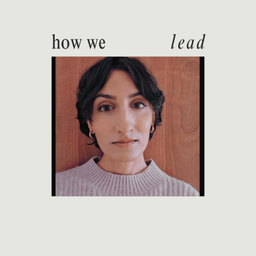
how we lead explores how colonialism has shaped modern leadership and supports people of colour to dismantle empire by healing from the empire within themselves. It's here to support leaders of self, communities and companies to co-create a better, more harmonious and just world. mayakalaria.substack.com (https://mayakalaria.substack.com/s/how-we-lead?utm_medium=podcast)
- Publisher
- Maya Kalaria
- Category
- business · society & culture
- Language
- en
- Explicit
- No
- First episode
- 22 Sept 2024
- Latest episode
- 8 Jul 2026
Latest episodes
10 episodes in the feed.
8 Jul 2026
shadow work for parents
I write this as someone who has never wanted to be a parent, and never wishes to be. This in itself might put some people off, because child-free people are often viewed as ignorant of the huge responsibility that parenting entails. Our voices are often swept to the sidelines, with the accompanying question of what do they know? I do, however, know a fair bit about parenting. It’s just from the other side of the coin. I’m someone who’s spent 30 years recovering from the neglect and narcissistic abuse of my father and his wife. And I’m also someone who supported young people for years as a mental health engagement worker. Prior to that, I worked for a domestic abuse charity. During these years, I offered support to mothers who were terrified for their children’s lives as they tried to flee their abusive husbands. I’ve walked young people to A&E after they had harmed themselves. I’ve read their suicide notes and talked them out of taking their own lives. I’ve run anti-bullying groups, held mental health workshops and given talks to hundreds of young people in schools, colleges and universities. And I’ve met many parents. The ever-growing waiting list of young people needing free mental health support meant that in my early years, I was talking to parents all day long. Later on, my role entailed managing weekly hubs where young people and their parents could drop in and chat to our team of trained volunteers about what kind of support we could offer them. One thing struck me quite early on. While talking to all of these parents, it occurred to me that many of them were solely focused on having us ‘fix’ their child, while displaying problematic behaviours themselves. There was little to no awareness of how their child’s issues were most likely a direct result of their own unacknowledged and unhealed issues, blindly inflicted upon their offspring. Many parents were anxious, controlling and some were downright aggressive, very rarely taking accountability for the harm they’d caused to their child. Young people came to us to talk safely and confidentially about the various issues they were experiencing in their homes, and as a charity, the government and various funders were footing the bill for all of this, not the parents themselves. All of this was familiar territory for me. Having lost my mother at the age of nine, not only was my overwhelming grief never addressed, but my father - who had never actually wanted children and who openly stated that he ‘didn’t know what love was’ - started seeing my school friend’s mum within 8 weeks of my mother dying. She’s a white British woman whose father had served in the British Army in India, and I was to be intimately schooled in colonial dynamics as her narcissistic abuse deepened. Eventually I left the family, but with severe emotional scars and c-PTSD. It took me years to recover from the heartache, grief and psychological damage that I went through at their hands, and I had to do it by myself. All of these experiences led me to reflect deeply on parenthood. Thankfully, I’d never felt the biological urge to have children, so the inner should I/shouldn’t I? conflict was never there, but what if it was? What would I do? The irony of parenting isn’t lost on me. Despite it requiring almost inhuman levels of self-sacrifice, it’s also a self-centred endeavour. Unless we’re giving birth to the next enlightened master, we’re not having children for the sake of humanity at large. Most of the time, we’re doing it because we want to. And there’s nothing wrong with that - we just need to be more honest about it. The truth is, being a parent doesn’t assign higher moral value to a person, nor does it mean they’re more loving, considerate or understanding than anybody else. A person with a child is no more important than a person without a child, which sounds incredibly obvious, yet sometimes it needs to be said out loud to cut through the unspoken assumptions we’ve been collectively conditioned into. If you’re reading this, I can probably assume that you’re the kind of person who’s aware of the many issues we’re collectively facing right now. I write this during the UK’s second heatwave and many places around the world are facing even deadlier ones. We’re already experiencing environmental catastrophe due to the greed-fuelled resource exploitation of a few. We’re facing the era of AI and are yet to know how this will fully transform not only our earth and communities but also the way that we learn and process information. We’re seeing settler colonialism and genocides live-streamed on our phones daily and mass migrations of people fleeing their now-unliveable homelands. We’ve never seen a time like this. A time where we have no idea what our world will look like by the end of the year, never mind in ten years time or fifty. Extreme change is upon us in every way imaginable, for better or for worse. This is where my reflections on parenting usually enter the space. When we have children, they’re not just ours, as much as we like to think they are. They’re everyone’s. They’re members of society. Humanity as a whole. They’re the ones who will not only live in the future we’re co-creating, but they will shape it. One person impacts countless others in their lifetime, and if that person is burdened with the damage from unconscious parenting - the kind where the unhealed wounds of their predecessors are simply inflicted upon them - we all suffer. However that wound manifests, whether it’s depression, anxiety, self-harm, suicidal tendencies, right through to abusive behaviours, this will never just stay in the family. It will become the added responsibility of the children and teachers at school, the local neighbourhood, the wider community, and ultimately, society as a whole. And not just on a national level - online bullying and trolling reaches its tentacles all across the globe. These keyboard warriors (when they’re not bots) are usually people who experience powerlessness, resentment and pain from adverse life circumstances and feel that inflicting this pain onto others will somehow make them feel better. It’s clear to see that the way children are parented in the so-called western world differs greatly to the more tight-knit communities that exist almost everywhere else. Capitalism, patriarchy and colonialism have corroded our idea of family and reduced it to one or two parents living separately with their children, with no community to support them. Without over-romanticising them too much (as abuse has always been prevalent), there is much to be said for family systems that exist outside of the western model, even if imperfectly. While parents worked during the day, children were with aunts, uncles, grandparents and other members of the community, who they often saw as extended parental figures. The adults around them also saw themselves as responsible for the child’s wellbeing and acted accordingly. There was an understanding that the child belonged to everyone, and everyone belonged to the child, because they were an important part of society. But the isolationist ways that we’ve been cornered into through the pressures of capitalism have severed us from these nourishing support systems, leaving many parents without community members to help them look after the children. The burden remains solely on them for financially providing for, emotionally supporting and bringing the child up in society. Everything stays within the four walls of the nuclear family home. As a result, when many parents imagine the future, they tend just to centre their lives and their children’s lives, fantasising about their graduation, career, marriage and families. Their focus then arranges itself around achieving these future accomplishments, without much thought to anything else. It becomes I want over we need. And this delusion contributes to what we’re collectively experiencing today. The stresses of colonial capitalism lead parents to make consumer choices out of a need to quickly ease their burdens so they turn to big companies. But it’s these very companies that exploit our earth and contribute directly to the climate change, genocide and other catastrophes that their children will inherit. Meanwhile, they’re encouraged to concentrate on achieving the highest grades and financial accomplishments, when none of those things will save any of us in the world we’re all walking into. There still seems to be backlash around mentioning the fact that more children create a larger strain on the earth’s resources, leading to more demand and more extraction, therefore worsening the climate change those children will have to survive one day. Despite being a fact, this is somehow deemed a patriarchal, heartless thing to say when it’s often coming from a deep concern for not only the existing humans, but for the many species of wildlife that are already on the brink of extinction due to our greed and lack of ability to protect them from further destruction. The earth herself is showing us all the signs we need to see, yet many are unwilling to acknowledge them because they stand in the way of their desires. With many parents I’ve encountered, there seems to be a prevailing assumption that everyone else will somehow fix these societal issues so that by the time the child grows up, it’ll all be fine. The foresight and sense of collective responsibility simply isn’t there. Instead, there are complaints about how hard it is to raise a child, and while no-one is denying that, there was never a magic wand that was going to be waved to accommodate their every need simply because they chose to bring a child into the world. Ultimately, it is all of our responsibility to create that world, whether we’re busy raising children or not. No-one is exempt. It’s still uncommon for parents or soon-to-be parents to prioritize their wish for their child to be a responsible member of society over being financially comfortable or well-educated. To heal their own emotional issues and shadows so that they don’t inflict them on their child. To contribute to co-creating an earth that will be liveable for their child, others’ children and wildlife after they’re gone. To try to change the oppressive systems that have made life unbearable for so many. To build a safe community so their child is also brought up by other members of the village. To decolonize so their child inherits a healthier worldview. These are things that need to be thought about by every parent. When we leave our children behind, what are we leaving them with, and equally as important, what are we leaving everyone else with? A few years ago, as part of my job, I was invited to a city council meeting where we were thinking about new community groups that would be helpful to introduce. I spoke about creating a group where young people who wanted to be parents could go and learn about the realities and responsibilities of parenting before they made that life-altering decision. To my surprise, no-one said a word. It was as though I’d spoken in an entirely foreign language. Later, a woman came up to me in private and said she agreed with me, but was too afraid to say it at the time. I was shocked, but also angered. Why was it so hard to bring up such an important topic? It seemed ironic to me that before adopting babies, even cats and dogs, there was a rigorous process to make sure that the caregivers were responsible and resourced enough to provide for these innocent beings entering their households. But when it came to deciding to have children via pregnancy, anyone could do it as and when they wished, and the consequences were to be dealt with afterwards. This isn’t to say that I believe we should police people who wish to have children. I simply wish that we were thinking about all of these issues, before we made that all-important decision. And this would entail a lot of inner reflection and assessment, with the possibility of coming to a decision not to have children if certain key conditions weren’t met. Wisdom comes with being able to look beyond our own desires and see what is beneficial for everyone involved, not just for ourselves. As for child-free people (by choice), we are often seen as self-centred, clueless and immature, when often that couldn’t be further from the truth. Many of us love children so deeply that we feel fiercely protective over them. Many of us find it unbearable to witness children being systemically targeted in the ongoing genocide in Gaza, as well as in other parts of the world, and feel both powerless and compelled to act. Many of us have sat with these reflections for years and decided not to have children because of that, often working in roles of service or with young people to help create a healthier world. Yet we often pay the price for the decisions and judgements of those who do have children. Imagine having a group meal at a restaurant. We’ve all been there, where we’ve been on a budget due to limited financial resources. So we choose the cheapest thing on the menu, accompanied by tap water. There are others around the table, however, who order the most expensive meal accompanied by champagne. At the end of the meal, one of these people suggests splitting the bill and the others agree. As a result, our bill is tripled while theirs is reduced. And when we dare to say anything, we are met with defensiveness and guilt-tripping. Similarly, we can often be met with patronizing comments laced with moral superiority by parents, as though they didn’t choose to have their child and they were actually doing a huge service to humanity. All the while, we’re expected to pay up for baby showers and children’s birthdays for years on end, but we don’t receive the same in return. We end up picking up the tab, financially, emotionally, socially and environmentally, for other people’s choice to have children, and we’re expected to understand and stay silent. Moreover, we’re still probed with questions such as why don’t you want kids? yet the opposite, why did you choose to have kids? is deemed offensive when it’s actually a more reasonable question, given that this choice directly impacts us. Of course, this isn’t the case with all parents. And thankfully, some are open to conversations like these. But for many more, these topics are incredibly uncomfortable to look at and talk about. If we are to move forward together, however, we must put an end to the collective illusions around parenthood and say it like it is. We’re also talking about leadership here. Healthy leadership is about making informed choices and owning our responsibilities. It also involves saying hard yet important things, knowing that we might upset some people. There are very few forms of leadership which are as powerful, long-lasting and impactful as parenting. Our children look up to us as role models as they grow. They watch what we do, not just what we say. They pick up our opinions, worldviews and biases and they carry them outside the home. They watch how we interact with others. They absorb our unhealed trauma, prejudices and resentment. They learn what love is and what it isn’t. They become the education system, the workforce, lovers, friends and parents themselves. And when we leave this earth, we leave them in stewardship of it. Parenting is, no doubt, the most important role one could undertake in a lifetime. I have a lot of respect for parents who do their best to lovingly raise their children to be healthy members of society, especially because they cannot guarantee the outcome in today’s rapidly-changing world. And as we look to our future together as members of humanity, my hope is that these conversations become easier to have as a collective, infused with more wisdom, reflection and discernment. Thanks for reading how we lead | exploring ways to decolonize leadership! Subscribe for free to receive new posts and support my work. My Work * For those navigating their own journey with grief and would like a guide through the underworld of death, grief and loss, you may find my poetry book Half Woman Half Grief (https://www.lulu.com/shop/maya-kalaria/half-woman-half-grief/paperback/product-1y594zk6.html?page=1&pageSize=4) beneficial. * If you enjoyed this podcast, tune into who we are | stories of colonialism and cultural reclamation (https://tr.ee/NL4-zDuRtz), where I feature guests from many different countries. There’s also a Substack here (https://whoweare.substack.com/?utm_source=share&utm_medium=android%2Candroid&r=jlimkhttps%3A%2F%2Fopen.substack.com%2Fpub%2Fwhoweare%3Futm_source%3Dshare%2Cjlimk). * Click here (https://linktr.ee/MayaKalaria?fbclid=PAZXh0bgNhZW0CMTEAAaZ78-j_yaiyyo9X1LPSIoNZBwh9jxhwYNJ7vblaXPLpvATVYGL9pE__H7o_aem_7VOigxn5n9gXdHiuweffag) to explore my full collection of talks, podcasts, books and articles. This is a public episode. If you would like to discuss this with other subscribers or get access to bonus episodes, visit mayakalaria.substack.com (https://mayakalaria.substack.com?utm_medium=podcast&utm_campaign=CTA_1)
20 Apr 2025
why gatekeeping isn't a dirty word.
To control a person, first you must reduce them. Subtract from them. Divide them into fractions. I am deeply loving. I am deeply hateful. I am peaceful. I am rageful. I am hermit. I am revolutionary. I am yielding. I am radical. I am humble. I am excellent. I am tender. I am harsh. I am beauty. I am terror. I am elegance. I am disgrace. I am blinding light. I am all-consuming darkness. I create with one hand. I destroy with the other. How can one ever reduce this? Yet from birth, I am brown woman. In school, I am brown woman. At work, I am brown woman. On the streets, I am brown woman. But I create with one hand. I destroy with the other. And the time for playing small is over. Some believe that our true essence is most untouched when we are small children. When we have yet to be imprinted on by the outside world, by our parents, our culture, and by trauma. Looking back on what we were naturally drawn to when we were very young can remind us of what we held sacred and point us back in the direction of ourselves. When I was a small child, there was only one thing I truly cared about, and that was the protection and conservation of endangered wild animals. They were my first love - my attention only later turned to humans out of painful necessity. This deep love was pre-internet and it was very different to what everyone else cared about in my family. I remember crying over World Wildlife Fund adverts and asking my mum to send money to sponsor endangered tigers in India, which she did. This, of course, predated my knowledge of white saviourism and how it plays out within charitable causes within the global South. All I cared about then was that these incredibly sacred and powerful creatures be protected from poachers, who were willing to take their lives for their own personal gain and couldn’t see that if they continued to hunt them, they would eventually have nothing left to hunt. My love for tigers soon grew into a love for all wild animals, particularly the poison dart frog of Central and South America, whose poisonous, brightly coloured skin serves as a warning to predators, and a great natural gatekeeper. A particular species of this tiny frog has the capacity to kill many people at once, yet humans have yet again proved ourselves more dangerous as we continue to endanger them by encroaching upon their habitats. Indigenous people, however, used their poison on the tip of their blowdarts to hunt, often releasing the frog after doing so. I loved hearing stories of how they lived harmoniously with nature in deep reciprocity, reverence and protection. Protection. Looking back on my life, I realize that this has always been a key value and innate quality of mine. Not the kind of over-guarding that comes with great trauma, although I’ve definitely done that too, but a healthy protection that keeps out further harm, extraction and abuse. The kind of protection that insists, this is where I draw the line. Like many of us, I learned this the hard way. Through experiencing abuse from the very people that were supposed to protect me - my family. Of having racial slurs thrown towards me on the street or at school, and having no-one speak up for me. This is particularly common in diasporic families who have been systemically uprooted and fragmented by colonialism. We turn on each other, and in doing so, we turn on ourselves. Often, it's been so long since we've had healthy protection that we would almost be suspicious of it if we were to suddenly experience it. Colonialism was a masterclass in the breaking down of the gates of protection. It was a mass violation of boundaries - of land, of people, of bodies, of spiritual lineages, of bloodlines, of human rights, of our right to health, freedom and happiness. It was a crossing over of all the sacred lines that we had built around our lives and cultures over thousands of years. It came without permission, without question, and it was further allowed by those who betrayed their own people in the face of fear, bribery and manipulation. They were not healthy gatekeepers, and we all paid the price for it. As colonized people, we see how so much of our sacred practices - ones which we were once ridiculed for - are now being extracted and exploited at an alarming rate. This dilution and desecration of once gatekept rites, rituals and practices are now unrecognizable from their original form, and being sold off by those who still benefit from our oppression. Foods which we once hid for fear of being bullied are now being peddled by these very same people as the next superfood, with absolutely no acknowledgement of the harm caused. We have seen how, after years of extractive tourism, the residents of Hawaii asked people not to travel there to prevent further harm to their land, culture and ecosystem. In Jamaica, inhabitants of the island don’t even have access to most of their beaches anymore because of private western landowners buying all the land for their hotels. In Japan, there is now a shortage of Matcha due to western overconsumption. Land and resource grabs are behind the current genocide in Gaza, and is the reason why the fertile and resource-rich global south is still far more impoverished than the resource-poor global north, whose wealth solely relies on the maintenance of these deliberately engineered inequalities. But what would happen if we started drawing the line? For me, healing from colonial harm requires an inner reverse-engineering of what happened. A clear, direct acknowledgment of what brought us here, and an understanding of the context within which we now exist. A reinstatement of what is sacred, and a drawing of lines around it. A clear definition of what is important to us, and a commitment to protecting that. For these reasons, I am a firm believer in gatekeeping the sacred. I don’t believe just anyone and everyone should have access to our cultural practices, our energy, our time, our food and various other things which were mined, stolen and extracted for hundreds of years. And even though I believe everyone has the right to housing, nourishment, ethical wealth, dignity and respect, no-one has a right to just take what is not given with consent when it comes to someone else’s culture. Nor do they all have the capacity to responsibly hold that information in a way which is safe for themselves and others. As a first generation British-born Indian woman, the question of giving endlessly to the dominant white culture would not have been an issue even a generation back, as they would have been surrounded by people of colour. There are things I used to share freely with all, but now do not because of the inherently extractive nature of the relationship. Where I once shared my carefully honed dahl recipe with anyone who enjoyed it, I won’t share it with white people anymore. Where I once made friends with anyone, I now reserve my sacred time and energy for people of colour. This is because, unless white people are actively decolonizing and divesting from the systems which benefit them at the expense of colonized people, the friendship will inevitably perpetuate that extraction in one way or another. And because I’m someone who likes to pour a lot of my love and energy into relationships, that dynamic just isn’t going to work for me. Until then, I choose to protect my own sacred resources by keeping a healthy distance. Not everyone needs to do that, of course - this is just what I’ve personally decided on due to my own experiences. But we each have a right to say no when someone is demanding a resource of us which they are not entitled to. There is no law which beholds us to give of our sacred time, energy, relationship, ancestral rituals, books or foods if we do not actually wish to. And those who get upset when we don’t share this with them are always the ones who have been benefitting from a imbalanced exchange. Sure, it might be disappointing for them, but those who respect your boundaries will understand. Watch how people react and this will give you a great deal of information. And - disclaimer - we also need to check where we may be extracting from others and, as my teacher says, clean up our side of the street. This is ultimately about using healthy boundaries to build truly reciprocal relationships, not about perpetuating further harm. The personal is political, and these small acts make a huge difference in how we view ourselves and our value in the world. Colonialism was so powerful because it deliberately chipped away at our sense of self. It drew lines within us and between us, rather than around us. It fractured us from the inside, which made us, as Clarissa Pinkola Estés would say, instinct-injured. Not able to tell right from wrong. Healthy from unhealthy. So broken that up was down and left was right. And this made us susceptible to having our boundaries violated over and over again until we became ghosts of ourselves. The great irony of colonialism is that, while it was convincing us to hate ourselves, it coveted and stole from us all of the things it had deemed unworthy, thereby negating its own claims and exposing the lie. You don’t break into a house full of trash because there’s nothing to steal, and you don’t copy from someone you don’t admire. The truth is the exact opposite of what we were told, and it’s time we woke up to that. When the internalised voice of white supremacy accuses us of being divisive by drawing protective lines, let us remember that this is the voice that commanded the arbitrary carving up of lands, tribes and peoples across many great continents, including Africa, Turtle Island and Asia, simply to serve its own greed. It had no problem in turning entire communities against one another by drawing the infamous line that would cause the bloodshed of the 1947 partition which still reverberates through South Asian bodies, communities and politics even today. This is the voice of apartheid, of genocide, of ecocide, when drawing lines conveniently serves its own desires. It lies behind the stirring up of anti-blackness, islamophobia and colourism within colonized communities, instead pointing us towards whiteness as the pinnacle of true wealth, intelligence, health and morality - a goal which will always be out of our grasp, no matter how much we strive, because we will never, ever be white. Gatekeeping has been given a bad rep recently, and I want to reframe that. Like with literally everything else, it can be used for harm or for good. When done healthily, it’s what keeps endangered animals protected and prevents further harm and extraction from continuing to desecrate our planet. And if there is grief in knowing that even we might not be able to visit some of these protected spaces, know that it’s only in the last 50 years or so that we’ve even been led to feel entitled to them, due to the rise of tourism. Our grief is valid - I have felt this too due to ingesting the white supremacist notion of having the right to access everything - but what’s more important; that we get access, or that these sacred areas, practices and beings literally survive? Supremacy makes us believe that the world centres around us, and that it’s simply a playground we can colonize and use to our advantage before discarding it in a much worse state than we found it. Someone else will sort that out, is what we often think. But the ones having to sort out this mess - as billionaire Bezos shoots female celebrities into space in a dubiously phallic craft, creating more pollution than Taylor Swift’s private jet - is us. And the disproportionate responsibility is shouldered by black, brown and indigenous people, who are always at the front lines of climate crises, and upon whose oppression capitalism was built. As leaders - of ourselves and of others - where do we draw the line? Even though we can’t ever guarantee safe spaces, I’ve been reflecting on what makes me feel the most safe in groups, and what I strive to maintain as a leader. And that is when I know where we’re willing to draw the line. What we will and won’t stand for. Our principles. Our establishing of group agreements or boundaries. Will we say something if we witness extraction and disrespect? What will we allow in the space, and what will we make very clear is unacceptable? Are we seeking to protect, encourage and empower the most vulnerable and historically silenced people in the group, or will we remain silent? Are we trying to rebalance the distribution of power in the room or unconsciously perpetuating it? There is no perfect answer to this, merely ongoing reflections and everyday practice. So I shall leave you with this too, just as I continue to ponder on where my own lines are. Who, how and what we gatekeep is up to us, but know that you have a choice. These lines can, and should, shift over time as we evolve, and I also believe that when we know where we stand, we are much more able to move through spaces and communities with a greater sense of self, able to stay rooted in our truth even when others hold opposing values and beliefs, without collapsing into fear or doubt. And where colonialism reduced us to one-dimensional shadows of ourselves, I offer this as an invitation to consciously destroy the lines which do not serve our flourishing and create those which protect the many beautiful and complex multitudes of who we are. Thanks for reading how we lead! This post is public so feel free to share it. * For leaders of colour who wish to dismantle empire by healing the empire within themselves, I offer consultancy sessions to provide gentle guidance through the process. The website is currently under construction so please contact me (http://consultingwithmaya@gmail.com/) if you wish to work together. * For those navigating their own journey with grief and would like a guide through the underworld of death, grief and loss, you may find my poetry book Half Woman Half Grief (https://www.lulu.com/shop/maya-kalaria/half-woman-half-grief/paperback/product-1y594zk6.html?page=1&pageSize=4) beneficial. * Click here (https://linktr.ee/MayaKalaria?fbclid=PAZXh0bgNhZW0CMTEAAaZ78-j_yaiyyo9X1LPSIoNZBwh9jxhwYNJ7vblaXPLpvATVYGL9pE__H7o_aem_7VOigxn5n9gXdHiuweffag) to explore my full collection of talks, podcasts, books and articles. This is a public episode. If you would like to discuss this with other subscribers or get access to bonus episodes, visit mayakalaria.substack.com (https://mayakalaria.substack.com?utm_medium=podcast&utm_campaign=CTA_1)
28 Mar 2025
the dysmorphic body of empire
i try to stride along beautiful and unfazed with my new mantra of i am enough, but i only get so far. in my peripheral vision there she limps behind me at all times. wounded and afraid always. her slow heaviness always. her unchecked bandages always. i cannot clear enough distance from her. so instead i turn around. i stare at a face i couldn’t even glance at in the mirror. i see a body i could not expose to a single soul. years of hatred. and i give her my arm. and we walk slowly together. what else can we do? For years, I had body dysmorphia. Of course, I didn’t actually know this for most of that time; I thought it was completely normal to hate myself as a brown woman in England. Something felt so inherently abnormal about my sheer existence in most of the spaces I had to occupy. It took me decades to realize that the dysmorphia was actually due to co-habiting my body with the sickness of empire, trying to contort and erase my features according to its ever-changing and unattainable needs, in a vain attempt to fulfil my own. The need to belong. To be loved. To be seen as viable, attractive, valuable. To absorb and assimilate with whiteness to the point where I didn’t know where it ended and I began. I was born in London; the heart of empire, and raised in the white working class northern town of Barnsley. Growing up in the 90’s was rough as one of the only Indian kids there, and we regularly received casually-flung racist comments as we walked down the street or stood outside our own home. My mother was the only brown woman I saw beyond my own reflection, and when she died, the house was filled with white women and their petite features. I began to feel like an alien; my larger nose and tall, slim body feeling awkwardly out of place, with no daily reminders of its normality or acceptability. No affirmations in the media, on the TV, or on the streets. No words of comfort from those around me, only racial curiosity or belittlement. Dysmorphia is not something that develops overnight. I believe it creeps in over time, slowly planting seeds within the cracks created by the unnatural demands of empire. In the deliberate fractures. Its inorganic beauty standards are drip-fed through the ethers, slowly soaking into our reflections and distorting the shape of us. The sound of us. The solidity and validity of us. The insidious voice that starts speaking to us silently, telling us that to be loved, we have to be hairless, like them. Small-nosed, like them. Blonde, like them. And this voice starts sounding scarily like our own, so much so that it can take years to untangle the two. The original from the invasion. The truth from the lie. It takes a huge amount of loving vigilance and compassion to hold ourselves as we release empire from our body and learn to love its lines, its colour, the way it holds the weight of so many ancestral stories. To stand straight, spine unburdened from humiliation. To face the brutal honesty of what happened to us, and how we lost ourselves so utterly and completely for so many years. Many of us are still on this journey, and I’d love to say I have reached the end of it. I nearly have. But to live within empire is to face the reality of its impact every day and to commit to remembering when sometimes all you see and feel is your own erasure. The erasure of your people. Even if it lies behind their blonde highlights, their nose jobs and their shrinking of themselves. Their altered accents. Their bleached skin. And much more insidious is how it now hides behind their declarations of self-love and their celebration of darker skin as they find other, more subtle ways to assimilate and proximate themselves to whiteness. For many people of the diaspora, we were forged in foreign terrains which we never asked to find ourselves within. We were stolen, manipulated, scaremongered or shipped out of our motherlands, only to find ourselves in the heart of where it all began. We had to chisel our own identities out of seemingly thin air, creating something so precarious and fragile that it could shatter at a moment’s notice. A sideways glance. The P word. The N word. The C word. Not getting the job. Being rejected. Being overlooked. We had to build and rebuild ourselves amongst the ever-changing backdrop of colonial beauty standards and colourism. We were only as acceptable as these current standards deemed us to be at any given time. As the adverts and the films and the magazines permitted us to be. As a woman of colour, I spent many years only seeing myself through the white male gaze. The absolute gods of my existence. It was an incredibly miserable existence, too. Nothing was ever enough; whether in relationship with them or not, whether desired or not, the hungry ghost of dysmorphia ensured that I was never enough for myself. There was always some way I could improve, and if I just did that, I’d feel better. As you can predict, it never happened. I never felt better, even in my twenties - the supposed peak of attractiveness. It could never be satiated, this hungry ghost. Because it was never meant to be. The dangling carrot of physical perfection was a way to torture myself internally, so that I was doing empire’s work without them having to lift a finger. The constant exoticizing mixed with outright racism was thoroughly confusing. To be sexually desired by them was social currency, and I conflated being wanted with being respected. Oh, how wrong I was - and I know I’m not the only one. And so here we find ourselves. In this global moment of reckoning, of release and reconciliation. Of the veils of empire slowly being lifted to reveal the tiny wizard-of-Oz like white man hiding behind the curtain. So many of us are realizing, ah. It was this all along. I gave myself away, I betrayed myself for this. But we didn’t betray ourselves willingly. We did it out of a desperate sort of love; a self-preservation in the cruelty of absolute erasure and degradation. This is what we must remember as we heal. To look lovingly and gently upon ourselves as we walk hand in hand with the self-made ghoul; the part of us we exiled into the underworld, terrified that they’d be seen in their fullness and destroyed. We did it out of love. And we will welcome them back out of love. I speak about leadership. But self-leadership and responsibility is the cornerstone of all else, and the work to disentangle the dysmorphia must start within us. There will be no-one coming to save us, magically healing all of our wounds as surely as they created them. No, it begins with us. A gentle correction of the internal voice. A longer, slower glance in the mirror. Celebrating the small wins. Dance. Song. Movement. Ritual. Laughter. Connection. Intimacy. These are all remedies for empire. Remembering that we are of the Earth, and how perfect that is. How a forest of wildflowers is beautiful because each flower is so uniquely special yet adds to the wild entirety. A sense of harmony that is formed by the absolute opposite of homogeneity. A sense of wonder that so much diversity can exist on such a small area of forest floor or sea bed. Just as it is with us. No more AI-ifying and codifying our features to deny ourselves for the sake of belonging to a culture which relentlessly eats itself alive and the rest of us, too. It has to stop somewhere. And it can stop with us. We may think that we leave our dysmorphia at home, or that no-one can hear the quiet voice in our heads. But we carry it with us everywhere. It walks into every room, every space with us. It breathes through us and it gathers energy when we feed it with comparison, self-deprecation and abandonment. It alters the way we move, the way we speak, the way we tighten the sinews of our neck and jaw. It lives in our fascia and tissue. It nestles into our bones. The way we hold back on our full smile, our full gait, of the entirety of our essence spilling through our every gesture. We hold it in. We hold it in. We hold it all in. And it shows. I don’t want any person of colour to see themselves as lesser than, or unacceptable in the face of white expectations of beauty. Not now. Not after all this time. And if I want this for them, I have to want it for myself. I have to lead with this, no matter how embarrassing or vulnerable it may be to speak about this. And over the years, I have noticed the impacts of healing. The way my immediate thought is ‘you’re beautiful’ when I look in the mirror, rather than cringing at my own reflection. The way I hold my head a bit higher, and walk with more confidence. The way I laugh a little louder or sarcastically roll my eyes a little higher. The gestures that make me, me. And it’s in the letting go of needing others to approve of me, to deem me as worthy of belonging. It’s in the communities where I see black and brown skin in abundance; a dazzling display of features which reflect the many landscapes, cultures and ancestries which brought us all to life. It’s in everything that we ever denied, all that we buried, tried to cut or burn away. It’s where the scars are, where the dark hair grows, uninhibited. It’s where our nose speaks for itself, without us having to say anything. It’s in our proud ownership of it all. Of welcoming it back into the sacred, where it always belonged. Thanks for reading how we lead! Subscribe for free to receive new posts and support my work. * For leaders of colour who wish to dismantle empire by healing the empire within themselves, I offer consultancy sessions to provide gentle guidance through the process. The website is currently under construction so please contact me (http://consultingwithmaya@gmail.com) if you wish to work together. * For those navigating their own journey with grief and would like a guide through the underworld of death, grief and loss, you may find my poetry book Half Woman Half Grief (https://www.lulu.com/shop/maya-kalaria/half-woman-half-grief/paperback/product-1y594zk6.html?page=1&pageSize=4) beneficial. * Click here (https://linktr.ee/MayaKalaria?fbclid=PAZXh0bgNhZW0CMTEAAaZ78-j_yaiyyo9X1LPSIoNZBwh9jxhwYNJ7vblaXPLpvATVYGL9pE__H7o_aem_7VOigxn5n9gXdHiuweffag) to explore my full collection of talks, podcasts, books and articles. This is a public episode. If you would like to discuss this with other subscribers or get access to bonus episodes, visit mayakalaria.substack.com (https://mayakalaria.substack.com?utm_medium=podcast&utm_campaign=CTA_1)
19 Mar 2025
make spirituality sane again
I have been reluctant to share this as it requires that I come out of the spiritual closet, in which I’ve been hiding for many years. Most recently the reason I’ve wanted to hide has predominantly been - in my opinion - the absolute horror show of what modern spirituality has become within capitalism, where anyone can put themselves out into the world as a spiritual teacher, healer or coach without any checks and balances to assess whether they’re in a position to guide others in a responsible and beneficial way. Most often than not, they are not in this position, and the onslaught is messy and often dangerous to people’s mental, emotional and physical health. The complexity lies in the fact that the ‘assessment’ required is not the western, medicalised and colonized version we have been led to view as the most valid. This assessment is often best made by community, by elders, and by the person themselves - if they are able to view themselves with clarity. Most of us cannot, and that’s not necessarily our fault - we haven’t been taught how to, and on the whole, we lack healthy communities and eldership. Witnessing what is happening in the name of wellness and spirituality has caused me to feel repulsed, angry and incredibly concerned. And the repulsion part is what has led me to hold back my own spiritual experience, my own story, and the core tenets from which I live my life, because I don’t want to be viewed like this. However, I have come to realize that this attitude is not beneficial because it means I stay silent when I could actually speak. It means I keep the foundation of my work hidden when it may be able to help someone - even if that person is me. I’ll start by sharing my story. I was brought up in a Indian Gujarati family who are mostly practising Hindus. The first image of the divine I saw was the Goddess Durga, riding a magnificent tiger and brandishing symbols of both war and peace in her many hands. When my mum died of leukaemia, I was nine, and within two months my father had started a relationship with a school friend’s mum - the daughter of a man who had served in the British army in India, a born-again Christian, and - as I was to later realize - my long-term abuser. My Hindu roots were eroded and I soon became a Christian, attending a born-again Christian school and church, truly believing that Jesus was the one and only saviour for many years. I didn’t realise that I was being colonized in my own home on every possible level until decades later when it was safe enough to disentangle myself from the people who had caused and enabled it. During my teenage years, and despite my belief in Christianity, I also carried a deep mysticism, naturally understanding astrology on a fundamental level and gravitating towards the deep symbology of the universe which showed itself to me through dreams and everyday life. I knew things that I couldn’t have possibly known but I had no-one to speak to about it, so it was only revealed through my diary, art and poetry. This deep inner guidance led me to naturally start questioning the patriarchal exclusivity of Christianity and led me to leave the Church, as well as through comments I had received along the way, such as ‘your Hindu family is going to hell if they don’t believe in Jesus’ and ‘you can’t enter heaven if you’re not baptized.’ My stepmother had a deep preoccupation with the apocalyptic end-times in a way which caused deep fear within me. Yet I now knew the Bible enough to question every aspect of it, with its many contradictions and irregularities. I knew it had been written and rewritten to serve whichever leaders were in power at the time, and I also knew that dogmatically believing in one doctrine was not the route I wished to go down. I also desperately missed the Mother aspect of God. The feminine. There was something deeply wrong with what I had learned - something which erased not only my existence as a woman but the existence and beautiful complexity of the Earth herself as our sacred home. My journey of self-exploration had begun, and I delved deep into the feminine mysteries, allowing life and my intuition to guide me. Meditation and subtle energy work soon followed as I started to see the years of grief and abuse that had been deeply patterned into my system, and how most of what I thought was my personality was actually a trauma response. As well as learning what worked for me individually, I also found a teacher to guide me through the subtle energetic and grounding work, and learning how to release the trauma from my high sensitivity so that I could embrace the many gifts it brought (including how and why I do this work). I can read the energetic archetypes of people, often at first glance. I can pick up on dysfunctional energetic dynamics very quickly, and I can read the room sometimes more than I would like to. Despite not subscribing to any particular religion or spiritual doctrine, I have spent years diving into practices from many spiritualities, and have a deep respect for those which genuinely seek to connect humanity to a remembrance of our divinity and our responsibility as stewards of the earth. My devotional and energetic practices are what take up the majority of my time, contrary to what some may believe when they engage with my work. Everything else comes from these deep communions and conversations with the Divine, the earth, my ancestors, guides, and with my deepest being. And even whilst sharing this, I am reminded of how even these phrases and words have been appropriated and overused to the point where they have been almost rendered meaningless and devoid of the sacred. But still, I reluctantly type them anyway. On my spiritual journey, I have seen the destruction caused by religion, not only through my own personal experience of Christian conversion, but by standing in the Ghanaian dungeons where enslaved people were held in pitch blackness, bar the small hole which led to the church above, so that while they sung their praises to white Jesus, the churchgoers could hear, smell and see the horror of what was going on below and somehow justify it in their hearts and minds. I have witnessed how this very Jesus is still plastered on the backs of most vehicles there, monitoring everyone silently, churches still dominating the streets; the aggressive tongue-speaking that is belted out through the microphones throughout the day to a people who only centuries earlier, had deep and rich ancestral spiritual lineages and practices, now considered heathen and sinful. We are all seeing how the ‘divine’ claim of God’s promised land to His promised children, over 2000 years ago, is being used to dismember God’s children in real time. We are seeing cults being formed and exposed on an almost regular basis. Spiritual leaders being held to such a godlike level that it is impossible to remain connected to their humanity. And we witness their inevitable fall. We are seeing people film themselves ‘channel’ the galactic federation, who tell them that the second coming is about to happen for those who are stepping into the ‘new earth’, for those doing parasite cleanses, for those cutting out all vegetables from their diet and only drinking filtered urine. One says this, another says that. Carrots are evil this week, potatoes the next. They contradict each other and they all make extremely harmful claims, all while pocketing our money. They prey on our fear, and the belief that we are disconnected enough from our own discernment and intuition to see the delusion. We see white people appropriate indigenous spiritual practices and use them to bypass their own responsibility to the people and the land from which they extract from. We see their spiritual tourism, used predominantly to support their own ‘ascension’ journey at the expense of Indigenous people’s sovereignty, their sacred practices and their right to financial compensation so that they can feed their families. We see how these practices are sold on to more westerners at extortionate prices, ultimately serving themselves, but not being used to help the many people of the global majority who have been spiritually, physically and emotionally colonized. Yoga has been reduced to stretches on rubber mats. Entire industries have been built upon leggings. Ayahuasca is now in our modern lexicon, yet we see very little of the sacred wisdom that it is supposed to bring about, only further illusions and disillusionment from reality. The issue is not with the plant itself, of course, but how and why it is being used, as with all plant medicine. We’re leaving our bodies to explore the astral realms, but we can’t even have healthy conversations with each other when conflict occurs. We’re dissociating when we hear bombs are dropped on families or when we hear that we’ve caused harm to someone. We are seeing insanity occur, over and over again, under the guise of spiritual goodness and wellness. Capitalism has given the go-ahead for anyone and everyone to put themselves out there with their so-called spiritual gifts and promises, but without one iota of wisdom. If our spirituality is not helping us become more human, more compassionate, and grounded enough in our bodies to witness both the beauty and the atrocities of the world, to stand what we see, and to respond to this in our own unique way, whatever that may be - then who and what does it actually serve? This isn’t a call to activism by any means. This is a call to sanity. The sanity of knowing that everyone has the right to believe what they believe, to live on their ancestral lands, to exist in a body of whichever colour skin they have, to love whomever they want, and that we don’t have a spiritually justified right to oppress them by imposing our values onto them. Nor do they have the right to do that to us. Rather than be used to punish ourselves, to hold ourselves to an impossible standard of goodness (and inevitably fail), to feel morally superior to someone or to simply bypass everything altogether, I believe that our spiritual beliefs and practices can help us come back down to earth, to our bodies and to the love which already exists around us and within us. To bring it into our day-to-day actions such as giving back to the earth, being mindful of what we extract, and to try and align our words with our actions. To honour our ancestors while also being mindful of the harm they may have caused. To practice surrendering to the mystery every now and again. To have boundaries, to cleanse ourselves energetically so that we’re not carrying more than we need to, and to fill ourselves back up with loving energy and life force. To create healthy relationships built on honesty and reciprocity rather than extraction and abuse. To honour that while we may not like someone, they are as divine as us. To speak with ferocity when innocence, and the innocent, are being destroyed. To laugh. To soak up the sunlight. To remember why we’re here. And to find a sacred reverence and self-respect again, so that we love ourselves enough to keep going and growing, even when it feels hard. Love knows what needs to be born and what needs to be destroyed, so that life can thrive in its fullness. And I’m reminded once again of the first image of God I ever saw, and how She held both symbols of destruction and creation in equal measure. And this is why I’ve come out of the spiritual closet - to say what I have been longing to say, but silencing within myself, for a long time. * For leaders of colour who wish to dismantle empire by healing the empire within themselves, I offer consultancy sessions to provide gentle guidance through the process. The website is currently under construction so please contact me (http://consultingwithmaya@gmail.com) if you wish to work together. * For those navigating their own journey with grief and would like a guide through the underworld of death, grief and loss, you may find my book Half Woman Half Grief (https://www.lulu.com/shop/maya-kalaria/half-woman-half-grief/paperback/product-1y594zk6.html?page=1&pageSize=4) beneficial. * Click here (https://linktr.ee/MayaKalaria?fbclid=PAZXh0bgNhZW0CMTEAAaZ78-j_yaiyyo9X1LPSIoNZBwh9jxhwYNJ7vblaXPLpvATVYGL9pE__H7o_aem_7VOigxn5n9gXdHiuweffag) to explore my full collection of talks, podcasts, books and articles. This is a public episode. If you would like to discuss this with other subscribers or get access to bonus episodes, visit mayakalaria.substack.com (https://mayakalaria.substack.com?utm_medium=podcast&utm_campaign=CTA_1)
7 Feb 2025
healthy accountability for leaders
Accountability. For a word that is increasingly overused in our modern lexicon, it's still something we collectively underuse as a practice. And it's no wonder, considering we live in societies where accountability is unbalanced, abused and misunderstood. For many of us, the word evokes fear of loss and punishment. Most of us grew up in punitive education systems, families or cultures where mistakes were seen as failures, and we still carry a hangover of shame. Many endured harm from people who never apologized, so healthy repair was never modelled. And on a global scale, we watch the genocidal behaviour of world leaders be defended, protected and applauded, leading them to higher positions of power while we couldn't so much as get away with missing a monthly debt payment or being a person of colour in the wrong place at the wrong time. In the US, simply being an immigrant in a country literally founded by immigrants is now a crime. You don't even have to do anything. Just existing with certain identities is a punishable offense. None of this is logical, and nor is it meant to be. Morally, the average person is held to standards that many authority figures and celebrities are not. We watch them deflect blame onto others, scapegoat vulnerable people or groups, or ignore the issue entirely, believing that if they never mention it again, any harm caused will cease to exist. If we're really lucky, they may offer some vaguely apologetic platitude, swiftly followed by the same harmful behaviour. Their money and powerful connections protect them from consequences the rest of us would have to suffer. This allergy to accountability in leadership is not new. It’s baked into our collective history. When we exist within systems forged during a time when land theft, slavery and human rights abuses were not only the norm but actively rewarded and encouraged within many western countries, it would have been counterintuitive to take responsibility for these acts. They were not even deemed as criminal until more recent years. And what makes the issue of repairing this harm more slippery is that it is now so insidious that it’s very hard to pin down. Generations have passed, laws have been changed, and there is so much discourse around it that it appears to be in the process of being adequately addressed. Yet, at least in England, colonial institutions such as the government, the monarchy, the Church of England and the British Museum have still not taken anywhere near the full level of accountability for the harm they partook in, were built upon and are still financially supported by. That would require a level of transformation that they simply do not want, because it would take away their power, status and financial privilege. Our collective leaning towards shirking responsibility is now also compounded by new age wellness and spirituality concepts that have been misappropriated to bypass any problematic behaviour. Self care, self compassion and self forgiveness are necessary, but they're not a convenient excuse to escape accountability in the name of love and light. There is a very fine line between blaming ourselves for everything and renouncing blame altogether because it is all an illusion which we can choose to detach from, as many misappropriated teachings from transcendental spiritualities infer. And although taking a bath and lighting candles could help us prepare to make an apology, they do not actually act as a substitute for one. Nor does simply being nice in the hopes that it will prevent the need for accountability. Unfortunately, niceness itself has become a silencing and oppressive tool in supremacy culture and is often used as a shield in spiritual, liberal and progressive circles to tone police anyone who speaks inconvenient truths. When people in the highest positions of power point blank refuse to take ownership for the harm they continue to cause, our everyday CEOs, church leaders, spiritual teachers and school principals are hardly going to be queuing up to take responsibility en masse. As a collective, we have not reached that stage yet, but we are going to have to if we are to actually see long lasting change in this world. We need to develop the fundamental ability to know when we have caused harm, to deeply listen, to own our part and to apologize, without it being performative. Where our words are followed by genuine change. There is also a distinct difference between hurt and harm. We can’t always control whether someone will be hurt by our actions, as it’s also dependent on how they interpret our words or behaviour according to their own personal experiences, trauma or worldview. Harm is different in that there are collectively understood harmful behaviours - physical harm, abuse, neglect and cruelty, for example. Isms and phobias also fall under the ‘harm’ category, even when they’re deeply unconscious and unacknowledged. Passing comments that appear well-meaning actually serve to further perpetuate racial, sexist or homophobic tropes, and are far from harmless. But rather than shame ourselves when someone highlights this to us, we can choose to take it as an opportunity to deepen our relationship with them by apologizing and making an effort to work on any prejudices we may have. And we all have them. An example of hurt, rather than harm, is when we may offer unsolicited advice to someone who could have had a lot of familial trauma around that. We were trying to help, and we weren’t to know their history, but we may have overstepped their boundaries by offering them advice they didn’t ask for, and we can own that. Whether we made an innocent comment that hurt someone, or whether we caused actual harm, an appropriate level of accountability would help to repair the situation, because the impact is as important as the intention. Accountability is not to be abused, however. It’s not meant to be a way to punish, shame or manipulate people, as so often happens nowadays on social media and in various activist groups. This only serves to sever ties within and between communities rather than build them. There is a well-ingrained and somewhat unconscious belief that when we take accountability, we will be ostracized from our communities and we will lose the respect and social standing we once enjoyed. Of course, it's not easy or comfortable. But in my experience, it is always those who genuinely own their mistakes and change their behaviours who inspire me and earn my deep respect. Rather than a weakness, it is a strength, and a rare one at that. We’re human - we’re going to hurt people, and we sure as hell expect an apology when someone else hurts us. And when we are able to build this muscle in return, we relax into our humanness and that of other people’s. We live in less fear of having to maintain our carefully curated perfection and we trust that we will ultimately be ok, because we have the tools to course-correct when needed. We liberate ourselves from the unconscious burdens that we may be carrying, and we cultivate deeper trust and intimacy with those around us, as well as with ourselves. As leaders, it's important to model this to the best of our capacity. When our power is built upon the powerlessness of others, it isn’t real power to begin with. It is never a true loss to own and change harmful behaviour if it leads to the empowerment and liberation of those who were oppressed or harmed by that behaviour. It is often terror and a deep mistrust of life itself - the very foundations upon which colonialism was built - that prevent people from facing and addressing the harms they have caused. It is a mistrust in the nature of abundance itself - how one supposedly earns it, how one receives it and how one maintains it, and comes from a deeply held belief that other people’s liberation, wealth or empowerment naturally comes at the cost of our own. There is nothing natural about this belief. It is entirely manufactured, and when we look at the natural world, there is plenty of evidence to prove that. There is more than enough for us all, if only we could cultivate the trust required to know each other beyond potential threats to our safety and livelihood. Resources aren’t finite when distributed fairly and sustainably. But when we siphon, hoard and steal more than our fair share, this belief keeps perpetuating itself and leaves us small, afraid and unwilling to address any harm we have caused in securing it. In areas like healthcare, social care, the military and the government, diminished responsibility literally costs lives. On a smaller scale, the inability to take ownership for health and safety measures - no matter how big or small - can also cost human life, and at the very least, the quality of it. The fear of being sued the minute we take accountability has rendered us all terrified of being caught, ready to share the blame with anyone and everyone, even if it was ultimately our decision to give the go-ahead. And the higher-up we sit in these colonial and capitalist structures, the further we are from fully understanding our impact on those who are oppressed by them. It’s easy to give an order when we’re not the one who is on the receiving end of it, whether it’s enforcing incredibly short lunch breaks, overlooking a formal complaint about racism, failing to install functioning door handles on staff toilets or distributing a cheaper yet more harmful product just to stick to tight budgets. Just to meet deadlines. Just to stay on track for our bonus. Just for an easy life. Those decisions and cut corners can have catastrophic effects on the lives of others; effects we may never even know. Yet when someone is inevitably harmed, the most common response from leadership is to shirk responsibility, to simply keep going as though nothing has happened, and - at a push - offer platitudes claiming it will be ‘looked into’, knowing full well that it won’t. Offering explicit apologies has become something most leaders have developed an allergy to, in a culture where the threat of legal action and financial loss looms over us all. The higher up we are in the system, the less we are held accountable. Meanwhile, our employees, without whom nothing would get done, are often held accountable for everything, treated disrespectfully and micromanaged. This system is unjust, classist, colonial, inequitable and unsustainable. But for the leaders who are currently having to work within it, how can we bridge the gap between the old world and the new by redistributing and rebalancing accountability so that it's fairer for all? For some, it would look like forming a council of people from different positions within the organisation to review company decisions. Decision making shouldn't just be made by those at the top; they aren’t the ones whose daily lives, pay and wellbeing are most impacted. Those directly affected by our decisions should be the ones holding us accountable as leaders. I also encourage us to question what we as leaders are holding ourselves accountable to. Meeting targets and deadlines, or our basic humanity? Of making sure systemic inequalities and abuses are addressed, team members are paid fairly, treated respectfully and have a healthy work/life balance, or simply to make as much profit as possible? This is a deep invitation for the leaders of our time, no matter where we are, no matter who and what we lead, to be able to own our mistakes with courage, conviction and trust in the people and the world around us to meet us there and to support our transformation. The choice is ours. We have the power to go either way, and many will keep taking the route of diminished responsibility, deflecting blame and scapegoating others. But this will ultimately lead us nowhere but further down the route that we’re all currently witnessing. Where a genocide could continue for over a year while our governments continued to spin platitudes of peace, shaking hands behind the scenes for billions of dollars of blood money yet clambering over each other to take credit once a ceasefire deal was made. Where oligarchs and despots with supposedly conflicting moral ideologies somehow join forces when the opportunity to rule society arises. In the world we actually wish to create and to live within, what are leaders practicing? What are we all practicing? As cliché as it sounds, we’re creating that very world as we speak. And taking accountability is an action we can start to practice right now. The freedom, authenticity and liberation that comes with that is absolutely worth its weight in gold. Thanks for reading how we lead! Subscribe for free to receive new posts and support my work. * For leaders who are on their decolonizing and shadow work journey, I offer consultancy sessions (http://www.consultingwithmaya.com) to provide gentle guidance through the process. * For those navigating their own journey with grief and would like a guide through the underworld of death, grief and loss, you may find my book Half Woman Half Grief (https://www.lulu.com/shop/maya-kalaria/half-woman-half-grief/paperback/product-1y594zk6.html?page=1&pageSize=4) beneficial. * Click here (https://linktr.ee/MayaKalaria?fbclid=PAZXh0bgNhZW0CMTEAAaZ78-j_yaiyyo9X1LPSIoNZBwh9jxhwYNJ7vblaXPLpvATVYGL9pE__H7o_aem_7VOigxn5n9gXdHiuweffag) to explore my full collection of talks, podcasts, books and articles. This is a public episode. If you would like to discuss this with other subscribers or get access to bonus episodes, visit mayakalaria.substack.com (https://mayakalaria.substack.com?utm_medium=podcast&utm_campaign=CTA_1)
9 Jan 2025
shadow work for leaders
There’s a lot being asked of our conscious leaders nowadays. They’re often expected to learn and implement various organizational strategies, developmental ideologies and theories while helping to support their team members’ wellbeing in the workplace, amongst various other things. These are all incredibly beneficial. Yet there is one painfully overlooked area that will thwart the healthy development of any of these aspects if it continues to remain unaddressed. This area is the shadow. And it houses all of the abusive power dynamics, isms and phobias that still run amok within our organizations. One of the many things I learned through my years of working within organizations is that, without fail, there is always a shadow. The parts that have been hidden - deliberately or not - from the conscious awareness of the members. The parts that have been exiled in an intangible fog of shame, fear, guilt and rage which looms over the organization, yet seems to have a mysterious way of disappearing when someone tries to name or grasp it. On a subtle level, the shadow can contain the CEO’s unacknowledged sexism, homophobia or racism. This can then materialize into a pile of skeletons in the HR closet - where perhaps their unacknowledged racism has led to inappropriate comments, monitoring people of colour and preventing their progression within the company. Maybe they have allowed far too many accounts of sexual harassment to fly under the radar. Dusty, ancient scrolls of formal complaints pile up, denied by higher management, intended to be kept secret from the majority of team members forevermore. Until one day, the closet bursts open and those secrets come to light in the most unexpected and undesirable ways, causing ripples of shock and disturbance within the team - a team who, despite wanting to believe that everything was fine, deep down knew that it was not. A team who somehow started to recollect their own memories of witnessing or enabling similar events - memories they themselves had suppressed. The shadow can be particularly strong within leaders and groups who identify as liberal and progressive, for the sheer fact that their very sense of worthiness and belonging is intrinsically tied to the identity of being good, open-minded people. The need for this to be true can be so overwhelming that anything which falls outside of that remit gets automatically flung into the shadow. I should know - the CEO I just mentioned is a real person, and I was one of the people of colour working there who was deeply impacted. It was a very progressive young peoples’ mental health charity; radical at times, and full of lovely therapeutically trained, social activist-type people who became my closest friends. Until I learned the painful way that all was not as it seemed. Amongst the racism, there were various complaints of sexual harassment from male team members; men who not only would have considered themselves feminists, but were also engaged in therapeutic and social work with young people. Not only did they reveal their own shadows, but in allowing these abuses to remain inadequately addressed, the CEO revealed hers too. The macro reflects the micro, and vice versa. We’re seeing large scale abuses being exposed in celebrity culture, in politics, religious and spiritual groups and corporations. And while it’s easy to look at others and judge (trust me, I still automatically do), there’s very little going on out there that we don’t hold some semblance of in our own psyche. Here’s the thing about our shadow; those parts of ourselves that are too painful to acknowledge, even to ourselves in the dead of night. They still exist, even when we bury them in the very back of our hearts and minds. Even when we compartmentalise them into the tiniest boxes, wrap them in layers and layers of bubble wrap and stuff them into the far corners of our closets. The truth will always out. Because it is powerful. And, contrary to what our fear tells us, the truth will always set us free. It may not feel like the classically utopian picture of freedom where our hair billows out around us as we run into the sunset. Rather, it’s an inner expansion. A freedom from our own internal imprisonment, built from shame. Shame to admit that we’re simply, magnificently human, flaws and all. That we all have our pettiness, our jealousy, our hatred, our rage, our buried, wild grief. That we’re insecure, we’re vulnerable and we’re really f*****g hurt. That yes, we carry isms and phobias, and we’ve all normalised certain abuses to varying degrees. This is understandable given that the world we currently live in was born under the looming shadow of colonialism. A shadow that we have barely even touched the edges of as a collective. When people - particularly privileged benefactors of our carefully constructed social hierarchies - question why many of us are keen to talk about colonialism, I often hear the term ‘the past is in the past’. I can understand that. And yet I disagree. Not only is colonialism and the systems it birthed very alive and well, albeit wearing a slightly different mask than the shamelessly outright conqueror (at least, in most places), but the energy of what occurred is still very much alive in our collective energy field. If it wasn’t, it would not have sprung back out of the woodwork and into our mainstream consciousness with such vigour. If ignorance really led to bliss, believe me, we’d all be trying it. The truth can sit patiently waiting for centuries until it is ready to be seen. It does not die, even if no-one acknowledges it openly. It does not fade away over time. It remains the same. And when collective consciousness rises to a point where we are ready to process and integrate it, it reveals itself. It is not a punishment, however. Yes, there is much rage and grief in historically colonized communities, and in many cases, a deep desire for apology, reparations and genuine change. But rather than a punishment, it is a call for a deeper level of love to settle within our hearts for each other. A desire for those affected to be witnessed and humanised in their pain, their grief for what was lost and for what is still being endured within these systems. A desire for the basic dignity of genuine acknowledgment, so that we can all move forward, together. This requires a shift from fragility to sensitivity - something I will explore further in the future. I used to be someone who remained stuck at the reparations part, when my shadow was still running the show. I was so gripped by my fear, rage and horror that all I wanted was for that to be acknowledged. I wanted to receive a genuine apology from those whose ancestors had colonized mine and from those who still benefitted from the unjust systems built thereafter. I could not imagine a world where we had effectively healed and moved forward together, even though that was what I truly desired. But then something shifted. Through gently sitting with them and allowing them space to breathe in my heart and mind, my traumatized, rageful and despairing parts started to flow through me and make way for something better. For seeing things a little differently than before. Over time, I started to feel the world I actually desired becoming manifest in my inner landscape and taking shape in my outer reality. I’m grateful that after years of painful deep-diving into our collective colonial history, I grew healthily tired of it, ready to create a world beyond that. To build that world together, our collective shadow must be addressed. We can’t bypass our way out of it, because what is buried will remain and fester in our shared unconscious and simply keep repeating itself. Projections, denial, fragility, domination, supremacy, physical violence, environmental ruin, genocide and war are all children of the unintegrated shadow. These are vital first steps on the journey of responsible leadership. Knowing why we’re still dealing with the same abuses of power within our teams even in 2025 - and how they were birthed by the unholy trifecta of colonialism, capitalism and the patriarchy, is key to understanding how we can effectively go beyond it. This transformation requires much more than the tick-box Diversity, Equality and Inclusion trainings that were rolled out in a panic in 2020. These are just flimsy bandaids stuck onto a much larger gaping wound, and are often used as a convenient excuse to avoid the shadow work which patiently awaits us. Sitting with the parts of ourselves we have denied and giving them space to breathe, to tell their stories, before thanking them and letting them go. When we hold ourselves equally accountable for facing and owning our shadows, we can start to make profoundly effective change within our organizations. We can’t expect issues like racism, sexism, transphobia or Islamophobia to be healed out there when we haven’t even faced them within ourselves first. To find out where they came from and what lies at their root. Because most often than not, they did not come from us, but the systems and structures that raised us all, as well as intergenerational trauma and the cultures we were exposed to. And while shadow work isn’t for leaders who cling to the illusions of comfort and safety in their current identities and worldviews, it is for those who are courageous enough to sit in the necessary discomfort of transformation. Where, on the other side, we find ourselves more connected to our own humanity and to that of others. Where the world feels a little brighter, bigger, and a heck of a lot more liberated. Where we discover the many passions and gifts we had also suppressed. It’s from this place where new and brilliant ideas spring forth - ideas that bring us forward as people and as responsible stewards of this Earth, our shared home. And we become leaders who have more capacity to steward our teams and organizations through their own shadow. So if you haven’t already, I invite you to take a peek into the darkness and take that first step into the unknown, with courage, curiosity and hope. I have a feeling that it’ll be worth it. Thanks for reading how we lead! This post is public so feel free to share it. * For leaders wanting to do their shadow work but not sure where to start, I offer consulting sessions (https://consultingwithmaya.com/) to gently guide you through the process. * For those navigating their own journey with grief and would like a guide through the underworld of death, grief and loss, you may find my book Half Woman Half Grief (https://www.lulu.com/shop/maya-kalaria/half-woman-half-grief/paperback/product-1y594zk6.html?page=1&pageSize=4) beneficial. * Click here (https://linktr.ee/MayaKalaria?fbclid=PAZXh0bgNhZW0CMTEAAaZ78-j_yaiyyo9X1LPSIoNZBwh9jxhwYNJ7vblaXPLpvATVYGL9pE__H7o_aem_7VOigxn5n9gXdHiuweffag) to explore my full collection of talks, podcasts, books and articles. This is a public episode. If you would like to discuss this with other subscribers or get access to bonus episodes, visit mayakalaria.substack.com (https://mayakalaria.substack.com?utm_medium=podcast&utm_campaign=CTA_1)
8 Dec 2024
resurrecting wisdom within leadership
When it comes to wisdom, where can I even begin? I will start by saying that I speak from my own belief systems and experiences of wisdom. There is an and/or quality to wisdom that feels hard to pin down; an ever-evolving living archetype which flows through all of life. I don’t want to assume that what I speak of here is universal, although I believe there are universal themes within wisdom which can be found in the ancient crevices of every society. Wisdom varies throughout cultures and can depend on many factors, including the age of the civilization, how it was conceived, how many of their practices and beliefs are inherently aligned with the natural ways of the earth, how their beliefs have developed and how spiritually mature that culture is. Wisdom could currently look different in white western countries such as the UK and the US to how it looks in certain parts of Africa, India and the global south in general. Many of us in the west have been deliberately disconnected from our earth-honouring ways in favour of patriarchal colonial ideologies which value greed, power and domination over human lives and the dignity of all life on the planet. Sadly, these ideologies have now also spread to cultures where wisdom traditions were once held as the cornerstone of society. These traditions vary greatly due to the connections people have with their rich folklore, spiritual beliefs and indigenous practices, which have been passed down - broken or unbroken - over hundreds and thousands of years. A people who have been detached from healthy community and from their true selves are generally going to find it harder to access their inherent wisdom than those who have grown up under the wise guidance of their elders, connecting them to ancient stories, indigenous practices, and earth-aligned beliefs. This is not to say, however, that wisdom is inaccessible to those of us who have not been raised in these environments. I would hazard a guess that most of us haven’t. It’s just that now, wisdom must be accessed in a slightly different way - a way which involves our self-leadership and trust, one which connects us back to our own intuition in a culture which has tried so hard to sever us from it. Many of us were raised with older people who were not wise elders. We witnessed these people be given familial roles of authority which they abused, either through active harm or neglect. Growing up, I first experienced this with my paternal grandfather, whose constant criticism and threats of physical harm created a poisonous family culture; one where we all simply normalised that this was what eldership meant. That this was somehow what it looked like to ‘know better’. That being harmed was necessary for our growth, and our family. Even now, his behaviour is widely dismissed with a ‘just ignore it. That’s just how he is.’ The thing is, others started to follow suit, traumatized by his behaviour yet devoid of a healthy role model. When unaddressed, this harm continues to trickle down through families in insidious ways and fractures us from each other and ourselves. Within diasporic families whose trajectory of the last few hundred years was dictated by the harm of colonial rule, this is common. How can elders within our families be expected to be connected to their inner wisdom when they’ve been so deeply disconnected from their own land, their culture, and their birthright? It is deeply painful. The acknowledgement of this can often be where wisdom emerges. In our grief for what we have lost. In the grief of what could be, and the kind of relationships we could have had. Wisdom is not being afraid of our own pain. It is knowing that no matter how unbearable it may feel at the time, it will pass once it is truly felt and gently acknowledged. Wisdom is knowing that the pain will not kill us, even if, in those moments, it feels like it will never end. Wisdom is knowing that, in that deep and tender place, there is a part of us which longs to be remembered and held, and brought back to life; a part of us which was once lost. Wisdom is knowing that these parts of us are evergreen, and simply went into hiding. Wisdom is learning how to see in those moments of darkness, uncertainty and mystery. Why? Because we are faced with moments of darkness, uncertainty and mystery in our every day lives. We are asked to navigate incredibly challenging situations, not knowing the outcome. We are asked to surrender our trust to a larger force, and keep taking our next steps forward in the darkness, not knowing if our feet will land on solid ground. We are asked to build the bridge into the unknown only by walking it. This is what is continually asked of us with our families, our health, our finances, our relationships, our careers, our communities and our planet. We are being asked to navigate uncertain times. And when we are afraid of being afraid, when we are afraid of the paralysis of pain, we become paralysed, unable to take the next step. We become trapped in our fear of the unknown. It’s my belief that many of the issues we face today is because we are afraid of facing our own pain, in the fear that it will consume us. In a desperate attempt to distract ourselves, we can fall into hedonistic escapism and addiction; a way to disconnect from what we perceive as a painful outer reality. Or we project our fears onto the people and the world around us; operating from a place of insecurity which can cause us to unintentionally control, harm and manipulate others in a need to feel some sense of safety. I am a consultant for leaders (https://consultingwithmaya.com/) with a decade of leadership experience within organisations. But I am also a mystic; someone who surrenders to the mystery of life, over and over again. This is different to the modern, white-washed idea of the mystic that has become commodified in western ‘spiritual’ culture. It is not a brand, or a graphic that is printed onto products to be sold en masse. It is a calling to meet life as it is, no matter how painful or uncertain it may feel. And it has been through this constant surrender to life that its multidimensionality has become even more real to me. Last year, I was diagnosed with Hodgkins Lymphoma. I chose not to read too much about it so that I could stay in my present experience with curiosity and openness, because it was happening anyway and I wanted to choose how I met that reality. The collective terror and power of the ‘c’ word had people caught in a paralysis that I was determined not to be sucked into. Immediately after my diagnosis, not knowing whether I would actually live or die, I released a video (https://youtu.be/bW9L-NSXjWk) for those going through similar experiences, offering another perspective on it. My mother had died of Leukemia at the age of 35, and I was now 36. I had lived with the very solid reality of death since I was 9 years old. At a time when most other children were unburdened by what was considered an exclusively adult horror, my very worst fear in this life had already been realised, and the only thing I could do was to face it, or not. Even though I struggled to do so for many reasons, eventually, through the death of another close family member, I was invited to face myself and the agony of losing her. In those long weeks of facing my long-buried grief, I thought I, too, would die. But I didn’t. I released it. I felt lighter. The world looked clearer. I had hope again. And through my years of deep diving into the true nature of death, I also came to know that it wasn't as scary as we are made to believe. That it was often more challenging to live than to die, yet ironically our lives were made challenging by our inherent fear of death, which lies at the root of most of our issues. People die. Animals die. Plants die. Our dreams and expectations die. Relationships die. Institutions die. But there is more to the story than that. Life does not necessarily end with death. Life swiftly follows death. In these uncertain times, we are being asked to befriend the idea of death and endings in a different way, which will help us to cultivate our wisdom from a much deeper place than terror. From a place of knowingness in the cycles of life, death and rebirth. From a place of resurrection. From an embrace of, and a curiosity towards, the deep mysteries. After all, life will keep life-ing. It will keep throwing its curveballs our way, and we get to choose how we respond, moment by moment. We get to decide who we want to be in the face of it all, and that is deeply powerful and transformative. Just like the parts of ourselves frozen in fear, wisdom, too, can be resurrected within us, our communities, our organisations and within leadership. When the nature of life, which flows through every part of us, from families to organisations, is so deeply mysterious and uncertain, what qualities would we most need in someone who was stewarding us through that? Would it be someone who was fixed and rigid in their beliefs, in their leadership style, and who offered a ‘my way or the highway’ approach? Would it be someone who was punitive; punishing their co-workers, family members and community for simply being impacted by the many inevitable uncertainties and challenges of life? Would it be someone who felt it was ok to bully and intimidate those they saw as a threat, or an abundant source of narcissistic supply? Or would it be someone who deeply saw us in all of our humanness? Who showed us - and themselves - grace and compassion as they helped us navigate it together, as we all worked towards a common goal? We are well aware of the organisational needs of a leader and how they often have to work towards priorities and deadlines. But when the essence of wisdom is lacking from these responsibilities, leaders become fragmented from themselves and others, mechanical and suppressed. Life cannot flow. A wise leader understands the nature of life. They understand the cycles of life, death and rebirth, the pain we experience as humans, as well as the difference between the necessary pain of transition and growth and the unnecessary pain of suffering. They know that we don’t have to suffer. They know that groups and organisations are not separate to life. We bring our life into everything we do, including our work. Wise leadership includes the courage - even in the face of fear - to address abuses of power, as where there is harm, life cannot flourish. We are part of the whole, and the whole is a part of us. They know that love is not just passivity in the face of harm. Love is also ferocious in the face of inhumanity. It is being willing to lose something - be it rigidly held ideas, relationships or ways of being - in order to protect and stand up for the dignity of ourselves and others, as well as this earth. It is being willing to let things die, and to be reborn in some other way which we do not yet know. We do not yet know. This is, to me, what a wise leader might say when faced with challenge, rather than scrambling for an answer which rises from the panic and pressure to know everything. We do not yet know, but let’s take the next right step. Let’s see. Let’s remain curious and open to the possibilities. Some of which we do not yet know. And that’s ok. Thanks for reading how we lead! This post is public so feel free to share it. * For leaders navigating and developing their own wisdom during uncertain times, I offer consulting sessions (https://consultingwithmaya.com/) to gently guide you through the process. * For those navigating their own journey with grief and would like a guide through the underworld of death, grief and loss, you may find my book Half Woman Half Grief (https://www.lulu.com/shop/maya-kalaria/half-woman-half-grief/paperback/product-1y594zk6.html?page=1&pageSize=4) beneficial. * Click here (https://linktr.ee/MayaKalaria?fbclid=PAZXh0bgNhZW0CMTEAAaZ78-j_yaiyyo9X1LPSIoNZBwh9jxhwYNJ7vblaXPLpvATVYGL9pE__H7o_aem_7VOigxn5n9gXdHiuweffag) to explore my full collection of talks, podcasts, books and articles. This is a public episode. If you would like to discuss this with other subscribers or get access to bonus episodes, visit mayakalaria.substack.com (https://mayakalaria.substack.com?utm_medium=podcast&utm_campaign=CTA_1)
10 Nov 2024
the god complex
One of the hallmarks of capitalism, especially in the more privileged white western world, is that we’re encouraged to ‘be who we want to be’ and to ‘follow our dreams’. While I very much agree with this in theory, when it comes to leadership in particular, there is a huge catch. Trump himself once dreamed of becoming a leader. So did Netanyahu, Hitler, and various other men who have caused unimaginable harm to huge groups of people. There are others who have destroyed rainforests, livelihoods and ecosystems, just because they once fancied themselves as a leader. I often used to wonder about the people who auditioned for TV talent shows, full of conviction yet devoid of actual talent. And I wondered whether the kindest thing to do by those around them was to be honest about their abilities and to gently encourage them to pursue their actual strengths instead of face almost certain failure and public humiliation. Singing terribly in front of the nation is one thing. But leading a nation terribly is catastrophic. We already know why, because we’re all experiencing it to varying degrees, or we're reeling from, healing from and seeking restoration and justice from the after-effects of it, of which there are always many. In the UK, if you’re a privileged white man who has been educated in certain elite public schools, you get a fast-track entry into leadership, whether you’re capable of it or not. There is no wise council to consult about whether you have enough emotional intelligence, empathy or wisdom to lead a corporation, constituency, or even a nation. In the USA, even a convicted felon can successfully campaign his way to presidency, as long as he has enough audacity and has rallied enough support from the crowds using age-old tactics. When it comes to leadership, our sense of responsibility, wisdom, intuition and healthy discernment were some of the many qualities that were deliberately driven underground during colonization. It targeted our earth-honouring ways, our connection to our community, our more-than-human-kin and our many spiritualities, trying to replace them with the idea of a vengeful-turned-compassionate patriarchal god and his only son, who he sent to save the rest of us; sinners by birth. This helped create an imprint for the colonial leader archetype that would spread across most of the globe like wildfire, imposed through the fear of divine judgement, eternal damnation and in many cases, outright murder. Even though the original man was a brown-skinned Palestinian, Jesus morphed into a mythic white man with blue eyes, and by default, so did his aged holy father. And boom - the archetype of the superior god-like white man became embedded in our minds as the most moral amongst us, the most worthy amongst us. The one who should naturally be telling us what to do. I believe we've been beholden by this global hypnosis for at least the last 400 years, and we continue to be. Men like Trump, with inflamed god-complexes, quote biblical verses and create the illusion that there is a real moral underpinning behind his dubious behaviour; that he is simply doing god’s work. Across the globe, we see Netanyahu doing the same thing through Zionism. And even though he is a man from a colonized nation, we see Modi supposedly doing god's work by spreading far-right Hindu fascism in India, attacking and oppressing ethnic minorities under the name of spiritual truth and a ‘higher order’ of things. This is, essentially, the modern-day divine right of kings. To divide people by class, caste, ethnicity and religion to inflict harm based on a religiously man-made and unquestionable hierarchy of worth. This absurd hypocrisy is highlighted by Arundhati Roy in The Ministry of Utmost Happiness. Nothing scared those murderers more than the prospect of bad luck. After all, it was to ward off bad luck that the fingers that gripped the slashing swords and flashing daggers were studded with lucky stones embedded with thick gold rings. It was to ward off bad luck that the wrists wielding iron rods that bludgeoned people to death were festooned with red puja threads lovingly tied by adoring mothers. All of these men once dreamed of being where they are today. They pursued those dreams with vigour and manifested them into reality, with a huge dose of audacity, social privilege and entitlement. In many of these cases, the threat - and reality - of violence is used to enforce compliance to these leaders’ ideologies. This violence could be from ‘the enemy within’ our lands or from foreign concerns which should never have concerned us in the first place. Most often, the UK and US invest in foreign wars due to resource grabs cleverly disguised as protection for the people who just so happen to inhabit that resource-rich foreign land. The western hero comes and saves the poor people of the global majority - made poor by colonialism, mind - from the enemy who wants to destroy their peace, usually a small ‘terrorist’ group also being armed by said hero or another western power wanting to get a piece of the pie. In return, the people receive the absolute devastation of their land, theft of their lifegiving resources, poverty, civil unrest, infighting and genocide. But if they're really lucky, they might just be left with the Bible and the promise of an eternal heaven in the skies. The god complex strikes again. These leaders, who are very often war criminals, direct our taxpayer money and public funds into weapons manufacturing, foreign military invasions and ‘interventions’, turning it into blood money without our consent. Meanwhile, our social infrastructures continue to be depleted as crucial public funds are diverted to ‘national security’ in foreign lands. The energy that compels us to accept, and in many cases, actually support these leaders, hooks directly into our survival mechanisms, our very primal needs to be fed, housed and to be physically safe. Oftentimes, we're made deliberately confused about whether we need safety from the threat of the leader, or from the threat they're protecting us against. In any case, there has to be some sort of threat. Despite the promise of democracy, we often feel like we don’t have a choice in who gets to govern our lands, and it can make us feel powerless. But what about the smaller scale versions of leadership that we do have a choice to freely participate in? How can we be more discerning with who we give our time, money and power to, and how can we call our power back and start exercising more sovereignty in our day to day lives? I’m a firm believer that if we’re not the conscious leaders of our own life, it’s being led by others. In the world of social media, anyone with a large following or 3 day yoga teacher training certificate can run groups, call themselves a leader and attract the power given to them by others. There are so many spiritual influencers out there, it’s hard to keep count. Any white cis-het man with a microphone and enough conviction in his beliefs can attract a hefty following with hardly any regulation or regard. And even though they’re not leaders of groups in a traditional sense, they are leaders. Because there are droves of people hanging onto their every word, their every thought, and their every piece of advice. Does it mean they should have pursued these roles, just because they could in this capitalist world? Where does the responsibility and power lie? Does it all lie with the person leading, or the people following? When harm is caused, is the leader culpable, just because the listener chose to follow their advice? The answer is nuanced. It’s both. Leaders and influencers are responsible for what they put out into the world, particularly when they know that people respect their work and take notice of what they say. Leadership is a huge responsibility - this isn't a game or a way for someone to fuel their egoic needs or heal childhood wounding through contriving admiration or power. This is serious. An irresponsible and incompetent leader can cause a great deal of harm to other people. And on the flip side, it’s also down to every individual to discern whether to listen or not, whether to agree or not, and whether it is right for them or not. The key here, for both parties, is wisdom. It’s time to resurrect wisdom from the depths of our collective psyche, where it was relegated to the back seat, peering from behind the more patriarchal and scientific concepts of intellect, logic, reason and common sense. While these are necessary qualities, without the essence of wisdom behind their application, we find ourselves where we are today - with hugely advanced technologies developed from highly intelligent minds, employed solely to destroy human bodies. The genetic modification of seeds. Or certain AI creations which threaten to replace necessary human roles and connections. Wisdom is often the why behind what we create. And although it is more of an essence rather than a tangible quality, I will explore its energy and expression in greater depth in part two, including how we can cultivate more of it in our internal and external worlds, particularly as leaders. I hope you will join me there. Until then, take care. Thanks for reading how we lead! This post is public so feel free to share it. If you’re a leader who would like to dive further into this work with me on a 1:1 level, I offer consultancy sessions (http://www.consultingwithmaya.com/), so feel free to get in touch. This is a public episode. If you would like to discuss this with other subscribers or get access to bonus episodes, visit mayakalaria.substack.com (https://mayakalaria.substack.com?utm_medium=podcast&utm_campaign=CTA_1)
13 Oct 2024
decentralizing power
What does decentralizing power actually mean? One of its dictionary definitions (https://www.merriam-webster.com/dictionary/decentralization) is the dispersion or distribution of functions and powers, specifically, the delegation of power from a central authority to regional and local authorities. But I’d like to point out two things. 1) In the world we’re co-creating, the delegation of power extends even further than regional and local ‘authorities’ and goes right back to every single individual. 2) underneath all of this lingo and jargon, what it boils down to is this; our ability to build real and reciprocal relationships with others and with the natural world. Decentralizing power cannot be effectively achieved without our ability to build strong relationships and communities, because essentially, it's the transfer of power from one entity to many, and those multiple entities (us) need to have the capacity, the structure and the integrity to hold that power. Without these, the power would fall back to the old hierarchical systems. As we build these skills, a natural redistribution of power occurs. It’s an organic process, deliberately fragmented by capitalism, which would rather have us feeling isolated, lonely and devoid of true intimacy. When in this state, we can turn to unhealthy behaviours and addictions to fill the void that only healthy relationships can bring; and capitalism is more than primed to feed these addictions in exchange for our money. We’re then left traumatized and frozen, afraid to feel, wary to reach out, mistakenly convinced that we’re the only ones experiencing this feeling. It's become evident to many of us that we will not be saved by any one government. We are starting to realize that we are the ones who will be saving each other and this planet. This is decentralization of power in action. Shopping locally and ethically. Supporting those in our immediate communities and building relationships globally. Sharing our personal resources and power. Thinking about the many, not just the few. Doing the exact opposite of what has been modelled by those in power, particularly in the white western colonial world. In fact, it is the centralization of power that has caused most of the problems we see today. It’s the reason why men like Benjamin Netanyahu can continue to carry out a year-long genocide in Palestine, despite literally millions of people around the world protesting, striking, appealing and boycotting against it. One man’s ideas somehow prevail against millions of peoples’, who despite trying, do not have the ‘power’ to stop him, because so much power has been siphoned into him. A huge amount of military protection and funding has been unjustifiably granted to him by other global elites and governments in similar positions of unearned, protected power. Together, they maintain the dominant patriarchal status quo and imperialist ideologies. The good news is that these ideologies once were, like everything else, just ideas. And we do have the power to imagine and bring new worlds into being. It requires a certain amount of commitment and small acts of faith that all add up, as well as building communities of people who hold similar visions, particularly across diversity. Even during moments of despair, those around us can carry the torch while we grieve, allow ourselves to rest and feel what we need to feel, before picking it up again. So how does this impact everyday leaders on the ground? Those who still have to run organizations, recruit, train and manage teams? What happens on the global scale is a reflection of the intimate and the personal. We’re living with the unhealthy centralization of power in many of our families, communities and workplaces, where it is unquestioningly distributed to only a few, based on race, gender and other societal factors. In workplaces, the people who strive for leadership roles often have unhealed wounds around power, domination and control. I would assume that we’ve all experienced this type of leader, and we all know exactly how the feelings we experienced under their abuse of power affected our self-esteem, our motivation, our everyday lives and our relationships. These things are rarely contained; the impact spreads rapidly and indiscriminately into everyone and everything around us. Yet even within the old hierarchical structures and systems, we can start to redistribute power. This starts with acknowledging the power we are given as leaders, and by giving that power back to the group that we're stewarding. Many leaders feel the need to monitor and micromanage their team’s every action to the point where it becomes incredibly difficult for people to operate within their own free will. Usually, this is not because the team is ‘hard to manage’, but because the leader is unconsciously driven by their own insecurities and unmet needs. The team then becomes the unfortunate playground for these unhealthy dynamics to be projected outwards and run havoc. When someone is drawn to leadership positions to feel a sense of control over people, this is exactly what makes them one of the most unsafe people for the role. There can also be an effort by the leader to turn their team into a homogenous entity, where everyone has to think, behave and work in a certain way; to reduce themselves to simply being another means of production, a cog in the machine, and less of a ‘headache’ for those in power. This is dehumanization; one of the unspoken cornerstones of capitalism. The centralization of power occurs when some or all of these factors cause leaders to keep team members underskilled and too discouraged to grow in their roles, often because they believe they'll be replaced or seen as incompetent. If this resonates with you as a leader, I invite you to gently sit with these feelings and reflect on where they might come from. It's understandable that leaders feel insecure in their roles, but it's important to remember that this is not due to the people we work with, but a system which is based on the ideas of finite resource and competition. Projecting our own fears onto the team will not only devolve our leadership but it will lead to miserable dynamics both inside and outside of the group. It could be said that healthy leadership renders the need to make itself obsolete. That members of the group are upskilled and encouraged to eventually be free of the need for someone to lead them. The leader, therefore, becomes more of a mentor, as and when needed, guiding people back to their own authority and abilities. And even though many managers still have to produce ‘evidence’ of their leadership as part of their role, the mindset of decentralizing power can still be the cornerstone of their work. In fact, empowering people to trust their own abilities will free up energy to carry out other necessary work and focus on creative ways forward. In many ways, our team is a big part of our community. Especially in a workplace context, these are the people who we inevitably spend the most time with. We don’t often choose everyone there, and neither do they always choose us, but we are responsible for building healthy relationships with them based on respect, trust and collaboration, and for helping to create a harmonious environment. Building a strong sense of community within our team can create more resilience during challenging times, a stronger sense of personal fulfilment, and bring more laughter and joy during time spent together. And when issues do arise within the team, there are also ways of managing conflict which can help build more intimacy rather than separation. I’ll be exploring this further in future posts. So I would like to leave us all with an invitation to rethink what leadership looks like. How can we integrate the idea of collective liberation into our daily working lives? How creative can we become with this? How many different ways can we give power back to the people we work with, so that we all feel fulfilled, seen and valued for who we are and what we bring to the table? Until next time, take care of yourselves. Thanks for reading how we lead! Subscribe for free to receive new posts and support my work. If you’re a leader who would like to dive further into this work with me on a 1:1 level, I offer consultancy sessions (http://www.consultingwithmaya.com), so feel free to get in touch. This is a public episode. If you would like to discuss this with other subscribers or get access to bonus episodes, visit mayakalaria.substack.com (https://mayakalaria.substack.com?utm_medium=podcast&utm_campaign=CTA_1)
22 Sept 2024
On Leadership.
As the former UK Prime Minister Tony Blair prepares to release his book On Leadership next year, I want to offer an alternative perspective as an Indian woman born and raised under Britain's imperial shadow. For those of us who do not want history to keep repeating itself, colonialism provides a very important lesson in the power of impact and consequence. In many ways, it still provides the blueprint for the most dysfunctional leadership systems of our modern times, fuelled by white supremacy, greed and the abuse of power through control and domination. I’m here to explore this further, as well as the many alternative forms of leadership which contribute to a more harmonious, decolonized and liberated world. This is a public episode. If you would like to discuss this with other subscribers or get access to bonus episodes, visit mayakalaria.substack.com (https://mayakalaria.substack.com?utm_medium=podcast&utm_campaign=CTA_1)
Podcast Authority Score: 10 / 100
A composite of feed quality, social presence, YouTube performance and engagement. Read the methodology.
- Quality
- 21
- Social presence
- 0
- YouTube
- 0
- Engagement
- 0
Contact how we lead
- Guest appearances
- Books guests
Based on episode analysis; this does not confirm that the show is currently accepting guests.
Host of how we lead?
Claim your podcast to manage its listing and keep your show details accurate.
Pod Engine is an independent podcast discovery and analytics service and is not affiliated with or endorsed by this podcast. Artwork and show content belong to their owners. Full legal notice.
Explore this show
Podcast research with Pod Engine