
Author's website
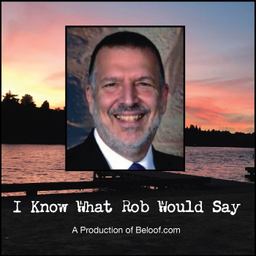
I Know What Rob Would Say
Claim This Podcastby Robert Speigel
5 episodes
Updated Daily
Accepts GuestsHas Sponsors
Podcast Overview
1 verified contact email on file for I Know What Rob Would Say
Pitch yourself as a guest, propose sponsorships, or reach out directly to the host.
Recent Episodes
May 18, 2022
Heartache
<br /> My Apple Watch buzzed on my wrist while I watched TV the other night. The screen flashed red and alerted “Atrial Fibrillation.” I felt no discomfort other than the mild indigestion of an aging digestive system. I mentioned the signal to Mary Anne. The first alert startled me two weeks earlier.<br /> <br /> <br /> <br /> I’d been placed on heart medication after being diagnosed with arrhythmia, an irregular heartbeat caused by errant electrical impulses. I felt the symptoms a few months into the pandemic, and they increased as the politics in our country became uglier.“Please call the doctor,” Mary Anne said in her soft defining voice. I made the appointment the next day, and they scheduled me to have a monitor placed on my chest…..<br />
July 14, 2021
New Normal? I Don’t Think So…
<br /> <br /> <br /> As we begin to exit the pandemic, many of us talk about how we enter a period of “new normal.” Those of you who know me well know I am careful about the use of idioms. To me, “new normal” is an idiom, and I believe idioms represent lazy languaging—they tend to be vague and open to interpretation. Don Miguel Ruiz teaches me to be “impeccable with my word,” so I strive to do so. New normal, and even any “normal,” does not fall within my range of impeccability.<br /> <br /> <br /> <br /> Throughout the pandemic, I wrote, edited, and recently published a new metaphysical fiction novel. We were stuck in the house, so why not? The book is entitled Braided: A Not Not True Story. My editors thought the subtitle to be a typo, and tried to correct it. It drives editing software crazy, but that is the subtitle: A Not Not True Story.<br /> <br /> <br /> <br /> You might point out that the subtitle, “A Not Not True Story,” is vague and open to interpretation, and therefore idiomatic, and I would agree with you. So in my quest to remain impeccable with my words, I chose to write a mystical and metaphysical manuscript of over 60 thousand words on 246 pages over two years to bring the meaning of Not Not True to life. I invite you to read the book to understand what I mean by “Not Not True.” I think you will find it entertaining and provocative. But for now, I’d like to say more about how the pandemic brought me to a place of “not not true.”<br /> <br /> <br /> <br /> When I think about how the pandemic affected me, I don’t feel I’ve entered a “new normal” period in my life. New normal seems like an oxymoron to me—how can something be new and ordinary at the same time. Nothing seems “normal” to me anymore.<br /> <br /> <br /> <br /> The pandemic changed me in ways I’ve never experienced before and don’t fully understand. I feel I’ve entered an utterly unique terrain without a roadmap or compass as if I’ve been blindfolded and dropped on a distant planet. New normal just doesn’t fit, so I believe we need a new idiom; one that describes that we must define our new state as we go through it. Therefore, it is neither true nor not true—it is Not Not True.<br /> <br /> <br /> <br /> As I sit here in a favorite coffee shop writing these words, I remind myself of certain empirical truths. One is that we are all on a speck of cosmic dust circling a burning sun along with our brother and sister planets, blasting through the universe at 490,000 miles per hour. I pause to look over at my cup of coffee sitting on the table next to my computer and notice the liquid in the cup remains perfectly still—not even a shimmer of vibration. My physical and observational cues of careening through space at 490,000 miles per hour are not present. So is that true, or not true? Professor Google said it, and I read it, so I must be experiencing it, right? But is it really “true?” I no longer treat this fact as normal, or old normal, or new normal. I am putting this information in the part of my experience of not not true. It resides together with my understanding of the existence of God—a great mystery.<br /> <br /> <br /> <br /> It seems we humans have become agitated with the existence of great mysteries. We seem to be obsessed with explaining the unexplainable. There is an excellent marketplace for interpreting the unknown—what I call the land of the not not true. There are churches, synagogues, mosques, and spiritual communities on every corner, each with a different explanation of what is not not true. We must have great patience to live with mystery. A favorite philosopher of mine puts forward a unique antidote.<br /> <br /> <br /> <br /> Years ago, we studied Carl Jung’s concept of active imagination. One of my teachers warned me that I should not read Jung from cover to cover but to study and meditate on his quotes. Jung said, “Normality is a fine ideal for those who have no imagination.
March 3, 2020
Mother Nature just put us all in time out
<br /> The human inhabitants of our world are struggling with a ruthless pandemic, and many are dying while the swans are returning to Venice and the fish are visible again, swimming below in the clearer waters of the canals.<br /> <br /> <br /> <br /> Many years ago, as a beginning therapist, I learned the technique of the “time-out.” I asked couples caught up in repetitive marital arguments to take a break, retreat to neutral corners, and reflect. I wanted them to find a quiet space and take time to reflect on their own feelings and behavior before reacting. In that place of solitude, I asked them to consider how they might approach the issue differently so they might resolve the conflict. Are they listening closely to what their partner has to say? Do they understand their feelings and needs before responding? Or are they reacting to what they think they heard them say?<br /> <br /> <br /> <br /> I used the same technique with parents having difficult times with their children. I remember asking one mother if she used time-out with her four-year-old son who was driving her crazy. She said, “I seem to have him in time out all the time. When he throws his temper tantrums, I march him off to the bathroom, put him inside, and tell him he can come out when he stops. He goes nuts in there, kicking the door and screaming. The problem is, he’s getting bigger and I can’t chase him all over house and physically force him into the bathroom.”<br /> <br /> <br /> <br /> I paused a moment before I said, “Oh, that’s the problem, you’re putting the wrong person in time-out.”<br /> <br /> <br /> <br /> She said, “What?”<br /> <br /> <br /> <br /> “It’s you who needs to go into time-out.”<br /> <br /> <br /> <br /> “Me?” she asked with a confused look on her face.<br /> <br /> <br /> <br /> “Yes; you. The next time he throws a tantrum, I want you to take yourself to the bathroom and lock yourself in there until he stops,” I instructed. “You must not come out until he is quiet for at least three full minutes.”<br /> <br /> <br /> <br /> She said, “And leave him alone out in the house? He’ll destroy it! He’ll break everything we own. And what if he walks out the front door and goes out in the street alone and gets hit by a car?<br /> <br /> <br /> <br /> “It’s just an experiment.” I replied. “Just put all your valuables away and lock the doors. Trust me, he won’t do either. That’s just your anxiety talking. Are you willing to try?”<br /> <br /> <br /> <br /> She agreed to try. I added, “And while you are in the bathroom, I want you to meditate; calm yourself down. Remind yourself you are a great mother trying to learn something new, and everything will turn out well.”<br /> <br /> <br /> <br /> The next week she came in to report what happened. She followed the instructions, taking herself into time-out in the bathroom when he was throwing one of his worst tantrums ever. When she closed and locked herself in, he promptly parked himself outside the door, screaming and crying at the top of his lungs. He kicked and punched the bathroom door. She heard him throw himself on the floor, kicking and screaming. She thought she would explode. She had to cover her ears and sing to herself to block out the racket.<br /> <br /> <br /> <br /> And then she heard nothing coming from the other side of the door. Her anxiety went through the roof. She thought, “Oh God, what’s he doing now. She uncovered her ears and heard him breathing on the other side of the door. She remembered she had to wait a full three minutes before she did anything. It seemed like a lifetime. After about one minute she heard him say something quietly to himself. She heard him say in his four-year-old voice, “This just isn’t working anymore.” She waited another minute before she opened the door. She pulled her son up, gave him a big hug, and had a good day.She couldn’t believe it. “This just isn’t working anymore? Could a four-year-old really have such insight?
5 total episodes available
Deep-dive analytics for I Know What Rob Would Say
Frequently asked questions
Have a different question and can't find the answer you're looking for? Reach out to our support team by sending us an email and we'll get back to you as soon as we can.
- What is I Know What Rob Would Say?
- How often does this podcast release new episodes?
This podcast updates daily.
- Where can I listen to this podcast?
This podcast is available on 4 platforms including Apple Podcasts, Spotify, and more. You can also use the RSS feed directly.
- Does this podcast accept guests?
Information about guest appearances is not available.
Legal Disclaimer
Pod Engine is not affiliated with, endorsed by, or officially connected with any of the podcasts displayed on this platform. We operate independently as a podcast discovery and analytics service.
All podcast artwork, thumbnails, and content displayed on this page are the property of their respective owners and are protected by applicable copyright laws. This includes, but is not limited to, podcast cover art, episode artwork, show descriptions, episode titles, transcripts, audio snippets, and any other content originating from the podcast creators or their licensors.
We display this content under fair use principles and/or implied license for the purpose of podcast discovery, information, and commentary. We make no claim of ownership over any podcast content, artwork, or related materials shown on this platform. All trademarks, service marks, and trade names are the property of their respective owners.
While we strive to ensure all content usage is properly authorized, if you are a rights holder and believe your content is being used inappropriately or without proper authorization, please contact us immediately at hey@podengine.ai for prompt review and appropriate action, which may include content removal or proper attribution.
By accessing and using this platform, you acknowledge and agree to respect all applicable copyright laws and intellectual property rights of content owners. Any unauthorized reproduction, distribution, or commercial use of the content displayed on this platform is strictly prohibited.